Showing posts with label stephanie bolster. Show all posts

Tuesday, June 18, 2019

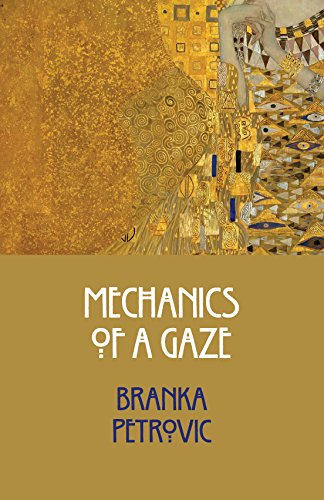
Mechanics of a Gaze — Branka Petrovic (Mansfield Press)

Today's book of poetry:
Mechanics of a Gaze.  Branka Petrovic.  Mansfield Press.  Toronto, Ontario.  2017.

Postcard No. 50

Severely hung over—
but hopefully it will be beneficial

πŸ’«πŸ’«πŸ’«

Today's book of poetry has long admired the work of Gustav Klimt, but we've never seen him or his work from quite this delightful perspective.  Branka Petrovic's Mechanics of a Gaze does that improbable thing, she makes her writing about the great man's paintings and life as beautiful and interesting as the real thing.

Petrovic moves beyond inhabiting the gaze to directing it's focus.

Disabled Sex
Egon Schiele, Kneeling Girl in Orange Dress (Gertrude Schiele), 1910.
Black chalk and gouache on paper.

Disabled sex: molluscs attempting
foreplay clogging
their shells. Girls in orange dresses
whose hands coil

into rotten cauliflowers;
squirt citruses
from their vulvas.
A circus of cerise boots

& taboo missionary positions.
It's masturbation
with the help of a sex toy,
pumped, then washed

by special friends;
never talked about
with nurses. Limbs looping
into shame.

Fellatio performed
in a wheelchair. Lift
your thigh higher; put your toe
into my mouth; pull

your depression out. Kiss
social constructs goodbye.
My ankle. Press
the inside of my thumb; rub

my left shoulder a little
harder. Yes oh yes
oh yesssssss.
Make sex furniture for me:

enhance this rail,
tantric clamp. Adjust
the mechanics of masculinity;
my right to fuck.

Anxiety that sterilizes
& distorts my thoughts
about myself: a sexy blob-fish
in a sea of deep disgrace.

Revise your kinked
thoughts about me:
a debilitated brute; enable
orgasmic dust, devotism to sparkle.

Talk dirty to me too.

πŸ’«πŸ’«πŸ’«

Mechanics of a Gaze fully examines the pulsating sexuality that most see in Klimt's paintings, she does the same thing with his life.  Petrovic, using actual post cards sent by Klimt to his close friend Emilie FlΓΆge, re-imagines time and place until the reader is transported to a Vienna from long ago.  Staid and vibrant, repressed and ribald, Klimt's Vienna was a complex culture and as much as artists inhabit/create a culture, artists are always the outsiders looking in.

Branka Petrovic has come correct.  She knows the paintings and sketches, the art work of Klimt and his friends and contemporaries.  When Petrovic describes a painting to us it grows in every dimension, we see more than Klimt, more than the model, we see Klimt's city, his time, his vision.

Cardinal and Nun
A painting by Egon Schiele, 1912.
Oil on canvas.

"Just as a horse in full gallop, blinded by the energy of his own speed,
pays no attention to any post or hole or ditch on the path, so two lovers,
blinded by passion, in the friction of sexual battle, are caught up in
their fierce energy and pay no attention to danger."
                                                    —The Kama Sutra (2.7.33)

His red cassock scoffs at the space, unties
like a vulva before us. His cock
knocks against her knee.
The onlooker caught

in a corrupt act.
The pact between God
and man, wrecked in an instant
of scarlet fascia, pectoral crosses,

and a scarlet zucchetto.
Karate hands; punches
we're not sure are him or her, or
the Holy Father. Oops.

The nun's manic glance.
The Cardinal's bare, muscular legs.
This rock-solid burst.
Unearthed erogenous zones; yes, oh

yes; oh no. Not now, not ever.
Paraphrase of Klimt's Kiss?
A reworking of everything mystical
into morbid patches,

black sin. Sunk in sexual gloom.

*

Schiele called the painting Liebkosung,
or The Caress.

*

It has been noted that self-portraits by Schiele from the same peri-
od, match the nun's face. Her beefy legs tip-off a "double-goer," evil
twin.

*

Marie Antoinette's husband, King Louis XVI's penis is

"no bigger than a straw
always limp and always curved
he has no prick, except in his pocket
instead of fucking, he is fucked."

—Les Amours de Charlot et Toinette (1779)

Nymphomaniacal Antoinette sought sexual favours
from her brother-in-law
from various court nobles,
from servants,
even from her own children.

"The Austrian bitch and her Friends in the Royal Orgy" suggests
Antoinette had a string of lovers, including
the Duchess of Polignac and the Count of Artois,
who was also the true father of her children.

The National Enquirer's latest finds:

Catwoman Caged For Clawing at Boy Toy

Carrie Royale's royal insight that Harry's crown jewels
are "average-sized—
but he's a grower, not a shower!"

*

1977:

Margaret Trudeau spent her sixth wedding anniversary
partying with the Rolling Stones
at a Toronto nightclub
and in Mick Jagger's limousine.

πŸ’«πŸ’«πŸ’«

Petrovic wants us to see a more complete picture than simply the amour, the scalding of promise in the paintings, Petrovic wants us to understand more about the man. 

There is no greater loss than that of a child.  Today's book of poetry has never had children but we've seen that sort of calamity up close.  There is no amount of glamour that will shield you from the big hurt.  Klimt was voracious in his appetites and fathered many children but Petrovic narrows his gaze and hers to Klimt's sorrow at the death of his son Otto.

Portrait of the Dead Otto
Portrait of the Dead Otto Simmerman, 1902.
Chalk on paper.

When death is your baby boy,
his pouted lips, parted hair;
the rest of him; bleached shawl,
bland face; your backdrop is:

a flat beige. The tiny dash of gold
in his hair a hint of life
you wish you saw when you first heard the news, dropped

everything, came running.
Held his lifeless body
tight for the rest of the night.
Two months is too little

to get to know someone. Starting
to bond, only to hold
transience in your hands. The crib,
a temporary casket, until they come,

take him away. Of all the shades
of death, his
is an especially difficult one
to blend: what colour his tiny cheeks,

minute chin, your blues.
The backdrop,
short-lived as unbleached silk,
desert sand, ecru.

*

The universe could have been:
astronomer almond, skyivory,
univeige, cosmic khaki, new-
fangled big bang buff or blush.

They voted for cosmic latte in the end.

*

A study revealed that
the overwhelming majority of stars
formed about 5 billion years ago.
Since these stars would have been

"brighter" in the past
the colour of the universe changes over time,
shifting from blue to red
as more blue stars change to yellow,

becoming eventually
red giants. As light from distant galaxies
reaches the Earth, the average 'colour of the universe'
(as seen from Earth) marginally increases

towards pure white, due to the light
coming from the stars
when they were
much younger and bluer.

*

Much younger and rosy-cheeked,
your baby boy is now
Navajo white. The stars lit in him,
then out. The universe,

a buildup of extraordinary
matter, then ether.

*

Grief is an anti-white flash decanted
from antique white. It's
splashed white, peach puff.
A hint of ivory. Eggshell.

Papaya whipped with
white smoke, ghost white.
It's all the shades of white
you never thought you'd see, wish

you could forget.

πŸ’«πŸ’«πŸ’«

Today's book of poetry would like to dedicate the last poem to the late Arlen Maxwell Kierkegaard. 

Branka Petrovic wrings every emotion you have out of you before you get to the end of Mechanics of a Gaze.  These poems put you in Vienna, but they also get inside of your internal geography and bang things around.  The cobbled streets and secret societies of Vienna become real and breathing.  The poems start to feel a little like paintings, exact, and starring back at us.

Petrovic has some serious burn.

Image result for branka petrovic photo

Branka Petrovic

ABOUT THE AUTHOR
Branka Petrovic completed an M.A. in English Literature and Creative Writing at Concordia University. She holds a B.A. in English Literature and Philosophy from McGill University. She was co-Editor-in-Chief of Headlight Anthology and her poetry has appeared in Branch, Arc Poetry Magazine, Contemporary Verse 2, The Malahat Review, The Fiddlehead, The Antigonish Review, and The New Quarterly, among others. Her work was long-listed for the 2012 and 2015 CBC Poetry Prize and the 2016-2017 Ralph Gustafson Prize for the Best Poem. It was also shortlisted for the 2013 Gwendolyn MacEwen Poetry Competition. In 2016, she won second prize at the Great Blue Heron Poetry Contest. Born in Belgrade, she lives and writes in Montreal.

BLURBS
Branka Petrovic gets Klimt—she gets inside the gorgeous horror, the lavish violence of his paintings. That she embodies his work and his era in a poetry as ornate, as startling, as boldly sexual, as his art, impresses. That she does so through interrogation, even judgement—particularly of the male gaze—makes this a remarkable, and remarkably mature, first book. Provocative, elegant, and unsettling, Mechanics of a Gaze will leave no reader untouched.
     —Stephanie Bolster, author of A Page from the Wonders of Life on Earth.
Rich in imagery and sound, Branka Petrovic’s Mechanics of a Gaze is a lush, layered, and carefully-curated collection of poems about Gustav Klimt. Animating found material and showing careful attention to the material culture of the Secessionist period in Vienna, Petrovic has written a collection steeped in history and aesthetics, one sharpened by a contemporary, deliciously-ambivalent gaze. Intertwining threads of art, sex, fashion, scandal, and looted works, Branka Petrovic’s Mechanics of a Gaze “blooms / bravura.”
     —Susan Elmslie—author of Museum of Kindness


Branka Petrovic
Why Do I Write
Video: Quebec Writers Federation


765

DISCLAIMERS

Poems cited here are assumed to be under copyright by the poet and/or publisher.  They are shown here for publicity and review purposes.  For any other kind of re-use of these poems, please contact the listed publishers for permission.

We here at TBOP are technically deficient and rely on our bashful Milo to fix everything.  We received notice from Google that we were using "cookies"
and that for our readers in Europe there had to be notification of the use of those "cookies.  Please be aware that TBOP may employ the use of some "cookies" (whatever they are) and you should take that into consideration.


Friday, February 12, 2016

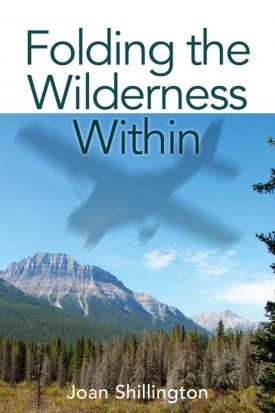
Folding the Wilderness Within - Joan Shillington (Frontenac House Poetry)

Today's book of poetry:
Folding the Wilderness Within.  Joan Shillington.  Frontenac House Poetry.  Calgary, Alberta.  2014.


Joan Shillington's second book of poetry, Folding the Wilderness Within, is rock steady from the first page to the last.  These poems are gorgeous constructions ripe with tension, drama and passion. 

Shillington's poems carve us a new notion of what it is to grieve, to lose.  That loss is there like a weight but then these poems redeem and reward the reader with intelligent surprise.

The Neighbour Speaks from Beyond

Let me say, this is not how anyone could imagine it is to drown.
August water creeping over my soles, then ankles. Slow list of
boat and there I was, caught between nightmare and reality. I
tipped the last of the twenty-six past my lips then lashed my
wrists to a rope and eased myself across the overturned hull.
Rum burned in my gut as if I had swallowed glass from the
bottle. Haunted voices hurled themselves from a distant

shoreline. Words, distorted, sank. Confused letters on black
water. I counted the seconds between lightening and thunder.
Paper, scissors, rock. Our Father who Art in Heaven. Cold
cleaved my body. I rocked and swayed with waves. I became
boat. Storm. Water. Rain. Soon, I was not seen but could see. I
saw the dark beyond the cottage. Family. Wife. Children. A girl
on the opposite shore who could not come. And now, she has
forgotten my name.

...

Today's book of poetry picked out a hoard of poems from this collections that we felt you HAD to see.  Shillington sets the bar rather high at the start of Folding the Wilderness Within and then she sustains that fierce standard like John Coltrane holding a moment of beauty in one note and turning it into a song.  We liked this book.  Shillington calls on the voices of the dead and the dying to help when no other voices will do.

Shillington mentions poet Richard Harrison as a friend and mentor in her notes.  Harrison is an old and respected friend of Today's Book of Poetry.  We don't quite go back to our teens, but close.
It is easy to imagine this manuscript going through Richard's disciplined hands.  If these poems meet his standard then they certainly meet ours.

Ordinary
         After Kindness by Naomi Shihab Nye

Before you know what ordinary is, you must visit a funeral home
and view the body of a friend you made plans with just a few
days before. You must watch as the people dearest to you, buried
beneath flowers, sympathy cards and lasagne casseroles, have
their mother's urn pressed into their hands. You must stand in
their home and see the unmade bed and laundry still scattered
on the floor. Then you must hug and kiss good-bye, turn the key
in your car and drive home less than a week after the phone call
and discover that milk and bread still line grocery store shelves,
traffic lights change green, yellow, red. Your dog needs grooming.
You step into the rain, walk through the neighbourhood,
past the church. Yellow parking lines gleam wet, your dog busy
on new grass and then look you look up as an SUV pulls
alongside and see the smiling face of Vivian, who you haven't
seen in six months. She rolls down her window and you pick up
your wet dog, hold him as he shivers beneath your jacket. Your
feet sink into the soft earth as you walk across the boulevard and
then you stand in the rain as the city hums around you, and
become one of the two women talking in the quiet of a road.

...

The poems in Folding the Wilderness Within, romantic lamentations, prayers, praise-songs, made for a very passionate morning read at the Today's book of poetry offices.  Our head tech Milo and our new intern Kathryn both brought in friends for the event - and as you all know - you show up for the morning read then you have to participate in the morning read.

Today's guests were an excellent addition to the poetry reading team.  We here at TBOP believe that the real music in poems is best heard aloud.  Ms. Shillington did not let us down.  These beauties sounded better than spare change.

TBOP's morning reads are open to the public.  

Summoning

         Please come before winter.

         Before north winds crumple veined leaves to the ground
and prairie grass is laid by snow.

         Before river's rage slows to a trickle between ice floes
or low clouds obscure landscape and snow muffles earth.

         Please come before frost snaps limbs or yellow birdsong
is erased by this season.

         Please come before the absence of light weighs on me.

         Please.

...

Joan Shillington's narratives follow a hard clean line and we like that, clean as the burn from the flame of a one-hundred and fifty proof flame.

Joan Shillington

ABOUT THE AUTHOR
Joan Shillington is a Calgary poet and has been published in The Antigonish Review, Fiddlehead, Grain, Prairie Fire and Freefall Magazine as well as four anthologies. She has won various contests over the years.  She is currently a poetry editor for Freefall Magazine.  Joan’s first book of poetry, Revolutions, was published by Leaf Press (2008).

BLURBS
These poems, at their best, achieve their power through withholding, to create an intimacy – sometimes gentle, sometimes brutal – that involves us even as it reveals the unspoken otherness of lives not our own. Though there is much loss here, the poems’ sustained attention to what endures makes the collection a celebration of the essential force of family. 
     ~ Stephanie Bolster

Joan Shillington’s new collection mines “this threshold of ordinary” to show the gleaming moments in all our small lives. Anchored in the detritus of daily routine, Joan knows “each word and their order”, revealing memories as archetypal as a hand of cards. Her adolescent narrator is unforgettable, “flamed one hundred and fifty proof in metal spoons, / sliced elk membrane from out-of-season carcasses, / fur falling wild …” For Shillington, the dead “are just people who / are very quiet.” But Shillington gives the quiet ones space to roar. Her poems spill over with the full throttle details of lives thoroughly lived. This book illuminates, offering us moments of grace in our flawed world.
     ~ Lisa Pasold

Welcome. You’re in for a treat, a second book from a poet fully committed to the art. I’d say a perfect second book because I can hear, in the Tsar-like footsteps of the poet’s father in all his daring, bare face turned to the wind, the echoes of history’s grasp on Joan’s first poems. And then hear the change in the insights that arise from a story but flash free of it to stand outside of any particular narrative in order to fit with many. Consider, “I dozed beside sleep,” or, of a butterfly on her arm, “Now this little epistle pleats its bright wings slowly,” or, of anywhere: “Here, we are all strangers, separated by death pains and dusty roads, quiet about the wrongs in our lives.” These are poems filled with the double-pleasure of poetic truth: the secrets are disclosed, but the mystery remains.
     ~ Richard Harrison

frontenachousepoetry.ca

436

DISCLAIMERS

Poems cited here are assumed to be under copyright by the poet and/or publisher.  They are shown here for publicity and review purposes.  For any other kind of re-use of these poems, please contact the listed publishers for permission.

We here at TBOP are technically deficient and rely on our bashful Milo to fix everything.  We received notice from Google that we were using "cookies"
and that for our readers in Europe there had to be notification of the use of those "cookies.  Please be aware that TBOP may employ the use of some "cookies" (whatever they are) and you should take that into consideration.

Wednesday, May 20, 2015

This World We Invented - Carolyn Marie Souaid (Brick Books)

Today's book of poetry:
This World We Invented.  Carolyn Marie Souaid.  Brick Books.  London, Ontario.  2015.


You all know how Today's book of poetry loves a list poem.

Carolyn Marie Souaid gives us a killer with "City of Everything."  This poem, does indeed, contain everything.

City of Everything

City of arrivals.
City of missed connections.
City of plate glass windows shouldered in fog.
City of terminals and interminable waits.
City of Beefeater.
City of laptops and mobile devices.
City of flux.
City of escalators.
City of criss-crossed time zones.
City of no time to lose.
City of left-hand turns down a staircase of shopping bags.
City of Gucci.
City of umbrellas.
City of "Excuse me, can you tell me...?"
City of looping echo.
City of strollers.
City of wheelchairs.
City of carry on and carry off.
City of parabolic laughter, 7.5 on the Richter scale.
City of Double Wear Stay-in-Place Makeup.
City of blush.
City of Apple.
City of lithe women in arching doorways.
City of legs.
City of incubating disease.
City of extended naps and early risers.
City of day.
City of ordinary details, like the sun, repeating.
Flip-flops and hideous toes, flip-flops and hideous toes.
City of hangnails.
City of rot.
City of concrete.
City of stiff.
City of shine.
City of cufflinks.
City of shirts and business suits pressed into cardboard.
City of standby.
City of hurry up and wait.
City of beeping electric carts backing into the throng.
City of turbans and burkas and Biotherm.
City of parasites on toilet seats.
City of farts.
City of India, Poland, Spain, France, Turkey, Japan, but mainly India.
City of credit cards.
City of faulty wiring.
City of Christmas tchotchkes in October display cases.
City of grandmothers in turtlenecks.
City of convergence.
City of fragrance.
City of chocolate.
City of paper.
City of glass, chrome, lead; city of nickel.
City of neon, marble, steel.
City of hard.
City of edge.
City of nerve.
City of trench coats.
City of emergency exits.
City of maps.
City of girls going to Idaho.
City of lost in the shuffle.
City of cloying loudspeaker distortion.
City of fat.
City of broom-pushers.
City of urinals.
City of Starbucks.
City of accelerating innovation.
City of hyper.
City of connections.
City of "Stop," "Go," "Move your ass."
City of billboards.
City of blinking.
City of cancelled reservations.
City of complainers.
City of lineups.
City of corduroy, denim, suede, leather and cotton.
City of canvas.
City of vinyl.
City of rubber.
City of stretch.
City of oversized watches.
City of Made in China.
City of mustard stains.
City of buttonholes.
City of unravelling hems.
City of dharma.
City of who among us is dying of cancer?
City of c'mon now, which one of us?
City of weakened immunity.
City of abandon hope ye who enter here.
City of night.
City of cooled surfaces.
City of cobweb.
City of drift.
City of swirling green gas.
City of border patrols.
City of passports.
City of fog.
City of departures.

...

So that was crazy fun and a little amazing, but atypical of the rest of the book.  Go figure.  No more list poems.

Souaid isn't playing with the same normal deck of cards as the rest of us.  She has Tarot cards of her own design, old baseball cards with gum stuck to them, the card from the package of cigarettes the ghost of someone's dead grandfather left sitting around.

Put another way, Souaid knows things we don't.  How else can you explain her interstellar wit at precisely the right moment - even though all your senses were telling you that something else was called for.  It isn't sorcery but these poems inhabit the reader like spells.

I kept saying stuff to myself like "did I just read that?", "did she really just make that leap?"  I could make a list of poems that caused various gasps of astonishment.

Scale

Africa was an inch and a half wide on my ruler.
The teacher smiled and pasted something into my book,
either a gold star or a moth with exceptional markings,
I don't recall.

She died. Lots of people died.
Push-pins came off the map, but more went in.
Overnight, the population doubled.
Where sprightly children once leapt about,
there were meaner ones
who excelled at games--

tagging a hapless ant with a magnifying glass,
harnessing the sun, funneling it into a prick of light,
then watching the scrabbling insect shrivel
into a seed.

It was, of course, the same destiny that awaited Joshua,
whose miraculous entry into the human race began
tentatively, on a bed of straw.

It isn't any one individual per se; it's the layers
of human thought that append themselves to an idea
and set its entire life course.

Back two thousand years,
blue sky met the ochre sand
in a perfect line.
It was the wandering shepherd who triggered all the fuss--
the celebratory gesturing of his hands.

...

Carolyn Marie Souaid's This World We Invented is one of those books you WILL hear more about.

Reading This World We Invented gave me spontaneous fits of joy.  Deeply disturbing when you are generally a miserable goat.  This book was a kick in the ass.

Again and again and again Today's book of poetry has told you readers how much we admire smart -- but it is more than that -- Souaid has her fingers so delicately placed on the pulse of her audience that they hardly notice when she starts to pinch.

The Holocaust Tower

You lost your gloves at the Jewish Museum.
Autumn trees were unseasonably bright,
the plazas a patchwork of knackwurst
and graffiti, beer and bicycles and surreal
collectibles of days gone by:
gas masks, canisters, helmets and arm bands,
the rare and not-so-rare.
Items from the Cold War
in their original boxes.
Everything else was uber-real.
Real coffee to go.
Real people from everywhere,
waving their art around.

Three days we watched poetry films
from Norway, Canada, Egypt,
pixilated worlds composed and decomposed
the time it took the froth to settle on our coffee
It's what happened afterward.
We were looking deeply into the eyes of the oven-bound--
great, gaunt sockets. It was there, I think.
Neither of us noticed. Somehow your glasses fell
unannounced into the quiet sweep of tourists.

Or we were too focused
on the darkness at the end of the hall,
the absolute void of a stilled pavilion,
which lured me but swallowed you whole,
your silhouette disappearing
into the matrix of '44,
where your mother shivered inside a cattle car,
World War II exploding overhead.

Later, we found you a new pair.

...

This World We Invented is full of fascinating beauty.

If I could, I'd award Souaid a special prize.  Not many books of poetry dance like this.

Sublime and superb.  I would like to use every compliment I can think of.

Brilliant.

Carolyn Marie Souaid

ABOUT THE AUTHOR
Carolyn Marie Souaid has been writing and publishing poetry for over 20 years. The author of six books and the winner of the David McKeen Award for her first collection, Swimming into the Light, she has also been shortlisted for the A.M. Klein Prize and the Pat Lowther Memorial Award. Much of her work deals with the bridging of worlds; the difficulty, perhaps the impossibility of it, but the necessity of the struggle. She has toured her work across Canada and in France. Since the 1990s, she has been a key figure on the Montreal literary scene, having co-produced two major local events, Poetry in Motion (the poetry-on-the-buses project) and the Circus of Words / Cirque des mots, a multidisciplinary, multilingual cabaret focusing on the “theatre” of poetry. Souaid is a founding member and editor of Poetry Quebec, an online magazine focusing on the English language poets and poetry of Quebec.

(This bio was lifted from the QWF Literary Database of Quebec English-language authors.  You can see more of that here:  http://quebecbooks.qwf.org/authors/view/381)

BLURB
"These bold, important poems have grappled with beauty and chosen honesty; they venture into territory where the lyric stops in dismay, horror, silence. Poems from the middle of a life, in the midst of a world that wounds and is wounded, they offer no easy consolations, but because they are made things, in their moving evocations of brokenness they reflect a hope for change."
     -  Stephanie Bolster


Carolyn Marie Souad
reads from This World We Invented
Video courtesy:  Brick Books


341


Poems cited here are assumed to be under copyright by the poet and/or publisher.  They are shown here for publicity and review purposes.  For any other kind of re-use of these poems, please contact the listed publishers for permission.


Wednesday, October 8, 2014

Shouting Your Name Down The Well - David W. McFadden (A Stuart Ross Book/Mansfield Press)

Today's book of poetry:
Shouting Your Name Down The Well - Tankas and Haiku.  David W. McFadden.  A Stuart Ross Book.  Mansfield Press.  Toronto.  2014.


David W. McFadden's last book of poetry, What's the Score?, won the Griffin Prize for Poetry.

Shouting Your Name Down The Well is a completely delightful encore.  This time out he is exploring the Japanese forms of tanka and haiku.  McFadden would seem to be a bottomless well of excellent poetry.

I've met the man a few times and am always surprised.  I keep expecting to see a giant lumber gracefully into the room rubbing his knowledgeable noggin on the ceiling.  Instead, this gentle, humble man, carefully disguised genius.

Today's book of poetry is going to let other Canadian poets tell you what they think:

"David McFadden is such an essential writer for us. His wonderful poems before and after Gypsy Guitar, his great Trip Around the Lakes series, feel to me the central unofficial voice of our time. He has always kept us close to the earth with his humour and his wandering off the beaten path of literature."
MICHAEL ONDAATJE

...

          I was on one of
Those happy drugs for three months
          And liked it okay.
But soon I got nostalgic
For a little misery.

...

"David McFadden's poems come across as passages in a long, thoughtful, roaming conversation about matters no less deeply serious for sometimes being utterly frivolous. As the title of one of his books, There'll Be Another, suggests, it all seems easy--this stroll from one poem to the next, this leap between stanzas--but that's part of McFadden's art. There won't be another like him.  Let's treasure the one we've got; the conversation of his poems includes us."
STEPHANIE BOLSTER    

...
          Tanka is to me
As bicycles to Curnoe.
          His friends kept thinking
This was the end of the line
But it was merely the start.

...

"Dave McFadden's attention to writing has always been top-notch, right from when he published Mountain magazine in the early '60s through many years of a wide range of poetry, prose, teaching, editing, and just being open to the beauty of language. In my generation he's a master."
FRED WAH

...

          Give me those who aren't
Afraid to say "I don't know."
          You can have the rest.

...

"His words would rip a hole in the night."        
LILLIAN NECAKOV

...

          When you're ninety, say
Grandma, people you haven't
          Seen in fifty years
Appear so real in your dreams
You can reach out and touch them.

...

"David McFadden has won every book prize ever lodged in a secret corner of everyone's heart, his acceptance speech echoing in our heads."
GEORGE BOWERING

...

          Turns out the love in
Love songs is true. Everything
          Will last forever.
The wind blows a gust of rain
All over my desk and me.

...

"Part rascal, part rogue, David McFadden is one of Canada's chief mischief makers. He condenses essential wisdom and offers it generously. I'm made more human by reading his work."
SANDRA RIDLEY

...

          When I was a kid
I could walk so quietly
          Through the woods that once
Without any warning I
Saw a dozen dozing deer.

...

"The world is full of wonder, but this can be easily forgotten. The poetry of David W. McFadden is a manual for restoring that sense of wonder. I'm quite certain reading it has improved my life tremendously."
PAUL VERMEERSCH

...

          I'm eight years old and
I've read Peter Pan eight times.
          Now for my ice cream.

...

"David McFadden is one of the purest and most radiant poetic souls of our time."
STEVE VENRIGHT

...

          The poems we write
After the Holocaust must
          Be the type Hitler
Would have despised, that would have
Had us put in cattle cars.

...

"I feel like writing the most wild / and humble poems in the world / but David had already written them."
SUSAN MUSGRAVE

...

          I'm a subjective
Man. I never ask questions.
          I just work it out.

...

Today's book of poetry could go on forever with both David McFadden poems and the gushing voices of so many other Canadian poets,  But you get the idea.  McFadden is a poet that other poets love.

Stuart Ross continues to champion some of our best poetry with his imprint for Mansfield Press.


David W. McFadden

ABOUT THE AUTHOR
David W. McFadden has been publishing poetry since the early 1960s. He is the author of about thirty books of poetry, fiction, and travel writing. Why Are You So Sad? Selected Poems of David W. McFadden (Insomniac Press) was shortlisted for the 2008 Griffin Prize for Poetry, and Be Calm, Honey (Mansfield Press) was short-listed for the 2009 Governor General's Award for Poetry (his third such nomination). In 2013, What's the Score? (Mansfield Press) won the Griffin Prize for Poetry. David lives in Toronto.

BLURB
"David McFadden's poetry is probably the poetry most often read aloud at my house...His broad talent, a unique voice and real vision."
     Elizabeth Bachinsky

The Griffin Poetry Prize - 2013
David W. McFadden
reading "It's Not Funny Anymore"
from What's the Score?


255