Showing posts with label david clewell. Show all posts

Monday, September 23, 2019

Undiscovered Country — Al Rempel (Mother Tongue Publishing)

Today's book of poetry:
Undiscovered Country.  Al Rempel.  Mother Tongue Publishing.  Salt Spring Island, British Columbia.  2018.

9781896949697_cover

Today's book of poetry remembers where we were the first time we read Sir Charles Bukowski, Lord Alfred Purdy, Saint Jack of Kerouac.  And now we're going to remember meeting the work of Al Rempel.

Undiscovered Country is an undiscovered and staggering masterpiece.  Undiscovered Country begins with the long poem "Into The Cloud of Unknowing" and this is a truly great poem.  A life changing poem.

How is it possible that there is a poet that is this good and his name is not on every ones lips.  Today's book of poetry is embarrassed that we have never encountered Al Rempel's poetry.  Today's book of poetry will now correct that and acquire This Isn't the Apocalypse We Hoped For, Understories and Rempel's two chapbooks Four Neat Holes and The Picket Fence Diaries.

Today's book of poetry hasn't been this thrilled about discovering a new poet since our man in the south, David Clewell, introduced us to the poetry of David Lee.  Sir David of Lee.  That's how fine we think Al Rempel's Undiscovered Country is.  That's how wise/clever/smart Today's book of poetry thinks Al Rempel burns.

Undiscovered Country is a great pleasure to read.  You feel like you're in that movie where people are gathered at the knee of some old wise guy who doles out wisdom with each and every breath.  A sage.  Today's book of poetry knows these are ridiculously high claims, high praise.  But we can take the heat and welcome the conversation.  For Today's book of poetry - Undiscovered Country is simply one of the best books of poetry we have read.

He Talked In His Sleep

she wishes for a morning with wet snow
and the birds' flagrant disregard

their beaks stuffed with bits of straw
as they shuttlecock

between their peep-a-peep & the falling
she lets her eyes drift

once again the house lifts off
rising up to meet the snow

if only the only thing she could hear
was the clock

the inner works of the furnace
and the eternal hum

how he wore the shirt of his uniform
and played his old songs

how he would shudder alone downstairs
with the record player

the aura of the streetlamp pouring in
a sickly illumination

how he would carefully hang the shirt
back in the dark closet

scuttle crabwise into his side of the bed
as if under trip wire

πŸ’«πŸ’«πŸ’«

Today's book of poetry is in pure poetry pleasure heaven and Al Rempel's Undiscovered Country has taken us there.  These poems burn honest as a mother's promise, deep as a father's legacy, and yet always remain approachable, even tender, no matter how real/rough the world gets.

Undiscovered Country moved us.  Today's book of poetry thinks these poems will move you too.  Undiscovered Country is a delight because every poem works, as Dennis Cooley suggested, Undiscovered Country is "a rinse to the clouded soul."

Our morning read was held out on the front porch today's as our offices were taken over by a book club meeting.  The Today's book of poetry staff could all hear the city humming behind us, the weather muggy but still nice.  Maggie, our Jr. Editor, arranged our order and cleared the runway.

Al Rempel's Undiscovered Country sailed out into the cosmos, off of our front porch, with an enthusiasm matching these extraordinary poems.

I Thought I Saw Her In The Water

in territories of the mind, in middle distances I can't reach
with outstretched hand,
in dreams inlaid & lidded with a ceiling of leaves, some dangling
on threads, rear-tail swimming
in the air above me — we're all guppies you know, we're caught
on our backs
wordlessly gulping at what we cannot say

or at night, the grass a dewy halo around my head, like a chalk line
drawn about my arms & legs,
the stars are swimming too, unglued from the sky, they slide
past my vision
when I need them the most

could I reach into the depths of a lake at dawn, or a quiet river,
even in a flat-bottomed boat, I'd hardly dip further in than my elbow—
o mother
I know you're not down there, slipping between my fingers
bubbling through gills

or up here, skidding across the sky pell-mell with the stars, with leaves
on empty streets of morning, filling up with hours & hours
but I want you to be here, somehow, closer than dreams that clear off
like fog
leaving only the hard outline of crooked trees & a road that curves
out of view

πŸ’«πŸ’«πŸ’«

Al Rempel talks about love lovingly, he mourns with authentic dignity and he observes and understands it all.

You, dear readers of Today's book of poetry, never see and/or hear about the four books we read for every book that we write about.  You don't have to weigh through those empty pages, eat that burnt toast.  But Today's book of poetry will willingly endure mountains of dross to get to books as charming and fulfilling as Undiscovered Country.

Thank you Al Rempel, this is what today's book of poetry lives for.

from Once Around The Sun


one night I left the sliding door too far open, my love,
I'm sorry,
the house went cold,
cold as the world is

each morning, when we went outside,
we could feel its chill
pressing on our pant legs,
and we blew into our cupped hands to warm them

every evening darkness arrived
a few minutes too early

as I sit here, the last flurry of seed fluff
drifts by my window like a parody of winter,
and when I walk through buildings,
I stop in the sunlight & its heat
and let if fall on my face
and blind me

what is this narrow band of heat
that keeps us alive, this fire we scoop on our plates
and pour into cups, again & again?

one day my eyes will close for the last time,
and my breath will leave as if through an open door
and I will grow cold
as the earth waits to cover me


πŸ’«πŸ’«πŸ’«

Image result for al rempel photo

Al Rempel

ABOUT THE POET
Al Rempel’s books of poetry are This Isn't the Apocalypse We Hoped For, Understories and two chapbooks: Four Neat Holes and The Picket Fence Diaries. His poems have also appeared in various journals including The Malahat Review, GRAIN, CV2, Event, and Prairie Fire as well as in anthologies such as The Best Canadian Poetry in English, Rocksalt, 4Poets, and Half in the Sun. He was awarded Prince George's Arts & Culture Award for Poetry in 2012 and Shortlisted for the Fred Cogswell Excellence in Poetry Award in 2013. One of his poems was shortlisted for Arc's Poem of the Year Award in 2015 and his poems have been included twice in the Poetry in Transit project in Vancouver. Rempel has also had some of his poems translated into Italian by the poet Sandro Pecchiari. Rempel has also created a number of videopoems in collaboration with local artists. “Sky Canoe” was screened at the Visible Verse Festival in Vancouver, 2012, and at the Filmpoem Festival in Dunbar, Scotland, 2013, as well as Liberated Words in Bristol, UK, 2013. Three of the poems in Undiscovered Country have also been made into videopoems. Al Rempel currently lives in Prince George, where he teaches math and science at a high school, but grew up in Abbotsford and loves to visit the Gulf Islands.

BLURBS
"It is impossible to be unmoved by this book. Rempel hears 'the earth, the rain saying/fatherless, motherless...' and admits, 'I wish I could say I'm less afraid, now a father'—and we know the pained bewilderment in making our ways through the 'undiscovered countr[ies]' of our own lives. He sees the abysses that open within the details of the everyday; and at the same time, allows us to observe 'small green birds...circusing in the aspens,' and though he speaks of 'the stars...not meaning anything except/what we make of them,' Rempel sets us where "we sit aswirl in light.'"
     - Russell Thornton, author of The Hundred Lives

"Undiscovered Country is extraordinary in its focus. Rempel skillfully moves from internal landscapes—of grief, loss and mortality—to the external with crisp, fresh poetics: 'the moon was a giant rock/hovering up there in the sky/and ready to fall.' Undiscovered Country is about shifts in place, shifts in time, shifts in perspective—child turned adult, adult turned orphan, orphan turned parent. Rempel is beautifully pragmatic, yet hopeful: 'you could be anywhere—/but you're not, you're here.'"
     - Kerry Gilbert, author of Tight Wire

"Wow! A rinse to the clouded soul, tonic to the torpid. The poetry rejoices, grieves, muses. It moves and amuses and delights us, dares brazenly to embrace the palpable world and to love the words we provide it. In affection and anguish and deft comedy. Undiscovered Country celebrates extraordinary moments in our ordinary and temporary lives.  An absolute joy to read."
     -Dennis Cooley, author of The Home Place: Essays on Robert Kroetsch's Poetry


Al Rempel reads from Undiscovered Country
Video: Joanna Smythe


787

DISCLAIMERS

Poems cited here are assumed to be under copyright by the poet and/or publisher.  They are shown here for publicity and review purposes.  For any other kind of re-use of these poems, please contact the listed publishers for permission.

We here at TBOP are technically deficient and rely on our bashful Milo to fix everything.  We received notice from Google that we were using "cookies"
and that for our readers in Europe there had to be notification of the use of those "cookies.  Please be aware that TBOP may employ the use of some "cookies" (whatever they are) and you should take that into consideration.

Saturday, January 26, 2019

Sleeping Things - Holly Iglesias (Press 53)

Today's book of poetry:
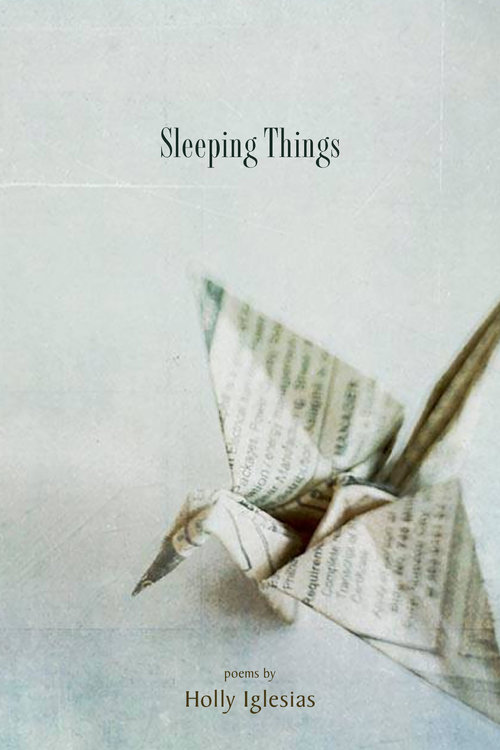
Sleeping Things.  Holly Iglesias.  Press 53.  Winston-Salem, North Carolina.  2018.

Sleeping Things cover.jpg

A prodigious list of appearances in a wide variety of literary magazines/journals speaks to the authoritative voice Holly Iglesias inhabits throughout Sleeping Things.  For people of my generation she has completely captured the zeitgeist of our times.

These poems bristle with the unbearable lightness of our sunshine youths and the undertoad of our modern indifference.

These prose poems bruise-blossom off of the page like a smart mouthed poetry patter raconteur.  Holly Iglesias makes it all look too easy.  As though just anyone could weave this tight and enticing fabric from the gossamer of scar and memory.

The Love There That's Sleeping

A Charlie Brown Christmas soothed us like it once
soothed my parents, who beckoned their children to
the couch to ingest the cartoon as an antidote to acid
rock. Thirty years later, they were gone, their stories
buried with them on a bluff above the river. The story
to bury with me will be that of scribbling a chord
progression from The White Album over and over on
the back of a grocery list, the pattern a sedative to dull
the news of the death of a boy I loved by his own
hand during the Bob Hope Bicentennial Special.

πŸ’«πŸ’«πŸ’«

Holly Iglesias quotes good old Adam Zagajewski to get our engines started with Sleeping Things.

     In the past, we had faith in invisible
     things, in shadows and their shadows
                in light—

Today's book of poetry can be slow on the uptake, but we like Zagajewski (Milo, our head tech, went to the stacks and came back with Tremor - Selected Poems and Without End - New and Selected Poems by great Polish poet, for a reminder/refresher.).  

As the weather in Ottawa has been a little intense the last week or so, a couple of nights ago the temperature was -40C with windchill.  That's cold anywhere.  The roads are very icy because the cold we've just had has turned the ice to cement.  And we've had some serious snow fall.  So when Iglesias takes the reader to Miami, to Cuba, Today's book of poetry was completely up for that. 

Today's book of poetry has been a tourist in Cuba but Iglesias has intimate knowledge, her poems are honest, experienced, true.

Remote Control

On saintless days, those sad ellipses on the church
calendar, we pray to pure space, that place where the
future blooms, our mortal souls loosed into a cool blue
void, each isolate, the Mystical Body reduced to parts—
ear, thumb, thigh—then flung into orbit with the
monkeys and cosmonauts. Language freed from
schoolbooks—Run and see! Oh, run and see!—pages
disintegrating at the speed of light.

πŸ’«πŸ’«πŸ’«

This morning's read was a little quieter than usual, some of our regular gang are awol, others absent without leave.  Kathryn, our Jr. Editor, liked the poems of Holly Iglesias so much that she insisted on doing the reading solo.  The rest of us hunkered down in the soft chairs and couches, and let Kathryn, our Jr. Editor, do her Holly Iglesias thing.

It was splendid.  Kathryn did Holly Iglesias proud.  And there's nothing quite like having good poetry read to you.  Of course Iglesias gave Kathryn all the ammunition she needed to blow us all away.  

Today's book of poetry snacked on Sleeping Things for a couple of days, taking quick hits and long glances.  We were always rewarded.

Hiroshima Flats

First a February tornado, prepping the area as though
it were a surgical field, when the wrecking balls and
bulldozers shoving away the rubble that once had been
sweet shop shoe shop barber shop millinery grocery
tavern church school tenement house doctor's office
dentist's office funeral parlor chili parlor bakery union
hall beauty salon drugstore five thousand structures
twenty thousand souls set again upon the migrant's
path carts piled with quilts and chairs and pots and
pans and cardboard boxes of photographs and
baptismal records the highway cutting through what
had been their neighborhood Novas Bel-Airs
Fleetwoods Falcons Galaxies Country Squires choking
the lanes the air fouled with exhaust.

πŸ’«πŸ’«πŸ’«

Sleeping Things is infinitely more interesting than my meagre powers of description.  But you regular readers of Today's book of poetry know what cooks in my kitchen.  

Holly Iglesias burns.

And if you check out the blurbs below, our southern correspondent, dear friend and poetry Saint, David Clewell, adds to the chorus of those who have read and adored Iglesias.

Holly Iglesias web.jpg

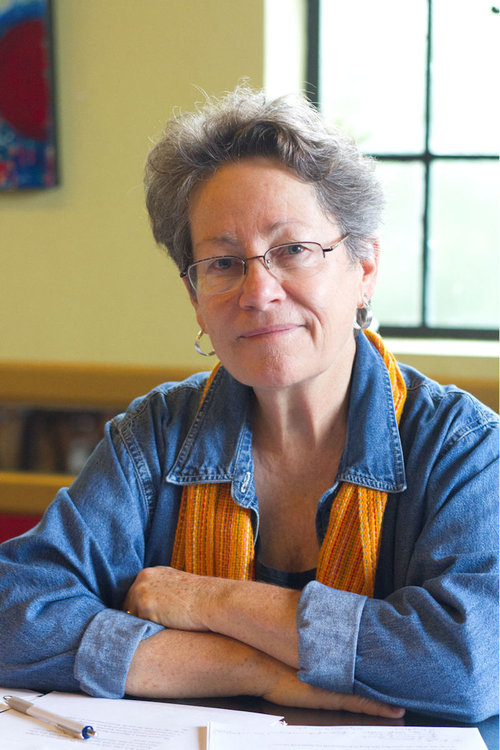
Holly Iglesias

ABOUT THE AUTHOR
Holly Iglesias is the author of two poetry collections, Souvenirs of a Sunken World and Angles of Approach, and a critical work, Boxing Inside the Box: Women’s Prose Poetry. She has taught at University of North Carolina-Asheville and University of Miami, focusing on documentary and archival poetry, and translated the work of Cuban poet, Caridad Atencio. She is the recipient of fellowships from the National Endowment for the Arts, the North Carolina Cultural Council, the Edward Albee Foundation, and the Massachusetts Cultural Council. Her poems have appeared in many journals and in anthologies such as The House of Your Dreams: an International Collection of Prose Poetry,Nothing to Declare: a Guide to the Flash Sequence, The Best of the Prose Poem,and Sweeping Beauty: Contemporary American Women Poets Do Housework.

BLURBS
If you are a writer in want of dynamite material, it really helps if you grew up in a white bread Midwestern suburb and were taught by nuns (“Each night I pray one Hail Mary for good grades, one for a vocation, and one for miniature golf”), and as a young adult found yourself embedded in a refugee community, trapped in the middle of the culture wars. The threat of obliteration is a theme here, whether by air-raid or terrorist bomb or the conditions of exile. We may be, as the author claims, “a mere speck in the cosmos,” but in her hands, even a mere speck contains multitudes. Holly Iglesias’ Sleeping Things is a crowning achievement from one of our most wry, incisive poets—¡Perfecto!
     —Madeleine Blais, Pulitzer Prize-winning author of To the New Owners: a Martha's Vineyard Memoir

Sleeping Things is luminous, marvelously succinct, and always engaging. Iglesias renders the spectacle of growing up not with reflexive, all-too-easy nostalgia but with clear-eyed affection, meticulous precision and gusto, giving day-to-day incidents and reclaimed details of that hopeful, rambunctious Cold War era a sense of delightful enterprise and luster. This new book is a refreshingly artful, savvy meditation on the past, rife with compassion and humor, one to celebrate, savor, and enjoy!
     — Cyrus Cassells, author of The Crossed-out Swastika

With stubborn joy, Iglesias refuses to let sleeping things lie, and we as readers are reawakened to why such human reclamation is so absolutely consequential. Whether turning her attention to Catholic grade school Cold War days where “students pray to pure space, that place where the future blooms,” the Cuban community in Miami conjuring an island that seems almost imaginary, or the glimpse of a younger self sipping coffee in Spain “dressed as the girl in Dylan’s song who never stumbles, who’s got no place to fall,” Iglesias unfailingly finds the pitch-perfect, sonic delight that only poetry can provide.
     —David Clewell, author of Taken Somehow by Surprise
Press53.com

731

Poems cited here are assumed to be under copyright by the poet and/or publisher.  They are shown here for publicity and review purposes.  For any other kind of re-use of these poems, please contact the listed publishers for permission.

We here at TBOP are technically deficient and rely on our bashful Milo to fix everything.  We received notice from Google that we were using "cookies"
and that for our readers in Europe there had to be notification of the use of those "cookies.  Please be aware that TBOP may employ the use of some "cookies" (whatever they are) and you should take that into consideration.


Wednesday, November 21, 2018

Chaos Theory - Christopher Buckley (A Plume Edition Book)

Today's book of poetry:
Chaos Theory.  Christopher Buckley.  A Plume Edition Book.  An imprint of MadHat Press.  Asheville, North Carolina.  2018.

Chaos Theory by Christopher Buckley

If Chaos Theory were only the first title poem, as illuminating as anything Blake hammered out, well, Today's book of poetry would be satisfied.  More than.  But Christopher Buckley has a multitude of universes on offer.

My buddy David Clewell, former Poet Laureate of Missouri, and Grand Daddy of the Knowledge, will stand up and cheer when he gets his hands on this B.B.Q.  Make no mistake, these poems are steeped in mystery and marinated in some freaky source of wisdom.  Christopher Buckley might be the craziest sumbitch in American poetry, he also might be the Campbell McGrath/Albert Goldbarth hardball link to a new reality.

All Today's book of poetry knows is that Buckley is smoking.  Today's book of poetry looked at Buckley's Star Journal - Selected Poems back in March of 2017.  Buckley poetry-bombed our heart.  You can see that blog/review here:


VII. Fractals

                Every great and deep difficulty bears in itself its own solution.
                    It forces us to change our thinking in order to find it.
                                            —Niels Bohr

A coastline, if measured down to its least irregularity,
tends toward infinite length, as do snow flakes. Clouds
or coastlines, no matter how close or far away we get,
the basic pattern, the surface and volume, repeat
ad infinitum...
                       Cloud or cauliflower, rough, broken
geometric shapes have an area that is finite, but
a perimeter that is not.
                                     It's a short walk from there
to Thomas Aquinas and Co., First Cause and effect,
and an intellectual trail of consecrated bread crumbs
back to a source we reflect.
                                            Computers came along
and we can enumerate all the patterned variations
in nature—lightning bolts, river networks, broccoli,
the branching of the circulatory system, pine cones
and ferns.
                Right now, someone is calculating the connection
between fractals and leaves in order to estimate how much
CO2 there is in trees, to help the environment with carbon
emission control so we might go on breathing and
piecing things together.
                                      Jackson Pollock's painting
appear to be composed of chaotic drippings and splatters,
but computers have mapped recursive patterns in the work;
high voltage has been trapped in an acrylic block, repeating
the bronchial patterns of trees.
                                                 Star clusters form
paisley patterns, and patterns repeat in the wobbly
orbits of satellites in the solar system, in weather,
economics, earthquakes and plate tectonics, and in
the mathematical model of eye-tracking disorders
among schizophrenics.
                                     Our universe could be a bubble
on an ocean of bubbles; a nearby universe might have Al Gore
as president and Elvis still singing in Las Vegas?
                                                                               Just like
the currents of the ocean, the brain itself might be organized
according to the laws of chaos—enfolded labyrinths, invisible
synapatic lingua franca, its grey death-mask mosaic
of temporary matter, the incremental and incidental tiles,
fragments that replicate, accumulate, and account for us
in every particular, and then are dispersed into the burning
dust fusing into the stars, into the silence that fills
every unaccounted for corner of the dark.

πŸ’«πŸ’«πŸ’«

"Like the wind, like the dust."  Such playful wisdom, such informed glee.  Buckley has a big tool box and he digs into it.  It's clear to us that Buckley is an old pro.

Today's book of poetry recently visited an old friend, a painter.  His house was literally ablaze with art, paintings, sculptures, pottery, much of it his own, the rest by his friends and fellow artists.  This man, Tom Campbell, is old, like me, yet his home sings with a vibrancy of intellect, hope and discovery — and that is exactly what Today's book of poetry feels when reading Christopher Buckley's Chaos Theory.

Buckley is warm and charming, hot and sharp.  Buckley recognizes the patterns in things, challenges us with the physics of emotion and shares his astonishment and wonder.  He imagines big; imagine a God particle.

Parallel Universes

                  Recent research has indicated the possibility of the gravitational pull of other
                      universes on ours.
                                       —Wikipedia

Einstein didn't live long enough
to work out the Theory of Everything,
the exact mileage to the immense...
but if parallel universes are the case,
he's out there in the stars still
putting the pieces together
even though Max Planck's study
of radiation suggested divergent laws
operating beneath the floorboards
of gravity and light...
                                     Now
they've turned up cosmic bruises—
4 circular patterns in the microwave
background radiation—evidence
that our universe has crashed
into others... One soap bubble
rubs against another and
you have a foam of universes,
 a mathematical crash and run-out
to the other side of the end of anything
you now have on hand... almost
endless permutations until you arrive
at a duplicate of our own
"Goldilocks zone" habitable planet!?
More or less.
                      It could vary by a micron
or two—the tiniest sub-atomic backfire
or jitter of an electron or quark
and scads of different outcomes,
though cosmic strings vibrate
essentially as Parmenides set it down
in his poem about the music of the spheres,
leaving out the north star as the still point
of the turning earth of course....
                                                   Thus
Elvis is still doing TV Spectaculars
from Hawaii; Al Gore was re-elected,
Rick got on that plane with Ilsa,
everyone in the middle east is sharing
pita bread and baba ganoush with his neighbor,
and somewhere on a stage Burns & Allen
are taking a bow: Say Goodnight, Gracie!
There's an even chance that communism
did not collapse, and instead of making reservations
at that French/Bulgarian fusion bistro,
you're eyeing the two potatoes and shriveled bit
of beet root left in the shop—some guy selling
lamp shades out the back....
                                             Sergei Krikalev,
Russian cosmonaut who flew six space missions,
could well head transportation for the EU.
We're here on condition that everything occurs
within the parenthesis of time,
within the end-stopped tributaries
to a sea, a great blind quantum scramble
where we arrive too late to the table
to translate the oscillating patterns and
packets of lights.
                            With every veneration
of my breath my cells are imminently obliged
to oblivion. You choose one god
or another, but religion is a trial,
an excuse to feel good about the fact
that you might be dead soon,
that, before you know it,
all your atoms will be headed
somewhere without you.

πŸ’«πŸ’«πŸ’«

In Buckley's world there are other worlds and for all we know; Elvis is still dancing in one of them.  Beautiful.

Our morning read was another doozy, as our old pal, poet and painter, Dennis Tourbin used to say.  Milo, our head technician, took a real shine to Mr. Buckley, he was still revved up from reading Star Journal - Selected Poems.  Milo said that it was like reading poetically about science and having morality/mortality/God dropped right into the middle of the conversation.

Christopher Buckley reminds us all of what poetry can do.  These conversations Buckley is having between himself and universe are worth listening in on.

On the Patio, after Reading Democritus

                   Nothing exists except atoms and empty space; everything else is opinion.
                                         —Democritus

I pour a little Absolut,
as clear as the glass
that holds it, clear as the soul
which Democritus said
consisted of atoms of fire....
As good a guess as any—
the air long let out of 
the old expectations,
that film of atoms
that was said to contain
the characteristics of the gods,
who, like the stars,
were not immortal.

And wafer by wafer
the darkness arrives
on my tongue...
what was it my father said
back there when I was 7—
the blink of an eye
and it's all behind you?
He was a dour man
who imparted that vision
to a child and was gone,
leaving the irresolute motion
of the sea as guide—
a haze, a veil between me
and whatever point there was
in the wind where chicken hawks
spun upward, lifting themselves
above the spindrift thumbed
from the bay, the tides fumbling
to shore, winter grating,
gravel washing out
at low tide. 
                   And the islands
floating across the channel,
the music of spheres
murmuring in the background,
microwave radiation,
its gravity waves
yet to reach us....
                            Still,
the stars pile up across the dark,
light years, like the sound
of a sled through snow
lost on the edge of wilderness....

Dog-walkers, star-gazers,
either way there's something
in our thoughts that interprets
the circles of light that fall to us,
that hold our gaze out there
where meteors streak
whether we are watching
with our sleeping hearts, or not—
our dreams tied to some idea
or other about our lives,
some silver stumbling cloud
being drawn into the gullet of time.

What if, finally, there was nothing
to fear?

πŸ’«πŸ’«πŸ’«

Chaos Theory was exactly what the doctor ordered for Today's book of poetry.  We were feeling in a poetry slump.  An early winter has hit our offices hard, calling for -18 C today.  And it is still November.  The snow is piled on the side of our lane, three feet high (we shovelled it there).  Chaos Theory warmed things up here.

Christopher Buckley photo

Christopher Buckley

ABOUT THE AUTHOR
Christopher Buckley’s Star Journal: Selected Poems was published by the Univ. of Pittsburgh Press in 2016. Back Room at the Philosophers’ Club, Buckley’s 20th book of poetry (Stephen F. Austin State Univ. Press), won the Lascaux Review’s Poetry Book Prize for 2015. SFA Press also published Varieties of Religious Experience in 2013. Rolling The Bones won the 2009 Tampa Review Poetry Prize and was published by the Univ. of Tampa Press in 2010, which published White Shirt in 2011.

Buckley was a 2007–2008 Guggenheim Fellow in Poetry. He has been awarded a Fulbright Award in Creative Writing to the former Yugoslavia, four Pushcart Prizes, two awards from the Poetry Society of America, and received NEA grants in poetry for 2001 and 1984.

With Gary Young, Buckley is the editor of The Geography of Home: California’s Poetry of Place (Hey Day Books, 1999). With David Oliveira and M.L. Williams, he is editor of How Much Earth: The Fresno Poets (The Round House Press, 2001). For the Univ. of Michigan Press Under Discussion series, he edited The Poetry of Philip Levine: Stranger To Nothing, 1991.

More recently he has edited the poetry anthologies Bear Flag Republic: Prose Poems & Poetics from California (with Gary Young) Alcatraz Editions, 2008; Homage To Vallejo, Greenhouse Review Press, 2006. With Alexander Long, he edited A Condition of the Spirit: The Life and Work of Larry Levis (Eastern Washington Univ. Press, 2004); with Christopher Howell, Aspects of Robinson: Homage to Weldon Kees (The Backwaters Press, 2011); again co-edited with Gary Young, One for the Money: the Sentence as a Poetic Form (Lynx House Press, 2012); and with Jon Veinberg, Messenger to the Stars: A Luis Omar Salinas New Selected Poems & Reader ( Tebot Bach, 2014).

Over the last 40 years his poetry has appeared in APR, Poetry, FIELD, The Georgia Review, The Iowa Review, TriQuarterly, The Kenyon Review, Ploughshares, The New Yorker, The Nation, The Hudson Review, The Gettysburg Review, Quarterly West, Prairie Schooner, The Southern Review, Five Points, The Harvard Review, & New Letters.

BLURBS
I don’t think I know of another poet who has such vertical range and depth; Buckley manages to have one foot in the physical muck and tenderness of the world and the other foot planted among the stars and galaxies of the universe.… There is something here that is deeply human and courageous, something like what I find in the essays of Loren Eiseley. And all of this would be nothing, of course, without the language, which is the glory of these poems.
     —Peter Everwine

There is a deep nostalgia here, but also wisdom and common sense, and beautiful writing. I welcome him at his maturest, poet of stardust.
     —Gerald Stern

These poems ask questions about an individual’s place in the universe and about the existence of the universe itself.… In his captivating voice, Buckley invites us to consider ideas of the mundane and the divine, ontology and epistemology, and what on earth we are here for.
     —Jerome Blanco, Zyzzyva

… we float in the universe … the slow gentle orbits of the planets progressing much like Buckley’s lives. [This] is a collection that is keenly aware of, but expertly deals with concepts of scope, space and time.
     —Nikki Stavile, reviewing Star Journal: Selected Poems in The Hollins Critic

There is a quietness to these poems and breakouts of lyrical intensity that define Buckley as a master of the art.
     —North of Oxford

These are poems of immortality and extinction that can still make you smile … [Buckley] has an exquisite ear for language and a gutsy way of blending bravado with humility.
     —Library Journal


Christopher Buckley
Read his poem The Shape of Things
Video: AskewPoetryJournal


728


Poems cited here are assumed to be under copyright by the poet and/or publisher.  They are shown here for publicity and review purposes.  For any other kind of re-use of these poems, please contact the listed publishers for permission.

We here at TBOP are technically deficient and rely on our bashful Milo to fix everything.  We received notice from Google that we were using "cookies"
and that for our readers in Europe there had to be notification of the use of those "cookies.  Please be aware that TBOP may employ the use of some "cookies" (whatever they are) and you should take that into consideration.
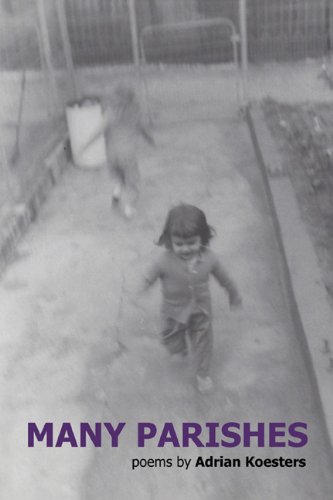
Sunday, March 25, 2018

Many Parishes - Adrian Koesters (BrickHouse Books)

Today's book of poetry:
Many Parishes.  Adrian Koesters.  BrickHouse Books.  Baltimore, Maryland.  2013.


Today's book of poetry will get to Adrian Koesters superb Many Parishes in a moment.  

We wanted to take a brief moment to mention David Steingass.  Our southern correspondent David Clewell has opened eyes around here with his recommendations and insist-upons.  David "Twangster" Clewell happened to mention recently that David Steingass had been an important mentor to him.  As is happens we had an early book by Steingass on hand, Body Compass (University of Pittsburgh Press, 1969), and took it down as soon as we got the word from Clewell.  

Consider this as a toast to Mr. Steingass and a tip of the hat to our southern friend.

Daydream  -  David Steingass

As a boy,
I thought no one could speak
Until he had learned.
I crept to the birds
And listened with my mouth
Open. I imagined
The birds were standing
In my mouth.

...


Adrian Koesters splendid Many Parishes is really three books in one.  Koesters must have realized this as she has neatly gathered these poems into three sections in her book; "Parochial World," "The Nuns Who Never Existed" and "Many Parishes."

Along the way Koesters tackles all the big subjects; love, sex and death.  But she's even better in the underbrush of grief, the shadow of doubt and then the strong and reassuring voice of reason waltzes in like she owned the place.  These poems not only work hard, they work on the page.

Sonnet for SoWeBo

The ten-year-old spinster sits on the back roof
          looking out on to a frame of wire and windows
lined with cotton underwear and lingerie,
          fathers smoking out onto the slips and housecoats
shaded by trees not even God intended to bring
          out of the Garden. She leans out in her undershirt, she
hears a radio, crooning something foreign and new
          from Lemmon Street where her colored sitter lives,

and she shrinks from the men who crawl along the back gates
          to beckon: "Come on down, sweetheart, I got something
over here to show you," and when she waits to come to them,
          they snarl and command as if she owed it,
because she is small and they are not,
          because they are exposed and need a hand.

...

Koesters is searching for the "secret answer" and until she finds it she's willing to implicate every suspicion.  In Koesters world it is her "deeply spiritual" intuition that spirals through these poems like a Spirograph of knowing.  She does find answers along the way but most of them lead to more questions.

Koester climbs that ladder until these poems emerge somewhat pure of heart and hellbent on securing reason.  Adrian Koester knows that to learn a real lesson there may be real pain in the answer and still she pushes to that end.  Today's book of poetry ultimately thinks that Koesters is a realistic optimist.

Following Intentions

Feeling accidents, dead of
winter, new year's remorse,
uncertain return
of love. We anticipate
but ought to predict, as when
the second clementine tastes
as sweet as the first, the web
of yellow veins pulls easy
from the fruit, the half-bottom
sections divulge everyday
secrets in the pale juice. As
it is, there are rooms
to be cleaned, the bed
made up, relatives to phone.
If you were one of these,
the rest would be easy;
as it is, I don't pretend to more
than step down, breathe out,
smooth up.

...

Our morning read was a rather mixed affair with a surprising number of people running about and through the Today's book of poetry offices.  Earlier today our Sr. Editor, Max, saved a catastrophe when he stopped me from posting an entirely new post about a chapbook that we had already covered.  The entire chapbook had been reproduced in its entirety in a larger volume that Today's book of poetry had already posted a blog about.  My brain is old and stupid.

Adrian Koesters snapped me out of that daze and provided ample material for our staff to let their ya-ya's out.  We included Koesters more recent Three Days with the Long Moon (Brickhouse Books, 2017), in our morning read.  We're hoping that Koesters more recent title will be fodder for the future Today's book of poetry poetry machine.

In Another Winter
           for Boyd Benson

We take this child we call belief, stand
it up against the darker children,
make it behave in rounder consonants,

as if there were soft ways
to see into the sky. All the green stains
I have loved seep into shirttails
pressed too long into the field

where sometimes the corn flecks,
at others stubble frosts over and is glad. Pretty,
how pretty it all might be,

in winter, as a January afternoon
folds over into February, and the darkness
explains itself, takes its threat
and curves it into a pocket:

the jacks, balls, and marbles at rest
under thrifty fingers not ready,
yet, to hold softer hands than these.

...

Today's book of poetry was somewhat enchanted to be in Adrian Koesters world, as dark and tumultuous as that sometimes is.  Koesters is in their asking that hard question.  As it sometimes happens with one book or another, an author opens a door and invites you in.  Koesters world was entirely worth the visit.

Image result for adrian koesters photo

Adrian Koesters

ABOUT THE AUTHOR
Adrian Koesters is a native of Baltimore, Maryland. She attended high school in Bellingham, Washington, and has lived most of her life in Nebraska, where she has worked in Omaha and Lincoln as a high school teacher, secretary, sign language interpreter, academic advisor, editorial specialist, and university professor. She holds an MFA in poetry from the Rainier Writing Workshop at Pacific Lutheran University, and a Ph.D. in English (fiction and poetry writing) from the University of Nebraska-Lincoln, where she was an assistant editor in Poetry for Prairie Schooner magazine and an assistant editor for Ted Kooser’s syndicated newspaper column, "American Life in Poetry.”She has taught creative writing at the University of Nebraska-Lincoln and Creighton University, and currently works as a research editorial specialist at the University of Nebraska Medical Center.

BLURB
“Koesters’ Many Parishes is an original. The poems seem to smack the hard-ass contemporary world up against a deep spiritual sense, until we see they’re one and the same. Adrian Koesters is able to write of men calling out to a ten-year old ‘spinster’ to ‘come on down, sweetheart, I got something over here to show you,’ and allow us to feel in her small, frightened heart the identical anguish of soul as in the nun who’s ‘divided from the principalities and goes in terror of them.’ These poems, like the nuns, ‘take things personally.’ They’re lyrical confessions of the deepest griefs—abuse, divorce, doubt, and loneliness. They provide absolution, and positively joy, in their skillful and lucid singing.” 
      —Fleda Brown, author of No Need of Sympathy


Adrian Koesters
"Sonnet for SoWeBo"
Video courtesy: BrickHouse Books


670


DISCLAIMERS

Poems cited here are assumed to be under copyright by the poet and/or publisher.  They are shown here for publicity and review purposes.  For any other kind of re-use of these poems, please contact the listed publishers for permission.
We here at TBOP are technically deficient and rely on our bashful Milo to fix everything.  We received notice from Google that we were using "cookies"
and that for our readers in Europe there had to be notification of the use of those "cookies.  Please be aware that TBOP may employ the use of some "cookies" (whatever they are) and you should take that into consideration

Sunday, November 12, 2017

Out of Place - Richard Jackson (The Ashland Poetry Press)

Today's book of poetry:
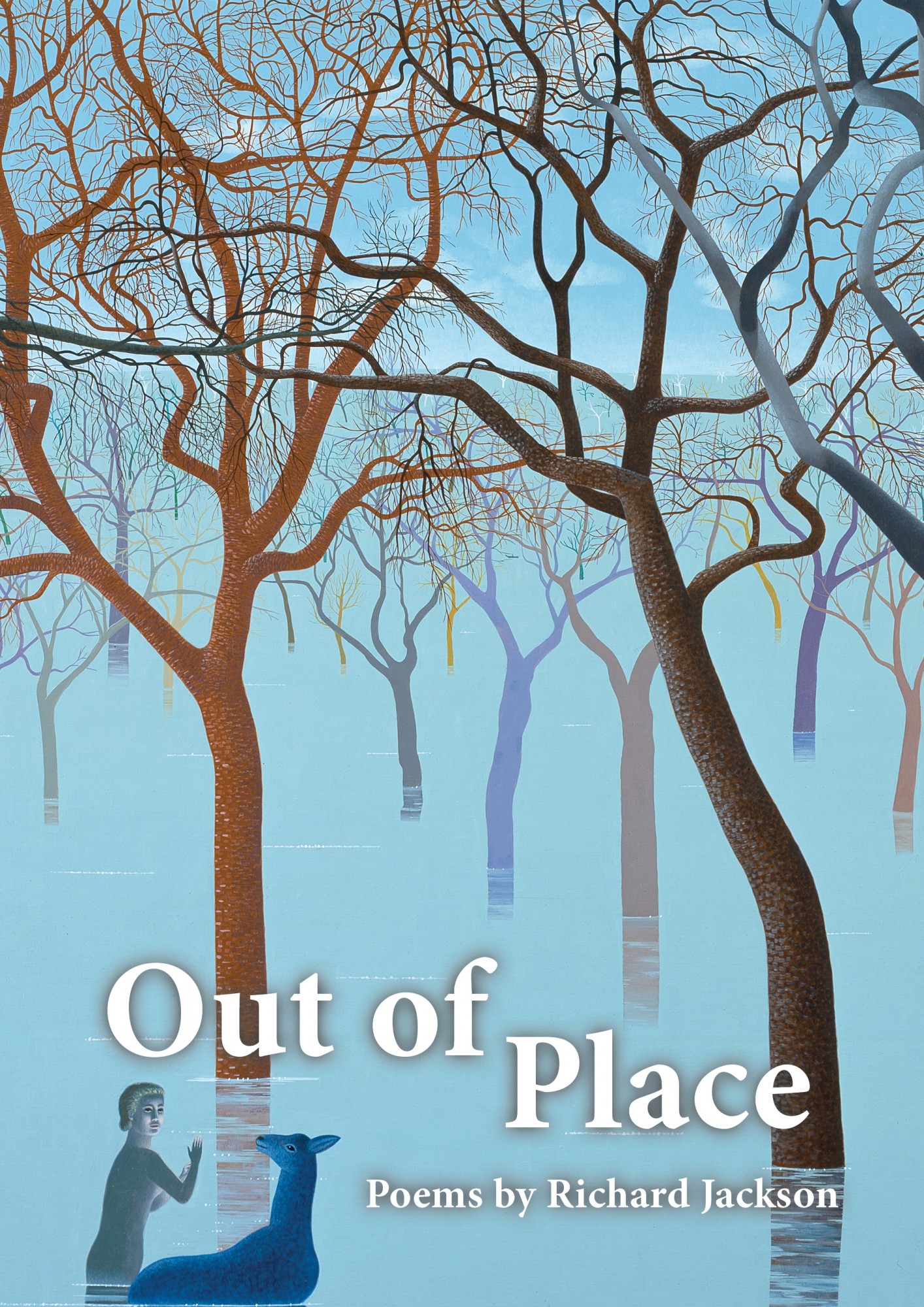
Out of Place.  Richard Jackson.  The Ashland Poetry Press.  Ashland University.  Ashland, Ohio.  2014.


Here's the thing that Today's book of poetry is only learning to accept, only learning to come to terms with.  There are so many fine poets out there it is impossible to know them all.  

To all you regular readers out there, we are doing our best to cover as much ground as we possibly can but we are not Kate Sutherland on the subway.  Sutherland of the beautiful Rhinos.  Bless her cotton socks.  We wrote about the brilliant Kate Sutherland and her book, How To Draw A Rhinoceros, last year.  You can look at that blog/review at the end of this paragraph.  Ms. Sutherland posts daily photos of a legion of unknown (to us) poets/poetry.  She doesn't do it everyday but it is something we here at Today's book of poetry look forward to.


All of that to clumsily say we know we are treading water in terms of the whole range of poetry out there.  But this is one of those cases where we feel a little guilt simply because we hadn't heard of Richard Jackson before.  Out of Place is Jackson's eleventh book of poetry, and as you will see in his biography below, he has won every award and prize but the Selke Trophy.

Bob Gainey has every right to feel nervous in his old Hab's sweater because Jackson might just start piling up those as well - this writing is that good.

There is a very good reason Richard Jackson has rolled up the awards and kudos.  This poetry is so good it is alarming.

About This Poem

          At the beginning...which is to awaken you to the right kind of joy
                        in serious times, we must list all those who have been killed
                                                                               since I last wrote......
                                                              - Bonhoeffer, 1942, Germany

It has to account for its untied shoelaces as well as its Extermination
Camps. Sitting among all those languages in the Munich beer garden.
Hitler's first speech a few blocks away. A masked ball where
the costumes are all switched around. Those carnival grab bags
filled with joy or remorse. Above me the clouds are paralyzed.
I have to wipe the dust from my soul. The wind holds its breath.
Bosnia, 1994: one group of men forced to bite off the testicles
of another group. Others to stand in the snow till their feet rot.
These things orbit now like a planet too far to see. Even the bee
can't figure a way out of my stein. Light staggers through the trees.
Every moment is filled with other moments. According to Bell's
Theorem whatever happens to this bee influences a history yet
to be written. Like the seed stars that smudge the trail of Mira as
it slips across the sky. All my maps are smudged with atrocities.
There are so many voices that are our own voices. Rhythm is just this
oscilloscope of the soul. We come from a place that has always
been inside us. Our words migrate helplessly. The world reflects
only itself. Which is why we have to create our own memories.
The paths from here spread out like shattered glass. The man
across the table's from Krakow. He doesn't want to talk about
the occupation and its lives turned to smoke. One the mechanical
Trumpeter in his church spire. The song stops where his real
ancestor was felled by an enemy's arrow. In the silence that follows
don't we all have to begin again? At the end of a line, the door
left open for a moment where you can fall in love, remember
what you wanted to forget, forget what you wanted to remember.
Why do you think our metaphors will save us? The world is only
itself. Time is just our way of imagining it. At least the bee has
ultraviolet vision to see everything we can't.  We have to light
our dark spaces with the sputtering matches of our words.
We have to follow wherever they lead us. There's this little
hole in existence we all pass through. Someone is always entering.
He's the one who invents me while I think I am writing about him.

...

Today's book of poetry has mountains of admiration, respect and awe where Richard Jackson's Out of Place is concerned, add in a little jealousy.  Jackson seems to have a simple formula, he picks a subject, writes about it with encyclopedic knowledge, dharma bum charm and whimsy and some sort of special poetry detectives trained eye.  This is cherse stuff.  There are no details left behind that we will need later, there is nothing extra to carry.  Jackson is thorough, candid and hard as nails/soft as clowns tears.

Day after day Today's book of poetry shares books of poetry we like with you, best job on the planet, but we are not about to index our poets or their books with scores -- but if you minions are paying attention this guy Jackson is in David Lee, Sue Goyette, David Clewell, Sharon Olds, territory.

Out of Place really is a remarkable book filled to bursting with remarkable poems.  It may even be a little unfair, Jackson having so much good poetry in him.  Somehow Richard Jackson is able to write about exactly what it is that you want to know about.  This is essential voice territory.  As in, the next time Today's book of poetry is asked "who should I read?", Richard Jackson will be part of that conversation.

Belief

                                 after the freeing of the West Memphis Three

Deep in our own inner caves the heart's canary sounds a warning.
On the other side of speech is a language that dreams us.
Echoes hide out in abandoned words. The air hardens.

A home invasion, a meth lab, a father killing his family.
It Had To Be You, Les Paul played on his guitar with seven
crippled fingers, but who is never named, or is us.
                                                                                 These
clouds begin to picket the horizon. Pine sap leaks from 
a wounded tree. Even the flowers seem to take on
the color of night.
                           There are times when it is better
to close your eyes to the world.

                                                  I have been watching
a fledgling drop from its nest, flutter a few feet, and again,
until it flew not back, but into another tree. The wind tests
itself against my torn screen. A few thorns of light jab
out of the darkness on the far hills.
                                                        Who are you
if your dreams are dreamt by somebody else? In a dream
of freedom we return to a place that is not the place.
                                                                                    Orpheus'
poems could not create the world he needed. How
many times do our words become cells? How do we
remove those splinters of memory and remain ourselves?
Most of our dreams are the seeds in sidewalk cracks.

By now my fledgling has its own dream.

        
                                                                 Tonight's clouds
will cover the meteor shower. I remember the fog in
the valley slipping forward like a glacier. At other times
a whole world rippled in the river.
                                                       It was David Hume
who said we had not a single reason to believe in reality,
but we must act as if we do. Even when a whole life
seems mothballed.
                             Now we know that our moon collided with
another moon whose remnants we can't see on its far side.
Moonglow is how Les Paul would have played it. And us?


Who are we if someone else's dream is really ours?

...

Today's book of poetry's morning read was spectacular.  You can blame Richard Jackson.  Many of our staff are becoming old hands in the reading game, at this reading poems aloud, and bless their cotton socks, they've taken a shine to the process.  Milo, our head tech, led the charge this morning while shaking his head with both wonder and the obvious.  Milo already knows his next assignment will be to find us the rest of Richard Jackson's books.  If they hold a candle to Out of Place Today's book of poetry knows they will be essential reading.

This is how the masters do it.  Solid.  Bold.  Beautiful.

That orange fugging fog that is over America is temporary and the poets tell us so.  This title from Jackson is from 2014 and has nothing to do with POTUS.  But it has everything to do with America and it gives us hope.  Jackson writes poems of reflection, inner examination, outer understanding and tolerance.  

Prophecy

                                                    You exist in the delirious illusion of language.
                                                                                                    - Robert Penn Warren

What I want to say to you has already disappeared like the flashlight
beam I aimed at empty space years ago. If Augustine was right
it will hit the edge of the universe in 15 billion years. If Einstein was
right then it will never get to the end of it. My own life is orbiting
a word I don't want to land on. Heisenberg said you can only know
where you have been. Freud said that where we are is the terror
of what we were. He was terrified by sex which he saw as a kind
of impalement. Polls say the happiest people are those in the middle
of sex. So tell me, why have you paused to listen?

                                                                                 Most of our words
come with dress codes to hide the world we never want to see.
Some march to the rhythm of goose steps. All I need to do is
throw another stone at the stars to know how far from any center
we are. Even Charon can't say which shore is which.

Every word here tries to pronounce something that has no name.
The words we don't hear are the words that control us. The words
I want to say edge over the horizon like a sunset sail. Every breath
disturbs the next. Every word erases another word. Nathan, the first
prophet, said no one would come after him. So what did he know?

I don't even know what the end of this sentence says because
while the clock is taking its time to decide, the homeless man
in the cemetery blows a few random notes on a dented trumpet,
a few cigarette butts in the flowerpot have a story they refuse to say,
the wounded day limps home alone, a few more protesters are shot
in Bahrain, a few mothers and children slaughtered in Mexico
in the middle of some drug war.

                                                   Isn't everything we say just some
bit of breath we can't hold any longer. Doesn't every word draw
a picture that hides what it really means. How did all those painters
know what the Apocalypse looks like? The bombed church
in Baghdad thought it was today. The man shot on his porch in East
Chattanooga thought it was another day.

                                                                Sometimes the moon rises
full of hate. Clouds scramble over distant peaks, the wind broods
in a ravine, the flycatcher, perched along, waits for darkness.

In truth, what I want to say to you are these trace elements
lingering in the spaces between words. In truth, nothing we say is
worth the way the hawk slides through the invisible air from
the top of the skeleton of a dead tree.

                                                           In a few years you'll decipher
how these words will create a whole world I never meant to say.
Our windows have their own prophecies. Birdsong crinkles the air.
Everything we say is a self-portrait. The radio preacher says
that flowers can't bloom in hell. I have it on good report that

you can fit 1,737 angels on the head of a pin, excepting fat angels.
Salvation comes before creation, writes Agamben, which is why
we have to say whatever words, however dark, puddle at the end
of each sentence.

                             And isn't what we can't say exactly what attracts us?

And you, would it have made any difference if I said what I wanted
to face back at the beginning, that we have to learn to love whatever
truth will say itself, oh, not at the safe distance words create, but
unconditionally, like the woman who cannot understand why she is
impaled on the branch in the Ivory Coast like one of Goya's
Disasters of War discovering words she never knew would lead her there.

...

Out of Place is another clear lesson for Today's book of poetry.  America remains full of greatness if you know where to look.  Poets like Richard Jackson give Today's book of poetry hope.

Remarkable, remarkable poetry.

Richard Jackson
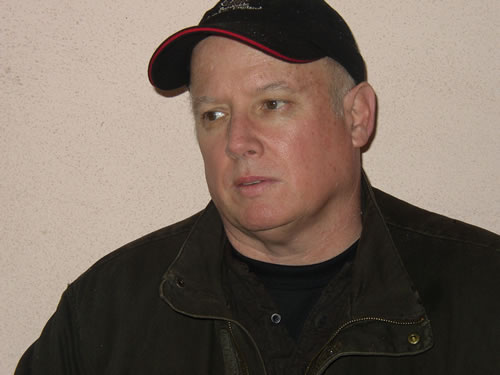
Richard Jackson

ABOUT THE AUTHOR
Richard Jackson is the author of eleven books of poetry, Out of Place (Ashland Poetry Press, 2014) most recently, two books of criticism, and two translations, one from Slovene and one from Italian. He is a winner of Guggenheim, Fulbright, NEA, NEH and Witter-Bynner Fellowships, five Pushcart appearances, as well as prizes from Prairie Schooner, Rattle and Crazyhorse. Jackson's poems have been translated into 15 languages. He was a recipient of the Slovene Order of Freedom Award for Humanitarian and Literary work in the Balkans and recipient of the 2009 AWP George Garrett Award. Jackson has taught at the Iowa Summer Festival, Prague Summer Program, Bread Loaf and other venues, and teaches at UT Chattanooga and the Vermont College of Fine Arts low residency program, winning teaching awards at both schools.

BLURB
His lines are clouds of love, piercing the sky with enormous empathy, rolling in the azure, torrents of passion, and are arrows at the same time, reaching a peak where they break, crying, cleansing the air, becoming ether. It is impossible to describe this in discursive language. With a melody that is unmistakably his own, his poems seem to come to us in Europe from the heart of the heart of America, the totally open (and hidden) center from where the power of the continent sprouts. He is a kind of Scorzese in poetry, but where Scorzese almost succeeds in his films, then stops, seals and terrifies us, Jackson adds a tender, vulnerable voice that blossoms and transforms us and that is so unique and great, great in its truest sense in Richard Jackson's poems.
    - TomaΕΎ Ε alamun

Richard Jackson
Poetry@Tech
Video: poetry@tech

ashlandpoetrypress.com

628


DISCLAIMERS

Poems cited here are assumed to be under copyright by the poet and/or publisher.  They are shown here for publicity and review purposes.  For any other kind of re-use of these poems, please contact the listed publishers for permission.


We here at TBOP are technically deficient and rely on our bashful Milo to fix everything.  We received notice from Google that we were using "cookies"
and that for our readers in Europe there had to be notification of the use of those "cookies.  Please be aware that TBOP may employ the use of some "cookies" (whatever they are) and you should take that into consideration