Showing posts with label William s burroughs. Show all posts

Thursday, May 31, 2018

Declassified — Mariela Griffor (Eyewear Publishing Ltd.)

Today's book of poetry:
Declassified.  Mariela Griffor.  Eyewear Publishing Ltd.  Marylebone, London, U.K.
2017.
Declassified

Declassified by Mariela Griffor is bursting at the seams with ideas, imagery and outside influences.  A short retinue of guest stars has to include:  Nelson Mandela, William S. Burroughs, George Orwell, Sappho, Kurt Cobain, David Foster Wallace, Albert Camus, Jean Paul Sartre, Carl Friedrich Gauss, Sofia Kovalevskaya, Sylvia Plath, James Joyce, Henry David Thoreau, Ariel Dorfman and Marcel Proust.

Regardless of the guests, in the end these are poems of love and loss.  Every highway we know has ditches littered with the ruined and rusty hulks of what someone once called hope.  Or at least the wire-fenced, flower adorned, temporary altar, a reminder of someone's worst moment, another person's worst loss.

Recovery

May 20, 2014
For Regina Derieva

We never met; we never spoke to each other
except through the immigrant song of Jan Johansson,
we knew we were united in
indestructible fibers of life breathing
in and breathing out, marching
to the sound of old days, in countries
that remind us of our own countries,
speaking old languages, that remind us of our own tongues,
we became so suddenly eternal tourists with a right to vote.

It was a time in my life when I stopped laughing
and I knew you did too. I could see it
in the photographs of magazines and
journals where new poems by you were published.
I knew what it was to be without a reason to laugh.

So sorry to have to miss you,
well-planned journeys, well they never happened.
I planned several trips to Rinkeby,
a town that I avoided fiercely when
I was there. It is not easy
to be reminded of cut wings, as you know.

My trips to Stockholm were always
the same, Gamla Stan, centrums, H&M
and the Viking Museum, then back to Uppsala.
Rinkeby was a forbidden point,
the limbo of anybody's trajectory.
But had I known then you were there
I would have faced the fear
and visited you.

I love your work. The fresh, naïve
and sweet idea the world can be improved, stained
on the pages everywhere.
I love the way you put the
best of you in your poems. The way
you make yourself at home inside a whale,
the way some of your images cannot
leave my head for days, exactly like
a pop song. The way you make me think
with each line and take me to places
I have never been before.

I love the way that insufferable persistence
of something must change in this
endlessness of war times, this time that
consumes each of us and makes us bend
in the direction of the wind a dozen times per day
as in your poem. I pray for that persistence
to infect everyone who reads you.

I'm sorry to have missed you in this life.
I imagine what great times you and I would have had
if we only had the opportunity and time, and money of course,
don't forget that, to meet.

Silly of me to think we would have had
that cup of coffee in Gamla Stan
and talked about pigeons and old catholic schools,
and how the world is not changing but ending.
Nature has its tricks, and even if we make progress,
it will make us part of its garden. Yes, at least.

...

Today's book of poetry has always flattered ourselves that we are "experienced."  It is to laugh.  Mariela Griffor's Declassified reminds Today's book of poetry just how sheltered our life has been.  Up until a post-Katrina visit to New Orleans, I had never heard a gun shot from a weapon fired in anger.  I've only heard it once.  Admittedly it was several rapid shots from a pistol followed immediately by three or four quick bursts of machine gun fire in return,

The last rebellion of any kind here in Canada was the failed FLQ operation.  That was when I was young and both Quebec City and Montreal were as far from Peterborough as Mars.  Griffor's Chilean history and her experiences as a political refugee are but one layer of the Griffor onion.

Today's book of poetry was won over quickly, Mariela Griffor has lived through things we cannot begin to imagine and come out the other side clean and hopeful.  How astonishing is that?  People still have to love and tenderness plays a big role in the Griffor canon.

The Last One

Last night I could not sleep,
the children were not at home. They both had
sleepovers. I was tired, too. Too much time away from
grown ups and I know they will be OK, I will move
back. This time, closer to my father, that at that
time will be old and probably very cranky. But
I will move back to spend with him the
time we never could give to each other before.
I will move back to those mountains in between
Pucon and Talcahuano, I will go to the beaches
around. I also plan to write.

I will take walks in San Pedro to
meet those people I saw the last time
when I was there, and I will run to the
Ocean, to touch the black sand of San Pedro,
I will be closer to God, feeling the thick
air of the early morning. I will let the salt
make my face ruggy and I will think about you and
those days in Chiloe, at the End of the Earth.
I also will go and visit my old relatives, those
that are so old that they don't even remember their
ages. I will put back the pieces of that last poem, and
will promise that you will always have a place in my mind.

It's time for you and me to go different
ways. You find the place your soul was longing.
And I will choose to stay here without you and
with the other I love. Just hang out there,
the day to get together is every day shorter,
but now it is time for me to do so much more.
Last night as I said I could not sleep
I knew this would be my last letter and my
last poem for you.

...

Our morning read was set up by Eric Burden & War belting out the long version of "Spill the Wine."
When Eric quit his temperamental scat, with War throbbing behind him like "hot rings of fire," we got on with our poetry business.

Kathryn, our Jr. Editor, started us off this morning and we were away, Thomas sat in, along with Lucy, our newest intern, and declassified Declassified.

Sometimes the horrors of life confound us innocents, but those rare souls who have had their pearls polished by terrible friction and come out the other side shining write wondrous and brave,  Griffor can write deeply caring and sweet poems, or she can knock on the darkness door. 

Hardship

Somebody told me this country was hard:
But not this hard.
I didn't believe it because
I came from a hard country myself
and because I lived in other hard
countries so I was not afraid.
I thought we were different yet not
that different. I have nostalgia
for the homeland as I always
did have nostalgia so it was
nothing new. When I started
to see and feel in this new
spooky way and my left eye
started to tremble and I could not
control the movement, like the
most embarrassing tic you can
imagine, I withdrew. The time
began to walk slowly in the
inside and very fast on the outside.
The day after the new election
the bombs and the new troops
didn't stop, we will not talk
about it, because as in my hard
country we don't talk about it.
We can talk only about what
we can talk about and the
rest is just the poor imagination
of dissidents. And how can it be
interesting to talk about what
dissidents talk about if
we already talked about it in the past
elections in the last century. It was
always the same. I do try to see the
good side of living in a hard country
though, so I'm not totally a critic.
I do want to have
my duties, my opinions, and I do
want to see things are changing for
the better, including the economy as
they say on TV. One of the good things
when soldiers come from the front line.
Have you seen the screen of the TV full
of beautiful children running to meet
daddy or mommy coming back? And
the uniform they wear, really beautiful,
no marks of blood or dirt anywhere.
Nobody could guess what
those uniforms can say. Don't take
this the wrong way. I also come
from a family in another hard
country that knows very well
the duty and honour of wearing a uniform
especially this one. What hits me
that hardest is the bouquet
of flowers the soldier brings to his
bride or wife and the running of
this beautiful woman to his side,
the crying every time. Perhaps because
I'm a romantic and I like flowers
or perhaps because I remember his
face destroyed by the hand grenade
he was carrying or the landmine
put in the ground by who knows who.
I guess we will never know. I remember
thinking how much makeup
the mortician had to put
over his face to hide all that
damage. His hair looked good
but those nostril pieces missing
will haunt me forever. See? My
country is also hard. Like
yours. I do think there is
a reason sometimes, yet
most of the time I just think
there is a bigger plot and not
exactly by God or the Devil that things
are this hard. Those who don't
think I'm right, they tell me
to get over it, to adapt, to adjust
and get over it. The ones that think
I'm right, they are mostly silent,
they hide, they don't like my
posts and they avoid
me when I get too difficult.
The problem is that I cannot
adapt and I'm always surprised
seeing more and more people
give in. Yesterday my oldest
child told me in the grocery store
she hated Albanians. Why? I asked
her and she told me, in her building
on the first floor there is a family
of four living in a nine hundred square foot
apartment and all above them can
smell their disgusting food,
bending over to my ear she whispered
and said, I don't like them because they
are all terrorists. And how do you know
that? I asked. Everybody knows that
she responded looking over her
shoulder to show me the Albanian couple
paying at the next cashier. I tell
her that's it. No more. I know I
will adapt. I will write more things
that can be printed and some people
will never read my poems and maybe
I will not think this country is hard
anymore and I will see the positive
side of the whole story and forget.
In the meantime I don't, I'm dangerous
if I remember scars , doorbells,
the sulfur smell of the tear gas
bomb and whistling zig-zag of
bullets coming from an unknown
direction, or if I remember he didn't
have his three left hand fingers.
[But excuse me for a moment,
my friend Cora is at the door,
we need to chat about her French doors
she is getting for her house]
Back to what I was saying:
He used to play the guitar with that hand.
I know they told me this
country was hard but I'm telling
you the truth when I say, nobody
really told me it was this hard.

...

Today's book of poetry has a soft spot for Chilean poets.  Nicanor Segundo Parra Sandoval (1914-2018), is an all-time favourite here in our offices.  Mariela Griffor will have the recently interred centenarian Parra, smiling, at the very least, a certain sly grin.  Griffor is that hard as nails poet with a gentle and loving human heart.

Magic.
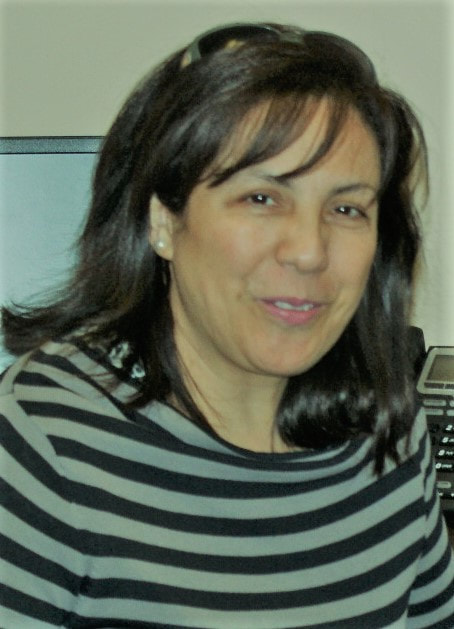
Image result for mariela griffor photo

Mariela Griffor

ABOUT THE AUTHOR
Mariela Griffor is the author of The Psychiatrist (Eyewear Publishing, 2013) and translator of Canto General by Pablo Neruda (Tupelo Press, 2016). She attended the University of Santiago and the Catholic University of Rio de Janeiro. She left Chile for an involuntary exile in Sweden in 1985. She is publisher of Marick Press. Her work has appeared in periodicals across Latin America and the United States. Griffor holds a B.A in Journalism and a M.F.A. in Creative Writing from New England College. 

BLURB
“Mariela Griffor’s brilliant poems navigate the distance between languages, homelands and heartlands. Her poems are the musical and engraved declarations the wounded world requires.”
     — Derick Burleson


Ma demeure brûle
5 Poems by Mariela Griffor
Video:  LOrigineDuMondeTV


66
DISCLAIMERS

Poems cited here are assumed to be under copyright by the poet and/or publisher.  They are shown here for publicity and review purposes.  For any other kind of re-use of these poems, please contact the listed publishers for permission.
We here at TBOP are technically deficient and rely on our bashful Milo to fix everything.  We received notice from Google that we were using "cookies"
and that for our readers in Europe there had to be notification of the use of those "cookies.  Please be aware that TBOP may employ the use of some "cookies" (whatever they are) and you should take that into consideration

Thursday, January 4, 2018

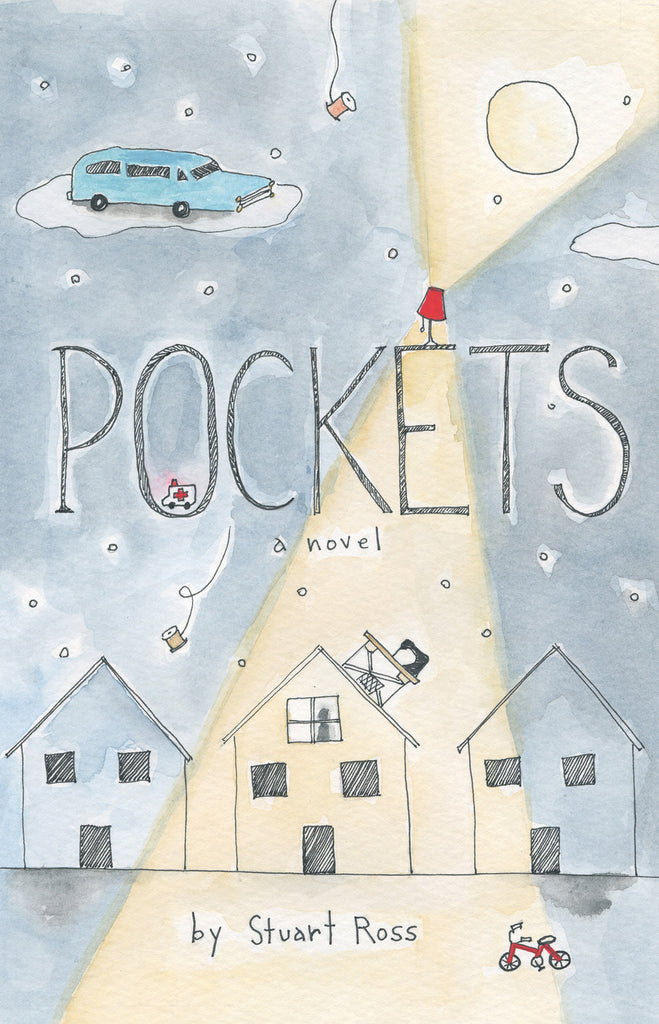
Pockets - Stuart Ross (ECW Press)

Today's book of poetry:
Pockets.  Stuart Ross.  ECW Press.  Toronto, Ontario.  2017.

Pockets by Stuart Ross, ECW Press

Anyone who has read Today's book of poetry knows about Stuart Ross.  

But just so we are clear from the beginning Today's book of poetry loves Stuart Ross as though he were my brother.  Stuart edited my last book, Bad Engine, and I sincerely hope he edits my next book, Low Centre of Gravity.  I love Mr. Ross enough that K and I have named our guest room The Stuart Ross Room.  Just last year Stuart Ross's A Sparrow Came Down Resplendent won the 4th annual prestigious Kitty Lewis Hazel Millar Dennis Tourbin Poetry Prize sponsored by Today's book of poetry.

You can see that here:   


Today's book of poetry will go you one further, Mr. Ross will be spending a couple of nights here, at the Today's book of poetry headquarters, next week.  All of this lead just to be clear of the road we're plowing, Today's book of poetry remains convinced that Stuart Ross, inspite of being my buddy, is one of Canada's very best writers.

Pockets, the most recent Stuart Ross publication is ostensibly a novel.  But it is a novel constructed of short prose poems.  That's where we come in.  And as much as Pockets holds it narrative these short prose poems have no trouble standing on their own.  Ross mines some familiar territory in Pockets visiting family terrain and his brother in the clouds.

Mayakovsky had his "Cloud in Trousers" and Mayakovsky might not be a bad, but brief, comparison to our surrealist inspired Ross.  The language Ross employs in Pockets results in his most accessible work to date.  Ross is only a few generations away from being a beautifully sad Russian himself.  And make no mistake, even when Ross is punching out prose he remains a poet at heart.  And I always remembered Mayakovsky's 'Trousers' as red.

。。。

                   As I sat cross-legged on the floor on my parents'
                   bedroom at lunchtime watching The Flintstones on
                   television, I felt a tickle on the knuckles of my right
                   hand. It was a daddy-long-legs. Or maybe it was the
                   1955 movie Daddy Long Legs, starring Fred Astaire
                   as Jervis Pendleton III and Leslie Caron as Julie
                   Andre. Whichever it was, it scurried across the back
                   of my hand and vanished.

。。。

This book recycles the dreams and the horrors of childhood through the challenging lens of a beautifully fractured memory.  Wherever there is a broken seam Ross applies his masterful Kintsugi thinking.

。。。

                  I pedalled my new red bicycle to the end of the
                  block. I looked back at our house. My brother stood
                  at the foot of the driveway watching me. He wore
                  a white T-shirt and blue jeans. I was not allowed to
                  ride any farther than the stop sign. I looked at the
                  grey-and-yellow triplexes a block away. Marky lived
                  in one. I rode past the stop sign and up, up, toward
                  the triplexes. I wobbled from side to side on my red
                  bicycle. My brother snitched. The slam of my father's
                  footsteps as he strode after me along Pannahill Road
                  was like a series of meteors hitting the earth. I stood
                  with Marky looking at my new bicycle, and soon my
                  father's shadow fell over us. His large thumb came
                  down and squashed me into the concrete. Marky
                  examined the smudge on the driveway in front of the
                  triplex he lived in.

。。。

These untitled micro-chapters fit together like Lego blocks built by William S. Bourroughs and his wild Brion Gysin friend.  Stuart Ross simply never fails to delight, surprise and inform as he entertains.  There are more nods of agreement inside your own head when reading the mysterio Stuart Ross than you generally have any right to expect.  Especially considering that Ross is most likely going to take you out of your range of reason and then back in before you can blink.

Today's book of poetry doesn't really know any other poets like Stuart Ross.  But if you were to take Kurt Vonnegut's imagination, a Garrison Keillor sense of the storyteller and candy twisted it all together with a generous dose of wit and wisdom from Randy Newman and his melodious lamentations, you would be nearing the mark.

。。。

                   The girl next door had never heard of the Beatles. I
                   laughed. She laughed, too. Her name was Karen. She
                   showed me her Cowsills comic book, and her mother
                   gave us peanut-butter sandwiches and milk in glasses
                   that had once held yahrzeit candles. I looked out their
                   kitchen window and saw my own house. My grand-
                   father was standing on the roof beside his treadle-
                   operated sewing machine. He was born in Poland,
                   and he clenched a piece of thread between his teeth.

。。。

                   Spools of black, brown, and grey thread emerged
                   from the clouds, unravelling as they sailed down
                   toward earth. Earth, meanwhile, braced itself.

。。。

Today's book of poetry is not alone in our admiration of Mr. Stuart Ross.  As a regular guest of Today's book of poetry all of our staff are quite familiar with Stuart and his work.  They also see his name in book after book after book of Canadian poetry -- as editor, mentor or simply being thanked for his friendship. Ross ushers more books of poetry into print, for a wide variety of presses, than Gutenberg ever dreamed.

Even though Pockets is a novel you can carry in your pocket, Today's book of poetry treated it like a series of cleverly connected and paced prose poems.  Our morning read was a non-stop start-to-finish roller coaster as the staff connected the dots and the chapters.  It was an excellent reading.

But in truth there is nothing like the real thing.  Stuart Ross remains one of the best live poetry acts in the country.  Today's book of poetry has been to more poetry readings than you think possible and still thinks Ross is the best.  Of course Ross has great ammunition.  He has a canon of fine books but the reality is that he is getting better with age.  Ross has been adding an emotional elements to his work that has made it more directly accessible to every reader.  

。。。

                  My mother told me the large tree in our backyard
                  was called a "weeping willow." It drooped toward
                  the lawn like it was sad. It was sad because the presi-
                  dent got shot in the head.

。。。

                  I stood at my bedroom window, looking out into the
                  stars and at the moon, so small, drifting aross the
                  black sky. The house was silent. My room was dark.
                  My pyjamas were covered in squirrels. The thing I
                  thought was the moon was not the moon, after all. It
                  was a snow fort. I huddled inside it, chewing ice.

。。。

Pockets will garner more attention than Today's book of poetry can give it.  But we will be able to say to many of you that you saw it here first.  Stuart Ross writes with such authority that his whimsy always leads the reader in the right direction.  His startling revelations and discoveries become a baseline for an entirely new sensation of reason.

Today's book of poetry loves this work.

Image result for stuart ross poet photo

Stuart Ross

ABOUT THE AUTHOR
Stuart Ross is a Canadian fiction writer, poet, editor, and creative-writing instructor.
Ross was born in Toronto's north end in 1959 and grew up in the Borough of North York. He began writing at a very young age and was first published at age 16 by Books by Kids (now Annick Press). This book, The Thing in Exile, also contained work by teen writers Steven Feldman and Mark Laba. Ross attended Alternative Independent Study Program for high school. He went on to self-publish dozens of books and chapbooks through his Proper Tales Press imprint. As his books began to emerge from larger literary publishing houses, he has continued his Proper Tales Press project.
Ross has been active in the Toronto literary scene since the mid-1970s. He is co-founder, with Nicholas Power, of the Toronto Small Press Book Fair, which has been operating since 1987 under various directorships. This fair, the first of its kind in Canada, inspired similar events in Vancouver, Ottawa, and Hamilton. Ross is a founding member of the Meet the Presses collective, which formed in 2006 to promote small-press publishing in the Toronto area.
He was the 2002 "Writer in Residence" for the Writers' Circle of Durham Region, the 2003 "Poet in Residence" for the Ottawa International Writers Festival, and the 2005 Electronic Writer in Residence for the Toronto Public Library's RAMP website for teens. He was Queen's University's writer in residence in 2010.[1] Stuart was the Fiction and Poetry Editor for This Magazine from 2004 until 2012 and from 2007 to 2016, he was Editor for Mansfield Press, where he had his own imprint: "a stuart ross book."[2] In 2017, Ross launched a new imprint for surrealist poetry – A Feed Dog Book – through Anvil Press.

His own magazines have included Mondo Hunkamooga: A Journal of Small Press Reviews (later subtitled A Journal of Small Press Stuff), Peter O'Toole (a magazine of one-line poems), Dwarf Puppets on Parade (a magazine of writing with restrictions), Who Torched Rancho Diablo? (poetry and fiction), Syd & Shirley, a magazine of Canadian and American poetry, and HARDSCRABBLE, a poetry magazine.

Although primarily known as a poet, Ross has also published fiction and personal essays. His column "Hunkamooga" appeared in Word: Toronto's Literary Calendar from 2001 to 2005, and moved to the Vancouver-based literary magazine sub-Terrain in 2006, where it ran until 2012.
As an editor, Ross was responsible for the 2004 anthology Surreal Estate: 13 Canadian Poets Under the Influence. In 2003, he issued the chapbook anthology My Lump in the Bed: Love Poems for George W. Bush. In 2007, Ross was the editor for the Insomniac Press book Why Are You So Sad? Selected Poems of David W. McFadden, and in 2010 for the Insomniac Press book Why Are You So Long and Sweet? Collected Long Poems of David McFadden. With Stephen Brockwell, he is the editor of the Mansfield Press poetry anthology Rogue Stimulus: The Stephen Harper Holiday Anthology for a Prorogued Parliament.

His 2009 short-story collection, Buying Cigarettes for the Dog, was shortlisted for the Alberta Readers' Choice Award and the Alberta Book Awards, and won the 2010 ReLit Award for Short Fiction. In 2012, he co-won the Elaine Mona Adilman Award for English Fiction & Poetry on a Jewish Theme, awarded by the J.I. Segal Committee of the Jewish Public Library in Montreal, for his novel Snowball, Dragonfly, Jew. In spring 2013, Ross's poetry collection You Exist. Details Follow. won the Exist Through The Gift Shop Award, the only prize given to an anglophone writer that year by the Montreal-based group l'Académie de la vie littéraire au tournant du 21e siècle. In fall 2017, Stuart's poetry collection A Sparrow Came Down Resplendent received the Canadian Jewish Literary Award in the poetry category.
PLEASE NOT THAT THIS BIOGRAPHY WAS TAKEN IN ITS ENTIRETY FROM WIKIPEDIA

BLURBS
“Each brief page of this brief, surrealistic novel brims with the unexpected, the astonishing, the odd . . . Pockets is a beautiful little book.” 
     – The Murdock


Stuart Ross
Reads 3 Razovsky poems
Video: farmergloomy


647

DISCLAIMERS

Poems cited here are assumed to be under copyright by the poet and/or publisher.  They are shown here for publicity and review purposes.  For any other kind of re-use of these poems, please contact the listed publishers for permission.

We here at TBOP are technically deficient and rely on our bashful Milo to fix everything.  We received notice from Google that we were using "cookies"
and that for our readers in Europe there had to be notification of the use of those "cookies.  Please be aware that TBOP may employ the use of some "cookies" (whatever they are) and you should take that into consideration.

Sunday, October 29, 2017

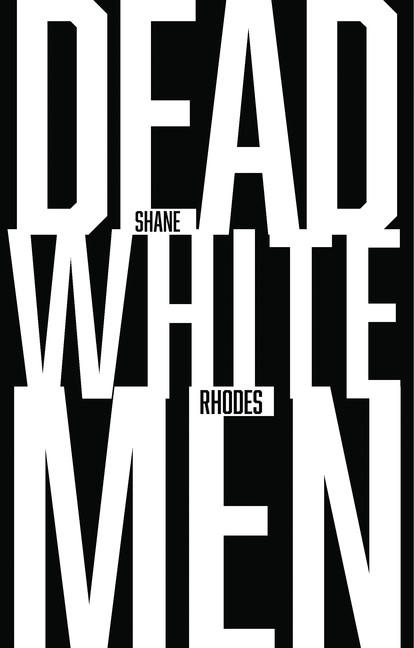
Dead White Men - Shane Rhodes (Coach House Books)

Today's book of poetry:
Dead White Men.  Shane Rhodes.  Coach House Books.  Toronto, Ontario.  2017.


Shane Rhodes Dead White Men is quite unlike almost any book of poetry we usually see here at Today's book of poetry.  Even more to the point Dead White Men falls outside of the parameters of the poetry we usually celebrate.  Put on your thinking caps please.

Shane Rhodes is swimming in some pretty deep water.  Today's book of poetry found that Shane Rhodes "Notes" at the end of the collection were very helpful when considering his poems.  We want to share them here:

"Early European narratives of exploration and contact with the 'New World' often intertwine the languages of scientific discovery and colonization and bring along with them all the attendant European concerns of race, commercial exploitation, and male domination over muted landscapes
and the peoples who inhabited them.  In writing and researching Dead White Men, I was interested in looking to these past stories (especially those focused on North America and the South Pacific), not to add to the fictions of past white heroism but to better understand the problematic relationship between the stories, the mythologies they have become, and the lands and peoples they describe.  For many settlers, our understanding of the history of the land upon which we live is often limited to the names that have been given to it by past white explorers and the mythologies we have built up around exploration and discovery.  I wanted to use poetry to interrogate this past and the texts upon which it rests.

This is the mandate of this book.  This is the manner of its history."

So, Dead White Men, what is it?  This is a rhapsodic blend of William S. Burroughs style cut-ups and concrete poetry served up within a ballistic barrage of indictment against the status quo of white colonial power.  That and it fits between the covers just like a regular book.  Shane Rhodes isn't your run-of-the-mill poet, Dead White Men is not Milk and Honey.

Animal Electricity      
after Luigi Galvani

Little flames, fixed fires
that certain men give out
when walking
or when silk garments are donned
in a very dark chamber.
Latent in the livid integuments,
it is a difficult thing to be known
even with electrophore
of dried nerve and bone.
Upon the caloric animalcules
dissected, I employed
an electrical machine
so that an eel, if bisected
transversely, trembled its tail
when a metallic arc was applied.
With current, a frog (hook secured
to its spine) jumped vigorously about,
while the wings of a chaffinch
slightly contracted.
Even stricken with a pinch
of pear powder or pernicious gases
(sometimes mephitic, sometimes opium,
powdered nicotine and arsenic),
a newborn cat moved its legs --
a phenomenon not lacking
with the head cut off.
Vipers have not yet been tested.
From the house high in the air,
we erected an iron wire,
hung upon it prepared frogs
and the legs of warm animals.
The thing went according to our desire.

...

Canada has a great deal to do to undo and even more to make right with our First Nations.  Rhodes uses a wide brush to capture colonialism and the snakes of its progress beyond just the Canadian home grown variety.  Today's book of poetry are big fans of Rhodes, although he is more work than your average bear.  We wrote about Mr. Rhodes X back in November of 2013 and you can see that blog here:


Our morning read here in the Today's book of poetry offices was an almost sombre affair today, not much in the way of chucks and giggles in Rhodes incendiary condemnation.  But just to be clear, this is not your typical Sunday drive poetry fest, before it's over you'll find yourself upside down and backwards.

from page 110...

     Nothing special today unless the great coldness of the wind from the North is
     worth mentioning unless the entire air swimming with watery exhalations
     is news unless a dense fog exceeding thick is of interest unless dark Squals
     and Lightning are most curious things unknown in Europe unknown to
     me and these people unknown and dangerous but what Winds we have
     had this day set down in the journal beneath a close-reefed Manitopsail
     which caused us to Tack several Times and paff within a cable's length of
     a very large ifland of ice (it appeared to be nothing elfe) we Serv'd Slops
     to the Men put on our winter rigging saw the footsteps of people fresh
     upon the sand which Painted the Boat with a Genteel breeze and the fog
     {o thick we could fcarce fee a man on the forecafile then a fresh Trade wind
      with heavy Albetrosses all wings and Tails so we hauled our courfes when
      there came along a boat with feveral Elkim'aux women and we traded
     wind with the people (I saw what I took and left them in Strings of beeds)

...

Today's book of poetry has to admit that there are often books of poetry that intimidate my intellect and understanding and Dead White Men is one of them.  That doesn't mean it wasn't riveting, it was.  And even more importantly Today's book of poetry believes Shane Rhodes is bleeding some necessary blisters, opening some festering wounds so that they can drain and heal.

White privilege has always extended to our histories, the way we write about our past.  Essential poetry like Shane Rhodes Dead White Men is another elemental step towards narrowing that damned gap.  White privilege will only be disassembled when white people recognize it exists and start measuring the costs.

More Translations of the Lappish Language

Their Words for Sounds

                       : a gently running stream whirring over river rocks

                       : an animal in the water splash

                       : wolves singing when I cry ass drunk

                       : a fire salt sprayed

                       : a bow when the arrows are shot out

                       : knocking as I roll down the hegyrs

                       : an empty vessel when tapped by two empty containers

                       : water falling in a fire

                       : a tree mouse gnawing Girr

                       : sand between your teeth or a ball stuck in a tube

                       : knocking a fish

                       :  a dog that flatters

                       :  noisily sipping like when someone eagerly drinks

                       : sometimes here this sound when the larynx nip slips

...

In the interest of full disclosure, Mr. Rhodes and I know each other.  You could even say we are friends.  We don't chum together but their is a sizable mutual respect, I hope.  

Today's book of poetry has long admired the poetry of Shane Rhodes, his dedication to the craft and his willingness to go further than most of the rest of us.  Rhodes isn't interested in the status quo at all.  Rhodes is all about breaking down walls and building new understanding.  Today's book of poetry is behind that all the way.  That and Rhodes is brilliant.

Image result for shane rhodes photo
Shane Rhodes

ABOUT THE AUTHOR
Shane Rhodes is the author of five books of poetry, and has won awards including an Alberta Book Award and the National Magazine Gold Award for Poetry. He lives in Ottawa, Ontario.


BLURBS
‘A provocative and galvanizing read … Riveting and dazzling invention is visible on almost every page: fonts shift size, language cascades and cleaves, and images disrupt order. Dead White Men should be widely read and taught.’
     – Eduardo C. Corral, author of Slow Lightning

‘Dead White Men is not only a searing indictment of colonialism but also a painful reminder of the violence that underpins the logic of exploration. Each poem strikes at the heart of the issue: there are often unarticulated, unacknowledged Indigenous presences here that have been flattened over by the lies and mirages of empty landscapes. Dead White Men is a stinging and difficult journey, and one that continues to remind us that stolen land has always been the most pressing concern for Indigenous peoples and settlers. This is an absolutely essential book.’
     – Jordan Abel, author of Injun


Shane Rhodes Reads
Video: Arc


622

DISCLAIMERS


Poems cited here are assumed to be under copyright by the poet and/or publisher.  They are shown here for publicity and review purposes.  For any other kind of re-use of these poems, please contact the listed publishers for permission.


We here at TBOP are technically deficient and rely on our bashful Milo to fix everything.  We received notice from Google that we were using "cookies"
and that for our readers in Europe there had to be notification of the use of those "cookies.  Please be aware that TBOP may employ the use of some "cookies" (whatever they are) and you should take that into consideration