Showing posts with label sylvia plath. Show all posts

Thursday, May 31, 2018

Declassified — Mariela Griffor (Eyewear Publishing Ltd.)

Today's book of poetry:
Declassified.  Mariela Griffor.  Eyewear Publishing Ltd.  Marylebone, London, U.K.
2017.
Declassified

Declassified by Mariela Griffor is bursting at the seams with ideas, imagery and outside influences.  A short retinue of guest stars has to include:  Nelson Mandela, William S. Burroughs, George Orwell, Sappho, Kurt Cobain, David Foster Wallace, Albert Camus, Jean Paul Sartre, Carl Friedrich Gauss, Sofia Kovalevskaya, Sylvia Plath, James Joyce, Henry David Thoreau, Ariel Dorfman and Marcel Proust.

Regardless of the guests, in the end these are poems of love and loss.  Every highway we know has ditches littered with the ruined and rusty hulks of what someone once called hope.  Or at least the wire-fenced, flower adorned, temporary altar, a reminder of someone's worst moment, another person's worst loss.

Recovery

May 20, 2014
For Regina Derieva

We never met; we never spoke to each other
except through the immigrant song of Jan Johansson,
we knew we were united in
indestructible fibers of life breathing
in and breathing out, marching
to the sound of old days, in countries
that remind us of our own countries,
speaking old languages, that remind us of our own tongues,
we became so suddenly eternal tourists with a right to vote.

It was a time in my life when I stopped laughing
and I knew you did too. I could see it
in the photographs of magazines and
journals where new poems by you were published.
I knew what it was to be without a reason to laugh.

So sorry to have to miss you,
well-planned journeys, well they never happened.
I planned several trips to Rinkeby,
a town that I avoided fiercely when
I was there. It is not easy
to be reminded of cut wings, as you know.

My trips to Stockholm were always
the same, Gamla Stan, centrums, H&M
and the Viking Museum, then back to Uppsala.
Rinkeby was a forbidden point,
the limbo of anybody's trajectory.
But had I known then you were there
I would have faced the fear
and visited you.

I love your work. The fresh, naïve
and sweet idea the world can be improved, stained
on the pages everywhere.
I love the way you put the
best of you in your poems. The way
you make yourself at home inside a whale,
the way some of your images cannot
leave my head for days, exactly like
a pop song. The way you make me think
with each line and take me to places
I have never been before.

I love the way that insufferable persistence
of something must change in this
endlessness of war times, this time that
consumes each of us and makes us bend
in the direction of the wind a dozen times per day
as in your poem. I pray for that persistence
to infect everyone who reads you.

I'm sorry to have missed you in this life.
I imagine what great times you and I would have had
if we only had the opportunity and time, and money of course,
don't forget that, to meet.

Silly of me to think we would have had
that cup of coffee in Gamla Stan
and talked about pigeons and old catholic schools,
and how the world is not changing but ending.
Nature has its tricks, and even if we make progress,
it will make us part of its garden. Yes, at least.

...

Today's book of poetry has always flattered ourselves that we are "experienced."  It is to laugh.  Mariela Griffor's Declassified reminds Today's book of poetry just how sheltered our life has been.  Up until a post-Katrina visit to New Orleans, I had never heard a gun shot from a weapon fired in anger.  I've only heard it once.  Admittedly it was several rapid shots from a pistol followed immediately by three or four quick bursts of machine gun fire in return,

The last rebellion of any kind here in Canada was the failed FLQ operation.  That was when I was young and both Quebec City and Montreal were as far from Peterborough as Mars.  Griffor's Chilean history and her experiences as a political refugee are but one layer of the Griffor onion.

Today's book of poetry was won over quickly, Mariela Griffor has lived through things we cannot begin to imagine and come out the other side clean and hopeful.  How astonishing is that?  People still have to love and tenderness plays a big role in the Griffor canon.

The Last One

Last night I could not sleep,
the children were not at home. They both had
sleepovers. I was tired, too. Too much time away from
grown ups and I know they will be OK, I will move
back. This time, closer to my father, that at that
time will be old and probably very cranky. But
I will move back to spend with him the
time we never could give to each other before.
I will move back to those mountains in between
Pucon and Talcahuano, I will go to the beaches
around. I also plan to write.

I will take walks in San Pedro to
meet those people I saw the last time
when I was there, and I will run to the
Ocean, to touch the black sand of San Pedro,
I will be closer to God, feeling the thick
air of the early morning. I will let the salt
make my face ruggy and I will think about you and
those days in Chiloe, at the End of the Earth.
I also will go and visit my old relatives, those
that are so old that they don't even remember their
ages. I will put back the pieces of that last poem, and
will promise that you will always have a place in my mind.

It's time for you and me to go different
ways. You find the place your soul was longing.
And I will choose to stay here without you and
with the other I love. Just hang out there,
the day to get together is every day shorter,
but now it is time for me to do so much more.
Last night as I said I could not sleep
I knew this would be my last letter and my
last poem for you.

...

Our morning read was set up by Eric Burden & War belting out the long version of "Spill the Wine."
When Eric quit his temperamental scat, with War throbbing behind him like "hot rings of fire," we got on with our poetry business.

Kathryn, our Jr. Editor, started us off this morning and we were away, Thomas sat in, along with Lucy, our newest intern, and declassified Declassified.

Sometimes the horrors of life confound us innocents, but those rare souls who have had their pearls polished by terrible friction and come out the other side shining write wondrous and brave,  Griffor can write deeply caring and sweet poems, or she can knock on the darkness door. 

Hardship

Somebody told me this country was hard:
But not this hard.
I didn't believe it because
I came from a hard country myself
and because I lived in other hard
countries so I was not afraid.
I thought we were different yet not
that different. I have nostalgia
for the homeland as I always
did have nostalgia so it was
nothing new. When I started
to see and feel in this new
spooky way and my left eye
started to tremble and I could not
control the movement, like the
most embarrassing tic you can
imagine, I withdrew. The time
began to walk slowly in the
inside and very fast on the outside.
The day after the new election
the bombs and the new troops
didn't stop, we will not talk
about it, because as in my hard
country we don't talk about it.
We can talk only about what
we can talk about and the
rest is just the poor imagination
of dissidents. And how can it be
interesting to talk about what
dissidents talk about if
we already talked about it in the past
elections in the last century. It was
always the same. I do try to see the
good side of living in a hard country
though, so I'm not totally a critic.
I do want to have
my duties, my opinions, and I do
want to see things are changing for
the better, including the economy as
they say on TV. One of the good things
when soldiers come from the front line.
Have you seen the screen of the TV full
of beautiful children running to meet
daddy or mommy coming back? And
the uniform they wear, really beautiful,
no marks of blood or dirt anywhere.
Nobody could guess what
those uniforms can say. Don't take
this the wrong way. I also come
from a family in another hard
country that knows very well
the duty and honour of wearing a uniform
especially this one. What hits me
that hardest is the bouquet
of flowers the soldier brings to his
bride or wife and the running of
this beautiful woman to his side,
the crying every time. Perhaps because
I'm a romantic and I like flowers
or perhaps because I remember his
face destroyed by the hand grenade
he was carrying or the landmine
put in the ground by who knows who.
I guess we will never know. I remember
thinking how much makeup
the mortician had to put
over his face to hide all that
damage. His hair looked good
but those nostril pieces missing
will haunt me forever. See? My
country is also hard. Like
yours. I do think there is
a reason sometimes, yet
most of the time I just think
there is a bigger plot and not
exactly by God or the Devil that things
are this hard. Those who don't
think I'm right, they tell me
to get over it, to adapt, to adjust
and get over it. The ones that think
I'm right, they are mostly silent,
they hide, they don't like my
posts and they avoid
me when I get too difficult.
The problem is that I cannot
adapt and I'm always surprised
seeing more and more people
give in. Yesterday my oldest
child told me in the grocery store
she hated Albanians. Why? I asked
her and she told me, in her building
on the first floor there is a family
of four living in a nine hundred square foot
apartment and all above them can
smell their disgusting food,
bending over to my ear she whispered
and said, I don't like them because they
are all terrorists. And how do you know
that? I asked. Everybody knows that
she responded looking over her
shoulder to show me the Albanian couple
paying at the next cashier. I tell
her that's it. No more. I know I
will adapt. I will write more things
that can be printed and some people
will never read my poems and maybe
I will not think this country is hard
anymore and I will see the positive
side of the whole story and forget.
In the meantime I don't, I'm dangerous
if I remember scars , doorbells,
the sulfur smell of the tear gas
bomb and whistling zig-zag of
bullets coming from an unknown
direction, or if I remember he didn't
have his three left hand fingers.
[But excuse me for a moment,
my friend Cora is at the door,
we need to chat about her French doors
she is getting for her house]
Back to what I was saying:
He used to play the guitar with that hand.
I know they told me this
country was hard but I'm telling
you the truth when I say, nobody
really told me it was this hard.

...

Today's book of poetry has a soft spot for Chilean poets.  Nicanor Segundo Parra Sandoval (1914-2018), is an all-time favourite here in our offices.  Mariela Griffor will have the recently interred centenarian Parra, smiling, at the very least, a certain sly grin.  Griffor is that hard as nails poet with a gentle and loving human heart.

Magic.
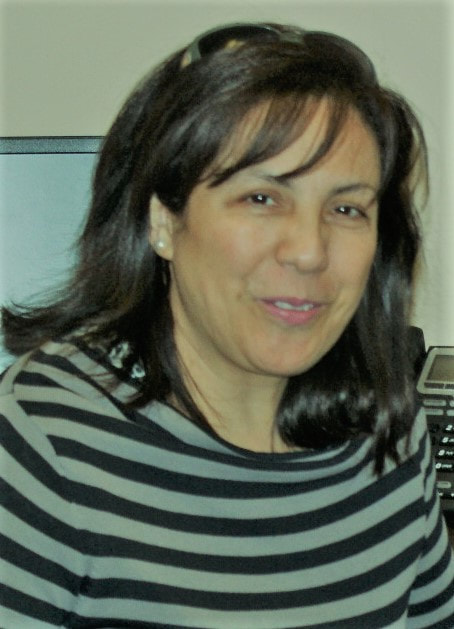
Image result for mariela griffor photo

Mariela Griffor

ABOUT THE AUTHOR
Mariela Griffor is the author of The Psychiatrist (Eyewear Publishing, 2013) and translator of Canto General by Pablo Neruda (Tupelo Press, 2016). She attended the University of Santiago and the Catholic University of Rio de Janeiro. She left Chile for an involuntary exile in Sweden in 1985. She is publisher of Marick Press. Her work has appeared in periodicals across Latin America and the United States. Griffor holds a B.A in Journalism and a M.F.A. in Creative Writing from New England College. 

BLURB
“Mariela Griffor’s brilliant poems navigate the distance between languages, homelands and heartlands. Her poems are the musical and engraved declarations the wounded world requires.”
     — Derick Burleson


Ma demeure brûle
5 Poems by Mariela Griffor
Video:  LOrigineDuMondeTV


66
DISCLAIMERS

Poems cited here are assumed to be under copyright by the poet and/or publisher.  They are shown here for publicity and review purposes.  For any other kind of re-use of these poems, please contact the listed publishers for permission.
We here at TBOP are technically deficient and rely on our bashful Milo to fix everything.  We received notice from Google that we were using "cookies"
and that for our readers in Europe there had to be notification of the use of those "cookies.  Please be aware that TBOP may employ the use of some "cookies" (whatever they are) and you should take that into consideration


Tuesday, May 22, 2018

Lady Lazarus Redux — Amanda Earl (above/ground press)

Today's book of poetry:
Lady Lazarus Redux.  Amanda Earl.  above/ground press.  Ottawa, Ontario.  2017.

Gwendolyn MacEwen, Adrienne Rich, Anne Sexton and Sylvia Plath.  

Amanda Earl has gone to the source, the deep pool, and come up smoking.  Today's book of poetry won't bother explaining how and what Earl borrowed from these giants, Earl explains it clearly enough in an "Afterword."  The technique doesn't matter that much to Today's book of poetry although it is an amazing and diligent feat, all that matters to us is what Earl does with the tools she has manufactured.  

Amanda Earl's Lady Lazarus Redux burns.

Today's book of poetry is relatively familiar with some of Amanda Earl's earlier works, we had Milo, our head tech, go into the stacks and he brought back Kiki (Chaudiere Books, 2014), I Owe Saint Hildegard the Light (unarmed chapbooks, no date), and 48 Bowls (le Temps des cerises/an Angel House Press Imprint, 2013).  Of course Milo now knows he has to add a few Amanda Earl titles to our ongoing list of poetry titles we are in search mode for.

Today's book of poetry is familiar enough with Earl to know that unlike the rest of us, Earl is willing to spread her net wide.  Amanda Earl isn't dedicated to a particular voice, a particular style, instead she tries new styles on like intellectual hats.  The poems in Lady Lazarus Redux employ a more narrative hook and Earl is happy to step on the gas, she is willing and able to stretch her bad engine into a higher gear.

Part Ten: The Same, Identical Woman

I am exhausted. I am exhausted.
Pillar of white in a blackout of knives.
                         Sylvia Plath, The Bee Meeting

1

Another messy wake up at four thirty a.m. against my will. I sip water, try to
dehydrate so I won't be clumsy but all the ghosts are here. They won't let me
breathe.

2

Silence makes its painstaking way into the day's carnival. Tap screech. Fridge
moan. I am unaccustomed to strangers. Dawn is my sleep's enemy. I want to make
a mansion out of my bed. Exhausted by eight p.m., I become thin as glass.

3

Winter is smooth. I crave the burr of spring, its exotic tricks of light, shadow
dancing. I avoid crowds, put on a velvet demeanour, tile my worries as limestone
shale on Ashburnham Hill. My goal is translucence.

4

What's the etiquette for I don't give a fuck! I choose a white card. My hands are
dry. I'd steal moisture from the moon, but that's time-consuming. The moon
despises me. We are rivals.

5

I am an exile in a colourful fish pond. I swim in the wrong direction, if I swim at
all. I am neglected with the sodden lilies and lazy bullfrogs, my outsider pals. I
unravel the seams of my gills to reveal my scars. I am graceless. Most days I fake it.

6

In public I don another mask, made of leaves that never turn or die. I am the
overripe thorn never the flower. I have outstayed my welcome. I have teeth. I am
sharp. I can sting. I bristle. There is no gentle here.

7

My hair is silver. I refuse to dye. I let it grow. It curtains the dark. I am
embarrassed not noble. A roll of sorrow overcomes.

8

I've never paid attention to omens. I choose a blue card. Blue for melancholy, for
medicine in the form of small pills. Yellow for Valium. I shred portents. I cry.
Fountains overflow. Here's an obsolete penny. Make a wish.

9

Fear is lamp black, impenetrable. I drown in my unadulterated contradictions. I
poison the light with humid passion when I'm supposed to be dried up. See me
smile to camouflage the sorrow, blond as flaxen, smooth as linseed. Spin me into
cool material.

10

I am monstrous, a whore, I confess reluctantly to eager suitors. They wear out
their purity. I canvas misery. I am a beautiful liar, n'est-ce pas? It's an affliction. A
siren with a head of silver years. Men swagger. I indulge them. I am fond of the
ingenue, but I don't want to guide him, I just want to be a witness.

...

In Lady Lazarus Redux Amanda Earl is almost always quoting someone in her single project based matrix, one of the four, MacEwen,Rich, Sexton or Plath.  But the language is always Earl.  But when Earl quotes Plath she is starting up the engine.

     "I am terrified by the dark thing
      That sleeps inside me."
                                      Sylvia Plath, Elm

Earl starts one of the her ten dynamos that appear in Lady Lazarus Redux with this great Plath quote and Today's book of poetry is pretty sure that Earl realizes that most of us have "dark things" that come in the night, but very few of us are capable of making music out of the dark.  Discord is a big black raven that sweeps above and around Earl's poems, that is until she grabs the beast and starts plucking it's long feathers.

Earl leans on the dark and pulls it taut.  Men aren't secondary in these poems, but they are barely present, barely necessary.  Earl is speaking from a place that seeks no approval.  This is a type of reporting for the new poetry news.

Part Four: The Paperweight

The world is blood-hot and personal
                                  Sylvia Plath, Totem

1

Dread follows a siege of cravings and aversions. As if my plasma is pleading for 
iron, a backbone, resilience.

2

The leaf of my temper unfurls and fiery bells of fury clang in my skull. I stumble
with the weight of hot iron. I am charred. I boil. I am a danger zone. Now
emotions are snow-feathered, delicate. I tremble, so brittle, I splinter.

3

This blood rust scent of myself incites burnt ocher dreams: cars on fire, sirens
wailing, the howl of nameless creatures in the hot dark. Gardens are luminous with
flame. I cannot surface.

4

Saints cry out to me in nightmares. The sheets are stained. I press my finger
against my clit. In the morning I wake with dried blood on my palm.

5

Treat this body as a numb castle with the drawbridge up. Do not attempt to 
rescue the princess. She is seated at her doom, doing nervous needlework, pricking
her finger. She is cursed.

6

Thoughts shear through my mind. Dread is an icicle that stabs into calm. Ice turns 
to brick. This is not alchemy, it is anxiety, a muddy recognition. Flat, unpercussive
despair.

7

It doesn't matter if I cross a thousand cold rivers, hug an icepack in my sleep, eat
an ice cream cone while wandering in January with my coat open, stand naked at
the window on a wintry night, the serpent of heat licks flame at my skin until I am
soaked in sweat.

8

Dear moon, a gesture would be nice. You're always so regular. I have a calendar
that tells me when you wax and wane. I envy your predictability. Bright wolf of
silvery gibbons while my uterus clenches blankly.

9

I am not made of iron. I seethe and sob. The earth turns from day to night and I
from dark to light. My bounce against infinity is no more than an ephemeral
quiver.

10

This lust is carried on scorched winds. When I touch a pencil, it turns to ash. I stay
away on purpose. Internalize my fervour. I am no gallery of calm. I am a 
connoisseur of carnality. A heat-seeker, a bomb.

...

The women here at Today's book of poetry are all big fans of Amanda Earl.  As Kathyrn, our Jr. Editor said this morning:  "She will say the thing!"  No fear.

In an effort for full disclosure Today's book of poetry does know Amanda Earl, we have one of her hand-made bowls sitting beside the desk in our office.  Today's book of poetry would go so far as to say that we are friends with Ms. Earl — but our circles don't intersect all that often.

Our morning read was smooth as glass.  Maggie, our new intern, took over the reins and laser pointed us home.  A Ms. Birney (yes, an honest to goodness, real life, relative of the late Saint Earle of Birney) joined us for this morning's reading.  The gang rose to the challenge and waltzed Amanda Earl around our offices and into the beautiful spring morning.  Ms. Birney brought a friend, Lucy, who was new to us all but made she made friends of us all quickly, joined in the reading. Lucy chose this last poem

Part Eight: The Cat

Love is a shadow.
How you lie and cry after it.
                       Sylvia Plath, Elm

1

Opening childproof extra strength sinus medication, plastic pantyliner bags, jars of
nuts, wine sealed with corks has become increasingly difficult with age. Will alone
isn't enough. I aspire to be enriched. I end up a restless paces of the night, all
packages destroyed by my teeth, my head pounding and stains in my underpants.

2

Age inscribes its sophistry on my body. This flesh was never holy but decadent
and real. I caress my scars.

3

My senses incinerate order, but I am no fan of chaos. The surface is rapacious and
dull. I want to delve, not to police my actions. I try to get hold of myself.

4

My emotions roar. My anxieties sear me. I am clinging as hard as I can to the
balustrade of optimism. I have two sides at least, odd and even. Odd usually wins.

5

I am an actor in the torchlight, making unidentifiable shadow puppets on the wall.
I do not envy youth. I am an arsonist of memory. I set each reminiscence on fire
and watch the remnants curl as it burns. I wake up sweating. My father tried to
possess me. Sometimes I believe he succeeded. And we are in hell together.

6

Here is a recollection. It is Christmas Eve. My father is into the whiskey again. I
am upstairs in my bedroom, but the shouts of my parents' battle reach my ears.
There is sudden movement. Screams. Something crashes.  I hide underneath my 
bed. I piss my pajamas because I am too afraid to leave the room to go to the
toilet.

7

Nightmares have anchors. This ship doesn't move. Holidays weigh me down. Bing
Crosby is singing White Christmas. I love the red cardinals on the cards strung
across the silver garlands in the living room. But a black bird caws in the sun and
the sky darkens once again.

8

Flights of fancy got me through childhood. My stories, my imaginary friends, the 
willow tree fairies, standing still on the railroad tracks, imagining the train would
take me away, escapes to cool creeks, tadpoles in a bucket, surprise frogs. I
remember that little girl. I wish I could be her guardian angel.

9

When I left home I took the Red Rose tea figurines with me. The owl and the
duck, the foxes and deer, the cats and dogs, the fish, the monkeys, we fled. I
wrapped them in tissue paper to keep them whole.

10

The little girl is made of glass. Despair causes cracks in her psyche that can't quite
be repaired. Now she reflects the light. So many colours in the prism of her life
reflected back as shards of memory and a love of the broken.

...

"...and a love of the broken."  That damned line broke Today's book of poetry's heart the first time we read it, and the second and the third.

Today's book of poetry was very happy to write about Amanda Earl's most recent chapbook Lady Lazarus Redux.  Amanda Earl is a poet of large appetites, Today's book of poetry is certain we will see more from Earl.

Image result for amanda earl photo

Amanda Earl
Photo: Charles Earl

ABOUT THE AUTHOR
Amanda Earl is an Ottawa writer, publisher and visual poet. She's the managing editor of Bywords.ca and the fallen angel of AngelHousePress.  More information is available at AmandaEarl.com.


Amanda Earl
Tree reading series
Video: Tree Reading Series


690


DISCLAIMERS

Poems cited here are assumed to be under copyright by the poet and/or publisher.  They are shown here for publicity and review purposes.  For any other kind of re-use of these poems, please contact the listed publishers for permission.
We here at TBOP are technically deficient and rely on our bashful Milo to fix everything.  We received notice from Google that we were using "cookies"
and that for our readers in Europe there had to be notification of the use of those "cookies.  Please be aware that TBOP may employ the use of some "cookies" (whatever they are) and you should take that into consideration


       

Monday, April 10, 2017

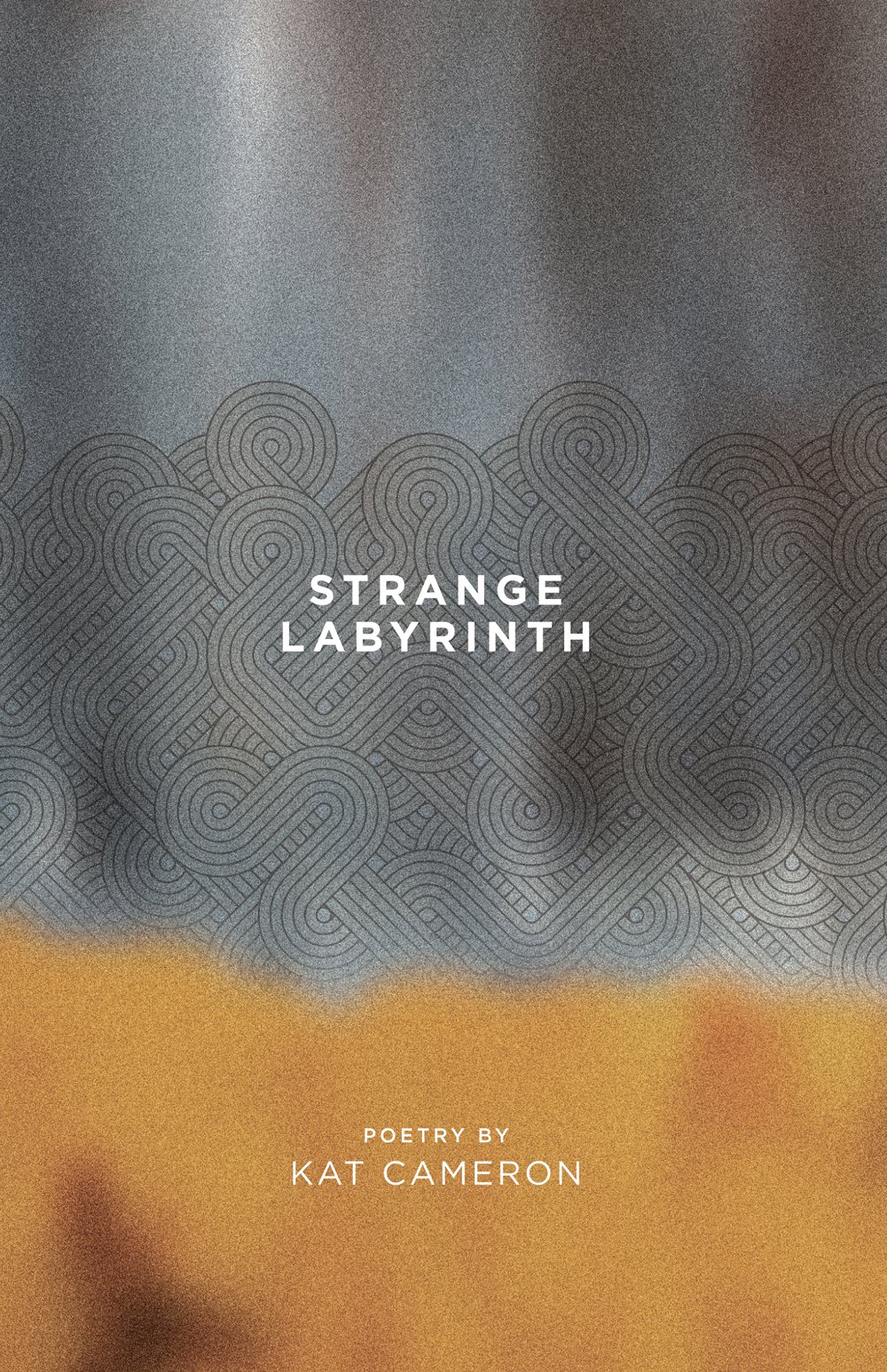
Strange Labyrinth - Kat Cameron (Oolichan Books)

Today's book of poetry:
Strange Labyrinth.  Kat Cameron.  Oolichan Books.  Fergie, British Columbia. 2014.


Kat Cameron reads twice her age, how else to explain the kaleidoscopic range of her cultural, historical and literary references where she tips her hat, says "how do you do?" to a myriad of misfits and heroes,  markers.  Today's book of poetry was on side from the start.  Strange Labyrinth is as advertised, we enter some strange territory and the exit isn't always certain but Cameron's curiosity and interests have a large span.

And the reader never feels lost.  

Cameron creates poems that have emotional certainty at the heart of them as though they arrived fully formed and knowing which way to lean into the wind.

The Palliser Slide

This rock slide destroyed one side of Mount indefatigable.
The largest rock slide in North America, it was four times larger
than the Frank slide.

Frozen waves, aeons buried in the cresting line.

In a basin, mountain-rimmed, slate-grey ramparts cross and gird, hold
back the inverted sea of sky. Far off, wavering in the foreshortened air,
snow-ghosts climb, flint heels striking fire from shale.

Ammonites spiral time in twisted coils.

Below, the darkness of the firs. A tortured path pulls and climbs
its way past clinging meadows, spots of sun. Frail jellyfish,
Queen Anne's lace, float by bristling blots of red paintbrush.

The air is thin, three thousand feet above the far earth's floor.
Marmots whistle warnings on the wind.

...

Today's book of poetry hears echoes of Saint Earle of Birney and his beautiful "David" in "The Palliser Slide," if only a frisson.  Cameron's nature capture has the same reverent awe, she makes the panorama present right there on the page.

Cameron works a whole magical lode of tenderness into her Strange Labyrinth.  Today's book of poetry doesn't want to give away any secrets but Kat the C has a thing for Mary Shelley's monster. e.e. cummings, Byron, Sylvia Plath, Elizabeth Bishop, Eliot, Pound and Vincent the Goth Van Gogh all show up, Marcus Aurelius and his Meditations sharpen Cameron's tools.  Strange Labyrinth brims with smart lyric animations and host of glamorous accomplices.

Today's book of poetry doesn't want to give the wrong impression, Kat Cameron's earthy poems aren't inhabited by or about the above mentioned iconic figures.  They are all just along for the ride. Cameron is writing about this world and our place in it, the space women inhabit that men don't know about.

Digging out the Twitch

The first sunny day in weeks and I'm in the garden,
digging out thick twitch grass, the heavy dirt clotted deep
with spidering white roots. When we bought this house,
I had plans, even though my uncalloused hands, smooth with
dishwater and lotion, spent the day tapping staccato keys.

All summer, I neglected this bed. Faded vines hang
from the fence, like shreds of forgotten sunsets.
I'm sowing the colours of spring; wanton tulips,
narcissi, and clusters of purple crocuses.

But past failures slow me down. I feel the strain
in my back, my aging knees, the shovel loads of
heavy doubt. All I can do is go on. Now
the gloves are off. I push tiny bulbs into shallow graves
feeling the soft dirt crumble with promises.

...

Our regular early morning read here at Today's book of poetry was a bit dishevelled today.  I have recently spent a few days working out in the real world with real people.  Once in a while I get work at the Art Bank and it is one of my favourite places on earth.  Picture a large warehouse carefully packed with around 20,000 works of the best contemporary Canadian art.  It's a dreamland.  I worked as an Art Technician for many years, transporting and installing art work.  In recent years I've worked mostly in the Frame Shop.  It is work I thoroughly enjoy.  So my brain and tired old posterior has been toiling hard at the Art Bank.

When I haven't been at the Art Bank I've been in David Lee world.  David Lee is a poet from Texas who now lives in Utah.  Our St. Louis correspondent, Mark Twang, sent us a couple of David Lee's books along with a Copper Canyon Press CD with David Lee Reading from A Legacy of Shadows and News from Down to the Cafe.  Today's book of poetry will be dealing with Mr. Lee in the near future but I've been making the staff listen to his CD non-stop for the last couple of days.  Now everyone around here is running around with a David Lee accent.  Beer bottle on their hip.

The other good, but distracting, news is that the sun is out.  It really does feel like spring and when that happens most of us here in Ottawa get a little sun drunk.  Everyone in town will be out on patios and in shorts by noon.  For all I know it could snow again tonight.

So our morning read was slightly distracted, we opened all the doors and windows for the first time since October.  Kathryn, our Jr. Editor, made sure that we all cottoned onto the strong feminist voice that inhabits these poems.  Cameron isn't burning down the house with strident polemics, she's informing the house because they need to know.  Once Kathryn laid down the law Kat Cameron's poems worked their way around the room, humour popped out when we least expected it, along with Frankenstein, Cameron kept us well entertained.

from Camille

II. Le Baiser

Two bodies.

I long to stroke his back
the soft deep groove from neck
to ass.

His hand holds the hollow
of my hip.

I pull him towards me,
me leg angles
my body closer.

Fused marble.

One kiss banished the lovers to the
second circle of hell.

I wish I could banish Rodin
as easily.

...

Kat Cameron's Strange Labyrinth isn't really so strange at all.  These intelligent poems "examine the choices women make," flirt joyously with strange dancers, summon memory.  Strange Labyrinth is a powerful debut.

Today's book of poetry will be anxious to see more from Kat Cameron.

Kat Cameron

ABOUT THE AUTHOR
Kat Cameron was born in Swift Current, Saskatchewan. She completed an MA in Creative Writing at the University of New Brunswick and has worked as an ESL teacher in Japan, a substitute teacher, and an editorial assistant. Her poems and short stories have appeared in literary journals across Canada, including CV2, Descant, The Fiddlehead, FreeFall, Grain, Literary Review of Canada, Room, Prairie Fire, PRISM International, and subTerrain. She teaches English and writing at Concordia University College in Edmonton and is currently working on a poetry manuscript, "Lighting over Wyoming," with the assistance of an Alberta Foundation for the Arts Grant.

BLURBS
“Strange Labyrinth moves across subtle moods and ideas, as if these were keys on a piano under the deft fingering of a virtuoso. Kat Cameron’s poems disturb our sense of time and distance, as figures in family history are simultaneously standing beside us and vanishing in the uncertain world of memory.” 
     ~Ross Leckie

“An accomplished debut. This is a collection of sweeping breadth with respect to subject matter, locale, and literary influence. Cameron writes poems of quiet elegance, and strategic feminism. Strange Labyrinth is imbued with the ghostly, yet grounded, idiosyncratic spirits of ancestors. Cameron is a poet to watch.”
     ~Jeanette Lynes, Author of The Factory Voice


570

DISCLAIMERS

Poems cited here are assumed to be under copyright by the poet and/or publisher.  They are shown here for publicity and review purposes.  For any other kind of re-use of these poems, please contact the listed publishers for permission.

We here at TBOP are technically deficient and rely on our bashful Milo to fix everything.  We received notice from Google that we were using "cookies"
and that for our readers in Europe there had to be notification of the use of those "cookies.  Please be aware that TBOP may employ the use of some "cookies" (whatever they are) and you should take that into consideration.

Tuesday, December 13, 2016

Look At Her - Vanessa Shields (Black Moss Press)

Today's book of poetry:
Look At Her.  Vanessa Shields.  Black Moss Press.  Windsor, Ontario.  2016.


Two years ago this month Today's book of poetry raved about the bawdy, brawny and bold I Am That Woman (Black Moss Press, 2013) by the incandescent Vanessa Shields.  We are back for round number two.

You can see what Today's book of poetry had to say about I Am That Woman here:

Look At Her, Shields second book of poems, picks up the torch exactly where she left it, scorching.

Only this time Shields is struggling to come to terms with a body that is changing/changed and challenging our notions of what is sensual/sexy.  We find Shields firmly in the school of loving oneself and she does it well.  Not through ego or narcissism but acceptance and a wicked sense of humour.

When Yelling At My Kids While
Bike Riding Could Be Sexual If
I Changed My Voice And Said
The Words To My Husband
While We Were Making Love

Wait!
Wait!
Slow down
It's not safe!
Look where you're going!
I'm here
I'm here
Slow down!
It's not a race!
Don't get so close!
Turn right here
Slowly
Good job!
Okay, you can speed up a bit but stay close to me
Be careful!
You have to listen to me!
Turn here!
Now wait for me
I'm coming!
I'm coming!

...

Shields works us over with her sense of humour and then works on our reason.  Motherhood to her seems as difficult and surprising as it is rewarding and Shields is candid about it, about motherhood and then about the beating of her carnal heart.

Sure, Vanessa Shields writes about Dionne Brand's hair, reads Sylvia Plath and worries about being a good mother, as many of us do, but the fireworks start loud and concussive with poems like "In My Next Life" which made Today's book of poetry howl with laughter.  Our Foreign Correspondent Luba hasn't read "In My Next Life" yet but we already know it will be one of her favourite poems.

In My Next Life

I will be a slut

A fun-loving
Safe-and-clean
Let's-party-and-fuck-all-night
Kinda slut

A by-choice slut because
Sex is fun and feels good
And makes me feel alive
And I want to feel alive with as many
People as I can
As often as I can

I won't be prejudiced or picky
Prudish or proud

I will French kiss until my lips
Bleed and bruise
Because the world needs more kissing

I will bring back foreplay
I will embrace pleasure toys
I will spin in the lace of expensive lingerie

I will be a jazz singer and
Wear long red gowns with no underwear
My vagina will be at my command
As I splay on piano tops in basement bars
Smoky with lust and lies

I will be a jazz singing slut

And I'll wear wigs to match my moods
And heels to match the colour of my soul
And I'll dance every day not on a stage or with a pole
But in the moments before I spread my legs
Over under up and down
Across the slut-studded universe

When my body gets tired
When my heart gets weak
When my vagina gets dry
Because it will
It will

I'll shut down my slut-dom
Look around and find my true love

He'll be old but I'll be old too
And when we hit the sack for afternoon naps
After we put our dentures on the bedside tables
I'll fuck him like the slut I was.

...

Today's book of poetry thinks that Vanessa Shields is all about empowerment and Look At Her is her latest installment.

A quietish day in the Today's book of poetry offices so far, our morning read was slightly muted by the shovel-weary demeanour of all present.  It snowed all day long yesterday here in Ottawa, that was after snowing all night long the night before.  We shovelled the lane way four times and swept it once yesterday.  But the poetry of Vanessa Shields sure did get our blood flowing.

Shields can sound like she is just celebrating sex, and she is, but only after she champions family, self-awareness and self-empowerment.  This isn't a Kama Sutra but a primer on how women learn, mature, experience and dance with desire.  And so on.

All that and Vanessa Shields even managed to work in a list poem.  Bless her cotton socks.

Avoidance

I vacuum to avoid doing laundry.
I change the bed sheets to avoid vacuuming.
I fold clothes to avoid doing dishes.
I do dishes to avoid putting the folded clothes away.
I visit family to avoid doing groceries.
I do groceries to avoid cleaning the house.
I text to avoid talking on the phone.
I talk on the phone to avoid visiting someone.
I send emails to avoid making a phone call.
I read a novel to avoid writing one.
I write in my journal to avoid writing poetry.
I write poetry to avoid telling the truth.
I tell a lie to avoid feeling scared.
I eat chocolate to avoid feeling sad.
I pretend to sleep to avoid having sex.
I have sex to avoid doing laundry.

...

Vanessa Shield's Look At Her leaves no doubt about the promises made by I Am That Woman, here is a celebratory poet we can look forward to.  Shields is a realist and pragmatic too and as unafraid of her passion as Eros.  

As Dexter Gordon would have exclaimed, "she can cook."

 
Vanessa Shields

ABOUT THE AUTHOR
Shields has made her home, her family and her work life flourish in Windsor, ON. Her passion for writing was discovered at a very young age through the vein of writing in a journal. Her first book, Laughing Through A Second Pregnancy – A Memoir, was published by Black Moss Press in 2011 to rave reviews. In April 2013, Shields edited Whisky Sour City, an anthology of poetry about and for her hometown city of Windsor. I Am That Woman, her first book of poetry, was published in November 2013. Her poetry, short stories and photography has been published is various literary magazines. She mentors, guest speaks and teaches creative writing, and she also created Poetry On Demand, on-the-spot poetry that helps make poetry fun and accessible for all. She also created and hosts Mouth Piece, a reading series created in an effort to bring people together in story. Her latest work Look At Her was launched by Black Moss Press in the fall 2016.

BLURBS
"With Look At Her, Vanessa Shields rightfully holds her place as a Canadian poet to watch. Fiercely honest, tender, and wrenching, Shields treads into the secrets that so many of us would prefer to keep to ourselves. Unapologetic and unforgettable, Shield's voice can't be ignored."
     - Liz Worth, author of No Work Finshed Here: Rewriting Andy Worhol 

"There is humanity in her work that is genderless. This work is about who we have all been, are, and may someday be. Shields invites you to 'look at her'. Accept the invitation."
     - Christopher Lawrence-Menard, author of Whatever It Was,and The DRAG Trilogy

"Look At Her is not a gentle read. Vanessa Shields' blistering honesty and raw unapologetic use of language marks her readers and leaves them blinking hard against the harsh, brilliant light. She tears down the comforting image of the silent, sexless female, with no opinions, no voice, nor even the desire to speak. Instead, she compels her readers to deal with the love and hate, pain and pleasure, doubt and heroism, the comples, contradictory, unresolvable mystery that is Woman. In short, Shields commands us to Look At Her, and when we do, dares us to try and look away."
     - Penny-Anne Beaudoin, author of holy cards: dead women talking

Vanessa Shields
"I Am That Woman"
Video courtesy:  Black Moss Press


535

DISCLAIMERS

Poems cited here are assumed to be under copyright by the poet and/or publisher.  They are shown here for publicity and review purposes.  For any other kind of re-use of these poems, please contact the listed publishers for permission.

We here at TBOP are technically deficient and rely on our bashful Milo to fix everything.  We received notice from Google that we were using "cookies"
and that for our readers in Europe there had to be notification of the use of those "cookies.  Please be aware that TBOP may employ the use of some "cookies" (whatever they are) and you should take that into consideration.

Monday, June 20, 2016

Disturbing the Buddha - Barry Dempster (Brick Books)

Today's book of poetry:
Disturbing the Buddha.  Barry Dempster.  Brick Books.  London, Ontario, 2016.


Barry Dempster has been nominated for the Governor General's Award twice.  Today's book of poetry tackles Dempster's latest, his fifteenth book of poetry, Disturbing the Buddha from the formidable Brick Books stable.

Dempster is no stranger to Today's book of poetry, we have several of his titles on our shelves:

Positions To Pray In, Guernica (1989)
The Unavoidable Man, Quarry Press (1990)
Letters from a Long Illness with the World, Brick Books (1993)
The Burning Alphabet, Brick Books (2005)
Love Outlandish, Brick Books (2009)
and 
Invisible Dogs, Brick Books (2013)

Today's book of poetry has been following Barry Dempster for a long time.  His books never fail to be good reads, this sort of intelligent diligence always delivers.

The thing with Dempster is that he has a polymorphous sense of curiosity.

Be Drunk

First sip has a way of loosening
knots, those clusters of nerves
nagging like bow ties, cutting off
my breath. After a good swallow
my legs shred some texture - hushabye.
Knuckles shoo their useless k's.
From here on in it's one grand gush -
elbows turned to slush.

Be drunk, Baudelaire proclaimed,
the poet crowning. Evening bobs
on rambunctious little waves,
the bottle cradled in my arms
a conch shell, my brain well
on its way to a saint's gibberish,
surrendering my stevedore will,
my Calvinist settle.

The second glass has a bubbly
disposition, flirty, faster
than a somersault. By the third
the couch is surfing. At four,
I'm on the floor playing Kitty-
Kitty. Can't remember five. Come
morning, daisies will be growing
from my lips, my legs squirming
two feet from my hips.
I'll be nameless, like a beast
Adam forgot to add to his scroll.

...

Disturbing the Buddha is mature, 10,000 hour work.  There are no rough edges on these babies.   Dempster has worked these until they are smooth to the touch.

Dempster is comfortable exploring the word of God and the water-skiing prowess of a Barbie doll, Boy George is in here, the Thompson Twins as well.  Beatrix Potter too.  Dempster calls on an honour roll of guests and characters to flesh out his world view and he can be both playful and serious as a heart-attack in the same poem.

Swallows

I decide to call them swallows,
liking how far out my lips go,
and then the reprieve, that o sound
an actual swallow might make
as it tightens its wings.
A swarm of them, not just a flock -  lassos
flinging themselves on distance.

The last time I fell in love it truly
felt like falling. One minute I was
throwing myself at the breeze,
the next landing so hard
even bone caved in. I lay there
shattered, tacking the sky
for explanations, swallowing
endless amounts of grief. Eventually,
I couldn't tell the difference between
a bird and the word. I wanted
to call it something extravagant
like disenchantment or self-destruction,
but settled on thud instead.

...

Any poet who tips a hat to P.K. Page is going to earn points here at Today's book of poetry.  Dempster brings in Mark Rothko, W.B. Yeats, Sylvia Plath, Walt Whitman, Ann Sexton, Milton, even Amy Winehouse makes one last breathless appearance.  Dempster likes a crowd.  

Actually Dempster deftly uses these touchstone public figures as a launching pad, as both bait and and prop.  If Barry Dempster is curious about it - he will make you curious about it as well.

This morning's reading was held in our non-air-conditioned dungeon/offices.  No one had their voice raise much above a whisper for fear of the heat.  We kept the blinds down.  It was almost liturgical.   The quietly intense poems of Disturbing the Buddha are never sermonizing though, Dempster's poems find the ground between conversation and lesson and let you in.

from DISTURBING THE BUDDHA
5/ Wu-Men

The Great Way has no gate,
no buzzer, no knob, no
iron bars that only breath
can penetrate. It's an entry
wound, skin pushed to the limits,
like the Red Sea's shores. Look
at all the traffic - swallows
hugging their speed, cruise ships
shaking their Jell-O-green pools,
genies shooting
skateboard flares. One toe at a time
and you're through, propelled by
desire's tiniest thrust. One
juicy thought and your consciousness
explodes. It's where your loneliness
was already heading,
where stamps have been flying
on perforated wings. Forget
the foolishness of choice.
You haven't had an unconflicted thought
since your mother's breast morphed
into a plastic Goofy cup.
You knew then and there, fate
was an openness to
folly. the Buddha so
disturbed, his belly rolled
across the lawn like a 
freshly fallen orange.

...

Disturbing the Buddha is another in a long line of very satisfying books of poetry from Barry Dempster.  This is how the pros do it.


Barry Dempster

ABOUT THE AUTHOR
Barry Dempster, twice nominated for the Governor General’s Award, is the author of fourteen previous collections of poetry. His collection The Burning Alphabet won the Canadian Authors’ Association Chalmers Award for Poetry in 2005. In 2010, he was a finalist for the Ontario Premier’s Award for Excellence in the Arts and in 2014 he was nominated for the Trillium Award for his novel, The Outside World. He lives in Holland Landing, Ontario.


Barry Dempster
at Words Aloud 9
Video: Words Aloud

brickbooks.ca

483
DISCLAIMERS

Poems cited here are assumed to be under copyright by the poet and/or publisher.  They are shown here for publicity and review purposes.  For any other kind of re-use of these poems, please contact the listed publishers for permission.

We here at TBOP are technically deficient and rely on our bashful Milo to fix everything.  We received notice from Google that we were using "cookies"
and that for our readers in Europe there had to be notification of the use of those "cookies.  Please be aware that TBOP may employ the use of some "cookies" (whatever they are) and you should take that into consideration.


Sunday, May 24, 2015

searching for a pulse - Nazifa Islam (Whitepoint Press)

Today's book of poetry:
searching for a pulse.  Nazifa Islam.  Whitepoint Press.  San Pedro, California.  2013.


Nobody has the heart to tell Rosemary that she's dead.  Rosemary is in a hellish void where Wheel of Fortune plays non-stop on the television and no one comes to call.

searching for a pulse does not have a happy ending.

Many of the best books don't.

Nazifa Islam's world and work are populated with spectacularly sad people fighting hard to emulate the sorrow of Sylvia Plath.

he had a peg leg too

She married a man with one glass eye
and divorced him the next day but he
still got his green card. She weeps now
while sitting in front of her television
watching Wheel of Fortune every night.
You haven't met her yet, but her name is Rosemary.

...

This is a first book for both Nazifa Islam and a first book of poems for Whitepoint Press.  Impressive on both counts.

These poems are messy little cries for help wrapped in elegant tissue.  These poems have a music all their own, it is a lulling dirge and it whispers you in.

searching for a pulse is utterly charming in a Morticia Adams/Janice Joplin/Ann Sexton sort of way. There's some dark attraction to those obsessed with the dark attractions.

Nazifa Islam is all over the legacy of Sylvia and her thirst for that oven, that one long sleep.

With no hope in sight that hope will prevail, Islam's characters spiral towards self-determined fates like Sufi dancers spinning towards the light.

he was taught truths

He told Rosemary
she was pretty when
she isn't for a very
long time. Finn isn't
particularly kind he
just actually believed
she was beautiful.
Rosemary used to
roll her eyes at him
but she was secretly
pleased all the same.
He stopped saying
it though after Janet
leaned over one
morning to whisper
I used to think she was
beautiful too but I've
learned better now.

...

Islam sustains a tone of humerous despair -- and you have to have a dark soul yourself to see the humour in these poems.  Luckily, Today's book of poetry is equipped with just such an entity.  It is hard to sustain the low notes of the human psyche and not tailspin into something too black to read.

Islam escapes that dangerous terrain with just the right slice of cherry twist.

lavender-scented stationery

The fourth time Rosemary
tried to die she decided to
do the thing properly. She
wrote goodbye letters to
everyone she loved and
mailed them before slitting
her wrists. As Rosemary
lay in her hospital bed,
restrained and under
sedation, both Alice and
Finn stopped by to burn
their letters in front of her.
They'd decided I love you --
but not quite enough was far
from being adequate. to
this day, Janet sulks about
not getting a letter.

...

Rosemary is nobody's baby.  In a world where no one can give love it is hard to sustain hope.

Even impossible.

These very good poems don't end happy, but I already told you that.

It is the reader that reaps all rewards.

Nazifa Islam

ABOUT THE AUTHOR
Nazifa Islam grew up in Novi, Michigan. She graduated from the University of Michigan with a B.A. in English and has an M.F.A. from Oregon State University. Her poetry and paintings have appeared in a number of publications, including Anomalous Press, From the Depths, A Baker’s Dozen, and Flashquake. While in London during the summer of 2012, she visited not one but two of Sylvia Plath’s houses in Primrose Hill. She can frequently be found banging away at her manual typewriter, regularly updating her blog Thoughts Interjected, and dreaming of one day visiting L.M. Montgomery’s Prince Edward Island.

You can visit Nazifa at her blog:  http://www.nazifaislam.com/


343

Poems cited here are assumed to be under copyright by the poet and/or publisher.  They are shown here for publicity and review purposes.  For any other kind of re-use of these poems, please contact the listed publishers for permission.