Showing posts with label black laurence press. Show all posts

Monday, June 12, 2017

What Weaponry a novel in prose poems - Elizabeth J. Colen (Black Lawrence Press)

Today's book of poetry:
What Weaponry - a novel in prose poems.   
Elizabeth J. Colen.  Black Lawrence Press.  Pittsburgh, PA.  2016.

Colenc_web

What Weaponry - a novel in prose poems saunters into the room like a tattooed lady in a perky summer dress with a pistol in her purse and a smear of lipstick still tasty on her lips.  Elizabeth J. Colen is not new to this game and her characters are all body and soul, just like a jazz song, tattered and somehow still hopeful on the battered field of love.

These beautiful assaults are instant karma and sad fate.  Colen has access to instantaneous emotional intensity with her wide open heart channeling all the dreams of her wounded heroes.

This poetry novel burns.

We Are Only Animals Furred
And Undone

In this land time stops, white bird hovering in the
pre-dawn. Unseen fawns high step the wet grass.
And we, feet and shin bathed in shallows seas of
scrub, marvel at the complete dark.  "There's
nothing," you whisper, and then say nothing more. I
know you mean the world has closed its doors.
We haven't slept but tired's come back to wild elation
the way all things circle back to meet their opposites.
The way I sometimes become you again. And
through bare toes feeling for the towpath, and that
stab of electric light moved on by our motion, we
find the neighbor's barn door. No light in neighbor's
kitchen, no horse sounds from the yard. Only the
crickets and your breathing, pale face posed, the
gun still in your hand.

...

Today's book of poetry was gobsmacked by What Weaponry and pleasantly so.  Every time I begin to waver another poet comes along to give us hope.  Today's hope is supplied by these electric jolts from Colen's stun gun.  Elizabeth J. Colen is a talent to celebrate.  

We have heard all these stories before, in one version or another, after all, how many stories are there?  But Colen has found the right traction to make her startlingly lived-in/innocent voice unique.

Today's book of poetry had some extra help this morning.  Before everyone else arrived I was sitting in the shade at the front of our building and rereading What Weaponry and enjoying the quiet street, the occasional cardinal whistle, the sun coming through the large trees down the road.  Our friend Pistol dropped by with his pal Thomas.  When they sat down I handed What Weaponry over to Pistol and asked him to take a peek.  Pistol started reading, he always opens a book of poetry at a random page and starts in there, and the first time he raised his head he was smiling and said "well, that was okay."  And of course he meant much more.  

He buried his head in What Weaponry again and when he came up for air he was a convert.  Pistol doesn't like all that much, I show him poetry whenever I can, but when he does like it I know I've hit on something special, splendid.

Wife Beater

There's a tattooed girl at the counter in the bread
shop and she's thin and she's tough and she's scarred
and you start talking about what her life must be
like. Tank top, wife beater, fresh bruise on her chin.
You wonder if she's somebody's wife. And the shirt
doesn't come all the way down to her pants, which
are low, which are black, which are ripped at the
knee. And the shirt is a little dirty around the
middle like she'd rubbed up against some dirty
truck. And I see your eyes turn down and you look
at her waist and you whisper something about
stretch marks. I tell you you have no business
speculating about the nature of those. Was she fat,
you said, but you decided it was babies. And how
many. You give her seven babies, but she's probably
only twenty-three and just looks forty-four. She
hasn't had time, I say and you say, she looks like the
world, this girl, she looks like the whole damn world
has been sitting right in her lap.

...

There's a dark engine revving hard and running the show in Colen's wheelhouse and the poems in What Weaponry are often bracing as a result.  But Colen is wall-papering her sad confines with jewels.  No matter how darkly set these gems glisten with revealing light.

Today's book of poetry found Colen's mastery of the prose poem invigorating.  Each of these poems ends up bigger than the sum of it's parts.  These are screenplays.  Colen seasons each page with an intoxicating mix of tender, tawdry (in the best possible way) and tired.

When Today's book of poetry says "tired" we are talking about that bone-funking weariness that too much experience welds onto your face like ritual scars.

Last Meal Of Gin

What it took: two days to get used to. The break-off,
lesion to touch, legion. And where were you when?
And then admitting that dream. What breaches.
What I would have made up, but didn't. From there,
dories everywhere, talk of unicorns, what horns,
whatever, the red birds that did not alight on my
arms: there was no going back. Everything right
now is about you. Standing in the dim kitchen,
knee-deep in me. Standing in the living room, the
lights clicking off. Timers. I can't see the face for the
face, can't see the place for the what if. We were a
mob of lost parts, a wreckage of history. Weekends
are tiny models of the world, what weeks want to be.
Sometimes what years. Might contain all electric, all
thought. Which way we went. A tug on the hair and
the clock shakes, pulling you forward by bangs,
waking up bruised. Waking with loss everywhere.

...

Elizabeth J. Colen's What Weaponry is exactly what Today's book of poetry wants to see when we open a book of poems.  We want to see sparks fly, stick around and find out what is buried in the ashes.

Colen made a fan out of our friend Pistol this morning and that's a difficult get.  Today's book of poetry was already convinced.
Image result for elizabeth colen photo
Elizabeth J. Colen

ABOUT THE AUTHOR
Elizabeth J. Colen is the author of poetry collections Money for Sunsets (Steel Toe Books, 2010) and Waiting Up for the End of the World (Jaded Ibis Press, 2012), flash fiction collection Dear Mother Monster, Dear Daughter Mistake (Rose Metal Press, 2011), long poem / lyric essay hybrid The Green Condition (Ricochet Editions, 2014), and Your Sick (Jellyfish Highway, 2016), co-written with Carol Guess and Kelly Magee. She teaches at Western Washington University.

BLURBS
  • Handsomely forged like the best scenes of the best art films, Elizabeth Colen’s What Weaponry moves between expansive seashores and claustrophobic interiors to illuminate or exorcise the emotional interstices we all inhabit. Such violence and tenderness rubbing up against each other! It’s impossible to look away. And if, as Colen insists, 'There is no mystery here,' it’s because she has exposed the beautiful ugly subcutaneous.
         —Debra Di Blasi
  • In What Weaponry, Elizabeth J. Colen has done something much more challenging, much more nimble than write a book of prose poems. She has created a wonder, a linear circularity – “We haven’t slept but tired’s come back to wild elation the way all things circle back to meet their opposites,” – she has embedded a book of poems inside a book of prose. “Say you didn’t say his name. Say you sang it.” So I won’t. I will. I just have to follow her. Let her make music with the stories she puts in my mouth. Let her wake me.
        —TC Tolbert

    The vortex of bold words that whip through Elizabeth Colen's What Weaponry are messages fully articulating a new form of body. A new sense of love. Radiant and containing "all electric, all thought," the language found in Colen's latest book generously provide a jittery syntactical jolt. What is constant in these dazzling lyrical vignettes is the desire for intimacy in the throes of love's changing face. What Weaponry swerves, plumbs, sears and burns for that which eludes but is right before us. It's a remarkable book.
         —Oliver de la Paz


583

DISCLAIMERS

Poems cited here are assumed to be under copyright by the poet and/or publisher.  They are shown here for publicity and review purposes.  For any other kind of re-use of these poems, please contact the listed publishers for permission.

We here at TBOP are technically deficient and rely on our bashful Milo to fix everything.  We received notice from Google that we were using "cookies"
and that for our readers in Europe there had to be notification of the use of those "cookies.  Please be aware that TBOP may employ the use of some "cookies" (whatever they are) and you should take that into consideration.

Friday, February 17, 2017

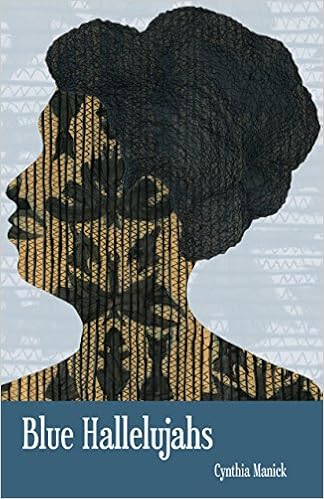
Blue Hallelujahs - Cynthia Manick (Black Lawrence Press)

Today's book of poetry:
Blue Hallelujahs.  Cynthia Manick.  Black Lawrence Press,  Pittsburgh, Pennsylvania.  2016.


"we don't choose what haunts us"
                                                                                               from Mind the Gap

Today's book of poetry can tell you that these poems are declarations, prayers, confessions and pleas, all of them vividly feminine and highly charged.  Cynthia Manick's Blue Hallelujahs is a strong woman's voice telling the stories of young girls, young women and old women too.  These are stories that don't see the light of day often enough.  Even though women read and write more poetry than men - men publish more poetry than women.  

Manick wrings joy out wherever she can find it and like her grandmother's kitchen, these poems will bring you that "slow applause under the skin."  Tyehimba Jess suggests that Blue Hallelujahs is necessary music for getting to the other side.  Today's book of poetry certainly felt the tug.

Mind the Gap

Little E wants a smile like mine,
teeth with a gap so wide
a corn husk and tugboat
could pull through.
Or a submarine, lost sounds
and grunts. Tiny light bulbs
if you're careful or a string
of Christmas lights looped
through like garland.

Does she know how the world
works? How some of us
are born without 40 acres
and the weight of a mule
on their chest. Like my mother
and Monday mornings --
boarding the F train and two buses
with two children, her own negro
caravan. A sonata full of low-watt
clinics and hurling vowels
like swords. How I often waited
in those long-ass lines
and imagined myself a boy,
a whirlwind digging in the muck
where only muscles and gold matter.

My tongue tries to reason with her
ring against the want -- cause
we don't choose what haunts us.
When I was young I craved closed
spaces, bright veneers, the smile
of Rudy Huxtable or on bad days
Shirley Temple. No one notices
a mouth when Bojangles is dancing.

...

Today's book of poetry is uncertain of how to address the obvious so feels compelled to say it - these poems are about a young Black woman and her experience of the world and I'm an old white man, so how could I possibly relate?  Is that an unreasonable question?  Cynthia Manick does all the work bridging that gap by writing poems that are wide open and crystal clear.  The strong women in these poems are familiars and we admire their unrelenting belief that the world is changed with every strong foot put forward.

Manick's poems are confident and certain, powerful meditations on family, gender, childhood and race.  Today's book of poetry enjoyed that Manick employs an innocent sense of wonder in her voice from time to time in these excellent poems.  Resilience is rare enough but adding wonder gives these poems additional charm.

Manick is comfortable with adding some smolder to her plate.  These poems are cradle to the grave stories about family for good and bad, but when Manick warms the sheets that all fades to the shadows.  Cynthia Manick captures the primal and caresses it with subtle sweetness.

Recipe for Consummation

Your seasoned skin --
            one quart Egyptian
            the shade of balsa honey,
            one part Cubano
            with a dash of cayenne pepper,
            and one half buttered South--
is a scratch 'n sniff insert
more savory than Old Spice
            or Sara Lee;
and I claw it nightly
like oranges or sand
to whispered chants
           of sweet meat sweet meat
and bareback tongues
            in our bedroom,
until shuck sheds
            like a coiled rope
            of dark stars.
I drink it down
pelvic-deep,
            so that my body
            remembers
            the brown bounty
of your herbs and spine
in the morning.

...

Blue Hallelujahs has its share of righteous indignity, these poems are never shrill or pained but they certainly are sharp and pointed when Manick puts her foot down.

Another great morning read at the Today's book of poetry offices.  The sun is shining in our town this morning which is a treat, we've had snow nineteen of the last twenty-five days.  We all took turns reading Cynthia Manick's Blue Hallelujahs until there were none left to read.

When I Think of My Father

I live in constant fear of extinction,
that I'll be pulled back to muddy toes
and pear trees. Praised for wide hips
and a silent mouth that wants
to scream, echo, grunt, but can't.

Or that I'll meet a man just like my daddy,
tether my back to his name like a spine
where each cord holds large teats filled with children
and more children like little benign tumors.
And when he slips his hand under my skirt
I'll know he doesn't love me -- just the malleable
skin that's spreads north and south,
guided by his un-mutable compass.

When I think of my father I can only see
my mother at her knees, chanting he's gone
Cyn, he's gone, pairs of discarded
blue jeans on the floor, my mother
fingering the silver buckles like a totem
to lure him back --
from some other woman's scent.

She silently demands my twelve-year old
self to hold and rock her body
like a pair of marsupials -- her rooting
my chest for safety, me exposed to the cold
air of their bedroom. I try to be stone,
brine the carnage in my throat
swallow her overripe voice of muscadines.

Falling into the bodies of baggy pants
boys at corner stores -- their pockets
full of candy and cake. What they don't
give me, I steal. What I steal, I eat.
I eat to fill a gangrene hole stuffed with bills,
deeds in my father's name, blocks
of state-issued butter and cheese.

I want to take a blade and cut
the edge of this round red wound.
Have daughters born not ready
to fear, but ready to pick up a spade,
dig a ditch, and knife a man.

...

Today's book of poetry has nothing but esteem for the voice of Cynthia Manick.  I wish her strength on all our daughters and sisters.

Blue Hallelujahs is Cynthia Manick's first book of poetry, it's as powerful as it is promising.

Manick Cynthia
Cynthia Manick
Photo:  Sue Rissberger

ABOUT THE AUTHOR
A Pushcart Prize nominated poet with an MFA in Creative Writing from the New School, Cynthia Manick has received fellowships from Cave Canem, The Hambidge Center for the Creative Arts & Sciences, the Callaloo Creative Writing Workshop, Hedgebrook, and the Vermont Studio Center. She serves as East Coast Editor of the independent press Jamii Publishing and was a 2014 finalist for the New York Foundation of the Arts Fellowship in Poetry. Her work has appeared in African American Review, Bone Bouquet, Callaloo, DMQ Review, Kweli Journal, Muzzle Magazine, Sou’wester, Pedestal Magazine, Passages North, St. Ann’s Review, and elsewhere. She currently resides in Brooklyn, New York.

BLURBS
The speaker of Cynthia Manick’s haunted debut collection admits “a love for surgery porn at 1 a.m.” And one early poem begins, “Today I am elbow deep/in some animal’s belly//pulling out the heart and stomach/for my mother’s table.” Throughout, Blue Hallelujahs approaches aspects of a woman’s development—from “feet first” Caesarean delivery to a grandmother’s admonition “to pull flesh/from the throat not the belly”—blade at the ready, moving from slaughter to surgery to a kind of deep southern haruspication. At the center of girlhood we find The Shop with its inventory of inherited hungers. “Is this what the heart eats?” Manick renders visceral a longing to avoid extinction, to escape the museum, to live fully embodying one’s identity as a woman who “knows/ how to wield a knife.”
     —Lyrae Van Clief-Stefanon, author of Open Interval, a 2009 National Book Award Finalist

"What we remember is what we become. Rocking chairs holding mothers and "animals that root the ground for peaches, bones and stars." In Blue Hallelujahs Cynthia Manick holds fast to what brought us across. These are not the things you will hear about Black people on the nightly news. But they remain the things that lock the arms of Black people around Black people when we need what we need to keep moving on. I am so grateful to this sweet box of sacred words."
     —Nikky Finney, Author of Head Off & Split, Winner of the 2011 National Book Award for Poetry

Cynthia Manick's Blue Hallelujahs bring us to a broil like Koko Taylor's "white-toothed love coils on repeat." Here, we have a gospel of womanly sharpness, a kitchen sinked and hot combed diary of the way Blues grinds into the 21st century. Gifted with the ability to smolder into surprise and swelter, Manick's reflections on discovery and loss will bring you to a "slow applause under the skin." Thank you for this bouquet of sheet music filled with church organ and pistol smoke, Ms. Manick. We gone need it to get to the other side.
    —Tyehimba Jess, author of leadbelly, winner of the 2004 National Poetry Series

Hunted 2
Black Poets Speak Out
Cynthia Manick

blacklawrence.com

552

DISCLAIMERS

Poems cited here are assumed to be under copyright by the poet and/or publisher.  They are shown here for publicity and review purposes.  For any other kind of re-use of these poems, please contact the listed publishers for permission.

We here at TBOP are technically deficient and rely on our bashful Milo to fix everything.  We received notice from Google that we were using "cookies"
and that for our readers in Europe there had to be notification of the use of those "cookies.  Please be aware that TBOP may employ the use of some "cookies" (whatever they are) and you should take that into consideration.

Monday, May 30, 2016

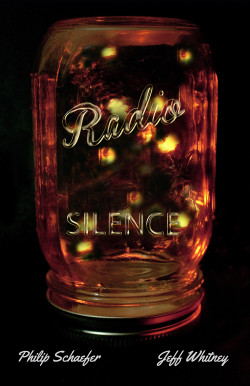
Radio Silence - Philip Schaefer & Jeff Whitney (Black Lawrence Press)

Today's book of poetry:
Radio Silence.  Philip Schaefer & Jeff Whitney.  Black Lawrence Press.  Pittsburgh, PA.  2016.

Winner of the Black River Chapbook Competition.

Schaefer_Whitneycw

Startling good poetry.  Somehow Philip Schaefer and Jeff Whitney have morphed themselves into a single entity with one marvelous fearsome voice.  Radio Silence crackles with intelligent energy all the way through.

Schaefer and Whitney do not reveal their seamless technique and it is impossible to decipher where one voice stops and another starts.  These guys didn't edit Radio Silence, they invisibly mended it.

Road Mapped

There is the giving and the taking and the taking
back. There is the day and the day is a woman
who loves you. There's a boy with a thumb
no bigger than the moon. There are rabid dogs
in packs of three, a moment to call it poverty, a dead
dust bowl idea of wealth, a dead child in a posthole,
delicious intent turned sour, a country going west.
There are buffalo who stagger boulder-like
in the dark. A coyote who has not eaten, a small
steady biting at her center. There is the bell
in a town no one rings, a statue's weeping,
and there is the weeping of those who visit her,
arms extended, supplicant as grass. There is
the marching of soldiers into villages
and the shrieking of ballistics in the night.
The dullness of blood and a trunk of dolls
lodged in the branches of a tree. There is the robe
his mother wore, pink with one yellow flower,
ribboning like the flag of a ruined country.
There is the sighing of holy men who do not pray
for the end of suffering but for the end of our willingness
to accept it. The ungulate that offers its neck to the river.
Candle flames ghosting around in the ungentle air.
That painting of the boy rowing out to an anchored galleon.
There is his happiness in going and his dread
and both are small spiders that live in the catacombs
of his nights. There are the people who could not resist
the sweetness of falling, the bridge with Plexiglas
and the bridges without. There is a woman
staring in the distance at a carnival, a mother
with dull insidious fruits clumped in a sack
near her heart. There are the sad notes of the mandolin,
the old hurts we remember wrong, all trembling, all curling
like smoke. Made from flaring ghosts. Whistled thin.

...

The poems in Radio Silence are all highly polished and full of sharp edges.  You will want to pick them up and turn them around in your hands but inevitably you will get nicked.  There's no getting away from Schaefer and Whitney without some blood letting.

"ribboning like the flag of a ruined country"

That's not a line of poetry!  That's a novel, and a damned good one.  These guys have salted every poem in Radio Silence with charms like this.

Vivisecting

The first out is the heart, small
gourd pulled from a wet pocket
of the body promised heaven
whose soul would come back
in a swell of insects or dry season
rain, who would become
for a night the moon's dull glow.

Then the doctor, half-clothed,
holds up the dark glob shining
to bring on the ten thousand
stars like the blinking eyes of gods.

This is the madness we dance for
hoping life fire to learn
the world the way a sloth learns
a tree's particular curve,
to come apart piece by
bloodied piece knowing nothing
goes back, to call home
the difficult weather, the severed
soul, the ball-to-glove thud
of figs in summer falling
each morning to mulch.

...

Milo, our head tech, and Kathryn, our new Jr. Editor, led our morning read.  Now they are huddled up in the corner of the office trying to decipher where Schaefer ends and Whitney starts, vice versa and so on.  Like trying to find the zipper on an apple -- it's not there.

Today's book of poetry never tires of poetry as smart as this, Radio Silence is full of urgent poems that are in no hurry.  These poems are as carefully laid out as the mosaic tiles that tell the sad history of the story of the world.  Some books take more out of you than they give, this isn't one of them.  Radio Silence starts rewarding the reader on the first page and leaves us wanting more on the last.

Not sure how to tell you that these poems are of a particular order.  Today's book of poetry wants to belong to that club.

Grief

Call it a snake curling between the chords
of a piano in your ribs, a snail that shimmies
across the sharp part of a blade.
Call it simple. Call it a woman
you've never met.

A house is always old
and there are many species of dark.

Call it a house or many species of dark,
a desperate watermelon salesman
burning his last field while miles away
children play the game of the lost dead
astronaut. they wander into the orchard
and retrieve the farthest fruit
then practice the difficult art
of coming home.

Call it gun metal rusting in the fences
like the wind's diamond tooth
while we have nothing to do but look,
let the hours stake out our bones, admire
what has learned to last.

     *     *

Last night wild dogs made fireworks
of the farmhouse chickens. A screaming
mural impressed against the picket fence.
We sleep through everything until we don't.
Today the sun is an artist gluing mountains
in crimson blues, splitting faces
of the corner drunks, pulling orange trees
from the pockets of the dead.

     *     *

There are words we can never say.
We have our tongues until
they're gone. Somewhere far
a gunshot, a crow,
a field of lightning writhing
to tell us we are wrong.

...

Philip Schaefer and Jeff Whitney must resemble the Matt Damon and Greg Kinnear characters in the Farrelly Brothers' movie "Stuck On You," conjoined twins stuck together at the hip.  I bet right now they are flipping immaculate burgers at some back road diner and writing magnificent poems on their breaks.  

First-rate.  Five star.


Philip Schaefer

Jeff Whitney

ABOUT THE AUTHORS
PHILIP SCHAEFER is the author of three chapbooks. [Hideous] Miraculous is available from BOAAT Press, whileRadio Silence (forthcoming 2016 from Black Lawrence Press) and Smokes Tones (available from Phantom Books) were co-written with poet Jeff Whitney. Individual work is out or due out in Thrush, Vinyl, The Cincinnati Review, Forklift Ohio, DIAGRAM, Sonora Review, H_NGM_N, Guernica and Hayden’s Ferryamong others. He tends bar at a craft distillery in Missoula, where he received his MFA from the University of Montana.

JEFF WHITNEY is the author of The Tree With Lights In It (Thrush Press, 2015) as well as two other chapbooks. His poems have appeared in journals such as Beloit, Blackbird, Cream City Review, Narrative, Poetry Northwest, Salt Hill, and Verse Daily. He lives in Portland, where he teaches English.

BLURBS
Philip Schaefer and Jeff Whitney have closed their eyes and listened: weathers, dance halls, bright-and-darkening towns…the blaze of certain silences, “flaring ghosts.” Radio Silence is an exquisite dream of transport.
     —Joanna Klink, author of Excerpts from a Secret Prophecy and Raptus

In these collaborative emergency poems, Philip Schaefer and Jeff Whitney remind us that silence doesn’t need to be disconcerting, even “in the chop of a storm/only the future saw coming.” But Radio Silence doesn’t fill in the gaps in transmission. Instead it attends to what emerges from those gaps when one really listens: Silence becomes noise; noise becomes music; music becomes a message—an old friend saying the perfect next thing. “There is the giving and the taking and the taking/back,” but what’s more there is what’s left over in the wake of disappearance, the afterglow of vanishment, the haunted present moment. These poems crackle with the notion that we are never alone, if we can only allow ourselves to pay attention (and participate!) with imagination and faith, in awe of the darkness and light that surrounds us.
     —Matt Hart, author of Debacle Debacle and Sermons and Lectures Both Blank and Relentless

blacklaurencepress.com

476

DISCLAIMERS

Poems cited here are assumed to be under copyright by the poet and/or publisher.  They are shown here for publicity and review purposes.  For any other kind of re-use of these poems, please contact the listed publishers for permission.

We here at TBOP are technically deficient and rely on our bashful Milo to fix everything.  We received notice from Google that we were using "cookies"
and that for our readers in Europe there had to be notification of the use of those "cookies.  Please be aware that TBOP may employ the use of some "cookies" (whatever they are) and you should take that into consideration.

Friday, September 19, 2014

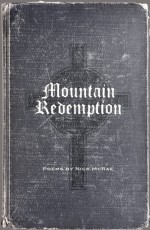
Mountain Redemption - Nick McRae (Black Laurence Press)

Today's book of poetry:
Mountain Redemption.  Nick McRae.  Black Laurence Press.  Pittsburgh, PA.  2013.


"Miracles can't save us from our fears - "  says Nick McRae in the poem 'Pessimists Guide to Miracles'.  But perhaps poetry can help us understand the relationships that govern our congress.

McRae just sounds so true.

These poems read like sermons dispatched from some higher plain, yet McRae is never speaking down to his readers.  That's some fine juggling.

That's some fine poetry.

Mountain Redemption

When Ottis Wilkins lost his arm,
he burned his tiny sawmill down
then sold his long-dead in-laws' farm
and moved his family into town.
He opened a barber shop
and hired his sons to sweep and mop
the place each day and brew coffee
for the men who came to see
the one-armed barber. Inch by inch,
the fresh-barbed rose up from the seat
like sinners from the mourners' bench.

Petunia Eckert's heart was broken
down and blown out like a tire.
The skinny girl she loved had taken
all Petunia's pluck and fire
and moved to Blue Ridge. Petie took
to church and, Sundays, wailed and shook
and made the preacher smile. That summer
Pete got work as a part-time plumber.
In basements she would flail her wrench
and watch rats, terror-maddened, clamber
like sinners to the mourner's bench.

Old Jackie Raburn didn't hold
with killing. Even the mice and snakes
that shimmied nightly over the cold
stones of Jackie's floors caught breaks
no other man would care to give them.
He had a shotgun, though, one trimmed
with etched brass plates. Some days he'd haul
the thing outside and discharge all
his shells at the ground and blast a trench
in it, then wait for silence to fall
like sinners to the mourner's bench.

Whenever Sheriff Biggers drank,
and that was often, he revved his Chevy's
engine up, sped past the bank
and dingy Main Street shops with a heavy
foot and siren wailing just
to see the townsfolk gawk as the rust-
and dirt-stained cruiser barreled by.
Once, he had to shoot a guy
to death. He watched the man's jaw clench,
his dead eyes lifted to the sky
like sinner's from the mourner's bench.

Preacher Greene, a handsome man,
a widower of just a year,
made all the married women fan
themselves and smile from ear to ear
when he preached of David's lustful pride
or the spear that pierced the Savior's side.
At home, the phone set off the hook,
he's open to his favorite book--
Song of Songs--then feel the pinch
of chaste Paul's thorn as his fingers shook
like sinners on the mourner's bench.

And mountain people--hard as limestone,
rich as black silt, deep as clay--
dreamed each night of valley towns
where valley cornstalks stood up tall
like sinners from the mourner's bench.

...

McRae's mountain landscapes and people would almost seem to be carved out of another time and sensibility.  McRae's great gift, one of many, is that he bridges the gap between rural mountain understanding and those of us in the valleys with fierce candor.

These narrative poems echo.

Deacons Meeting

Five men smoke outside the convenience store
that doesn't exactly have a name. Over the door
hangs a sign: COLD BEER CHEAP GAS.
The men smell of hay and cow and hot skin.
Two perch on a tailgate, their boots
barely scraping the gravel.
One wears a damp red hat and he lifts it
to wipe sweat from his balding skull with a rag.
The one in the white t-shirt swears
and says, hell hath no fury like a woman's scorn,
that's what the Bible says, and the one
beside him disagrees, reckons it's not even in the Bible.
The hell it ain't, the other says, because he knows
it's a good one and all the good ones
come from the Bible. The sun pours out wet heat
like a steam engine and the ground
radiates and the hood of the truck shines dully,
reflecting in the eyes of a hound
whose tongue lolls and who hogs
the only bit of shadow cast by an old turnkey
Coke machine. The older one get to explaining
how that ain't necessarily so when high above
in the hot sky a jet breaks the sound barrier
with a jarring crack and the five men and the dog
crane their necks upward to figure out
where exactly it's flying to. I bet that sumbitch
is headed to Warner Robbins, one of them says.
Naw that's north it's headed, says another,
I betcha it's headed to Chattanooga,
and the shirtless one with the stubbled jowl
who has until now been silent
figures it's about damn time they talked about
something else besides women.

...

There is much dramatic tension in Nick McRae's Mountain Redemption.  It is a dark and cold world that does not favor the weak.  This narrative is about hard people in hard situations having to make hard choices.  But there is also a sense of hope.  McRae shows a sense of optimism as he hammers out Christian myths on the unrelenting anvil of the mountains.

Orpheus in Huntsville, Alabama

My mama, godly as she was,
never forgave my daddy for quitting
the church. For politics. She couldn't.
She'd always wanted to marry a preacher,
and married one, but then he ran
for mayor and won. The king of Huntsville.

Years later, when her mind was gone,
she told me how he'd lay her down,
his fingers circling her bellybutton,
breathe the scripture into her neck--
Thy navel is like a round goblet
which wanteth not liquor--and take her
with biblical authority.
She said that, once he'd shed the cloth
his touch no longer felt the same.
How could it? He forsook the Spirit.

Now both of them are long buried.
But daddy taught me the fiddle, and mama
sang her hymns so sweet they shimmied
out her throat and into mine.

...

Nick McRae illuminates the world these poems exist in from within with a language both borrowed from and steeped in the past - he does this in a thoroughly modern way.  Seamlessly.

There is no evidence of a white collar around McRae's neck but make no mistake, this Biblical diction comes from a broader sermon.  McRae gives body and depth to all his assertions by providing unanswered questions to ponder.

What is basic goodness?  Community?

Mountain Redemption is a surging voice, a choir, attempting to illuminate a vanishing space and time.  These are noble poems.

Nick McRae

ABOUT THE AUTHOR
Nick McRae is the author of Mountain Redemption, winner of the Fall 2011 Black River Chapbook Competition, as well the De Novo Prize-winning full-length The Name Museum (C&R Press, 2013). He is the editor of the anthology Gathered: Contemporary Quaker Poets (Sundress Publications, 2013). His poems, reviews, and translations appear in Cincinnati Review, Hayden’s Ferry Review, Linebreak, The Southern Review, Third Coast, and elsewhere. He serves as associate editor for 32 Poems, poetry coordinator for the annual Best of the Net anthology, and is a member of the Sewanee Writers’ Conference staff. Born in Chattanooga, Tennessee, and raised in the Northwest Georgia foothills, Nick earned an M.F.A. in creative writing at The Ohio State University and is currently a Robert B. Toulouse Doctoral Fellow in English at the University of North Texas.

BLURBS
"In Nick McRae's splendid Mountain Redemption, the contradictions of family and faith are hard to hold in balance. They are the fulcrum of a teeter totter that tips back and forth between passion and violence. But as he meditates on growing up in Georgia and the complexities of the faith he was born into, the poet himself is balanced, thoughtful, judicious--and loving. As he struggles to sustain that love, McRae sometimes borrows the cadences--large, passionate, and elegiac--of the prophets he knows so well: "Where, O Lord, is the home I only almost had--/mythic, bloody as a psalm in the mouths/of old and dying men who will take it/ with them wholly when they go?"
     Andrew Hudgins, author of American Rendering: New and Selected Poems

"These rich and strange but familiar and American poems remind us that the roots of the American language are in Jacobean English, the English codified in the King James Authorized Version of the Bible--a text often quoted in this book. In every mark of dialect, in every turn of a country phrase, we still hear a language that Shakespeare and Jonson would have recognized. But the experience--what would they have made of that? It is familiar to us, it is authentic, and this latest rendering reminds us that our language originally redeemed the heart and soul of English. Nick McRae's book prods us with the memory of that redemption. It is one to treasure.",
     Mark Jarman, author of Bone Fires: New and Selected Poems

Nick McRae - Paging Columbo
May 10, 2012


247