Showing posts with label sina queyras. Show all posts

Tuesday, August 21, 2018

Stereoblind — Emma Healey (House of Anansi Press)

Today's book of poetry:
Stereoblind.  Emma Healey.  House of Anansi Press.  Toronto, Ontario.  2018.

Stereoblind

"these are the kinds of things you own when you cannot control your own future."

"everywhere in this city of the future, people walk arm in arm, discussing their childhoods."
                                                                                                               — Emma Healey

Everything I am about to tell you is true.

Everything that happens in Emma Healey's diaphanous Stereoblind is true.

Everything that happens in Emma Healey's deuteronomously delightful Stereoblind may be dreamspeak.

Every dream Emma Healey lets you/us in on, in fact, may be a real event and all real events may be dreams.  And so on.

And already Today's book of poetry is misleading you about Stereoblind.  It is not as deliberately complex or confusing as our comments suggest.  In fact, when you are reading Stereoblind, and once you start it is hard to stop, Stereoblind has both it's own gravity and it's own centrifugal force.  You get pull, pulllled, pullllllllled into Healey's stream of unconsciousness, all the while marvelling at how comfortably at home you are in these poems.

There are short poems that flit across your eyes like a swift in flight, skittering across your line of sight just long enough to marvel and then there are longer prose poems that spiral through the air, the connections vaporous and ethereal, the white noise between dreams.  Yet Healey makes it all work as simply as tic tac toe.

Stereoblind works wonderfully well.  The reader doesn't browse these poems, you are compelled forward like a new convert being introduced to a new holy text.  Healey simply pulls you forward and off of your feet before you know what has poetry slapped you.

from Forced Swim

Sometimes the question of what is made inside or outside
the body feels pressing. I'll be out in the world by myself,
among others—at the gym, running on the treadmill, or in
the grocery store, staring up at a punishing multiplicity of
hummus—and all of a sudden I know something endless
and dark wants its way through me, wants to take my
bones out one by one, to swallow and dissolve. In these
moments, the world drops away and I stand there
forever—my face strange, my fists tiny and strange—
sweating under the fluorescents. In these moments, I can
feel the things it's already claimed, aching just outside my
reach, like phantom limbs.

💫💫💫

Emma Healey isn't content with re-arranging our understanding of dreamworld, she manages to throw in footnotes, sudden shifts in light, direction and volume, and it works.  These poems move the reader forward with an unsuspected weight, they have a hidden velocity.

All of this happening in poems tenderly disguised as an odyssey in modern living.  Healey plays it all out on a canvas only accessible through Stereoblind.

Our morning read was held in an almost empty office.  The Today's book of poetry minions are all away on holiday or attending to personal issues.  None the less we managed to give Healey's Stereoblind around the office and the results were surprising.  Stereoblind lent an air of cool calm to the office, and in the face of many impediments.  We're usually blasting some sort of jazz through the speakers but Radiohead seemed called for this morning.

Ontario Today

The guy wants to know if he can prune his spruce himself;
he's worried about wind. How big exactly is this tree? asks
Ed, his cadence level, tone bemused. I can't fit my arms
around it, goes the guy. Which, look: kitchen table, chairs,
dog, sink, weak sunlight, radio, your front lawn in the
bruise and split of sunrise, kids and wife asleep. The spruce
predicting shadows in the driveway, how it croons and
keens against the night in the key of future, denting,
vantage, glass outside your bedroom. How insurance is a
prayer misfiring, how deep green makes your tongue taste
rust for weeks. How you can't but gaze into a pool of water,
Ed, without a spray of needles shattering the edges. How
the air can do you violence, speaking skips against the
present, reference fails and fails again. Maybe we have to
do it this way—voice and air and wires and distance. Trust.
Maybe the only metric is attempt: what can be held by you.
What you can stand to hold.

💫💫💫

Nothing Today's book of poetry is going to say will do justice to the "in the kitchen" level of comfort you are going to feel when you walk in to Stereoblind.  And as soon as you settle in there, Healey shifts quiet gears and you are in a Joni Mitchell "dreamland, dreamland, dreamland."  These are splendid places to be.

Today's book of poetry enjoyed Emma Healey's Stereoblind the way you enjoy an afternoon matinee during the blistering dog days of August.  A cool calm somewhere just east of dreamland, dreamland, dreamland.

Beautiful Boys

Pink silk jackets. Feathered hair, impeccable skateboards,
liquid jawlines, triplicate. Thin hands gripping thin
forearms, in a pyramid in order the Beautiful Boys
doppling down your street like a snake, or the dream you
had about a snake. Taken together they sing like distant
pavement in a heat wave, colour warbling at the edges like
a melted VHS, craft beer dying in the backs of all their
throats like a bad secret. Eyes like wrenches. Skin like
petals. Wheels that whisper to the pavement as they pass
under your window: please yes please yes please yes please

💫💫💫

Today's book of poetry regrets that we've been sporadic of late, there have been some absences in our office and so on.  But we are terribly happy to present Emma Healey and her splendid Stereoblind.  This is the book of poetry you need to buy today.
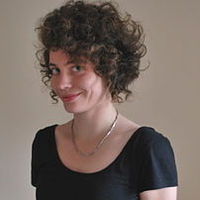

Image result for emma healey photo

Emma Healey

ABOUT THE AUTHOR
EMMA HEALEY’s first book of poems, Begin with the End in Mind, was published by ARP Books in 2012. Her poems and essays have been featured in places like the Los Angeles Review of Books, the FADER, the Hairpin, Real Life, the National Post, the Globe and Mail, the Toronto Star, the Walrus, Toronto Life, and Canadian Art. She was poetry critic at the Globe and Mail (2014–2016) and is a regular contributor to the music blog Said the Gramophone. She was the recipient of the Irving Layton Award for Creative Writing in both 2010 and 2013, a National Magazine Award nominee in 2015, and a finalist for the K.M. Hunter award in 2016.

BLURBS

PRAISE FOR BEGIN WITH THE END IN MIND: 
“Who needs a tightrope to stroll across Niagara Falls when you have the prose poem — pliable, surreal, infinitely hackable. These poems from Emma Healey signal the arrival of an exciting, nimble, new voice.” 
     — Sina Queyras

“Healey’s work operates close to the edges of contemporary poetic discourse — and sometimes beyond them . . . but [it] is also concerned with the experience of life lived in the personal present. A poet well-versed in critical and theoretical discourse but who also has a keen eye for the everyday and the real.” 
     — Philip Coleman, Penny Dreadful (Ireland)

“A bit confessional, a bit surrealist, a bit Miranda July, and very New Sincerity . . . These poems dance and ramble, propelled by an earnestness that can’t help but charm.” 
     — Nico Mara McKay, Broken Pencil


houseofanansi.com

714

Thursday, June 16, 2016

Barking & Biting - Sina Queyras (Wilfrid Laurier University Press)

Today's book of poetry:
Barking & Biting.  Sina Queyras.  Selected and with an introduction by Erin Wunker.  Laurier Poetry Series.  Wilfrid Laurier University Press.  Waterloo, Ontario.  2016.


"I am not interested in other words for honey. I am interested in honey."
      - Sina Queyras, "Water, Water Everywhere"

Queyras wants to be clear and she is.  This is a straight shot across the bow, full of intent.

Today's book of poetry likes a list poem and Sina Queyras gives us a lemon-tart sparkler with "If Only."  Poetry this smart is always going to turn heads and if Queyras has her way those heads will be more sympathetic, empathetic, reasonable.

If Only

If only men were more feminine. If only Judaism were
more feminine. If only industry were more feminine.
If only bridges were more feminine. If only trucks
were more feminine. If only airplanes were more
feminine. If only fruit were more feminine. If only
engines were more feminine. If only economics were
more feminine. If only test tubes were more femi-
nine. If only physicists were more feminine. If only
space were more feminine. If only Hollywood were
more feminine. If only America were more feminine.
If only farmyards were more feminine. If only the
weather were more feminine. If only Islam were more
feminine. If only engineers were more feminine. If
only city planners were more feminine. If only femi-
nists were more feminine. If only Catholicism were
more feminine. If only politicians were more femi-
nine. If only astronauts were more feminine. If only
corporations were more feminine. If only women
were more feminine. If only what was feminine were
firm. If only there were slots. If only things fit inside.

...

Barking & Biting is a tasting menu of sorts brought to you courtesy of the deft hand of Erin Wunker. Wunker's choices nip and tuck from some much longer works to bring us surprisingly self contained poetic essays on gender with both Holly Golightly and Virginia Woolf among the cast of luminaries.

And exactly as a tasting menu should, these bites leave us wanting more.

Sina Queyras writes poems that evolve in front of your eyes, they play with being short stories, novellas, epic.  Queyras has much to say about gender in these poems and her articulate charms add gravitas but never vitriol.

From Meanwhile, elsewhere, otherwise
     "Some other poets and the puddle"

          'When for no reason I could discover, every-
           thing suddenly became unreal.'
                                                              Virginia Woolf

She didn't notice the puddle. She was busy unravel-
ling the pavement. She clip-clopped past. She had
serious business. The words in her head were pleas-
ing her. She liked the sun. The smell of meat sizzling
called out to her. Language needed to be parted,
ordered. The children irritated her as they played in the
puddle. They were noisy. It was not her business.
There were no books in the playground, but there
were shapes to things. Sentences combusted. No
one recognizes. The words in her head grew cold.
They needed a rest. Her feet had an idea. She
thought they meant business. She saw herself in
everything and everything was good.

She saw the puddle as pewter. She swallowed it sweet
as figs. She saw it nestled in the cleavage of plum
girls. She held them over her head and cracked their
legs.

She saw the universe in the puddle. She saw a slide
show of organic compounds. She saw the key and 
the key fit. She saw the genital-less amoeba as a
hero. She put her ear to the puddle but she was no
naive child; she was listening for the rumble of
trucks, not the sweet musing of water beetles.

She waited until winter and when the puddle froze
over, she glided across it. She sat in the summer heat
and was content. She lifted the puddle and slid it
down her arm like pancake. She invited a girl gang
over and drank it. She had no puddles on her street.
She had no street. She leapt over the puddle on
horseback in pursuit. She saw streams of Nazis skim-
ming book black across the surface. She thought she
heard the apostles and so kneeled down to pee. She
dove in, scraping her nose. She had her father drain
all the puddles in the village. She splashed. She leapt
and bombed it with rocks. She floated and toppled
heads of Barbie dolls. She walked around. Then she
walked around again. She heard men flinging mud
and arranged a blanket of oak leaves across the
surface. She did a cartwheel. She knit a scarf out of
the letters R and E which she wound round and
round and round.

...

Queyras comes up with a phrase that Today's book of poetry has never encountered before when she says that "Lyric Conceptualism's goal is to create openings rather than closures."  This quote from the Sira Queyras poem Afterward: Lyric Conceptualism, A Manifesto in Progress is a succinct summation of the idea of these poems.  But it doesn't quite address the feeling that they create, this feels like a conversation that all are welcomed to listen to.  As robustly feminist as Queyras can quite rightly be, there is no matriarchal man-bashing, compassionate intelligence reigns here.

Kathleen, our Jr. Editor, took control of this morning's reading and made sure to include everyone.   Sina Queyras sailed around the room and over our heads like a wise hot-air balloon.

Proverbs of Hell

The body sublime, the heart SUV.
Fuel your plow with the blood of war.
Drive your car on the bones of the dead.
The road of CO2S leads to rising seas.
He who is preoccupied with the afterlife pisses on the present.
So the price of oil goes, so goes the number of wars.
A fool sees product; a wise man sees shade.
He who sullies the earth sullies himself; he who dulls the sun
     dulls his senses.
The future is the reversal of destruction.
Even a bee's too busy.
Profits are measure by the dollar, but read profit cannot be
     measured.
A wholesome food comes in fewer than sixteen pieces from
     seven states.

Prisons are built with the bricks of luxury items.

Let man wear the fell of the hemp see, woman the fleece of
     cotton.
The bird a thought, the spider a path, the mind the means.

What was once proved and known is now only rarely imagined.
What was once used to imagine now operates software.
The rat, the mouse, the starling, the squirrel; the lion, the
     tyger, the elephant, the whale -- only the useless, or root
     less, survive, otherwise; extinction porn.
The cistern pollutes, the fountain overflows, is of no use to
     itself.
Once thought filled immensity; now it purchases goods.
To speak your mind is to be unpatriotic; to be human, then,
     is to be unpatriotic.
All things imagined must be images of truth; all things
     created must be fragments of our imagination.

The eagle never wreaked so much havoc as when he
     submitted to the whims of profit.
The eagle provides for himself, but the air provides for the
     eagle.
Want in the morning. Buy at noon. Buy in the evening. Buy
     in your sleep.
He who has suffered you to impose on him knows the market.
As the plow follows the markets, so the market follows itself.
The tygers of the market are no wilier than the corporate dogs.
Expect poison form the standing mind.
The coals of Wall Street, the bricks of despair, the last drop,
     the last grain.
As the cat chooses the warmest place to curl her bones so the
     wise man seeks home.
To create a new kind of flower is the splice of genes.
The best wine is the oldest, the best thought is the first.
Cheerfulness is the hammer of the right.

The expressway is a straight line, but the crooked road
     remains the road of genius.

Where man is, nature is bereft.
Where nature is not man, is not known.
Where nature is not natural, man is not man.

As a dog returns to his vomit, so a citizen to his belief in
     separation.
More is destruction.
Less is the wisdom of the future.
Abundance is all context.
The end of thought is the end of man is the end of earth.
In absentia, in absence, in obsolesce, or obnoxious.
Where nature is, man is not enough.
Enough, or too much. Too much.

Go forth and undo harm.

Go forth and do.

...

How's that for a taste of the menu.  Queyras bounces around ideas like cartwheeling jackhammer.

Barking & Biting is the first poetry by Queyras that Today's book of poetry has encountered but we'll certainly be searching for her others now.

Sina Queyras

ABOUT THE AUTHOR
Sina Queyras is an accomplished poet and essayist. She edited the first anthology of Canadian poetry published by an American press (Open Field: 30 Contemporary Canadian Poets). Between 2005 and 2007 she co-curated the path-breaking feminist Belladonna* reading series in New York and was instrumental in bringing Canadian and American poets into conversation. She has published six books of poetry and a novel, Autobiography of Childhood (2011). She received the Pat Lowther Award and a Lambda Literary Award for Lemon Hound (2006). Her most recent book of poetry is MxT (2014).


ABOUT THE EDITOR
Erin Wunker is the chair of the board of the national non-profit social justice organization Canadian Women in the Literary Arts (CWILA) and co-founder, writer, and managing editor of the feminist academic blog Hook and Eye: Fast Feminism, Slow Academe. She teaches Canadian literature and culture at Dalhousie University. Her book The Feminist Killjoy Handbook will be published in the fall of 2016.

Sina Queyras

This video is from Fred Wah's Parlimentary Poet Laureate Series.


482
DISCLAIMERS

Poems cited here are assumed to be under copyright by the poet and/or publisher.  They are shown here for publicity and review purposes.  For any other kind of re-use of these poems, please contact the listed publishers for permission.

We here at TBOP are technically deficient and rely on our bashful Milo to fix everything.  We received notice from Google that we were using "cookies"
and that for our readers in Europe there had to be notification of the use of those "cookies.  Please be aware that TBOP may employ the use of some "cookies" (whatever they are) and you should take that into consideration.