Showing posts with label house of anansi. Show all posts

Tuesday, August 21, 2018

Stereoblind — Emma Healey (House of Anansi Press)

Today's book of poetry:
Stereoblind.  Emma Healey.  House of Anansi Press.  Toronto, Ontario.  2018.

Stereoblind

"these are the kinds of things you own when you cannot control your own future."

"everywhere in this city of the future, people walk arm in arm, discussing their childhoods."
                                                                                                               — Emma Healey

Everything I am about to tell you is true.

Everything that happens in Emma Healey's diaphanous Stereoblind is true.

Everything that happens in Emma Healey's deuteronomously delightful Stereoblind may be dreamspeak.

Every dream Emma Healey lets you/us in on, in fact, may be a real event and all real events may be dreams.  And so on.

And already Today's book of poetry is misleading you about Stereoblind.  It is not as deliberately complex or confusing as our comments suggest.  In fact, when you are reading Stereoblind, and once you start it is hard to stop, Stereoblind has both it's own gravity and it's own centrifugal force.  You get pull, pulllled, pullllllllled into Healey's stream of unconsciousness, all the while marvelling at how comfortably at home you are in these poems.

There are short poems that flit across your eyes like a swift in flight, skittering across your line of sight just long enough to marvel and then there are longer prose poems that spiral through the air, the connections vaporous and ethereal, the white noise between dreams.  Yet Healey makes it all work as simply as tic tac toe.

Stereoblind works wonderfully well.  The reader doesn't browse these poems, you are compelled forward like a new convert being introduced to a new holy text.  Healey simply pulls you forward and off of your feet before you know what has poetry slapped you.

from Forced Swim

Sometimes the question of what is made inside or outside
the body feels pressing. I'll be out in the world by myself,
among others—at the gym, running on the treadmill, or in
the grocery store, staring up at a punishing multiplicity of
hummus—and all of a sudden I know something endless
and dark wants its way through me, wants to take my
bones out one by one, to swallow and dissolve. In these
moments, the world drops away and I stand there
forever—my face strange, my fists tiny and strange—
sweating under the fluorescents. In these moments, I can
feel the things it's already claimed, aching just outside my
reach, like phantom limbs.

💫💫💫

Emma Healey isn't content with re-arranging our understanding of dreamworld, she manages to throw in footnotes, sudden shifts in light, direction and volume, and it works.  These poems move the reader forward with an unsuspected weight, they have a hidden velocity.

All of this happening in poems tenderly disguised as an odyssey in modern living.  Healey plays it all out on a canvas only accessible through Stereoblind.

Our morning read was held in an almost empty office.  The Today's book of poetry minions are all away on holiday or attending to personal issues.  None the less we managed to give Healey's Stereoblind around the office and the results were surprising.  Stereoblind lent an air of cool calm to the office, and in the face of many impediments.  We're usually blasting some sort of jazz through the speakers but Radiohead seemed called for this morning.

Ontario Today

The guy wants to know if he can prune his spruce himself;
he's worried about wind. How big exactly is this tree? asks
Ed, his cadence level, tone bemused. I can't fit my arms
around it, goes the guy. Which, look: kitchen table, chairs,
dog, sink, weak sunlight, radio, your front lawn in the
bruise and split of sunrise, kids and wife asleep. The spruce
predicting shadows in the driveway, how it croons and
keens against the night in the key of future, denting,
vantage, glass outside your bedroom. How insurance is a
prayer misfiring, how deep green makes your tongue taste
rust for weeks. How you can't but gaze into a pool of water,
Ed, without a spray of needles shattering the edges. How
the air can do you violence, speaking skips against the
present, reference fails and fails again. Maybe we have to
do it this way—voice and air and wires and distance. Trust.
Maybe the only metric is attempt: what can be held by you.
What you can stand to hold.

💫💫💫

Nothing Today's book of poetry is going to say will do justice to the "in the kitchen" level of comfort you are going to feel when you walk in to Stereoblind.  And as soon as you settle in there, Healey shifts quiet gears and you are in a Joni Mitchell "dreamland, dreamland, dreamland."  These are splendid places to be.

Today's book of poetry enjoyed Emma Healey's Stereoblind the way you enjoy an afternoon matinee during the blistering dog days of August.  A cool calm somewhere just east of dreamland, dreamland, dreamland.

Beautiful Boys

Pink silk jackets. Feathered hair, impeccable skateboards,
liquid jawlines, triplicate. Thin hands gripping thin
forearms, in a pyramid in order the Beautiful Boys
doppling down your street like a snake, or the dream you
had about a snake. Taken together they sing like distant
pavement in a heat wave, colour warbling at the edges like
a melted VHS, craft beer dying in the backs of all their
throats like a bad secret. Eyes like wrenches. Skin like
petals. Wheels that whisper to the pavement as they pass
under your window: please yes please yes please yes please

💫💫💫

Today's book of poetry regrets that we've been sporadic of late, there have been some absences in our office and so on.  But we are terribly happy to present Emma Healey and her splendid Stereoblind.  This is the book of poetry you need to buy today.
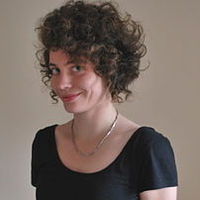

Image result for emma healey photo

Emma Healey

ABOUT THE AUTHOR
EMMA HEALEY’s first book of poems, Begin with the End in Mind, was published by ARP Books in 2012. Her poems and essays have been featured in places like the Los Angeles Review of Books, the FADER, the Hairpin, Real Life, the National Post, the Globe and Mail, the Toronto Star, the Walrus, Toronto Life, and Canadian Art. She was poetry critic at the Globe and Mail (2014–2016) and is a regular contributor to the music blog Said the Gramophone. She was the recipient of the Irving Layton Award for Creative Writing in both 2010 and 2013, a National Magazine Award nominee in 2015, and a finalist for the K.M. Hunter award in 2016.

BLURBS

PRAISE FOR BEGIN WITH THE END IN MIND: 
“Who needs a tightrope to stroll across Niagara Falls when you have the prose poem — pliable, surreal, infinitely hackable. These poems from Emma Healey signal the arrival of an exciting, nimble, new voice.” 
     — Sina Queyras

“Healey’s work operates close to the edges of contemporary poetic discourse — and sometimes beyond them . . . but [it] is also concerned with the experience of life lived in the personal present. A poet well-versed in critical and theoretical discourse but who also has a keen eye for the everyday and the real.” 
     — Philip Coleman, Penny Dreadful (Ireland)

“A bit confessional, a bit surrealist, a bit Miranda July, and very New Sincerity . . . These poems dance and ramble, propelled by an earnestness that can’t help but charm.” 
     — Nico Mara McKay, Broken Pencil


houseofanansi.com

714

Sunday, July 30, 2017

The Corpses of the Future - Lynn Crosbie (House of Anansi)

Today's book of poetry:
The Corpses of the Future.  Lynn Crosbie.  House of Anansi.  Toronto, Ontario.  2017.


Such tenderness amid so much sorrow.  Lynn Crosbie has done that most difficult of things, she has learned, as Maryse Holder insisted upon, to "give sorrow words."  The Corpses of the Future is bursting at the seams with stunning poem after exhilaratingly sad poem.  Crosbie is documenting the demise of her father as dementia drags him incrementally further away day by horrifying day.

Crosbie is singular in her pursuit of whatever dark truths lay ahead -- she is steadfast but lost in the memory of her fully functioning and much adored father.

Slainte Mhath

For David McAskill

The visits have taken on an orderliness that I imagine prison is like, odious and
conciliatory in its steadfast regimen.

What must it be like for him, his mind attacked like a painting altered
with swipes of turpentine, then left exposed.

There are fields of his childhood, alive with tiny raspberries, sharps sticks and
slowpoke turtles, bleeding into his hoodlum teens.

Did you actually rock around the whole clock, I ask him, when my sister suggests
we play his fifties record.

We rocked until the girls said they had to go, or we were too drunk, he says, and
remember vomiting at a party, spills of yellow and green.

A through line of parties with David, his partner in crimes, who visits this August
with a stack of bitter chocolate, and stories my father sits up and shares

Of a detested colleague whose plant Dave sprayed every morning with DDT until
the man wrenched the tended-to, maddening thing into the trash, spiking the
     earth with

A pencil that Dave began treating with paint remover: Nothing can grow in this!
the man despaired,

An open can of sardines left in a heating duct during another colleague's vacation;
hours billed to big steaks and tall beers:

He signs his letters with the Gaelic words for Cheers.

One day later, my father forgets that we were there, but he is desperate,
the heavy bear howls for the bars of chocolate.

He doesn't remember seeing me, but he never forgets who I am,
the most besieged of his platoon, and the most enduring: You're just like me,

He says, and my brother holds his head with infinite tenderness and shaves him,
and I lead him back to bed, in my mind I am lifting him again and he is holding on--

Like Anchises as we stagger through the burning city.

In the very centre of the painting we are untouched by ruin: we are five, furious
and suffering and madly in love.

...

It's a hell of a thing to see your father disappear in front of your eyes only to be replaced by a unfamiliar familiar inhabiting his flesh.  Today's book of poetry has seen this movie from the front seat and it was crippling.  Crosbie has made it art.

This level of honesty could be considered reportage but the uber-talented Crosbie makes it all personal and universal with one sweep of her talented pen.  We survive this painful litany only because Crosbie leads us through.  We get to observe our worst parental fears writ large on someone else's sad canvas.

Elba

My father asked for peace and quiet for his birthday and for Christmas and Father's 
Day, every year.

I want to live like Napoleon, he said. Exiled in silence on my Elba.

In their early fifties, my parents moved to Curacao, one of the ABC islands, just
north of Venezuela.

He worked for some Dutchmen there, moving money around, and my mother
volunteered at an orphanage.

They went to church every Sunday: one Christmas Eve, my father asked my
sister and me to go to the early-morning Mass.

We declined and he offered us money. I'll give you fifty, no, one hundred guilders.
Has it come to this? he said.

They stayed for many years, and on our last family visit we sat at the beach and
watched the sun go down.

Dad disappeared and I went off to find him.

He was sitting in a rowboat, also watching the sun cannonball into the water, in a
great violent splash.

The boat was called the Elba, I noticed.

He had put his shoulder to his dreams. Dad, why won't you get better?

In Curacao, there are hundred of stray dogs, all of them big yellow curs--
fireworks are set off on every holiday,

Huge repeating rockets, poppers, sparklers and shells.

This terrifies the dogs and in the morning you drive the fast streets and keep
swerving,

There are so many dead dogs on the road, who ran there, out of their
minds with fear, only to be struck,

To be battered and ground into peace, then quiet.

...

Somehow, Lynn Crosbie forgive me, it seemed the right thing to do, so this morning during our production meeting I had Milo, our head tech, play Amy Winehouse's astonishing album Frank on the office speakers.  There is absolutely no correlation of narrative between Winehouse and Crosbie, but emotionally Winehouse strives for the same sort of dark clarity that Crosbie insists upon.  

Or maybe I just wanted/needed to break a little of the tender tension in the office.  Today's book of poetry couldn't help but notice the sudden run on phone calls to parents after this morning's read. 

Crosbie writes poems like dominoes, one as solidly constructed as the next, each one solid enough to stand on its own, each one a building block.  Her poetry machine punches these, fully formed, out like clockwork.  The Corpses of the Future comes in at a hefty 140+ pages and there's nary an unnecessary poem.

Lynn Crosbie poignantly goes where we all fear to be and does it with unflinching honesty.  The Corpses of the Future  isn't just a pained tribute to her father, it's a primer for the rest of us on how love overcomes pain.

For the Person Suffering

From dementia, it is traumatic to relive certain events over and over. As such, certain
topics should be avoided--

This is how I started lying to my father.

I read an article by a Dutch doctor, which instructed me never to say, No, Dad,
your mother has died,

To watch his face crumple in confusion and pain.

This spring, when he asked me about our bets on the horse race, I made up names
for the runners, and he added Hurry up Honeybun to the list:

One hundred on the nose! he said.

Later I would try to register the name, and get into an awkward, meretricious
conversation with a horsey sort located outside Leeds.

Today, tired as ever, I listened carefully to my father's story about the football
game.

He was taking me to see the Alouettes versus the Roughriders, but could I call
about the tickets?

Of course I can, I said.

I'm on this damn boat, he said, and I told him I would send Mom the information.

They think I have some illness, he said. Expialadocious.

I repeated the word, as though writing it down.

We've never been to a game before, I said, feeling winded from the little smacks to
my heart.

I want to take you, he said.

He and I are in a fall stadium, drinking spiked coffee as he explains the rules of
football.

We are wearing Als hooded sweaters and once in a while his arm presses against
mine and I double over in pain, reliving the very thought of my father.

Wanting to take me to a game.

...

Today's book of poetry had Milo go to the stacks and he came back with the following:  Miss Pamela's Mercy (1992), VillainElle (1994), Queen Rat (1998), Missing Children (2003) and Liar (2006).  Which reminds us that we are big fans of Lynn Crosbie here at Today's book of poetry but now realize we have some catching up to do on the Crosbie canon.  

The Corpses of the Future could be the crowning achievement of any excellent poetic career but Today's book of poetry is pretty sure Crosbie is just getting warmed up.  The Corpses of the Future will reverberate in the ear of every reader with aging parents, and that is most of us.

This book will be remembered.

Image result for lynn crosbie photo
Lynn Crosbie

ABOUT THE AUTHOR
Lynn Crosbie was born in Montreal and is a cultural critic, author, and poet. A Ph.D. in English literature with a background in visual studies, she teaches at the University of Toronto and the Art Gallery of Ontario. Her books (of poetry and prose) include Queen Rat, Dorothy L’Amour, and Liar. She is also the author of the controversial book, Paul’s Case, and most recently Life Is About Losing Everything and the Trillium Book Award-nominated novel Where Did You Sleep Last Night. She is a contributing editor at Fashion and a National Magazine Award winner who has written about sports, style, art, and music.

houseofanansi.com

592

DISCLAIMERS

Poems cited here are assumed to be under copyright by the poet and/or publisher.  They are shown here for publicity and review purposes.  For any other kind of re-use of these poems, please contact the listed publishers for permission.

We here at TBOP are technically deficient and rely on our bashful Milo to fix everything.  We received notice from Google that we were using "cookies"
and that for our readers in Europe there had to be notification of the use of those "cookies.  Please be aware that TBOP may employ the use of some "cookies" (whatever they are) and you should take that into consideration.