Showing posts with label william faulkner. Show all posts

Tuesday, January 17, 2017

Nineteen Fifty-Seven - Jim McLean (Coteau Books)

Today's book of poetry:
Nineteen Fifty-Seven.  Jim McLean.  Coteau Books.  Regina, Saskatchewan. 2016.
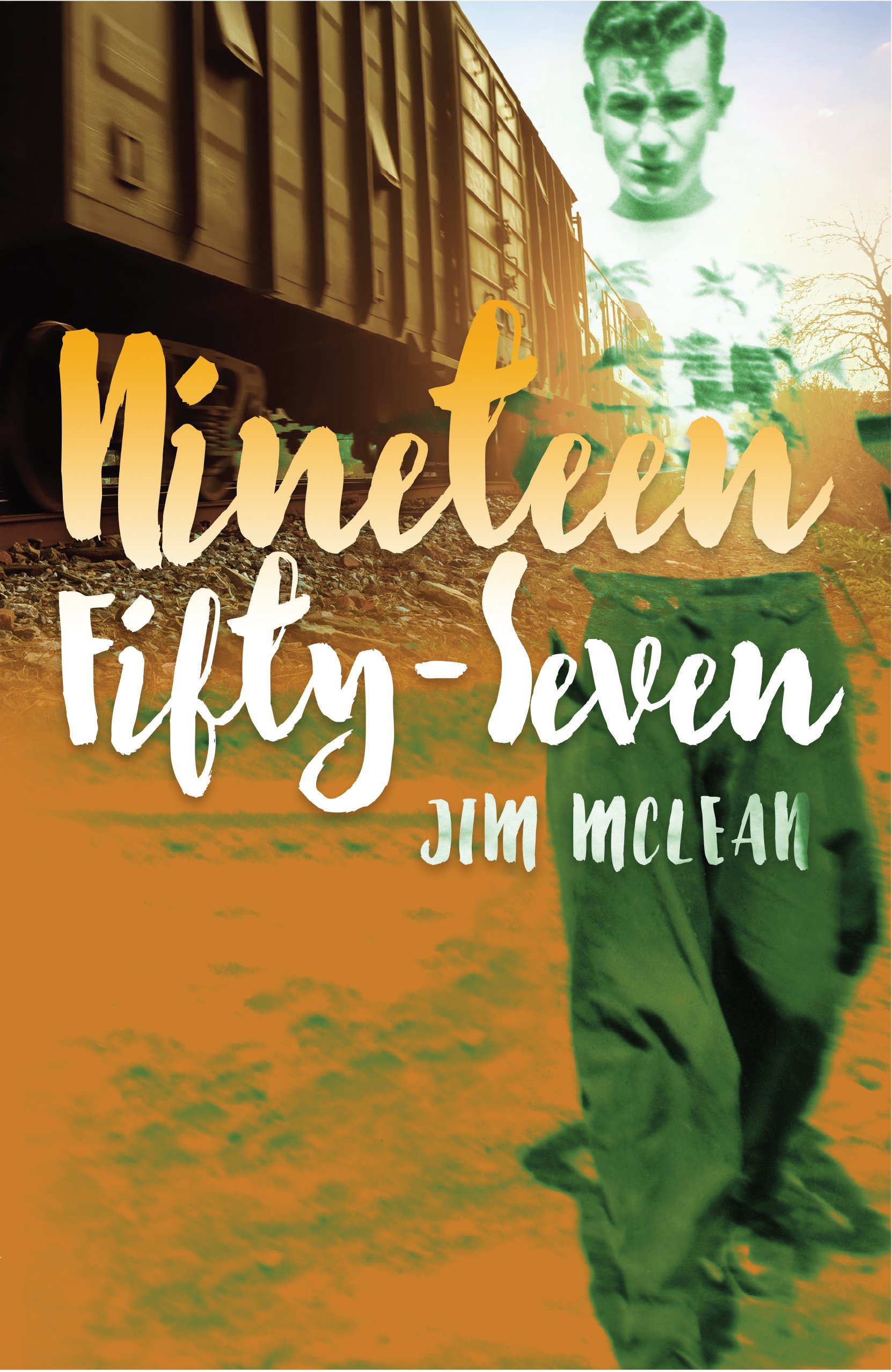

Jim McLean isn't about to concede an inch to fashion.  Nineteen Fifty-Seven reads like someone stepped on a very articulate cat's tail.  This is tough-guy caterwauling of the highest order. McLean isn't in a bad mood in every poem but there is a Joe Btfsplk at the corner of every page and a devil on his shoulder.

These poems are train yard secrets, hobo's taunts and Moose Jaw lullabies.  McLean has some serious narrative gifts and these poems let him show it.  McLean's Nineteen Fifty-Seven is packed to the rafters with salty wisdom.

Heartbreak Hotel

R. Smith & Sons contracted for the railway,
feeding the gangs of men who came each spring

from the unemployment lines and the jails
and the reserves and the soup kitchens and River Street

to lay steel in the raw early mornings with their pitiable
shabby suit coats and soft, mushy shoes,

a few with caps.
The foremen were tough and seasoned and had to be,

it was still, back then, a long journey
from Moose Jaw to Chaplin, Old Jim,

the cook, was ex-army, 77 years old, his muscle
turned soft, turned to fat, he used to say with regret.

Up at five every morning, first thing he taught me
was not to lean my elbows on the wash stand

when I scrubbed my face in the early dawn.
It was a military thing, I guess, and he would grunt

with satisfaction to see me bend at the waist,
elbows up, over the enameled basin.

It was easy for me to give him that.
He was a pretty good old guy, Polish,

he said he was. He watched, let you show him
what you were made of.

Bill was just about as old as the cook,
skinny as a rail, with a wife at home.

No business being there,
except he needed the money, I guess.

We'd peel potatoes together every morning
for the noon meal and again in the afternoon

to get ready for supper, and talk a bit.
We'd eat our meal after the men

had gone back to the track
or to their bunks at the end of the working day

and Bill would always eat too much,
as if he was trying to store it up,

yet he never put on any weight, he'd just
get sick and then be sorry.

Bill treated me all right
and I liked him but I never wanted

to get that old and be that poor. It was 1956
and I was a kid and on my own out there.

The cook liked the way I could carry whole sides
of beef, his own strength gone,

and he gave me lots of other things to do
but my main job was to wash dishes

I washed those dishes from the meals of those hundred
or more men three times a day

with water hauled from the tender and heated
boiling hot on the stove and I sang

alone, away from everybody, at the top of my lungs
with my hands in the soapy water up to my elbows

every song I knew, Hank Snow and Williams
The Platters and Webb Pierce and I can't remember them all

and, of course, Heartbreak Hotel, by that new guy,
that I played every day on the juke-box

in the Chaplin Cafe beside the tracks when I bought a Coke
and sat on a stool like teen-agers you would see

on television and learned all the words for singing later
away from everybody

...

Any poet who hearkens the spirits of William Faulkner, Robert Penn Warren and Charles Bukowski is going to get a piece of my time.  Throw in an entirely sweet 80th birthday ode to the King, Elvis Aaron Presley and Today's book of poetry is a your new fan.

Jim McLean travels back and forth in time with these poems, we see him as a young man and earning the regrets he'll carry later and then full circle we hear the mature older man's wisdom.  McLean's hero carries some heavy water in these poems but there are no "woe is me" moments.  McLean is old school all the way.

My Brother, Who I Looked Out for
When We Were Kids

it was the tenth or the fiftieth
or the hundredth time
we brought him to the house
and called his sponsor who didn't even want
to bother with him any more he said
he just want to kill himself, there's nothing
you can do

and it was true, he looked like death, his skin
translucent, waxy     I said
you've got to get straight, get a job
and he laid there on the couch and said
I can't work out in the cold
I need an office job, an executive job
and that was bad, because I knew then
how hopeless things were

and he promised, for the hundredth time
to stop drinking and to go to the meetings
and we piled groceries into bags
and I drove him to the place where he lived
Wong said he owed last month's rent
and I paid that and the next month in advance
and I made him give me a receipt

he sold the groceries
because somebody saw him an hour later on the street
with his woman and said
by the way they were falling down
they must have got hold of something
it was a thing to crush you
we couldn't do anything and we couldn't stop trying

finally, my father came down from the Coast
he ended up drinking with him, told us
we didn't do anything to help him
when he said that he was lucky he was my father
he bought two tickets, took him back
to Vancouver on the train
afterward he wrote a letter, saying things
hadn't worked out saying he'd been
wrong, saying he'd left and he didn't
know where he was

a long time later he wrote again telling us
about how he'd come across
a newspaper item, just a few lines
buried in a back page that said he died
alone in some flophouse and that the city
had buried him as having
no known next of kin

I wrote my father a letter, he needed something
was looking for something
from me and told him we all had tried
I said he had taken that wrong turn
and but for the grace of God
it could have been me
it was nobody's fault

...

Today's book of poetry had a good time rooting through Nineteen Fifty-Seven because Mclean doesn't really ever take his foot off of the gas.  These poems pound through the gears and when you come out the other side you know you've been taken for ride.  This is a robust read filled with characters you've already met, people you already know.  McLean's tales are writ large and aren't afraid to stomp their feet as they march across the page.

McLean's Nineteen Fifty-Seven both convinces and reminds Today's book of poetry of just how beautifully horrible we humans can be to each other and how redemption is only a poem away.

My Father's Hat

I bought a hat, a fedora
and bent down the brim

on the front right side and trained it
with a binder clip

The first time my sister saw it she said
My God, you look just like Dad

and I looked in the mirror
and she was right

and I thought about all those
little pieces of paper he used to fill

with strange cryptic columns
of numbers and I thought about

how one day he threw everything away
his job, years of service

sold the house, moved us far away
from our school and our friends

like we were being punished for something
like he was punishing himself

It was hard at first
but we were young and resilient

and bounced back, some of us
and I learned not to blame him

or myself or the world and searched
until I found all the little pieces

and put them back together and never
threw away anything important

and I remembered, years later
stopping to visit him in Vancouver

sitting mostly silent until a decent interval
had passed, getting up, saying

I wanted to walk along English Bay
while I was here and he, surprising me

offered I'll go with you
and as we watched the tide he said

You've done all right for yourself
which is about as close as he ever came.

...

Jim McLean must be one tough old son of a B, there is some hard railroading in these poems, the toughest kind of love.  It's clear McLean kissed the wrong gal once or twice and feels some sort of way about it.  This is hearty, vibrant and compelling narrative poetry with a brylcreemed ducktail full of memory on the side.

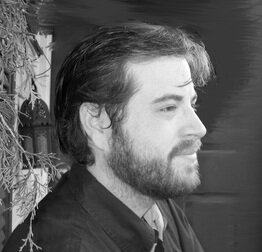
Image result for jim mclean poet photo
Jim McLean

ABOUT THE AUTHOR
Jim McLean had a long career with Canadian Pacific Railway and with Transport Canada, living and working in various Canadian locations. He is an original member of the Moose Jaw Movement poetry group, and his work has appeared in magazines and anthologies and on CBC Radio. He is the author of The Secret Life of Railroaders and co-author of Wildflowers Across the Prairies. His illustrations have appeared on book covers and in several literary and scientific publications.

Jim McLean
reading Elvis Agonistes
from Nineteen Fifty-Seven
video: Coteau Books

coteaubooks.com

541

DISCLAIMERS

Poems cited here are assumed to be under copyright by the poet and/or publisher.  They are shown here for publicity and review purposes.  For any other kind of re-use of these poems, please contact the listed publishers for permission.

We here at TBOP are technically deficient and rely on our bashful Milo to fix everything.  We received notice from Google that we were using "cookies"
and that for our readers in Europe there had to be notification of the use of those "cookies.  Please be aware that TBOP may employ the use of some "cookies" (whatever they are) and you should take that into consideration.

Thursday, June 30, 2016

Wedding in Fire Country - Darren Bifford (Nightwood Editions)

Today's book of poetry:
Wedding in Fire Country.  Darren Bifford.  Nightwood Editions.  Gibsons, British Columbia.  2012.


In yet another example of just how buried in the sand my head can be Today's book of poetry is only now encountering Darren Bifford's 2012 publication Wedding in Fire Country.  Some things are really worth waiting for.

Milo and the research team insisted I read a couple of the reviews that appeared when Wedding in Fire Country was released but I'm not sure they read the same book I did.  Those reviewers should have been raving, Bifford is brilliant.

These poems have tender precision on the ends of a raptor's muscle ripping talons.  These poems demand respect.  Bifford can barely contain his many influences as Robert Kroetsch and Robert Lowell spill out of the back court, Czeslaw Milosz and Walt Whitman power it up and down the wings and then big old nasty William the Faulkner dances down the middle with his boozy wisdom.  Oh ya, they're all in here along with Creely and the Beats.  But Bifford never steals from his heroes, he gives them the respectful and polite nod and moves on from one breathless idea to the next.  

Possibilities of Prometheus

Did he really think he'd get away with it?
That no one was watching?

It could have been Prometheus was after
Something else all along -- not that fire --
But made a mistake -- wrong drawer! --

And fumbled for whatever
Would fit his hand.
The fire fell

Because he tripped, stumbled 
On a loose stone, and managed to strike
Humanity across their heads.

And like a dynamite wick
History's cord was lit.

...

Some of these poems hit you like sunshine does when you walk out of the darkness of an afternoon movie.  That CRACK of daylight/information hits like a smack.

Today's book of poetry hit a proverbial wall about a week ago where all poems started to look a little like the same disappointment but Darren Bifford has snapped us out of that.  Wedding in Fire Country is exactly the tonic we've needed.  In a world where there has been a dearth of heart recently we discover that the talented Mr. Bifford has a heart as big as we need and it is right out there at the end of his articulate sleeve.  It might be hunted by bears, wolves or cougars and haunted by fire, nightmare or impending disaster but this heart is in the game.

Today's book of poetry gets future hopeful when we encounter books this fine.  There is an army of excellent young poets hammering away in Canada and Bifford certainly stakes a claim with Wedding in Fire Country.  Bifford had us on the edges of our seats during this morning's read.  Our Jr. Editor, Kathryn, read the hell out of Bifford's long poem "Letters to Milosz" and confirmed what I'd thought from the start.  Kathryn is a pistol and Darren Bifford's Wedding in Fire Country is delightfully dazzling poetry of a velocity you don't often see.

Crowded Theatre

There was a time I thought
I was all alone
and free. I never imagined

growing older, weaker;
I imagined being famous and humble.

Now it is as if I'm sitting
in a crowded theatre, in a ratty red chair
too tiny for my legs, its armrests too narrow to share.

Even when I look behind me
people are pushed around the other way.

I've come this far, reached out and clung
to your damp hand.
And we hold each other here

though the building has begun to shake,
and the show is not the one we asked for.

...

Quiet foreboding. Bifford has that nailed.  Frankly, Today's book of poetry was a bit flustered (but not frustrated), by how familiar this new world was.  Bifford is able to dial into a deep folkloric pool and emerge with new understanding of old wisdom.

Today's book of poetry really would like you readers to think of this blog as a "taster's menu" because it simply isn't possible to get to the several main courses a good book offers.  Wedding in Fire Country is as good an example of this paradox as any we've encountered.  Main course here, main course there.  Taste this...

Nightmare

What is that knocking, mother?
It's the wind's knuckles rapping the window, my son.

What is that squeaking, mother?
That's the procession of the mice within the walls, my son.

What is that rotting in the basement, mother?
Those are harvest apples in a bucket, my son.

Who are the men crouching at the door, mother?
They are my friends, my son. And they're coming.

...

The best part of our mandate here at Today's book of poetry is finding gems and sharing them with you readers.   Wedding in Fire Country is the sort of book that can make you fall in love with poetry again, instantly.  These poems are smart like a challenge, clear and refreshing like a quenching tonic.

Today's book of poetry couldn't get enough.


Darren Bifford

ABOUT THE AUTHOR
Darren Bifford is the author of Wedding in Fire Country (Nightwood Editions, 2012) and Hermit Crab, forthcoming from Baseline Press. He lives in Montreal.

BLURBS
Reading this collection, I feel communicated with, and indeed, carrying it around for several weeks to dip into during my spare moments, I came to feel companionate towards it, as though the poems’ frequent depictions of people enjoying each other’s company had bled into my consciousness, tingeing my worldview with its sociability. I suspect that Wedding in Fire Country will have a similar effect on anyone who spends some real time with it, and I heartily recommend doing so.
-Stewart Cole, The Urge: Reviewing New Canadian Poetry

“Nightmare” leaves you with a chill down your back with the last quote “they are my friends my son. And they are coming.” Bifford asks the question: is this the beginning of the nightmare or the end? These poems do not come together like one big story, but rather like stories told around a campfire; some happy, some scary, all intriguing.
-Thomas Stubbs, Salty Ink

Darren Bifford
Tree Reading Series, Ottawa
Video: Tree Reading Series

nightwoodeditions.com

485

DISCLAIMERS

Poems cited here are assumed to be under copyright by the poet and/or publisher.  They are shown here for publicity and review purposes.  For any other kind of re-use of these poems, please contact the listed publishers for permission.

We here at TBOP are technically deficient and rely on our bashful Milo to fix everything.  We received notice from Google that we were using "cookies"
and that for our readers in Europe there had to be notification of the use of those "cookies.  Please be aware that TBOP may employ the use of some "cookies" (whatever they are) and you should take that into consideration.

Thursday, May 12, 2016

Creeks of the Upper South - Amy Wright & William Wright (Jacar Press & Unicorn Press)

Today's book of poetry:
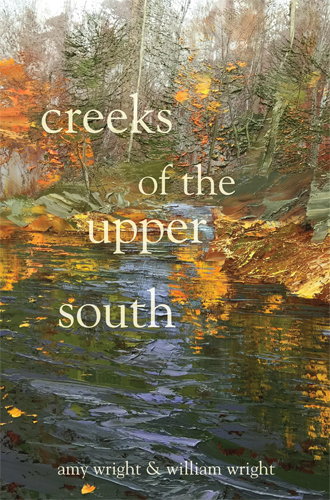
Creeks of the Upper South.  Amy Wright & William Wright.  Jacar Press & Unicorn Press.  Durham, North Carolina.  2016.

Collaborations in poetry can be damned hard work.  Creeks of the Upper South is a call and response collaborative book of poems from Amy Wright and William Wright and it is seamless.

Today's book of poetry has attempted different types of collaborative poetry with mixed results.  It's hard enough to find someone you agree with on anything let alone finding someone to share a page with.  It is deep, murky water and there are dangers everywhere.  All of that to say that Today's book of poetry marveled at the synchronicity in every danced step between Wright and Wright.

Memory and Prophecy

What She Remembers:

     That in the summer of her seventh year,
     storms slanted in and engorged the rivers
     and creeks until all waters buckled high,

     shattered the levies and bit to the quicks of berms:
     houses that did not kneel and drift away moldered.
     They moved the whole town eight miles north.

     That in her ninth year she came back to the creek
     then in drought and walked barefoot
     the dry bed's limb-trash and alabaster--

     That something in the slim sun-spears made
     her look up into the unshackling of April
     and witness a horse skeleton, brown-white

     as the soles of her feet and silty hands.
     She looked long at how vines twined its brisket,
     at the strange philodendron head, drained

     of flesh, brainless and almost comical in
     its stillness, staid and smiling long with gothic
     joy at the sheer oddness of how the Earth had reined it.

     That the winter of her thirteenth year
     in the frigid mineral-scent of dusk, the Harman
     boy breathed warmth on the small hairs of her neck,

     the whiskey on his child's breath, how they leaned
     into one another in the blindness and purity
     of the killed grass beside the creek, the water frozen

     pure to the floor, where stunned curves
     of minnows flashed tinny and motionless
     under the stars' arc-light.

     That the thaw snapped and pocked the air like gunshots
     so that in the first hint of spring the Harman brother
     slew the boy she kissed and dragged his kin down into the gorge.

What She Cannot Foresee:

     That centuries the white window of the moon will open,
     house roofs will crumble as the horse bones gripped
     in the long-fallen oak will fall themselves, then grind

     down with years, fold as dust and meld with the specks
     kept there of the murdered boy, millennia-old, both
     now in the earth proper, slack and laggard slow.

...

Now if that isn't gothic/romantic enough for you I'll eat my shorts.  Wright/Wright take you down to the water to see if you'll float.  They make you walk barefoot .through the millennial ooze, the silt of their ancestors.  This is captivating stuff, you open the cover to this little gem and you are instantly under the spell cast by Wright/Wright.

Wright x2 have a biologist, historian, anthropologist, geologist and a bevy of scientists on their research team and along with their own gothic charm it makes for a riveting crossing of all this stormy water, the Wrights have roiled up the water and we are in for an emotional voyage.  Their rich lingo sings of a particular notion of the South, I can see Carson McCullers and William Faulkner at the edge of one of these coulees, Flannery O'Conner is probably somewhere nearby.

Sanguinaria

In the chill before Easter, it was dusk again,
and my mother and I walked the berm, out past

the corn, The night's door warped: the sky
broken from its hinge swung down

low to us, low enough that the smell of rain
steeped our hair. Behind the springhouse,

we stopped to watch a possum crawl
over a years-old midden

with such reckless fear that she took a spade to its skull.
How can I justify a fear that blooms in the gut

and stings like thistle? Such creatures follow
me in my sleep, the ones harmless but foul,

the ones that must haunt: blowfly, centipede,
wolf spider, the bubbling muck of toads.

We trudged into watercress, across the field,
she in her country gown, a ghost before me--

down to the hemlocks and galax
when rain fell sudden, and the wind

pierced the thicket and drowned our scalps.
There is no such thing as empathy.

                         *
The storm drove through, just north
of us, a great spectral womb broken, ripped.

Our footfalls hugged the creekside's silence,
its washed-out susurrus, its sealed mouth.

There with her in that violet cold, all the blood
that ran through that shadow. All the bloodroot

we smashed through, the bloodwort, puccoon root,
into slanted fields two

farms over, up from the rushing creek curve
where heaped stones were draped with lichen.

The moon smeared behind clouds, a runnel
of milk. Why does the sight

of lanterns dawdling in a far pasture
ignite the heart with a joy and sorrow that, upon sleep,

the mind lumbers with false memories of farmhouses,
days and days of threshing grass, the chirr

and grind of crickets in the core of a summer long dead?
The rain fell hard: we quickened through briars, up

to the backdoor, the red light that framed it.
She said nothing. I witnessed her face

turning in the window--a shivering
leaf that withered, that would not release.

...

These poems have a cumulative effect on the sodden reader.  Wright & Wright know their business and their business is to write emotionally haunting and visually stunning poems that get under your skin like a poetry tick.

Today's book of poetry has long admired the voice of Shelby Foote.  Foote was a historian and novelist and he had a voice of such gravitas and humour, warmth and wit, that I could happily of sat and listened to him read a phone book.  Shelby Foote reading Creeks of the Upper South is an entertainment I would pay almost anything for.  He'd ride over these poems with the perfect verbal caress.  These are poems that should be read aloud.

Understory

And now we will witness the unseen flames:
cardinal shit, apple maggots, fishbone thistle, squama
and fauna scales, keratinous flakes flecking ground;
sporiferous trees (ambassadorial as they kneel);
hyssop, sometimes odoriferous; dried blood on bard,
dropwort, smartweed and sweetleaf; outhouses
still standing in a crush of woods (redolent of peaches);
early-century crates breaking under the weight of wild squash;

crimson minnows courting a swale (painterly over chalk-white silt
and rocks stroked with moss so green it hurts to look);
woad and its micro-cache of bluest rivers; witloof chicory
(good in salads); distant farmhouse windows on winter nights
shining like citrine stricken with sun; the yucca's
blades curdled over with cream-flowers a few April days;
jars of milk; smells of leaf-fire; poxy bogs

emeralded with mosquito eggs; itchweed, abelia,
and spittlebugs with their soapy secretions;
the half-buried bones of horses, their skulls
ghastly and beautiful; musket balls buried (for good);
possum oak and possums themselves (drooling
and conspiratorial in suburban sheds);
ivory nuts and ivy-tods; the helix-lattices of lichen;
gypsum and hagberry; the toothless kin-gone elderly

who grin at the edges of cracked doors (kind or wary);
snakeskins, fraxinella (burning bush); understory
flames; diatomoceous earth; the waxy cartilaginous
bulbs or rocky shoal spider litlies; cutworms that gnaw
on vegetable seedlings so that they fall like small timbers;
capillary mattings (wicking water from reservoirs);
wild decay (never gothic) and wildest revival (never lofty).

...

Amy Wright and William Wright have done something remarkable.  It is not just that they have become one voice for the purposes of Creeks of the Upper South, but that they have become a choir, in unison, with resolve.

Amy Wright


William Wright

ABOUT THE AUTHORS
Amy Wright has authored two poetry collections and five chapbooks. The Nonfiction Editor of Zone 3 Press, Coordinator of Creative Writing and Associate Professor at Austin Peay State University, she has been awarded a Peter Taylor Fellowship for the Kenyon Review Writers’ Workshop, an Individual Artist’s Fellowship from the Tennessee Arts Commission, and a fellowship to the Virginia Center for the Creative Arts. You may find some of her work online at: awrightawright.com.

William Wright is author of four books of poetry, most recently Tree Heresies and Night Field Anecdote, as well as four chapbooks. He is editor of eleven editions, including all volumes ofThe Southern Poetry Anthology series (Texas Review Press), two texts centered on Gerard Manley Hopkins (Clemson University Press, forthcoming, 2016), and Hard Lines: Rough South Poetry (USC Press, forthcoming, 2016). He is assistant editor of Shenandoah.

BLURBS
“The poems in Creeks of the Upper South rely on call and response—both within individual poems and from poem to poem—which seems fitting, given the collaborative nature of the collection. At times, the voices and personal narratives are alive and burgeoning, and at the same time fragile. Other times, primal and colloquial language fuses into a lexicon of ecological anxieties and understandings. This collection calls us to take off our boots, roll up our britches, and follow the creeks and voices meandering and forking through these poems. We can’t help but respond.”
     — Adam Vines

“Creeks of the Upper South is collaborative poetry at flood-surge. It is a braided stream, the skitter-flight of water-fowl, a storm event of vowels, childhood as rocky shoals, cutbank in language’s flow. Amy Wright and William Wright walk back the postmodern idea that word and place, signifier and signified, can’t roil the same deep channel.” 
    — John Lane

470

DISCLAIMERS

Poems cited here are assumed to be under copyright by the poet and/or publisher.  They are shown here for publicity and review purposes.  For any other kind of re-use of these poems, please contact the listed publishers for permission.

We here at TBOP are technically deficient and rely on our bashful Milo to fix everything.  We received notice from Google that we were using "cookies"
and that for our readers in Europe there had to be notification of the use of those "cookies.  Please be aware that TBOP may employ the use of some "cookies" (whatever they are) and you should take that into consideration.
Wednesday, May 4, 2016

Blue Angels - Peter Huggins (River City Pubishing)

Today's book of poetry:
Blue Angels.  Peter Huggins.  River City Publishing.  Montgomery, Alabama.  2001.


Today's book of poetry is going back in time today.  River City Publishing from Montgomery, Alabama, sent us a herd of beautiful hardcover poetry titles and even though some of them were published a few years ago they are all new to me and I suspect they will be new to most of you as well.

Peter Huggins' Blue Angels is packed to the rafters with Angels of every colour.  There are also a few ghosts that need tending to in these continuously surprising and entertaining poems.  Blue Angels feels as southern as the beautifully melodious voice of Shelby Foote.  This isn't the south of the "stars and bars", although that's in here too, but this is the south where William Faulkner's home haunts the memory, where going home again to that old house Thomas Wolfe lived in might have you remembering his line  “I have to see a thing a thousand times before I see it once.”

Randall Jarrell is one of the first poets I can remember reading, his poem, "The Death of the Ball Turret Gunner" still rattles around in the cage that passes for my head and I read that poem over forty years ago.  So it was a multi-faceted pleasure/surprise to come across him roaming around in Peter Huggins Blue Angels.

For the Woman Who Struck
Randall Jarrell

It must have been an ordinary fall day
For her. She hung
On the line to dry in that warm,

Apple-scented air. Humming Telemann,
She swept the leaves off her porch,
Knowing she'd have to sweep it again

Before her day was through. No matter.
Her maple would be in glory soon.
She had the pleasure of its change.

What were a few leaves to her.
She had to pick up her son at school,
Then go to the grocery on the way home.

Traffic was heavy on the Chapel Hill
By-pass. She never saw the elegant-
Looking man who lunged into the road.

In all that noise she heard
The terrible thud of his body
Striking her car. She didn't want to,

But she screamed at him,
Lying on the road like the last
Prim leaf on her sugar maple.

...

I hear Auden.  I hear France.  I hear you dancing in your underpants.  Today's book of poetry felt very much at home in Huggins world.  These poems are all built like old houses designed for the long haul, built to last.

A horse in a swimming pool is an image that is almost surreal except that now, in the Internet Age, we can all watch video of bears, moose or monkeys in someones backyard pool at whim.  Huggins gives us more than any video, he gives us a moment of horse-thought and then his understanding and gentle compassion.  Today's book of poetry is a big fan of kindness and that is a feeling that prevails in Blue Angels.  Poems celebrating kindness are thin on the ground these days but they are always welcome here.

Standing Mortality

A bad thunderstorm
Spooked my neighbor's
Horse last night.
This morning my neighbor
Found her in his swimming pool.
She looked surprised to be there.

Her tail floated behind her
Like a bed of kelp. When
I asked him how he was going
To get her out,
He walked into the pool,
Put blinders and a bridled on her,

Then led her up the steps
Of the shallow end.
She bunched the muscles
In her back and flicked her tail.
I wondered at the fear
That drove her into the pool.

I wondered at my neighbor's
Easy acceptance
Of her fear and her calm
As he led her back
To her stall in the barn.

I wondered that I thought
She looked like a prisoner
Going to execution,
With the hope and serene
Trust of the faithful.

...

Today's book of poetry was up in the air about today's third poem.  Two worthy contenders.  One, a poem about a child's bedtime monsters and the other about the needs of the dead.  There was much discussion at this morning's read.  Milo, our head tech, read both poems to us, twice.  Then Kathryn, our new intern, read them again.  One of the things Today's book of poetry liked about the poems in Blue Angels was their elasticity, their ability to stretch in several directions at once.  In the end our morning reading circle settled on 'monsters' - because who doesn't like those.

Monster Story

As soon as I tell my nephew
He doesn't have to worry about
Water buffalo men in Louisiana,
I know I'm in trouble.
He asks me if he has to worry
About them in Mississippi
Or in North Carolina. I tell him
He doesn't have to worry about them
At all. They don't exist, I say.

He doesn't believe me and I know
I've made a monster to trouble
His sleep. My uncle made
One to trouble my sleep when he said
I shouldn't go swimming at night.
The alligators, he said, would mistake
Me for a fish and eat me.

Try listening to that story
When you're five years old, lying
Flat on the floor, and you think
Water's sucking the pilings
Of your house out from under you.
Go swimming during the day or night
Without thinking your body's not
A sweet morsel of trout or bass
To a hungry jaw-heavy alligator.

Try not to think of white knights
Galloping through your uncle's bloodstream.
They are too late to save him.
Dragons, breathing fire
Into the sweet tissue of his lungs,
Take him down to pure clean bone.

...

Reading Peter Huggins's Blue Angels is a journey to Alabama, a meditation on living well, musings on vapour trails and some good hard lessons on how to be a good person.  In Today's book of poetry world that is a full dance card.

Peter Huggins has published five books of poetry.  Before Blue Angels there was Hard Facts.  Since publishing Blue Angels Huggins has followed with Necessary Acts, South and Audubon's Engraver.

Peter Huggins

ABOUT THE AUTHOR
Peter Huggins is the author of five books of poems, Audubon's Engraver (Solomon & George Publishers, 2015), South (Solomon & George Publishers, 2013), Necessary Acts, Blue Angels, (both from River City Publishing, 2004 and 2001), and Hard Facts (Livingston Press, 1998). South was shortlisted in 2014 for the International Rubery Book Award. He has published over 300 poems in many journals and magazines, and was awarded a literature fellowship in poetry from the Alabama State Council on the Arts in 2006.In the Company of Owls, a middle grade novel, appeared from NewSouth/Junebug Books in 2008. In addition, he has published a picture book, Trosclair and the Alligator (Star Bright Books, 2006), which has appeared on the PBS show Between the Lions, received a Mom's Choice Award, and been selected as a best book by the Bank Street College of Education and by the CCBC at the University of Wisconsin-Madison. He teaches in the English Department at Auburn University, and he and his wife live in Auburn, Alabama.

BLURBS
"These poems variously marvel at, meditate on, and grieve over significant moments in life. In clear, straightforward, but often surprising lines, Peter Huggins offers his take on a world in which loss and salvation are next-door neighbors, and angels turn up in the strangest places."
     - Jennifer Horne

"Peter Huggins is a rarity - a poet who writes with the clarity of a silver bell. The poems of his new collection allow the reader to see through their surfaces, to go beyond the simplicities, the sweetness and light, to the dark matter of the mind and heart. This book demonstrates a generosity of spirit hardly to be found in today's serious poetry."
     - Thomas Rabbitt


467

DISCLAIMERS

Poems cited here are assumed to be under copyright by the poet and/or publisher.  They are shown here for publicity and review purposes.  For any other kind of re-use of these poems, please contact the listed publishers for permission.

We here at TBOP are technically deficient and rely on our bashful Milo to fix everything.  We received notice from Google that we were using "cookies"
and that for our readers in Europe there had to be notification of the use of those "cookies.  Please be aware that TBOP may employ the use of some "cookies" (whatever they are) and you should take that into consideration.