Showing posts with label coteau books. Show all posts

Sunday, April 2, 2017

Burning In This Midnight Dream - Louise Bernice Halfe (Coteau Books)

Today's book of poetry:
Burning In This Midnight Dream.  Louise Bernice Halfe.  Coteau Books.  Regina, Saskatchewan.  2016.
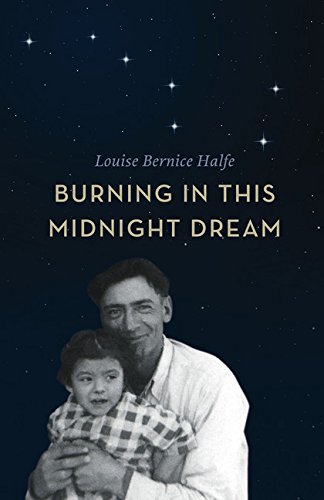


Louise Bernice Halfe Sky Dancer has published a fourth volume of poetry, Burning In This Midnight Dream, and it is a burning indictment, a hushed prayer, an angry account.  Burning In This Midnight Dream articulates some of Canada's worst history from the inside looking out.  These poems are an insider's nightmare memories of Canada's residential schools.

Halfe/Sky Dancer is a quiet poet of considerable reserve yet these poems rumble with thunderous revelations that reverberate off of the page, run up your arms and attack your guilty heart.

nipin nikamowin - summer song

I listened to outrageous laughter
there by the stone-carving shelter
where children painted and listened
to Alex Janvier.
Year after year
on the grounds of Blue Quills
I shared a tent with a friend and we told stories
of those lonely nights and how we preserved
our broken Cree.

I walked, ran, skipped
swore and sang the fourteen miles
from that school all the way to Saddle Lake.
We were told by our guide to meditate, be silent
in our walk. How could we after our voices
where lost in the classrooms of that school?
When I reached my home reserve
the Old Ones received me
and danced me on my blistered feet.
Water, tea, fruit, bannock and deer stew.
What food would heal this wound
bundled against my back?
A child still crying in those long school nights.
I know of a man who still carries his suitcase,
began at six, now sixty years, carrying
those little treasures of home
that was forever gone.

...

Burning In This Midnight Dream is a peat fire of poetry.  You don't see any flames on the surface but you know for certain that you are on hot footing and that all is ablaze underneath, smoldering and determined.

Halfe/Sky Dancer has included several family photos along with the text and this case is the exception that proves the rule about photos and poetry.  These photos are necessary.  The poems work just fine on their own, they are all strong, exude the strength of a brave survivor, but these photos make the stories blood, flesh and bone.  We see the young children in a new and different context, we see them as clearly as the "boy in the striped pajamas," the red-coated lost girl in the opening frames of Steven Spielberg's Shindler's List.  The fine and perfect faces in these photos are calling out through these poems.

Residential School Alumni

An uncle shot his wife
left her lying behind the house
with the rifle at her side.
Their four children peered
behind the curtains.
He was never able to look at anyone.
A lake held him as he froze, standing,
clutching his traps.

One son joined the marines
a mosquito killed him in Vietnam.

In a police chase another son
hit a slough and drowned in his grave.

Their little brother slept in a flaming
house with needles, spoons, heroin and cocaine.

My cousin was left alone.

I remember them.

...

Our morning read here in the Today's book of poetry offices was a little more sombre than usual but that's not to say we didn't enjoy the poems.  We certainly respected them.

Louise Bernice Halfe Sky Dancer wants the Truth and Reconciliation process to succeed.  Burning In This Midnight Dream is an honourable attempt to plow as much truth into the open as the open can bear.

Today's book of poetry is interested in the poetry of things before the politics and Halfe/Sky Dancer covers all those bases with verse that creates drama and tension while still being able to cradle quiet moments of tenderness and hope. 

April 30, 2014

Weeds are flattened beneath last year's tire tracks
others lay burden by the winter's heavy snow.
The crocuses labor through this thick blanket.
I am sun drained from the bleakness
of the weeks before. Now a tick
I've carried in my hair runs up my neck,
festers on my chin.
I show it no mercy.

the lake-ice is rotting diamonds
where water seeps hungrily through its cracks.
Beneath the birdfeeders
goldfinches and juncos scratch.
Two mallards strut
crane their necks for the roving dogs and cats.
Sharp tail grouse lay low in the thicket believing
they cannot be seen, their rust-colored wings
match the frost-bitten ground.

This morning we were woken by a knocking
on our skylight, the yellow feathers
of a flicker splayed against the window.
I cradle a striped gopher, it heaves so slightly
against my palm, a leg broken
and one eye bloodied shut.
I lay it against the mountain ash and beg
it not to suffer.

This afternoon I have my hearing
for Truth and Reconciliation.
I must confess my years of sleeping
in those sterile, cold rooms where the hiss
of water heaters were devils
in the dark.

I want to walk these thickets
to that far horizon and not look back.

...

The damages inflicted upon Canada's First Nations community by the Residential School program will never be over.  Generations have been ham-strung by endemic racist policies and implementation of said policies.  Louise Bernice Halfe Sky Dancer illuminates some of that dark night with Burning In This Midnight Dream.  This is the sort of poetry that does move us all one step closer to understanding and true reconciliation.

There is still a long, long way to go but underneath Halfe/Sky Dancer's laments there is hope, astonishing hope.

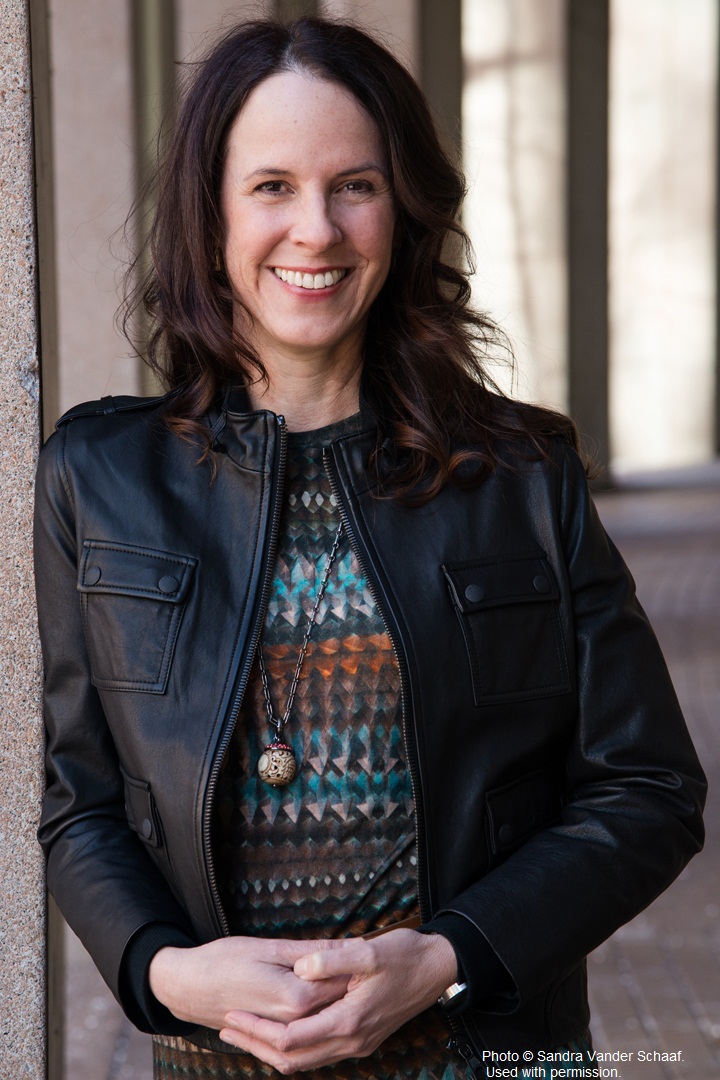
Author Photo
Louise Bernice Halfe Sky Dancer

ABOUT THE AUTHOR
Louise Bernice Halfe was born in Two Hills, Alberta, and was raised on the Saddle Lake Reserve. Her Cree name is Sky Dancer.

With the publication of Burning in this Midnight Dream in April 2016, Louise has four book publications to her credit. Bear Bones & Feathers was published in 1994. It received the Canadian People’s Poet Award, and was a finalist for the Spirit of Saskatchewan Award. Blue Marrow was a finalist for the Governor General’s Award for Poetry, the Pat Lowther Award, the Saskatchewan Book of the Year Award, and the Saskatchewan Poetry Award. The Crooked Good was published in 2007. She was awarded third prize in the League of Canadian Poets' national poetry contest and was Saskatchewan’s Poet Laureate for 2005-2006.

Louise has a Bachelor of Social Work, and received an Honorary Degree of Letters (Ph. D) from Wilfred Laurier University. She currently works with Elders in an organization called Opikinawasowin (“raising our children”). She lives outside of Saskatoon with her husband.


Louise Bernice Halfe
 Returning, Words Aloud 2007, Canada
Video: Words Aloud


568

DISCLAIMERS

Poems cited here are assumed to be under copyright by the poet and/or publisher.  They are shown here for publicity and review purposes.  For any other kind of re-use of these poems, please contact the listed publishers for permission.

We here at TBOP are technically deficient and rely on our bashful Milo to fix everything.  We received notice from Google that we were using "cookies"
and that for our readers in Europe there had to be notification of the use of those "cookies.  Please be aware that TBOP may employ the use of some "cookies" (whatever they are) and you should take that into consideration.

Tuesday, January 17, 2017

Nineteen Fifty-Seven - Jim McLean (Coteau Books)

Today's book of poetry:
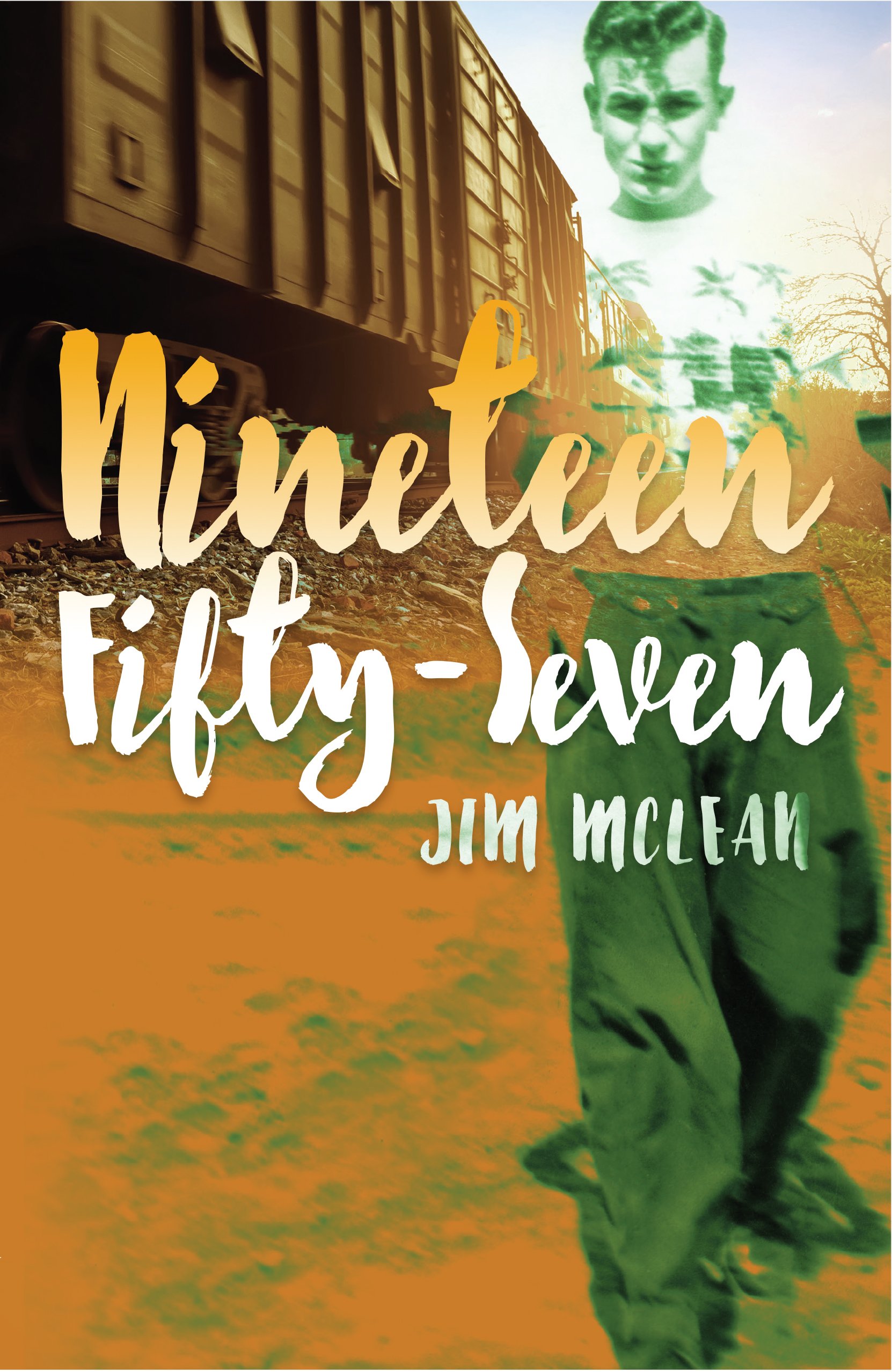
Nineteen Fifty-Seven.  Jim McLean.  Coteau Books.  Regina, Saskatchewan. 2016.


Jim McLean isn't about to concede an inch to fashion.  Nineteen Fifty-Seven reads like someone stepped on a very articulate cat's tail.  This is tough-guy caterwauling of the highest order. McLean isn't in a bad mood in every poem but there is a Joe Btfsplk at the corner of every page and a devil on his shoulder.

These poems are train yard secrets, hobo's taunts and Moose Jaw lullabies.  McLean has some serious narrative gifts and these poems let him show it.  McLean's Nineteen Fifty-Seven is packed to the rafters with salty wisdom.

Heartbreak Hotel

R. Smith & Sons contracted for the railway,
feeding the gangs of men who came each spring

from the unemployment lines and the jails
and the reserves and the soup kitchens and River Street

to lay steel in the raw early mornings with their pitiable
shabby suit coats and soft, mushy shoes,

a few with caps.
The foremen were tough and seasoned and had to be,

it was still, back then, a long journey
from Moose Jaw to Chaplin, Old Jim,

the cook, was ex-army, 77 years old, his muscle
turned soft, turned to fat, he used to say with regret.

Up at five every morning, first thing he taught me
was not to lean my elbows on the wash stand

when I scrubbed my face in the early dawn.
It was a military thing, I guess, and he would grunt

with satisfaction to see me bend at the waist,
elbows up, over the enameled basin.

It was easy for me to give him that.
He was a pretty good old guy, Polish,

he said he was. He watched, let you show him
what you were made of.

Bill was just about as old as the cook,
skinny as a rail, with a wife at home.

No business being there,
except he needed the money, I guess.

We'd peel potatoes together every morning
for the noon meal and again in the afternoon

to get ready for supper, and talk a bit.
We'd eat our meal after the men

had gone back to the track
or to their bunks at the end of the working day

and Bill would always eat too much,
as if he was trying to store it up,

yet he never put on any weight, he'd just
get sick and then be sorry.

Bill treated me all right
and I liked him but I never wanted

to get that old and be that poor. It was 1956
and I was a kid and on my own out there.

The cook liked the way I could carry whole sides
of beef, his own strength gone,

and he gave me lots of other things to do
but my main job was to wash dishes

I washed those dishes from the meals of those hundred
or more men three times a day

with water hauled from the tender and heated
boiling hot on the stove and I sang

alone, away from everybody, at the top of my lungs
with my hands in the soapy water up to my elbows

every song I knew, Hank Snow and Williams
The Platters and Webb Pierce and I can't remember them all

and, of course, Heartbreak Hotel, by that new guy,
that I played every day on the juke-box

in the Chaplin Cafe beside the tracks when I bought a Coke
and sat on a stool like teen-agers you would see

on television and learned all the words for singing later
away from everybody

...

Any poet who hearkens the spirits of William Faulkner, Robert Penn Warren and Charles Bukowski is going to get a piece of my time.  Throw in an entirely sweet 80th birthday ode to the King, Elvis Aaron Presley and Today's book of poetry is a your new fan.

Jim McLean travels back and forth in time with these poems, we see him as a young man and earning the regrets he'll carry later and then full circle we hear the mature older man's wisdom.  McLean's hero carries some heavy water in these poems but there are no "woe is me" moments.  McLean is old school all the way.

My Brother, Who I Looked Out for
When We Were Kids

it was the tenth or the fiftieth
or the hundredth time
we brought him to the house
and called his sponsor who didn't even want
to bother with him any more he said
he just want to kill himself, there's nothing
you can do

and it was true, he looked like death, his skin
translucent, waxy     I said
you've got to get straight, get a job
and he laid there on the couch and said
I can't work out in the cold
I need an office job, an executive job
and that was bad, because I knew then
how hopeless things were

and he promised, for the hundredth time
to stop drinking and to go to the meetings
and we piled groceries into bags
and I drove him to the place where he lived
Wong said he owed last month's rent
and I paid that and the next month in advance
and I made him give me a receipt

he sold the groceries
because somebody saw him an hour later on the street
with his woman and said
by the way they were falling down
they must have got hold of something
it was a thing to crush you
we couldn't do anything and we couldn't stop trying

finally, my father came down from the Coast
he ended up drinking with him, told us
we didn't do anything to help him
when he said that he was lucky he was my father
he bought two tickets, took him back
to Vancouver on the train
afterward he wrote a letter, saying things
hadn't worked out saying he'd been
wrong, saying he'd left and he didn't
know where he was

a long time later he wrote again telling us
about how he'd come across
a newspaper item, just a few lines
buried in a back page that said he died
alone in some flophouse and that the city
had buried him as having
no known next of kin

I wrote my father a letter, he needed something
was looking for something
from me and told him we all had tried
I said he had taken that wrong turn
and but for the grace of God
it could have been me
it was nobody's fault

...

Today's book of poetry had a good time rooting through Nineteen Fifty-Seven because Mclean doesn't really ever take his foot off of the gas.  These poems pound through the gears and when you come out the other side you know you've been taken for ride.  This is a robust read filled with characters you've already met, people you already know.  McLean's tales are writ large and aren't afraid to stomp their feet as they march across the page.

McLean's Nineteen Fifty-Seven both convinces and reminds Today's book of poetry of just how beautifully horrible we humans can be to each other and how redemption is only a poem away.

My Father's Hat

I bought a hat, a fedora
and bent down the brim

on the front right side and trained it
with a binder clip

The first time my sister saw it she said
My God, you look just like Dad

and I looked in the mirror
and she was right

and I thought about all those
little pieces of paper he used to fill

with strange cryptic columns
of numbers and I thought about

how one day he threw everything away
his job, years of service

sold the house, moved us far away
from our school and our friends

like we were being punished for something
like he was punishing himself

It was hard at first
but we were young and resilient

and bounced back, some of us
and I learned not to blame him

or myself or the world and searched
until I found all the little pieces

and put them back together and never
threw away anything important

and I remembered, years later
stopping to visit him in Vancouver

sitting mostly silent until a decent interval
had passed, getting up, saying

I wanted to walk along English Bay
while I was here and he, surprising me

offered I'll go with you
and as we watched the tide he said

You've done all right for yourself
which is about as close as he ever came.

...

Jim McLean must be one tough old son of a B, there is some hard railroading in these poems, the toughest kind of love.  It's clear McLean kissed the wrong gal once or twice and feels some sort of way about it.  This is hearty, vibrant and compelling narrative poetry with a brylcreemed ducktail full of memory on the side.

Image result for jim mclean poet photo
Jim McLean

ABOUT THE AUTHOR
Jim McLean had a long career with Canadian Pacific Railway and with Transport Canada, living and working in various Canadian locations. He is an original member of the Moose Jaw Movement poetry group, and his work has appeared in magazines and anthologies and on CBC Radio. He is the author of The Secret Life of Railroaders and co-author of Wildflowers Across the Prairies. His illustrations have appeared on book covers and in several literary and scientific publications.

Jim McLean
reading Elvis Agonistes
from Nineteen Fifty-Seven
video: Coteau Books

coteaubooks.com

541

DISCLAIMERS

Poems cited here are assumed to be under copyright by the poet and/or publisher.  They are shown here for publicity and review purposes.  For any other kind of re-use of these poems, please contact the listed publishers for permission.

We here at TBOP are technically deficient and rely on our bashful Milo to fix everything.  We received notice from Google that we were using "cookies"
and that for our readers in Europe there had to be notification of the use of those "cookies.  Please be aware that TBOP may employ the use of some "cookies" (whatever they are) and you should take that into consideration.

Friday, September 30, 2016

Ceremony of Touching - Karen Shklanka (Coteau Books)

Today's book of poetry:
Ceremony of Touching.  Karen Shklanka.  Coteau Books.  Regina, Saskatchewan.  2016.

Image result


Today's book of poetry had the distinct pleasure of writing about Karen Shklanka's first book of poetry Sumac's Red Arms back in November of last year.  Sumac's Red Arms was one hell of a debut. You can see that here:


Ceremony of Touching picks up the torch with aplomb.  Shklanka writes with such open emotion and accessibility that she reveals the inner workings of things.  Even things we don't want to know.

In one part of this world Shklanka is a physician, in another a dancer, she is a lover and a historian, and she is constantly reporting from her post as a poet.  It must get terribly crowded in Karen Shklanka's noggin' but then aren't we all fractured pieces trying to be whole?  Shklanka is a quick study in the fabrication of the glue that holds those pieces together.

One by One

At random times, when I am
wiping the dog's muddy paws, opening a biography
of Lord Byron, or undressing
for my husband, their faces
come to me.

Evelyn, who baked two
apricot loaves at a time - 
one for me - even after I
diagnosed her diabetes.

Albert, who brought me camellias
every spring, his wife's favourites.
His blue eyes filled and he blinked
each time he passed the pink flowers
to me, their stems wrapped in wet
paper towels and foil, the way
Edith used to.

Eleanor, unpacked from the ambulance,
rattled out on a stretcher. I'd just arrived
to do morning rounds. I recognized her,
even swaddled in white blankets, strapped
down, her smile twisted, eyes wide.
In the office, her loud voice made me smile.
Down with a stroke,
the ambulance attendant told me.
A dangerous new blood thinner
available, but only in the city.
No family to decide. Time
is brain. A four-hour window of chance
to give the medication. Too late
and the stroked-out tissue
softens and bleeds. There's time, I said,
called neurologist, the helicopter,
didn't tell them right off
she was a smoker, refused to take
Coumadin for her TIA's. To get your way,
sometimes it helps to smile as you talk.
As they wheeled her out of the hospital for transfer,
I took her hand, said, I'll see you
when you get back; it will be alright.

Years ago, when a patient died,
I went down to the river at night,
my husky howling into the wind
with me. Now, sometimes I cry,
sometimes I don't.

Nobody told me I would
remember the face of
each of my patients who died.
I wish I could remember every face
in detail, every voice, and listen
to their words. So
that I could read each name,
bring them to me. Hold them
for a moment.

...

Who among us hasn't wished to hold someone long past holding?  Ceremony of Touching explores many of the ways we come together to interact, love and hurt one another, all those juicy moments that make us human.

One section of Ceremony of Touching is a series of poems called Flight Log.  These poems create a fictional logbook for the flight of the Enola Gay on that fated day over Hiroshima.  These short poems are sparse, almost code, and almost perfect.  Shklanka has just the right balance of function and gravitas.  These little bullets are impressive.

Shklanka's curiosity does not let us down, these poems have laser guided vigor, whimsy when called for.

Trying Not To Remember the Woman in the ER

White needles, hoarfrost on the Douglas fir.
I can't leave my boyfriend, she says. Women use

what their partners do. I still want
to be a social drinker, she says.

All the new science is about immortality.
When's the point of no return,

journeying from bottoms up? It's snowing
at the bottom of the mountain,

not the top. When you're walking downward
inside a cloud, at what exact moment

does the snow start to form?
We say that hearts beat, but they don't.

They open and contract, open and contract.

...

This mornings read of Today's book of poetry went surgically smooth, everyone got out with only the smallest of scars and those were all neatly stitched.

Shklanda isn't afraid of shining the light on her own imperfections, these poems have the weight of truth about them.  Every dilemma does not have an immediate solution, or a solution at all, but these are the moments we have to live through, Ceremony of Touching gives voice to keen observations of our stumble.

Antidote II

A raven drops a chestnut into the middle of the afternoon,
flies back to the lamp-post, waits for the lights to change.
I am down to the last two patients of the day.

A woman with lung cancer whose father recently died
of the same. She inherited the smoking,
or the radon in the basement.
She asks me to tell her
whether she needs more chemotherapy.

The wife of a man with Alzheimer's. He needs diapers,
runs away and is returned home by police
once a week. She should let him go
into extended care. At least I will try
to convince her of that.

Cars will crunch the raven's chestnut into a smear.
The raven will eat when the light changes.

...


That's two for two.  Two books, Sumac's Red Arms and Ceremony of Touching, two books that Today's book of poetry thinks you should read.  Karen Shklanka writes fine poems and Today's book of poetry can't wait to see what comes next.

Image result for karen shklanka photo
Karen Shklanka
(photo: Tatiana Balashova)

ABOUT THE AUTHOR
Karen Shklanka is a poet, family physician and an Argentine Tango dancer. Her first book of poetry, Sumac’s Red Arms, published by Coteau Books in 2009, was nominated for aForeWord Review’s Book of the Year award. In 2012 she was long-listed for the CBC Poetry Prize (for “Flight Log” – included in this collection). Her poetry has been included in the Planet Earth Poetry Anthology and the 2004 chapbook anthology, Letters We Never Sent, edited by Patrick Lane. She was four times a finalist in ARC magazine’s international poem contest, and has been published in numerous other literary periodicals, most recently in CV2 and Room.

Born in Toronto, Karen Shklanka spent 14 years practicing rural and emergency medicine in small and medium-sized Canadian communities. She has an MFA in creative writing from UBC and currently works as a hospital-based Addiction and Pain medicine consultant in Vancouver, and as a Clinical Assistant Professor at UBC.

coteaubooks.com

508

DISCLAIMERS

Poems cited here are assumed to be under copyright by the poet and/or publisher.  They are shown here for publicity and review purposes.  For any other kind of re-use of these poems, please contact the listed publishers for permission.

We here at TBOP are technically deficient and rely on our bashful Milo to fix everything.  We received notice from Google that we were using "cookies"
and that for our readers in Europe there had to be notification of the use of those "cookies.  Please be aware that TBOP may employ the use of some "cookies" (whatever they are) and you should take that into consideration.

Thursday, November 19, 2015

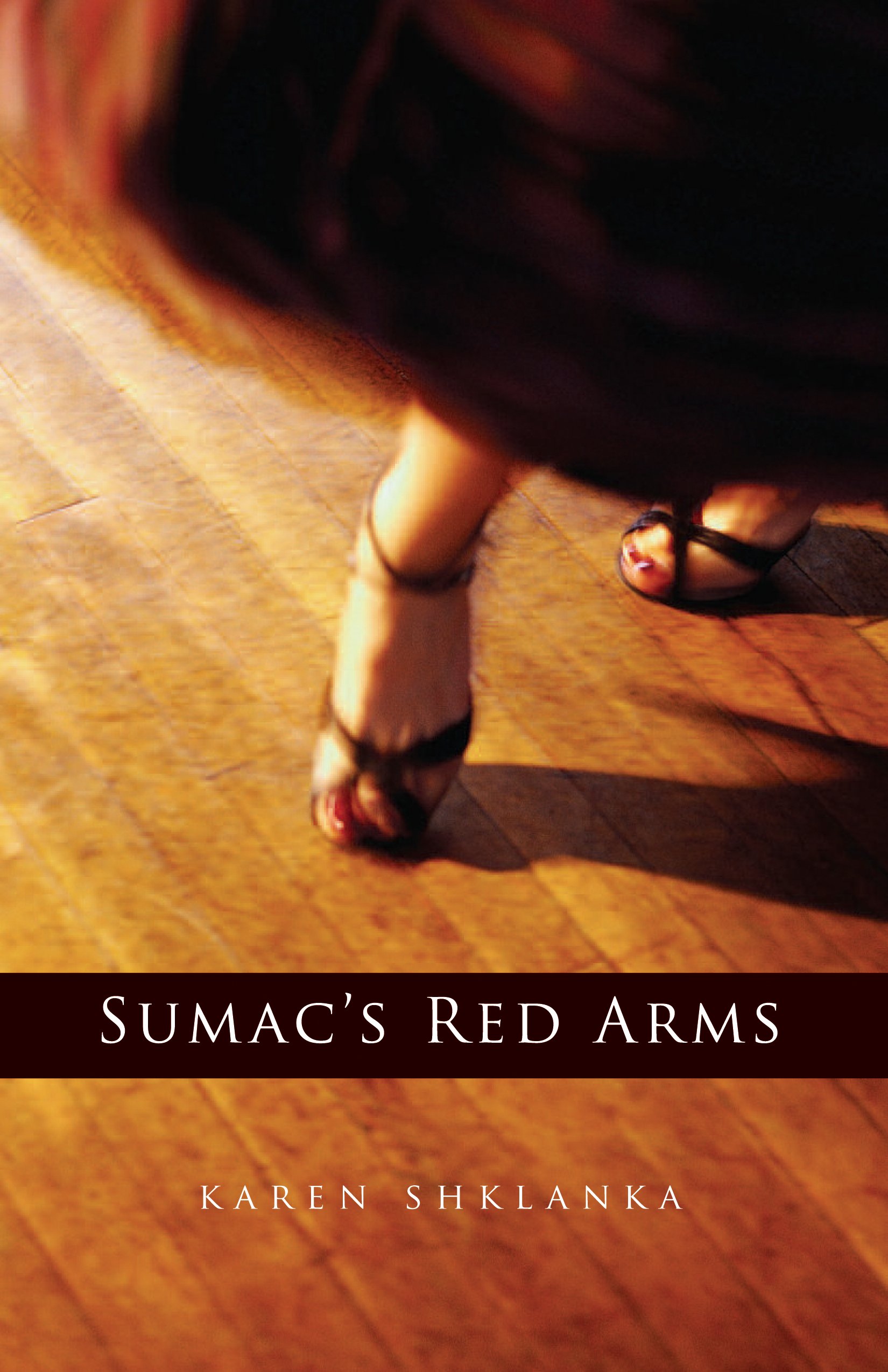
Sumac's Red Arms - Karen Shklanka (Coteau Books)

Today's book of poetry:
Sumac's Red Arms.  Karen Shklanka.  Coteau Books.  Regina, Saskatchewan.  2009.


Karen Shklanka is a poet I could listen to all day long.  Nothing is as exciting as a voice filled with vibrant intelligence and wit.  She also happens to be a practicing physician.

The poems in Sumac's Red Arms are small movies worth watching.

Whether Shklanka is in an emergency room stitching scalps or dancing the tango as though her life depended on it Sumac's Red Arms stuns the reader with precision and clarity.  These poems charm the reader, if this is dancing, Shklanka is definitely the lead.

Season

Milkweed pods empty themselves to the wind,
dry cups like grandmother's hands.
A child on the bank follows a yellow leaf underwater.
Sumac's red arms gather in the weather.
The river, larger than memory,
pours itself like clear tea through the ravine.

...

Today's book of poetry takes old school pleasure in the way Shklanka's narrative holds the reader by the scruff of the neck.  These poems are well traveled, the fruit they serve could be from anywhere.

Sumac's Red Arms  is broken up into several separately titled sections and each has some stylistic perk that make them unique but the voice never changes, Shklanka is constantly stone-cold certain. The lucky reader gets to see Shklanka's considerable skills spread out over several different palettes and she has a different gear for each other them.

In The Poem

I won't tell you
about how morning stretches
under the clouds on English Bay
like a bright skin, how
its edges blur tenderly into
the dark, how all moments
accordion into this one
where we touch a stranger's
fingers, how our steps echo
in the street, how you measure
this, the Pont Neuf, my stride,
how you read my back
with your hand, how my sidelong
thoughts slip by
the Seine, out of streets
of the Marais, sniff around you,
intercept a glance, a sudden
kiss before the inevitable
commutation, the door closing
and the gleaming train.

...

The gang in our office for the read this morning was larger than usual.  Milo and Kathryn both brought guests, they claim our morning read is better than Bugs Bunny or Oprah.  The office rule is that everyone has to read a poem and that included our guests.

One visitor read the entire "Vocabulary A Tango" section of Sumac's Red Arms.  The other guest, they both prefer to go unnamed, read two poems, "Dear God," and "Letter to Jesus."  Both were excellent reads.

From today forward, Today's book of poetry will be welcoming guests to our morning reading.  But if you show up - you HAVE to read.

The Girl From Attawapiskat

She is the fifth Friday night "Tylenol overdose" send from the
Attawapiskat nurses in six weeks. I am new to medicine, to the North,
still can't sleep night before being on-call. We chopper them down:
fifteen or sixteen years old, smooth skin, wary eyes. I never really know
what to do. There's no acetaminophen level. No proof. They get an IV
drip for the night, Mucomyst, then go shopping at the Northern store
the next day. There's not much for a teenager to do in Attawapiskat, a
reserve of a thousand people with their own Cree dialect. Once, we
made the rule, "No Shopping," and the weekend helicopter rides
stopped, for a while.

**

Another Saturday night, the girl from Attawapiskat again. An
"overdose." She refuses to stand, so I sit on the floor of the ER with her.
Her voice is quiet, not wanting to talk to me. She casts her eyes down. I
wait. Look at the scuffmarks on the floor.

She says she heard a voice in her head that gave orders. Kill yourself, the
voice says. This time, I know what to do. There is a psychiatric hospital in
North Bay. The psychiatrist can't refuse. The pilots flying patients to this
hospital insist they wear a straightjacket. We both cry as the orderlies
strap her in. She screams at the men. I stand in the stairwell by the
helicopter pad. She spits on me as they wheel her out on the stretcher.

**

Four months later the girl from Attawapiskat stops me on the road, as I
walk to the hospital. I hardly recognize her. She is pretty now. A bit
plumper. From the medication, I think. Not as quiet. Says she wants to
thank me for sending her to North Bay, that she'd been in
treatment for depression, sexual abuse. She appreciates me taking the
time. Plans to go and stay with her older sister in Fort Albany. I blush,
then release my breath; fight the tears in my eyes.

**

Six months later I get a call at 10 pm from the nurse in Fort Albany, one
community north from Moose Factory on James Bay. A thirty-five year
old woman has been in a gas explosion. From medical school, I know the
key question is, Does she have burns around her mouth? Yes? Then
check inside. Yes? Bits of Black? My mind is tight and clear.

I send the anesthetist up in the chopper in case of swelling of her airway,
then I fall asleep on the living room floor, a blanket over my shoulders,
my husband in the bedroom upstairs. The phones wakes me up at
midnight. I've been drooling. Don't know where I am. The nurse is
panicking. The chopper isn't there yet. The patient is choking.

I talk the nurse through a needle cricothyroidotomy. It doesn't work.
There's blood everywhere, she says. Get the bag and mask, oxygen,
I say, some air will get in. They hear the chopper. Hang up.

I can't sleep, call an hour later to see what's happened. She was barely
hanging in there when the doctor arrived, then she lost her IV. I'd asked
for two, but they'd only managed one, her veins were so shut down.
While they all tried to replace the IV, she stopped breathing, had a
cardiac arrest. The nurse says the woman's sister, the girl from
Attawapiskat, is waiting outside.

...

The feeling around the office was that we all wanted to see more of Karen Shklanka's very fine poetry.  Sumac's Red Arms was thoroughly entertaining when Shklanka was dancing, riveting and respectfully sublime every time there was blood on her hands.  Shklanka's prescriptions are disguised as poems.

This is great medicine.

Karen Shklanka

ABOUT THE AUTHOR
Karen Shklanka is a poet, a family physician and, with her husband, an Argentine Tango dance instructor. Her poetry was included in the 2004 chapbook anthology, Letters We Never Sent, edited by Patrick Lane. She was twice a finalist in ARC magazine's international poem contest, in 2005 and 2006, and has been published in numerous other literary periodicals. Sumac's Red Arms is her first book publication.

Born in Toronto, Karen Shklanka spent 18 years practicing rural and emergency medicine in small and medium-sized Canadian communities. She has lived in Vancouver, Australia, Regina, Houston, Los Angeles and Moose Factory, Ontario, and on Salt Spring Island. She received her M.D. in 1988, and, in 1990, received the top mark in Canada from the Canadian College of Family Physicians. She currently serves as a Clinical Instructor in the Faculty of Family Medicine at UBC.


409
DISCLAIMERS

Poems cited here are assumed to be under copyright by the poet and/or publisher.  They are shown here for publicity and review purposes.  For any other kind of re-use of these poems, please contact the listed publishers for permission.

We here at TBOP are technically deficient and rely on our bashful Milo to fix everything.  We received notice from Google that we were using "cookies"
and that for our readers in Europe there had to be notification of the use of those "cookies.  Please be aware that TBOP may employ the use of some "cookies" (whatever they are) and you should take that into consideration.
Saturday, July 4, 2015

The Tongues of Earth - New and Selected Poems - Mark Abley (Coteau Books)

Today's book of poetry:
The Tongues of Earth - New and Selected Poems.  Mark Abley.  Coteau Books.  Regina, Saskatchewan.  2015.


We here at Today's book of poetry were tickled to read Mark Abley's The Tongues of Earth.  Many of these poems are newly trimmed and polished, others are simply new.  Abley has a very consistent tone and voice but multiple personalities, luckily for us readers - they are all razor sharp.

The Almost Island

                                     Rising
and rising as the planet's crust
buckles and two continents shuffle closer,
inching up like a secret Ararat from
a ridge on the ocean's turbulent floor
through miles of lightening water, each crag
within view of the surface explored by dolphins
and sharks, reconnoitered by petrels:
immune to the force of rain and fog:
all prepared for some radiant Thursday morning
when the sea recedes with grudging compliance
from a peak that has become dry land.

Not yet, not for us, though gossip tells
how the wide-eyed crew of a Japanese trawler
rescued a woman from Buenos Aires
who had walked off a yacht after midnight:
imagine her shock as she found herself, not
in the airless depths but chest-high in chilly water,
balancing on a hidden summit. "Am I dead
already?" she asked the black waves; and as if
in response, a long-submerged craving for life
poured over her like a passion for mangoes --
their texture, their flavour, their unpredictable
sweetness.

...

What I like about Mark Abley's very clever The Tongues of Earth is that each poem is its own brave new world.  One minute you are in Amsterdam and you have those Dutch issues, the next you are in Labrador with that anciently dead body -- but in truth the reader is always on firm footing because Abley makes it so.  These poems each seem to come equipped with their own Rosetta Stone, you don't realize you are reading the code.

I am making these poems sound more complicated than Mark Abley has made them.  Abley has honed and crafted these gems just south of any formalism, they are taut as a drum, and they roll.
These poems are build on very solid foundations.

Radnorshire

When my mother dies, the eyes of a shepherd
born in the Crimean War will die again.
No-one's left who remembers his clannish ways,
his moorland dogcalls, his turns of phrase:
nothing of him roams a working mind
except those blue, unclouded eyes she met
as she tottered along a puddle-specked lane
toward a market in the primrose season.

His names will linger, cut on a stone
up the slope from where I set fresh marigolds
on grandparents I never knew. Nearby
a baker was tidying his wife and parents,
dead within a year while the foe spoke Spanish
in the South Atlantic. "Like Job of old
in the Bible," he told me, wiping his brow,
"the slate was swept clean, you might say."

...

Mark Abley is a chameleon and The Tongues of Earth a cornucopia of human adventure, love, loss and hope.  Abley is able to conjure as many faithful persona's as he needs.  They people these poems with intelligent wit.

Abley has a sharp and sensitive bullshit barometer, he is all over any nonsense, recognizes and refutes at full-steam.  These beautifully articulate poems carry Abley's occasional disdain with such high standards you almost never see the gentleman's punch coming for you.

Fire

     "We scorched and boiled and baked to death more people in Tokyo
        that night of May 9-10 than went up in vapor at Hiroshima and Nagasaki."
        - Gen. Curtis LeMay

Sixty years later, when the rain has dwindled
and darkness has pacified the baritone crows,

a Tokyo sky mutates into trembling
scrolls and screens, a calligraphy of fire,

the planet Saturn, snails, a weeping willow,
childish faces with eyes that linger an extra

second, two heads of cats, a geodesic dome
inside a heart that morphs into a galaxy

as the watching girls in flip-flops and kimonos
and a few of their t-shirted boyfriends ooh and aah.

the crackle of a dozen explosions peeling
clouds above the harbour into blood orange juice;

I nibble an octopus roll and sip Pocari Sweat,
wisps of purple smoke playing hide-and-seek among

the towers as I brush against a man in the crowd,
his wiry, salt-coloured hair at my shoulder;

How, I want to ask, did you manage to live
when the sky delivered fire that broke your city,

frying infants on their mothers' backs,
boiling children alive in the canals, killing

a hundred thousand people in a night...but I don't
speak his tongue; and the old man is beaming.

...

These poems leave me a little punch-drunk.  There are many, many poems in Mark Abley's The Tongues of Earth that are simply startlingly good.

Abley's voice resonates with the trusted wisdom of someone you would want at your campfire.  His poems sound/feel like stories that we need to pass along.

Mark Abley

ABOUT THE AUTHOR
Mark Abley is a Canadian poet, journalist, editor and non-fiction writer.  He has published three previous books of poetry, two children's books and several works of non-fiction.  He has won Canada's National Newspaper Award for critical writing and received a Guggenheim Fellowship for research into language change.
Born in Warwickshire, England, he moved to Canada as a small boy, won a Rhodes Scholarship from the University of Saskatchewan and has been a contributing editor of both Maclean's and Saturday Night magazines, and a regular contributor to the Times Literary Supplement.  For sixteen years he worked as a feature writer and book-review editor at the Montreal Gazette.  He lives in Montreal.

BLURBS
"The poems of Mark Abley are as durable as stone and as delicate as first light; it is as if they have belonged to us forever."
     - Joe Fiorito, author of The Closer We Are to Dying

"As Abley laments the overlooked, endangered and the extinct, he sings of what endures, in music that pleasure(s)...like a lover: each time we lose a language the ghosts who made use of it cast a new bell.  That ringing is this urgent, beautiful book."
     - Julie Bruck, author of Monkey Ranch

Mark Abley
Irving Layton Centenary
video:  Endre Farkas
Mark Abley paying homage to the Canadian poet Irving Layton (1912-2006) upon his Centenary.


357

Poems cited here are assumed to be under copyright by the poet and/or publisher.  They are shown here for publicity and review purposes.  For any other kind of re-use of these poems, please contact the listed publishers for permission.

Monday, December 1, 2014

The Trouble With Beauty - Bruce Rice (Coteau Books)

Today's book of poetry:
The Trouble With Beauty.  Bruce Rice.  Coteau Books.  Regina, Saskatchewan.  2014.


The Trouble With Beauty is Bruce Rice's fifth poetry collection.

These poems are entirely down-to-earth missives, without artifice.  Those of you who follow Today's book of poetry will know that these are the books I like best.

Glossary of Hills

There should be a glossary of hills
                       if only to say golden afternoon light on a butte
             weathered down to the clay is not old,

though these hills are old.  There should be a sign for the breath
                                    taken in the space between one hill and another,
             a notation for a voice on a ridge.

We need a name for one slope disappearing
                                   into the mist of the next and the faint green hyphen
joining ourselves to distance, to the deep memory

                                                          of how once we studied hollows for life,
                                  knapped blades from a flint core, learned
and remembered it all as if our lives depended on it - and they did.

Then we would know how ancient we've become
                                    watching the shallow brown river
            that seems not to move, all the while cutting away the time we have left.

There would be no apostrophes
                                   in the Book of Hills, no possessive form.
                       To open the cover would be like looking

                                                into the mirror
of our own faith, all the lost translations,
                       the songs at the end of the wind.

...

Rice is having a gentle conversation with the land itself.  These poems invite us to participate in that conversation.

Rice, I think, would argue that there is beauty almost everywhere in spite of what we humans have done to the planet.

Advice

I should do a better job of taking my own advice.
I am just getting the things my poems
knew all along.  Sometimes it's messy;
I peer into the chest of Patient 19, his pink ribs
retracted.  I am the sleep-deprived intern,
not to be trusted with brutal and delicate instruments,
so I take notes, the teacher disappointed in yet another
average student.  I wonder if the Apostles had it this bad
as they stood in line at the table.  Was the bread sweet?

These ecstasies we imagine - saints' eyes turned upward,
arrows dripping like leaves, the yellow-grey smudge
of a pyre - cannot compare with an empty road
and all the ghosts on it.

I trust the instincts of birds, oceans of grass
rushing up slopes - see a thing tremble
and I want to put it safely where it belongs.
I cannot choose what is already in me.  I feel nothing so heavy
as the great ennui of carrying on, though I am saved by the fact
I cannot see a horizon without going over it.

...

Rice has hope to share with us.  But it would be misleading to think about these poems as nature poems.  Human folly and human achievement, bravery, courage, failure, they are all in here.

At our offices we like poetry that is accessible - but that doesn't mean easy.  Rice asks some hard questions, muses poetic with the resolutions.

Origins

Where nothing is, small desires
have consequence.

In our night harbour, the indifference of the ocean is benign.
Its slender breath pushes us to shore for hours.

The colour of every inlet is different yet water cupped in the hand
is transparent.  Memory is like this.

A child knows our home is a starfish, dangling its arm in the millennial tide.
Further out nebulae curl crimson as tubeworms, a shy luminescence:

Which abyss did we come from?
Riding a planet-sized rock.  Yahoo.


When we hunt we must travel.  To forget is to die.
Every bay has an echo so name it.

These islands move, evolving into themselves, a dictum on survival -
seeds in a mudball, a million lives in trust of the feet of birds.

The most natural thing is to want to know where weather comes from, the ways
beaches differ -- ropy and treacherous, or a midden of shells,

a place to inhabit a week or a season, the sea's floating skin
measured in microns on which we sail.

...

Bruce Rice celebrates beauty and I see much truth.  What more does a poet aim for?

 Bruce Rice

ABOUT THE AUTHOR
Bruce Rice has published four books of poetry, including Coteau’s Descent into Lima (1996) and Saskatchewan Book Award-winner The Illustrated Statue of Liberty (2003).
Bruce’s first collection, Daniel,(1988) received the Canadian Authors Association Award, and his most recent title, Life in the Canopy, was a finalist for Book of the Year in the Saskatchewan Book Awards. He received Grain magazine’s 2002 Anne Szumigalksi Award for the best poem or sequence published in Grain that year. His work has been broadcast on CBC radio and he has collaborated on several poetry performances and excerpts which were performed in Globe Theatre’s “On The Line” series. Born in northern British Columbia, Bruce Rice grew up in Prince Albert and spent a decade in the Canadian Maritimes before settling in Regina where he continues to live and write.

BLURBS
"Bruce Rice's poems ripple across the land like light slanting through clouds, tender and relentless by turns.  He is equally adept at surprising us with crisp details -- the track of a coyote imprinted in mud, the blank-faced stare of a cow -- and at probing the shadows for wisdom.  The Trouble With Beauty is down-to-earth, immensely pleasurable and highly recommended."
      Candace Savage, author of A Geography of Blood: Unearthing Memory from a Prairie               
                                                  Landscape

"In "Self Portrait As Landscape," Bruce Rice's speaker confesses: "These meditations feel like signs/
in a language not fully mine."  It's the modesty, the reluctance to overstate, that appeals so much here, that draws us into the poems.  No theatrics, no preening of the ego, but full attention to the land, the language, and the "dark line" inside that seeks out the battered, reluctant beauty in things.
     Gary Geddes, author of Falsework and What Does A House Want?


273