Wednesday, February 15, 2017

Love is a very long word - Majlinda Bashllari (Guernica Editions)

Today's book of poetry:
Love is a very long word.  Majlinda Bashllari.  Guernica Editions.  Essential Poets 233.  Toronto - Buffalo - Lancaster (U.K.).  2016.
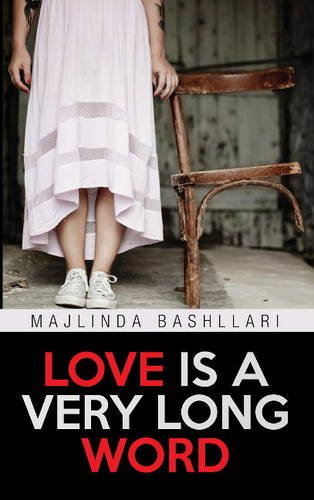

What joy.  Majlinda Bashllari's Love is a very long word was such a pleasure to read that it snapped me out of a poetry funk.  Today's book of poetry had been wallowing in a deep trough of poetic despair and displeasure as a couple of books I'd set aside with pleasure soured when I returned.  It happens from time to time.  Not so with Love is a very long word.

These poems are immediately accessible and still full of mystery.  There's passion from a woman's point of view, escape stories, poems about family and so on.  The subject matter is far less important than the way Bashllari wraps you around her fingers and has her way with you.  The reader is happy inside these poems because Bashllari knows the secret languages of intimacy.

Cropped Images

There's nothing on the first pages of this family photo album.
Neither pictures nor paintings of the great grandparents who
were supposed to be shown here. They didn't know anything
about photography. They used each other's eyes to record
their memories.

Light is absorbed into these black empty spots and cannot
get reflected back. They're all soldiers of the same blood and
flesh army, dead or alive, silent and often forgotten. From
time to time we make a stop at these imaginary graves
wondering which one of us resembles them.

Here comes another generation: the recently departed
grandparents, uncles, aunts, rich and poor cousins, with their
own stories frozen in celluloid.

Once the daylight touches their eyes, faces start to revive.
They sigh, smile and look for their dearest ones in the crowd.

What happened to you, they say, what happened to me ... that
day, that night, that moment ... They get sad and stare: Please,
send us back, we want to be somnambulists. Don't wake us up.

I skip pages, coming close to the living empire: adults with
our own children, who know little about growing up.

We are not done with our time yet. There are battles to win,
at least arguments. We take pictures of every event, happy
pictures if possible. Although not sure we are happy, we need
to leave physical evidence of supposed happiness behind.
Somehow we remain idealists who love everything material.

Faces, gestures often surrounded by suspicious blurs taken
between invisible moments. Unnoticed moments, like
heartbeats; once important but never to be displayed again,
powerless to weaken our unique talent for pretending.

...

Love is a very long word is Majlinda Bashllari's first book of poetry in English.  Let me repeat that astonishing remark.  Love is a very long word is Majlinda Bashllari's first book of poetry in English. But ten years ago Bashllari published Një udhë për në shtëpi (A road to home) (Morava, 2007), in Tirana, Albania.

It's beyond astonishing that Bashllari is now writing poems in English as though she invented the language.  Love is a very long word is nuanced and considered poetry that feels like a conversation in that dream you can't forget.

Borrowed

Mira wanted him, and when nobody was around,
she trembled and whispered gibberish mostly
and begged him to touch her.
It was not her fault she never knew the taste
of being loved. With one leg shorter than the other,
she's always been invisible to men.
Turning forty wouldn't make her any prettier,
she knew that.

He was her brother's best friend,
who else would treat her right ...
The man got straight to the point:
--Girl, you're like my sister, this may kill us both ...
--Nobody will know, she murmured,
looking at her good leg.
Then he held her gently in his arms,
kissed her on the neck, thinking of the money
he'd borrowed from her brother ...
She blushed, burst into tears
and he couldn't tell what was uglier,
her face or his performance.
Between her thighs, he forgot everything:
his wife, the loan, the lousy life.

Later, in bed alone, she cried,
as she pictured him leaving,
limping on his healthy legs.

...

The Today's book of poetry minions were in fine form today once I got them inside from shovelling. In the last seventy-two hours Ottawa has had seventeen feet of snow.  That's an alternative fact. Shovelling will tire the rebelliousness right out of a pesky intern or editor.

Kathryn, our Jr. Editor, remarked on the strength of the speaker in these poems, how resilient.  Milo felt that there was a low hum of resigned melancholy under the poems.  Today's book of poetry agreed with both of my loyal staff -- but we'd tell the reader to look around for the hope in these poems.  We're convinced Majlinda Bashllari is an optimist, too experienced to have any notion of unbroken happiness, but full of hope in the face of reason.

Natural Woman Made In The Balkans

On nights that are neither moon nor wolf, I want my man
over me like a bat that holds a lit-up chandelier in his wings.

Almost blind, he tries to reach the last hearth-fire ... Why me,
I breathe in his mouth, dying to hear again that all other girls
in the town seem like sisters to him.

Quiet, but hot, blind but hungry, we both take off across the
darkness. On nights that are neither of wolf nor moon.

When he falls asleep, I uncover the sweaty hair from my eye
and watch beyond his shoulder, to make sure no sisters come
out of the dark.

...

Today's book of poetry liked every single thing about this powerhouse.  Today's book of poetry liked Majlinda Bashllari's Love is a very long word so much that we now want to learn Albanian and find a copy of Një udhë për në shtëpi (A road to home).  It must be a stunner, this one certainly is.

Majlinda Bashllari
Majlinda Bashllari

ABOUT THE AUTHOR
Born in Albania, Majlinda Bashllari’s first poetry collection, Një udhë për në shtëpi (A road to home), was published in Tirana, Albania (Morava, 2007). Bashllari’s work has appeared in numerous Albanian art and literature magazines and in Albanian anthologies of essays and short stories. Love is a very long word is her first English-language collection of poems. She lives with her family in Toronto.

BLURB
With their cultural roots in Albania, the poems in Love is a very long word are distinct in welcome ways from almost anything else in Canadian literature. Laconic and edged with sharp wit, they engage the necessary courage and strength of character to transform the often bleak, thwarted and alienated experiences which they recount into art of the finest, most valid sort: uncompromising, imaginative, and deeply true to life. 
     - Allan Briesmaste

Love is a very long word - Book Trailor
Video: Guernica Editions


551


DISCLAIMERS

Poems cited here are assumed to be under copyright by the poet and/or publisher.  They are shown here for publicity and review purposes.  For any other kind of re-use of these poems, please contact the listed publishers for permission.

We here at TBOP are technically deficient and rely on our bashful Milo to fix everything.  We received notice from Google that we were using "cookies"
and that for our readers in Europe there had to be notification of the use of those "cookies.  Please be aware that TBOP may employ the use of some "cookies" (whatever they are) and you should take that into consideration.

Thursday, February 9, 2017

On Not Losing My Father's Ashes in the Flood - Richard Harrison (Buckrider Books/Wolsak & Wynn)

Today's book of poetry:
On Not Losing My Father's Ashes in the Flood.  Richard Harrison.  Buckrider Books.  Wolsak & Wynn.  Hamilton, Ontario.  2016.


Micheline Maylor recently referred to Richard Harrison as the best narrative poet in Canada.  Those could be fighting words in some circles because it is a pretty big declaration.  Today's book of poetry certainly thinks that Richard Harrison's On Not Losing My Father's Ashes in the Flood certainly bolsters his case.

Richard Harrison is a masterful story teller and as a result you could be forgiven for assuming these are spontaneous histories, lovingly improvised stories for the fire or late at night in bed, but Harrison's work is anything other than off the cuff.  These gentle and compassionate poems are made of interlocking puzzle pieces so meticulously set into place and rendered that the seams become invisible.  The puzzle becomes a painting and the painting is the poem.

Now is the Winter

With the last ounces of his grace, my father
stands up from his wheelchair, turns toward
the bed as though the floor is ice;
he tilts his spine, knees bent, and waits to shift
his weight to mine; I lay him on the blanket
and kiss his lips. We talk of Shakespeare
who carried him line by line through tropic wars
to the final surgery on his failing hips.
Now is the winter of our discontent,
he recites from those pages of his brain
no disease has yet erased,
the words the prayer of one
who has no god to hear his cries, his powers spent.
When he asks, I promise to be with him when he dies,
and winter stirs in the broken fingers
of my hand that long ago healed winter cold
into mended bone. My father sleeps as the land sleeps --
and I am taught that nothing is immortal
and awake forever. Outside, the heroes, green,
and knowing only what they see,
take their sticks and pucks and
lean into their shots
while the mid-winter's night
dreams water turned to stone beneath their feet.

...


Today's book of poetry first met Richard Harrison in Peterborough back in 1978 or 1979.  Our impression then was that he was a true gentleman with manners beyond his years and we all know how hard they are to find.  Almost as hard to find as a poet who has stayed the course all these years. Richard Harrison had a brilliant mind when I first met him thirty-eight years ago and he has spent the intervening years honing his considerable craft.  Practice and experience.

You see it in every poem in On Not Losing My Father's Ashes in the Flood, practice and experience. Today's book of poetry recently looked at the Alan Feldman's Immortality and feels Harrison can claim some of that same rarefied air.  Bless the cotton socks of the poets who tell stories with experienced wisdom, razor honed craft and hearts as big as locomotives.

Maybe I forgot to mention that Harrison usually leads with his heart.  Most men wouldn't dare and Harrison makes it look easy.

Found Poem

On a line from Margaret Laurence's The Diviners 

At my feet, at a bus stop, a bumblebee and a honeybee
are stinging each other to death. At first I think it's two bees mating,
something I had seen only once: not every bee
has a queen surrounded by a hundred thousand female eunuchs
in the monarchy of a hive; the Bombini, bumblebees,
never gave up motherhood to that degree, and plenty of them pair up
to breed like you and I have done in a selfishness so great
it created more of our own.

Once, in the hot first days of autumn,
out on the soccer pitch, I heard two Bombi fucking in the grass,
buzzing as they did it, and I was afraid for them,
being out on the field where he had come to trample and kick.
So I tried to pick them up as one rich flooding coil
singing the mellifluous bumbling aria of nature and sex.

But they broke away from each other, the one flew off,
while the other let me take it out of bounds and play --
                                                                      and that was it --
                                                                      a coitus interrupted, yes.
but a gene code preserved that would otherwise be lost beneath a pair of cleats.

And isn't it odd that it is not odd to talk of living things this way? These days
                      every object is a kind of page,
                                                                      every life a kind of writing.
I feel comforted, thinking of the unfathomable mystery at the heart of the bee
as piece of paper in a bottle, and on that paper, nothing more than one
                                                                      among an infinite arrangement
                                                                      of words.

The bee is a sentence, a line from a song.

But I know my kind.

Someone arriving after me to wait for the bus
would step on these two insects at war. So I pick them up,
and put them on the lawn away from human feet
so they can settle it in the grass undisturbed.

And I recall the fossil I saw as a child of
two dinosaurs that died together, struggling in the mud,
the carnivore with its arm down the other's throat all the way to its stomach,
the plant eater with its teeth sunk in the predator's shoulder all the way to 
the bone,

a poem composed in flesh,
               preserved in stone
                                       that waited 200 million years for its readers.

...

Our morning read was a little different this morning.  I'm hoping Richard doesn't mind but Today's book of poetry called in some old favours, made a few bribes and called on some old Peterborough friends.  Richard and I used to be loosely connected in a coven of misspent youth and poetry so I called in some old Peterborough Poets.  Of course we already had our Sr. Editor Max, I let him out of his strongbox this morning and made him put on pants and we decided to put on a show for the youngins. 

I met Max in Peterborough almost forty years ago and he was terror.  I was also able to round up Riley Tench and Ian David Arlett and get them into the office this morning -- please don't ask what sort of voodoo was required to accomplish this.

We each took our enthusiastic turns with pleasure, we were all proud of our old friend and the morning wine didn't hurt either.  Happy to do Richard's bidding, we bounced these poems off of the walls.  My old tricks no longer have much affect on the Today's book of poetry staff but when Max, Arlett and Tench were through the effect was jaw-dropped silence.  You'd have thought Marcel Marceau was on stage.  I think GOB STRUCK is the word.

Confessional Poem

Yesterday I wrote a confessional poem,
          but my wife, who always reads me first, said it was just a journal entry.

It's been years since I was that far from a poem and thought I was that close,
                                                                                                     but I trust her.

Today, before class, a student was zipping through a Rubik's Cube,
                        knuckling the box into panels of many colours, then a couplet,
                                                                       then one            then many again.

Within two minutes, without looking, he was done.
         I asked him to do it over so we could all watch, and, having watched,
                       have something with which to begin the writing of the day.

I wrote that the planes of the cube going in and out of order
                       as the student twisted the game were like the drafts of a poem,

sometimes deliberately torquing towards the opposite of the desired end
                       because the poem is a way we give in to a logic that lives within us
                                                                                                    but is not our own.

I was thinking of that poem I couldn't write,
          an apology I wish I'd made years ago,
                                           and carry with me even though two things are true:

          the person I would have apologized to is dead now,
                       and what I want to apologize for is speaking badly of them
                                   thought it was only to my wife and so they never knew.

The poem was like having an argument with someone in a dream,
                        then going up to them in daylight wanting to make amends.

Last time I did that,
          the other person reminded me
                       that I had done nothing.

But I apologized anyway
         because they had done nothing
                       to deserve what I did not do.

...

It's an honour to tell you how much Today's book of poetry enjoyed our old friend's book.  Today's book of poetry still can't tell you whether Micheline Maylor was wrong or right and we see quite a bit of poetry here in the Today's book of poetry offices.   We've admired Richard Harrison's poetry since before most of you were born and On Not Losing My Father's Ashes in the Flood confirms what we already knew, Richard Harrison writes beautiful poetry.

Image result for richard harrison poet photo
Richard Harrison
Photo:  Keeghan Rouleau

ABOUT THE AUTHOR
Richard Harrison’s first comic book was a Marvel Tales collection of Spider-Man’s first battle with the Hulk, Thor vs. Sandu, the Human Torch vs. the Sub-Mariner and a scary cautionary tale told by the Wasp to a kid in the hospital, “Somewhere Waits a Wobbo.” Four fantasies for a quarter: it was a steal. He’s been reading ever since. Richard is a nationally recognized poet (Hero of the Play, Big Breath of a Wish), editor and essayist on topics ranging from philosophy to prayer, literary criticism to mathematics, and poetry to hockey – as well as his work on superheroes. A professor at Calgary’s Mount Royal University, he teaches English, Creative Writing, and courses in comics (with Lee Easton) and the graphic novel.

Richard Harrison
School of Thought - 2016
Video: ciswf


550
DISCLAIMERS

Poems cited here are assumed to be under copyright by the poet and/or publisher.  They are shown here for publicity and review purposes.  For any other kind of re-use of these poems, please contact the listed publishers for permission.

We here at TBOP are technically deficient and rely on our bashful Milo to fix everything.  We received notice from Google that we were using "cookies"
and that for our readers in Europe there had to be notification of the use of those "cookies.  Please be aware that TBOP may employ the use of some "cookies" (whatever they are) and you should take that into consideration.




Monday, February 6, 2017

Lady Crawford - Julie Cameron Gray (Palimpsest Press)

Today's book of poetry:
Lady Crawford.  Julie Cameron Gray.  Palimpsest Press.  Windsor, Ontario.  2016.


Julie Cameron Gray can burn with the best of them.  These wicked smart poems get to the edge of sophistication without Today's book of poetry feeling a plebeian kink in the neck.  Gray is a post-modern feminist to our way of thinking and determined to reveal some chinks in that old patriarchal order.  She has to open up her heart to do it.

Gray never allows Lady Crawford to become any sort of strident dialectic tract all weighed down with agenda.  These poems offer all the variety of subject, tone and result that you can ask for from a book of poetry.  Today's book of poetry sees that Gray has some serious chops and it's all tempered with a reasonable sense of humour.  Humourless poetry will be the death of us all.

A Classic Pack of Camel Cigarettes

Some days it feels like nothing
will ever change in this town,
other days it's a landscape
like the front of a classic pack
of camel cigarettes, exotic black
angles under a different sun.
We hunt for specifics, anything

overlooked in the ashed-out
twilight to claim our own:
bottle cap, earring, a piece
of blue glass worn opaque
by the beach, the novelty of egrets
mating in the green garden
your neighbour made after his wife

died in a five-car pileup.
Each spring as he turns the earth
he recalls the state trooper awkward
at his front door, describing
interstate constellations of car
parts scattered like satellites
that got lost on their way home.

...

Today's book of poetry has all sorts of reactions to poems but my lovely wife K is a little more direct and forthcoming.  Today's book of poetry usually reads Today's title the night before, in bed.  Today's book of poetry has always read the title at least once by this point in our process.  So last night, I tried a couple of Julie Cameron Gray recipes on K.

As it turns out K was reading Plutocrats by Chrystia Freeland and she offered up a trade.  She'd listen to as much poetry as I wanted if I promised to read Plutocrats.  Well a nod's as good as a wink to a blind horse.  Fair enough.  Of course K never knows what is coming.  In general I only read her the very best or the very worst of my nightly poetry feed.

I'm sure you can guess which I thought Gray had to offer - but in this case the guarantee comes from higher up the food chain, K loved it.

Lineage: Hugh and Margaret Crawford (1195 -1265)

This is what I know: The Chief of Clan Crawford was like every
other father. Ambition bred not in the bone but in the fervent dinner
conversations with his wife, suggesting that things would be better
if the Norse would bugger off already. He baited and led them until
October, when the fall shores gave way to storms and their ships were
no match for the rough seas of Scotland. To the confused Norsemen
dying on the shore, arrows were a kind of weather.

...

Julie Cameron Gray published her first volume of poetry, Tangle (Thightrope Books, 2013) a few years ago and Today's book of poetry has yet to see it but we are assured by our reading of Lady Crawford, this is fine poetry by any standard and all full of future.

Gray has that ability to make her intimacy and knowledge yours.  The reader can feel certain beats of Julie Cameron Gray's generous and challenging heart.

Fight or Flight

In some countries, a daughter
is fear made flesh.

Once there was movie about college girls
clad in bikinis and pink ski
masks, clutching berettas
in Florida's manic orange juice sun.
Soon, all the men are dead
and the girls, sexual as overkill,
drive off in a Lamborghini.

Not unlike the onna-bugeisha--
Samurai women wielding a naginata,
defending their homes and children
and honour from marauders
while their husbands were away at war.

Young girls taught
the loft of a sword so long
it pulled horsemen from the air
and thrashed them to roses.

...

As good as Today's book of poetry demands you believe Lady Crawford is we are convinced this meal is just beginning.  Julie Cameron Gray will burn down the house before she is through.


Image result for julie cameron gray photo
Julie Cameron Gray

ABOUT THE AUTHOR
Julie Cameron Gray is originally from Sudbury, Ontario. She is the author of Tangle (Tightrope Books, 2013), and has previously published in The Fiddlehead, Prairie Fire, Event, and in Best Canadian Poetry 2011(Tightrope Books, 2011). She currently lives in Toronto.

BLURB
"An impressive transformation has occurred from Tangle. Cameron Gray's debut, to Lady Crawford:
writing out the small familiar tragedy of we live, we sorrow, this wrecking ball of a book smashes myths of femininity. It is as if this poet woke from the slumber of a young woman's dreams and, seeing how all the dreams were broken, set about describing her experience of the broken castle as more than lies -- as cultural reconstruction. Among many other feats, this beautiful poetry of impassioned reason ironizes the lives of famous women as heart broken. Reading it, our hearts are broken as our hearts were, once, already.
     - Shane Neilson

Julie Cameron Gray
Lady Crawford - Performance Art
video: Julie Cameron Gray


549

DISCLAIMERS

Poems cited here are assumed to be under copyright by the poet and/or publisher.  They are shown here for publicity and review purposes.  For any other kind of re-use of these poems, please contact the listed publishers for permission.

We here at TBOP are technically deficient and rely on our bashful Milo to fix everything.  We received notice from Google that we were using "cookies"
and that for our readers in Europe there had to be notification of the use of those "cookies.  Please be aware that TBOP may employ the use of some "cookies" (whatever they are) and you should take that into consideration.


Saturday, February 4, 2017

The last white house at the end of the row of white houses - Michael E. Casteels (Invisible Publishing)

Today's book of poetry:
The last white house at the end of the row of white houses.  Michael E. Casteels.  Invisible Publishing.  Halifax & Picton, Nova Scotia.  2016.

cover-TLWH

Today's book of poetry went back to the stacks today to see what we could find on Michael E. Casteels.  Turns out we had more than we remembered, less than we want.  Casteels has published more than a dozen chapbooks and we were only able to turn up three of them.  The Robot Dreams (Puddles of Sky Press, 2013), solar-powered light bulb and the lake's achy tooth (Apt 9 Press, 2015)
and check engine. rhinoceros. tungsten (Puddles of Sky Press, 2015).

Today's book of poetry has written about both The Robot Dreams and check engine. rhinoceros. tungsten. and you can check those out here:


It was easy to like those chapbooks but now, with considerable glee, we present the last white house at the end of the row of white houses and Today's book of poetry couldn't be happier to see Casteels with a trade collection.  And this one is a corker.

Casteels seems to have a mastery of a certain kind of romantic ennui, these poems are loving but gently sad.

Universe Composed Of Mostly Nothing,
New Study Indicates

Suddenly we're weightless,
columns of light
slice through us
and a gentle breeze
blows us further apart.
For a while we drift,
waving farewell to our hands,
whispering goodbye
with lips already distant
to ear that were barely even here.

...

We were pretty happy here in the Today's book of poetry offices when Casteels book arrived, it's great to see him get the opportunity to let the ya-ya's out, to canter, skip, sprint and cavort.  The last white house at the end of the row of white houses gives Casteels a platform to spread his considerable wings.  And we loved the title of this book, a big old juicy long-assed title.

Casteels mixes clinical detail of the day to day with an imagined reality that lives just beneath our skin and just beyond our grasp.  The result is a strangely familiar poetic that can be both consternating and comforting depending on whether Casteels is slamming on the brakes or hammering down on the gas.

The Map

Somebody dropped a map on the sidewalk downtown
and no one stopped to pick it up. Now it's dark, the
streets are empty, and the map is alone. It shivers as the
fingers of a heavy breeze grab the edge of a page and
start pulling. The map spreads out in all directions. It
crawls over fire hydrants and parked cars, mailboxes,
phone booths. It climbs up lampposts and stop signs. It
smothers building and bridges. The map unfolds until
it blankets the entire city at a ration of one-to-one.

The next morning, no one is late for work. Their keys
are right where they left them. No one misplaces a wallet
or searches for a missing sock. The lost dog arrives at
the front door and barks to be let in. No one stops to
ask for directions. No one honks a horn or slams on
their brakes. Everything inhabits its own space and
everything feels right at home. But the map, now one
with its city, longs for a pocket to nestle in. It wants to be
folded and pressed against another map, a map of some
foreign city whose streets are beautifully unknown.

...

Today's book of poetry was impressed with the straight out punching power in The last white house at the end of the row of white houses.  Casteels is a Sugar Ray Leonard poet.  These poems come at you from every direction but the power behind the punch is always right on target.

Milo, our head tech, took over our morning read today, he's been a Casteels fan ever since The Robot Dreams got stuck in his noggin.  Milo said that he found Casteels poems "twist like real life, tease like dreams."  We liked that.

The Red Light

I'm already late and speeding,
praying the light doesn't change.
It does and I stop.
I tap my fingers against the wheel,
twist dials on the dash. In the rear-view mirror
I examine the spaces between my teeth.
The light hasn't changed.
I rummage through the glovebox,
remembering the spearmint gum.
I count spare change in the ashtray.
Minutes pass. I consult the
owner's manual. I read it
cover to cover and still
the light remains. At sundown
I begin to worry. I take only
short sips from my water bottle.
I flick the high beams off and on,
signalling in Morse code. It's getting late.
Radio hosts abandon the airwaves.
I watch the moon drift overhead.

Night after night
the moon wanes
until crescent, and then
into nothing. I've been
counting the days on my 
fingers and toes. Seasons
shift and skew. I engage the
wipers when it rains, crank the
defrost when it snows.
On humid summer evenings
I roll down the window
and let me arm dangle.
A faint breeze stirs my thought
and I wonder about Goldie.

Is she swimming in circles
or just floating in the archway
of that tiny plastic castle? I hope the water
is fresh, that her bowl is clean, I hope she wants
for nothing. And sitting here, bathed in the glow
of this godforsaken light, I wonder
if she'd even remember me.

...

Obviously we here at Today's book of poetry are big admirers of Michael E. Casteels, his third appearance on our page puts him in the rarefied atmosphere of our repeat customers, our favourites. The last white house at the end of the row of white houses will present Casteels to a much wider audience and we here at Today's book of poetry know they are in for a treat.

Image result for michael e. casteels photo
Michael E. Casteels

ABOUT THE AUTHOR

Michael e. Casteels is the author of over a dozen chapbooks of poetry. In 2012, he was nominated for The Premier’s Awards for Excellence in the Arts, an emerging artist award. He lives in Kingston, where he runs Puddles of Sky Press.

BLURBS
“Have you seen Michael e. Casteel’s first full-length book of poems? It’s here, in front of your face. It begins with a wolf at the door and ends by waving farewell to our hands. Inside you’ll find everything you need: robots, a possum’s sneeze, and coffins filled with jelly donuts. The Last White House at the End of the Row of White Houses is one of the most exciting debuts to appear in Canadian poetry. Brilliant, strange, beautiful and encouraging, Casteel’s poetry is a repair kit for the human spirit.”
      — Jason Heroux, Hard Work Cheering Up Sad Machines

“Worlds of invention, humour, insight and the energy that is language. Michael e. Casteels’s first full-length collection is rich with empathy for robots and the sea, and the brilliant, delicate, outrageous leaps the mind makes when given words and our lives.”
     — Gary Barwin, Moon Baboon Canoe

Michael E. Casteels
"Particles"
video: Small Books, Big Country

invisiblepublishing.com

548

DISCLAIMERS

Poems cited here are assumed to be under copyright by the poet and/or publisher.  They are shown here for publicity and review purposes.  For any other kind of re-use of these poems, please contact the listed publishers for permission.

We here at TBOP are technically deficient and rely on our bashful Milo to fix everything.  We received notice from Google that we were using "cookies"
and that for our readers in Europe there had to be notification of the use of those "cookies.  Please be aware that TBOP may employ the use of some "cookies" (whatever they are) and you should take that into consideration.
Thursday, February 2, 2017

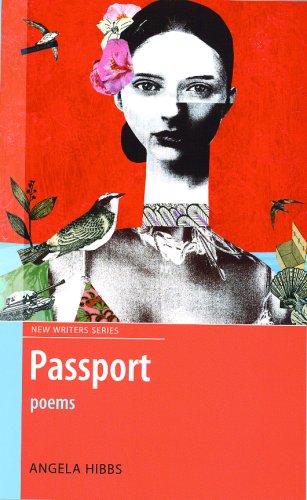
Passport - Angela Hibbs (DC Books)

Today's book of poetry:
Passport.  Angela Hibbs.  DC Books.  New Writer's Series.  Montreal, Quebec.  2006.


Today's book of poetry has been out of the office for the last few days attending to family business in Peterborough.  Had we known then what we know now we could have dropped in on Angela Hibbs. Peterborough is quickly getting a reputation as a place where poets are setting up shop.

Passport was published ten years ago but the poetry hasn't aged a day.  Today's book of poetry is embarrassed to admit that Passport is our introduction to Hibbs, and it has only recently come to our attention.

Passport is one hell of a debut book of poetry.  I was totally committed after reading the first poem. The second poem was better than the first, the third poem better than the second.  That went on for several sensational pages.  This woman can burn.

Hibbs does exactly what I want to see, she grabs you by the scruff of the neck and says "Here, eat this!"  It's not arrogance when every damned poem backs it up.  This book is a full course meal.

New Body
For Reuben

I covet my time.
I unplug
the phone.
Arrange the pink pillows

artfully on couch and bed,
cashmere sweater
& velvet
panties,

paint toenails red,
check spine visibility
in the wall mirror,
stare at the digital time display,

stand on feet
then head,
feel the blood
move. I am a Chevette

in a Cadillac body; I
stumble around
a hotel suite
in a town where I have

an apartment; I
sip vodka through ice.
Nobody impresses me.
I draw straight lines

with magazine spines
to guide me.
There is a lot to be done
by Wednesday.

The days are not long
enough for all I have
to say to myself.

...

Hibbs employs a Newfoundland sensibility of humorous certainty as she explores the tension wires on which we suspend our relationships.  This is compelling and clever stuff driven by characters that are as bold as brass.

Dear Maria Callas,
Born Kalogeropoulos

With your birth name I invoke you.

Listening to you sing La mamma morta,
the recording sounds
like it always has.
Your mother said she wouldn't
give you the lice off her head.

With a note you could break
all the windows in the hall.

You could throb your heart
at a frequency that would explode mine,
like glass.

Though it is not.

...

This morning's read had some serious spirit to it.  Kathryn, our Jr. Editor, felt a particular connections to Hibbs and proceeded to run the show.  Kathryn gave each poem a quick silent read and then told us which of us was to read that poem.  It was an office first and it worked.

We can thank Hibbs for that.  Hibbs poems roll off of the page, roll off of your tongue, run roughshod given half a chance.

Egyptology

A discreet incision near the hipbone,
for evisceration, replacing

only the dehydrated heart; they liquefied
the brain with palm wine, poured it out.

Unearthed, a mummy's skin,
slightly orange
perfectly intact.

My mother announces
cremation is not for her; she speaks

now for a time when she won't.
She says she may need her body
in the afterlife.
I put dibs on her birthstone ring.

When my uncle Thom died
the mortician put so much make-up
on him, he left this life a stranger.

I thought we were in the wrong room,
I wiped some of the paint off
with a Kleenex; he was perfumed.

I must mummify my mother:
touch each organ.

Palm wine to wash the stomach cavity,
aromatic plants to dry,
fill with myrrh or perfumed sawdust. Carefully
replace her heart.

...

Angela Hibbs first book is a highly polished, fully achieved, emotional corkscrew.  These intelligent poems crack the whip.

Since publishing Passport in 2006 Hibbs has published Wanton (Insomniac Press, 2010) and Sin Eater (ARP Books, 2014).  Passport is sterling stuff, Today's book of poetry can only imagine the other two are killers.

Angela Hibbs


ABOUT THE AUTHOR
Angela Hibbs is the author of three poetry collections, Passport (DC Books, 2006) Wanton (Insomniac Press, 2009) and Sin Eater (ARP Books, 2014). She holds a MA creative writing from Concordia University. Her work appeared in the Poetry Is Public Is Poetry installation at the Toronto Reference Library. She was awarded the 2010 Joseph S. Stauffer Prize.

BLURB
"In this auspicious debut collection, Angela Hibbs writes with tender insight and passionate care. These are poems which incant the sensuous particulars of place and, proceeding with the sensibility
that poetry is always for real, insist upon boring through walls and, then, beneath the skin."
     - David McGimpsey

Angela Hibbs
The Hearthside Hearings Present: Angela Hibbs July 2010 pt1
video: viporinatree


dcbooks.ca

547
DISCLAIMERS

Poems cited here are assumed to be under copyright by the poet and/or publisher.  They are shown here for publicity and review purposes.  For any other kind of re-use of these poems, please contact the listed publishers for permission.

We here at TBOP are technically deficient and rely on our bashful Milo to fix everything.  We received notice from Google that we were using "cookies"
and that for our readers in Europe there had to be notification of the use of those "cookies.  Please be aware that TBOP may employ the use of some "cookies" (whatever they are) and you should take that into consideration.