Showing posts with label guernica editions. Show all posts

Monday, January 28, 2019

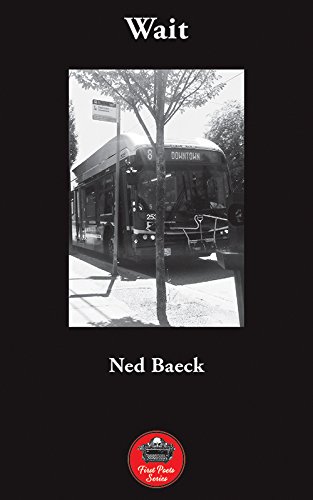
Wait - Ned Baeck (Guernica Editions)

Today's book of poetry:
Wait.  New Baeck.  Guernica Editions.  First Poets Series 18.  Toronto - Buffalo - Lancaster U.K.  2018.

Ned Baeck is down and out in Calgary and Vancouver.  This sort of drinking and poetry and poetry and drinking is suicide.  And from the edge of that precipice Wait mocks and provokes us.

Baeck is bleak and dark and wounded and wild and out of that wolf sneer side of his lucid mouth he's spitting poetry daggers.  Never has a poet so irritated, intrigued and impressed Today's book of poetry at the same time.  It's like Malcolm Lowry and his doomed being "eloquent in their sinking."

Intervene

I jumped from a bridge
into the Niagara River
on a bright February afternoon.

It was cold as hell, and the crows
were frenzied when the man
with the hair-lip briefed me on murder. I followed
a dark horse, aware of breathing, maybe not,

there was in falling an ascendant peace
too heavy for space.
Don't look over your shoulder—
unwavering as I hurtle from the rail.

Plunged in and shot to the surface
gasping, voices calling me from shore.
Man woman dog. Saw them as I fell.
Claw cold water till I lose consciousness.

A torrent of electrodes
tears a ragged scream
from my throat.
Nothing has names
yet.

People cover me like insects.
I was in the river.

Maybe I will draw the crocus
and vole of spring
emerging from the teeth of the earth.
Word of mouth

for a warm breeze and a choked song:
watching, waiting,
adjusting to the light.

and when the sun sinks from the sky
I give my anxiety to the night,
settle in to undulation,

the stills and tosses
in the water
lit by the moon.
A forecast
for tomorrow:
the law of today, the lack

a voluminous glint
on our troubled path
by the highway.

The idyll
is a wrecking yard
and the hospital
can't hold you.

Nor mother nature,
though she is,
softly pursued,
as we carry out in waking
some of what we have in dreams.

A luminous inner body
through which bitter nettles seep,
poised to enter
the sun-ruled world
and fall apart without end.

💫💫💫

And then Ned Baeck's Wait spills out a quiet and tender bon mot like this:

Still

At the centre of the changing world,
someone with a bag of groceries.

💫💫💫

Baeck probably does that just to see the look on our faces.

Today's book of poetry thinks that Ned Baeck has arrived fully formed with a strong disposition.  These poems ripple ripe because Baeck knows how to burn.

Protean Things

Maybe to forestall
I go out, though it's already late
and the dark a wilderness.

Armed and drunk,
a fire burning on each shoulder.

Orange, blue and yellow vines
lick the sides of the head,
ears mold to the hissing
pressure of heat, pulse beats out
its duty to blood.

Bones and notes decompose
like eyes, marrow and frequency like vision,
robust and undying.

Flesh will be
laid to waste,
care will be
present.

All our actions tipping
into the grave before and after
us, chastening our claims, here and there
a face, an eddy in the stream, an important address
blending back to unreadable flow,
its brusque gait like a thief's.

Either you want it to last
or you want it to end
or you know it doesn't matter.

There isn't much time.
I'm not saying it's a rush
but there isn't much time.

Already we may have died,
talking decomposition,
although there may be
some kind of composure.
At least the dogsbody, empathy.

There is the limit
and the old growth within it:
degrees and features
at some level neutral, as people
say of weather.

But we die, stop arguing,
stop balancing,
we die
without consummating a wanted
or repulsive thing.

Until then we live it—the cavalcade
and neglected berths at the road-side,
shared with scarred and programmed
animals and images.
Many hard-won wounds
watched over by bacchanals and Samaritans.

Allotted to sniff out
and shrug off the panic,
eyes to rove for stragglers,
stammers of midday
in the ripening silence
so far behind
but still brought to attention
by the clarion call
of protean things.

So why do we think we can separate
our intent from the future, or metabolize
its gruel of almost and elsewhere?

We recoil from the given
as if it were the acid-burned face
of Pangaea, lissome
grandmother, ordinary girl
we have wanted, warred with,
and may even love.

💫💫💫

Wait is unsettling, unnerving and totally necessary reading.  This is not poetry that will make you happy—but you will be engaged.

There are moments of tenderness and hope but you have to be looking for them.  Today's book of poetry was deeply moved reading Wait, when it grabs you, and it will, it gets in deep, right next to the bone.

A Brother's Sketch

I passed the hunched Knut Hamsun sick-man
in the middle of the crosswalk, red hand flashing—

he going south into the Punjabi village
and I going north, home, across
from the graveyard.

Most days, smoking, I see him from my balcony
overlooking the street—if not on the sidewalk—
scanning the ground for cigarette butts, unkempt
in ill-fitting clothes, the same too large pants
held up by hands in pockets,
grey-blue k-way jacket, colourless sneakers
rain or shine, winter, summer, slush or dust.

I wonder, did he flash
on mortality on morality
(testing victory truce and failure)
a lot and a long
until his mind detached—
undetermined,
undermined,
stopped finishing his dreams
and couldn't flesh it out.

People think the feeling
you'll die is much. It isn't.
It's not a question of dying,
the trouble is entering
an unroofed labyrinth,
the slight one, but not seeing
your way through.

In your mind a sandcastle
based in the imperishable,
no doubt loved,
being slowly, patiently
licked away—
repatriated—and you still in it
not formed again.


And not being able
to go
where you need
to go
with no other worldly concern
is hell, or at least anguished displacement.
Anyone can tell you that,
and the ingredients are still here.

The mixture of disequilibrium
and just a tiny spout of direct reality
is enough to throw a person.
You might think you're capable
of monstrosity and heroism at once
and long for neutrality like an adolescent
for adulthood, maybe he longs like that.

Or maybe he just wants Lethe,
and to sew up the wounds of memory,
walks without stopping.

Once I offered him a cigarette
and he accepted it reluctantly,
disappearing it into his shirt.
But I could tell I was interrupting
a conditioning pattern,
introducing another blip of potential,
a shipment of blood into ghost-hood,
the possibility of it all happening again.
I haven't done it since.

💫💫💫

Today's book of poetry is trying to get back to normal operations but we fear we're going to be a little light on the ground for the near future.  Milo, our head tech, and Kathryn, our Jr. Editor, have vanished.  They left a short note that lacked any detail.  They will be made to pay for it.

In the meantime you might want to listen to Sir Tom of Waits, patron saint and holy warrior, start with his monstrously good "If I Have To Go."  Today's book of poetry is certain that will put you in the perfect space for Ned Baeck's Wait.  It's a trip worth taking.

Ned Baeck

Ned Baeck

ABOUT THE AUTHOR
Ned Baeck lives in Vancouver. His poems have recently appeared in The Continuist, Sewer Lid, Prism International, poemimage, untethered, and Ottawa Arts Review. Wait is his first full-length collection of poems.

BLURB
“Who, now that sadness is forbidden, dares weep, these poems pierce the psyche like spikes through our wooden heads.”
     —Claudio Gaudio, author of the novel Texas


732

Poems cited here are assumed to be under copyright by the poet and/or publisher.  They are shown here for publicity and review purposes.  For any other kind of re-use of these poems, please contact the listed publishers for permission.

We here at TBOP are technically deficient and rely on our bashful Milo to fix everything.  We received notice from Google that we were using "cookies"
and that for our readers in Europe there had to be notification of the use of those "cookies.  Please be aware that TBOP may employ the use of some "cookies" (whatever they are) and you should take that into consideration.


Thursday, February 15, 2018

Send - Domenico Capilongo (Guernica Editions)

Today's book of poetry:
Send.  Domenico Capilongo.  Essential Poets Series 244.  Guernica Editions.  Toronto - Buffalo - Lancaster (U.K.).  2017.


Today's book of poetry knew we'd heard the name Domenico Capilongo before so we sent Milo into the stacks.  As soon as Milo sat Capilongo's first two books down on my desk I remembered.

Domenico Capilongo does plenty in his first book but Today's book of poetry remembered how Capilongo nailed that whole furtive first kiss with his poem "Shera-Lee" from I Thought Elvis Was Italian (Wolsak & Wynn, 2008).  Today's book of poetry remembered thinking that maybe Capilongo was another Len Gasparini character but he soon wrote us out of that illusion.  I Thought Elvis Was Italian was all James Brown hip and e.e. cummings poetic, quoting John Lennon and tipping the old hat to Saint Michael of Ondaatje.  We loved it.

Hold That Note (Quattro Books, 2010) had Louis Armstrong, Theolonious Monk, Billie Holiday, John Coltrane and Tom Waits as angels in the wings.  You just know that Today's book of poetry is going to have a lot of time for that, all the time in the world.

Send is a whole new ball game.  A clean slate.  But Today's book of poetry doesn't own a phone, of any kind.  There is a land-line phone in our office, plugged into the wall.  Today's book of poetry has never sent or received a text.  Domenico Capilongo's Send bursts at the seams with messages that you need to receive.

Contrary to the constantly public display of "texting" by the current POTUS there are texts worth reading, messages worth hearing.  Send is full of them.

Capilongo gives us instant access in his efforts to capture the languages and means we use to communicate. Capilongo catalogues it all from Morse Code to "whistled languages."

after

all the selfies. all the shame. after all the tex-
ting. all the comments. all the sexting. after
all the nakedness. all the pain. after all the
instagram. all the secret tattoos. after all the
tweeting. all the play-by-play. after all the
facetime. all the snapchat. the skype. after
all the auto-correct email. all the googling
after all.

...

Marconi and Alexander Graham Bell both put in cameos in Capilongo's efforts to search out every step forward in our haste to communicate faster.  Today's book of poetry suspects that some of these communiques are "found poems" and we can only celebrate Capilongo's keen sense of every methodology.  Domenico Capilongo is an all-in type poet if his first two books are any indication and in Send he invests it all in how we communicate.

Capilongo's sense of humour is abundant in these compellingly readable poems.  Today's book of poetry fears I am out of my depths because I can only think I know what it means when Capilongo titles a poem "Christopher Marlow Pocket Calls William Shakespeare."  The poem itself is hilarious.

kiss me like houdini's wife

straightjacketed and ready to take the plunge
in the dark. his mind racing through steps.
through the math of the weight of water. the
pressure of oxygen in his lungs. the sound
of the eyes of the crowd all around him. the
kiss from his wife. his tongue meets hers.
she slips a key into his mouth. he pushes it
into the corner of his cheek for later. the
crowd takes a breath. kiss me.

...

Our morning read started a little later than usual today.  It's not snowing in Ottawa for the first time in weeks but there is a misty rain that is falling and coating everything it touches in a lovely coat of ice.  Milo insisted we use all three Capilongo titles for the morning read but agreed we would hammer through Send first. 

Much to Capilongo's credit he happily jumps into concrete poems when he feels the need.  Here Today's book of poetry feels terribly unqualified to comment except to say that in most cases these poems surprised us with the clarity of a particular message, for us they were dead on.  And that is first time Today's book of poetry has ever said that!

During the reading we passed those poems around for everyone to see and then kept on with the rest.

In Capilongo's exhaustive and almost encyclopedic search for examples of how we choose to communicate he never loses sight of the reader, always makes certain they are engaged, Capilongo is communicating in a direct line with us.  The poems in Send got Today's book of poetry on Capilongo's side early.  After that the intriguing entertainment/exploration never let up.

carretto siciliano

in argentina or brazil there are ex-nazi soldiers in their
eighties who still hide in the shadows of trees. who still
wear large hats with sun glasses. they try to speak spanish
or portuguese. they try to walk slowly with knees bent but
you can still see the stiffness in their backs. the harsh ac
cent hanging at the ends of words. these men, in the early
morning, still wonder how the allies managed to take sicily.
     it was one man, a lowly carretto driver, some salvatore
or giuseppe, who came up with the idea. the germans were
everywhere with their checkpoints. no one was safe. they
even looked under hats. it came to him in a dream. the sky
was purple. his carretto flying over palermo like some sicil-
ian santa. his horse turned head back and spoke to him.
     we can send the messages with the horses, he thought
to himself over morning coffee, but how? the germans
even check under the horses' balls. later when he fed his
horse he saw it shove some food in its cheek only to share
it with another horse in the plazza.
     messages were sent in little walnut-sized capsules
from horse-to-horse piazza-to-piazza all across sicily. the
german soldiers often commented about the strange sicil-
ian horses, seltsame kussende pferde. strange kissing horses.
     this sicilian secret is know only to a chosen few. if
you want to know the truth about how this really hap-
pened you will have to go to sicily and ask one of the
horses yourself.

...

Domenico Capilongo writes solid poetry that you can depend on, every time out.  These are sweet, smart, clever, witty, funny, incisive poems that will re-wire your future communication.  All Today's book of poetry can say to Mr. Capilongo is thank you.

It's usually three strikes and you are out in almost every league.  What does it mean when you hit a homer out of the park your first three times up to the plate?

Capilongo's Send is a book of poetry you can hang your hat on.  This cat can seriously burn.

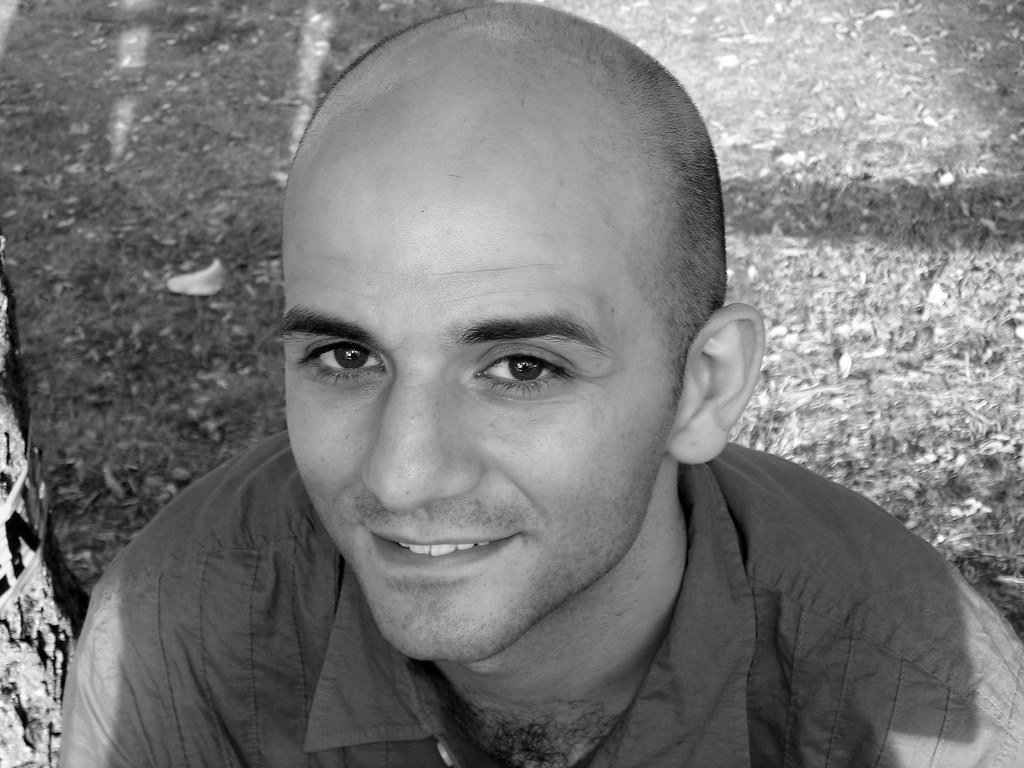
Image result for Domenico capilongo photo

Domenico Capilongo

ABOUT THE AUTHOR
Born when rotary telephones came in multiple colours, Domenico Capilongo began writing with pencil and paper, passing poetry notes from the back of the class. He still writes in notebooks, used a typewriter in high school, and his earliest published poems were printed on a dot-matrix printer. His first books of poetry, I thought elvis was Italian (2008) and hold the note (2010), as well as his first book of short fiction, Subtitles (Guernica, 2012), came very close to winning awards and were all mailed in the post. A high school creative writing teacher and karate instructor, he lives with his wife and children in Toronto. Find out more on the information superhighway at domcapilongo.wixsite.com/home.

BLURB
In his latest book, Dom Quixote mounts a new smartphone and tilts away at our digital windmills. His chivalry is analogue: what is lost in our twittering is the seed-bed of his musings. Messages between and underneath communications—tender, sensuous, comically misaligned and/or brutal by turn—are gathered up and offered back to us as rebus: an oracular operating system where what we mean is not always how we speak.
     - Chris D’Iorio, author of Without Blue


Book teaser for
Domenico Capilongo's Send
Video: Capilongo Poetry


657


DISCLAIMERS

Poems cited here are assumed to be under copyright by the poet and/or publisher.  They are shown here for publicity and review purposes.  For any other kind of re-use of these poems, please contact the listed publishers for permission.
We here at TBOP are technically deficient and rely on our bashful Milo to fix everything.  We received notice from Google that we were using "cookies"
and that for our readers in Europe there had to be notification of the use of those "cookies.  Please be aware that TBOP may employ the use of some "cookies" (whatever they are) and you should take that into consideration

Friday, October 27, 2017

math for couples - Adele Graf (Guernica Editions)

Today's book of poetry:
math for couples.  Adele Graf.  Essential Poets Series 242.  Guernica Editions. Toronto - Buffalo - London (U.K.).  2017.

math for couples

Adele Graf's math for couples reads a bit like you've stumbled into another family's old photo albums.  The poems are snapshots of important and intimate moments of family history along with those that capture an unexpected moment of languor or amusement.

Regardless of the subject Graf has an uncanny ability to straddle the lines between whimsy and frivolity, panic and well paced poise.  Over the course of math for couples we experience poems from the perspective of a child, a young girl, a young woman, a mature woman and a grandmother, I think.  The story changes, characters come and go but Adele Graf's voice remains a constant pleasure.

my mother played Chopin while lamb stewed

what a sumptuous scene, you must think --
you hear Chopin's waltz skim piano keys
smell herbed lamb broth that steeps leeks and carrots
sense chords and aroma fuse in the hall
between hushed rooms and the warm kitchen stove
see my mother rapt in melody
even beaming at our upturned faces
as they catch the light

my mother managed Chopin's waltzes
straight-backed, fingernails clicking each key
plunking phrases she labelled romantic
thought she'd long lost her ardour --
and the lamb stew?
carrots soaked slack, gristly, bland broth
burning off in an acrid puff--
another dry meat in our cold tiled kitchen

but in her way, my mother did slip inside her music
and before we'd heard Ashkenazy play Chopin
we liked her playing, so why would we doubt
she was high-brow, as she called herself
back when we still thought her hours
enthroned at the piano explained
the lack of fragrant family meals --
my mother, queen of appearances.

...

The Today's book of poetry offices just have not been the same since our darling Max went walkabout.  Funnily enough it almost coincided with Odin leaving the nest for greener valleys.

Thankfully Kathryn, our Jr. Editor, and Milo, our Head Technical Officer (and boy, oh boy, does he ever like his new title) are both signed to long term contracts.  Kathryn led the charge this morning with a spirited reading of Graf's poetry.

math for couples is home to some dry wit and some ghosts.  We've had a few old ghosts blow through our offices recently.  It is unsettling at the least.  It can be alarming and strangely comforting at the same time.  Maybe they think we still need them.  Adele Graf seems to have come to terms with her ghosts even if she lets them run around in her poems.

jam

you get just one
piece of toast to spread it on --
still, you try to take as much
jam as you can

you do your best
to grab your slice from
the middle of the loaf
but whatever size slice you get
-- even if you're stuck
with the puny heel --
here's the decision you face

should you spread all
your jam over the whole slice
so each bite has the same
flavour and sweetness?

or use just enough
so each bite leaves
a slight jam taste
then pile what's left
on your very last bite
-- rich and thick and sweet --
since the last is the one
you'll remember?

...

Adele Graf writes some poems that feel like conversations you've already had, they have deja vu written all over them.  It must be the ghosts.  Regardless, Today's book of poetry felt a warm and fuzzy attraction to math for couples.

This is Graf's first kick at the can and out of the gate she's writing strong, vivid poems.  Today's book of poetry has to be convinced her next book with kick serious ass.

hot flesh

you touch me &
my flesh heats up --
flashes of pleasure
zap my brain
surge through
my core --
menopause meets seasoned sex

you tinker till
my circuits cool
buzz & hum
while we recharge --
our ebbing flesh
overhauled in
doze with dual snores

I rise & grope
for bifocals
then brew sweet tea --
samples from the health food store
where I buy herbs
to stave off ills
middle aged women are prone to

...

Today's book of poetry applauds the candor of Graf.  Her honesty is right at her fingertips, all the time.

Winter is coming.  I can feel it in my bones.  The only defense might be poetry.  Poetry that will fill our stomachs and warm our hearts.  Adele Graf's math for couples is a good step in that direction.


Adele Graf
Adele Graf
Photo: Ed Overstreet

ABOUT THE AUTHOR
Adele Graf grew up outside New York City and immigrated to Canada in 1968. math for couples is her first book of poetry, though more than half these poems have been published in Canadian journals including The Antigonish Review, CV2, The Dalhousie Review, Room and Vallum. She lives in Ottawa.

BLURBS
Adele Graf’s poems explore the inner worlds of family, including grandmother, father, mother, husband, childhood self and aging self with an openness and honesty that is stunning, using her pen as both scalpel and microscope. A master of slant rhyme, she is also unafraid to experiment in the far reaches of poetics; and you’ll never think of popcorn in the same way again.
     - Mark Frutkin

Whether she’s revisiting fraught scenes from her past with wry humour or facing them down deadpan, Adele Graf infuses whatever she touches—bric-a-brac, childhood haunts, or stricken relatives—with a vividness that places them stage-centre. Charting a memorable path through several generations of family upheaval and continuance, she evokes her grandmother’s New Jersey milliner shop, her father’s tragic early death, and her own journey to late-life plenitude with a sharp eye for the waystations that lead from disillusionment to delight.
     - Peter Richardson

math for couples is a warm and playful debut collection. You can feel the pleasure Adele Graf takes in the words she juggles and the forms she explores in this very intimate adventure.
     - Stuart Ross, author of A Sparrow Came Down Resplendent


621
DISCLAIMERS

Poems cited here are assumed to be under copyright by the poet and/or publisher.  They are shown here for publicity and review purposes.  For any other kind of re-use of these poems, please contact the listed publishers for permission.


We here at TBOP are technically deficient and rely on our bashful Milo to fix everything.  We received notice from Google that we were using "cookies"
and that for our readers in Europe there had to be notification of the use of those "cookies.  Please be aware that TBOP may employ the use of some "cookies" (whatever they are) and you should take that into consideration


Saturday, June 10, 2017

Navy Blue - Steve Meagher (Guernica Editions)

Today's book of poetry:
Navy Blue.  Steve Meagher.  First Poets Series 15.  Guernica Editions.  Toronto - Buffalo - Lancaster (U.K.).  2016.


"Begging penance for his necessary sin"
      - from Have You Seen Him

George Elliott Clarke mentions Bob Dylan, Jimi Hendrix and Marshall McLuhan when attempting to describe the poetry of Steve Meagher.  Not to make this about Today's book of poetry but now is as good a time as any to admit that we here in this office are all members of the George Elliott Clarke fan club - and one time, a long time ago, Today's book of poetry was lucky enough to share a few beers with Sir George of Elliott Clarke at the original Ottawa Royal Oak Inn.  Those beers were probably before Mr. Meagher was born.

As much as Today's book of poetry admires Mr. Clarke we think he got it a little wrong.  If we had to compare Meagher's poetry to anyone  it would be the troubadour of tasty trauma Tom Waits.  That's if Tom Waits were spending a lot of time with the ghost of Richard Brautigan.  Dark wisdom and lyrical splendor from Waits, sweet, tortured and innocent ala Brautigan.

New Saints

Cowboy knows all the shortcuts
He can hop the black fence without stopping
He showed me how to throw a perfect spiral
He's been David's best friend since kindergarten

Scarecrow's brave like a fugitive
He French-kissed Rebecca J. in the catwalk
Told me she tasted like Orange Crush
I saw him smoke a cigarette once
It smelled something like a forest fire
Next day he showed us his brother's magazines

Shark Tooth's got a pair of nunchucks
They came in the mail from Tokyo
His dropkicks are real deadly
He can do cartwheels over the creekbed
He knows how to slay the dragons

Ezekial was my partner at Science Fair
He's quiet as a June bug
He can't come out on Saturdays
His mom keeps him in to study his lessons

Sweet Baby's the smallest
I swear he's full of cobra blood
He threw that rock from a mile away
Hit the sixth grader straight between the eyes
He's the greatest there is
When we ride our bikes to the snack bar
We never even stop for cars

Tin Man's brains don't work right
Some nights he won't stop screaming
About how he shot Hakeem
How he caught the itch
How everybody's gotta come from somewhere
He comes round like the wind
I can hear him from my bedroom
When he's gone I breathe again

Jackson's got the switchblade
He stole it from the Chinaman
He keeps it tucked in his belt loop
Uses it to lop the heads off bullfrogs

Banjo's some kind of genius
He can do his times-tables backwards
Even the sevens and nines
he's gonna be a doctor someday
Most likely he's gonna cure cancer
I give him Oreos to do my fractions

Got In The Log knows some things
He knows the hidden tunnel
All the sweet-spots in the forest
He knows about the beehives and the helicopter leaves
But he don't like being bothered
Me and Sweet Baby are the only ones who visit

There's Moreno he's Mexican
His face looks like a map of Missouri
He killed a black girl once
We found her body in the branches
He's the reason I'm not allowed across the train tracks

David can sing like Frank Sinatra
He's got two pet salamanders
Their names are Dale and Swiss Army Knife
He's the fastest runner in the whole school
Sometimes he gives me beats
But he's still a good big brother
He makes sure nobody fucks with me

I can skip a rock five times easy
I can wallop your nastiest curve
Mostly my mind knocks like a woodpecker
I got the tadpole's shadow on my arm
When I grow up I'm gonna be big time
I'm gonna find my father
I'm gonna make my mother love me
I'm gonna shine like Christmas morning
Don't even try to stop me

...

Sometimes comparisons don't do anyone justice.  Meagher gives us plenty to think about without the comparisons and he does it with panache.  Nothing about Navy Blue feels like a first book.  Meagher has polished these poems till they shine.

Now for some more comparisons.  Meagher's poetry universe is full of great characters that you are going to remember.  Sweet Baby and Banjo conjure up visions/memories of Sodapop and Ponyboy from S.E. Hinton's most excellent novel The Outsiders.  There is a measure sense of menace just under the skin of Navy Blue.  Meagher never comes across as rough or vulgar but he keeps a particular tension that captures the reader, keeps the reader on alert.

Philadelphia Woman

She grew up off South 22nd
Her tongue's got ties in Memphis
She is daughter of the Iron Brigade
She breaks bread with the packrats

There's a shoebox in her closet
Full of Pennsylvania minerals
Years back her father was a collector

The radio's locked on 1060
She keeps up with the weather
Switches to Coltrane after dinner

When the heavy rains fall
She wraps her wrists in grapevine
Her landscapes hang like criminals
They know December's darker roads

She writes longhand letters
Sends them to the man in Fresno
He never calls or writes back
And that's the way she likes it

There are memories she holds
Like grenades with the pins pulled
The worst nights crack like battlefields

When the phone rings
I already know it's her
Only she would call so late
To ask about my broken wings

...

Today's book of poetry was instantly comfortable in Meagher's poetry world.  These poems are immediately accessible and that is something we like a lot.  Meagher is generous and playful, even when his poetry is serious as a heart attack.  We like that too.

Our morning read was as perfect as today's weather here in Ottawa.  We opened all the windows in the Today's book of poetry offices and passed Navy Blue around like a new talisman we were learning to believe in.

Reading Navy Blue is mining a very rich vein, rich enough that we were able to find another splendid list poem.  Regular readers of Today's book of poetry will remember how fond we are of list poems. This one is exemplary, this one came directly from beneath the poets fingernails, the real dirt.

Peter's Dream

The way things used to be
When I wanted a bedtime story
Grandpa would read me the Bible
The Old Testament gave me nightmares

I dreamed I was an Egyptian
With the lizards falling on my head
I dreamed I was a sinner
And the punishment on its way
I dreamed I was Isaac on the mountain
And Abraham had the knife
I dreamed so much
I even dreamed I was the apple

But I don't get stories anymore
Nowadays Grandpa just says goodnight
Then he shuts the door
And I'm alone all of a sudden
So now when I dream it comes like a hurricane
And I don't know how to stop it

I dreamed all the riverfish turned up dead
I dreamed the eastwind broke my pole in two
I dreamed the world was on fire
And our house was burning
And Grandpa was inside taking a nap
And the smoke was in his clothes
I dreamed I stepped in broken glass
And the coyotes could smell my blood
I dreamed I was a soldier
And the Nazis were after me
And I was hiding in a pile of bodies
And I was too scared to breathe
And I could taste the skin
I dreamed I was a madman
I dreamed I was a scientist
I dreamed I was a leper
And I was living in the canyons
I dreamed I was a cannibal
And I bit off Banjo's ear
And spit it in the lake
And it floated like a lilypad
And the catfish fed till morning
I dreamed I kissed the Bag Lady
And my tongue went black and swollen
I dreamed I was being born
With a rattlesnake round my throat
I dreamed a knife in my back
I dreamed a pistol in my pocket
And a thousand of blind children
I dreamed the North Star spoke my name
I dreamed I was in the medicine show
And my mouth shot dust in Cowboy's face
I dreamed it was next Sunday
And I was in church
And the preacher was a cyclops
And he had horns the size of fence posts
I dreamed I was real sick
And my hair was falling out
And the nurse kept feeding me Jell-O
I dreamed Sweet Baby got run over by a truck
So he had no legs
And he wouldn't stop laughing
I dreamed I was dirt poor
And my only friends were gypsies
I dreamed I climbed the tallest birch
And I couldn't get back down
I dreamed I ate a spider for supper
And it laid eggs inside my stomach
I dreamed a horse kicked me in the belly
And it hurt so bad I crapped blood
I dreamed I was Tarzan
I dreamed I was King Arthur
I dreamed I was combing the hairs on Grandpa's chest
I dreamed the killer was licking my fingers
I dreamed I was catching water in a bucket
And it felt like early spring
And the lightning bolts were lasers
And the raindrops hit the metal like a hummingbird
I dreamed I had the shotgun
And the pigs were in the shed waiting
I dreamed I saw David naked
And he got real mad
And said we wasn't brothers no more
I dreamed I was dead at high noon
I dreamed the hangman was my father
But my mother was an angel
So I met her minutes later

...

Books like Steve Meagher's Navy Blue are exactly why Today's book of poetry is in business.  Poetry like this needs to be shared.  Poetry this vibrant can make your body hum, it hits a register that your senses can't ignore.  We are silly human beans who spend so much time looking for truth we don't always recognize it.  Here's a chance.

Steve Meagher, well, I'll remember that name.  Read Navy Blue and you will remember it too.

Steve Meagher
Steve Meagher

ABOUT THE AUTHOR
Steve Meagher grew up in Oakville, Ontario. His poems have appeared in Carousel, The Nashwaak Review and Ottawa Arts Review. Navy Blue is his first book. He lives in Toronto.

BLURBS
Navy Blue is an exhilarating, guerrilla romp through tabloid news talk and Internet inanity to set up the seditious poetry Marshall McLuhan would’ve written if he could’ve. These poems are a cross of Bob Dylan casual strangeness and Jimi Hendrix bluesy surrealism. (Think “Visions of Johanna” mixed with “My Friend”.) Each line could spin off into its own bizarre screenplay: “The doctor kept cutting / Now the blood was everywhere … / I listened to the crickets / Their prayers sounded like my bicycle.” Nicely, Meagher gives shout-outs to Ray Souster and Irv Layton, claiming their street-wise vernacular and sardonic, ironic insights. But I see a touch of Dick Brautigan here too, in the accomplished insouciance, the freedom to just “say” and have the meaning be in that liberty. Ladies, gents, here’s the new vibe. Ready to be experienced?
     - George Elliott Clarke, Parliamentary Poet Laureate

Steve Meagher's Navy Blue is full of ghost voices, fever dreams, cowboy saints and hard scrabble benediction.
     - Singer-songwriter Jason Collett

Navy Blue
Steve Meagher
Video: Guernica Editions


582

DISCLAIMERS

Poems cited here are assumed to be under copyright by the poet and/or publisher.  They are shown here for publicity and review purposes.  For any other kind of re-use of these poems, please contact the listed publishers for permission.

We here at TBOP are technically deficient and rely on our bashful Milo to fix everything.  We received notice from Google that we were using "cookies"
and that for our readers in Europe there had to be notification of the use of those "cookies.  Please be aware that TBOP may employ the use of some "cookies" (whatever they are) and you should take that into consideration.


Wednesday, February 15, 2017

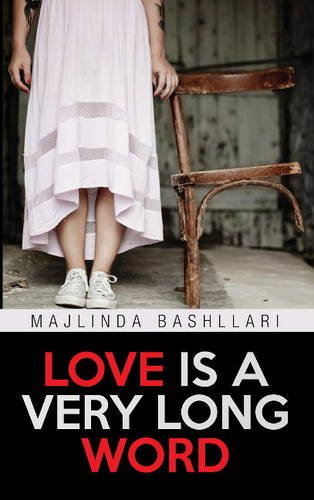
Love is a very long word - Majlinda Bashllari (Guernica Editions)

Today's book of poetry:
Love is a very long word.  Majlinda Bashllari.  Guernica Editions.  Essential Poets 233.  Toronto - Buffalo - Lancaster (U.K.).  2016.


What joy.  Majlinda Bashllari's Love is a very long word was such a pleasure to read that it snapped me out of a poetry funk.  Today's book of poetry had been wallowing in a deep trough of poetic despair and displeasure as a couple of books I'd set aside with pleasure soured when I returned.  It happens from time to time.  Not so with Love is a very long word.

These poems are immediately accessible and still full of mystery.  There's passion from a woman's point of view, escape stories, poems about family and so on.  The subject matter is far less important than the way Bashllari wraps you around her fingers and has her way with you.  The reader is happy inside these poems because Bashllari knows the secret languages of intimacy.

Cropped Images

There's nothing on the first pages of this family photo album.
Neither pictures nor paintings of the great grandparents who
were supposed to be shown here. They didn't know anything
about photography. They used each other's eyes to record
their memories.

Light is absorbed into these black empty spots and cannot
get reflected back. They're all soldiers of the same blood and
flesh army, dead or alive, silent and often forgotten. From
time to time we make a stop at these imaginary graves
wondering which one of us resembles them.

Here comes another generation: the recently departed
grandparents, uncles, aunts, rich and poor cousins, with their
own stories frozen in celluloid.

Once the daylight touches their eyes, faces start to revive.
They sigh, smile and look for their dearest ones in the crowd.

What happened to you, they say, what happened to me ... that
day, that night, that moment ... They get sad and stare: Please,
send us back, we want to be somnambulists. Don't wake us up.

I skip pages, coming close to the living empire: adults with
our own children, who know little about growing up.

We are not done with our time yet. There are battles to win,
at least arguments. We take pictures of every event, happy
pictures if possible. Although not sure we are happy, we need
to leave physical evidence of supposed happiness behind.
Somehow we remain idealists who love everything material.

Faces, gestures often surrounded by suspicious blurs taken
between invisible moments. Unnoticed moments, like
heartbeats; once important but never to be displayed again,
powerless to weaken our unique talent for pretending.

...

Love is a very long word is Majlinda Bashllari's first book of poetry in English.  Let me repeat that astonishing remark.  Love is a very long word is Majlinda Bashllari's first book of poetry in English. But ten years ago Bashllari published Një udhë për në shtëpi (A road to home) (Morava, 2007), in Tirana, Albania.

It's beyond astonishing that Bashllari is now writing poems in English as though she invented the language.  Love is a very long word is nuanced and considered poetry that feels like a conversation in that dream you can't forget.

Borrowed

Mira wanted him, and when nobody was around,
she trembled and whispered gibberish mostly
and begged him to touch her.
It was not her fault she never knew the taste
of being loved. With one leg shorter than the other,
she's always been invisible to men.
Turning forty wouldn't make her any prettier,
she knew that.

He was her brother's best friend,
who else would treat her right ...
The man got straight to the point:
--Girl, you're like my sister, this may kill us both ...
--Nobody will know, she murmured,
looking at her good leg.
Then he held her gently in his arms,
kissed her on the neck, thinking of the money
he'd borrowed from her brother ...
She blushed, burst into tears
and he couldn't tell what was uglier,
her face or his performance.
Between her thighs, he forgot everything:
his wife, the loan, the lousy life.

Later, in bed alone, she cried,
as she pictured him leaving,
limping on his healthy legs.

...

The Today's book of poetry minions were in fine form today once I got them inside from shovelling. In the last seventy-two hours Ottawa has had seventeen feet of snow.  That's an alternative fact. Shovelling will tire the rebelliousness right out of a pesky intern or editor.

Kathryn, our Jr. Editor, remarked on the strength of the speaker in these poems, how resilient.  Milo felt that there was a low hum of resigned melancholy under the poems.  Today's book of poetry agreed with both of my loyal staff -- but we'd tell the reader to look around for the hope in these poems.  We're convinced Majlinda Bashllari is an optimist, too experienced to have any notion of unbroken happiness, but full of hope in the face of reason.

Natural Woman Made In The Balkans

On nights that are neither moon nor wolf, I want my man
over me like a bat that holds a lit-up chandelier in his wings.

Almost blind, he tries to reach the last hearth-fire ... Why me,
I breathe in his mouth, dying to hear again that all other girls
in the town seem like sisters to him.

Quiet, but hot, blind but hungry, we both take off across the
darkness. On nights that are neither of wolf nor moon.

When he falls asleep, I uncover the sweaty hair from my eye
and watch beyond his shoulder, to make sure no sisters come
out of the dark.

...

Today's book of poetry liked every single thing about this powerhouse.  Today's book of poetry liked Majlinda Bashllari's Love is a very long word so much that we now want to learn Albanian and find a copy of Një udhë për në shtëpi (A road to home).  It must be a stunner, this one certainly is.

Majlinda Bashllari
Majlinda Bashllari

ABOUT THE AUTHOR
Born in Albania, Majlinda Bashllari’s first poetry collection, Një udhë për në shtëpi (A road to home), was published in Tirana, Albania (Morava, 2007). Bashllari’s work has appeared in numerous Albanian art and literature magazines and in Albanian anthologies of essays and short stories. Love is a very long word is her first English-language collection of poems. She lives with her family in Toronto.

BLURB
With their cultural roots in Albania, the poems in Love is a very long word are distinct in welcome ways from almost anything else in Canadian literature. Laconic and edged with sharp wit, they engage the necessary courage and strength of character to transform the often bleak, thwarted and alienated experiences which they recount into art of the finest, most valid sort: uncompromising, imaginative, and deeply true to life. 
     - Allan Briesmaste

Love is a very long word - Book Trailor
Video: Guernica Editions


551


DISCLAIMERS

Poems cited here are assumed to be under copyright by the poet and/or publisher.  They are shown here for publicity and review purposes.  For any other kind of re-use of these poems, please contact the listed publishers for permission.

We here at TBOP are technically deficient and rely on our bashful Milo to fix everything.  We received notice from Google that we were using "cookies"
and that for our readers in Europe there had to be notification of the use of those "cookies.  Please be aware that TBOP may employ the use of some "cookies" (whatever they are) and you should take that into consideration.

Sunday, October 23, 2016

Mirror Image - Len Gasparini (Guernica Editions)

Today's book of poetry:
Mirror Image. Len Gasparini.  Essential Poet Series 209.  Guernica Editions. Toronto - Buffalo - Lancaster(U.K.).  2014.

Mirror Image

I first discovered Len Gasparini in 1976 when rummaging through stack of used books in a ramshackle barbershop near the Ford plant I worked at in Windsor.  I was writing poems and had published in a few small magazines and journals but I was still a couple of years away from my first book. 

Gasparini was a liberating and inspirational find.  Here was a poet whose straight ahead no bullshit persona came jumping off of the page and grabbed me by the collar.  I liked Gasparini right out of the gate and have been a big fan ever since.

Early this morning I sent Milo, our head tech, into the stacks to see what he could find by Gasparini, this is what he came back with:

21 X 3 - with Dorothy Farmiloe/Eugene McNamara, The Gryphon Press, 1967
Cutty Sark - The Quarry Press, 1970
Tunnel Bus to Detroit - Fiddlehead Poetry, 1971
Pelee Island - Thistle Printing, 1972
The Somniloquist - Fiddlehead Poetry, 1972
One Bullet Left - Alive Press, 1974
If You Love - Borealis Press, 1975
Moon Without Light - York Publishing, 1978
Breaking and Entering, New and Selected Poems - Mosaic Press/Valley Editions, 1980
Ink from an Octopus - Hounslow Press, 1989
I Once Had a Pet Praying Mantis - Mosaic Press,1995
A Canadian In Dixie - Lyrical Myrical, 2003
Leftover Love to Kill - Lyrical Myrical, 2004

Turns out this is only a portion of his output.

Today's book of poetry cannot begin to tell you how thrilled we were to see Gasparini's Mirror Image come through the door.  Len Gasparini has been a big hero of ours for almost forty years. Today's book of poetry was reading poems by Gasparini before Bukowski, before Purdy, Carver, Ross, any of it.  I thought Len Gasparini was the original gangster poet.

This first poem comes from a longer sequence of poems, "Memories of the Rockin' Fifties" and encapsulates the feeling I had back in the Windsor of my youth when I first picked up a copy of One Bullet Left.

from Memories of the Rockin' Fifties

8

       for Jim Christy

How summer day in the city.
On my way to a beach party
I stopped for cigarettes at a corner store.
A 35 cent Avon paperback, The Subterraneans,
by Jack Kerouac, caught my eye.
(The title sounded like sci-fi.)
I bought the book ... read passages
to my sunbathing pals drinking contraband beer.
When the party ended, it came
as no little surprise to see the beach
hadn't moved, the lake was still there;
but this cat wasn't.
Kerouac had turned me around.
I was never altogether the same after that.

...

The poetry of Len Gasparini is often clipped so short that you don't realize you've been rabbit punched.  No wasted movement.  Gasparini is a romantic of an old school of take no prisoners, that might include the ghosts of Raymond Chandler and Jim Harrison, maybe even Charles the B.

Mirror Image is two books in one.  The first thirty pages are poetry and the remainder is prose.  Odin, our newest staff member is working over the prose right now and I don't have the heart to tell him that prose is above our pay grade.  Our mandate stops with the poetry.  But what fine, crisp, clean poems these are.

Endangered Species

     for Patrick Lane

In a country that was founded
on the backs of fur-bearing animals
I once saw a stuffed adult cougar
at a trade show in Vancouver's BC Place.
It there is reincarnation,
metempsychosis, transmutation, or whatever,
I hope that I come back
as a cougar, Felis concolor,
solitary and nocturnal in the wilds
of northern British Columbia.
I will stalk, ambush, and stab
my sharp canines into the neck
of any motherfucking nimrod
who tries to hunt me down.
I'll eat my fill: feed my kittens:
and leave the rest for the ravens.

...

Gasparini has been publishing his honest and unfettered poetry with resolute consistency for the best part of fifty years.  Today's book of poetry feels honoured to have him come through the door, for an opportunity to share his work.

Many of Gasparini's poems can be read as reportage sans resolution, these poems often raise more questions than answers.  Today's book of poetry thinks Gasparini's modus operandi has always been the pulling back of the curtain to show the real world at work.  That old over the rainbow trick from the Wizard of Oz.

Runaway

Alone, with nowhere to go,
she stands on the corner
of some deserted intersection
late at night, waiting
for a traffic light.

...

Today's book of poetry has admired the poetry of Len Gasparini my entire adult life and is pleased to share his work with you.  You're not going to like every poem in Gasparini's vast catalogue, no poet can pass that test, but all these years on Gasparini has never let me down.

Len Gasparini
Len Gasparini

ABOUT THE AUTHOR
Born in Windsor, Ontario, Len Gasparini is the author of numerous books and chapbooks of poetry, five short-story collections, including The Snows of Yesteryear (2011), The Undertaker's Wife (,2007), and A Demon in My View (2003), which was translated into French as Nouvelle noirceur. He has also written two children’s books, a work of non-fiction, and a one-act play. In 1990, he was awarded the F.G. Bressani Literary Prize for poetry. In 2010, he won the NOW Open Poetry Stage event. Having lived in Montreal, Vancouver, New Orleans, and Washington State, he now divides his time between Toronto and his hometown. Mirror Image, his latest collection, combines poetry and prose.


517
DISCLAIMERS

Poems cited here are assumed to be under copyright by the poet and/or publisher.  They are shown here for publicity and review purposes.  For any other kind of re-use of these poems, please contact the listed publishers for permission.

We here at TBOP are technically deficient and rely on our bashful Milo to fix everything.  We received notice from Google that we were using "cookies"
and that for our readers in Europe there had to be notification of the use of those "cookies.  Please be aware that TBOP may employ the use of some "cookies" (whatever they are) and you should take that into consideration.


Tuesday, May 24, 2016

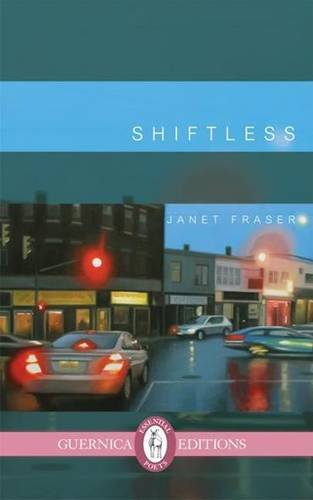
Shiftless - Janet Fraser (Guernica Editions)

Today's book of poetry:
Shiftless.  Janet Fraser. Guernica Editions.  Essential Poetry Series 216.  Toronto - Buffalo - Lancaster (UK).  2014.


There is a stream of down-home consciousness, laissez faire that Today's book of poetry likes about Janet Fraser's poems in Shiftless.  These poems are like conversations Fraser is allowing us to overhear, the conversations that usually go on behind curtained windows.   Fraser will have none of that, she's kicking against the pricks with a public voice.

Shiftless could have been written by a character from an Alistair MacLeod story.  That's some solid.

Two Sisters

On the terrace
of the Restaurant Fournaise,
one hatted lady,
one flower-crowned girl.
Red and blue colour blocks
foreground green strokes.
Local models, not related,
for Renoir's Two Sisters.

She sent me that print
when we were freshly married.
I hung it by the picture window
of my garden room,
the one I retreated to nights
my husband stayed out.
(I didn't know her man
was a runabout too.)

As I grew up Renoir goddesses
fearlessly stared down at me.
Their rosy flesh, lustrous tresses,
corseted abundant dresses,
brightened the silent rooms
of three melancholy femmes.
(Two sisters and their mother
waiting for life to begin.)

Today my sister and I
don't speak of Art, or Mom,
a shy, gaunt artist who retired
after we were born, choosing
not to be a hobbyist,
settling for the Renoirs
that lived in our house --
the framed lush ladies.

Sis, good with her hands,
teaches school crafts
but is unwilling to take her
own oils into the light.
Her house is crammed with
Mom's discarded paintings,
all the tasteful fabrics
and porcelain she craves.

She lives with her daughter
in a mauve Victorian cottage.
Summers I visit her statuary
and formal gardens.
We sit on her polished verandah,
admire golden wire birdcages,
talk flatly for a bit
about our lives' surfaces.

...

Janet Fraser illustrates the matter-of-factness of our grind towards that endless dirt nap but she does so with considerable aplomb.  We want to listen to her talk.  You get the feeling Fraser is a poet who you could sit with at the kitchen table and share conversation and a sip.

Only a woman could have written these poems.  That doesn't mean they are for women, just saying a man couldn't have come up with this stuff.

Today's book of poetry was intrigued by the title which is taken from a quote at the start of Fraser's Shiftless:

     "It was my goal always to be shiftless
       I saw the merit in that."
                            - Raymond Carver, "Shiftless"

There is nothing shiftless about Shiftless, sly and wise yes.

The Laws of Science

     Memory wants rain.
                            - Elisabeth Harvor

The trauma preacher
says fundamentally
hurt is one side
of a see-saw
we can pull down,
then push up the other side.
Thank our lucky stars
that can be seen
if we squint long
and hard enough.

Recall junior high
science and physics
of bullying, our pull towards
boys and girls
who mock and curse us.
They create an opposite
and equal reaction
in the service
of a balanced operation.

With joy cost accounting
and sorrow gratitude,
because a girl learns
to love the dad who incests
her on her birthday
while the helium balloons
float graciously to the ceiling.

A teenage boy kills
himself, manifesting
a destiny determined
by age six.
Insults fuel us
like the fire
that dries up the rain,
floods the darkness.
Forget about death.
It's all good,
so get used to it.

...

"It all good, / so get used to it."  Killer.

Today's book of poetry has been away for a few days.  We found ourselves in the middle of Pigeon Lake on a houseboat.  We couldn't bring the entire staff for our weekend houseboat adventure but we did invite our head tech Milo and our new intern Kathryn,  They now share a roof and a poetry bookcase.  While on our Kawartha Lakes adventure we promoted Kathryn from new intern to a full time position with pay and everything.  We will be expecting great things from her in the future.

We read Janet Fraser's Shiftless, to each other, taking turns at the wheel and navigating and turns reading.  Milo and Kathryn turn almost everything into a loving coo at this point but they read with heated emotion and considerable insight.

Fraser's poems came off our lips like stories we already knew, their familiarity both a surprise and a comfort.

from Domestic Drama: Eight Prose Poems

7. The Mall

In Scarborough my life ground on from one spanking to
the next. Always at the strip mall where grim Mom quick as
shit pulled down my pants and smacked my puddle cheeks.
At four I asked my mother not to spank me anymore,
'cause it hurt my feelings, and she stopped, making me
promise to be good until we got home, when she could lock
her bedroom door. I ran away from home to the Golden 
Mile mall where Mom found me on the mechanical pony
trotting and begging passersby for dimes. On junior-high
weeknights I took off smoking to the Halifax Shopping
Centre where I sucked on hard candies and relaxed at the
Eaton's makeup counters and teen magazine racks until
nine when the lights were dimmed and all the mall rats
bum-rushed into the night.

...

Shiftless by Janet Fraser feels like comfort foot when that's exactly what you need.  Solid poems in a world that is anything but.

Janet Fraser
Janet Fraser

ABOUT THE AUTHOR
Janet Fraser was born in her mother’s ancestral home, Saint John, and returned over 40 years later. In the meantime, she lived for long stretches in Halifax, Toronto, and St. John’s. Her first poetry collection Long Girl Leaning into the Wind was shortlisted for the Newfoundland and Labrador Book Award. She teaches part-time at UNB’s College of Extended Learning.

BLURBS
With a painterly hand, Janet Fraser offers deft family portraits of men and women past, and sketches of the painful present. We enter a poetic gallery of rogues and misfits, sons and lovers, matriarchs and loving aunts – some comic, some tragic, all touching. The imagery of painting enters many poems, as when Fraser describes two sisters who “talk flatly for a bit / about our lives’ surfaces.” But the poems themselves delve deep into the core of human relationships, and especially in the “Self Portrait” section, a skilful run of prose poems situates the poet herself in the turmoils, loves and disappointments she has drawn.
     - Maureen Hynes

Memory is imagination in this well-peopled collection where character sketches, condensed biographies and shards of autobiography mingle. By turns pious, bohemian, antique, contemporary, confessional, tight-lipped, compassionate and vituperative, these are poems full of longing and regret, a secretive village of black-painted houses with white lace curtains drawn.
     - Patrick Warner


474
DISCLAIMERS

Poems cited here are assumed to be under copyright by the poet and/or publisher.  They are shown here for publicity and review purposes.  For any other kind of re-use of these poems, please contact the listed publishers for permission.

We here at TBOP are technically deficient and rely on our bashful Milo to fix everything.  We received notice from Google that we were using "cookies"
and that for our readers in Europe there had to be notification of the use of those "cookies.  Please be aware that TBOP may employ the use of some "cookies" (whatever they are) and you should take that into consideration.