Showing posts with label billie holiday. Show all posts

Thursday, March 12, 2020

This Is Not A Frank Ocean Cover Album - Alan Chazaro (Black Lawrence Press)

Today's book of poetry:
This Is Not A Frank Ocean Cover Album.  Alan Chazaro.  Black Lawrence Press.  New York.  2019.

Black River Chapbook Competition Winner

Barrelhouse Reviews: THIS IS NOT A FRANK OCEAN COVER ALBUM by Alan Chazaro

Being a sixty-three year-old grumpy white man in Canada, Today's book of poetry is sadly unfamiliar with contemporary music.  Bird, Trane, Prez and so on, Billie, Sarah, these are the musicians I know.  Hip hop, as I've only very recently discovered, is rock n roll as much as any other.  But until I started to write this blog/review I had never heard of Frank Ocean or Christopher Edwin Cooksey, I certainly had never heard of Odd Future or listened to Channel Orange or Blond.  But after a first reading of Alan Chazaro's This Is Not A Frank Ocean Cover Album we figured we needed to hear Frank Ocean's acclaimed Blond.  Astounding.

Alan Chazaro's This Is Not A Frank Ocean Cover Album is like a slice of some new fruit, spicy, fragrant and tasty.  Alan Chazaro can cook.  So can Frank Ocean.

Self-Portrait as American

I say fuck
because it feels right
about now,
and I say love because
what wrong
could it bring?
I haven't shot a pistol
since my stepdad
flung his Desert Eagle
from the bedroom and took us
to burst freedom as kids.
The smell of sulfur
and devil, the pinch
of steel between my 10-
year-old finger. I didn't
seek this, was never good
at hitting body-
sized targets,
kept my eyes
shut while I curled
the trigger. It's heavier
than you think,
to hold and re-
lease thunder.
Not like the movies but
somehow like the movies.
Ears still ringing,
vibrations
in my bones.

💥💥💥💥

Alan Chazaro is doing some singing of his own in This Is Not A Frank Ocean Cover Album.  But wouldn't you know it, he's also looking at colonialism, toxic masculinity and tenderness.  Chazaro is using a multi-coloured brush and painting broad strokes when he paints his landscapes.  And of course he paints in the detail so that it all fits.

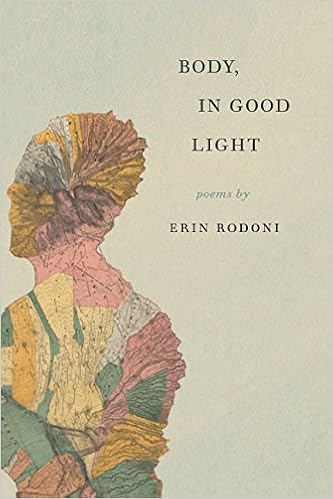
Yes, Today's book of poetry uses metaphors like cooking, singing, painting, to describe poetry and we feel good about it.  And just in passing, our photo does not do it justice, the cover of This Is Not A Frank Ocean Cover Album is one of the very best we have seen in a long time.  Splendid.

Self-Portrait as Cartographer

Have you ever retraced the borders on a world
map with your abuela's lipstick? Post-

colonialism is a word that means re-hustle,
but should never be re-Tweeted. This isn't

a political statement. The states have been on fire
for as long as they have been stated. What happens

when GPS can no longer locate what you are
looking for? I'm talking cartography,

the fog-swallow of clouds, a wandering
mathematics. Since we've come a long way

from the art of papyrus. Since we've come for more
than your blood can script. Return to your proper

homes. This land is full of forsaken places
I've never visited. What is a sign if it only points to you

in one direction? How can you sleep with your eyes
open and an open road ahead of you?

Is it possible to be found when you've fallen
off the map? I've been in wilderness. I've been in fluorescent

cities. I mean this literally--how the lights raged
across both places. How I know the silence

of hands that can draw worlds and hands
that won't even try.

💥💥💥💥

Today's book of poetry was listening to Frank Ocean this morning, but when we typing up this blog it was Billie Holiday, Miles Davis, that lot.  I don't think Mr. Chazaro would object.  

The world is on fire and Alan Chazaro is pointing fingers.  This poetry takes place in a world Today's book of poetry has not spent much time in - so why is it so compelling?

Actually, this is where Frank Ocean really comes in to play, listening to Mr. Ocean it was easy to imagine Chazaro writing these poems.  The same casual elegance and a little embrace of the classic "fuck you."

Chazaro writes about Oscar de La Hoya fighting Julio César Chávez and Today's book of poetry is in the room.  Today's book of poetry has nothing but admiration for this poem and the poet who got it down.

Julio César Chávez vs. Oscar De La Hoya, 1996

That night our apartment was an armpit, testosterone
and sweat-washed as if Papi and his friends were the ones

entering the ring. When he let me sip his Heineken I knew
it was a big deal. I stumbled and hiccupped, imitating

Dumbo from the cartoon I'd loved. The men laughed, easily
entertained until Chávez appeared on screen. The Mexican

Warrior, they called him. Papi reminded me
how he had battled one hundred fighters, more

than Ali, or Tyson, or Dempsey. The De La Hoya
entered. Everyone booed, telling him to go back

to his locker like the traitor he was. The Mexicans
thought he was gringo and the gringos thought

he was Mexican. I should've smiled
with missing front teeth for The Golden Boy

in his mixed-up outfit, a combo
of US and Mexican flags, but I didn't, I don't

remember the actual fight, a flurry
of blurred punches and the card girls in bikinis. I wasn't sure

what took place until everyone on the couch started
grumbling, their movements a slow and beer-confused

disappointment. I swear someone must've cried. Chávez 
was hunched over in his corner, right eye swollen

from repeated jabs to the brow, while De La Hoya
stood center, undefeated.

💥💥💥💥

Poetry may be the uniter of worlds, Alan Chazaro was not considering the attention of an aging Canadian, his house surrounded by snow, when he wrote these fine poems.  A true poetry voice always has a clear sound and Chazaro cooks that up proper.

Today's book of poetry will be waiting, both hopeful and anxious, for Chazaro's next poetry title.  The man is a stone cold poetry assassin and Today's book of poetry loves that madly.

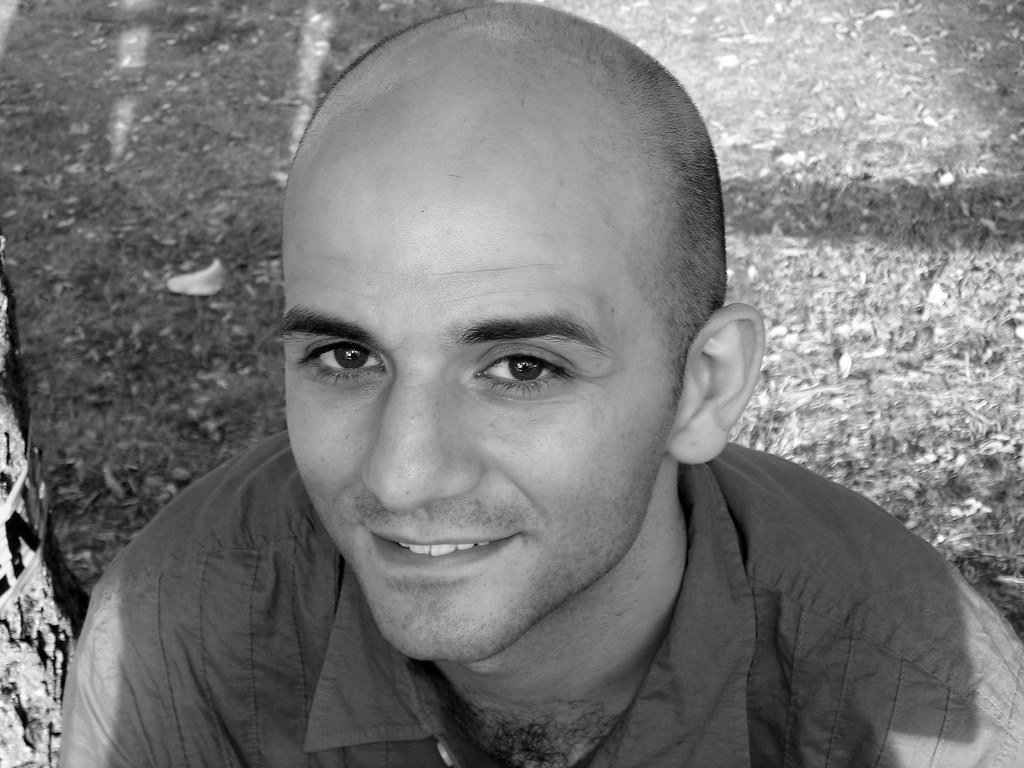
Image result for alan chazaro poet photo

Alan Chazaro

ABOUT THE POET
Alan Chazaro is a high school teacher at the Oakland School for the Arts, the former Lawrence Ferlinghetti Fellow at the University of San Francisco, and a June Jordan Poetry for the People alum at UC Berkeley. A Bay Area native, his poems have been featured in the San Francisco Chronicle, Puerto del Sol, Huizache, Acentos Review, and Ninth Letter. He is a recipient of an AWP Intro Journals Award and has been nominated for multiple Pushcart Prizes. His first poetry collection, THIS IS NOT A FRANK OCEAN COVER ALBUM
(Black Lawrence Press, 2019), was the winner of the 2018 Black River Chapbook Competition, and his second book, PIÑATA THEORY (Black Lawrence Press, 2019), was awarded the 2018 Hudson Prize.

BLURBS
"Listen: This book is so good it makes me want to curse. Better still: it makes me want to go write. Alan Chazaro's THIS IS NOT A FRANK OCEAN COVER ALBUM is full of neon imagery—a blunt passed around like 'just-born stars,' an apartment full of men watching boxing as an armpit. Chazaro's lyric is expansive; his music is tight. Nod your head & find yourself going back to each poem to trace its wisdom like a kid hitting rewind on a Walkman to hear their favorite punch line over and over. Chazaro's poems explore masculinity & machismo with tenderness, they define & redefine ideas of home, and they shout out the Bay Area with love & precision."
—José Olivarez

"Welcome to the blood hymn of the fast-moving body. In THIS IS NOT A FRANK OCEAN COVER ALBUM, debut poet, Alan Chazaro, breaks open—beautifully—the contemporary poetry landscape, crossing bridges, contemplating borders, and reckoning with the legacies of a rumbling boyhood. The voices here are tender, intellectual; hungry for desert wonder and midnight hoops, they wind their way through the ruins of Athens, the streets of Mexico City, and back to the yards and bars of Oakland. 'We are byproducts of earthquakes,' confesses the speaker; 'Do not look away.' A burning and beautiful achievement by a poet on the rise."
 —Brynn Saito

"Alan Chazaro's THIS IS NOT A FRANK OCEAN COVER ALBUM challenges us to listen. To reckon with the troubling vibrations of diaspora and masculinity in the landscapes of a gentrifying America and postcolonial world. In these pages you'll find a poet who has done that listening, who has listened to himself, his loved ones, his community. Who knows 'there are streets that have retained the noises of ghosts,' and has found a way to remix those vibrations as a way of navigating the joys and perils of his world."
—Malcolm Friend

"THIS IS NOT A FRANK OCEAN COVER ALBUM is a full-throated song, a reclamation of language, history, and memory that resonates across time and space and generations. Here, the Bay Area is sentient and brimming with sound, possessing a body and blood of its own. Chazaro's language is pure electricity, revealing the sonic landscapes and silences that surround lineages, memories, and displacements. By alchemizing loss into light, these poems are both cosmic and deeply embodied. Chazaro rewrites masculinity and reckons with colonialism, all while guiding us toward the mythic possibilities of creation: 'how constellations are formed / from the darkness of our mouths.' Each poem contains a home within itself, a home that defies nation and gentrification, a home that can hold all of us. This collection is kaleidoscopic, alive with joy and mourning and defiance. With each singing line, it brings the future to us: 'One day, / let us all return to ourselves.'"
—Kristin Chang


Alan Chazaro -- "16 Reasons Why a Dreamer Will Be the First Person to Build a Spacecraft"
Oakland School for the Arts-- Heart of Oakland 2019 Written by Alan Chazaro Performed by Alan Chazaro and OSA students


808

DISCLAIMERS

Poems cited here are assumed to be under copyright by the poet and/or publisher.  They are shown here for publicity and review purposes.  For any other kind of re-use of these poems, please contact the listed publishers for permission.

We here at TBOP are technically deficient and rely on our bashful Milo to fix everything.  We received notice from Google that we were using "cookies"
and that for our readers in Europe there had to be notification of the use of those "cookies.  Please be aware that TBOP may employ the use of some "cookies" (whatever they are) and you should take that into consideration.

Friday, July 12, 2019

High Ground Coward - Alicia Mountain (University of Iowa Press)

Today's book of poetry:
High Ground Coward.  Alicia Mountain.  University of Iowa Press.  Iowa City, Iowa.  2018.

IOWA POETRY PRIZE WINNER

36376982. sx318

Ray "Boom Boom" Mancini punches the lights out of "Southpaw Skin the Gloves" in an early poem out of High Ground Coward.  Alicia Mountain already had the full admiring attention of Today's book of poetry by the time we read the second poem in this startling good book.  High Ground Coward is anything but cowardly.  

Those of you too young to remember "Boom Boom" won't know that he killed a man in the ring.  Mountain is boxer brave at least.

How can poems you've never read before feel this familiar?  Mountain is intimate, wildly funny, loving, lusting and in each of these things there is an open honest intensity.  High Ground Coward is beyond refreshing, it's liberating.

Oh yes, this is "Queer" literature and Today's book of poetry wants to be respectful in this new gender-sensitive world.  But all you poetry babies better believe me when Today's book of poetry says that High Ground Coward is universal.  Alicia Mountain writes about love and desire and loss and all the rest of it and does so with such clear vision that she pierces your heart.  And your brain will follow this poet anywhere, Mountain has power.

On Being Told To Do Whatever I Want

Whatever I want is to run the stick of my deodorant
along each of your spread-eagle limbs
to dig my nails into your forearm at takeoff
and find turbulence every time
and be afraid of nothing and falling
to split a cake for dinner
or light the sheets on fire
to take a raccoon as a pet
train it to fold more tiny paper raccoons with its little human hands
to make twins of each of us
watch them braid each other's hair
watch them use their tongues
to know for certain we will die at night
to know which commodities you've stolen
and convince the hygienist I'm committed to flossing
to wipe away the lint stuck to my lips.
What I want has been crouched so long it cannot stand
it is filament
it is hardware store
it is someday I'll sharpen the knives
the skim milk of your belly and back.
I want leftovers for breakfast
want you gentle and heathen
I want to talk like a preacher in your bathrobe
to embarrass myself before company
until you paint my face a disguise
and call your mother
and hear her breathe on the phone
and hang up
and owe nothing to the bank
and the twins of us are in love
but won't say it
and the sound of their sleeping is ice melting in a jar.

💫💫💫

Today's book of poetry has called in the support of some of the other Today's book of poetry staff simply because it seems I can't stop gushing.  High Ground Coward is pure cherse, Alicia Mountain can burn with anyone.

Today's book of poetry is telling you true, Alicia Mountain moved us to tears this morning, her poem "Almanac Traction" is a terse and tender ode, a loving promise, a Juliet/Juliet incantation.  In another world Raymond Carver might have written that poem.  That's not a "gender" comment — that is a "greatness" comment.  Yes, Today's book of poetry just said that Alicia Mountain's High Ground Coward is filled with GREAT poems.

High Ground Coward is Mountain's first book which excites the bejesus out of us here at Today's book of poetry because she is destined for something remarkable.  Kathryn, our Jr. Editor, said that reading Mountain was a little like the first time she heard Laura Nyro.  It's hard to believe the immediate connection, what you get to take in, what you get to keep.  Today's book of poetry couldn't agree more, when the reader starts to absorb the vibe Mountain is throwing, all bets are off.

If pressed to put a particular name to it, Today's book of poetry is going with "silk sledgehammer."  Mountain is as tough as she is tender.  Wickedly smart poetry with giant and invisible hooks.

Safety Off

There is a shooter     in the mall where she works.
She hasn't seen him yet     but customers are running
down the escalators in shrieks, becoming so fleshy
                                                                                 as they move.

She is the narrator, Jules tells me.
Walkie-talkies describe a gunman who is unmistakably
her angry angry stupid brother      lonely.

I am lazy. I don't even ask if his rampage brain
consummates what it set out to do.                Or I can't bear
that she put that kind of violence through skinny fingers.

Jules asks, should I write the ending so that the sister
                                                                               finds out he survives
or so that we don't know what happens to him?

She won't have the brother die, in the story.      I am disappointed.
     What is wrong with me that I want that?

I wait in my car outside her house,
                                         because it had seemed still to much winter to walk
to the movie—           which was very good.     It won an award.

For a week I tell anyone I like that it was
                                fight club and black swan and eternal sunshine put together—


On the street afterwards, I offer Caylin a ride too.
We let the car warm, watch a woman rehearse ballet in her kitchen.
               She moves like practice, elbows in,
                         just gesturing the turns and leaps,
                     her back to the window.

Caylin says we will all have sugarplum fairies
in apartments in our poems.
                              But I call dibs and Jules says dibs is real.


We spend a driveway half hour telling Caylin
     how to go on a date                      as if we know.
She asks if she should wear an all black outfit
           to the funeral we're going to on Thursday,
which is before her date,        which would be totally fine
                         because she looks good in black.

We say don't text the guy that    those fries are the bomb dot gov.
She goes with    those fries are insanely good   and tells us she loves us
and squeals
    and slams the car door
        and prances through the back-porch dark—


We have only a few blocks left to drive.      I tell Jules
       the narrator should find out her brother lives—
it would be the more terrible outcome,
                                                      the rest of that life.

You are so sinister, she says, undoing her seatbelt.


Should I leave it open-ended here?
Or write that she kisses me hard on the mouth,
                                                    the more unbearable thing.

💫💫💫

Today's book of poetry has had versions of this problem before, our copy usually includes three poems, no more, no less, today we are flummoxed.  Today's book of poetry would happily share every fine poem in High Ground Coward.  Imagine, this Mountain's poem, "Palomino" is as good as ANY list poem Today's book of poetry has encountered, and you all know how much Today's book of poetry loves to share list poems.  Can't do it today,  But Today's book of poetry will share a one line teaser:

     "Can you smell the silence on my breath?"

Wow.  You can take Alicia Mountain's High Ground Coward to the bank all day long and never be disappointed.  In a moment of holy fuckwads admiration Today's book of poetry just actually yelled out loud in the office, something I rarely do.  It was one of those "I want a hallelujah and a holler" moments.  I just read this:

Little Rectangular Earths

On Fourth of July in the 90s
I was desperate for a glowstick.
I mean, I knew we were supposed
to be in it for the fire sky, for the
red glare. we all knew, even before
the skyline lost both front teeth.
Floods Hill carpeted in bare legs
and Tupperware and cops mostly
not caring about open containers.

I had a thing for aliens then,
the lemon-lime egghead tapering
to a pointed chin. I was in it for
the genderlessness of their power
and deep space and truth revealed
in cornfields. Wanted three bucks
so I could bite through a fluorescent
necklace and spit light from my insides,
as neon as I knew them to be.

💫💫💫

Today's book of poetry would like to dedicate that last poem to our Southern Correspondent and alien loving hero, David Clewell, Poet/Saint of St. Louis.

Everyone in our office was a little over-whelmed by just how much poetry pleasure Alicia Mountain was willing to share.  Today's book of poetry thinks it is very important to recognize, respect, and give voice to everyone regardless of gender.  So we want to tip our hats to Mountain in this regard.  But Alicia Mountain needs no pampering, these poems will burn and will hold up to any scrutiny.  
Today's book of poetry loved Mountain's shady sense of humour, we totally attuned to her sense of justice.

     "I want us to disappear, but all together so we won't be alone"
                                                                           from Forward Falling Daytime

Finally Today's book of poetry will surrender, High Ground Coward is book we'd like to share in its entirety, it is that good.

Isn't this world a splendid place to have such poets as Alicia Mountain in it?  To be this good she must be ten foot tall.

Today's book of poetry hasn't had a poetry meal this good in recent memory.  Mountain burns like Holiday, burns like Ella, you now, incandescent.

Related image

Alicia Mountain

ABOUT THE POET
Alicia Mountain is a poet and scholar in the PhD program at the University of Denver. Mountain has been a writer in residence at the Virginia Center for the Creative Arts, an Idyllwild Arts Fellow, and a Pushcart Prize nominee. Mountain lives in Denver, Colorado.

BLURBS
“Alicia Mountain looks at every tiny thing very closely, and in doing that conveys the big picture of a vast inner life with marvelous clarity and depth. Her voice is intimate, brash, always precise, heartbreaking in both its vulnerability and its authority. These poems are carried away by both lust and intelligence. This poet understands desire: its expression lets loose while giving form. This book doesn’t detour, it goes right to and through the overpowered, relentless heart of its speaker and the reader is struck through too, and good. High Ground Coward is a dazzling debut by a rare, true talent.”
     —Brenda Shaughnessy, judge, Iowa Poetry Prize

“High Ground Coward is raw and intimate. Alicia Mountain looks at what she loves and that foreground blurs into a backdrop of practical constraints and injustices. The poems press at those boundaries where desire starts to interfere with the opportunities of others and cast an unsparing eye on the cost. This is a book of hard, shifting, dreamlike gems.”
     —Joanna Klink, author, Excerpts from a Secret Prophecy


769

DISCLAIMERS

Poems cited here are assumed to be under copyright by the poet and/or publisher.  They are shown here for publicity and review purposes.  For any other kind of re-use of these poems, please contact the listed publishers for permission.

We here at TBOP are technically deficient and rely on our bashful Milo to fix everything.  We received notice from Google that we were using "cookies"
and that for our readers in Europe there had to be notification of the use of those "cookies.  Please be aware that TBOP may employ the use of some "cookies" (whatever they are) and you should take that into consideration.

Thursday, February 15, 2018

Send - Domenico Capilongo (Guernica Editions)

Today's book of poetry:
Send.  Domenico Capilongo.  Essential Poets Series 244.  Guernica Editions.  Toronto - Buffalo - Lancaster (U.K.).  2017.


Today's book of poetry knew we'd heard the name Domenico Capilongo before so we sent Milo into the stacks.  As soon as Milo sat Capilongo's first two books down on my desk I remembered.

Domenico Capilongo does plenty in his first book but Today's book of poetry remembered how Capilongo nailed that whole furtive first kiss with his poem "Shera-Lee" from I Thought Elvis Was Italian (Wolsak & Wynn, 2008).  Today's book of poetry remembered thinking that maybe Capilongo was another Len Gasparini character but he soon wrote us out of that illusion.  I Thought Elvis Was Italian was all James Brown hip and e.e. cummings poetic, quoting John Lennon and tipping the old hat to Saint Michael of Ondaatje.  We loved it.

Hold That Note (Quattro Books, 2010) had Louis Armstrong, Theolonious Monk, Billie Holiday, John Coltrane and Tom Waits as angels in the wings.  You just know that Today's book of poetry is going to have a lot of time for that, all the time in the world.

Send is a whole new ball game.  A clean slate.  But Today's book of poetry doesn't own a phone, of any kind.  There is a land-line phone in our office, plugged into the wall.  Today's book of poetry has never sent or received a text.  Domenico Capilongo's Send bursts at the seams with messages that you need to receive.

Contrary to the constantly public display of "texting" by the current POTUS there are texts worth reading, messages worth hearing.  Send is full of them.

Capilongo gives us instant access in his efforts to capture the languages and means we use to communicate. Capilongo catalogues it all from Morse Code to "whistled languages."

after

all the selfies. all the shame. after all the tex-
ting. all the comments. all the sexting. after
all the nakedness. all the pain. after all the
instagram. all the secret tattoos. after all the
tweeting. all the play-by-play. after all the
facetime. all the snapchat. the skype. after
all the auto-correct email. all the googling
after all.

...

Marconi and Alexander Graham Bell both put in cameos in Capilongo's efforts to search out every step forward in our haste to communicate faster.  Today's book of poetry suspects that some of these communiques are "found poems" and we can only celebrate Capilongo's keen sense of every methodology.  Domenico Capilongo is an all-in type poet if his first two books are any indication and in Send he invests it all in how we communicate.

Capilongo's sense of humour is abundant in these compellingly readable poems.  Today's book of poetry fears I am out of my depths because I can only think I know what it means when Capilongo titles a poem "Christopher Marlow Pocket Calls William Shakespeare."  The poem itself is hilarious.

kiss me like houdini's wife

straightjacketed and ready to take the plunge
in the dark. his mind racing through steps.
through the math of the weight of water. the
pressure of oxygen in his lungs. the sound
of the eyes of the crowd all around him. the
kiss from his wife. his tongue meets hers.
she slips a key into his mouth. he pushes it
into the corner of his cheek for later. the
crowd takes a breath. kiss me.

...

Our morning read started a little later than usual today.  It's not snowing in Ottawa for the first time in weeks but there is a misty rain that is falling and coating everything it touches in a lovely coat of ice.  Milo insisted we use all three Capilongo titles for the morning read but agreed we would hammer through Send first. 

Much to Capilongo's credit he happily jumps into concrete poems when he feels the need.  Here Today's book of poetry feels terribly unqualified to comment except to say that in most cases these poems surprised us with the clarity of a particular message, for us they were dead on.  And that is first time Today's book of poetry has ever said that!

During the reading we passed those poems around for everyone to see and then kept on with the rest.

In Capilongo's exhaustive and almost encyclopedic search for examples of how we choose to communicate he never loses sight of the reader, always makes certain they are engaged, Capilongo is communicating in a direct line with us.  The poems in Send got Today's book of poetry on Capilongo's side early.  After that the intriguing entertainment/exploration never let up.

carretto siciliano

in argentina or brazil there are ex-nazi soldiers in their
eighties who still hide in the shadows of trees. who still
wear large hats with sun glasses. they try to speak spanish
or portuguese. they try to walk slowly with knees bent but
you can still see the stiffness in their backs. the harsh ac
cent hanging at the ends of words. these men, in the early
morning, still wonder how the allies managed to take sicily.
     it was one man, a lowly carretto driver, some salvatore
or giuseppe, who came up with the idea. the germans were
everywhere with their checkpoints. no one was safe. they
even looked under hats. it came to him in a dream. the sky
was purple. his carretto flying over palermo like some sicil-
ian santa. his horse turned head back and spoke to him.
     we can send the messages with the horses, he thought
to himself over morning coffee, but how? the germans
even check under the horses' balls. later when he fed his
horse he saw it shove some food in its cheek only to share
it with another horse in the plazza.
     messages were sent in little walnut-sized capsules
from horse-to-horse piazza-to-piazza all across sicily. the
german soldiers often commented about the strange sicil-
ian horses, seltsame kussende pferde. strange kissing horses.
     this sicilian secret is know only to a chosen few. if
you want to know the truth about how this really hap-
pened you will have to go to sicily and ask one of the
horses yourself.

...

Domenico Capilongo writes solid poetry that you can depend on, every time out.  These are sweet, smart, clever, witty, funny, incisive poems that will re-wire your future communication.  All Today's book of poetry can say to Mr. Capilongo is thank you.

It's usually three strikes and you are out in almost every league.  What does it mean when you hit a homer out of the park your first three times up to the plate?

Capilongo's Send is a book of poetry you can hang your hat on.  This cat can seriously burn.

Image result for Domenico capilongo photo

Domenico Capilongo

ABOUT THE AUTHOR
Born when rotary telephones came in multiple colours, Domenico Capilongo began writing with pencil and paper, passing poetry notes from the back of the class. He still writes in notebooks, used a typewriter in high school, and his earliest published poems were printed on a dot-matrix printer. His first books of poetry, I thought elvis was Italian (2008) and hold the note (2010), as well as his first book of short fiction, Subtitles (Guernica, 2012), came very close to winning awards and were all mailed in the post. A high school creative writing teacher and karate instructor, he lives with his wife and children in Toronto. Find out more on the information superhighway at domcapilongo.wixsite.com/home.

BLURB
In his latest book, Dom Quixote mounts a new smartphone and tilts away at our digital windmills. His chivalry is analogue: what is lost in our twittering is the seed-bed of his musings. Messages between and underneath communications—tender, sensuous, comically misaligned and/or brutal by turn—are gathered up and offered back to us as rebus: an oracular operating system where what we mean is not always how we speak.
     - Chris D’Iorio, author of Without Blue


Book teaser for
Domenico Capilongo's Send
Video: Capilongo Poetry


657


DISCLAIMERS

Poems cited here are assumed to be under copyright by the poet and/or publisher.  They are shown here for publicity and review purposes.  For any other kind of re-use of these poems, please contact the listed publishers for permission.
We here at TBOP are technically deficient and rely on our bashful Milo to fix everything.  We received notice from Google that we were using "cookies"
and that for our readers in Europe there had to be notification of the use of those "cookies.  Please be aware that TBOP may employ the use of some "cookies" (whatever they are) and you should take that into consideration

Sunday, June 18, 2017

Body, in Good Light - Erin Rodoni (Sixteen Rivers Press)

Today's book of poetry:
Body, in Good Light.  Erin Rodoni.  Sixteen Rivers Press.  San Francisco, California.  2017.


"...bliss, like a memory, can be unearthed by scent."
                                                                                                 "The Body Lathe"
                                                                                                  Erin Rodoni

Erin Rodoni's Body, in Good Light has enough light to charm your eyes open wide but there will be tears enough before the end.  Rodoni has poems built on sustained intensity but without any anxiety, passion without pontification.

Today's book of poetry is a bit distracted today as our associate Odin is putting in his last days with us.   Odin has been presented with a bigger and better playground and is unable to say no.  We understand that and are proud of the work he has done here, we are sorry to see him go.  Odin never talked all that much but we sure listened when he did.

Body, in Good Light is just the sort of book Odin likes best, unapologetic intelligence, open-hearted wit and kindness.

The Ninety-Year-Old Woman On My Table

is speaking into the lavender-spritzed air
between us. Her muscles Braille another
story. She's telling me about her niece,
who lives with a man she'll never marry.
It's complicated, you see. There's so little
between her bones and mine, a thumb's
pad, a tendon's frayed twine. You see,
he has a wife. Sometimes it seems these
bodies just appear under my hands. She has
some kind of condition. They all touch
their own shoulders, their lower backs
to show me where the pain is. Sometimes
they want to touch mine (right there) as if
we don't all inhabit the same sad pockets
of skin. Can't move, can't speak. I imagine
there are people hired just to wash her
where her husband can't. Certainly can't
have sex, and I suppose he has all he wants
with my niece. Our muscles are toned to transfer
gentleness. From lover to child. From stranger
to self and back again. Sometimes the weight
of a toothbrush seems too much when I remember
I must lift it twice a day until I no longer can.
They have children together. I've kissed my own
grandmothers into smaller and smaller beds,
fixed their hair -- all wrong I'm sure. I suppose
he must have loved her. Now he tends her
like a houseplant. Or maybe she's a ghost
orchid in a greenhouse in a snowed in city.
Probably still does, in his way. The globe
unshaken, shelved in one of these little rooms
where hands polish it with love
so unconditional it's cruel.

...

Erin Rodoni talks about cancer and childbirth and chemotherapy and the impending death of a younger brother and when she is doing this she is covering some damned sad territory, sweet and profound.  As a reader you'll feel compelled to turn to the next page, Rodoni keeps the iron under your feet suitably red.

Today's book of poetry also wants to warn you.  Rodoni moved us to real, running down the cheeks, tears more than once.  As much of a crocodile as I can sometimes be those were real emotions running down my old face.

You Kept My Summer Dresses

when I died, and jewels worn closest to my skin.
You warmed them in a fist, watched hemlines swish

dust, once my thigh. When you lie
beside your new love now, do you miss

the little nicks not on her shinbone,
the mole your little finger doesn't brush?

Hush, I know about darkness, how it funnels
a sort of light we see as flesh

through our sealed lids. I know about rooting
toward comfort's infrared.

I only meant to say I can't forgive you.
I'm not God, just a voice inside your head.

You remember, don't you, what I said
about the heart? To do the things it tells you?

Soon she will jump at necklaces curled like cobras
in your sock drawer. Soon it will be time

to wash my dresses, leave them slapping on the line.
All I ask is, just once more at dusk, stand

in the life we shared, let night gather
behind the dresser, beneath the bed.

Let shadows press open the closet and breathe
the last moths of my scent.

...

Our morning read was a tempered emotional affair this morning.  We were all on edge because of Odin's bon voyage.  Every time Rodoni crossed an emotional bridge one of us jumped out of our skin and to be pulled back from the ledge.

Odin calmed us all down, as he always does, kissed everyone, left.  A class act all the way.

When I got back to my office there was a short note from Odin on my desk.  He said "that Rodoni woman is built from strong stuff, first rate poetry from an intelligent woman's voice.  Remember that you grew up under the care of a strong, intelligent woman.  Stay the course."

We Chop Onions, Listen To Billie Holiday

The windows fogged. Our eyes. My brother slides the knife from his
wife's fist, dances her around the room. Her body already out of breath,
he folds her to his chest. They revolve in one place: teenagers during 
the last song of prom. My husband stands behind me. I lean into his
weight. And for a moment I let myself conjure a child with her smile
and my brother's green eyes, a child who will never run through this
house playing tag with the child I don't yet have. Beyond the steam on
the windows, fall's first frost sharpens the marsh grass, and the arced
maps in the stars tick past without us until we are already ghosts.

...

Erin Rodoni's Body, in Good Light is flat out excellent.  You should give a copy to every woman you know.  Wouldn't hurt any of the menfolk either.

Erin Rodoni

ABOUT THE AUTHOR
Erin Rodoni is the author of Body, in Good Light (Sixteen Rivers Press, 2017) and A Landscape for Loss, which won the 2016 Stevens Manuscript Prize sponsored by the National Federation of State Poetry Societies and is forthcoming later this year. Her work has appeared in Colorado Review, Cimarron Review, Drunken Boat, Ninth Letter, Spoon River Poetry Review, Tupelo Quarterly, and The Adroit Journal, among others. Her poems have also been included in the Best New Poets anthology, featured on Verse Daily, nominated for a Pushcart Prize, and honored with an Intro Journals Award from the Association of Writers and Writing programs. She currently lives in the San Francisco Bay Area with her husband and two young daughters.

BLURBS
“I walk toward you barefoot,” writes Erin Rodoni, a poet who can speak with the same ease of private elegies and public journeys, of childbirth and of changing trains in Krakow, of grief on losing a loved one to cancer, and of ‘borrowed countries / where bougainvillea scales balconies // like a romance language.’ Here is a book that journeys out into the world, and also inward—into the mysteries of private life, of the body, where ‘bliss, like a memory, can be unearthed by scent.’ I love how wisdom enters the moment of passion in these poems, where we see ourselves living here, on this earth, ‘believing // in these bodies.’ This is a marvelous debut.” 
     —Ilya Kaminsky, author of Dancing in Odessa 

“The aesthetic that courses throughout Erin Rodoni’s sumptuous debut—tender and bittersweet, but also clear-eyed and unflinching—recalls Rilke’s ninth Duino Elegy, in which the earth’s dream is ‘to resurrect / in us invisibly.’ That ache of regeneration and rejuvenation is made manifest in Body, in Good Light. In the section entitled ‘A Sort of Light We See as Flesh,’ the poem ‘The Chapel’ brings us to a woman’smemorial service, where Rodoni faces ‘an altar draped in fabric / that belongs to no faith.’ At the end, though, she says: ‘We praise/ the faith of whatever machine // keeps the warmth in her hands.’ By extension, that warmth extends to the poet, to those she holds dear, and, thankfully, to us.”
     —Thomas Centolella, author of Views from Along the Middle Way


sixteenrivers.org

585
DISCLAIMERS

Poems cited here are assumed to be under copyright by the poet and/or publisher.  They are shown here for publicity and review purposes.  For any other kind of re-use of these poems, please contact the listed publishers for permission.

We here at TBOP are technically deficient and rely on our bashful Milo to fix everything.  We received notice from Google that we were using "cookies"
and that for our readers in Europe there had to be notification of the use of those "cookies.  Please be aware that TBOP may employ the use of some "cookies" (whatever they are) and you should take that into consideration.


Thursday, August 27, 2015

Music from Small Towns - Al Maginnes (Jacar Press)

Today's book of poetry:
Music from Small Towns.  Al Maginnes.  Jacar Press. Durham, North Carolina.  2014.


Almost every poem in Al Maginnes' fine Music from Small Towns has previously been published in a magazine or journal that you and I would be tickled pink to appear in.  That is an enormous accomplishment, colour me green.

These poems are tremendous machines of muscle galloping across the page like a red-haired Secretariat.

Mingus and Stars

I am writing this on my 56th birthday.
On my father's 56th birthday, he died,
leaving little to measure my steps against
from this day forward. This day when I'm afraid
to close my eyes. The day Charles Mingus died
fifty six sperm whales died on the beaches in Baja.
And Mingus was 56. He left behind
a garden as sweet and thorny as the fields
father and sons have warred in since the first
measure of time, since stick or rock
first pounded imitation of the human heart.
Tonight, presents and phone calls, the prizes
for completing a year, done, the little cake I can
be allowed, gone, I should listen to music

instead of watching a movie whose outcome
I know, turning pages in books I read last year.
I'm old enough now for real listening, to close
my eyes and let music have its way with me.
"I want to be a star," said Mingus after he knew
he was dying, meaning not the faces on magazines
or the metal shapes in Hollywood sidewalks,
but the burning orbs or rock and gas we see
only at a distance, whose light continues long after
they go out, the way music continues after
the hand that wrote it is done. When I close my eyes,
fields of stars unfurl there. Those are the stars, bright,
unreachable, each singular as bass notes, stars
I want to shine among, but not today.

...

These poems say too much, go on too long, have streamers in their tails -- but they do sing.

Milo, our office crank and technical wizard, always claims to hate jazz but unabashedly loves poems that he calls "Charlie Rich voice ditties", that Milo is a romantic at heart.  And so is Al Maginnes.

Maginnes calls on various Gods both large and small to pepper these poems with notes hard as hammers, soft as your heart.

Something Words Will Not Say
                                    For Don Adock, 1926-2011

How long will it be before I buy
some jazz or see an announcement
for a show without thinking I need
to burn it for you or call to see
if you want to go. Last night, I listened
to different piano players until
I told myself I could hear the difference
in the pressure of fingers, could tell
their signature licks, small decorations
of melody, apart. Perhaps I can,
but it's knowledge that only lasts
until the next disc comes on.
One night you came in the bookstore
where I worked between semesters, pointed
to the speaker and said "That's Cedar Walton,"
and when, a few nights later, it was
Red Garland, you knew it too.
One evening while we watched a quartet
work through "Body and Soul,"
the piano player stumbled on his solo.
"He doesn't know what to do with it."
You elbowed me as the hapless pianist
nodded it to the sax player,
whose playing all night had surged
with invention. "He knows what to do
with it," you chuckled and leaned back.
Watching you was a lesson
in how to listen. There are chords
underneath the chords being played.
There are leaves blowing down sidewalks,
alleys filled with wind, the sound
of a name broken into three long notes.
I have always believed music was
trying to tell me something
words will not say. When I drive
at night, I sometimes listen to CDs
you copied for me--there are enough
to fill a shoebox--and those hours
are empty enough for the searching horns,
the splash of drums, the piano waiting
to drive, empty enough for me
to listen until I think I hear you say,
"He knows what to do with it."

...

Al Maginnes gets it.  Marcus Aurielius might be walking around in these suckers along with Charles Mingus, Billie Holiday, the Prez, John Keats, Eldridge Cleaver and Malcolm too.  Thomas Edison and Peter Coyote drop in.  You just cannot predict who is going to sit in on something to make it just right, but everyone plays nice.  The quartets and quintets Maginnes finesses out of his noggin astound just a little.

You get the drift though, these poems are full of hard-edged knowing and charm.

Passage Through the Body of Fire

Impossible to fathom lightning without
          dark and silence. One of our commandments
is contrast. There is silence so deep
          words, even thunder, will not find
the end of it. The house burning down
          on the news might be the church
of your childhood, dissolving in fire
          while half the town watches.

Can't faith crumble the same way?
          The nameless man pulled from the lake
offers the same excuse to break
          our soft code of silence as rain
or any weather we can name but can
          do nothing to change. Give us anything,
and we learn to make language,
          the way prisoners invent code to send

shorthand messages tapping through stones
          or flashing in bolts of light from mirrors.
His eyes were still open, said a woman
          at the bank; his body showed
he was not in the water long.
          The finger of lightning that touched
the church into flame, the ragged scars
          across the drowned man's chest

hold us in a place language will not
          free us from. Words will never be
all we have of language, as flame
          cannot be the whole of fire. The stare
of the drowned man, the architectures
          of burning wood might be signals from
the unspeaking world, like sullen braids
          of smoke rising from the ruin

of the church the night after the fire
          did its work, shards of metal, glass,
even wood still undigested after
          their passage through the body of fire,
the ghost of what had been there
          more real than when the door could be
opened, the body entered. Some prayers
          outlast every vow to forget them.

What you have of the fire-eaten church
          is smoke so thick it was language
all its own, body that might insist
          on seeking its own path,
as you resisted the hand that seized you,
          shoved you into the soundlessness
of water, making an unreachable heaven of
          the surface you suddenly prayed for.

...

We here at Today's book of poetry are especially fond of narrative poetry.  We love poems that tell a good story.  Al Maginnes is a master storyteller and they are rarer then hen's teeth.

Maginnes has a voice we want to listen to.

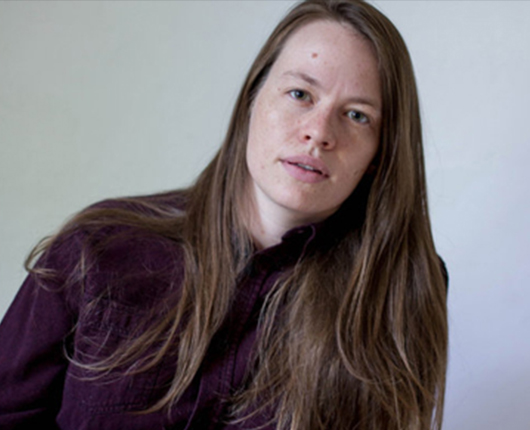
Al Maginnes

ABOUT THE AUTHOR
Al Maginnes was born in Quincy, Massachusetts and teaches at Wake Tech Community College in Raleigh, NC. His poems have appeared in many journals and magazines, including Poetry, The New England Review, The Georgia Review, The Antioch Review, Shenandoah and Quarterly West. He has been the recipient of a Writer’s Fellowship from the NC Arts Council and is the author of two collections: Taking Up Our Daily Tools (St. Andrews Press, 1997) and The Light in Our Houses (Pleiades Press, 2000), which won Lena-Miles Wever Todd Poetry Prize.

BLURB
“What I love about these poems is how they manage to be so eloquent without being pretentious. I’m also drawn to the way Maginnes juxtaposes fire and its quick losses with fire’s complement, slow vanishing. Not all the poems in this collection directly address either of those ideas — Maginnes is too smart for that — but I finished these pages thinking it was change that infuses the finest of them and that Maginnes, like so many of us, has striven to accept what is, even when it’s transition, and through that acceptance find peace. I admire that, and this book.”
— Lola Haskins, The Grace to Leave, Still the Mountain, Desire Lines, New and Selected Poems

Al Maginnes
Reading at Poetry Hickory
12-24-2010
Video:  T. Peeler


376

DISCLAIMERS

Poems cited here are assumed to be under copyright by the poet and/or publisher.  They are shown here for publicity and review purposes.  For any other kind of re-use of these poems, please contact the listed publishers for permission.

We here at TBOP are technically deficient and rely on our bashful Milo to fix everything.  We received notice from Google that we were using "cookies"
and that for our readers in Europe there had to be notification of the use of those "cookies.  Please be aware that TBOP may employ the use of some "cookies" (whatever they are) and you should take that into consideration.