Showing posts with label john coltrane. Show all posts

Monday, February 10, 2020

Divided - Linda Frank (A Buckrider Book/Wolsak & Wynn)

Today's book of poetry:
Divided.  Linda Frank.  A Buckrider Book/Wolsak & Wynn.  Hamilton, Ontario.  2018.

Book Cover: Divided, Linda Frank

Clearly Linda Frank's poetry posse includes a world class botonist and a scientist with an eidetic memory.  How does Today's book of poetry know such things?  The answer is quite simple;  no one poetry brain could pull these poems together.  These poems require multiple experts and fathoms upon fathoms of research.

Divided is that completely unexpected cornacopia of delights.  Frank's poems pass all of our poetry tests.  Linda Frank is both remarkbaly insightful and unimaginably thorough.  It isn't enough that her understanding of human nature, emotion and character is illuminating;  Frank sees the big picture so clearly, she can use the various languages of animals and insects, she is able to use their knowledge.  The resulting poems delight.

Thomas, our new Assistant Editor, found Linda Frank's Divided "an absolutely compelling read" and Today's book of poetry couldn't agree more.

Von Frisch's Ten Little Housemates

The housefly he calls a trim little creature. A man
would have to leap from the Westminister Bridge

to the top of Big Ben to compete with the flea.
All living creatures are equal in the great law

of life, he writes. Even bedbugs. Lice can carry
two thousand time their body weight with their forefeet.

Cockroaches are a community that has come down
in the world. Silverfish, entirely harmles sugar guests.

The spider's actions differ in detail according to the weaver's
character. In gnats, the organs of flight have reached a high 

level of perfection. We cannot blame the tick for her bloodthirstiness.
Anyone who has to hatch a few thousand eggs deserves a good meal.

Moths are useful scavengers. What else would happen
to all the decaying hair and feathers that disnintergrate so slowly?

Von Frisch's little housemates are extraordinary, in their own way
exceptional. At the end of each affectionate chapter

he recommends in equally good-natured tone and detail
how each could best be exterminated.

💥💥💥                                                 

Today's book of poetry had some standards blasting out of the box in our office this morning, Coltrane's A Love Supreme, Anita Baker, some Gil Scott Heron.  That sort of tone.

Divided is presented in four sections which include the closest inspections of the beetle, anthropod and arachnid worlds, accounts of women who were pioneers in their scientific fields, accounts of the first balloon flight (untethered) and an account of the first descents into our oceans.  Linda Frank even shares some elements of her own story.  

What Today's book of poetry enjoy most is the consistency of Frank's voice, she can hold a note.  Linda Frank's poems all come at the reader in the same way, as revelations.  Frank uncovers truths we previously never questioned.  All of this good.  But for you poetry monsters the most important question is "does it burn?"

Damned straight.  Today's book of poetry has never seen this particular manner of cooking before but we'd sure like to get our hands on the recipe.  Frank goes all poetry-Julia Child poetry wise and botanically bent.  Divided not only makes the reader feel smart and smarter, Divided makes the reader truly curious.

Falling Stars
CAROLINE hERSCHEL, 1750-1848

Every night up on the flat roof
            over the hayloft

the great man's sister
            with her telescope, hunting
                       for wanderers
messengers that enter the solar system.

Every night up on the flat roof
            over the hayloft
                       in thrall to the polished lens
sweeping the sky for comets.

The great man's sister
                      minded the heavens.

No longer such a lonely thing
                       to open one's eyes.
Every impulse of light exploding.

Only thirty "hairy stars" ever recorded
            and she, the Lady's Comet Hunter

alone and free up on the flat roof
                                    over the hayloft
found eight in a dozen years.

She knew those distant stars ceased to exist
           millions of years ago.
Her starry night, her stellar landscape
                        not really there at all.

Light travels long
            after the heavenly body is gone.

Her sky, so full of ghosts.

💥💥💥    

Today's book of poetry so enjoyed Linda Frank's Divided.  We've tasked Thomas, our new Assistant Editor with procurring Frank's three other poetry titles.  Poetry this exciting and enlighting is juat a full stop pleasure but it doesn't happen by accident.  Today's book of poetry would bet our fortune that Frank's other poetry titles delight as well.

Frank invites the reader into gardens of wonder, deep into the dark sea, and delightfully into an ocean of tulips that decorate an Ottoman rulers pleasure and obsession.  These are all worthy adventures, experienced through a particularly sharp lens.

Today's book of poetry can only begin to imagine what Linda Frank's reading list must look like.  These poems required both difficult magic to conger and encyclopedic dexterity to imagine.  This sort of mastery can only from a poet a the top of the game.

Dragonfly

The Devil's darning needle, ear sewer, eye poker, ear cutter,
                 eye snatcher. Horse stringer. Troll's spindle.
                                     The adder's servant, it follows
snakes around and stitches them up when they are injured.

August god, lady of the weeping willow, widow skimmer,
             water witch. The Devil's little horse sent by Satan
                         to create chaos
                                                 to steal people's souls.

💥💥💥

Here is the new deal.  Today's book of poetry will personaly vouch for any purchase of Linda Frank's Divided.  If any of you poetry monsters buy this book and are dissapointed - you have our address, send your copy to us and we'll refund your money.

That's how good Linda Frank's burn feels.

Salute.
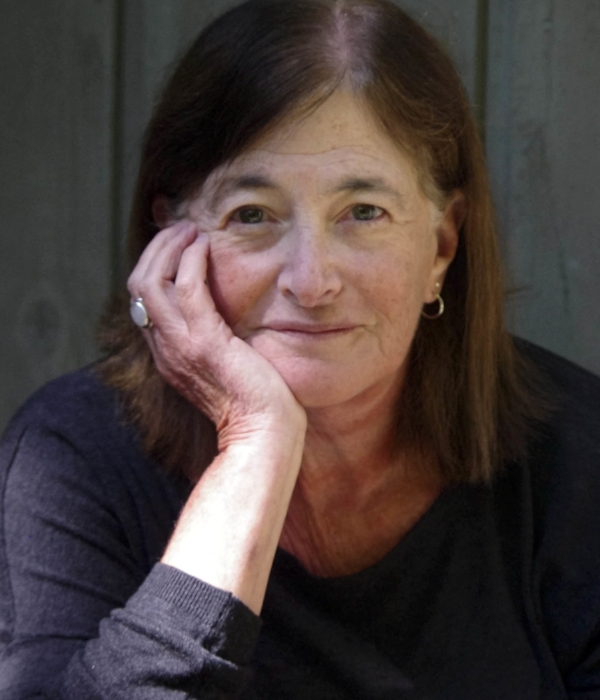
Image result for linda frank photo

Linda Frank
(Photo curtesy of Wolsak & Wynn)

ABOUT THE POET
Linda Frank was born in Montreal and now lives in Hamilton, Ontario. A retired professor from Mohawk College, she has written three books of poetry: Cobalt Moon Embrace, Insomnie Blues and Kahlo: The World Split Open, which was shortlisted for the Pat Lowther Award. She is a past winner of the Banff Centre's Bliss Carman Poetry Award and has been shortlisted for the National Magazine Awards.

BLURBS
Divided, we fall ... for Linda Frank’s poetry
“Wonderstruck by nature and science, [Frank] uses them beautifully in this book to draw out the most myriad and finely observed insights, on everything from sexual politics and bedroom intimacy (or the lack of it) to species extinction, the swiftness of life, religion, control, capture, the call of the wild and children."
     - Jeff Mahoney, The Hamilton Spectator

4 Women with New Books of Poems!
"This is a vital text as there is not a single piece in here that doesn’t consider other life forms than the human. […] These pieces are more than worth an embedding in your empathetic core."
     - Catherine Owen, Marrow Reviews

A Review of Amanda Jernigan's Years, Months, and Days and Linda Frank's Divided
"None of [her] interpretations are ever in conflict with one another. Rather, they enhance an already dense set of poems by offering sundry entry points. In a time where much popular poetry resembles candid notebook entries or performative tantrums, Frank's poems arrive refreshingly and consolingly classroom-ready."
     - Zachary Thompson, Hamilton Review of Books


805
DISCLAIMERS

Poems cited here are assumed to be under copyright by the poet and/or publisher.  They are shown here for publicity and review purposes.  For any other kind of re-use of these poems, please contact the listed publishers for permission.

We here at TBOP are technically deficient and rely on our bashful Milo to fix everything.  We received notice from Google that we were using "cookies"
and that for our readers in Europe there had to be notification of the use of those "cookies.  Please be aware that TBOP may employ the use of some "cookies" (whatever they are) and you should take that into consideration.


Thursday, February 15, 2018

Send - Domenico Capilongo (Guernica Editions)

Today's book of poetry:
Send.  Domenico Capilongo.  Essential Poets Series 244.  Guernica Editions.  Toronto - Buffalo - Lancaster (U.K.).  2017.


Today's book of poetry knew we'd heard the name Domenico Capilongo before so we sent Milo into the stacks.  As soon as Milo sat Capilongo's first two books down on my desk I remembered.

Domenico Capilongo does plenty in his first book but Today's book of poetry remembered how Capilongo nailed that whole furtive first kiss with his poem "Shera-Lee" from I Thought Elvis Was Italian (Wolsak & Wynn, 2008).  Today's book of poetry remembered thinking that maybe Capilongo was another Len Gasparini character but he soon wrote us out of that illusion.  I Thought Elvis Was Italian was all James Brown hip and e.e. cummings poetic, quoting John Lennon and tipping the old hat to Saint Michael of Ondaatje.  We loved it.

Hold That Note (Quattro Books, 2010) had Louis Armstrong, Theolonious Monk, Billie Holiday, John Coltrane and Tom Waits as angels in the wings.  You just know that Today's book of poetry is going to have a lot of time for that, all the time in the world.

Send is a whole new ball game.  A clean slate.  But Today's book of poetry doesn't own a phone, of any kind.  There is a land-line phone in our office, plugged into the wall.  Today's book of poetry has never sent or received a text.  Domenico Capilongo's Send bursts at the seams with messages that you need to receive.

Contrary to the constantly public display of "texting" by the current POTUS there are texts worth reading, messages worth hearing.  Send is full of them.

Capilongo gives us instant access in his efforts to capture the languages and means we use to communicate. Capilongo catalogues it all from Morse Code to "whistled languages."

after

all the selfies. all the shame. after all the tex-
ting. all the comments. all the sexting. after
all the nakedness. all the pain. after all the
instagram. all the secret tattoos. after all the
tweeting. all the play-by-play. after all the
facetime. all the snapchat. the skype. after
all the auto-correct email. all the googling
after all.

...

Marconi and Alexander Graham Bell both put in cameos in Capilongo's efforts to search out every step forward in our haste to communicate faster.  Today's book of poetry suspects that some of these communiques are "found poems" and we can only celebrate Capilongo's keen sense of every methodology.  Domenico Capilongo is an all-in type poet if his first two books are any indication and in Send he invests it all in how we communicate.

Capilongo's sense of humour is abundant in these compellingly readable poems.  Today's book of poetry fears I am out of my depths because I can only think I know what it means when Capilongo titles a poem "Christopher Marlow Pocket Calls William Shakespeare."  The poem itself is hilarious.

kiss me like houdini's wife

straightjacketed and ready to take the plunge
in the dark. his mind racing through steps.
through the math of the weight of water. the
pressure of oxygen in his lungs. the sound
of the eyes of the crowd all around him. the
kiss from his wife. his tongue meets hers.
she slips a key into his mouth. he pushes it
into the corner of his cheek for later. the
crowd takes a breath. kiss me.

...

Our morning read started a little later than usual today.  It's not snowing in Ottawa for the first time in weeks but there is a misty rain that is falling and coating everything it touches in a lovely coat of ice.  Milo insisted we use all three Capilongo titles for the morning read but agreed we would hammer through Send first. 

Much to Capilongo's credit he happily jumps into concrete poems when he feels the need.  Here Today's book of poetry feels terribly unqualified to comment except to say that in most cases these poems surprised us with the clarity of a particular message, for us they were dead on.  And that is first time Today's book of poetry has ever said that!

During the reading we passed those poems around for everyone to see and then kept on with the rest.

In Capilongo's exhaustive and almost encyclopedic search for examples of how we choose to communicate he never loses sight of the reader, always makes certain they are engaged, Capilongo is communicating in a direct line with us.  The poems in Send got Today's book of poetry on Capilongo's side early.  After that the intriguing entertainment/exploration never let up.

carretto siciliano

in argentina or brazil there are ex-nazi soldiers in their
eighties who still hide in the shadows of trees. who still
wear large hats with sun glasses. they try to speak spanish
or portuguese. they try to walk slowly with knees bent but
you can still see the stiffness in their backs. the harsh ac
cent hanging at the ends of words. these men, in the early
morning, still wonder how the allies managed to take sicily.
     it was one man, a lowly carretto driver, some salvatore
or giuseppe, who came up with the idea. the germans were
everywhere with their checkpoints. no one was safe. they
even looked under hats. it came to him in a dream. the sky
was purple. his carretto flying over palermo like some sicil-
ian santa. his horse turned head back and spoke to him.
     we can send the messages with the horses, he thought
to himself over morning coffee, but how? the germans
even check under the horses' balls. later when he fed his
horse he saw it shove some food in its cheek only to share
it with another horse in the plazza.
     messages were sent in little walnut-sized capsules
from horse-to-horse piazza-to-piazza all across sicily. the
german soldiers often commented about the strange sicil-
ian horses, seltsame kussende pferde. strange kissing horses.
     this sicilian secret is know only to a chosen few. if
you want to know the truth about how this really hap-
pened you will have to go to sicily and ask one of the
horses yourself.

...

Domenico Capilongo writes solid poetry that you can depend on, every time out.  These are sweet, smart, clever, witty, funny, incisive poems that will re-wire your future communication.  All Today's book of poetry can say to Mr. Capilongo is thank you.

It's usually three strikes and you are out in almost every league.  What does it mean when you hit a homer out of the park your first three times up to the plate?

Capilongo's Send is a book of poetry you can hang your hat on.  This cat can seriously burn.

Image result for Domenico capilongo photo

Domenico Capilongo

ABOUT THE AUTHOR
Born when rotary telephones came in multiple colours, Domenico Capilongo began writing with pencil and paper, passing poetry notes from the back of the class. He still writes in notebooks, used a typewriter in high school, and his earliest published poems were printed on a dot-matrix printer. His first books of poetry, I thought elvis was Italian (2008) and hold the note (2010), as well as his first book of short fiction, Subtitles (Guernica, 2012), came very close to winning awards and were all mailed in the post. A high school creative writing teacher and karate instructor, he lives with his wife and children in Toronto. Find out more on the information superhighway at domcapilongo.wixsite.com/home.

BLURB
In his latest book, Dom Quixote mounts a new smartphone and tilts away at our digital windmills. His chivalry is analogue: what is lost in our twittering is the seed-bed of his musings. Messages between and underneath communications—tender, sensuous, comically misaligned and/or brutal by turn—are gathered up and offered back to us as rebus: an oracular operating system where what we mean is not always how we speak.
     - Chris D’Iorio, author of Without Blue


Book teaser for
Domenico Capilongo's Send
Video: Capilongo Poetry


657


DISCLAIMERS

Poems cited here are assumed to be under copyright by the poet and/or publisher.  They are shown here for publicity and review purposes.  For any other kind of re-use of these poems, please contact the listed publishers for permission.
We here at TBOP are technically deficient and rely on our bashful Milo to fix everything.  We received notice from Google that we were using "cookies"
and that for our readers in Europe there had to be notification of the use of those "cookies.  Please be aware that TBOP may employ the use of some "cookies" (whatever they are) and you should take that into consideration

Friday, May 6, 2016

New & Selected Poems - W.H. New (Oolichan Books)

Today's book of poetry:
New & Selected Poems.  W. H. New.  Oolichan Books.  Fergie, British Columbia.  2015.


New & Selected Poems by the distinguished W.H. (Bill) New is the book of poetry everyone in Canada should take to the cottage for the summer.  This is stuff you want to go back and browse like a catalogue full of goodies.

In it you will find highlights from these fine books:

Science Lessons - 1996
Raucous - 1999
Riverbrook and Ocean - 2002
Night Room - 2003
Underwood Log - 2004
Touching Ecuador - 2006
Along a Snake Fence Riding - 2007
The Rope-makers Tale - 2009
YVR - 2011

Our guy Bill has been nominated for the Governor Generals Award and that doesn't happen by accident.  Today's book of poetry enjoys New's easy calm with language regardless of the form he employs.  Stylistically New ranges far and wide but his rational eagle eye is always in focus and the result is poetry that is always sharp.

That and he can be so humanely tender without making us cringe.

Chemistry

One, Lorna, even to mention her name
causes him to change colour, fires him
into blurted declarations of like. She acts:
he reacts, red and blue as litmus paper
and just as wet. He grins a lot, gawkily,
picks berries with her if he can, flirts
at the edge of touch and gesture,
flushes if others overhear.
In his dream, words like care and kissing
come to him articulate and whole;
awake, he needs a catalyst to say them,
mixes them up, lingers awkwardly till she
places a ripe raspberry on her tongue
and shares with him her taste for bittersweet.

...

Today's book of poetry has told you before how much we love W.H. Auden's "Musee des Beaux Arts" so when W.H. New takes a crack at Icarus in his poem "21.  Safety" we were all ears.  And New does not disappoint.  He has 'the Knowledge'.  New has an old cab driver's understanding of the ins and outs of things, the quickest way to get from one place to another with the smallest fuss.  

21.  Safety

Icarus as a boy played with army
trucks, not frisbees, played cops-&-
robbers, marbles in a ring, not hop-
scotch, kites, addy-addy-I-
over: he watched the ground, held fast
to things -- water, earth -- turning away
from dangerous fire & insubstantial air.

You'd have forecast for him an ordinary job --
something that kept his hands occupied,
farm irrigation, yard work in the maze,
something that gave him the lie of the land,  But he held
fast because of the gnawing away: it was always
there, & the first leap up he was vulnerable --
monster on one side, father on the other,

alternating tales of damnation &
derring-do -- inexorably, flame drew him,
& air appeared to hold him up: what
the old stories never tell is whether
he regretted choosing, or lived finally
only at the point of falling, knowing at last the difference
between fear and safety, tumbling into the sea.

...

Today's book of poetry is convinced of the deep and generous heart at the centre of W.H. New's New and Selected Poems.  Robert Kroetsch has called New "the flaneur" and he is right on.  These observational poems all point in one direction and we here at Today's book of poetry believe that direction is hope - we took an office survey at this morning's reading.

Darwin's Tulip

she talks of things she no longer sees,

fine print,
petitpoint,
thin lines--

listening,
you watch her lift fog from the river,

one hand brushing away the blur

                    *
presence: the scent of
roses in an empty room, the way

bedclothes fold against
bare skin

                   *
listening for what the ear cannot
tell you: the rumpled sea, the halfmoon

shoot of a Darwin's tulip, the first

                   *
drawing a line in air, water, sand:
this far and--
                     oh--

where did it go--
              the river, the wind--

...

"I Want To Talk About You" is blaring from one corner of our office to the other on this rather spectacular sunny spring morning here in the nation's capital.  We have deep, deep respect for Saint John of Coltrane.  One of the best things about running your own operation is having control of the music situation.  Of course I usually let the minions have their way -- but I do remind them from time to time of the classics.  

Books like W.H. New's New & Selected Poems makes our job a cinch.


W.H. (Bill) New

ABOUT THE AUTHOR
W. H. (Bill) New retired in 2003 as University Killam Professor at the University of British Columbia. A native of Vancouver, he earned an M.A. in Canadian Literature from UBC in 1963. In 1966 he was awarded his PhD from the University of Leeds, where he specialized in the English-language literatures of the Commonwealth. He then returned to the University of B.C. to set up a Commonwealth/ Postcolonial Literatures program.

Honoured by the Killam Research and Teaching Prizes (1988, 1996), the Gabrielle Roy Award (1988), the Jacob Biely Prize (1995), the Association of Canadian Studies Award of Merit (2000), and the CUFA Award for Career Achievement (2001), he was elected to the Royal Society of Canada in 1986. In 2004 he was awarded the Governor General’s International Award for Canadian Studies and the Lorne Pierce Medal for his contributions to critical and creative writing. He has taught or lectured in Australia, China, France, Germany, India, Italy, New Zealand, Spain, the UK, and the USA. In 2002, The University of Toronto Press published his Encyclopedia of Literature in Canada. It has been praised in Canada and the UK for its innovative perspective and described in France as indispensable. In 2006 he was awarded the Order of Canada. Recently he received the 20th Annual George Woodcock Lifetime Achievement Award.


468

DISCLAIMERS

Poems cited here are assumed to be under copyright by the poet and/or publisher.  They are shown here for publicity and review purposes.  For any other kind of re-use of these poems, please contact the listed publishers for permission.

We here at TBOP are technically deficient and rely on our bashful Milo to fix everything.  We received notice from Google that we were using "cookies"
and that for our readers in Europe there had to be notification of the use of those "cookies.  Please be aware that TBOP may employ the use of some "cookies" (whatever they are) and you should take that into consideration.