Showing posts with label w.h. auden. Show all posts

Friday, June 28, 2019

On Its Edge, Tilted - John Levy (Otata's Bookshelf)

Today's book of poetry:
On Its Edge, Tilted.  John Levy.  Otata's Bookshelf.  2018.

on its edge, tilted

Today's book of poetry is going to apologize right off the top, for the life of our research staff, and believe me, lives were at stake, we could not find out where Otata's Bookshelf originates.  Didn't stop of us from adoring the poetry of John Levy though.

"Let's talk about the weather, the earth
says with flowers."
                                                                                                 Home,Tucson

Today's book of poetry loves his job.  We get to read read read poetry and then write about the books and poets we like.  So many fine poets out there...  but every once in a while Today's book of poetry finds a John Levy type.  Today's book of poetry wants to be able to write poems exactly like John Levy's On Its Edge, Tilted.

This Poem 

This is going to be one of those poems
that goes on and on and calls. . . 
calls itself a poem, looking in 

one of those sets of mirrors 
joined by hinges so that this poem can 
see itself in profile 

or from the ass backwards perspective, 
a poem written on a Sunday afternoon, the sun 

up and my wife walking 
the dogs around the yard, 
the poem is about to say it is going 

along like the trains I saw as a child 
in my mind out in nowhere with flat land 
all around and the train goes through and 

I’m seeing it as a child from a distance. 
The flat 
nowhere with the dried-up stream 

of consciousness and the brief 
bridge over the dried-up stream the poem 
goes over, so fast you miss it if you glance at your wrist-

watch 
or at the floor or at the sky or your palm, sore 
finger or old shoe. This poem is going 
to say almost nothing and the almost 

is itself close to nothing in many ways, 
ways no one will bother to count because 
the poem keeps going and there’s 

no time to count much beyond one 
line after another and it would be 
pointless to begin counting anything as the poem, 

say, preens a moment in the mirror, passing 
a stanza over its body in what could be mistaken 
for a caress, but it turns out is just a scratch— 

the itch about the size of the dot above the lower 
case i. This poem circles that dot 
and rejoices in the space around it. 

This poem, in fact, is primarily about that space 
and how the space 
looks in the mirror around it, the legendary 

negative space. This poem is going to say 
almost nothing about what’s positive about 
the negative space, or almost 

positive, or fractionally, though now it finds 
a sliver of positivity and then another, using them 
like rails in a train track. Stand back.

💫💫💫

Levy had Today's book of poetry laughing out loud and for the best reasons.  John Levy is all about managing "the negative space."  Ha.  Levy 's autobiographical narratives are joined by utterly fabulous flights of fancy.  In On Its Edge, Tilted John Levy becomes whomever he chooses by whim.  One minutes he's Pablo Picasso and the next he's fulfilling Pablo Neruda's fancy by interviewing his spider.  Marvelous.

Will Today's book of poetry simply sound naive when we try to tell you that John Levy made us think?  Our in-house comedian Pistol suggested Today's book of poetry should "think more often."  Ha ha.

True Story

I was glancing at the man in line 
behind me in this bank when he 
pulled out a flask and took a drink. 
He offered it to me and no one 
watched as I downed whatever it was 
it tasted like grimace with toffee at first 

then orange notes followed by 
caramel and barley. It warmed, no, 
burned, no, increased my mass, but 
then the ceiling sparkled and a mother two people 
behind me told her little girl that everyone 

has been wrong, very very wrong, and the earth 
is flat. The man pried the flask from my grip 
as the teller waved him over even though, as I 
carefully noted earlier, he was behind me. 
At first I thought it was me the teller wanted to 

snub—”snub” is too short a word for how I felt myself 
wobble, massively, at the insult of having the smiling 
teller use all five fingers of a hand to neglect my 
Being. The after-

taste, a touch of dried flower petals, black pepper, tobacco 
leaf and chocolate was no consolation when I viewed the man 
pass the flask to the teller, which she took with the very same 
fingered hand she’d waved in the atmosphere. The view 

was nearly identical to looking through pillars at the Acropolis 
if the Acropolis were a bank and we were all tourists 
so none of us spoke Greek. The girl, inches behind me now, 
guffawed after her mother whispered loudly, “Some men are 

invisible, darling, and to think 
that they can help it 
is very very wrong.”

💫💫💫

On Its Edge, Tilted has it all, love stories, instructional video, bad weather and so on.  What attracted Today's book of poetry was that there is hope in here as well.

Our morning read was a vivacious affair.  Any poet who mentions W.H. Auden's "Musee des beaux arts" with serious intent and respect, well, that poet gets our full attention.  Today's book of poetry continues to maintain, respectfully, that Sir W.H. Auden's "Musee des beaux arts" is one of our greatest poems.  It's certainly near the top of the charts.

Milo, our head tech, took the lead with this mornings reading.  Milo's recent reading has included Auden so his poetry eyes opened up big when reading Levy's On Its Edge, Tilted.  This isn't meant to distract you readers, Levy doesn't actually spend much time on Auden or anyone else, Today's book of poetry just appreciated the mention of one of our hero's.  Levy himself is a train, keeps a steady head of steam and arrives on time and fully loaded with every poem.

Postcard to My Wife
                                                             12/25/17

Dear Leslie,

As you know, sometimes I blather. What
is her doing in blather, near the nonsense of
blat, like a husband and wife, like us. You're
the dear one, next to a blat, the dear one
who gives birth. You gave birth
to our two children, an act of giving,
to them and to us. You made me
a father and brought them onto
this planet and you love them before you
think of yourself. I send you this postcard
with one word on the other side, LOVE,
hand-painted, seeming to rise above
all else, all upper case because you
keep it up so skillfully, so
carefully, with such kindness.

Love,
John

💫💫💫

Today's book of poetry was delighted to end today's blather with a love poem/postcard.  Like Today's book of poetry, John Levy appears to love poetry, but loves his wife most.  Levy never walks and talk maudlin or saccharine, but he hits the poetry heart square on every time he tries.

Mr. John Levy will be welcome here anytime, Today's book of poetry liked how he handled it all.


John Levy

ABOUT THE AUTHOR
John Levy was born in Minneapolis. His father, a businessman, went to law school at the age of 45 and then opened his own law firm (and later began a solo practice). Levy's mother is a sculptor and painter.
When Levy was a young boy, his family moved to Phoenix. His first exposure to poetry was in the sixth grade, when his older brother began playing recordings of Dylan Thomas reading his poetry.
Later, Levy began to read e. e. cummings and at age 15, after finding a book of William Carlos Williams poems, began writing poems.
Levy graduated from Oberlin College in 1974. He worked in a factory that summer and earned the money to fly to Kyoto, where he lived for a year and a half. For six months he worked as a waiter and dishwasher with the American poet Cid Corman in a coffee and ice cream shop Corman had started with his wife Shizumi. He briefly returned to Arizona in early 1976, where he was a poet-in-residence at a private school (K - 12) for a month, having been awarded a grant by an arts commission. Levy then moved to Paris where he lived for just over a year, earning his living by babysitting a young Canadian boy and by working as a personal secretary for a retired diplomat.
Levy published his first collection of poetry, Suppose a Man, at the invitation of James L. Weil, publisher of The Elizabeth Press. Weil also published Levy's second collection, Among the Consonants (in 1980), and Weil became a generous and supportive friend until his death in 2006.
In 1980 Levy moved to Tucson and continues to live there. After moving to Tucson, he worked as a carpenter with a high school friend who had started his own construction company. From 1983 to 1985, Levy moved to Meligalas, Greece where he taught English as a second language at private language schools in Kalamata. After returning to the United States, Levy took up the study of law in 1988 at the University of Arizona College of Law. After graduation, he clerked at the Court of Appeals (1991-1992), then undertook a solo practice for three years (doing both criminal and civil work). He then joined a small firm that specialized in plaintiff's securities fraud class action cases. In 1997 Levy joined the Pima County Public Defender's Office, where he has worked in the felony trial division (except for a nine-month stint in the appellate unit).
Levy's poetry has appeared in various poetry magazines in the United States and in England, and has been anthologized in How the Net Is Gripped (Stride Press, 1992) and A Curious Architecture: A Selection of Contemporary Prose Poems (Stride Press, 1996), both anthologies edited by Rupert Loydell & David Miller.

767


DISCLAIMERS

Poems cited here are assumed to be under copyright by the poet and/or publisher.  They are shown here for publicity and review purposes.  For any other kind of re-use of these poems, please contact the listed publishers for permission.

We here at TBOP are technically deficient and rely on our bashful Milo to fix everything.  We received notice from Google that we were using "cookies"
and that for our readers in Europe there had to be notification of the use of those "cookies.  Please be aware that TBOP may employ the use of some "cookies" (whatever they are) and you should take that into consideration.


Friday, October 19, 2018

The Age of Revolution - Darren Bifford (Anstruther Press)

Today's book of poetry:
The Age of Revolution.  Darren Bifford.  Anstruther Press.  Toronto, Ontario.  2017.

The Age of Revolution.jpg

Ok, Today's book of poetry is in.  Any poet who stream of consciousnesswise throws in a line from Sir W.H. Auden's best poem in the world along with Jackson Pollock and the Rue St. Denis, has my full attention.  In fact Today's book of poetry is going to celebrate it.

Try this one...

This Sunset Lasts Forever

There must have been a lot of beauty
At the end of empire. Scratch that.
Strictly the usual amount,
More or less, like in a movie
When before he is shot
The soldier considers the dewy grass or the dawn
Over yon golden hills. Which is to say
I doubt it. Consider the fowls of the air and beasts of the field
Christ did not say on the Cross. Why, why, why, why, why, why?
Is closer to the mark. And it was no ordinary day
For those who were otherwise occupied with their lives,
Even given the torturer's horse scratching its innocent behind on a tree.
For there was a breaking sound in the sky;
We were all as terrified as other slow-witted animals, desirous and hungry.
I'm not getting over this in record time. Oh my heavenly days
Is what my grandmother sighed. Now which book will I take?
Will there be a record player? A mistake in these matters
Will commit us to eternal boredom. Help me
With a Jackson Pollock from the MoMA, whose paintings,
In lieu of small fires or snow storms, will serve to increase our contemplative
Capacity. Now if only we could get some help—I mean,
Help with the moving, not the moaning.
I've heard no pianos are housed on the isles of the blessed
Though the wind plays the trees and the trees are willing.
Nor that my will is broken I am either left for dead
Or I shall see them forever: my wife, my little boy. They are crossing
Rue St. Denis on a winter afternoon, holding hands. Flaring in the mind
Awhile longer like a flare shot to the height from which it falls in the night sky,
Tumbling into wine-dark oceans,
We went down to the ship —

💫💫💫

The Age of Revolution is an unassuming little chapbook of a mere nine poems - but when Today's book of poetry finished reading it felt like a tome that we'd been waiting for.  It was a much larger experience then Today's book of poetry usually finds in nine poems.  Expansive.

It is because Darren Bifford's poems are not fast food, these poems have been simmered, they have been stewed and tenderized, until the flavours are all rich and complex.

False Spring Is The New Thing

The first spring is always false. They call
It that because everyone wishes further
Hibernation. There's a town the existence
Of which I learnt when I was a child: all its
Inhabitants sleep as much of the day and night
As is possible. It's a thing to arrive into
Their public square unannounced.
My one practice is to summon indifference
To the most consequential events: what's left
Of the Great Barrier Reef, for instance; the situation
In Syria; my brother's long illness. I wish for a say
In what qualifies as an externality. That woman
In Toronto who, when asked about the last
Federal election, responded I don't know
What that means. The guy next door
With that fucking dog, for instance. Or Mark, who sits
Outside the liquor store, hat in hand, all spring,
Reading. Do I care what he's reading? Not all hope
Is great hope, even given this as if spring.
I've also felt the desire to join the slumber
Of that hidden town behind the mountains.
The kid who made it there came not without
His own questions. As for answers, what seemed
To him like reasons were little better than a roll
Of the dice, a yes and a no and a no and a no.

💫💫💫

Today's book of poetry went into Darren Bifford country back in June of 2016 when we looked at his Wedding In Fire Country (Nightwood Editions), and you can see that in the link below:


Today's book of poetry liked Bifford's poems then and we like them now, even more.  If the reader pays attention, Bifford reveals it all.  The Age of Revolution could just as easily been titled "How I See The World."  Well, Darren Bifford seems to have better than 20/20 vision, he sees just fine.

The Age of Revolution is one of those books you readers will thank me for, if you can get your hands on it.

The Scene From Here

So I see near the beach beside the docked
and decommissioned ferry, a makeshift flagpole
on which hangs, half-mast, the French Tricolore.

I run past. The route I take follows
the trail beside the channel, its slow waters
flowing from lake to lake, its currents shallow,

benign, so that no danger troubles the swimmers
who recline and drink on their rubber floats before
they leap in and submerge. Nothing is hidden of summer

in the Valley where all along the shore
children build tiny sand castles, dig twisting moats
into the mud. Lone suckers feed on the lake floor.

It's been a weird July. Every afternoon for over a week
storms break over the mountains—lightning, thunder—
the rain falls hard. Conversation turns to the weather.

What's the worst they've seen (if they've seen it before)
those who've been here a long time can't recall
or won't say, and the weather anyhow has its own way

of doing things. It's easy to stare at the hills and think
about nothing. As if the mountains would have you wander
into them, burrow into a fallen pine needles, stay there.

Soon I turn from the trail and run up-hill on the old track
or where the railroad tracks were that once ran the span
of the valley from the coast into Alberta. History marks

landscape like a scar, like the flesh healed into woven stitches
above my right eye, so that a reddened furrow is cut close
but hardly visible except to those women who've pressed

their fingers there. In the evenings I'm reading Euripides
on my mother's patio, near the lakeshore where a giant peach
is open until late; teenage girls serving ice cream floats

later flutter about the beach above the glow of their cell-phones.
Early in the morning last week I woke to the sound of a voice
announcing on a megaphone the names of marathon runners

as they crossed the finish line. AC/DC's Thunderstruck, applause,
all the spent athletes like in Ovid, that story near the end
about the runner who had escaped the finale of the last age,

when iron returned to fire and fire to sand. He moved like an ant
below the gods who at that point were left with little to do;
they say Apollo caught him easily, pressed him between his finger

and thumb, squished and ground him up until he too was sand,
flicking him down to where he was left with the rest of civilization,
subject to the wind's shifts. In the afternoon my three year old son

learns to swim. I prop him on my knees in the lake, cup my hands
underneath his arms; he does not let me relax my grip but screams
delight and terror when I throw him into the air and let him fall

again into my hands and collapse in my arms, splashing
cold water over his face and hair. He cries because water
is in his eyes and complains that it got into his mouth.

Later, on the sand, he tells me Babi, you protect me. The truth
of what he says, that total trust, turns my heart transparent.
He is a diamond cut into the air. My midway run inclines to dust-

dry ponderosa bluffs, the shelter of my ear like caves carved into the clay
cliffs which rise here on either side, the trail metamorphosed into scree.
The Trojan Women all wail and wail. There is no happy conclusion.

The ships on which they sail take them elsewhere far away.
Last week in Nice a few young drunk Brits took selfies next to a family
mourning their dead. Life returns to normal quickly.

Out on the lake the boats pull skiers; above the water a man
harnessed to a parachute is pulled around awhile. The scene
from here shows him minuscule, like a dead man in an airborne pulley.

What is normal? The air I breathe is dry, dry. The mountain flowers
are yellow. No sound from the trees.
Not even birds.

💫💫💫

Darren Bifford's The Age of Revolution, complete as it is, is a teaser.  You can't pick it up without wanting more of this intelligent poetry.  Bifford can open your heart and your mind.  

Simply splendid.

Image result for darren bifford photo

Darren Bifford

ABOUT THE AUTHOR
Darren Bifford is the author of Wedding in Fire Country (Nightwood Editions, 2012) and False Spring (Brick Books, 2018). He's the co-editor (with Warren Heiti) of Chamber Music: the poetry of Jan Zwicky (WLUP, 2015). He lives in Montreal.


Interview with Darren Bifford about his poetry collection False Spring
Video:  Brick Books


723

Poems cited here are assumed to be under copyright by the poet and/or publisher.  They are shown here for publicity and review purposes.  For any other kind of re-use of these poems, please contact the listed publishers for permission.

We here at TBOP are technically deficient and rely on our bashful Milo to fix everything.  We received notice from Google that we were using "cookies"
and that for our readers in Europe there had to be notification of the use of those "cookies.  Please be aware that TBOP may employ the use of some "cookies" (whatever they are) and you should take that into consideration.

Saturday, January 27, 2018

Season of the Second Thought - Lynn Powell (University of Wisconsin Press)

Today's book of poetry:
Season of the Second Thought.  Lynn Powell.  University of Wisconsin Press.  Madison, Wisconsin.  2017.

Winner of the FELIX POLLAK PRIZE in POETRY


Lynn Powell is exactly the tonic that Today's book of poetry needed to get back on track and into gear.  Reading poetry that is this smart and confident reminds us of how the real pros do it.

Season of the Second Thought is audacious.  This is Powell's third book but the first Today's book of poetry has seen.  Reading Season of the Second Thought is like eating that perfect box of chocolates, each one more delicious, every taste a new and exciting experience.  And you can never have enough. Powell calls out the muse, her muse, several times and openly challenges her for higher ground.  Not sure how Powell manages her erudite and sophisticated palette and still comes out speaking in a language we all understand, but it is a true pleasure to read.  And to read again.

Slow Elegy from Afar

     Then the Lord answered Job out of the whirlwind:
      ...Where were you when I laid the foundation of the earth?

What glitch in the genes created shame?
God, the oldest scapegoat, usually gets the rap.

But why would the maker of that granite island--
glacier-polished nub of a Precambrian peak,
with an osprey perched, bellyful of fish, in a wind-bent pine,
the gibbous moon floating up, and the evening star,
on cue, surfacing in a lavender sky--why
would the God of that cold beauty
contrive a hall of mirrors in a human mind?

︷

On our last long walk five springs ago, we sparred, gingerly.
You were a brilliant believer; I had come to believe
that cruelty was the only sin--with the caveat
that cruelty could also be the secret name of subtler sins.
Everything else, I argued, is the blundering of a desire
to be known, loved, or safe. We make mistakes
and know ourselves.

I could see your young, tired face tighten.

So I tried a different tack--
Don't take the perfect so personally.
Don't take shame so much to heart.

︷

Why did you suffer? And why did you leave
your suffering to those you loved?

I can't gird my loins again against my childhood God,
that God with a clipboard and swift red pen.

So I reread Job, and watch the waves wash,
and aim to wash away, the granite shore.
They paraphrase the whirlwind.

As do the oriole that slings her hammock nest
along the path we walked, the doe in the close woods
wary for her fawn, the thunderhead and the downpour,
the firefly galaxies in the blackest field of night,
the forsythia festive once again beside your grave.

...

Lynn Powell's Season of the Second Thought grabbed me by the poetry lapels and shook me senseless.  Powell musing in a blue mood is as good as Miles Davis doing the same.  But somehow I keep hearing W.H. Auden's perfect pitch in these poems.

The thing you learn, early on in Season of the Second Thought, is that you can be confident throwing yourself into each and every poem from the beginning to the end.  Lynn Powell is steady as a metronome with these incandescent poems aglow with "iridescent language."  Powell can burn.  Here's a poet who talks about the weather as though she controlled the sky, like she knows when it is going to rain.

Love Poem from the Wrong Side
of the Rain

What would April do? Tease hidden
meanings from the bulbs, raise the stakes
and double my entendres, and bet
all my roses on the bottom line.

But it's the season of embarrassed trees,
the modest charms of leaf rot and briar
and hawk scat thawing on the muddy path:
skinny March at an earnest latitude.

So tell me, Muse: where around here might a woman
find a little flint and tinder,
some figure of feisty speech, a correlative for kisses
that would make a grown man weep if she put it
all on the table and headed out
for good into the long-stemmed rain?

...

Today's book of poetry is very happy to be back in the saddle, and Lynn Powell is one hell of reminder of why we are in the poetry game.  Today's book of poetry doesn't just love reading great poetry, we aspire to write some of it.  Poets like Powell set the bar to beautiful new heights.

Our morning read was old school.  I made everyone stand up today when they read.  An infinitesimally small gesture of respect in memory of Señor Caballero Nicanor Parra who left us this week after more than a century of being a GREAT poet and a beautiful citizen.

Powell's poems held up splendidly.  The grand old man would have seen the bold beauty of Powell's hard truths, her certainties all tinged a little blue.

October Edge

Mapless and skidding again on a backroad
prickly with teasels and sumac and skeletons
of lace, I glimpse a pink non sequitur:
a winged woman on the stoop
of a whitewashed church, glancing up
from an opened book and lifting
her opened hand--

but I will not brake today for grace,
I round the reckless curve, past pumpkins
with no faces forced yet on them, past
bins and barrels of crimson wholesale fruit,
past tombstones disheveled in the drizzle
staggering after their long-lost
ballast of grief--

the blurred signs vanishing
like everything else in the hindsight horizon,
and the black tires taking my incendiary heart
farther, faster, out past the charred trunks of the maples,
those miles of martyrs with feet
held fast to the banked flames
of their own making.

...

Today's book of poetry is here to tell you that Lynn Powell's Season of the Second Thought is worth every second of time you can spend on it.

Today's book of poetry is built on the idea of sharing the best poetry what we can find.  Lynn Powell's Season of the Second Thought is as stone cold solid as any book Today's book of poetry has sent your way.  Lynn Powell is instantly a poet we will have all the time in the world for.

For Lynn Powell we are ready when she asks "Why don't you put your mouth / where your moody heart is?"  Today's book of poetry is speaking up here and now; Lynn Powell IS the next poet you should read.


Lynn Powell

Lynn Powell

ABOUT THE AUTHOR
Lynn Powell teaches in the Creative Writing Program at Oberlin College, where she directs Oberlin's Writers-in-the-Schools Program. She has published two previous collections of poetry: Old & New Testaments, winner of the Brittingham Prize in Poetry, and The Zones of Paradise. Her nonfiction book Framing Innocence won the Studs & Ida Terkel Award.

BLURBS
“Let Powell's images and figures wash over you. They can be deft and unobtrusive, but they will stick with you; they will illuminate what otherwise might be dark. A poet so sure-handed is irresistible. Dazzling.”
     —Robert Wrigley

“Not just written, but wrought. Powell's new poems deftly combine keen observation with perfect pitch, and their rich chiaroscuro renders them vibrant and painterly as the Dutch masters they often reference. The current running through her lines leaves me shivering with excitement and gratitude.”
     —R. T. Smith, author of In the Night Orchard


Kind of Blue
Lynn Powell
Video: Gabriel Jasso


650


DISCLAIMERS

Poems cited here are assumed to be under copyright by the poet and/or publisher.  They are shown here for publicity and review purposes.  For any other kind of re-use of these poems, please contact the listed publishers for permission.


We here at TBOP are technically deficient and rely on our bashful Milo to fix everything.  We received notice from Google that we were using "cookies"
and that for our readers in Europe there had to be notification of the use of those "cookies.  Please be aware that TBOP may employ the use of some "cookies" (whatever they are) and you should take that into consideration


Tuesday, August 1, 2017

Other Houses - Kate Cayley (Brick Books)

Today's book of poetry:
Other Houses.  Kate Cayley.  Brick Books.  London, Ontario.  2017.


Kate Cayley's Other Houses manages to put Arthur Conan Doyle, the knighted author of the Sherlock Holmes as well as plethora of other books including four of poetry, and Harry Houdini, the great magician and escape artist, into a room together.  Beautiful mayhem ensues of the sort only a playwright who is also a poet could stage.

Seemingly, this is a typical Cayley move.  Her imagination is rostered with the famous and the oddly infamous.  She moves them around the page as though they were actors on a stage subject to her jurisdiction.  

Arthur Conan Doyle and Harry Houdini Share Breakfast

Cunning man, and wise enough to keep up the patter, Doyle
lays plots, Houdini listens, keeping his eyes
somewhere else, pointing his host the wrong way. Look here,
not here, where the trick nests. By the time the eye
swerves back, it's done. What's meant to vanish, has.

The teaspoons are gone. Doyle is determined
not to be hoodwinked, outwitted. He's canny, genial, disposed
to liking the chicanery that lends itself to art. He blinks
and his toast rack has evaporated. Both are too polite
to mention this. Consummate gentlemen

revisioning their ancestry: rueful Irishman, shamed Jew, knowing
they may inherit through ostensible obedience, press hard
on the mold, secretly break it. Doyle rises, coughing lightly,
and flings the net. Houdini dodges, dives under the table
but his feet are already shackled. Doyle smiles,

swilling laughter. Then sees appearing on the tablecloth
among the china roses and the crumbs, sudden
other objects: sealed letter, straitjacket, noose.
Pocket watch, deathwatch beetle, death's head.

He ducks his head down just in time
to see Houdini wriggle free, brandishing cuffs,
whistling through the gap in his teeth. Cards
erupt from the napkin holder, Tarot showing one
or another face. Empress and Hanged Man,

World and Fool. Staring over the muffins, eggs,
bread and butter, they make a truce, saying
nothing. Fear death by water. Fear the end.
Yet neither does, and so they nod,
knowing that each may apprehend the other.

...

Arnold Potter, Ann Lee and William W. Davies, united in their belief that they are the risen Christ animate several of Cayley's clever pages along with Laszlo Toth who attacked Michelangelo's "Pieta" with a hammer in 1972 before the Italian courts declared him insane.  Cayley makes use of these narratives, skating between mystery and myth with mystics, chatting with charlatans, watching children grow.

Other Houses is that odd tent at the fair ground where no one is charging admission, and the lighting is unnaturally challenging.  You feel your way into it, compelled to enter, until once inside and you realize time has stopped, however briefly.  You roam, with increasing excitement from one splendid curio to the next.  Your satisfaction swelling with each diorama that appears out of the dim light with knowledge you didn't know you needed until now.

A Partial List of People Who Have Claimed to Be Christ
Laszlo Toth, 1938-2012

The patient is still writing letters to the Pope. He complains of not
receiving an answer, though he allows that even great men may be
afraid of the unexpected. He went to Rome, he says, for revelation,
as it was his thirty-third year. What he did there on Pentecost
Sunday, he did with his whole heart. When he struck Michelangelo's
Pieta with the geologist's hammer he'd hid under his coat, it was
a step up from carpentry. He struck first at the Virgin's arm, then
nose, then eye, because she would not look at him. Her son.

I lie to him, like all doctors. His followers are waiting for him on
the other side of the padded door. He turns to face the wall when he
sees me. Some days he says nothing. Other days he begs me for a
chisel. He wishes to pry himself apart. His blood will rinse his spirit
clean, his guts unwind along the carpet, his bones split like winter
wood, and the true part of him will show plainly, risen.

...

Milo, our head tech, pulled Kate Cayley's first book of poetry, when this world comes to an end (Brick Books, 2013), from the stacks this morning so we could look at it during the morning read. We realized Cayley was both consistent and dazzling.  The noggin' that puts Nick Drake and Emily Dickinson on the same small cloud is a curious treasure indeed.

Kate Cayley is one of those well read architects of future dreams.  She reconfigures the known past to better suit her splendid narrative gifts and to better serve our current poetic purpose.  Cayley is operating on a high wire, safe in the knowledge that her lyricism, wit and winsome intellect is all the net needed.

Daedalus and Icarus

He dreamed his son was a bird.

It was a pardonable thought.
Fathers think these things,
mulling possibilities, noting
a body outlined in the fridge light,
the thwack of a door, a sudden
ability for numbers, words.

His son hollow-boned, red-
feathered, fearless. Fledged.
Bright-eyed, already aloft
as though bypassing human
muscularity, the lumbering frame,
the lolling head.

After the fall into the sea
his father was stooped forever,
as though looking in each pavement crack
for that closing hole in the water below him.

If only he'd spoken differently.
If he'd imparted his own
shortcoming. Soldered his son
to earth. Yet it seemed
too much to waste, that winged hope
in hell, ascending.

...

Today's book of poetry is always a sucker for the Icarus story.  W.H. set the tracks with "Musee des beaux arts" and it stuck.  Kate Cayley graces her way through with style.

Today's book of poetry has always admired smart, even when it is intimidating.  Other Houses, Kate Cayley's second book of poetry is smart, like an erudite fox.


Kate Cayley

***

Information added after the fact:  It was only several hours after Today's book of poetry posted this blog that we realized our mistake.  Today's book of poetry did look at Kate Cayley's when this world comes to end back when we were first doing this blog.  It was before we were keeping proper records and it slipped our attention today.  Damn.

Here is that post:

We stand by both posts.  Kate Cayley has an office full of fans here.

***
ABOUT THE AUTHOR
Kate Cayley is a poet, playwright, and fiction writer living in Toronto. She is the author of one previous poetry collection (When This World Comes to an End, Brick Books), a young adult novel (The Hangman in the Mirror, Annick Press), and a short story collection (How You Were Born, Pedlar Press), which won the 2015 Trillium Book Award and was a finalist for the Governor General’s Award. She has been a playwright-in-residence at Tarragon Theatre in Toronto since 2009, and has written two plays produced by Tarragon, After Akhmatova and The Bakelite Masterpiece.

BLURB
Beware of Kate Cayley. With an agility stolen from some other world she flicks this one open and invites us to watch our certainties scuttling away. Predatory and unsettling, these exquisitely crafted poems suggest that we are at our most human when yearning to reach beyond the visible.
     —Martha Baillie

Kate Cayley reads from When This World Comes to an End (Brick Books)


593
DISCLAIMERS

Poems cited here are assumed to be under copyright by the poet and/or publisher.  They are shown here for publicity and review purposes.  For any other kind of re-use of these poems, please contact the listed publishers for permission.

We here at TBOP are technically deficient and rely on our bashful Milo to fix everything.  We received notice from Google that we were using "cookies"
and that for our readers in Europe there had to be notification of the use of those "cookies.  Please be aware that TBOP may employ the use of some "cookies" (whatever they are) and you should take that into consideration.

Thursday, January 12, 2017

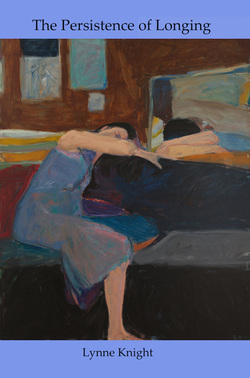
The Persistence of Longing - Lynne Knight (Terrapin Books)

Today's book of poetry:
The Persistence of Longing.  Lynne Knight.  Terrapin Books.  West Caldwell, New Jersey.  2016.


Picture


"What if memory and longing were one,"
                                                                                           - Lynne Knight

Lynne Knight is poet brave in some rather spectacular ways in The Persistence of Longing.  Today's book of poetry doesn't like using the word brave to describe poems but Knight is a Jedi-laser-ray-gun poet who cuts through to the emotional truth with eviscerating effect.

It's so easy to read these robust narrative gems that you might overlook the fact that these poems are rock solid.  Knight is building solid ships and then she sends them out onto dangerous seas.

The Snow Couple

I used to wait at the window for lake-effect snow.
First wind, then a thin smattering of flakes

swirling suddenly white while the village
disappeared and my house with it,

the husband drunk and asleep on the couch
or not yet home, missing as he was in dreams

where I killed him without knowing who it was,
waking to panic that I'd done a thing so horrible,

some night wondering if I really had killed,
the dream so real, as the vanishing house

seemed real while I stared into the silent rush
of snow, never thinking I'd be gone, too, then,

until the night the car smashed the maple tree
at the edge of the lawn, metal crumpling, a horn

unstoppable, then through the snow human cries
so pitiful I grabbed my coat and ran

to my husband, banged up a little, bloodied,
but all right, so I led him inside, I made coffee,

I tended his wounds, wondering If I would
ever awake, if I would ever stop feeling this

snow pour from my hands, my mouth,
covering him, the table, the rising floor.

...

Today's book of poetry was reading Knight's poem "Vessel" which ends with this great line, 

"the boat drifting, the birds continuing their indifferent song."

and I couldn't help but think of Auden and his beautiful "Musee des beaux Arts" and how it conveys such wonder, dread, despair and the on-going dilemma that despite our individual dramas and heartbreaks we remain mere specks of things.

The Persistence of Longing is a catalogue of love and the transgressions that ensue in its name. Knight offers both a tender embrace and a healthy dose of fiery scorn.  Knight isn't playing around, she's ready for love or she's ready to kick the crap out of love, whatever needs must.

Strategy

Wild turkeys swarm the neighbor's bank,
pecking at all the new ivy shoots, Bark!
I tell the dog, who stands statue-mute
staring through the fence. Bark! Even my voice
fails to alarm them. Stupid birds, sauntering
down the road like people, waiting until a car
is almost upon them before straying from danger.
They've probably eaten all the impatiens
by the front gate and mangled the azaleas.
Anything bright, they're on it. The neighbor
left his rhododendrons to die because they take
so much water, and we're in a serious drought,
but one rhodie managed a sole blossom.
I dare one of the turkeys to fly up to it.
They peck and saunter, saunter and peck.
The dog loses interest. I check the time.
Eight minutes, and I haven't thought of you.

...

Today's book of poetry has nothing but admiration for these poems because we can see that Knight is fully committed.  If love requires flames then Knight is all about adding gasoline to the blaze.  She'll fight for love or burn down the house around it to bury it if necessary.  These are survivor poems, hand-and-heart-held-to-the-flame-of-love survivor poems.

Knight's poems are both elegant and sad but she is always right on the beat.  You can feel the heart of these poems as they navigate the dark streets of love.

The Unintended Lecture on Desire

Hard labor was good for you, he said,
and by now sweat splotched his shirt,
his face had runnels of sweat, like the four
of us, two couples ripped rotted shingles
from the house, mid-July, humid, windless,

already my arms ached and the sweat stung
my eyes, but it would be good for me, I knew,
not just in the way he said but because I wanted
to rid my body of desire for him, forbidden
desire, since he was my best friend's husband,

so I slid my hammer to get purchase and pulled
until a shingle loosened, again, again, he said
maybe we should stop for a beer but I wanted
to keep going, I wiped my eyes with the bandana
my own husband handed me, and my best friend

said she didn't want a beer, she wanted a long
hot soak, so I saw the two of them making love
in the hot tub, and I wished we were shingling
the house instead of unshingling it, so I could
hammer, hammer, hammer desire away,

and then he said he'd been reading a book
about perspective, it got a little too technical
in parts but was worth the slog because of
the reminder that no one could see what someone
else saw, think about it, ever this, he said,

even the four of us out here in this bloody heat
ripping shingles I should've ripped five years ago,
not one of us can see what the others see.
I'm here, you're there, he said, and that's all
there is to it: we're alone, we're in this alone.

...

Our morning read has become my favourite part of the day.  Kathryn, our Jr. Editor, led the charge this morning.  Lynne Knight's The Persistence of Longing filled up our office, her emotionally charged yet available voice rang out with piercing poignancy, love-jagged dreams and tales of resiliency, even hope.

Lynne Knight has visited the pages of Today's book of poetry before.  Back in September of 2015 we posted a blog about Ito Naga's I Know (Je Sais) that was translated by Knight.  You can check that out here:


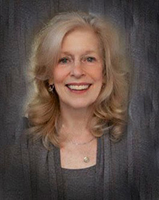
Lynne Knight
Lynne Knight

ABOUT THE AUTHOR
Lynne Knight, a former fellow in poetry at Syracuse University, taught high school English in Upstate New York, then moved to California where she taught part-time at San Francisco Bay Area community colleges and began writing poetry again. She now devotes herself full-time to writing. She is the author of four full-length poetry collections, three of them prize winners, and four chapbooks, three of them also prize winners. Her work has appeared in a number of journals, including Kenyon Review, Poetry, and The Southern Review. Her other awards and honors include publication in Best American Poetry, the Prix de l’Alliance Française 2006, a PSA Lucille Medwick Memorial Award, the 2009 Rattle Poetry Prize, and an NEA grant. Please visit her website.

BLURB
​I love these poems, love how they sweep me along, sweep me up into the arms of the kind of longing that seems unsayable, untranslatable, impossible to describe in any language, with any words—the words turning back into breath, as this poet says, as she creates the sense of that longing, itself, in words, in these sometimes-breathless lines, sometimes against the restraint of form, the sweet ache of rhyme, creating that sense of urgency that’s so like desire, itself, and the sense of danger that infuses even the deepest pleasure, especially the deepest pleasure. I’ve never read poems that seem to me more accurate about love and desire and sexual relationships and their almost-inevitable shattering—darkly gorgeous and expertly-crafted poems, with a white-hot lyric intensity and a narrative pull that becomes cumulative, an erotic veering toward doom. And yet, the persistence of longing is the life force, too, refusing to exhaust itself: How could anything in the universe be undying / when everything rushed forward, trailing light?
     - Cecilia Woloch, author of Carpathia


539

DISCLAIMERS

Poems cited here are assumed to be under copyright by the poet and/or publisher.  They are shown here for publicity and review purposes.  For any other kind of re-use of these poems, please contact the listed publishers for permission.

We here at TBOP are technically deficient and rely on our bashful Milo to fix everything.  We received notice from Google that we were using "cookies"
and that for our readers in Europe there had to be notification of the use of those "cookies.  Please be aware that TBOP may employ the use of some "cookies" (whatever they are) and you should take that into consideration.


Friday, May 6, 2016

New & Selected Poems - W.H. New (Oolichan Books)

Today's book of poetry:
New & Selected Poems.  W. H. New.  Oolichan Books.  Fergie, British Columbia.  2015.


New & Selected Poems by the distinguished W.H. (Bill) New is the book of poetry everyone in Canada should take to the cottage for the summer.  This is stuff you want to go back and browse like a catalogue full of goodies.

In it you will find highlights from these fine books:

Science Lessons - 1996
Raucous - 1999
Riverbrook and Ocean - 2002
Night Room - 2003
Underwood Log - 2004
Touching Ecuador - 2006
Along a Snake Fence Riding - 2007
The Rope-makers Tale - 2009
YVR - 2011

Our guy Bill has been nominated for the Governor Generals Award and that doesn't happen by accident.  Today's book of poetry enjoys New's easy calm with language regardless of the form he employs.  Stylistically New ranges far and wide but his rational eagle eye is always in focus and the result is poetry that is always sharp.

That and he can be so humanely tender without making us cringe.

Chemistry

One, Lorna, even to mention her name
causes him to change colour, fires him
into blurted declarations of like. She acts:
he reacts, red and blue as litmus paper
and just as wet. He grins a lot, gawkily,
picks berries with her if he can, flirts
at the edge of touch and gesture,
flushes if others overhear.
In his dream, words like care and kissing
come to him articulate and whole;
awake, he needs a catalyst to say them,
mixes them up, lingers awkwardly till she
places a ripe raspberry on her tongue
and shares with him her taste for bittersweet.

...

Today's book of poetry has told you before how much we love W.H. Auden's "Musee des Beaux Arts" so when W.H. New takes a crack at Icarus in his poem "21.  Safety" we were all ears.  And New does not disappoint.  He has 'the Knowledge'.  New has an old cab driver's understanding of the ins and outs of things, the quickest way to get from one place to another with the smallest fuss.  

21.  Safety

Icarus as a boy played with army
trucks, not frisbees, played cops-&-
robbers, marbles in a ring, not hop-
scotch, kites, addy-addy-I-
over: he watched the ground, held fast
to things -- water, earth -- turning away
from dangerous fire & insubstantial air.

You'd have forecast for him an ordinary job --
something that kept his hands occupied,
farm irrigation, yard work in the maze,
something that gave him the lie of the land,  But he held
fast because of the gnawing away: it was always
there, & the first leap up he was vulnerable --
monster on one side, father on the other,

alternating tales of damnation &
derring-do -- inexorably, flame drew him,
& air appeared to hold him up: what
the old stories never tell is whether
he regretted choosing, or lived finally
only at the point of falling, knowing at last the difference
between fear and safety, tumbling into the sea.

...

Today's book of poetry is convinced of the deep and generous heart at the centre of W.H. New's New and Selected Poems.  Robert Kroetsch has called New "the flaneur" and he is right on.  These observational poems all point in one direction and we here at Today's book of poetry believe that direction is hope - we took an office survey at this morning's reading.

Darwin's Tulip

she talks of things she no longer sees,

fine print,
petitpoint,
thin lines--

listening,
you watch her lift fog from the river,

one hand brushing away the blur

                    *
presence: the scent of
roses in an empty room, the way

bedclothes fold against
bare skin

                   *
listening for what the ear cannot
tell you: the rumpled sea, the halfmoon

shoot of a Darwin's tulip, the first

                   *
drawing a line in air, water, sand:
this far and--
                     oh--

where did it go--
              the river, the wind--

...

"I Want To Talk About You" is blaring from one corner of our office to the other on this rather spectacular sunny spring morning here in the nation's capital.  We have deep, deep respect for Saint John of Coltrane.  One of the best things about running your own operation is having control of the music situation.  Of course I usually let the minions have their way -- but I do remind them from time to time of the classics.  

Books like W.H. New's New & Selected Poems makes our job a cinch.


W.H. (Bill) New

ABOUT THE AUTHOR
W. H. (Bill) New retired in 2003 as University Killam Professor at the University of British Columbia. A native of Vancouver, he earned an M.A. in Canadian Literature from UBC in 1963. In 1966 he was awarded his PhD from the University of Leeds, where he specialized in the English-language literatures of the Commonwealth. He then returned to the University of B.C. to set up a Commonwealth/ Postcolonial Literatures program.

Honoured by the Killam Research and Teaching Prizes (1988, 1996), the Gabrielle Roy Award (1988), the Jacob Biely Prize (1995), the Association of Canadian Studies Award of Merit (2000), and the CUFA Award for Career Achievement (2001), he was elected to the Royal Society of Canada in 1986. In 2004 he was awarded the Governor General’s International Award for Canadian Studies and the Lorne Pierce Medal for his contributions to critical and creative writing. He has taught or lectured in Australia, China, France, Germany, India, Italy, New Zealand, Spain, the UK, and the USA. In 2002, The University of Toronto Press published his Encyclopedia of Literature in Canada. It has been praised in Canada and the UK for its innovative perspective and described in France as indispensable. In 2006 he was awarded the Order of Canada. Recently he received the 20th Annual George Woodcock Lifetime Achievement Award.


468

DISCLAIMERS

Poems cited here are assumed to be under copyright by the poet and/or publisher.  They are shown here for publicity and review purposes.  For any other kind of re-use of these poems, please contact the listed publishers for permission.

We here at TBOP are technically deficient and rely on our bashful Milo to fix everything.  We received notice from Google that we were using "cookies"
and that for our readers in Europe there had to be notification of the use of those "cookies.  Please be aware that TBOP may employ the use of some "cookies" (whatever they are) and you should take that into consideration.