Showing posts with label terrapin books. Show all posts

Thursday, March 7, 2019

Travel Notes from the River Styx - Susanna Lang (Terrapin Books)

Today's book of poetry:
Travel Notes from the River Styx.  Susanna Lang.  Terrapin Books.  West Caldwell, New Jersey.  2017.
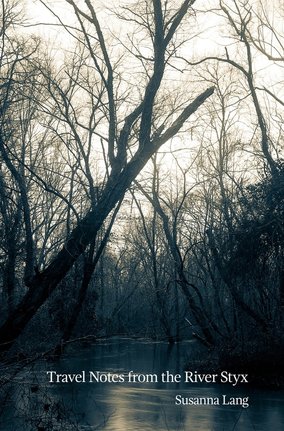
Picture

Today's book of poetry's first impression of Susanna Lang's Travel Notes from the River Styx is of a haunting, a ghost trail, a ghost voice.  Or perhaps it is just affectionate trepidation.  But Lang's poems get between your fingers and toes like mud or mist, flowing where they want.  These poems are not incantations but they are certainly precarious spells of some kind.

And Susanna Lang really hammer and tongs our hearts when she brings out the big guns, Saint Anna Akhmatova, our beloved, on to the playing field.  Travel Notes from the River Styx entertains, if that's the word we want to use, but it comes at a price.  The entertainment marches along with dread.  And then the crafty Lang drops a Ben Sidran moment on the readers and we go limp with surprise and joy.  Susanna Lang must possess a wicked sense of humour under her cheeky smirk.

Migration

   1.
Wind empties the sky of all but its own force, carries
a concrete dock from Misawa

five thousand miles across the ocean, encrusted with thirty species 
not seen before on this side of the world:

sea stars, urchins, gooseneck barnacles, snails, seaweed, kelp,
shore crabs—but not like ours, creatures

that have survived the winds and deep water; curls and ribbons,
protruding eyes and tongues

the color of blood. We bury the lot eight feet under sand
and higher than a storm would surge.

Starved of salt water, they'll none of them live; or
so we hope.


   2.
I sleep in one country, wake in another, dream and daydream in two
languages, lose words in both.

This year the heat comes early, frost comes late, burns the blossoms
on the trees, blights the harvest—

apples, cherries, apricots, all the stone fruit. But in the backyard
of a brick two-flat on the southwest side of the city

small green knobs hang half-hidden in the leaves, until birds
come to ravish them:

durazno in the language of the house, momo in the language
of the dock, a sweetness in the air.

Losing ground, losing home, only the blur of wings
and that fragrance.


   3.
RED ROJO written in chalk on the sidewalk, GREEN VERDE
and a goldfinch

singing in the tree above, returned from its yearly journey.
My family came to stay

but not in one place. One country, too many cities.
I found a clamshell yesterday

by the backyard fence, where it should not have been;
but there have been others.

My real country is not a place, the monk says when he is expelled
from the country where he has lived

for decades, though he cannot forget the desert and its fragile icons.
My real country is heaven.

💫💫💫

Today's book of poetry wants to tell you how Susanna Lang sustains such a solid presence with these poems  Travel Notes from the River Styx is a full seven course meal that satisfies at every turn.  The appetizers are engaging, the soup as fine as your favourite grandmother used to make.  The main course is varied, filling, solid and rewarding.  Dessert a surprising dollop.  All of this to say that Susanna Lang can burn.  And you know how much we love that here at Today's book of poetry.

Another sure sign that Susanna Lang's Travel Notes from the River Styx is worth your poetry time is that almost every poem in this tasty collection has already been published in a literary magazine that we all want to appear in.

Languorous forces and a memory for the ages.  Lang jumps over those Russian steppes and her grandparents history in poems rich with irony, fear and hope.  Today's book of poetry is always happy to find the hope element.  Much like Lynne Knight (our last blog/review was of Knight's The Language of Forgetting), Lang evokes memory, calling upon it to reveal some truths for the present.

After You Get Up Early on Memorial Day

You take the cats out with you, shut
the door: I have the whole wide bed, all
the covers to fall back asleep in, while you
cut up and sugar the strawberries, grind
the coffee, leave the radio off
so I won't be disturbed. The room is still
dark, rain forecast for the entire day,
other people's family picnics cancelled,
barbeques moved into basements, parades
rerouted to avoid flooded viaducts, the iris
losing petals beside newly cleaned graves,
their mason jars spilt into the saturated ground.
But here is my holiday, this drift back beneath thought
while I lie in the warm impression of your body.

💫💫💫

Our morning read reflected an office in flux.  Today's book of poetry has been undergoing some major changes and apologizes once again for our recent tardiness.  Steps are being put in place to correct those issues.  None the less, Travel Notes from the River Styx is just the bromide needed to start our poetry engine and yours.

Susanna Lang, the storyteller, reminds Today's book of poetry of Saint Alistair of MacLeod, if he were writing poetry.  Disguised as poems, Lang's stories inhabit the reader, memory lurks at every turn.  Lang is working towards a conclusion, each poem another solid addition to her platform, a foundation forged in another time.

Lexicon

My father, who studied these things, would have said
that we become more so as we grow older.
I don't know if he invented the phrase or borrowed it
from one of the books he read and handed on to me
before I was ready; but more so became a word
in our family, a way to explain my mother
shifting the vase half a centimeter to its predetermined
place on the end table, or our friend whose skin
after the heart attack let the light through.
We collected words, like child of God
which meant the way Sister Ann pulled Rene downstairs
by his ear, reminding herself and everyone in earshot of where
we all come from and how to love what fights against us.
Or heron, which meant so much more than the blue-gray
shadow that flew over the canal we insisted on calling
a river, meant afternoons on real rivers up north and Sundays
at the natural history museum, the living bird's crooked neck
and long beak so like the artist's rendering of what flew
above this place in the beginning. It's enough to make you believe
in a Garden of Eden, if you can imagine an Eden
that grows and changes, perennials coming in more thickly,
roses a deeper hue than they were before, but the beds
still marked. And now a previously unknown species of tailorbird
has been discovered in a suburban tree, vibrating
with its own song, new cap on its head, new name
in the books. We still need a word for the primate
that loosened up its shoulders like a slingshot, ready to throw
what would one day be called a fastball, my father
sitting in the stands with my brother, one face reminiscent
of the other, both cheering for the pitcher and his evolving arm.

💫💫💫

So, in conclusion.  We have discovered, much to our delight, that Susanna Lang can burn, baby, burn.  You all know how much we like that here at Today's book of poetry.
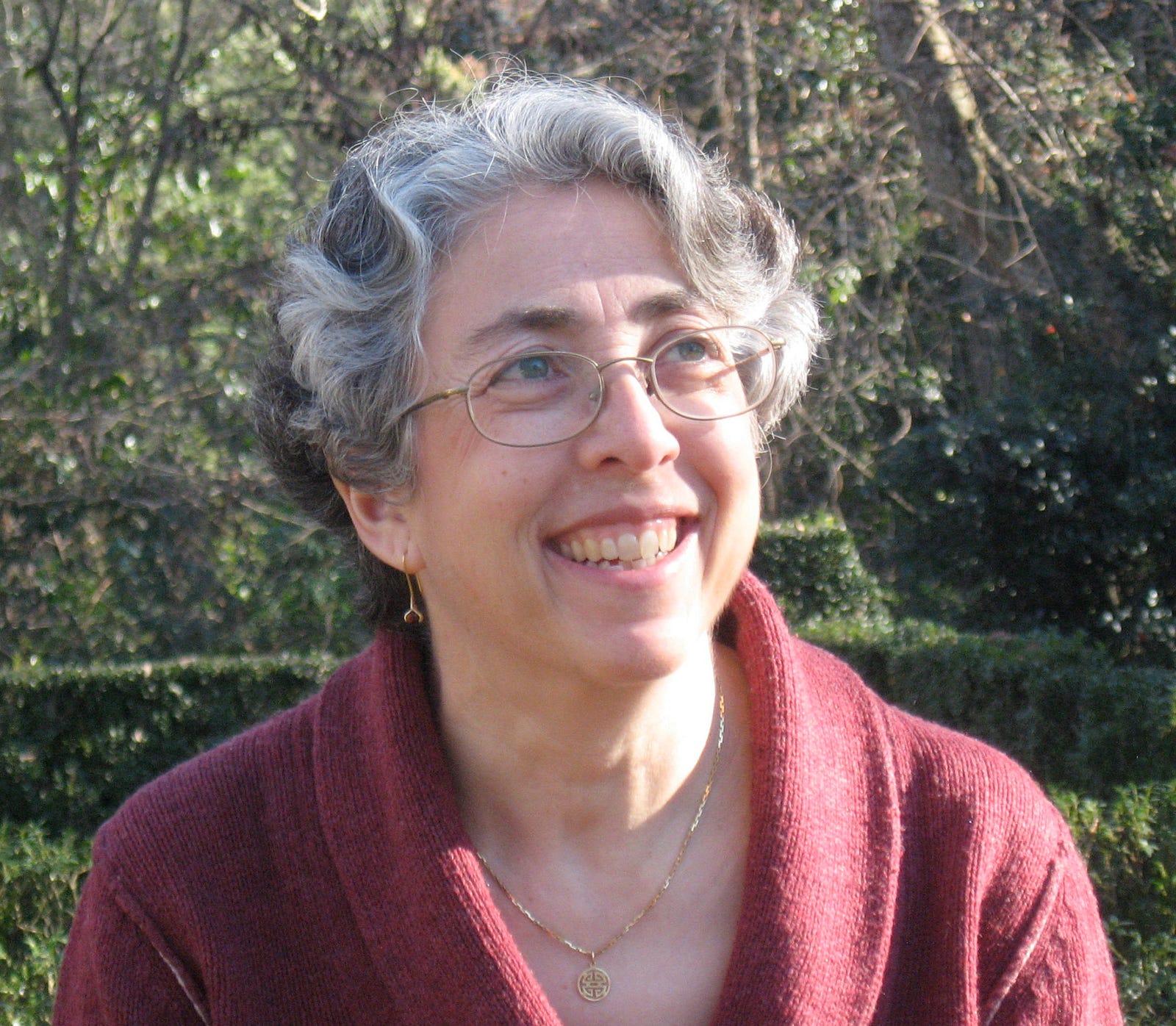

Susanna Lang

ABOUT THE AUTHOR
Susanna Lang is the author of Tracing the Lines (Brick Road Poetry Press, 2013) and Even Now (The Backwaters Press, 2008). She has also published two collections of her translations of poems by Yves Bonnefoy, Words in Stone (University of Massachusetts Press, 1976) and The Origin of Language (George Nama, 1979). A two-time Hambidge Fellow and recipient of the Emerging Writer Fellowship from the Bethesda Writer's Center, she has published her poems and essays in such journals as New Letters, Prairie Schooner, Green Mountains Review, and Poetry East. She lives in Chicago, where she teaches in the Chicago Public Schools.

BLURB
In the earnest and beautiful Travel Notes from the River Styx, Susanna Lang peers into the tiny mirrors of a river’s current, the mirror her father cannot see himself in, the rearview mirror in which she spies sandhill cranes on an afternoon drive as she interrogates the natural and, at times, unnatural world. The result is a collection of double images: the moon a “copper coin with the sheen worn off,” “the flag [that] slips down the pole,” the country where her grandmother was born once called Russia, now Ukraine. As clear in its language as it is rich in argument, there’s something for everyone in Travel Notes, for travelers are exactly what this poet proclaims we are. It’s impossible to read this collection without wondering what doubles wait/lurk/reside beneath the skin of our bodies and of our world.
     —Andrew McFadyen-Ketchum

terrapinbooks.com


SPECIAL NOTICE:

Today's book of poetry would like to give a shout out to Steven Heighton, our Canadian colleague, who has been recently named as one of four finalists for the Moth Poetry Prize.  You can get more information about that here:

Today's book of poetry sends our best wishes and all our crossed fingers for Mr. Heighton.


742

DISCLAIMERS

Poems cited here are assumed to be under copyright by the poet and/or publisher.  They are shown here for publicity and review purposes.  For any other kind of re-use of these poems, please contact the listed publishers for permission.
We here at TBOP are technically deficient and rely on our bashful Milo to fix everything.  We received notice from Google that we were using "cookies"
and that for our readers in Europe there had to be notification of the use of those "cookies.  Please be aware that TBOP may employ the use of some "cookies" (whatever they are) and you should take that into consideration

Thursday, June 14, 2018

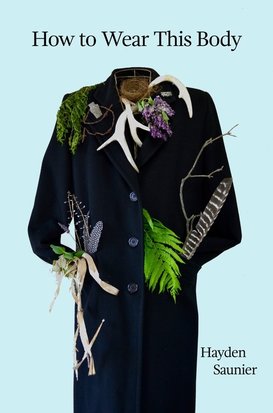
How to Wear This Body — Hayden Saunier (Terrapin Books)

Today's book of poetry:
How to Wear This Body.  Hayden Saunier.  Terrapin Books.  West Caldwell, New Jersey.  2017.

Picture

Is it fair to call poetry reasonable?  Hayden Saunier writes poetry that makes a very convincing case out of reason, gentle reason at that.  Relationships happen and Saunier has plenty to say about them—
and about how to "stay alive" in this world.

As Christopher Bursk (author of The Improbable Swervings of Atoms) suggests, Saunier shows us "how to live on this planet."  Saunier connects us.

Hard Facts

To stay alive do not resist
that's what you're told

as if it were a simple act to make yourself
be only meat

and bone
pressed down into an asphalt street

and not a form of suicide
erase yourself be dead enough

that he or she or they'll decide
there is no need to kill you

though do not resist
can make no guarantee of this

but if you stay alive
do not resist will mean you have to stand

your dead self up
walk out into the world alive

which is another kind of death
and harder every single time

you have to kill enough
(do not resist) to stay alive.

...

Today's book of poetry thoroughly enjoyed ambling through How to Wear This Body.  Hayden Saunier is easy to feel at home with.  Yet, from somewhere deep below the reader can't help but sense the spirit of Carson McCullers dancing behind the scenes.  McCullers always knew more than she revealed, she knew what was in the dark, untended corner of the room. McCuillers' once said that "there's nothing that makes you so aware of the improvisation of human existence as a song unfinished. Or an old address book." 

It's not that Saunier ever has the catastrophic arms of fate swinging for the fences but deep below the surface of these poems, you can feel the "undertoad."

Hayden Saunier is one smooth character.  Most of these poems ring familiar, not because we've seen them before, but because they accurately catch the rhythms that sustain us.

Hard Facts

She's cleaning fish.
Old rivers of raised veins
twist down her forearms
through networks of scars
down her wrists to the roots
of her fingers, the palms of
her hands, her arms
rest on the workbench a moment,
this woman who could be
any woman on the lee
side of any harbor
where there's been war.
She picks up a bone-handled
blade from the workbench,
scrapes guts into buckets,
flicks bits of shine from her
fingertips, and I wonder
how long, if at all, it took
before she could pick up a knife,
and knife, in her hands cut
by knives, but the answer,
I venture, like the answer
to everything else, is —
it depends on how hungry you get.

...

Saunier has no trouble with putting it out there, "Hard Facts" is a good case in point.  But Saunier can also contemplate and savor, her poem "Asparagus" is almost as crisp and tasty and tender as the real thing.

Our morning read was another slightly subdued affair.  Today's book of poetry is having a hard poetry week. Today's book of poetry will be in Toronto this weekend for the funeral of David McFadden, Canadian poetry giant and one of my heroes.

But our hearts are heavier still.  Stephen Reid (writer/bank-robber), died earlier this week.  Stephen Reid was the husband of Susan Musgrave.  Our regular readers will know it already, but Today's book of poetry's esteem for Musgrave knows no bounds.  She is one of Canada's finest poets.  Today's book of poetry sends our deepest condolences to Ms. Musgrave and her entire family.

Our staff did get down to business and gave Hayden Saunier's How to Wear This Body a proper Today's book of poetry reading.  Our dear friend Alexandre added his accent to the proceedings which lent an international feel to the event.  We did Hayden Saunier proud.

Accrual

Some nights my mind still tries
to peel away squares of blackened paper
from the old-fashioned kiosk

of my spinal column, photographs
and placards posted by the body
behind the mind's back, years ago,

glued with spit and wheat paste.
Images gone, titles gone,
all part of the whole

structure now, hardened,
darkened, their weight subsumed
into frame. The way a tree grows

first around, then through, barbed
wire, or folds the small grey marble
headstone of a child into its

knotted roots. Such heaviness
our bones haul in and hold inside.
No wonder we can't fly.

...

Today's book of poetry must apologize to Hayden Saunier as we were a bit distracted this week.  Saunier's poetry deserves the readers full attention.

Image result for hayden saunier photo

Hayden Saunier

ABOUT THE AUTHOR
Hayden Saunier is the author of three poetry collections, Tips for Domestic Travel (Black Lawrence Press, 2009) a St. Lawrence Award Finalist, and Say Luck (Big Pencil Press, 2013), which won the 2013 Gell Poetry Prize. She is also the author of a chapbook, Field Trip to the Underworld (Seven Kitchens Press, 2012), winner of the Keystone Chapbook Award. Her work has been published in such journals as Beloit Poetry Journal, Nimrod, Southern Poetry Review, Tar River Poetry, and Virginia Quarterly Review. Her work has also been featured on Verse Daily and has been awarded the 2011 Pablo Neruda Prize, the 2011 Rattle Poetry Prize, and the 2005 Robert Fraser Award. A poet, actor, and teaching artist, she holds an MFA from the Bennington Writing Seminars and lives on a farm in Bucks County, Pennsylvania.

BLURB
The interconnectedness of everything on earth, how we belong to it all, how permeable boundaries are between us and the natural world, how things sing and what they sing of are rendered with aching acuity. Whether a poem’s focus shines on a “rump sprung sofa,” a turkey vulture, or dazzling autumn trees described as “sugar maple drama queens,” even evanescence becomes rich and luminous in these poems. This is a gorgeous, precise and deeply graceful collection.
     — Amy Gerstler


Hayden Saunier
"Where Poetry Begins"

Video: Serenity Bishop


697

DISCLAIMERS

Poems cited here are assumed to be under copyright by the poet and/or publisher.  They are shown here for publicity and review purposes.  For any other kind of re-use of these poems, please contact the listed publishers for permission.
We here at TBOP are technically deficient and rely on our bashful Milo to fix everything.  We received notice from Google that we were using "cookies"
and that for our readers in Europe there had to be notification of the use of those "cookies.  Please be aware that TBOP may employ the use of some "cookies" (whatever they are) and you should take that into consideration
Thursday, January 12, 2017

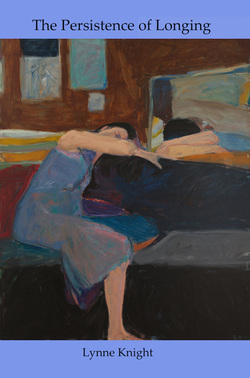
The Persistence of Longing - Lynne Knight (Terrapin Books)

Today's book of poetry:
The Persistence of Longing.  Lynne Knight.  Terrapin Books.  West Caldwell, New Jersey.  2016.


Picture


"What if memory and longing were one,"
                                                                                           - Lynne Knight

Lynne Knight is poet brave in some rather spectacular ways in The Persistence of Longing.  Today's book of poetry doesn't like using the word brave to describe poems but Knight is a Jedi-laser-ray-gun poet who cuts through to the emotional truth with eviscerating effect.

It's so easy to read these robust narrative gems that you might overlook the fact that these poems are rock solid.  Knight is building solid ships and then she sends them out onto dangerous seas.

The Snow Couple

I used to wait at the window for lake-effect snow.
First wind, then a thin smattering of flakes

swirling suddenly white while the village
disappeared and my house with it,

the husband drunk and asleep on the couch
or not yet home, missing as he was in dreams

where I killed him without knowing who it was,
waking to panic that I'd done a thing so horrible,

some night wondering if I really had killed,
the dream so real, as the vanishing house

seemed real while I stared into the silent rush
of snow, never thinking I'd be gone, too, then,

until the night the car smashed the maple tree
at the edge of the lawn, metal crumpling, a horn

unstoppable, then through the snow human cries
so pitiful I grabbed my coat and ran

to my husband, banged up a little, bloodied,
but all right, so I led him inside, I made coffee,

I tended his wounds, wondering If I would
ever awake, if I would ever stop feeling this

snow pour from my hands, my mouth,
covering him, the table, the rising floor.

...

Today's book of poetry was reading Knight's poem "Vessel" which ends with this great line, 

"the boat drifting, the birds continuing their indifferent song."

and I couldn't help but think of Auden and his beautiful "Musee des beaux Arts" and how it conveys such wonder, dread, despair and the on-going dilemma that despite our individual dramas and heartbreaks we remain mere specks of things.

The Persistence of Longing is a catalogue of love and the transgressions that ensue in its name. Knight offers both a tender embrace and a healthy dose of fiery scorn.  Knight isn't playing around, she's ready for love or she's ready to kick the crap out of love, whatever needs must.

Strategy

Wild turkeys swarm the neighbor's bank,
pecking at all the new ivy shoots, Bark!
I tell the dog, who stands statue-mute
staring through the fence. Bark! Even my voice
fails to alarm them. Stupid birds, sauntering
down the road like people, waiting until a car
is almost upon them before straying from danger.
They've probably eaten all the impatiens
by the front gate and mangled the azaleas.
Anything bright, they're on it. The neighbor
left his rhododendrons to die because they take
so much water, and we're in a serious drought,
but one rhodie managed a sole blossom.
I dare one of the turkeys to fly up to it.
They peck and saunter, saunter and peck.
The dog loses interest. I check the time.
Eight minutes, and I haven't thought of you.

...

Today's book of poetry has nothing but admiration for these poems because we can see that Knight is fully committed.  If love requires flames then Knight is all about adding gasoline to the blaze.  She'll fight for love or burn down the house around it to bury it if necessary.  These are survivor poems, hand-and-heart-held-to-the-flame-of-love survivor poems.

Knight's poems are both elegant and sad but she is always right on the beat.  You can feel the heart of these poems as they navigate the dark streets of love.

The Unintended Lecture on Desire

Hard labor was good for you, he said,
and by now sweat splotched his shirt,
his face had runnels of sweat, like the four
of us, two couples ripped rotted shingles
from the house, mid-July, humid, windless,

already my arms ached and the sweat stung
my eyes, but it would be good for me, I knew,
not just in the way he said but because I wanted
to rid my body of desire for him, forbidden
desire, since he was my best friend's husband,

so I slid my hammer to get purchase and pulled
until a shingle loosened, again, again, he said
maybe we should stop for a beer but I wanted
to keep going, I wiped my eyes with the bandana
my own husband handed me, and my best friend

said she didn't want a beer, she wanted a long
hot soak, so I saw the two of them making love
in the hot tub, and I wished we were shingling
the house instead of unshingling it, so I could
hammer, hammer, hammer desire away,

and then he said he'd been reading a book
about perspective, it got a little too technical
in parts but was worth the slog because of
the reminder that no one could see what someone
else saw, think about it, ever this, he said,

even the four of us out here in this bloody heat
ripping shingles I should've ripped five years ago,
not one of us can see what the others see.
I'm here, you're there, he said, and that's all
there is to it: we're alone, we're in this alone.

...

Our morning read has become my favourite part of the day.  Kathryn, our Jr. Editor, led the charge this morning.  Lynne Knight's The Persistence of Longing filled up our office, her emotionally charged yet available voice rang out with piercing poignancy, love-jagged dreams and tales of resiliency, even hope.

Lynne Knight has visited the pages of Today's book of poetry before.  Back in September of 2015 we posted a blog about Ito Naga's I Know (Je Sais) that was translated by Knight.  You can check that out here:


Lynne Knight
Lynne Knight

ABOUT THE AUTHOR
Lynne Knight, a former fellow in poetry at Syracuse University, taught high school English in Upstate New York, then moved to California where she taught part-time at San Francisco Bay Area community colleges and began writing poetry again. She now devotes herself full-time to writing. She is the author of four full-length poetry collections, three of them prize winners, and four chapbooks, three of them also prize winners. Her work has appeared in a number of journals, including Kenyon Review, Poetry, and The Southern Review. Her other awards and honors include publication in Best American Poetry, the Prix de l’Alliance Française 2006, a PSA Lucille Medwick Memorial Award, the 2009 Rattle Poetry Prize, and an NEA grant. Please visit her website.

BLURB
​I love these poems, love how they sweep me along, sweep me up into the arms of the kind of longing that seems unsayable, untranslatable, impossible to describe in any language, with any words—the words turning back into breath, as this poet says, as she creates the sense of that longing, itself, in words, in these sometimes-breathless lines, sometimes against the restraint of form, the sweet ache of rhyme, creating that sense of urgency that’s so like desire, itself, and the sense of danger that infuses even the deepest pleasure, especially the deepest pleasure. I’ve never read poems that seem to me more accurate about love and desire and sexual relationships and their almost-inevitable shattering—darkly gorgeous and expertly-crafted poems, with a white-hot lyric intensity and a narrative pull that becomes cumulative, an erotic veering toward doom. And yet, the persistence of longing is the life force, too, refusing to exhaust itself: How could anything in the universe be undying / when everything rushed forward, trailing light?
     - Cecilia Woloch, author of Carpathia


539

DISCLAIMERS

Poems cited here are assumed to be under copyright by the poet and/or publisher.  They are shown here for publicity and review purposes.  For any other kind of re-use of these poems, please contact the listed publishers for permission.

We here at TBOP are technically deficient and rely on our bashful Milo to fix everything.  We received notice from Google that we were using "cookies"
and that for our readers in Europe there had to be notification of the use of those "cookies.  Please be aware that TBOP may employ the use of some "cookies" (whatever they are) and you should take that into consideration.