Showing posts with label susan musgrave. Show all posts

Sunday, March 17, 2019

Linger, Still — Aislinn Hunter (Gaspereau Press)

Today's book of poetry: 
Linger, Still.  Aislinn Hunter.  Gaspereau Press.  Kentville, Nova Scotia.  2017.


Today's book of poetry sent Milo, our head tech, to the stacks yesterday before we all headed for home.  Today's book of poetry was almost certain we'd read something from Aislinn Hunter before.  And we were right.  Milo returned with a very smart looking Possible Past (Polestar Book Publishers, 2004) by Hunter.  Today's book of poetry gave it a quick perusal that turned into a full sit-down reread.  Possible Past is cherce.

Today's book of poetry liked Aislinn Hunter's poetry fifteen years ago.  Now we are ready to go stark raving mad with glee when we tell you that with Linger, Still, Hunter has entered sacred territory.  Linger, Still is Nora Gould good, Sue Goyette good, even Saint Susan of Musgrave splendid.  Today's book of poetry bloody loves it!

Aislinn Hunter has the wisdom, the knowledge, the secret, the magic - need we say more?  Hunter can burn your kitchen black and blue.  Linger, Still is vividly entertaining from the first page, the first poem.  And Aislinn Hunter has concerns that are very dear to Today's book of poetry.  Hunter's poems ask us how to be good people.  What could be more noble than that.

Northwestern Salamander Eggs Preserved in a Jar

A hundred slow curtsies
in filmy skirts
upends us, returns us,
briefly, to ourselves.
The jar held up to the window,
clutch of eggs swaying in the light.
A dance that goes back millennia,
that once saw
Simon Fraser's paddle
dip down through green
streaming chandeliers
on his way to a river
that would one day
forge his name.

Each egg a bathysphere—
a pip-sized possibility,
a helmet diver, scooped
with the stick it was moored on,
out of the wind-stirred stream.
How clear it is here
in the filigreed cloud of this
ancient bedding,
to see that being born is the rarity—
to see how the odds are stacked
against navigation—
to marvel at the possibility
of arrival, at how anything
becomes anything
at all.

πŸ‘πŸ‘πŸ‘

We've all had that one teacher that seemed to be talking directly to us, Aislinn Hunter is that poet.  Linger, Still is an intimate sharing.  Hunter has captured what we need to know and shares it with us, the other tender animals.

Aislinn Hunter is prescient.  She answers to questions you are just starting to think about.  Linger, Still is a wondrous construction.  Hunter has no problem putting the reader in Russia and making the reader feel familiar, comfortable with new knowledge.  Russia or Newfoundland, Hunter has the maps to the secret corridors of the world and shares her familiar with us.

Linger, Still is, as Hunter intones "in this rarefied air."  Today's book of poetry asserts that Hunter and her poetry are in rarefied air.  It's easy to be excessive when you like a book of poetry as much as Today's book of poetry likes Linger, Still.  It is hard to maintain any sort of objectivity.  We'll stake our reputation on Hunter's humility but these poems remind Today's book of poetry of the voice of Michel de Montaigne himself.  

Today's book of poetry just wants more of whatever Ms. Hunter is willing to put on a page.  This is marvelous poetry.

Her Husband Takes Leave of Her With His Usual Courtesy

Her neighbours finger the sleeves of family life
as if it were a well-made coat.

And yes, she has decent husband, a marvelling child,
an abacus that clicks bead after bead into place.

So what of honesty? Of what's announced
and what gets pared away?

Even the Egyptians weighed the heart against
enumerations of innocence:

I have not mistreated cattle, I have not robbed the poor
or held back water in its season.

Rules of etiquette Anna finds
in The Book of the Dead.

I have not caught fish in their ponds,
I have not snared birds in the reeds of the gods,

I have not sinned in the Place of Truth.

And once, at least, I stood there.

πŸ‘πŸ‘πŸ‘

Today's book of poetry will happily follow Aislinn Hunter to Russia or Scotland or any other place on earth her poetry map takes her.  We know ranting turns into unwelcomed noise if you let it so we will try to be reasonable.

Linger, Still is Canadian poetry of the highest order.  Our only issue with Hunter is that we need to see more of her poetry.  Reason and beauty don't have to adversaries, Aislinn Hunter's poetry says so.

Central American Squirrel Monkey, Male Skeleton,
From the Suffield Experimental Station, Alberta, 1951

How to do death better?

The squirrel monkey
has three kinds of call:
squeals, whistles, chirps.

A black cap, long red tail,
largest brain of any primate,
relative to body size.

Sprayed with sarin, one monkey
convulsed at six minutes
and died at twenty-nine.

What does that interval,
that Suffield winter,
look like to you?

This plush little bit
of history, these yellow bones
set, this morning,

against a backdrop
of a CBC radio documentary
on beheadings.

This monkey's skull
is the diameter
of an elaborate

men's wristwatch:
dial-less eyes, one of time's
teeth missing.

It's like a horror-of-war
film, except here
someone has stopped to pen

a set of numbers
in fine black ink
above his socket.

His body
flayed clean
down to his hands—

to two cuffs
of copper fur,
like those worn

by kings.

πŸ‘πŸ‘πŸ‘

Aislinn Hunter should be a name we all know.  Linger, Still should be read by each and every one of you.  You will thank Today's book of poetry.
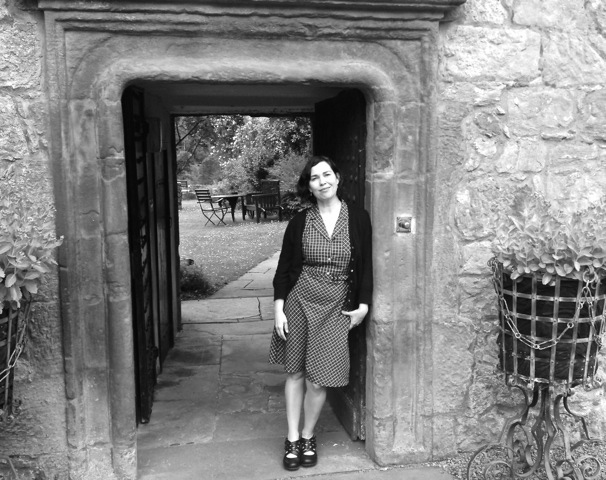

Aislinn Hunter

ABOUT THE AUTHOR
Aislinn Hunter is a poet, essayist, and novelist. She is the author of six books, including the novel The World Before Us, which won the Ethel Wilson Prize. She lives in British Columbia.


gaspereau.com

744
DISCLAIMERS

Poems cited here are assumed to be under copyright by the poet and/or publisher.  They are shown here for publicity and review purposes.  For any other kind of re-use of these poems, please contact the listed publishers for permission.
We here at TBOP are technically deficient and rely on our bashful Milo to fix everything.  We received notice from Google that we were using "cookies"
and that for our readers in Europe there had to be notification of the use of those "cookies.  Please be aware that TBOP may employ the use of some "cookies" (whatever they are) and you should take that into consideration


Thursday, January 17, 2019

The Holy Nothing - Jessica Hiemstra (Pedlar Press)

Today's book of poetry:
The Holy Nothing.  Jessica Hiemstra.  Pedlar Press.  St. John's, Newfoundland and Labrador.  2016.

holynothing.jpg

Reading Jessica Hiemstra's The Holy Nothing is exactly the poetry tonic needed by Today's book of poetry.  Some poets know how to cut right to the chase, hit the ground running.

Today's book of poetry just returned from an epic journey to the jowls of southern California and we were feeling a little poetry skeptical.  A little poetry jaded even.  All those highways outside and inside of Los Angeles is enough to put the fear in you.

Jessica Hiemstra is precisely the way to go.  In one of her poems Hiemstra has Irene's grandfather warming his wife's earrings in a moment so sweet and perfect that Today's book of poetry had a jaw drop moment.  Yes, yes, yes, but don't for one second think that Hiemstra is serving up treacle.  This stuff is pure.

The Holy Nothing will go a long way in proving Hiemstra to be one of those smart voices we need to hear from.  Canadian poetry needs this kind of voice in its choir.  

Jessica Hiemstra knows how hard and dark the world can be and she is willing to take you there.  One minute your warm heart glows with tenderness, the next, not so tender at all.

Haloes

There are haloes
around light switches
elevator buttons. We touch
and take something, leave something.
Smudge of oil, fleck of paint.

I hold my heart, its worn
marble steps. Can you see it,
the dog moon halo of men
who paced here, pressed here,
took something, left me
nearly holy?

πŸ’«πŸ’«πŸ’«

Jessica Hiemstra is great with a pencil, The Holy Nothing is riddled with excellent sketches and drawings by the poet, all of them quite lovely.  Today's book of poetry admired the drawings - but adored the poems.

With The Holy Nothing Jessica Hiemstra has found that sore spot we all have when we've lost someone very important, she strums that nerve as though she were Johnny Cash, diet-pill rapid and ripped, beating the bejesus out of his wooden box of a guitar.  Hiemstra has fine tuned that minor chord we bellow when we are all singing that song "loss."

Not sure how Hiemstra quite pulls it off but underlying all that turmoil, grief and leaving, there is an undercurrent of hope, a rim of possible light breaking crisp on the newly forming horizon.  It is not all grim.

Grace

I balance on silence in my skis
after lunch. Snow's not rain.
Love's not grace. I suppose

what I wanted was grace,
a version of atonement
that required nothing of me.

Of course I forgive you,
that was never a question.

Spring comes and means
nothing, but it's still holy.

πŸ’«πŸ’«πŸ’«

Today's book of poetry was enthralled by The Holy Nothing, we knew after the first poem, just like after taking the first bite of a new recipe, all tasty hopeful, we were hooked.  The Holy Nothing didn't let us down.  

Our morning read was an unrehearsed pleasure.  Kathryn, our Jr. Editor, took the lead and assigned each of us our poems.  Kathryn said that these poems "tasted copper, tasted blood."  If Kathryn was meaning that they felt real and true then she was right on track.

How about this one:  Jessica Hiemstra's The Holy Nothing reads smart like Sue Goyette, tender like Wendell Berry and smartdark like Saint Susan of Musgrave.

Abuse

Angry that his donkey got into a feed sack
a farmer in South America
poured gasoline on her and lit a match.

She ran blazing, ears back, circled home,
winded and raw. He was tender
with his salve, cursed himself
for cursing her.

πŸ’«πŸ’«πŸ’«

Milo, our head tech, came up empty-handed after I'd sent him into the stacks to see if we had either of Jessica Hiemstra's earlier books of poetry.  Well, there's another name to add to our list of book searches.

Strong and smart always go a long way here at Today's book of poetry.  The Holy Nothing is pure petrol for your poetry engine.  High test.

Image result for jessica hiemstra photo

Jessica Hiemstra

ABOUT THE AUTHOR
Jessica’s widely published in literary journals and has edited anthologies of poetry, stories and essays. She’s won several awards for her poetry, and every time she finds the right words she’s surprised and happy.   At the moment Jessica’s writing from the second story of a little beige house in Toronto. She’s at work on a novel alongside her poems, paintings and drawings. 

BLURB
"Hiemstra’s vulnerability and her resilience are palpable throughout this volume, and she addresses hard personal and universal truths with a relentlessly straightforward honesty. It is this honesty that makes her collection so compelling." 


Jessica Hiemstra
Tree Reading Series, Ottawa
26 January 2016
Video: Tree Reading Series


730
Poems cited here are assumed to be under copyright by the poet and/or publisher.  They are shown here for publicity and review purposes.  For any other kind of re-use of these poems, please contact the listed publishers for permission.

We here at TBOP are technically deficient and rely on our bashful Milo to fix everything.  We received notice from Google that we were using "cookies"
and that for our readers in Europe there had to be notification of the use of those "cookies.  Please be aware that TBOP may employ the use of some "cookies" (whatever they are) and you should take that into consideration.


Thursday, June 14, 2018

How to Wear This Body — Hayden Saunier (Terrapin Books)

Today's book of poetry:
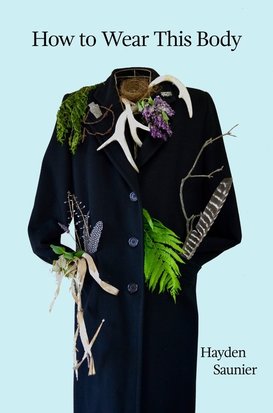
How to Wear This Body.  Hayden Saunier.  Terrapin Books.  West Caldwell, New Jersey.  2017.

Picture

Is it fair to call poetry reasonable?  Hayden Saunier writes poetry that makes a very convincing case out of reason, gentle reason at that.  Relationships happen and Saunier has plenty to say about them—
and about how to "stay alive" in this world.

As Christopher Bursk (author of The Improbable Swervings of Atoms) suggests, Saunier shows us "how to live on this planet."  Saunier connects us.

Hard Facts

To stay alive do not resist
that's what you're told

as if it were a simple act to make yourself
be only meat

and bone
pressed down into an asphalt street

and not a form of suicide
erase yourself be dead enough

that he or she or they'll decide
there is no need to kill you

though do not resist
can make no guarantee of this

but if you stay alive
do not resist will mean you have to stand

your dead self up
walk out into the world alive

which is another kind of death
and harder every single time

you have to kill enough
(do not resist) to stay alive.

...

Today's book of poetry thoroughly enjoyed ambling through How to Wear This Body.  Hayden Saunier is easy to feel at home with.  Yet, from somewhere deep below the reader can't help but sense the spirit of Carson McCullers dancing behind the scenes.  McCullers always knew more than she revealed, she knew what was in the dark, untended corner of the room. McCuillers' once said that "there's nothing that makes you so aware of the improvisation of human existence as a song unfinished. Or an old address book." 

It's not that Saunier ever has the catastrophic arms of fate swinging for the fences but deep below the surface of these poems, you can feel the "undertoad."

Hayden Saunier is one smooth character.  Most of these poems ring familiar, not because we've seen them before, but because they accurately catch the rhythms that sustain us.

Hard Facts

She's cleaning fish.
Old rivers of raised veins
twist down her forearms
through networks of scars
down her wrists to the roots
of her fingers, the palms of
her hands, her arms
rest on the workbench a moment,
this woman who could be
any woman on the lee
side of any harbor
where there's been war.
She picks up a bone-handled
blade from the workbench,
scrapes guts into buckets,
flicks bits of shine from her
fingertips, and I wonder
how long, if at all, it took
before she could pick up a knife,
and knife, in her hands cut
by knives, but the answer,
I venture, like the answer
to everything else, is —
it depends on how hungry you get.

...

Saunier has no trouble with putting it out there, "Hard Facts" is a good case in point.  But Saunier can also contemplate and savor, her poem "Asparagus" is almost as crisp and tasty and tender as the real thing.

Our morning read was another slightly subdued affair.  Today's book of poetry is having a hard poetry week. Today's book of poetry will be in Toronto this weekend for the funeral of David McFadden, Canadian poetry giant and one of my heroes.

But our hearts are heavier still.  Stephen Reid (writer/bank-robber), died earlier this week.  Stephen Reid was the husband of Susan Musgrave.  Our regular readers will know it already, but Today's book of poetry's esteem for Musgrave knows no bounds.  She is one of Canada's finest poets.  Today's book of poetry sends our deepest condolences to Ms. Musgrave and her entire family.

Our staff did get down to business and gave Hayden Saunier's How to Wear This Body a proper Today's book of poetry reading.  Our dear friend Alexandre added his accent to the proceedings which lent an international feel to the event.  We did Hayden Saunier proud.

Accrual

Some nights my mind still tries
to peel away squares of blackened paper
from the old-fashioned kiosk

of my spinal column, photographs
and placards posted by the body
behind the mind's back, years ago,

glued with spit and wheat paste.
Images gone, titles gone,
all part of the whole

structure now, hardened,
darkened, their weight subsumed
into frame. The way a tree grows

first around, then through, barbed
wire, or folds the small grey marble
headstone of a child into its

knotted roots. Such heaviness
our bones haul in and hold inside.
No wonder we can't fly.

...

Today's book of poetry must apologize to Hayden Saunier as we were a bit distracted this week.  Saunier's poetry deserves the readers full attention.

Image result for hayden saunier photo

Hayden Saunier

ABOUT THE AUTHOR
Hayden Saunier is the author of three poetry collections, Tips for Domestic Travel (Black Lawrence Press, 2009) a St. Lawrence Award Finalist, and Say Luck (Big Pencil Press, 2013), which won the 2013 Gell Poetry Prize. She is also the author of a chapbook, Field Trip to the Underworld (Seven Kitchens Press, 2012), winner of the Keystone Chapbook Award. Her work has been published in such journals as Beloit Poetry Journal, Nimrod, Southern Poetry Review, Tar River Poetry, and Virginia Quarterly Review. Her work has also been featured on Verse Daily and has been awarded the 2011 Pablo Neruda Prize, the 2011 Rattle Poetry Prize, and the 2005 Robert Fraser Award. A poet, actor, and teaching artist, she holds an MFA from the Bennington Writing Seminars and lives on a farm in Bucks County, Pennsylvania.

BLURB
The interconnectedness of everything on earth, how we belong to it all, how permeable boundaries are between us and the natural world, how things sing and what they sing of are rendered with aching acuity. Whether a poem’s focus shines on a “rump sprung sofa,” a turkey vulture, or dazzling autumn trees described as “sugar maple drama queens,” even evanescence becomes rich and luminous in these poems. This is a gorgeous, precise and deeply graceful collection.
     — Amy Gerstler


Hayden Saunier
"Where Poetry Begins"

Video: Serenity Bishop


697

DISCLAIMERS

Poems cited here are assumed to be under copyright by the poet and/or publisher.  They are shown here for publicity and review purposes.  For any other kind of re-use of these poems, please contact the listed publishers for permission.
We here at TBOP are technically deficient and rely on our bashful Milo to fix everything.  We received notice from Google that we were using "cookies"
and that for our readers in Europe there had to be notification of the use of those "cookies.  Please be aware that TBOP may employ the use of some "cookies" (whatever they are) and you should take that into consideration
Sunday, March 20, 2016

No Work Finished Here: Rewriting Andy Warhol. - Liz Worth (Book Thug)

Today's book of poetry:
No Work Finished Here: Rewriting Andy Warhol. 
Liz Worth.  Book Thug.  Toronto, Ontario.  2015.

NoWorkFinishedHere_LizWorth_highres_9781771661645 (2)

Today's book of poetry is slightly confused, I don't know what to explain first, my technique for choosing today's poems or Liz Worth's technique for writing them.

Let's start with Liz Worth and her astonishing second book of poems No Work Finished Here: Rewriting Andy Warhol.  Worth has taken the 1968 Andy Warhol novel A Novel and eviscerated it.   Within a self-imposed set of boundaries Worth tackles each page to tear away what isn't needed and to savour the juicy morsels, rendering them down to inexplicably fine poems.

You are here

I didn't do a thing last night
felt like a ghost
just staying up and all that, just talking
car noises in the background.
Some of my throat is gone.
Need some Obertrols--blue ones, blasting
oh, the orange ones are divine.

Is there ANY place we can keep calling
voice on the other end
know where we can get some.
This number in front of us--sister would know us.

We should start for the park. Takes forever.
Asleep on the bus, too gorgeous.
It's all right--fantastic baby,
you definitely are here.

...

And we are there.  Boom.  Worth plants us in the Factory with these poems that are a remixing distillation of Warhol's novel.  But they are so much more.  These poems are electric.  No Work Finished Here is simply a towering achievement.  Page after page after page of this opus burns.  It's a bit like going for that blue flame, dipping your fingers in lighter fluid and catching lit matches.   Whooosh.

Today's book of poetry was completely gob-smacked by No Work Finished Here and so was everyone in the office.  Our morning read hasn't had quite that smirky smack in the head edge since we last read Susan Musgrave, another great Canadian poet who can burn.

Push to tell

Kill me
in a fake voice,
disguising the real day.
Make them believe
we're stars,
unbearable to live with.
They hate me
for being what I am and
all your friends
get so mad at you.
Why should we wait here
like this, with doubt;
come and talk to me,
push to tell
how we are.

...

Andy Warhol was one interesting cat and Today's book of poetry is slightly ashamed to say we've never read A Novel.  We sure want to now.

Today's book of poetry isn't able to tell you anything about Andy Warhol or the Factory that you don't already know -- but Liz Worth sure can.  No Work Finished Here opens up the Factory like it was a can of tuna and Worth was the can opener, she just rips the top off of that thing.  Then she reaches in a plucks out the best of what she needs, hammers them into gems.

And that would be enough.  Worth does more than that.  She bridges the gap from the Factory to us, the reader and then tells us how we are.

Values

I wanna tell you something
very secret:
my voice
is turned up
to drown out
all possible
conversation.
Background obstructs
those people
in the other room
with their fucking values.
Their tactics
have led 
to nothing.

Aren't you going
to fuck
for five minutes
with me?
On tape?
In the elevator,
pressing that button,
there's time for
charity, falsity.

...

So since Today's book of poetry pretty much loved every poem in No Work Finished Here (and that never happens, seriously), today's poems were chosen at random and with confidence.

If you want to know exactly how we made our random choices please send two Crying Charlies and a buck-fifty to Today's book of poetry with your enquiry.  You know the address.

No Work Finished Here: Rewriting Andy Warhol is one big thick lovely tome, coming in at over 450 pages, and for this reader it is a high water mark for Canada's most adventurous small press, Toronto's Book Thug.

Saying wow isn't saying enough, as far as Today's book of poetry is concerned No Work Finished Here gains immediate entry into that lovely pantheon of absolutely essential Canadian poetry classics.

Liz Worth

ABOUT THE AUTHOR
Liz Worth is a Toronto-based author. Her first book, Treat Me Like Dirt: An Oral History of Punk in Toronto and Beyond, was the first to give an in-depth account of Toronto’s early punk scene. She has also released a poetry collection called Amphetamine Heart and a novel called PostApoc. You can reach her at www.lizworth.com, on Facebook (www.facebook.com/lizworthbooks), or Twitter @LizWorthXO.

BLURBS
“Liz Worth’s collection of poems is a testament to both her artistry and daily discipline. In an age of diminished attention, her perseverance in daily poem—making by mining the same source over and over reminds us that artists can be a model of life without distraction-how to go deeper and deeper until you find yourself looking back at you.” 
     — Heath Allen, composer of Andy, A popera

“What if you tore apart the city’s tenderloin; if you seized its ephemera and — before burning all the sweet voodoo — collected the best, and most brilliant cuts? This is Liz Worth’s stylish master-nightmare, No Work Finished Here. This is ‘the start of something true.'”
     — Lynn Crosbie, author of Where Did You Sleep Last Night

Liz Worth
@
Mike Geffner Presents The Inspired Word
Wednesday, May 16, 2012
116 MacDougal Street Bar/Lounge
Manhattan
Video: InspiredWordNYC

bookthug.ca

451

DISCLAIMERS

Poems cited here are assumed to be under copyright by the poet and/or publisher.  They are shown here for publicity and review purposes.  For any other kind of re-use of these poems, please contact the listed publishers for permission.

We here at TBOP are technically deficient and rely on our bashful Milo to fix everything.  We received notice from Google that we were using "cookies"
and that for our readers in Europe there had to be notification of the use of those "cookies.  Please be aware that TBOP may employ the use of some "cookies" (whatever they are) and you should take that into consideration.

Sunday, February 21, 2016

Frayed Opus For Strings & Wind Instruments - Ulrikka S. Gernes (Brick Books)

Today's book of poetry:
Frayed Opus For Strings & Wind Instruments.
Ulrikka S. Gernes.  Translated by Patrick Friesen & Per Brask.  Brick Books.  London, Ontario.  2015.


Today's book of poetry has never read Ulrikka S. Gernes in Danish because I'm a uni-lingual fool, I can only imagine how fine that would be because she is a pistol all the way through Frayed Opus For Strings & Wind Instruments.  Patrick Friesen and Per Brask have given Gernes an English voice full of humour, wisdom, wit and some serious chops, her timing is all jazz.

K WAS SUPPOSED TO COME WITH THE KEY, I WAS
to wait outside the gate. I arrived on time,
the time we had agreed on and waited, as agreed,
outside the gate. I waited a long time, waited
and waited, waited a very long time. I stood
next to the security guard from Securitas, who also
stood outside the gate. I waited, the security guard
from Securitas just stood there, he wasn't waiting,
it was his job to stand there, he didn't take
any breaks, he just stood there, keeping an eye
on what he was supposed to keep an eye on. K
didn't show up. I waited. When the security guard
from Securitas finished his shift I went home
with him, sat down across from him at the kitchen
table, ate spicy meatballs on rice, summer cabbage
followed by green tea and mango from Brazil.
In the night he laid his human hand between
my shoulder blades before we both stumbled
across the threshold into a brand new now.

...

Ulrikka S. Gernes has almost certainly read Milan Kundera's The Unbearable Lightness of Being.  I say that because Gernes has found the same light to shine into corners that illuminated Kundera's opus.  These poems are great songs about the details of ordinary life - writ large and modest at the same time.  

What Gernes is suggesting is that "the world is magical and dangerous," she says so in her very helpful and enlightening Afterword: Notes on a Collection of Poems Considered at a Distance.  

I HAVE TO FIND F. I DON'T KNOW WHY AND I DON'T KNOW
where, but if I find F I'll get the answer to an important
question. I don't know the question, but at some
point I'll be told. It's something to do with an
envelope. And a parrot feather. I'm in London.
I have a photo of an English row house, the kind of house
there are a million of in London. I have no address.
I only know that it's in London and that F is in the house
in the photo. I must find that house. I have two large
suitcases that are very heavy. In addition I have a rucksack
on my back. It too is heavy. I can barely carry my luggage.
I also have a dog. A small, black and white dog which is
very lively. I have it on a leash but it constantly runs
away from me. Its name is Ziggy. I call and call after it.
It leaps and jumps and barks. It's impossible to control it.
We walk through dark, narrow passages and alleys that
dead-end and we have to walk back. It seems hopeless,
but I mustn't give up. I yell and yell after the dog that
constantly skips away from me. In my pocket I have
the photo of the house, I have to stop continually, put
the suitcases down, take the photo from my pocket
and compare the house in the photo with the houses
we pass. In this way seventeen years go by.

...

Gernes asks "have I loved, have I loved, have I loved enough." in her poem On H. C. Anderson Boulevard During Rush Hour and it may be the most important question any of us ever ask of ourselves.  I think it is the main discussion taking place in Frayed Opus For Strings & Wind Instruments.  Gernes gets to these difficult places where our hearts hide and harvest those secrets we think we need.

These poems start off with a possible lightness, they are crystal clear, so easy to access and inhabit, but Gernes is no lightweight, she owns a hammer.  Once you're inside these delightful and assassin deadly poems - she has you.  Then the fireworks ensue, time and again, her precise knowledge of where to apply gentle pressure determines how the reader's heart beats.

REMEMBER, LONGING DOESN'T DIMINISH OVER THE YEARS,
rather it grows, he says, and I know that the allusion
isn't directed at me as we both grow quiet at the sight
of tradesmen with naked torsos in the midday heat
in the square in front of the church, both of us marvelling
at a neat pattern of body hair across a chest, down along
the navel, the play of muscles in the network of drops
of sweat, the bird-like flight of an upper lip's arch; arms, hands,
the bend in the neck and its toss, to be a man, to be a man,
to be a woman, love knows no age and no gender,
love is a window, and maybe it's because the air shimmers
short of breath from heat, death and lavender
that all at once I wish for nothing else but for him
to hold me on a discarded mattress in the parking lot beneath
the Tears of St. Lawrence, he can fuck me in the ass, if he wants,
for a moment the both of us can abandon who we are.

...

Controlled abandon, precise as tacks on a map, this translation is slick in the very best way.  Ulrikka S. Gernes should be very happy about her treatment at the hands of Friesen and Brask.  Today's book of poetry will be raving about Frayed Opus For Strings & Wind Instruments, we'll tell anyone who listens that we think Gernes is the Danish Susan Musgrave.

Today's book of poetry can offer no higher praise.

ulrikka.gernes 2015
Ulrikka S. Gernes

ABOUT THE AUTHOR
Ulrikka S. Gernes was born in 1965 in Sweden of Danish parents. At the age of twenty-two she moved to Copenhagen, Denmark, already a published and highly acclaimed poet. Her first collection, Natsværmer (Moth), was published in Denmark in 1984, when she was eighteen years old. Since then she has published an additional ten collections, all of them received gratefully in the Danish press. She is also the author of two books for children, as well as many short stories, songs, and various contributions to literary anthologies, art catalogues, magazines, newspapers and Danish National radio.
In 2001 A Sudden Sky: Selected Poems, translated into English by Per Brask and Patrick Friesen, was published by Brick Books. Over the decades, poetry has put her on several flights across the Atlantic ocean to read at festivals in Canada as well as sending her on missions to numerous other locations across the planet. She manages the estate and artistic legacy of her father, the internationally known visual artist Poul Gernes, and lives in Copenhagen, Denmark with her daughter Perle. Frayed Opus for String & Wind Instruments is the second translation of Ulrikka’s work published by Brick Books (2015).

Ulrikka S. Germes
reads from Frayed Opus For Strings
& Wind Instruments
video: Brick Books

brickbooks.ca

440

DISCLAIMERS

Poems cited here are assumed to be under copyright by the poet and/or publisher.  They are shown here for publicity and review purposes.  For any other kind of re-use of these poems, please contact the listed publishers for permission.

We here at TBOP are technically deficient and rely on our bashful Milo to fix everything.  We received notice from Google that we were using "cookies"
and that for our readers in Europe there had to be notification of the use of those "cookies.  Please be aware that TBOP may employ the use of some "cookies" (whatever they are) and you should take that into consideration.