Showing posts with label gaspereau press. Show all posts

Thursday, September 19, 2019

Against — Matt Robinson (Gaspereau Press)

Today's book of poetry:
Against.  Matt Robinson.  Gaspereau Press.  Devil's Whim Chapbook No. 38.  Kentville, Nova Scotia.  2018.


Today's book of poetry read Matt Robinson's A Ruckus of Awkward Stacking (Insomniac Press, 2001) back in the day but we had Milo, our head tech, dig it out of the stacks so we could give it another once over before we feasted on Robinson's Against.  

Against is fun, in a cranky sort of way.  You eat it up.  Tear off a bit, roll it around between your tongue and cheek.  Presto, as soon as it hits your poetry taste buds, well, by then the Devil has had his/her way.  You're hooked.

Against is against everything.  Against is a systematic, analytic, thorough and unabashed curmudgeonly look at every thing there is to be against since before the first Zamboni hit the ice.

Matt Robinson is up against it.  If it's out there, our man Matt is against it.

Against The New Year's Day Hangover

     But I enjoy the idea of their shade
     when the sun hits them right.
            FROM "TRANSIT OF MERCURY" BY  DANI COUTURE


When the sun hits them right, those empties
extant in their nesting of shards are less
a dull, throbbing reminder of last night's poor choices
and excess, and more a loosely curated drunk's
afterglow, a showy blown-glass derangement
resting skew-countered, serrated, all edgily cornered
but softened somehow by fruit flies' flittered near caul.
It's the small things, after all. Especially
on mornings like this one when your piss and vinegar's
turned and perverted—been swallowed, undone,
and inverted—to a vinegared distillate pissed at
the mumbling, curvilinear brink of the nauseous,
off-colour dawn's waiting bowl, while
your near-useless hands semi-morse for purchase
against the sink's brim or the unfinished skim
coat of that wall you'd sworn you'd get to.
Last night's howls at the moon, now long gone
and cocooned somewhere in the Advil-gauzed
ale aphasias that stipple your brain's stewing meat.
This new year's a sudden 100 watt bulb,
weaponized; a light's tenuous rhetoric aggressively
weighing the pros and the cons of the eyes'
new-found, ad hoc focus on what passes for promise.
For darkest fears. It's all you can do,
at this waking moment, to blink; your jaundiced lids'
strobing—in the bleary, calendar-tossing AM—
seems an intermittent inconvenience of fact;
a subconscious bias, betrayed. The trick, of course, is learning
to enjoy the idea of their shade.

💫💫💫

As Today's book of poetry is a teetotaler for the most part we had to survey our staff to better understand what a hangover might be like.  Against Today's book of poetry's better judgment we decided to take our Senior Editor, Max, at his word and believe his hangover stories as gospel.  Pretty sure Matt Robinson would be against that too.

Matt Robinson's Against is a real misanthropic marvel, a canyon filling calamity of complaint disguised as the most sulphurous of vapors — poetry.  Bless his cotton socks.  Today's book of poetry was much amused, even against our better instincts.

Robinson's complaints are both universal and deeply personal, all encompassing and all consuming.  In the proper frame of mind Today's book of poetry is convinced Matt Robinson could be against anything.

Against The Opposable Thumb

Briefly unhinged at some pivotal juncture
of a late summer's football-matched
pratfall, this thumb's now a cranky old bugger—uneasily
angry and warily perched on the proverbial porch
of my damaged right hand. Bruise-bloated; arthritic
and swaying; prone to fits of distemper. Barely
able to grasp a mere semblance of whatever
sly, rumoured rhetoric at which its stick has been shaking,
it longs for a line drawn in the sand that slips through
its neighbouring digits' failed clutch. This dull ache's the new face
of what passes for real flexibility in a suddenly post-fractural
world; how our grasp on reality's set, and then loosed,
grudgingly. A trumped up indignant, it's opposed, constantly—
aches to say, in the morning's damp cool
or each evening's close, clammy heat:
Take a hike. Take a seat and watch the world burn.
Yes, this knucklehead seems at once to know best, or know
nothing; or, ape just as much. A nouveau, bespoke, hipster-maker
of handwrung once-fists, of faux-wrought A-OKs—
we just hope its signed puppetry's shadows
are—in some guise—in the end, no more or no less than
good ol' pick-me-ups, an innocence
mimed. Just vaudevillian gestures towards our
coming to grips. Only another nail chewed, chewed,
eschewed, and then spit.

💫💫💫

If Matt Robinson had his way we'd be driving our Zamboni's without any thumbs at all.  Cry havoc.
Another crazy week here in the Today's book of poetry offices, people coming, others going.  The usual September confusion.  

In Today's book of poetry world September has always been the real start of the year.  That's when things start.  January 1st is just the weekend after Christmas.  Today's book of poetry is against January starting the year off and we believe we might convince Matt Robinson to be against it too.  Just for the spite of it.

These too few poems make a bigger impact than you might first expect.  Wasn't it Joe Orton himself who was "Kicking Against the Pricks" and really against it all.  Today's book of poetry is going to make a list shit-kickers and Matt Robinson is going to be on it.  Only the best will do.

Our morning read was highly entertaining.  Maggie, our new Jr. Editor, set the stage with a rousing reading of Robinson's "Against the AR-15".  Then she started pointing fingers.

Against The Wedding Invitation Ampersand

Imperfect ornament; unfinished
script. Lazy journeyman's apprentice-
wrought hackjob of a joinery's
grip left askew and still setting, edges
un-knit. An incomplete circuit,
its breakers just tripped as an idea's
new train of thought makes its ponderous,
penultimate turn and then slows
to pull into mind's station. Unsung
treble clefs, they are nothing
but poorly tied bows on spectacular gifts.
These loop-de-looped maps' near
pseudo-suggestions are a sky's inky contrails,
scrawled insinuations polluting
our horizon's far flung, bird's eye
scansion, its cloudless grammar. Nothing
but a brutish fool's tools—nails
crudely hammered and prised once
and again, and then left en plein air,
an iron-y tangle. They're typeset brambles
hedging their bets on how we—us two,
our traceried routes—have meandered
about and around and into each
and the other. On how the art of connection
sometimes leaves even language
to wonder.

💫💫💫

Matt Robinson's Against proves once and again that size doesn't matter.  This short chapbook stands tall, tall, tall, and against the tide.  Today's book of poetry loved Robinson's verisimilitude, as grumpy as the weather.

Well done is well done.  The proper burn.

Today's book of poetry is tickled pink to have Against heading into the stacks to keep Robinson's A Ruckus of Awkward Stacking company.


Matt Robinson

ABOUT THE POET
Matt Robinson’s previous poetry collections include Against the Hard Angle (2010), no cage contains a stare that well (2005), how we play at it: a list (2002), and A Ruckus of Awkward Stacking (2000), as well as numerous chapbooks. Robinson has won the Grain Prose Poetry Prize, the Petra Kenney Award, and The Malahat Review Long Poem Prize, among others. He lives in Halifax, Nova Scotia, with his family.


786

DISCLAIMERS

Poems cited here are assumed to be under copyright by the poet and/or publisher.  They are shown here for publicity and review purposes.  For any other kind of re-use of these poems, please contact the listed publishers for permission.

We here at TBOP are technically deficient and rely on our bashful Milo to fix everything.  We received notice from Google that we were using "cookies"
and that for our readers in Europe there had to be notification of the use of those "cookies.  Please be aware that TBOP may employ the use of some "cookies" (whatever they are) and you should take that into consideration.



Sunday, March 17, 2019

Linger, Still — Aislinn Hunter (Gaspereau Press)

Today's book of poetry: 
Linger, Still.  Aislinn Hunter.  Gaspereau Press.  Kentville, Nova Scotia.  2017.


Today's book of poetry sent Milo, our head tech, to the stacks yesterday before we all headed for home.  Today's book of poetry was almost certain we'd read something from Aislinn Hunter before.  And we were right.  Milo returned with a very smart looking Possible Past (Polestar Book Publishers, 2004) by Hunter.  Today's book of poetry gave it a quick perusal that turned into a full sit-down reread.  Possible Past is cherce.

Today's book of poetry liked Aislinn Hunter's poetry fifteen years ago.  Now we are ready to go stark raving mad with glee when we tell you that with Linger, Still, Hunter has entered sacred territory.  Linger, Still is Nora Gould good, Sue Goyette good, even Saint Susan of Musgrave splendid.  Today's book of poetry bloody loves it!

Aislinn Hunter has the wisdom, the knowledge, the secret, the magic - need we say more?  Hunter can burn your kitchen black and blue.  Linger, Still is vividly entertaining from the first page, the first poem.  And Aislinn Hunter has concerns that are very dear to Today's book of poetry.  Hunter's poems ask us how to be good people.  What could be more noble than that.

Northwestern Salamander Eggs Preserved in a Jar

A hundred slow curtsies
in filmy skirts
upends us, returns us,
briefly, to ourselves.
The jar held up to the window,
clutch of eggs swaying in the light.
A dance that goes back millennia,
that once saw
Simon Fraser's paddle
dip down through green
streaming chandeliers
on his way to a river
that would one day
forge his name.

Each egg a bathysphere—
a pip-sized possibility,
a helmet diver, scooped
with the stick it was moored on,
out of the wind-stirred stream.
How clear it is here
in the filigreed cloud of this
ancient bedding,
to see that being born is the rarity—
to see how the odds are stacked
against navigation—
to marvel at the possibility
of arrival, at how anything
becomes anything
at all.

👏👏👏

We've all had that one teacher that seemed to be talking directly to us, Aislinn Hunter is that poet.  Linger, Still is an intimate sharing.  Hunter has captured what we need to know and shares it with us, the other tender animals.

Aislinn Hunter is prescient.  She answers to questions you are just starting to think about.  Linger, Still is a wondrous construction.  Hunter has no problem putting the reader in Russia and making the reader feel familiar, comfortable with new knowledge.  Russia or Newfoundland, Hunter has the maps to the secret corridors of the world and shares her familiar with us.

Linger, Still is, as Hunter intones "in this rarefied air."  Today's book of poetry asserts that Hunter and her poetry are in rarefied air.  It's easy to be excessive when you like a book of poetry as much as Today's book of poetry likes Linger, Still.  It is hard to maintain any sort of objectivity.  We'll stake our reputation on Hunter's humility but these poems remind Today's book of poetry of the voice of Michel de Montaigne himself.  

Today's book of poetry just wants more of whatever Ms. Hunter is willing to put on a page.  This is marvelous poetry.

Her Husband Takes Leave of Her With His Usual Courtesy

Her neighbours finger the sleeves of family life
as if it were a well-made coat.

And yes, she has decent husband, a marvelling child,
an abacus that clicks bead after bead into place.

So what of honesty? Of what's announced
and what gets pared away?

Even the Egyptians weighed the heart against
enumerations of innocence:

I have not mistreated cattle, I have not robbed the poor
or held back water in its season.

Rules of etiquette Anna finds
in The Book of the Dead.

I have not caught fish in their ponds,
I have not snared birds in the reeds of the gods,

I have not sinned in the Place of Truth.

And once, at least, I stood there.

👏👏👏

Today's book of poetry will happily follow Aislinn Hunter to Russia or Scotland or any other place on earth her poetry map takes her.  We know ranting turns into unwelcomed noise if you let it so we will try to be reasonable.

Linger, Still is Canadian poetry of the highest order.  Our only issue with Hunter is that we need to see more of her poetry.  Reason and beauty don't have to adversaries, Aislinn Hunter's poetry says so.

Central American Squirrel Monkey, Male Skeleton,
From the Suffield Experimental Station, Alberta, 1951

How to do death better?

The squirrel monkey
has three kinds of call:
squeals, whistles, chirps.

A black cap, long red tail,
largest brain of any primate,
relative to body size.

Sprayed with sarin, one monkey
convulsed at six minutes
and died at twenty-nine.

What does that interval,
that Suffield winter,
look like to you?

This plush little bit
of history, these yellow bones
set, this morning,

against a backdrop
of a CBC radio documentary
on beheadings.

This monkey's skull
is the diameter
of an elaborate

men's wristwatch:
dial-less eyes, one of time's
teeth missing.

It's like a horror-of-war
film, except here
someone has stopped to pen

a set of numbers
in fine black ink
above his socket.

His body
flayed clean
down to his hands—

to two cuffs
of copper fur,
like those worn

by kings.

👏👏👏

Aislinn Hunter should be a name we all know.  Linger, Still should be read by each and every one of you.  You will thank Today's book of poetry.


Aislinn Hunter

ABOUT THE AUTHOR
Aislinn Hunter is a poet, essayist, and novelist. She is the author of six books, including the novel The World Before Us, which won the Ethel Wilson Prize. She lives in British Columbia.


gaspereau.com

744
DISCLAIMERS

Poems cited here are assumed to be under copyright by the poet and/or publisher.  They are shown here for publicity and review purposes.  For any other kind of re-use of these poems, please contact the listed publishers for permission.
We here at TBOP are technically deficient and rely on our bashful Milo to fix everything.  We received notice from Google that we were using "cookies"
and that for our readers in Europe there had to be notification of the use of those "cookies.  Please be aware that TBOP may employ the use of some "cookies" (whatever they are) and you should take that into consideration


Friday, March 16, 2018

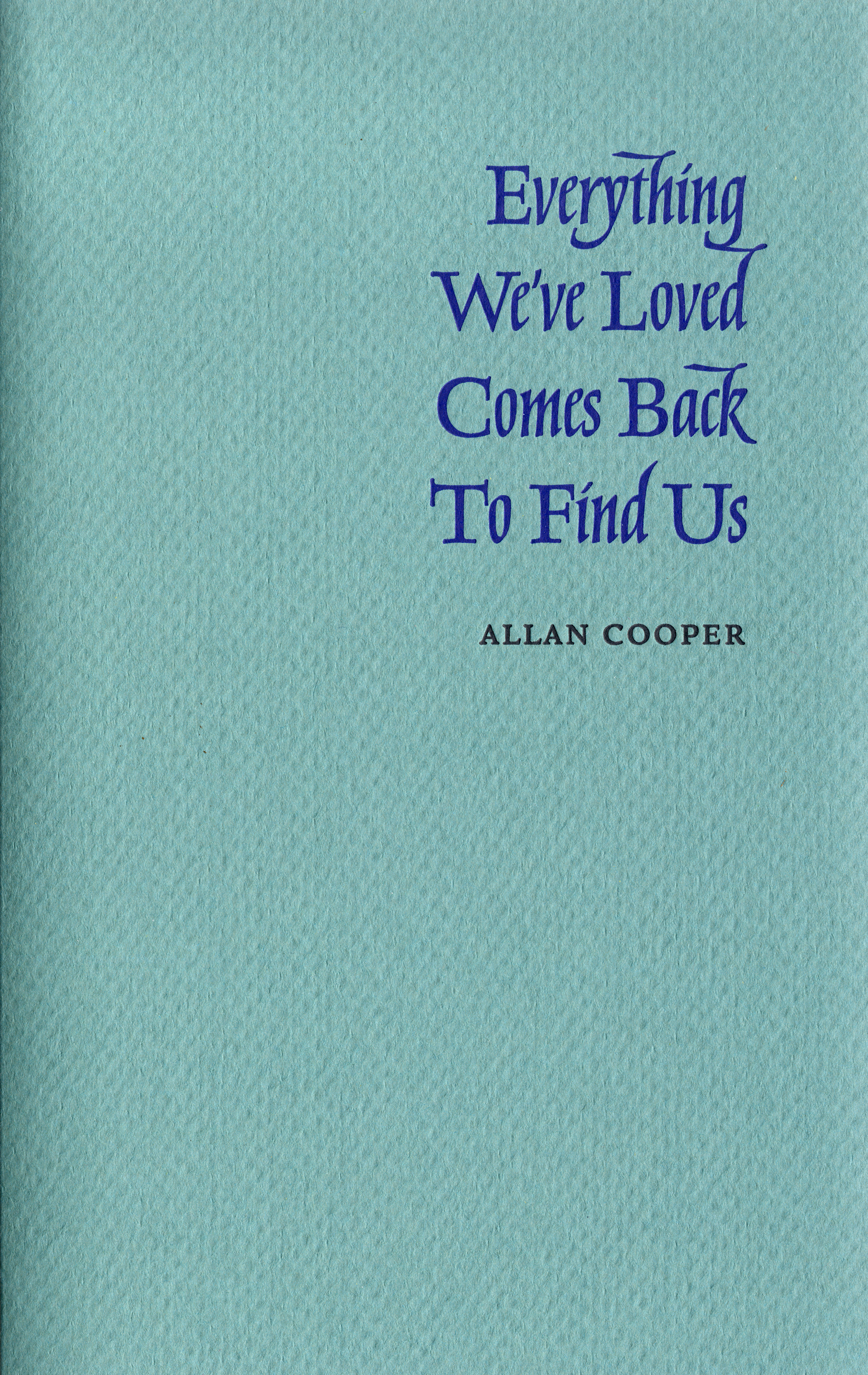
Everything We've Loved Comes Back To Find Us - Allan Cooper (Gaspereau Press)

Today's book of poetry:
Everything We've Loved Comes Back To Find Us.  Allan Cooper.  Gaspereau Press.  Kentville, New Brunswick.  2017,


Allan Cooper's Everything We've Loved Comes Back To Find Us is a little like walking into a log-fire warmed home where you know you are welcome.  The opening section of Cooper's thoughtful and tender volume reads like an open letter to his granddaughter and his daughter.  But they could be the children of anyone, these themes are universal.  

Cooper's poem "Standing At The Open Door" is a joyous yawp of observant optimism and we can all use a good dose of that these days.  Allan Cooper would have us believe that there is much more to be celebrated beyond beauty.  Everything We've Loved Comes Back To Find Us will tell you "What the Cricket Said," and "The Young Raccoon," and "The Heron Flying."

They are all saying a different version of the same Walt Whitman grassy thing.  If Allan Cooper had a mantra it might be to take joy in the present and to celebrate the simplest gifts with grace.  Cooper is almost Zen, almost beatific, in his willingness to wait for the quiet moment simply so he can celebrate it with hope carefully disguised as an appreciation.

Hinges and Latches

I stop at the door in the middle of the night
to make sure the old cat is still breathing.
I will do this many times before I sleep.

I like hinges and latches,
the way the key clicks in the lock
before I open the cabin door.

What's this on the table? Someone has
brought me a gift: daisies and vetch,
goldenrod opening the doorways of the fall.

My child, bundle up this love
I have for you. What we carry with us
to the end is enough.

My father was standing at the open door
the moment you were born. Although
he'd been gone a long, still I felt him there.

...

Cooper's "Requiem" for his father stands alone as a tribute and a testament to the power of love and how it seeps through the generations with a great undercurrent.  Cooper muses about heaven but by now we know that Cooper believes heaven is on earth.  Somewhere between youthful promise and the jubilee Cooper sees in the eyes of his granddaughter and the memory of his father's gaze -- Cooper realizes the fleeting nature of chance and the true celebrations are always those of the heart.

This is no big leap for Cooper.  We had Milo, our head tech, head in to the stacks because I knew we had some Cooper gold.  Milo came back with Blood Lines (Fiddlehead Poetry Books, 1979), Poems Released on a Nuclear Wind (Pottersfield Press, 1987) and The Deer Yard (co-written with Harry Thurston, Gaspereau Press, 2013).  I remembered reading Cooper back in my Acme Art & Sailboat days and thinking that I would die to have a book with Fiddlehead.

Take a look at this gem from Poems Released on a Nuclear Wind.  Cooper has been playing with the same carefully considered tool box for a long, long time.

The Bee Leaves The Deep Flower Reluctantly

I think of so many things
contained by this cold:

old berries and poplar catkins
glowing 
beneath the ice

the bones of a mole,

a day in 1965
when I played after school
the red shovel
tunnelling through a drift,

and overhead
the tiny crystals
sounding in every flake of falling snow.

     *              *           *

There is no moment that has more weight
than a child's:

moment of summer filled with the promise
of forever,

the smell of fresh grass, and a cricket singing,

the hand of my grandfather leading me
down to a river, through beech and alder,

a river
flowing always
inside.

         *           *           *

Basho said,

the bee leaves
the deep flower
reluctantly.

Look inside a nest
inside a stone
or tree...

Everything
is inward
and divine.

...

And this, thirty years later, from Everything We've Loved Comes Back To Find Us.

The Wild Clover Plant

There must be some reason why this earth keeps
on breathing. It must be out there somewhere
in the long grass, in the tiniest insect's carapace.

You used to come and get me to show me
the small garter snakes beside the foundation.
In your way, you gave me childhood's second chance.

The yellow mushrooms have gathered in a fairy ring
around the old spruce. When we stand inside it,
I tell you anything can happen.

There are times when I've drunk the dregs of grief.
But I'd rather be the silly man -- arms akimbo --
dancing in the middle of the kitchen floor.

When I say I'm in love with the world, I mean it.
Even the lonely bead of dew on the wild clover
seems enough to feed the world.

...

Everything We've Loved Comes Back To Find Us is like a drink of ice-cold well-water on a sweaty-hot day.  These poems are clear to see through and pure when put to the poetry bullshit barometer.  

[Milo recently insisted we have one installed, to quote Milo's favourite movie character, "Just in cases."]

Everyone chimed in happy on the morning read today.  Our new intern Maggie led with an enthusiastic charge.  Maggie has only recently joined the Today's book of poetry staff.  We found Maggie in the poetry section of Black Squirrel Books here in Ottawa.  Every city needs a Black Squirrel Books and Ottawa is certainly grateful for all they do for the literary community.  Maggie told Today's book of poetry that her current favourite poets were Susan Musgrave, Sue Goyette and Eileen Myles.  We hired her on the spot.

The Invisible Book

     What is the language using us for?
           - W. S. GRAHAM

The invisible book
writes itself
whether we know it or not.
It's in love with the small things we abandon.

     *

I like sentences that begin with rain
and end in silence.
The stones love it too,
and the white rabbit feeding at the edge of the field.

     *

Heaven can wait,
But I seem to find it
in the fox sparrows
kicking up bugs from the leaves.

     *

No one knows when the last word will come.
That's why I talk so much.
Let's spend the rest of the day with a stone Buddha,
who is always silent, always aware.

     *

I can deal with silence, and age,
two or three books on my shelf.
I want to wander with Rilke near the dark roses.
I want to tell Hesse our homesickness will never end.

     *

I'd like to take a little walk
that ends at water.
All the roads inside me
are turning to sand.

     *

The earth breathes evenly,
takes everything inside: the bones
of a vole, the blue shadow hiding
inside an empty snail shell.

     *

The brook sound reminds me
of the earth's hands,
holding everything steady.
What catches the earth when it falls?

     *

I want to be playful with the light,
show it my shadow in late afternoon.
At night I am the lone presence
moving from room to room.

     *

Night comes. The whole field
is soaked with dew.
Lovers don't mind: they spend
the night wrapped in a cocoon of light.

     *

I step outside to take in
the moon, the clouds, a little wind.
Someone keeps changing my name,
and the small things I fall in love with.

     *

Don't worry,
someone looks over us.
It would be a shame if the world
were a garden where nothing ever grew.

     *

I am the voice that never leaves you.
I am the hand that never sleeps.
I am the voice of the wild grass ripening
the shade inside the light.

     *

It's a good thing that the earth
shakes itself now and then, like a giant
waking from sleep. In the earth's cells,
whole pastures of light are waiting to be born.

     *

Let's be playful, then.
It may be the only way to mend the soul.
A woman stitched it by moonlight
from the sorrows of passion and dew.

     *

Call down the black and white angels of the air.
It may be the only hope we have.
Wings keep turning the pages of the invisible book
that we glimpse but may never know.

...

Today's book of poetry reminded everyone on our staff that we had purchased our first Allan Cooper title, Blood Lines, before ANY of them were born.  Now almost forty years later Today's book of poetry is proud to share Allan Cooper's most recent title with all of you.  In truth, not much has changed: Mr. Cooper's poems remain instantly engaging and inspirationally humane.

Allan Cooper has found what he was looking for, it is our great pleasure to share it.  Everything We've Loved Comes Back To Find Us is a book of poetry that soothes where our souls ache.  This is always a welcomed tonic.


Allan Cooper

ABOUT THE AUTHOR
Allan Cooper has published over a dozen books of poetry, most recently The Deer Yard (with Harry Thurston) and The Alma Elegies. He has twice won the Alfred G. Bailey Award for poetry. He is the founder of Owl's Head Press and has been the editor of the intermittently-published literary journal Germination since 1982. Cooper is also a songwriter and performer. He divides his time between Riverview and Alma, NB.


667

DISCLAIMERS

Poems cited here are assumed to be under copyright by the poet and/or publisher.  They are shown here for publicity and review purposes.  For any other kind of re-use of these poems, please contact the listed publishers for permission.
We here at TBOP are technically deficient and rely on our bashful Milo to fix everything.  We received notice from Google that we were using "cookies"
and that for our readers in Europe there had to be notification of the use of those "cookies.  Please be aware that TBOP may employ the use of some "cookies" (whatever they are) and you should take that into consideration

Thursday, November 10, 2016

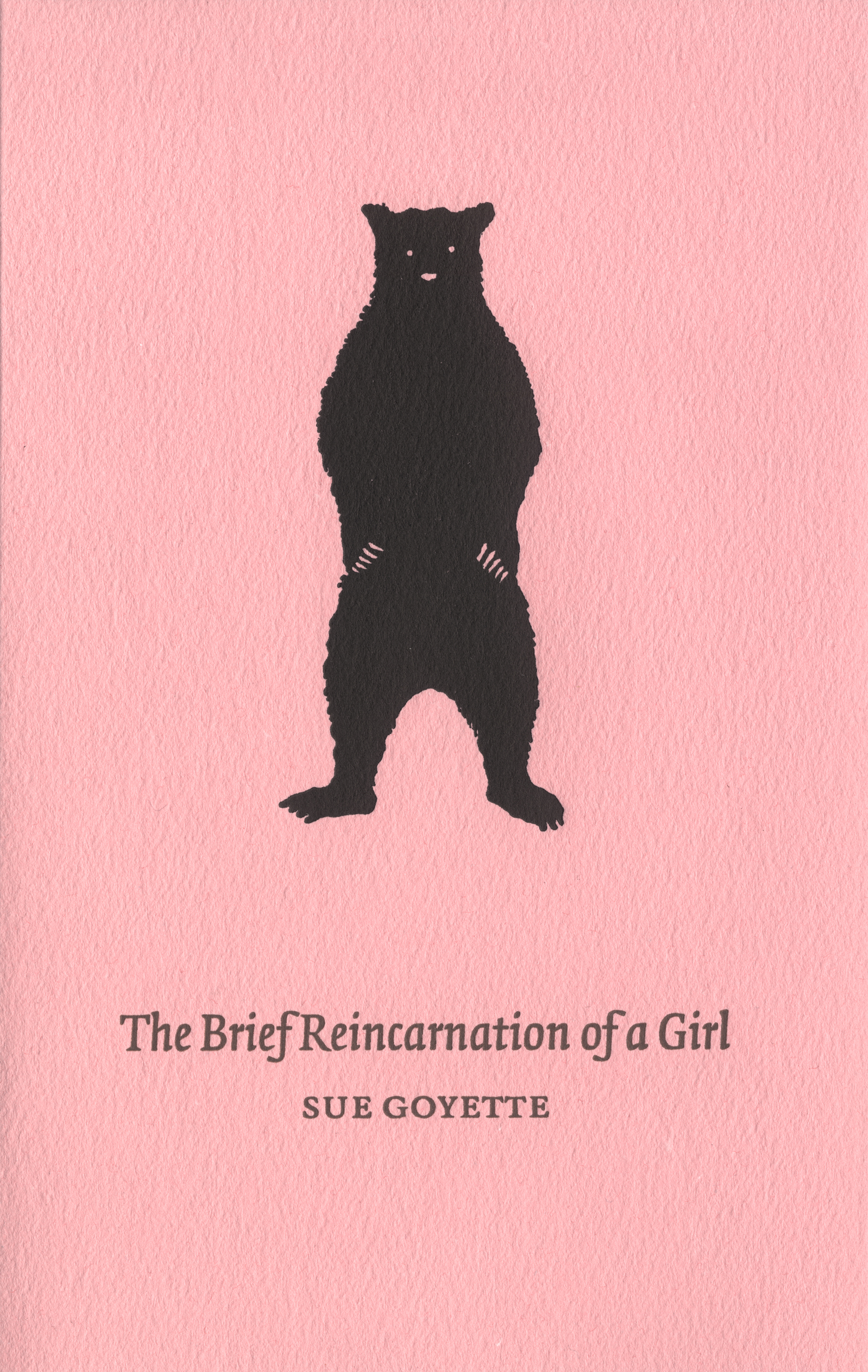
The Brief Reincarnation of a Girl - Sue Goyette (Gaspereau Press)

Today's book of poetry:
The Brief Reincarnation of a Girl.  Sue Goyette.  Gaspereau Press. Kentville, Nova Scotia.  2015.


It's not false modesty to claim that Today's book of poetry sometimes feels that our skill set is not sufficiently broad to do justice to some of the great books that come our way.  Today's book, The Brief Reincarnation of a Girl by the sublimely talented Sue Goyette, is a case in point.

We've been down the Sue Goyette poetry road before at Today's book of poetry.  You might remember we marvelled at Goyette's first book The True Names of Birds (Brick, 1998/2008) and then gushed about Ocean (Gaspereau Press, 2013) because it impressed the bejesus out of us.  You can see both of those here:


In The Brief Reincarnation of a Girl Goyette has suspended the exactness of events to reveal a new kind of truth, one that can only be achieved through poetry.

1

The girl refused to be afraid when she climbed
on high things. Her mother shaved the legs of the furniture
and, along with some cough syrup, stewed it
with a few of the girl's father's beer caps. The girl spit
a whole parade's worth of bicycle bells back at her
and pranced around in her diaper. The mother sat in the closet,
lit a candle, and located the doctor with binoculars.
The doctor, appearing in a bathrobe, urged
the mother to slap the girl with her slippers then take her
pulse. The girl had begun to growl which was upsetting
the cats. The mother upped the dosage of bottle caps
and added some baby Aspirin. The doctor suggested
more conventional medication, the girl sounded bipolar
and should be on a leash. What they didn't know
was that the girl had collected enough stickers
to reward the universe. She had a blanket and a bear.
She had resolved that when she got up from the floor
that last time, she'd be in another time zone
with better tasting furniture and a door that closed.

...

2

The mother sat in the closet and trained her binoculars
on the doctor's prescription pad. They were trying their hand
at automatic writing. The doctor wrote Chevrolet
and hubcaps. The mother wrote she's driving me crazy.
The doctor discussed the dosage and they both agreed,
given the century and the 24-hour drugstore, they could treat themselves
to a chocolate bar and maybe a slurpee. The mother wondered
if there was a pill for the minutes before the girl's father
got home. Are the minutes filled with knives or cement?
the doctor wanted to know. Sometimes knives and sometimes
cigarette burns. If the bath was filled, the doctor wanted
to know, would the water be hot or cold? The mother
complained that she didn't have time for a bath because her daughter
often would stand on her dresser and pronounce that she was
a burglar. Was she armed? the doctor wanted to know.
The doctor reminded the mother to put a colander against
her daughter's chest and strain her heartbeats. The mother
wondered if she was qualified to own a colander. They laughed
when they both wrote down parenting with a sad face.
The doctor urged the mother to draw happy faces instead. A whole
page of them and then to swallow four of them a day.
Maybe, the mother said jovially, one day, the father and the girl
just wouldn't come home.

...

Sue Goyette gives us ample warning, the first words we see in The Brief Reincarnation of a Girl after the title page is this prophetic line from E. M. Forster.  

     "Logic! Good gracious! What rubbish!"

Goyette then proceeds to introduce us to the "counter-logical" poem.  Sixty-one of them, untitled and unfettered by logic.  

At first the reader is a little kilter-stepped by Goyette's template, you don't necessarily catch the ride on the first wave.  But of course you continue because once you get your feet wet the tide and the undertow pull you from below to reveal the wonder in these waves.

The narrative in The Brief Reincarnation of a Girl is one sad canter down some pretty desperate streets.  Poverty and neglect play starring roles, ignorance plays along, it is one blue, blue ballet.

26

Poverty was taunting the girl's father's fire. Did he want
a training bra, poverty asked and the father sizzled
in his seat. Order, the judge yelled. Did he want
some panties? The father slumped and the fire
in his crotch flared. Order, the judge yelled and the father
sat up, trying to hide the fire from the judge who had already
warned him about open flames in his courtroom. Poverty
gobbled up the father's shame for its salt. The lawyer
asked the doctor if the girl had exhibited other behaviour
that warranted increasing her dosage from a single pill
to an entire orchestra complete with the several trumpets
she had been given to drown out her own loudness.
She suffered anxiety, the doctor told the jury, as well as rage
and low self-esteem. Objection, the courtroom yelled,
to which the lawyers objected and the judge pounded
on the doctor's prescription pad for order and then called
a recess so he could take a piss and look out at the parking 
lot from his office. Often, he'd been described as being
a little Zen.

...

The reader, almost by osmosis, intuitively follows Goyette and her counter-logical discourse all through this complex life and death drama of a young girl let down by all.  Parents, doctors, lawyers, the well intentioned and the rest of us could not prevent the ghosting of this girl.

Sometimes there is no safety net at all and people are left to plunge into an abyss that only promises a hard end.

Today's book of poetry was touched by the narrative of these poems, it is sad moving stuff.  At the same time we can't help but express our poetry fix joy at the workings of this poet.  Sue Goyette writes with such intelligent confidence that the reader always wants more.  The Brief Reincarnation of a Girl has all the elements of tragedy but Today's book of poetry can't read Goyette without feeling hope.

60

The bear carried the ghost of the girl tenderly
in her teeth and ran until walls and verdict were replaced
by trees. She stood the ghost of the girl by the river.
She kept slipping so the bear moved her to a sapling and leaned her
into it. She waited to see if the ghost would slip again
but she stayed upright, squinting at the sun. What is that?
she wanted to know. That's your sister, the bear told her gently.
I drew her wrong, the ghost dismayed. The bear shook her head,
you were close, she said, then concentrated on the task
she'd set out to do. She threw the first fish back.
Too slow, the bear explained. The sapling was carbonating
the story it was giving the ghost with tender leaves that rose
in the telling like bubbles, bursting their green into that place
where her ears would be if the ghost of the girl had ears.
The bear was patient having grown old in the winters she'd spent
with the girl and her reach was slow. The girl had often groomed
the bear and gave her words to speak, then would sing the bear
more words that were lozenges of honey the bear would gulp.
Between them, there wasn't a moment they weren't famished.

...

61

The bear knew the second before she caught it
that she'd found the right one. She readied herself
for the feel of it, how it might overwhelm her
but once she held the fish it was more
like a homecoming than anything. The bear reveled
in the pure moment of it, its clamour for life.
It felt like this, she told the ghost of the girl
before placing the fish in the pan where the girl's heart
had been. The fish enchanted them by swimming
in protest. The girl glided back into her voice
long enough to say oh. Oh. Love trusted the bear to pick the fish
from the pan then and return it to its river. It would be easy
and proper to say, at this point, that several seasons later,
the tree surprised the bear by flowering; its fruit a succulence
that chimed with her loss a new kind of nourishment.

...

The Brief Reincarnation of a Girl is not so much a book of individual poems and pulling them out of context as Today's book of poetry does here offers them no favours.  Taken as a whole The Brief Reincarnation of a Girl has scope and depth and beautiful complexity to spare.  It's an elegy and a plea.

Today's book of poetry is convinced that Sue Goyette is simply one of our very best poets.

Today's book of poetry has to say it one more time, Gaspereau Press and those masters Gary Dunfield and Andrew Steeves continue to make the most attractive books of poetry on the planet.  This one is a stunner.

Sue Goyette

ABOUT THE AUTHOR
Sue Goyette has published four collections of poetry, The True Names of Birds, Undone, Outskirts, and Ocean, which was a finalist for the 2014 Griffin Poetry Prize. She also published a novel, Lures, in 2002. She has won the Pat Lowther Memorial Award, the Atlantic Poetry Prize, the CBC Literary Prize for Poetry, the Earle Birney Prize and the Bliss Carman Award. Goyette lives in Halifax where she teaches creative writing at Dalhousie University.


gaspereau.com

522
DISCLAIMERS

Poems cited here are assumed to be under copyright by the poet and/or publisher.  They are shown here for publicity and review purposes.  For any other kind of re-use of these poems, please contact the listed publishers for permission.

We here at TBOP are technically deficient and rely on our bashful Milo to fix everything.  We received notice from Google that we were using "cookies"
and that for our readers in Europe there had to be notification of the use of those "cookies.  Please be aware that TBOP may employ the use of some "cookies" (whatever they are) and you should take that into consideration.

Tuesday, June 7, 2016

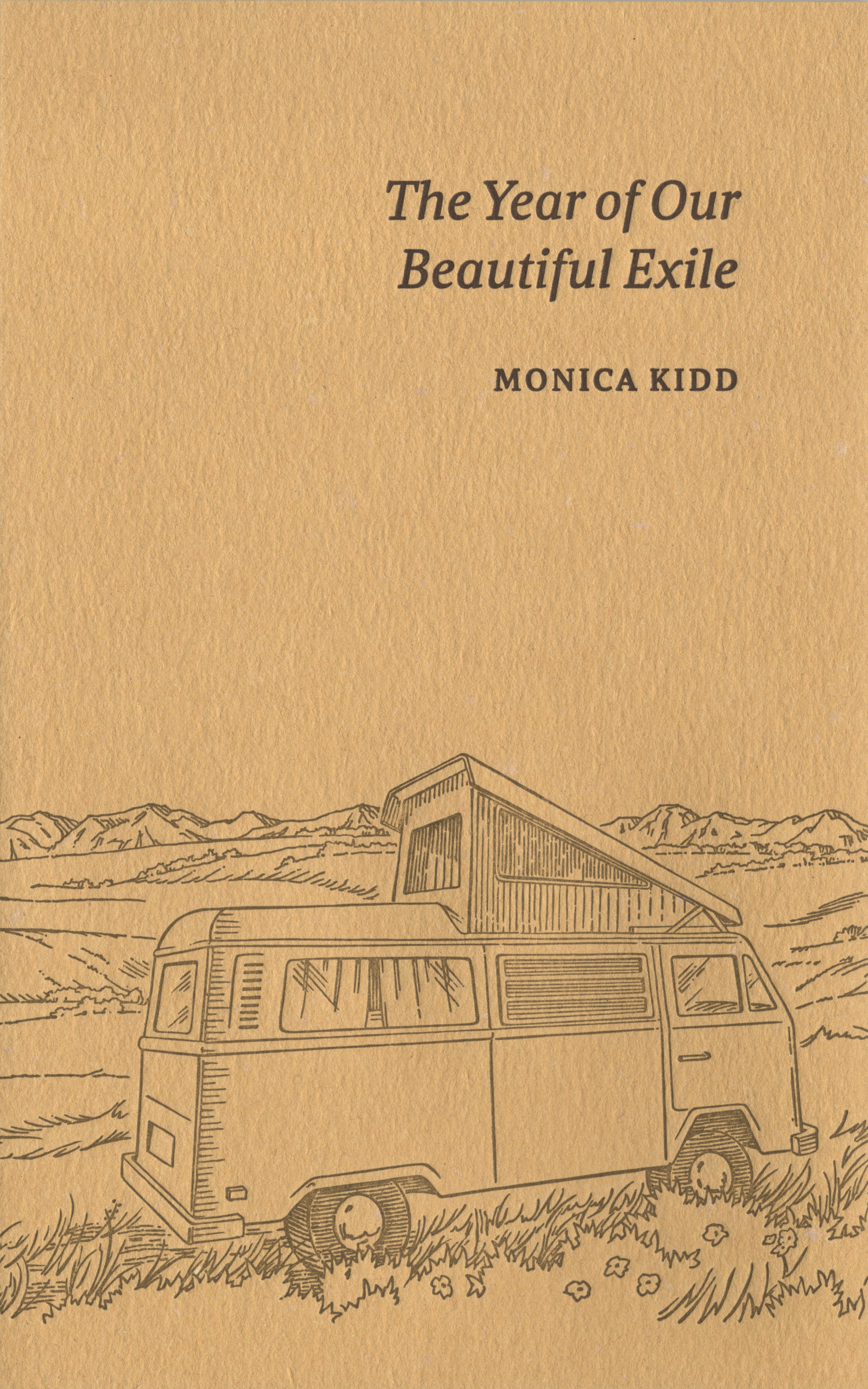
The Year of Our Beautiful Exile - Monica Kidd (Gaspereau Press)

Today's book of poetry:
The Year of Our Beautiful Exile.  Monica Kidd.  Gaspereau Press.  Kentville, Nova Scotia.  2015.


Today's book of poetry had the pleasure of writing about Monica Kidd's Handfuls of Bone (Gaspereau Press, 1012) back in January, 2014.  


It is our distinct pleasure to travel along with Kidd once more in The Year of Our Beautiful Exile.  These punchy poems get to the point and apparently Kidd doesn't mind us tagging along.

A Makeshift Martini Shaker

It requires an attitude of the wrist.
A flick of the hair, the bearing of Buster Keaton,
a love for the way white layers on white,
the way a word can be both sour and sweet
when served with a boar's head.
The way nothing is ever
quite what it seems.

An emphatic pumpf as the line cook peeps
out the porthole of a door that swings
both ways. Feet like water on
flagstones in old Montreal.

...

Monica Kidd's curiosity would kill several cats.  The Year of Our Beautiful Exile reads like an omnibus from some hip oracle priestess.  We here at Today's book of poetry like how Kidd talks.

You could hand this book out at a party and every reasonable person would like it, a lot.  But they'd all have different favourites.  Why?  Because somehow Monica Kidd writes poems that sound so true you simply think they have happened to you.  This is a very good trick.

The beetles in Madeira lie much concealed until the wind
lulls and the sun shines

Of evolution and what it said about God, geneticist J.B.S.
Haldane remarked, He must have an inordinate fondness
for beetles. For remove the soil, the houses, and asphalt, the
fighter planes and pop cans, the bed sheets; remove the
entire residue of man, and the earth would remain, a husk
of twitching bug feet. Set your mind to counting and come
back when you are old, and still the number would not be
great enough to hold them.

...

Today's book of poetry just has to admit it right out front.  Whatever Monica Kidd is interested in writing about - we are interested in reading.

This morning's read was a first.  Our Senior Editor, Max, came out of his office for the first time in over three years, walked to the middle of the floor with his copy of The Year of Our Beautiful Exile in hands and said "I've got this."

Then with almost perfect pitch he rattled them all off, the entire book, turned on his heels and went back to his office.  Milo, our head tech, said that he'd thought Max had retired.  Kathryn, our Jr. Editor, asked where the door had come from and who the strange man in our office was and why had she never seen him before.

I explained to Kathryn that Max lives on a diet of dictionaries, books of style and the solo recordings of Thelonious Monk.  

It is only natural that Max would admire The Year of Our Beautiful Exile, Monica Kidd has Monk like imagination, Thelonious wit.  She knows what to leave in, when to let your imagination fill in the blanks.

How The Body Remembers Joy

How you snug my hip with
two girls curled into sleep, my heart
humming an old tune it once heard,
a hundred times, the heat of a body
on a sofa never closer than brass strings
strummed against the night,
prowling at the windows.

My new love affair with F#:
the way it sits cock-eared
in the drum of my chest,
its sound of feet on earth, of quiet
rooms and a blank page, turning.

How the body remembers joy.
How the clocks stop.

...

 Monica Kidd writes with precision, compassion and wit and we can't get enough of that here at Today's book of poetry.  We were greatly impressed with Handfuls of Bone, The Year of Our Beautiful Exile only raises our expectations.  Kidd can cook with the best.

Monica Kidd

ABOUT THE AUTHOR
Monica Kidd grew up on the Alberta prairies. Her previous literary works include two novels (Beatrice and The Momentum of Red), a book of non-fiction (Any Other Woman: An Uncommon Biography) and two collections of poetry (Actualities and Handfuls of Bone). Her short experimental films have shown in Atlantic Canada and in Amsterdam. She has worked as a seabird biologist and as a reporter for CBC Radio, where her news items and documentaries have won numerous awards. Kidd presently lives in Calgary, Alberta, where, as well as writing, she works as a medical doctor and tends to her young family.


479

DISCLAIMERS

Poems cited here are assumed to be under copyright by the poet and/or publisher.  They are shown here for publicity and review purposes.  For any other kind of re-use of these poems, please contact the listed publishers for permission.

We here at TBOP are technically deficient and rely on our bashful Milo to fix everything.  We received notice from Google that we were using "cookies"
and that for our readers in Europe there had to be notification of the use of those "cookies.  Please be aware that TBOP may employ the use of some "cookies" (whatever they are) and you should take that into consideration.

Wednesday, March 18, 2015

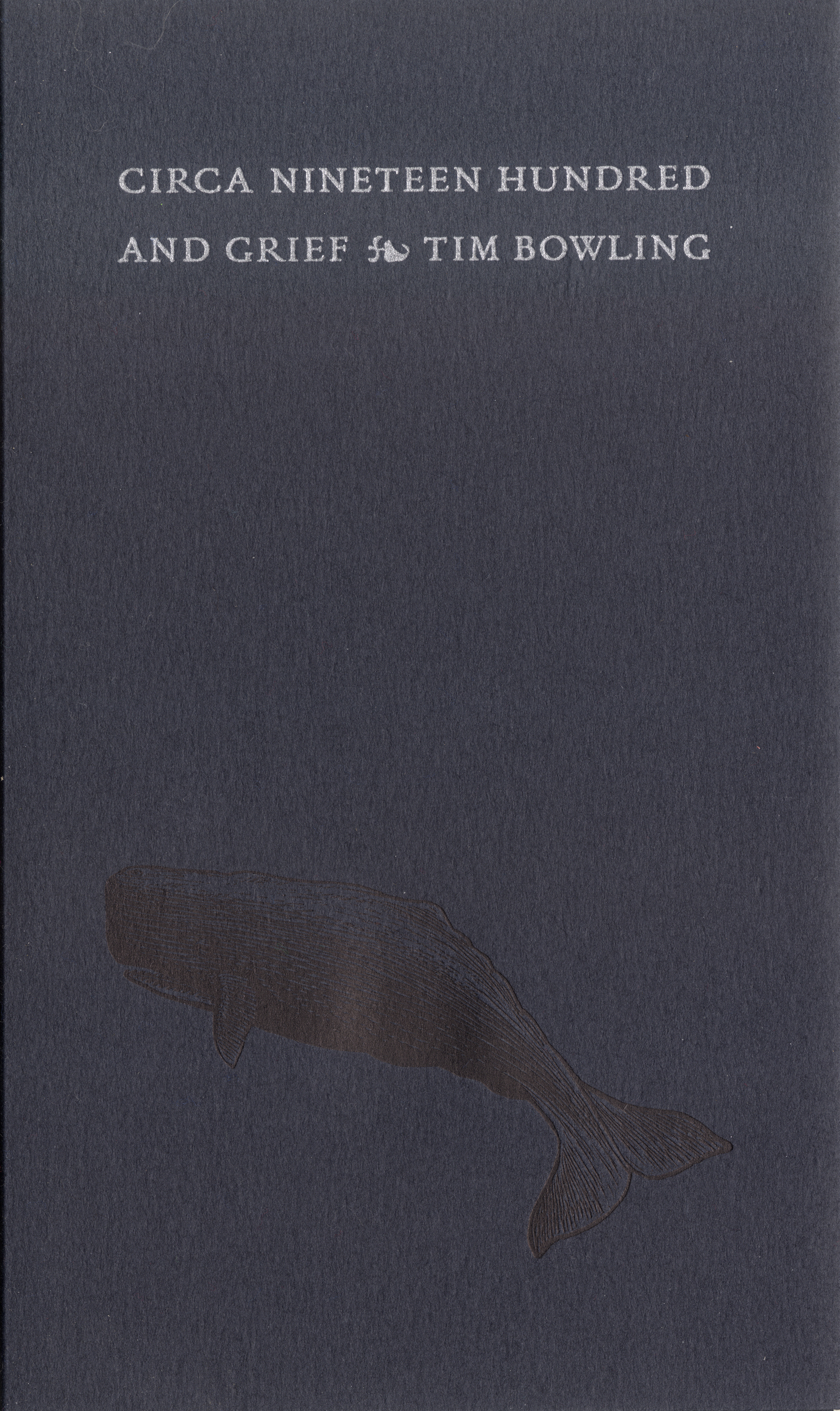
Circa Nineteen Hundred and Grief - Tim Bowling (Gaspereau Press)

Today's book of poetry:
Circa Nineteen Hundred and Grief.  Tim Bowling.  Gaspereau Press.  Kentville, Nova Scotia.  2014.


The picture I have of the cover does not do justice to the lovely Wesley Bates woodcuts that grace this beautiful book.  Gaspereau Press books are not like the others.

Today's book of poems looked at Tim Bowling's Selected Poems (Nightwood Editions, 2013) back on May 13, 2013.  We loved it.

You can see that blog here:
http://michaeldennispoet.blogspot.ca/2013/05/selected-poems-tim-bowling.html

Circa Nineteen Hundred and Grief is Bowling's twelfth book of poetry and perhaps his best to date - which is saying a hell of a lot.  Bowling has been a big favourite here at Today's book of poetry.  His book Low Water Slack (Harbour Publishing, 1995), is required reading for our interns.

Childhood

I want it back. It is unseemly
to admit so. The many who confuse
a love for the present of the past
with a love for something dead
roll their eyes. Forget them.
This is for men and women
of certain years who,
having left prints on the sand,
remember the feeling
of castles in their fingers
and turn for the fanfare
blowing silent out of the mouth
of the sun, for those who,
when the utilities are paid
another month and the children
in their intensities occupied
and the laundry transferred
once more to the light,
sit on the grass in the yard
and place one hand
on the sun-warmed gold
of the sleeping retriever's fur
to take the pulse
of that small self
they say goodbye to
a little more each day,
for those voters, tax-payers,
bearers of the ordinary burden
without end or praise who
for a few seconds
bury their faces in the old trinity
earth-sun-beast
and breathe that lost present alive
tending the last coals of a fire
in the woodcutter's woods
before the blank page of the story
turns back again
with the sound of a whale
sliding its Victorian nursery
for the last time
into the sea.

...

"Childhood" starts off this sterling collection like the whistle of a train announcing its definitive arrival with authority.  This lament to aging is Bowling at the height of his considerable powers.  It breathes the same air as The Old Man And The Sea.

Time is a lonely hunter bearing down on us all as invariably as Orion looking down on every night. Bowling knows time and the stars burns equally bright.  These poems read as though they were chiseled into stone, carved as runes of wisdom for those to come.  As though the very earth loosed them in a fit of chthonic wonder.

Two Young Men In A Duck Punt

It's still dark, they wait for something.
Light? Time? Though their lives
and ours consist of light and time
it is not for these they wait.
But see the tension in their necks
shoulder -- what else could be
the cause? Even if you say
they wait to kill, what
have you ever done to the light
and time besides?

The river around the rushes
flows black, the salmon smolts
cluster thick in separate gleams --
the knives of the knife-
throwing before the show.
Frost thaws on the gunwales
water drips off the oars
the breath of the young men
comes down-slow
and visible, there are no rings
on their raw hands. They wait
without knowing, for everything

as you have done, are doing,
there in your row at the seminar
at the breakfast table, on the knife-
scored seat of the city bus,
with the frost burning off
and the day's last windfall
rotted in your lap, waiting
for the horizon's stir
the thousand clock hands
at the centre of the present.

How fleetingly lovely
the ordinary annulment
of our skies
as the tide changes
and smoke leaves the barrel
and those young hands
like ours
gather all morning
each soft inch
of the bloody rope
whose pulling sounds only the silence
in which is heard

light and time
light and time
light and time

...

Today's book of poetry has always enjoyed the poetry of Tim Bowling and Circa Nineteen Hundred and Grief cements what we always thought.  Bowling is one of our best.

Bowling is more formal than he first appears, and fiercer.  These poems work like the inside of a fine watch, all delicately intertwined and necessary for the silent mechanism to keep track of time.  All those gears grinding away and we don't hear a sound.

The Last Days of Summer
Before the First Frost

Here at the wolf's throat at the egress of the howl
all along the avenue of deer-blink and salmon-kick
where the spider lets its microphone down
into the cave of the blackberry bush -- earth echo
absence of the human voice -- wait here
with a bee on your wrist and a fly on your cheek
the tiny sun and tiny eclipse.
It is time to be grateful for the breath
of what you could crush without thought
a moth, a child's love, your own life.
There might never be another chance.
How did you find me, the astonished mother says
to her four-year-old boy who'd disappeared
in the crowds at the music festival.
I followed my heart, he shrugs,
so matter-of-fact you might not see
behind his words
(o hover and feed, but not too long)

the bee trails turning to ice as they're flown.

...

These poems long to understand our world, put it into perspective despite the complex layers of narrative that demands.  Bowling has found the language that both connects us to and explains mysteries we have yet to unravel about ourselves.  We want to listen to everything Bowling has to say and he never disappoints.

Bowling must be an excellent listener because it appears he doesn't miss a thing.

Gary Dunfield and Andrew Steeves should be sainted by the small press world.  They are the Huckleberry Saints of Canadian publishing as far as Today's book of poetry is concerned.  No one does it better.  They can be counted on to produce books of unsurpassed physical beauty.  Circa Nineteen Hundred and Grief is but one of a long line of visually stunning and consistently gorgeous books lovingly produced by Gaspereau Press.

Tim Bowling

ABOUT THE AUTHOR
Circa Nineteen Hundred and Grief is Tim Bowling’s twelfth collection of poetry, others of which include TheAnnotated Bee & Me, Fathom, The Memory Orchard, and Selected Poems. He has also published a memoir, four novels (including The Bone Sharps and The Tinsmith) and a creative work on book collecting and poetry entitled In The Suicide’s Library. Bowling lives in Edmonton, Alberta.

gaspereaupress.com

320

Poems cited here are assumed to be under copyright by the poet and/or publisher.  They are shown here for publicity and review purposes.  For any other kind of re-use of these poems, please contact the listed publishers for permission.

Wednesday, January 14, 2015

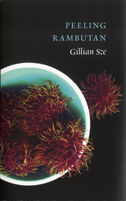
Peeling Rambutan - Gillian Sze (Gaspereau Press)

Today's book of poetry:
Peeling Rambutan.  Gillian Sze.  Gaspereau Press.  Kentville, Nova Scotia.
2014.


FOR SABERA

"sorrow becomes a friend if it hangs
around long enough"
                                --from East is the Sun Behind a Tree
                                           Gillian Sze

Back on October 14, 2014, Today's book of poetry (blog #257), I had the pleasure of writing about Gillian Sze's utterly illuminating second book, The Anatomy of Clay.  Peeling Rambutan feels and reads as though it were written by a different poet - but one of equally fascinating and obvious talent.

Whereas there was a lightness to The Anatomy of Clay, an almost casual brilliance - Peeling Rambutan has weight.  It is full of focused energy and power.  But it is never too heavy.  This balancing act takes game.

Once again, Gillian Sze is dazzling.

Come

and show me our various forms of leaving. By boat, by foot,
by the flash of our thumbs. By storm, by nightfall, by the
infant hours. Play me the heave of a train horn pushing
through the dark. Show me how a railway crossing rises as
easily and slowly as a dancer lifting one leg. Show me the
silent lightning, as if the sky surrendered, and we're waiting
for ash. Tell me that someone has already seen this and is
still looking up. Tell me how to prepare for the weather next
Saturday. tell me how to reduce stories to their simplest
parts. Tell me again our various forms of leaving. With the
engine running. With joy, avidity, stifled regret. Tell me how
the rooms fell silent. Faces looming in the back window.
The eye falling to the fence. Tell me about two-toned living.
The incompatibility of temper. the worlds you worked to
unite. the tumbling languages that refused to stay aloft. The
ground-bound postscripts. The plummeted paper planes.

...

Many of the poems in this third book of poetry by Sze are prose poems - and yet they flow easily enough, slide off of your tongue as though by design.

Contemplative is a good word to describe these precise poems of captured moments.  Like you are constantly walking into rooms of new discovery.  The edges are clear, reading them is like watching one of those old Polaroid photos come into focus in front of your eyes.

Garage Band

In Wen Chong Village, beneath a small light,
a group of old men settle on their plastic chairs.
Cradling their instruments,
they smoke cigarettes
and drink kung fu tea to defeat the dark.
Inside, their women fret over what to prepare
and pack for next day's lunch.
Outside, a weathered man stands to face his players
and wavers out a Canton opera,
spitting during the interludes,
and picking up at his cues.

...

Once again I have to mention Gary Dunfield & Andrew Steeves.  This book continues Gaspereau's tradition of making the most beautiful books of poetry that Today's book of poetry sees.  Looks shouldn't matter to poetry - but Gaspereau gives all other poetry presses something to aspire to.

How To Kill A Cockroach

Without qualm,
she peers at the bottom of her shoe and says,
Never let a cockroach see your hand's shadow.

...

Peeling Rambutan is a travelogue of sorts that takes you inside the minds and language of foreign people and places that you will most likely never see - and leaves you feeling like you've been there.

That's a great trick.  Bravo Gillian.

Gillian Sze

ABOUT THE AUTHOR
Gillian Sze is the author of two previous collections: The Anatomy of Clay (2011) and Fish Bones (2009). Her work has appeared in a number of national and international journals, and has received awards such as the University of Winnipeg Writers’ Circle Prize and the 2011 3Macs carte blanche Prize. Originally from Winnipeg, she now resides in Montreal.

BLURBS
Peeling Rambutan traces a young poet's journey into the interior of China, a place where "religion is a game of telephone and illumination," where epiphany is found in ancestral kitchens. Sze shows us a luminous, lyric landscape where old village vendors ride into Shanghai singing in rhyming couplets. What a beautiful, unforgettable trip reading this book is!
—MARY DI MICHELE, author of The Flower of Youth

Gillian Sze's Peeling Rambutan is an unforgettably vivid collection, combining her characteristic intimacy with subjects and a gut-punching instinct to get it across. Richly detailed with uncommon knowledge and observance, poised in articulation and always present. Gillian Sze is one of our most enchanting poets.
—DAVID MCGIMPSEY, author of L'il Bastard

Gillian Sze's voice is so assured and so clear. She sets out to explore where she is from, where "Here can't be found on a map," and then sends the images our way. She records, and then tattles in the best of ways: with curiosity and awe and humour. I felt at times that I was reading a novelist writing brilliant poetry. That is to say, these poems are busy with story. I loved them.
—DAVID BERGEN, author of The Age of Hope


Gillian Sze's sensuous, precisely-observed poems trace her identity across cultures, eras and continents, weaving together scraps of family lore, visits to changing landscapes, the smell of Malaysian fruits and Canadian snow. Her far-flung home, often in the air, often lonely and built from memory is of a sort many of us share. The poems in Peeling Rambutan enlarge our sense of who we are.
—JOHN STEFFLER, author of Lookout


Gillian Sze reads from The Anatomy of Clay\
video from ECW Press


292

Poems cited here are assumed to be under copyright by the poet and/or publisher.  They are shown here for publicity and review purposes.  For any other kind of re-use of these poems, please contact the listed publishers for permission.