Showing posts with label book thug. Show all posts

Friday, February 2, 2018

Precious Energy - Shannon Bramer (Book Thug)

Today's book of poetry:
Precious Energy.  Shannon Bramer.  Book Thug.  Toronto, Ontario.  2017.
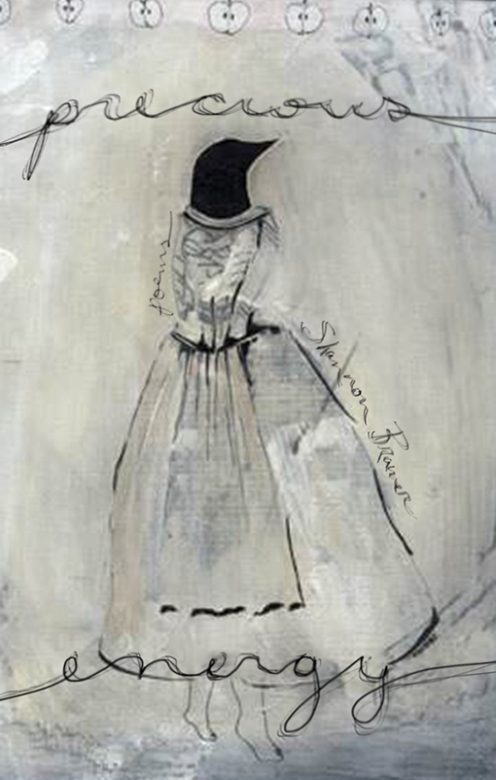

Today's book of poetry not only met Shannon Bramer a few months ago, we shared the same stage.  Shannon graced the podium whereas Today's book of poetry kind of menaced it.  It was a genuine pleasure to meet Bramer.  We went prepared with a copy of her suitcases and other poems (Exile Editions, 1999) along with a copy of the recently published Precious Energy.

Today's book of poetry doesn't actually get to meet many of the poets that we write about on our blog. And you poets are a beautifully strange lot so when you meet a poet who resembles normal it is always a bit of a shock.  Bramer is so down to earth and honest you'd almost think she were regular folk.

But she's one of us, cursed with poetry and putting a smile on things anyway.

When You Are Sad You Must Also

Get lice and buy the special combs.

Eat as much garlic as possible.
Stuff it up your ass.

Write Sestinas.
Telephone your religious brother and challenge his beliefs.

Find a carpet catalogue and read it with an open mind.

Watch Law & Order.
Her perfect body's in the dumpster.

Clog up the toilet.

Buy a toy gun and point it at your head.
Point it at your husband's head.

Tell a new friend you need money.
Get down on  your hands and knees
                               and beg for it.

...

Suitcases and Other Poems was Bramer's first book and it was nineteen years ago.  Things have changed and so has Bramer.  Along with all the skill and promise Bramer showed in her first book she's added a lifetime of adult living.  Here's what Janice Kulyk Keefer had to say about suitcases and other poems.

          "Uncanny, the brilliance and beauty of this first book of poems.
          Shannon Bramer gives us both the sharp, clean bones of grief,
          and the deliciousness of those perceptual shocks that makes us 
          see the already-known-gardens, suitcases, speckled fruit -- as if
          for the first time, and through extraordinary eyes."

There's been a lot of water flow under Bramer's bridges since then.  Bramer's voice in Precious Energy is mature in the best ways.  A preciously dark sense of humour goes a long towards salving life's bruises.  Bramer realizes, fully, that survival always includes scars -- both inside and out.

Bramer comes right out and says that thing.  There may be boundaries in life but there are few in Bramer's poems.

The Cold Feel of The Forks and Knives

At 6:35 in the morning it's all in the sound

of the cutlery. How will he handle it?

If there is any roughness he's just hurried; don't

worry. Things will get easier. My son

likes to throw his plastic cup. We need to let him

touch things he might break.

Even me. I don't want to think about

my husband's hands

or the cold feel of the forks and knives.

I'm afraid of what comes next. I listen

to him empty the dishwasher.

It's a wonder some people are not sad.

He's pouring coffee now. He's on

the stairs with our third child

and coming in to wake me up.

...

Bramer mines those timeless minutes that make up real life and it makes for some very powerful poetry.  Our morning read included both our Bramer titles.  Kathryn, our Jr. Editor, took over the duties on suitcases and other poems, the rest of us passed around Precious Energy.  We had Uyama Hiroto and Haruka Nakamura on the box so we took our time between poems to let them sink in.

Shannon Bramer writes superbly clean poetry about a woman's life.  She writes about it with candor as though confessing and then throws in her own counterpoint to keep herself honest.  Today's book of poetry is always going to have time for that.

The Days of The Fox

It was one drunken night after another, back

in the days of the fox. Once with the bottles

I put my own heart out with the trash

but three young raccoons found it first, tore it

to pieces in the cedars. My fox got nothing

that night but a few broken zinnias,

some sour cherry pits. I watched him

nuzzle the garbage until he noticed me, sober

as stars. He put his paws up

on the back door and I opened it

so he could smell me, my empty hands.

Let me in anyway, said the fox.

It's not your heart that I want.

...

Today's book of poetry admits that he was totally charmed when we met Bramer a few months ago -- and why wouldn't we be?  Bramer has one of those voices where you can't wait to hear what the hell she's going to say next.  Domesticity under a harsh glare can unravel quickly but Bramer has superb tools and pulls it all together.  She's able to wrestle her demons and turn them into splendid poems and that is worth the price of admission any day.

Image result for shannon bramer photo

Shannon Bramer

ABOUT THE AUTHOR
Poet and playwright Shannon Bramer lives in Toronto. Previous collections of poetry include: suitcases and other poems (winner of the 2000 Hamilton and Region Best Book Award), scarf, and The Refrigerator Memory. She has also published chapbooks with above/ground press and BookThug, and regularly conducts poetry workshops for students of all ages. An illustrated collection of poems for very young children is forthcoming from Groundwood Books in the spring of 2019. Precious Energy is her first full-length collection in over a decade.

BLURBS
“Shannon Bramer writes with a candor that is as clever as it is devastating. Through masterfully crafted studies of the everyday, Bramer transcends, in the manner of Lydia Davis, drawing the domestic into utter sublimity.”
—Robin Richardson, author of Knife Throwing Through Self-Hypnosis

“With this collection Bramer has redeemed modern poetry. Precious Energy is a must for anyone who has ever had their clothes drenched in a child’s vomit, seen their cell phone as the enemy, momentarily failed to recognize their lover or wondered what the point of all this is.”
—Andrew Kaufman, author of All My Friends are Superheroes and Small Claims


Shannon Bramer 
reading from Precious Energy
Video: Jay MillAr

bookthug.ca
652

DISCLAIMERS

Poems cited here are assumed to be under copyright by the poet and/or publisher.  They are shown here for publicity and review purposes.  For any other kind of re-use of these poems, please contact the listed publishers for permission.
We here at TBOP are technically deficient and rely on our bashful Milo to fix everything.  We received notice from Google that we were using "cookies"
and that for our readers in Europe there had to be notification of the use of those "cookies.  Please be aware that TBOP may employ the use of some "cookies" (whatever they are) and you should take that into consideration
        
Please excuse some of the format issues Today's book of poetry is experiencing.  Our head Tech, Milo, is out of the office this morning and when my computer refused to comply with my suggestions there was much kerfuffle and humpffffing.  We'll try to be back to regularly scheduled broadcasting asap.

Wednesday, August 30, 2017

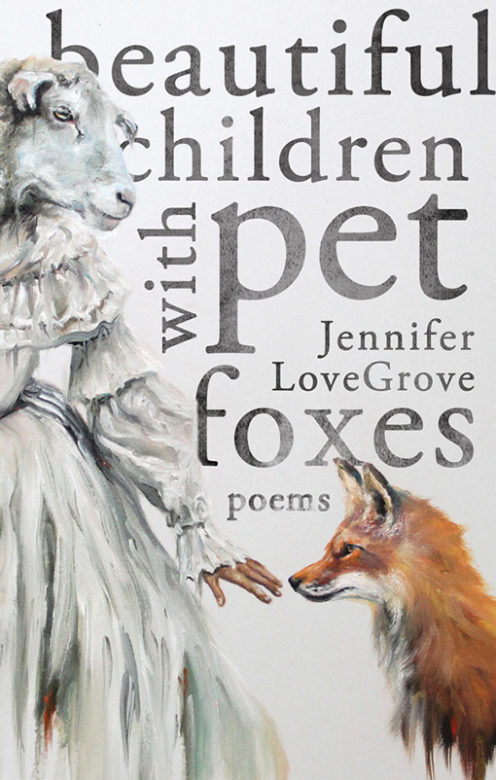
Beautiful Children with Pet Foxes - Jennifer LoveGrove (Book Thug)

Today's book of poetry:
Beautiful Children with Pet Foxes.  Jennifer LoveGrove.  Book Thug.  Toronto, Ontario.  2017.

Beautiful Children with Pet Foxes - Jennifer LoveGrove (Book Thug)

Today's book of poetry isn't exactly sure what reality governs the world of Jennifer LoveGrove poetics but we were certainly happy to venture into Beautiful Children with Pet Foxes.  This world feels remarkably similar to our own, even familiar at times, but there is a gossamer shadow casting a silhouette, a new dimension, over this world and LoveGrove is here to guide us through.

When I say that these poems are fun Today's book of poetry is not suggesting that they are slight in any way, quite the contrary, you can feel the weight of these almost ominous messages.  Beautiful Children with Pet Foxes is fun because it gives voice to a previously undiscovered universe.

Brock Street

Three white-tailed deer
on the sidewalk:
hooves polished, giddy rural expats
bored of leaves, martini-eager,
greedy for dancing.

Back home, a forest opens its fist.
In its palm, a clearing.
A barb-faced eagle
flies his shadow overhead.
First a kite, then a shroud.
Plucks a rabbit
from a little girl's lap.

We three skitter home at dawn,
as a Taser-hipped cop
wedges his boot onto
a man's neck. We shout,
click our camera phones,
file sprawling reports.

In the morning
the street is clean
and we are hungry.
We look down at our feet
and see our hooves
are caked with mud.

...

LoveGrove's poetry is a bit like that dream you can't fully remember and you can't fully escape.  You know you are involved in an important struggle, you reach to fit disparate pieces into a story. LoveGrove compels us along on the journey into her dream scape with circumstance and nuance, but she keeps us there with language.  LoveGrove runs a tight ship.

Today's book of poetry loved that Beautiful Children with Pet Foxes brims with new ideas. Literally shimmering with unexpected whimsy, LoveGrove drops beautiful bombshell titles like "Autumn Takes its Rifle for a Walk" on the reader like bon mots.

Today's book of poetry has long been a fan of LoveGrove.  Milo, our head tech, brought her two previous poetry titles out of the stacks for us this morning, The Dagger Between Her Teeth (ECW, 2202) and I Should Never Have Fired the Sentinel (ECW, 2005).  We thoroughly enjoyed those books when we first acquired them, they are even better now.  Jennifer LoveGrove has constant velocity, the poems in this volume move along with a brisk pace.  

Self Portrait as a Leaky Boat

I'm the stainless steel handle
slouching on the bailing bucket
I'm a yellow tow rope
coiled on the floor
I'm the reeking sulphur
in the waterproof flare
I'm the life vest's plastic clasp
that doesn't quite close
I'm the needle in the compass
red tip bitten off
I'm a little orange whistle
crawling into your mouth
I'm the sudden winds
sneaking up lee side
I'm the heavy cloud
shuttering the moon
I'm a search party of one
my chapped hands empty

...

This morning's reading was taken in hand by Kathryn, our Jr. Editor, just returned from several happy days roaming Paris.  Kathryn romped us through Beautiful Children with Pet Foxes and then skipped us through The Dagger Between Her Teeth and I Should Never Have Fired the Sentinel for good measure.  LoveGrove would have enjoyed the enthusiasm shown her poems.

The title poem from Beautiful Children with Pet Foxes is inhabited by ghosts.  Ghosts appear more than once in this collection but they are essentially well mannered as LoveGrove weaves them in and out of her dreams.  It all seems normal, it all seems correct, but by the time you've finished Beautiful Children... you will want/need a pet fox too.

Dream Specimen 95

I'm alone in trees as the day dissolves
to a bright royal blue, glowing thick
and settling on the world like a balm.

I feel free and smile and throw
my arms wide like when no one
has betrayed you in a really long time.

Then a white pickup truck full of four bellowing bros
hurtles into the clearing, splinters the trees
and crumples right next to me.

Posture still perfect, their pale heads
ringed with blood like the crowns
they thought they already wore.

...

Excellent.

Today's book of poetry is tickled pink to bring you Jennifer LoveGrove's Beautiful Children with Pet Foxes, we loved this title.  But that was no surprise at all.

Image result for jennifer lovegrove photo
Jennifer LoveGrove

ABOUT THE AUTHOR
Jennifer LoveGrove is the author of the Giller Prize–longlisted novel Watch How We Walk, as well as two poetry collections: I Should Never Have Fired the Sentinel and The Dagger Between Her Teeth. In 2010, LoveGrove was nominated for the K.M. Hunter Artist Award for Literature and in 2015, her poetry was shortlisted for the Lit POP Awards. Her writing has appeared in numerous publications across North America. She divides her time between downtown Toronto and rural Ontario.

BLURB
“LoveGrove’s poetry apprentices itself to the world we live in, pacing out the dimensions of the enclosure called the present–the enclosures of culture, history, family, and other patriarchal institutions–with a keen eye and a relentless heart. In pursuit simultaneously of holistic perception, love, and an escape route, LoveGrove invites words to hold hands in unusual combinations, enters dreams and lets consciousness run feral. “There was a war going on and / ours was a very important mission,” LoveGrove writes, and it’s true.”
     —Helen Guri, author of Match

Jennifer LoveGrove reading from Beautiful Children with Pet Foxes 
at the 2017 BookThug Spring Launch
Video: Jay MillAr


603

DISCLAIMERS

Poems cited here are assumed to be under copyright by the poet and/or publisher.  They are shown here for publicity and review purposes.  For any other kind of re-use of these poems, please contact the listed publishers for permission.

We here at TBOP are technically deficient and rely on our bashful Milo to fix everything.  We received notice from Google that we were using "cookies"
and that for our readers in Europe there had to be notification of the use of those "cookies.  Please be aware that TBOP may employ the use of some "cookies" (whatever they are) and you should take that into consideration.

Saturday, March 18, 2017

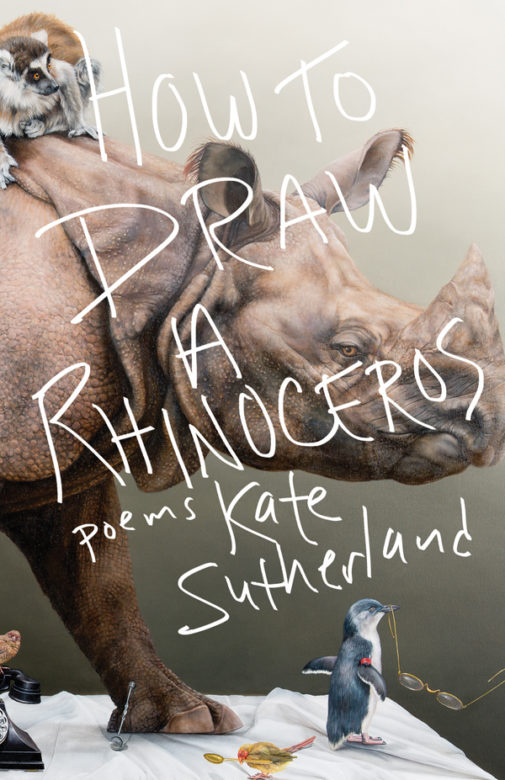
How to Draw a Rhinoceros - Kate Sutherland (Book Thug)

Today's book of poetry:
How to Draw a Rhinoceros.  Kate Sutherland.  Book Thug.  Toronto, Ontario.  2016.


Kate Sutherland has created a rather robust bestiary but it only contains one principal animal.  More correctly one type of animal, yes, How to Draw a Rhinoceros is seriously amped with a cornucopia of rhinos.

Sutherland's research is rich and varied and a little astounding.  Kate Sutherland is thorough and her sources for the poem "A Natural History of the Rhinoceros" will give you a little tug and twist into her ample resources.  

"Fragments of text borrowed from: Ctesias, Ancient India; Oppian, Kynegetika; Pliny, The Natural History; Kosmos Indikopleustes, De Mundo; Marco Polo, The Travels of Marco Polo; Valentin Ferdinand, Letter; Edward Topsell, The History of Four-Footed Beasts and Serpents; James Bontius, An Account of the Diseases, Natural History, and Medicines of the East Indies; John Evelyn, The Diary of John Evelyn; I. Parsons, A Letter from Dr. Parsons to Martin Folkes, President of the Royal Society, containing the Natural History of the Rhinoceros; L'Abbe Ladvocat, Letter on the Rhinoceros to a Member of the Royal Society of London; Comte de Buffon, Natural History; Oliver Goldsmith, A History of the Earth and Animated Nature.

How to Draw A Rhinoceros may be the most well researched volume of poetry to come across the desk of Today's book of poetry in a long time.  Of course the research wouldn't mean anything if the poetry didn't work.  Sutherland's poems work hard and the results are easy to like.

How to Draw a Rhinoceros

Begin with an elephant. Shorten the legs and the nose, pin back the ears
To cement the distinction, assert eternal enmity between the animals

Compare to:
cow  calf  bull  ox
oryx  buffalo  camel
horse  donkey  goat  lamb
lynx  lion
pig  hog  boar  sow  swine
dog  rabbit  mouse
eagle  duck
tortoise  turtle  toad
dragon  elephant
overturned coach
mountain

Distinguish from:
fox
tiger
elephant
hippopotamus
unicorn

Use a woolly rhinoceros skull to sculpt a dragon's head

Delete all rhinoceros references from the Bible
Replace with unicorns

Add a dorsal horn and a suit of armour

Incorporate its image into an apothecary's coat of arms

Put a jaunty human skeleton in front
and one behind

Sketch a front view, a back view, a side view. Insert details
of horn, hoofs, ears, nose, tail, each of its component parts

Liken its genitalia to botanical specimens with Latin names:
e.g., Digitalis floribus purpureis, Aristolochia floribus purpureis, &c

Picture it grazing placidly in the foreground, while a fearsome compatriot
gores an elephant in the background

Position it on an island under a palm tree
in a jungle draped with vines
in a march rolling in mud
next to a river
in a desert
on a cliff edge

Depict it stalked by an Indian swordsman, or African tribesmen
armed with bows and arrows. Don't be afraid to mix and match

Confuse its armour with an armadillo's and situate it in the Americas

Render it with a ring through its nose, being led by a chain
or with its leg shackled

Paint it lying on its side, feeding in its pen
preening before an audience. Divest it of its horn
Mask the audience. Make it realistic
the audience fantastical

Sculpt it from marble. Cast it in bronze. Model it in porcelain
Perch a turbaned Turk on its back
Place a robed mandarin cross-legged at its feet
Put a clock in its belly

Enamel it on a serving plate

Engrave its likeness on a medal, a series of medals
suitable for collecting

Emblazon it together with a sailor on a banner
the sailor raising a glass of beer
in a toast: Bon Voyage!

...

Sutherland's How to Draw a Rhinoceros is a glossary to adorn the history of the rhino and messy human interlopers alike.  By the time Sutherland finishes we can imagine a world where the only reason for human existence to flourish is to praise the big beast.  But of course Sutherland is up to much more.

Today's book of poetry thinks you get the picture, Sutherland's rhinos are the platform, her high diving poetry act is what we are really here to see.  How to Draw a Rhinoceros is a splendid poetry read; Sutherland both amuses and informs, teases and delights.

Kate Sutherland's How to Draw a Rhinoceros is a new mythology for the odd-toed ungulate and Rhinocerotidae will be eternally grateful for as long as they can read poems.

O'Brien's Four Shows

Museum! Menagerie!
Caravan! Circus!

The Rhinoceros
or Unicorn of Holy Writ

huge animal
immense size
enormous footprints
prodigious proportions
one of the largest black rhinoceroses
ever seen
huge monster
leviathan rhinoceros
great unicorn
Rhinoceros-ship

perhaps the only opportunity
of ever beholding
a FULL-GROWN LIVING RHINOCEROS
in the United States

the public will please remember
there will be no additional charge
to see this extraordinary
curiosity

...

Having been a member in curious standing of the Rhinoceros Party I felt it was my duty to get our morning read off the ground and started.  Our office staff were a bit St. Patrick's Day green this morning but Today's book of poetry offered no sympathy.  I put John Coltrane's "Giant Steps" on at a peaceful but not distracting volume, spiked everybody's tea, and on we went down Rhinoceros Road.

The Fun of Hunting Them

I. Theodore Roosevelt, East Africa, 1910

Any modern rifle is good enough. The determining factor is the man
behind the gun.

I pushed forward the safety
of the double-barrelled Holland rifle
which I was not to use for the first time
on big game. such a hard-hitting rifle
the best weapon for heavy game
I was using a Winchester
with full-jacketed bullets
I was anxious to try the sharp-pointed bullets
of the little Springfield rifle on him
I used all three of my rifles

It would certainly be well if all killing of it were prohibited

I fired for the chest
I first hastily into the chest
I put the heavy bullet straight into its chest
I fired right and left into his body
I put in the right barrel
I struck him with my left-hand barrel
I again knocked it flat with the left-hand barrel
I put both barrels into and behind the shoulder
I fired into the shoulder again.
I fired into its flank both the bullets
remaining in my magazine
I emptied the magazine at his quarters and flank
I put in another heavy bullet
I had put nine bullets into him
I sent the bullet from the heavy Holland
just in front of her right shoulder
The bullet went through both lungs
It went through her vitals
My second bullet went in between
the neck and the shoulder
The bullet entered between the neck and shoulder
and pierced his heart
The animal was badly hit
It needed two more bullets before it died
I had put in eight bullets, five from the Winchester
and three from the Holland

To let the desire for 'record' heads become a craze is absurd

None had decent horns
None with more than ordinary horns
None carried horns which made them worth shooting
It did not seem to have very good horns
Her horn was very poor
A poor horn
A stubby horn
A short, stubby, worn-down horn
His horn though fair was not remarkable
A fair horn
A good horn
The front horn measured fourteen inches
against his nineteen inches
It had good horns
The fore horn twenty-two inches long
the rear over seventeen
Thick horns of fair length
twenty-three and thirteen inches respectively
A stout horn, a little over two feet long
the girth at the base very great
A front horn was nearly twenty-nine inches long
He was a bull with a thirty-inch horn
A very fine specimen, with the front horn thirty-one inches long
much the longest horn of any of them

...

Kate Sutherland's How to Draw a Rhinoceros is a monster first book of poems that Today's book of poetry admired from the get go.  Sutherland has taken a page out of the American novelist John Irving's playbook.  One of Irving's characters in The Hotel New Hampsire intones that only way to succeed is to "get obsessed and stay obsessed."  Sutherland's rhino obsession is all gravy to poetry readers, Sutherland knows how to burn.

Image result for kate sutherland photo
Kate Sutherland

ABOUT THE AUTHOR
Kate Sutherland was born in Scotland, grew up in Saskatchewan, and now lives in Toronto, where she is a professor at Osgoode Hall Law School. She is the author of two collections of short stories: Summer Reading (winner of a Saskatchewan Book Award for Best First Book) and All In Together Girls. How to Draw a Rhinoceros is Sutherland’s first collection of poems.

BLURBS
“Kate Sutherland has created a surprising, beautiful and often tragic menagerie of poems about a powerful, peaceful beast that has the misfortune of being both magnificent and magnificently horned. Her brilliant resurrection of 18th-century rhinosuperstar Clara is an enchanting bonus.” 
     —Stuart Ross, author of A Hamburger in a Gallery and A Sparrow Came Down Resplendent

“Kate Sutherland writes a book of poems with the understanding that the colonial encounter requires a deliberate destruction of the colonized. In How to Draw a Rhinoceros, Sutherland draws upon historical documents and imagined perspectives to present a palimpsest that maps imperialist invasion, European plunder of brown and black countries, kidnapping, murder, and enslavement. In other words, the poems reveal the true face of empire. In verse that invents, alludes, and allows for considerable vivid delving, the poems present and speak back to white violence and a colonialism that framed and imprisoned those that they conquered (including people) as exploited ‘exotics’ for European appetites.” 
     —Hoa Nguyen, author of As Long as Trees Last

bookthug.ca

562

DISCLAIMERS

Poems cited here are assumed to be under copyright by the poet and/or publisher.  They are shown here for publicity and review purposes.  For any other kind of re-use of these poems, please contact the listed publishers for permission.

We here at TBOP are technically deficient and rely on our bashful Milo to fix everything.  We received notice from Google that we were using "cookies"
and that for our readers in Europe there had to be notification of the use of those "cookies.  Please be aware that TBOP may employ the use of some "cookies" (whatever they are) and you should take that into consideration.


Thursday, December 8, 2016

ةيلمع Operación Opération Operation 行 动 Oперация - Moez Surani (Book Thug)

Today's book of poetry:

ةيلمع Operación Opération Operation 行 动 Oперация. 

Moez Surani.  Book Thug.  Toronto, Ontario.  2016.


Moez Surani does a couple of things in ةيلمع Operación Opération Operation 行 动 Oперация that go entirely against the grain of Today's book of poetry Poetry Belief System.  Today's book of poetry generally disapproves of introductions in books of poetry where the introduction is explaining how or why the poem works.  It is like muddying the water before you can get your feet wet.  But there are always exceptions and ةيلمع Operación Opération Operation 行 动 Oперация is an exceptional exception.  In this particular case the introduction is a necessary part of the whole.

Turns out ةيلمع Operación Opération Operation 行 动 Oперация may also be the mother of all list poems - and you know how we love those here.  Max, our Sr. Editor has taken a dislike to the list poem in his tired dotage but we love him anyway.  This morning we pushed a saucer full of shortbread cookies and another saucer full of scotch under his office door.  With any luck at all that will mollify, read sedate, his ire.  

1959

Burnt Cork
Concord
Executor
Friendship
Grapple M
Ice
Mastodon
Repack II
Shuttlecock
Sputnik
Trousseau
Vague II
Vixen
Visage
Hotfoot/White Star
Jumelles (Binoculars)
Orpheus

...

Not to give away the plot but ةيلمع Operación Opération Operation 行 动 Oперация is a found poem constructed from the list of military operations undertaken by member states of the United Nations between 1945 and 2006.  This poem is a haunting indictment that opened Today's book of poetry's eyes.  How dare these military operations have humour, irony, wit and pathos amongst their names.

We owe Moez Surani a great debt for his research and diligence in creating this highly disturbing and menacingly masochistic nihilist literary stream of conscience gem.  Exactly what Mr. Surani intends to say with Operations will be sorted and discussed by higher authorities than Today's book of poetry but we are honoured to look at it here.

1972

Dhib
Marble
Keystone Owl
Putney
Prek Ta
Seahawk
Eastertide: Quang Tri
Freedom Train
Eastertide: An Loc
Bullet Shot
Constant Guard I
Constant Guard II
Eastertide: Kon Tum
Keystone Pheasant
Plathond
Pocket Money
Isotope
Linebacker I
Constant Guard III
Koteka
Thunderhead
Keystone |Wren
Folklore
Pacer IVY / Pacer Inventory
Toggle
Ticky
Motorman
Keystone Pelican
Boulder
Constant Guard IV
זעם האל [Wrath of God] / Bayonet
Waverider
Zealous
Marosca
Linebacker II

...

ةيلمع Operación Opération Operation 行 动 Oперация is way outside Today's book of poetry's usual bailiwick of narrative, descriptive and casually accessible poetry, way outside. This book is a challenge but that is not an obstacle, it is an incentive. Surani has written the best sort of anti-war, anti-violence tract possible, it hoists these nations by their own petards with clarity and conviction.

1998

Recuperation
Noble Response
Solar Sunrise
Stanhope
Determination
Pollard
Prudence
Murat
Excite / Hilti / Prone
Bevel Incline
Shakti [Power]
Chagai - I
Chagai - II
Quartz
Safe Departure
Shepherd Venture
Determined Falcon
Joint Forge
подкова [Horseshoe]
Kitona
Vagabond
Resolute Response
Infinite Beach
Persistence
Boleas
Shadow Express
Eagle Eye
Central
Sovereign Legitimacy
Badr [Full Moon]
Joint Guarantor / Determined Guarantor
Fuerte Apoyo [Strong Support]
Rivibala [Rivi Force]
Desert Fox
Spartic
Climate Change

...

This morning's read was a steam-roller that barely paused for breath. ةيلمع Operación Opération Operation 行 动 Oперация is a military fugue where the volume and beat have been pumped up until it makes you catch your breath. Surani has discovered what sweet horror we casually inflict upon the world and has made poetry out of it.

Image result for moez surani photo
Moez Surani

ABOUT THE AUTHOR
Moez Surani has travelled, studied, and worked in countries around the world. His writing has been featured in numerous publications, including the Best Canadian Poetry (2013 and 2014), The Walrus, The Globe and Mail, Harper’s Magazine, and PRISM International. His first poetry collection, Reticent Bodies (Wolsak and Wynn), was published in 2009. In that same year, he won a Chalmers Arts Fellowship, and later, attended artists’ residencies in Italy, Finland, Latvia, Switzerland, Taiwan, and Canada. His second poetry collection, Floating Life (Wolsak and Wynn), was published in 2012. ةيلمع Operación Opération Operation 行动 Oперация, Surani’s third book, was a finalist for 2014 Les Figues Press Book Prize.

BLURBS
“Words, first, then evidently turning into names, but names of what? Racking up four thousand military operations by United Nations member states since 1945, Moez Surani’s list is far from simple. Who knew that the UN was writing a long poem? Or that this particular long poem would resound in the mind like Pound’s Cantos, that ‘poem including history’? A stunning compilation of linguistic fertility—and fertilization— courtesy of a political organization listing in the wind over half a century. But it takes a listener to detect that shiver in the atmosphere, and this astonishing book is deep listening through and through.” 
     —Jed Rasula, author of Destruction Was My Beatrice: Dada and the Unmaking of the Twentieth                                 Century

“Morning light. June dawns. Moonbeam. Bumblebee. Wren. Tulip. The code names of military operations conducted by the United Nations mark and disguise the costs of war and humanitarian interventions, like modest arrangements of flowers at unseen necropolitical funerals. ةيلمع Operación Opération Operation 行动 Oперация appropriates these code names without deploying the arsenal of juxtaposition, displacement, and framing conceits. It is a stark, stripped down, relentless list poem that organizes and recognizes the many faces and names of historic international cooperation. Surani’s new book reimagines appropriative writing as an “inadvertent collaboration” between nations. It documents the civilian and ecological devastation of collaboration and divests idealism from the notions of “agreement” and “co-production” between imagined and real communities. It is appropriative writing that queries how language is resignified and renovated for artful and affectively profitable cooptation by the state. And, true to the project’s claims, the book eschews the pleasures of euphony, pursuing instead a terrifying cacophony between sound and sense. An unnerving, frightening book that calls for expansive and paratextual reading.”
     —Divya Victor, author of Natural Subjects

Moez Surani reads from Floating Life
Video: Wolsak & Wynn

bookthug.ca

533

DISCLAIMERS

Poems cited here are assumed to be under copyright by the poet and/or publisher.  They are shown here for publicity and review purposes.  For any other kind of re-use of these poems, please contact the listed publishers for permission.

We here at TBOP are technically deficient and rely on our bashful Milo to fix everything.  We received notice from Google that we were using "cookies"
and that for our readers in Europe there had to be notification of the use of those "cookies.  Please be aware that TBOP may employ the use of some "cookies" (whatever they are) and you should take that into consideration.

Sunday, March 20, 2016

No Work Finished Here: Rewriting Andy Warhol. - Liz Worth (Book Thug)

Today's book of poetry:
No Work Finished Here: Rewriting Andy Warhol. 
Liz Worth.  Book Thug.  Toronto, Ontario.  2015.

NoWorkFinishedHere_LizWorth_highres_9781771661645 (2)

Today's book of poetry is slightly confused, I don't know what to explain first, my technique for choosing today's poems or Liz Worth's technique for writing them.

Let's start with Liz Worth and her astonishing second book of poems No Work Finished Here: Rewriting Andy Warhol.  Worth has taken the 1968 Andy Warhol novel A Novel and eviscerated it.   Within a self-imposed set of boundaries Worth tackles each page to tear away what isn't needed and to savour the juicy morsels, rendering them down to inexplicably fine poems.

You are here

I didn't do a thing last night
felt like a ghost
just staying up and all that, just talking
car noises in the background.
Some of my throat is gone.
Need some Obertrols--blue ones, blasting
oh, the orange ones are divine.

Is there ANY place we can keep calling
voice on the other end
know where we can get some.
This number in front of us--sister would know us.

We should start for the park. Takes forever.
Asleep on the bus, too gorgeous.
It's all right--fantastic baby,
you definitely are here.

...

And we are there.  Boom.  Worth plants us in the Factory with these poems that are a remixing distillation of Warhol's novel.  But they are so much more.  These poems are electric.  No Work Finished Here is simply a towering achievement.  Page after page after page of this opus burns.  It's a bit like going for that blue flame, dipping your fingers in lighter fluid and catching lit matches.   Whooosh.

Today's book of poetry was completely gob-smacked by No Work Finished Here and so was everyone in the office.  Our morning read hasn't had quite that smirky smack in the head edge since we last read Susan Musgrave, another great Canadian poet who can burn.

Push to tell

Kill me
in a fake voice,
disguising the real day.
Make them believe
we're stars,
unbearable to live with.
They hate me
for being what I am and
all your friends
get so mad at you.
Why should we wait here
like this, with doubt;
come and talk to me,
push to tell
how we are.

...

Andy Warhol was one interesting cat and Today's book of poetry is slightly ashamed to say we've never read A Novel.  We sure want to now.

Today's book of poetry isn't able to tell you anything about Andy Warhol or the Factory that you don't already know -- but Liz Worth sure can.  No Work Finished Here opens up the Factory like it was a can of tuna and Worth was the can opener, she just rips the top off of that thing.  Then she reaches in a plucks out the best of what she needs, hammers them into gems.

And that would be enough.  Worth does more than that.  She bridges the gap from the Factory to us, the reader and then tells us how we are.

Values

I wanna tell you something
very secret:
my voice
is turned up
to drown out
all possible
conversation.
Background obstructs
those people
in the other room
with their fucking values.
Their tactics
have led 
to nothing.

Aren't you going
to fuck
for five minutes
with me?
On tape?
In the elevator,
pressing that button,
there's time for
charity, falsity.

...

So since Today's book of poetry pretty much loved every poem in No Work Finished Here (and that never happens, seriously), today's poems were chosen at random and with confidence.

If you want to know exactly how we made our random choices please send two Crying Charlies and a buck-fifty to Today's book of poetry with your enquiry.  You know the address.

No Work Finished Here: Rewriting Andy Warhol is one big thick lovely tome, coming in at over 450 pages, and for this reader it is a high water mark for Canada's most adventurous small press, Toronto's Book Thug.

Saying wow isn't saying enough, as far as Today's book of poetry is concerned No Work Finished Here gains immediate entry into that lovely pantheon of absolutely essential Canadian poetry classics.

Liz Worth

ABOUT THE AUTHOR
Liz Worth is a Toronto-based author. Her first book, Treat Me Like Dirt: An Oral History of Punk in Toronto and Beyond, was the first to give an in-depth account of Toronto’s early punk scene. She has also released a poetry collection called Amphetamine Heart and a novel called PostApoc. You can reach her at www.lizworth.com, on Facebook (www.facebook.com/lizworthbooks), or Twitter @LizWorthXO.

BLURBS
“Liz Worth’s collection of poems is a testament to both her artistry and daily discipline. In an age of diminished attention, her perseverance in daily poem—making by mining the same source over and over reminds us that artists can be a model of life without distraction-how to go deeper and deeper until you find yourself looking back at you.” 
     — Heath Allen, composer of Andy, A popera

“What if you tore apart the city’s tenderloin; if you seized its ephemera and — before burning all the sweet voodoo — collected the best, and most brilliant cuts? This is Liz Worth’s stylish master-nightmare, No Work Finished Here. This is ‘the start of something true.'”
     — Lynn Crosbie, author of Where Did You Sleep Last Night

Liz Worth
@
Mike Geffner Presents The Inspired Word
Wednesday, May 16, 2012
116 MacDougal Street Bar/Lounge
Manhattan
Video: InspiredWordNYC

bookthug.ca

451

DISCLAIMERS

Poems cited here are assumed to be under copyright by the poet and/or publisher.  They are shown here for publicity and review purposes.  For any other kind of re-use of these poems, please contact the listed publishers for permission.

We here at TBOP are technically deficient and rely on our bashful Milo to fix everything.  We received notice from Google that we were using "cookies"
and that for our readers in Europe there had to be notification of the use of those "cookies.  Please be aware that TBOP may employ the use of some "cookies" (whatever they are) and you should take that into consideration.

Saturday, October 17, 2015

Endangered Hydrocarbons - Lesley Battler (Book Thug)

Today's book of poetry:
Endangered Hydrocarbons.  Lesley Battler.  Book Thug.  Toronto.  2015.


Lesley Battler's absolutely incendiary Endangered Hydrocarbons continues Toronto's Book Thug's tradition of publishing the most cutting edge poetry in the country.  This tome weighs in at 175 pages and it is one hell of a dirty dance.  These poems are a scathing indictment of the policies, systems and practices that surround petrochemical production and usage.

Battler isn't just making up stuff, this is Joyce Cary Horse's Mouth stuff of the highest order.  As Gulley Jimson said:
   
“Nothing like poetry when you lie awake at night. It keeps the old brain limber. It washes away the mud and sand that keeps on blocking up the bends.Like waves to make the pebbles dance on my old floors. And turn them into rubies and jacinths; or at any rate, good imitations.”
Joyce Cary, The Horse's Mouth

These poems are collages made out of the misdirection and technospeak from the industry itself. Battler explains the text with this statement:

"All of the poems in this project are derived from texts generated in a multinational oil company. I spliced items such as wellbooks, mudlogs, geological prognoses, and meeting notes with a variety of found material, including histories and critical theoretical works, as well as travel, real estate, and home decor magazines - basically anything that crossed my path."

The following poem is an excerpt from the longer poem Pax McMurray.

the Edson wars 

for centuries
Edson's conventional well culture
had bullied the intellectuals
at Fort Mac

of course
this meant war

knowing
they were outnumbered
the Murrians pioneered
supply-chain
logistics

burned coke
with quick & dirty electricity
met intensity targets

transported
entire work camps
by horse-drawn chariot

routing the Edsonites
who continued utilizing
slaves, suffering
endless LTIs

at the same time,
commodity prices
bottomed

stymied by diminishing
sweet gas returns, Edson
surrendered to the
Bitumenites

who released one
of the most important
documents in history
Pax McMurray 1964

the Pax relied
on bulk modules
a surplus of joules
& Alcogel 1 to fuel
the imperial army

upholding the victors'
moral claim to the Regional
Municipality of Wood Buffalo

Syncrude imposed a
provisional government
wrote off the decline rate
cut supply to debt-ridden
territories

thus
the gentle colony
of bitumen worshippers
became a modern client-based
project team

...

Because Today's book of poetry is an old fart and getting older our selection of works from Endangered Hydrocarbons does not include any of the more adventurous and experimental of Battler's texts.  But I am here to tell you that you can be sure she is brilliantly convincing at every turn.

It's not just that Battler is turning OILWORLD upside down and sideways -- these are poems written by an effervescent neologism, a master of neolexia.  If you don't believe me just ask William Gibson. Battler invents language we somehow already know.  There is much marvelous fun buried at every turn in this new encyclopedic examination of the absurd, it is enthralling.

RADIANT DIACEL

Martin Luther and the birth of
Individual Reservoir Pressure

hollowed in autumn shadow
Luther pursues the hermeneutics
of pneumatic drills
              i lost hold of the Methane
              made of Him, Stockmaster
              and Hangman over my
              poor Soul

the young monk sobs over the antics
of apostolics at critical point on
the risk matrix
              pontiffs siphon pipelines
              fill their empty mitres

              nuns run wireline
              down saline caverns

              archbishops cache gas
              in lavish Vaticans

              mud-filtrate desecrates
the Holy Writ

haunted by hydraulic pumps
caught in faulty logic, he
promises to rid the world of
Cathodic corruption
              salvation is a gift of God's grace
              music of the chemical
              Eucharist is received
              by tests alone

personal revelation

on the very day condensate gas
goes retrograde, God reveals
His Five-Year Plan
              the Reservoir Fluid
              Composition of Tool
              1200 is tabulated
              on Pages 6 & 7

early temperature
vs. pressure plots

Luther burns the bull allowing nuncios
to sell Unleaded at Stations of the Cross

writes 600 million cubic feet a day
a personal best
              but i know You
              can pressure even
              the most heinous
              eicosane into a
              straight-chain
              only You
              my God

              we can not exist
              in two phases

              must
              choose

              heavy oil or
              natural gas

Marburg

Luther edits his viscosity
deposits the excess slurry
of his vocabulary

deviates from vertical wells
drilled by the Colloquy

dares test Ethyl Lead
declares it Unready

insists on the physical
wettability of the Holy Spirit

              one must open
              the perforation tunnel
              in his heart to bathe
              in Radial Flow

Wittenberg

flushed with success from first-run tests
Luther emulsifies 95 theses from his treatise
              the Compositional Analysis and Transfer
              of Bottomhole Samples

              civil authority
              can enact no law
              against the Diacel
              of the Christ who
              liquefied for our sin

...

Books like Endangered Hydrocarbons are rare as hen's teeth, poetry books like Endangered Hydrocarbons are once in a lifetime explorations of where flame meets fuel and our collective responsibility for lighting the match.

Battler isn't just being a well-informed reporter, she's turning a world upside down by being an enemy submarine in their lexicon ocean of oil.

There is much to entertain and enthrall in Battler's opus, but sit somewhere safe when you read it, Battler is going to be fracking with your head.  She is sending out information stylishly dazzled into poetry, it is under pressure and it is going to go in deep.  You won't be the same afterwards.  From now on you will aftertaste kerosene.

ADVANCES IN UNCONVENTIONAL ONEIROLOGY

at 25 barrels per capita
(60 barrels Alberta)
Canadians are the world's
heaviest dream users

my subconscious contains
a semantic core encased
in mundane sand, sulphur
salt water

heat, pressure, decay
eventually compress
past and present into
a tarry ooze

early oneirologists ran
small diameter pipes
through my limbic
system

flared off random
thought mutations
until my amygdala
blew out on Seepage
Lake

for weeks, phantasms
and psychoses clogged
the Old Man River
terrorizing Lethbridge

finally in '55 the great
Conrad Schlumberger
analyzed a lump of my
reverie and just knew

dimethyltriptamine
could increase dream
production 60%

Imperial Oil approved
gravimetric testing on
my hippocampus

cholinergic ponto-genicul-
occipital waves stimulated
my cortical structures

technicians injected
nitroglycerine into my
parietal lobe

shot-point vibrations
released dissociated
imagination from
sensory traps

REM converters allowed
thousands of metres of
uncaptured by-products
to push up the standpipe

rendering a whole new
source of my dreams
(whimsy, hypnagogia)
safe for your factory
your car, your furnace

...

This book is an indictment.  A stunning first book.  Lesley Battler has our full attention.

Lesley Battler

ABOUT THE AUTHOR
Born in Barrie, Ontario, Lesley Battler’s work has been published in Alberta Views, Arc, Contemporary Verse 2, dandelion, filling Station, Matrix, Other Voices, PRISM international, and west coast line. She won the PRISM international Earle Birney Award (2012), and the University of Calgary Poem of the Season Award (2009) for a poem that became part of Endangered Hydrocarbons. Battler received an MA in English from Concordia University, and currently lives in Calgary, where until recently she worked in the petrochemical industry.

BLURBS
“Electric and unexpected … Lesley Battler’s ‘Idylls of Inuvik’ [is] a zinger of a poem that uses the internal, molecular energy of words to enact a merciless takedown of the still-colonial attitudes at play in the economics of Canada’s North.” 
     — Anita Lahey, Arc Poetry Magazine

“Lesley Battler’s cut-up work will continue to remind me that it will always be easier to remove overburden than it will be to clear-cut a small forest. Her work brings us the spectacle of the wars of rhetoric – with their victors and victims of ideology, hijacking knowledge and power with approved terms of vocabulary.” 
     — Paul Zits, filling Station


Lesley Battler
Reading from Endangered Hydrocarbons at the 2015 BookThug Spring Launch
video: Jay MillAr

Endangered Hydrocarbons is a 49th Shelf Most Anticipated Spring 2015 Poetry Selection


394
 DISCLAIMERS

Poems cited here are assumed to be under copyright by the poet and/or publisher.  They are shown here for publicity and review purposes.  For any other kind of re-use of these poems, please contact the listed publishers for permission.

We here at TBOP are technically deficient and rely on our bashful Milo to fix everything.  We received notice from Google that we were using "cookies"
and that for our readers in Europe there had to be notification of the use of those "cookies.  Please be aware that TBOP may employ the use of some "cookies" (whatever they are) and you should take that into consideration.