Showing posts with label alistair macleod. Show all posts

Thursday, March 7, 2019

Travel Notes from the River Styx - Susanna Lang (Terrapin Books)

Today's book of poetry:
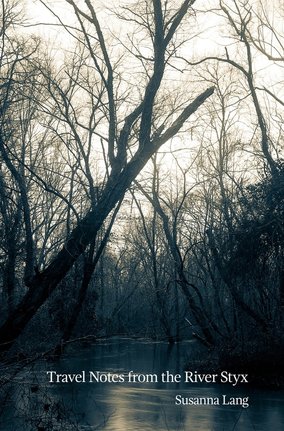
Travel Notes from the River Styx.  Susanna Lang.  Terrapin Books.  West Caldwell, New Jersey.  2017.
Picture

Today's book of poetry's first impression of Susanna Lang's Travel Notes from the River Styx is of a haunting, a ghost trail, a ghost voice.  Or perhaps it is just affectionate trepidation.  But Lang's poems get between your fingers and toes like mud or mist, flowing where they want.  These poems are not incantations but they are certainly precarious spells of some kind.

And Susanna Lang really hammer and tongs our hearts when she brings out the big guns, Saint Anna Akhmatova, our beloved, on to the playing field.  Travel Notes from the River Styx entertains, if that's the word we want to use, but it comes at a price.  The entertainment marches along with dread.  And then the crafty Lang drops a Ben Sidran moment on the readers and we go limp with surprise and joy.  Susanna Lang must possess a wicked sense of humour under her cheeky smirk.

Migration

   1.
Wind empties the sky of all but its own force, carries
a concrete dock from Misawa

five thousand miles across the ocean, encrusted with thirty species 
not seen before on this side of the world:

sea stars, urchins, gooseneck barnacles, snails, seaweed, kelp,
shore crabs—but not like ours, creatures

that have survived the winds and deep water; curls and ribbons,
protruding eyes and tongues

the color of blood. We bury the lot eight feet under sand
and higher than a storm would surge.

Starved of salt water, they'll none of them live; or
so we hope.


   2.
I sleep in one country, wake in another, dream and daydream in two
languages, lose words in both.

This year the heat comes early, frost comes late, burns the blossoms
on the trees, blights the harvest—

apples, cherries, apricots, all the stone fruit. But in the backyard
of a brick two-flat on the southwest side of the city

small green knobs hang half-hidden in the leaves, until birds
come to ravish them:

durazno in the language of the house, momo in the language
of the dock, a sweetness in the air.

Losing ground, losing home, only the blur of wings
and that fragrance.


   3.
RED ROJO written in chalk on the sidewalk, GREEN VERDE
and a goldfinch

singing in the tree above, returned from its yearly journey.
My family came to stay

but not in one place. One country, too many cities.
I found a clamshell yesterday

by the backyard fence, where it should not have been;
but there have been others.

My real country is not a place, the monk says when he is expelled
from the country where he has lived

for decades, though he cannot forget the desert and its fragile icons.
My real country is heaven.

💫💫💫

Today's book of poetry wants to tell you how Susanna Lang sustains such a solid presence with these poems  Travel Notes from the River Styx is a full seven course meal that satisfies at every turn.  The appetizers are engaging, the soup as fine as your favourite grandmother used to make.  The main course is varied, filling, solid and rewarding.  Dessert a surprising dollop.  All of this to say that Susanna Lang can burn.  And you know how much we love that here at Today's book of poetry.

Another sure sign that Susanna Lang's Travel Notes from the River Styx is worth your poetry time is that almost every poem in this tasty collection has already been published in a literary magazine that we all want to appear in.

Languorous forces and a memory for the ages.  Lang jumps over those Russian steppes and her grandparents history in poems rich with irony, fear and hope.  Today's book of poetry is always happy to find the hope element.  Much like Lynne Knight (our last blog/review was of Knight's The Language of Forgetting), Lang evokes memory, calling upon it to reveal some truths for the present.

After You Get Up Early on Memorial Day

You take the cats out with you, shut
the door: I have the whole wide bed, all
the covers to fall back asleep in, while you
cut up and sugar the strawberries, grind
the coffee, leave the radio off
so I won't be disturbed. The room is still
dark, rain forecast for the entire day,
other people's family picnics cancelled,
barbeques moved into basements, parades
rerouted to avoid flooded viaducts, the iris
losing petals beside newly cleaned graves,
their mason jars spilt into the saturated ground.
But here is my holiday, this drift back beneath thought
while I lie in the warm impression of your body.

💫💫💫

Our morning read reflected an office in flux.  Today's book of poetry has been undergoing some major changes and apologizes once again for our recent tardiness.  Steps are being put in place to correct those issues.  None the less, Travel Notes from the River Styx is just the bromide needed to start our poetry engine and yours.

Susanna Lang, the storyteller, reminds Today's book of poetry of Saint Alistair of MacLeod, if he were writing poetry.  Disguised as poems, Lang's stories inhabit the reader, memory lurks at every turn.  Lang is working towards a conclusion, each poem another solid addition to her platform, a foundation forged in another time.

Lexicon

My father, who studied these things, would have said
that we become more so as we grow older.
I don't know if he invented the phrase or borrowed it
from one of the books he read and handed on to me
before I was ready; but more so became a word
in our family, a way to explain my mother
shifting the vase half a centimeter to its predetermined
place on the end table, or our friend whose skin
after the heart attack let the light through.
We collected words, like child of God
which meant the way Sister Ann pulled Rene downstairs
by his ear, reminding herself and everyone in earshot of where
we all come from and how to love what fights against us.
Or heron, which meant so much more than the blue-gray
shadow that flew over the canal we insisted on calling
a river, meant afternoons on real rivers up north and Sundays
at the natural history museum, the living bird's crooked neck
and long beak so like the artist's rendering of what flew
above this place in the beginning. It's enough to make you believe
in a Garden of Eden, if you can imagine an Eden
that grows and changes, perennials coming in more thickly,
roses a deeper hue than they were before, but the beds
still marked. And now a previously unknown species of tailorbird
has been discovered in a suburban tree, vibrating
with its own song, new cap on its head, new name
in the books. We still need a word for the primate
that loosened up its shoulders like a slingshot, ready to throw
what would one day be called a fastball, my father
sitting in the stands with my brother, one face reminiscent
of the other, both cheering for the pitcher and his evolving arm.

💫💫💫

So, in conclusion.  We have discovered, much to our delight, that Susanna Lang can burn, baby, burn.  You all know how much we like that here at Today's book of poetry.

Susanna Lang

ABOUT THE AUTHOR
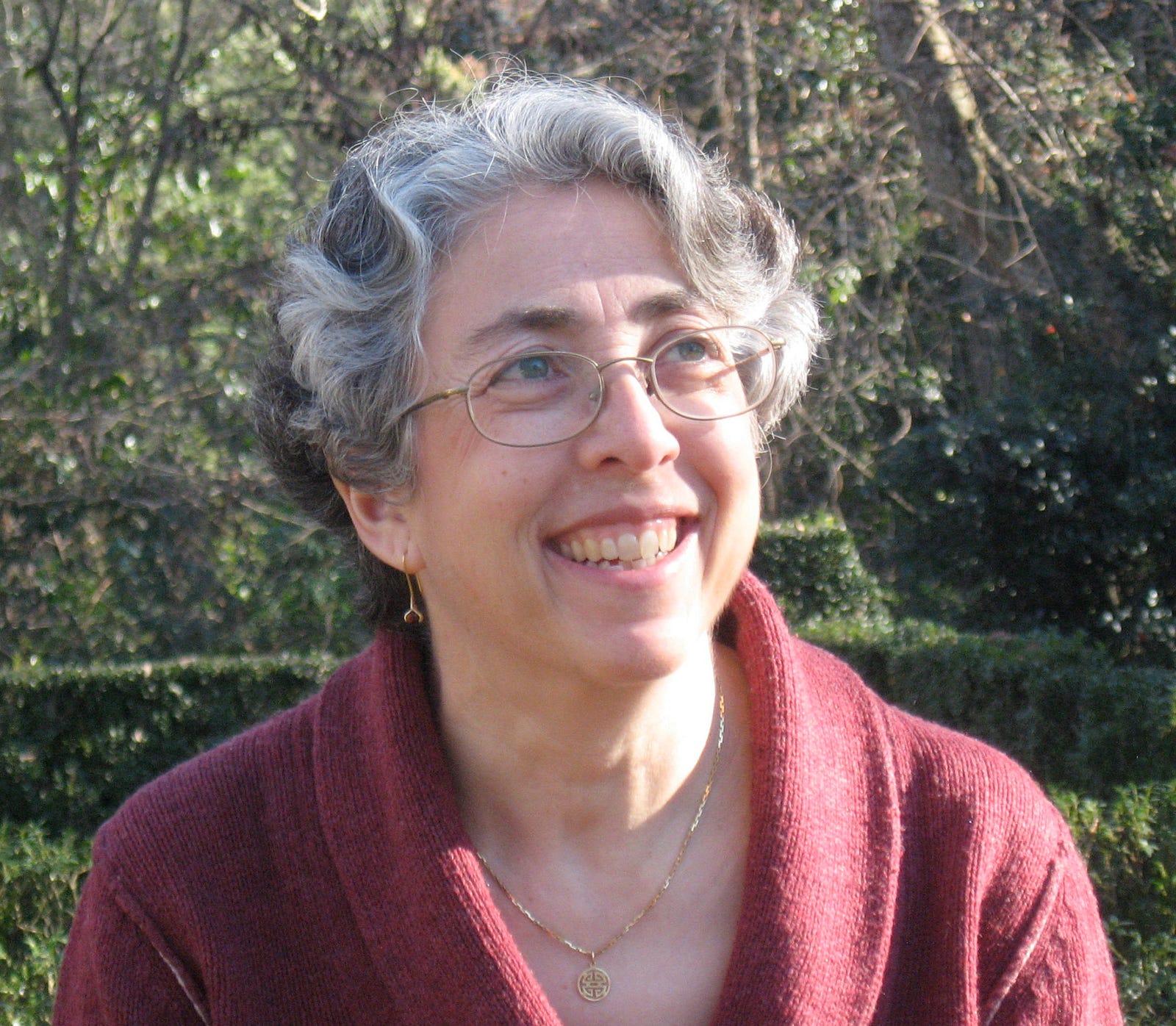
Susanna Lang is the author of Tracing the Lines (Brick Road Poetry Press, 2013) and Even Now (The Backwaters Press, 2008). She has also published two collections of her translations of poems by Yves Bonnefoy, Words in Stone (University of Massachusetts Press, 1976) and The Origin of Language (George Nama, 1979). A two-time Hambidge Fellow and recipient of the Emerging Writer Fellowship from the Bethesda Writer's Center, she has published her poems and essays in such journals as New Letters, Prairie Schooner, Green Mountains Review, and Poetry East. She lives in Chicago, where she teaches in the Chicago Public Schools.

BLURB
In the earnest and beautiful Travel Notes from the River Styx, Susanna Lang peers into the tiny mirrors of a river’s current, the mirror her father cannot see himself in, the rearview mirror in which she spies sandhill cranes on an afternoon drive as she interrogates the natural and, at times, unnatural world. The result is a collection of double images: the moon a “copper coin with the sheen worn off,” “the flag [that] slips down the pole,” the country where her grandmother was born once called Russia, now Ukraine. As clear in its language as it is rich in argument, there’s something for everyone in Travel Notes, for travelers are exactly what this poet proclaims we are. It’s impossible to read this collection without wondering what doubles wait/lurk/reside beneath the skin of our bodies and of our world.
     —Andrew McFadyen-Ketchum

terrapinbooks.com


SPECIAL NOTICE:

Today's book of poetry would like to give a shout out to Steven Heighton, our Canadian colleague, who has been recently named as one of four finalists for the Moth Poetry Prize.  You can get more information about that here:

Today's book of poetry sends our best wishes and all our crossed fingers for Mr. Heighton.


742

DISCLAIMERS

Poems cited here are assumed to be under copyright by the poet and/or publisher.  They are shown here for publicity and review purposes.  For any other kind of re-use of these poems, please contact the listed publishers for permission.
We here at TBOP are technically deficient and rely on our bashful Milo to fix everything.  We received notice from Google that we were using "cookies"
and that for our readers in Europe there had to be notification of the use of those "cookies.  Please be aware that TBOP may employ the use of some "cookies" (whatever they are) and you should take that into consideration

Tuesday, May 9, 2017

Silent Sister - the mastectomy poems - Beth Everest (Frontenac House Poetry)

Today's book of poetry:
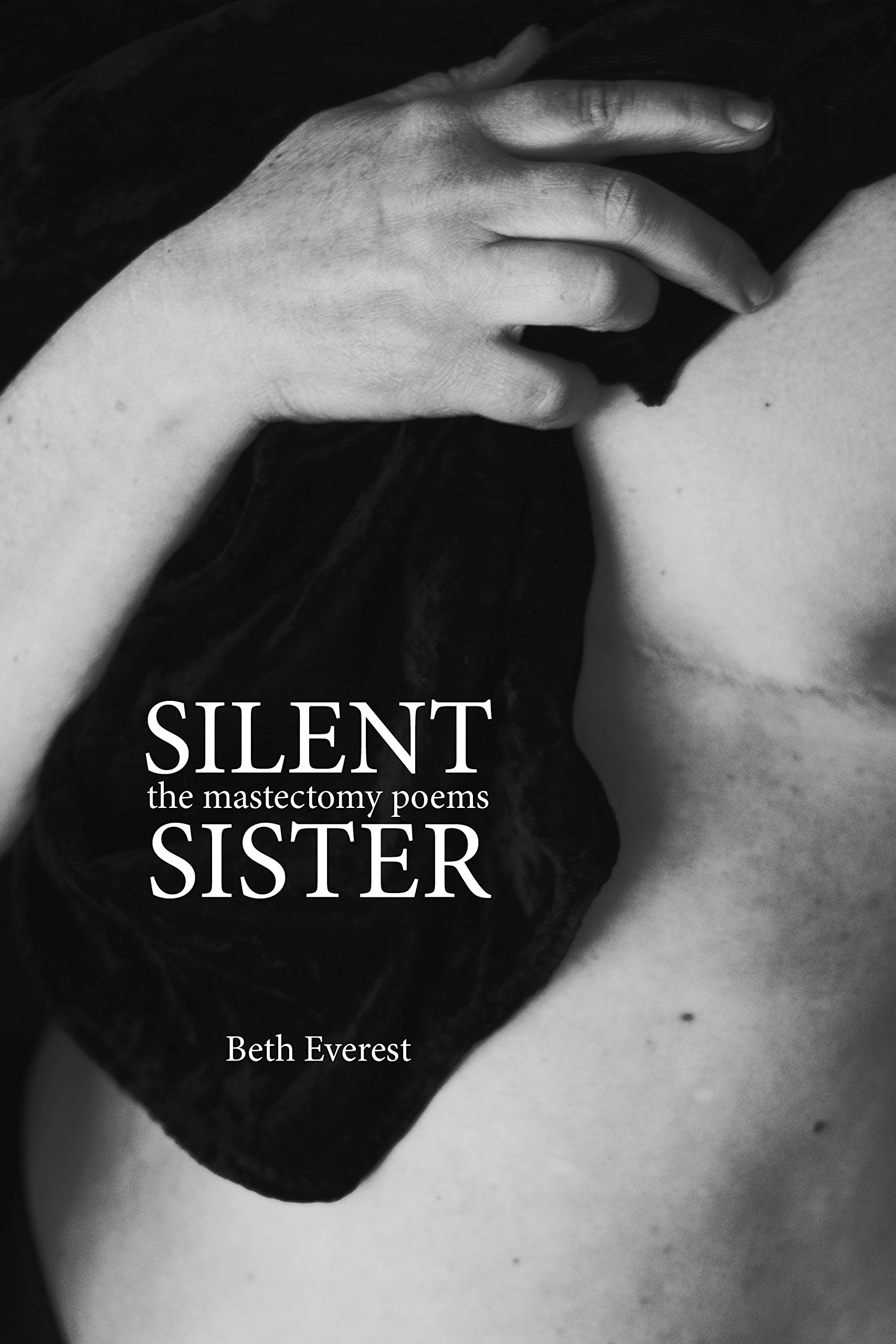
Silent Sister - the mastectomy poems.  Beth Everest.  Frontenac House Poetry.  Calgary, Alberta.  2016.


~~~~~

is chemo as awful as
some people say it is?

you never ever want to know.

~~~~~

Beth Everest goes to hell and back and writes poems about the experience.  They are as immediate as a slap to an unsuspecting face.  Silent Sister - the mastectomy poems is a harrowing coming to terms with cancer and the fallout around that terrible disease.

Everest takes honesty to chemo-puking levels and shares the intimacies of emotional mountain climbing and the literal physical breaking point.  Her illness is a cross she bears and a painful platform and from that stratified vantage point Everest muses on relationships, family, the concept of the/a future and the pain.  There is almost always the pain.

~~~~~

sometimes

i lie in bed, hoping
morning comes.
other times, i lie in bed
hoping it doesn't
but it does
and maybe the sun comes
out, or doesn't
but my nurse
tells me rain
clears toxins
even if it feels like

burning,
burning
rain.

~~~~~

Today's book of poetry was very curious to find out that Beth Everest had the opportunity to study with both W.O. Mitchell (Who Has Seen The Wind) and Saint Alistair MacLeod (No Great Mischief), two of Canada's greatest story-tellers.  

Today's book of poetry was lucky enough to study with W.O. Mitchell's son Orm Mitchell, as good an English professor as you'd ever want to find.  The closest Today's book of poetry ever got to St. Alistair was to stand beside him at a small cocktail party while he and Margaret Laurence traded war stories.  I made sure their glasses were full, listened, gobsmacked.

Today's book of poetry mentions Mitchell and MacLeod because in our story of the world they are a special kind of deserved royalty.  That Everest studied with them shows serious intent, and it never hurts to rub elbows with the gods.  But to my knowledge neither MacLeod or Mitchell dabbled in the dark art of poetry.

Silent Sister - the mastectomy poems works very effectively as a book of poems.  The immediacy, intimacy and voracity of these extremely personal poems is electric.  But it would be very easy for Today's book of poetry to imagine much of this text in a longer narrative work of fiction.  We would stop short of saying we can see the particular influence of Mitchell or MacLeod but we certainly see the quality, the precision.  Beth Everest writes poems singed with the fire and flame of having been to Hades.

~~~~~

docetaxel

smells like medicine we were given
when we were kids, one teaspoon each
year before the wormy winter of sucking
on frozen sweater sleeves, eating snow
for God's sake, a dog might have peed there,
the carmine suspension that tasted like
coins, thick on the tongue.

open your mouth, it's just one teaspoon,
my dad holds my hands back, mom pries
at my mouth and just the smell i am
spitting it into the next year.

and now i am 53, the oncology nurse with
the slow rubber gloves, funnels the bag of
red into the syringe, into my arm, it smells
like, it feels like, it tastes like
forever
will it be over, the slow 45 minute
squeeze,
does it burn? tell me if it burns and
i will slow down, hurry, please, too
toxic to drip, too toxic to touch, too toxic
to spit and when you get home you'll pee
red for up to four days, all your body
fluids are toxic, take precautions especially
around the toilet, wash your hands, be
careful, tell your family, and watch your pets, do you
have pets? a dog, maybe?
yes, yes, hurry, please yes,
and when we are done,
we'll start the slow
2 hour
drip.
drip.
drip.

~~~~~

There is much rough going on in Silent Sister - the mastectomy poems, so much pain shared that it's hard to rub it off when you are done.  At the same time Everest has found her way to a voice that is measured with enough tenderness to get through to the end.  She is not without hope.

In this very difficult time Everest and her poems find some solace in the consoling hands of caring friends.

~~~~~

i am at a local store,
flipping thru the racks of discount clothing
sort of hoping to find something to fit
my reshaped
body.

hey. i look up at the sound of a woman's voice,
soft and friendly, and realize she is speaking to me.
you in treatment? she says. i've been there.
twice. as in two sets.

i think i am afraid
to think about that possibility.
what stage? she asks.
2B comes surprisingly to my tongue.
can i hug you? she asks and moves to my
side of the rack.

and you? i say, what stage are you? i ask this
mid-hug. she steps back.
she smiles, they are making me comfortable
and she walks away.

wait, i think, but not thinking loudly
enough for her to hear. wait, please
tell me your name, as if somehow
the naming would make all the difference.

~~~~~

Everyone here at Today's book of poetry has been touched by that rat bastard cancer at one point or another.  Our Sr. Editor Max lost his youngest son to the scourge almost twenty years ago and we miss him so.  One way or another cancer has thunder-fucked each and every one of us here at Today's book of poetry so this morning's reading was a highly charged affair.

Today's book of poetry's mother, Effie, had a breast removed when she was in her early 20's and then had the other breast removed when she was in her early 40's.  For the first time in my life, thanks to Silent Sister - the mastectomy poems, I have had a small glimpse, a moment of perspective, into the horrors my mother braved.  Four small children and a fifth on the way when the Big C first knocked on my mother's door.

Beth Everest is doing some very brave sharing with Silent Sister - the mastectomy poems.  Many, many women will weep with understanding and empathy, any man who reads Silent Sister will come away with more understanding than previous and certainly more sympathy.  That is an awfully big success for any book of poetry.

And Everest manages to throw in some hope, a trickle of optimism.  An "I'm still here, dammit," smiling sneer.

This book of poems should be in every Dr.'s office and waiting room in the country.

Beth Everest author photo
Beth Everest

ABOUT THE AUTHOR
Beth Everest is a Calgary based writer whose poetry and fiction have been published in journals across the country. Her new book, silent sister: the mastectomy poems, forthcoming from Frontenac House (2016), is her second book of poetry.

Beth has won numerous awards for her work and her teaching. Most recently, her piece “this poem is about desire” was awarded the silver medal at the Alberta Magazine Publishers Association Awards (2014), and “hanging clothes” won second place in the 2013 Freefall Fiction Contest (judged by Patrick Lane).

Beth holds a Doctorate in Education (University of Calgary), a Master of Arts Degree (University of Windsor, where she had the notable honour of studying with the great story-tellers W.O. Mitchell and Alistair MacLeod), a Bachelor of Education Teaching Certificate (University of Calgary), and Bachelor of Arts Degree (University of Alberta).

Currently, Beth is an Associate Professor in the Department of English,
Languages and Cultures at Mount Royal University, where she teaches Creative Writing (fiction).

BLURBS
Your writing makes me wake up and think and feel and remember.
     - Judy O'Leary, cancer survivor

Telling the story of breast cancer is brave but not so important to helping others who often feel very alone. Even more effective when poetry brings alive the daily experience in such a graphic way.
     - Jeremy Hughes, former CEO, Breakthrough Breast Cancer, UK

Dr. Everest has composed an honest, reflective collection of her art, sharing with us her hard-fought battle against breast cancer. She vividly captures the fragile moments of her journey; there is intense emotion in each verse.
      - Dr. J. Kanashiro, surgeon

Powerful. Poignant. Heartbreaking, yet ultimately hopeful. Silent Sister is about more than breast cancer. It's about the loneliness of modern medicine, our seach for meaning, our dogged resilience in the face of a crow's nest of cancer. The flesh may be pierce, but the human heart never.
     -Will Ferguson, Giller Book Prize Winner


579

DISCLAIMERS

Poems cited here are assumed to be under copyright by the poet and/or publisher.  They are shown here for publicity and review purposes.  For any other kind of re-use of these poems, please contact the listed publishers for permission.

We here at TBOP are technically deficient and rely on our bashful Milo to fix everything.  We received notice from Google that we were using "cookies"
and that for our readers in Europe there had to be notification of the use of those "cookies.  Please be aware that TBOP may employ the use of some "cookies" (whatever they are) and you should take that into consideration.

Monday, December 5, 2016

Tiller North - Rosa Lane (Sixteen Rivers Press)

Today's book of poetry:
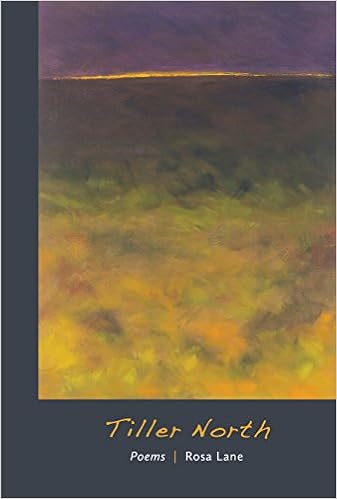
Tiller North.  Rosa Lane.  Sixteen Rivers Press.  San Francisco, California.  2016.


Rosa Lane's Tiller North makes Today's book of poetry think of Alistair MacLeod's short stories in marvels such as The Lost Salt Gift of Blood and As Birds Bring Forth the Sun and Other Stories if they were written by a woman of equal power and persuasive gifts.  Or Michael Crummey's stunning novel Sweetland.  These poems feel like they are familiar, like they take place on or near the same water.

Today's book of poetry says this because these poems are big, they feel like stories, fill up the space and imagination just like a big novel.  These poems situate you in a rural/remote fishing community surrounded by sea and brush.  You are in the kerosene lit kitchen, you are in that death-watch bedroom.

But most certainly, you are there.  

The natural path Rosa Lane pushes you down in these poems is strewn with hard work and calloused hands, hard living and some hard luck.  Yet there doesn't seem to be much complaint, this is reportage using memory rendered poetic.  Lane isn't asking for any empathy, her heart is full to bursting with memory.

June Bugs

Electricity buzzes the yellow bulb
in Maine's humid heat. June bugs bomb
the porch light with spiny legs -- date-colored
and oversized.
                        Spring peepers pin the night,
pitch a universe in my mother's kitchen, except
I have not yet occurred to her. She is sixteen,
and I will be hers in less than a year.

Supper's on the table for the boy who will be
my father, his nineteen-year-old body big
and husky. He rinses dried splashes
of work from the day's ocean into a small
blue basin, enameled and filled
with hand-pumped water drawn from the well.

Fireflies light the field aflame. Conceived in the heat
of summer, I appear a small spark of night
planted in the deep crevice between them.

...


Lane takes the reader to a time and a specific place in these poems.  We'll never truly understand the life of a small and remote fishing village but we certainly understand more now.  We can't smell the kerosene or the fish but Lane gets us there, we are on the coast of Maine gazing west towards civilization.

Today's book of poetry was terribly enamoured reading Tiller North, Rose Lane has that steady Andrew Wyeth gaze and hand, and it would appear some of his same ideas about story, narrative and how to make the heart arc.  Many of Wyeth's paintings seem stark but in fact they never are, Rosa Lane has that trick finessed. There are some hard moments in Tiller North but a warm and tempered heart is leading the way.  Tiller North is coming of age poetry writ large over the working class background of a young woman in a remote place.  

Tiller North

Take Route 130 nine miles
where it dead-ends at the coastal tip,

keep your eye on the spire,
how it peaks above ragged pines

torn from a small length of ocean:
shingled shacks drunk with fog,

the mouth of John's River, a bar
of khaki sand, a stand of piers rusted

in salty air, Dora's cow pasture blurred
with brutes down meadow. How the fog

dampens fisher boats wedged at the wharf,
arched glass stained with light on the hill.

~

Households begin at the Point,
where fisher boys drive

their cars fast to the cliff,
test their brakes, scare

their girls, who squeal and dive
for safety into dangerous

arms. Tongues of the bell buoy
bang a rhythm of ocean in backseats,

when sixteen-year-old bodies grow
pregnant, birth armloads that suck

tiny breasts, unready. The young stumble
along a path of church bells calling them

to kneel Protestant pews and swallow
white wafers of a single mind.

~

Fisher boats named women wait in the cove,
anchor lines tied at the nose, nets piled

in the hold. Our father stands there waving
across the salt air, our mother at the shore

squinting the sun, seaweed floating
her black hair across the surface ahead

of winter already moving in. The three of us
run to the school bus each morning.

Our father's fingers, cracked with cold, count
singles laid on the kitchen table at night,

our porch lights lit proof of survival at the edge
of the harbor we are damned to leave.

... 

No guests for this morning's read as Ottawa was covered in snow this morning.  A number of our staff didn't make it to our digs on Dagmar.  I was out shovelling snow for over an hour earlier this morning and will go back out when it stops snowing altogether.  Milo, our head tech, and Kathryn, our Jr. Editor, both made it through the snow, they live close by and walked.  The three of us batted these poems around until we reached shore.

Today's book of poetry really liked the tone Lane establishes from the start, she has such confidence and is so self-assured that you feel like some of it might rub off, a little osmosis through hard living.

Bingo

Lucy's shack sat on cinder blocks
pressed into peat near the bog,
a piece of real estate
no one wanted. Saturday night
down at the hall,
she laid navy beans
on numbers, played six cards,
won a few coins
on the left straight.
                                She drives
headlights up the throat of driveway
pounded hard by the last rain. Trees
crawl across the face
of the house. Her porch light
burns a small hole at the door.
Her boyfriend can't wait up,
he said -- her daughter's silhouette
in the upper window riding horseback
on a horse she never sees.

...

Rosa Lane's Tiller North is the 37th title from San Francisco's Sixteen Rivers Press.  Lane joins a fraternity that includes Nina Lindsay, Stella Beratlis, Ito Naga and Beverly Burch, very fine company.

Today's book of poetry thinks you should join Rosa Lane on her journey back to the Maine of her youth.  Lane's Tiller North imparts a portrait of family and community, loss and found, in one elegant nostalgic yawp.

Rosa Lane

ABOUT THE AUTHOR
ROSA LANE is a native of coastal Maine, with familial and ancestral roots steeped in lobster fishing. She earned her MFA from Sarah Lawrence College and is the author of the poetry chapbook Roots and Reckonings(Granite Press, East, 1980). Her work has appeared in numerous journals, including The Briar Cliff Review, Crab Orchard Review, New South, and Ploughshares. After earning her second master’s and a Ph.D. in sustainable architecture from UC Berkeley, Lane works as an architect and divides her time between coastal Maine and the San Francisco Bay Area, where she lives with her partner.

BLURBS
“Tiller North ends with the word sing, a final act in a volume of poems that narrates sorrows and pays tribute to the Maine people Rosa Lane comes from. She offers scenes looked over carefully, as everyone takes their place at the table. She tells of making it through a sense of unbelonging, imprinted by rejection based on class and cut-off dreams mitigated by fierce love, hard work, and constant relation to family, place, and the rules of the season.”
     —Beatrix Gates, author of Dos and In the Open

Rosa Lane’s poems in this remarkable volume are reminiscent of Elizabeth Bishop’s in the author’s fierce dedication to craft….Lane’s poems build through the architecture of the image; the texture of physical detail; and a sparse, understated language that resonates a profound love of humanity, an embrace of the people around her, and a deep, inward movement of the poet’s imagination.”
     —Stephen Haven, author of The Last Sacred Place in North America and Dust and Bread

“In Tiller North, Rosa Lane gives us a world—not just one compass point, but all of them. In poems as lyrical as they are narrative, she presents a family and a landscape with precision and compassion. Her writing is as sharp as her heart is full. Tiller North is a moving and accomplished book.”
     —John Skoyles, author of A Little Faith and Permanent Change

Rosa Lane’s poetry reminds us why, at a certain time in our lives, we’ve had enough of innocence. Here is a compendium of those so crucial, chronology-defying self-revelations that we only know through our skin….Each poem is a skiff sculling through sounds almost Hopkinsesque, each measure of music anchored by the ground base we feel more than hear.”
     —Jeffrey Levine, author of Rumor of Cortez and Mortal, Everlasting

532


DISCLAIMERS

Poems cited here are assumed to be under copyright by the poet and/or publisher.  They are shown here for publicity and review purposes.  For any other kind of re-use of these poems, please contact the listed publishers for permission.

We here at TBOP are technically deficient and rely on our bashful Milo to fix everything.  We received notice from Google that we were using "cookies"
and that for our readers in Europe there had to be notification of the use of those "cookies.  Please be aware that TBOP may employ the use of some "cookies" (whatever they are) and you should take that into consideration.