Showing posts with label miles davis. Show all posts

Saturday, January 27, 2018

Season of the Second Thought - Lynn Powell (University of Wisconsin Press)

Today's book of poetry:
Season of the Second Thought.  Lynn Powell.  University of Wisconsin Press.  Madison, Wisconsin.  2017.

Winner of the FELIX POLLAK PRIZE in POETRY


Lynn Powell is exactly the tonic that Today's book of poetry needed to get back on track and into gear.  Reading poetry that is this smart and confident reminds us of how the real pros do it.

Season of the Second Thought is audacious.  This is Powell's third book but the first Today's book of poetry has seen.  Reading Season of the Second Thought is like eating that perfect box of chocolates, each one more delicious, every taste a new and exciting experience.  And you can never have enough. Powell calls out the muse, her muse, several times and openly challenges her for higher ground.  Not sure how Powell manages her erudite and sophisticated palette and still comes out speaking in a language we all understand, but it is a true pleasure to read.  And to read again.

Slow Elegy from Afar

     Then the Lord answered Job out of the whirlwind:
      ...Where were you when I laid the foundation of the earth?

What glitch in the genes created shame?
God, the oldest scapegoat, usually gets the rap.

But why would the maker of that granite island--
glacier-polished nub of a Precambrian peak,
with an osprey perched, bellyful of fish, in a wind-bent pine,
the gibbous moon floating up, and the evening star,
on cue, surfacing in a lavender sky--why
would the God of that cold beauty
contrive a hall of mirrors in a human mind?


On our last long walk five springs ago, we sparred, gingerly.
You were a brilliant believer; I had come to believe
that cruelty was the only sin--with the caveat
that cruelty could also be the secret name of subtler sins.
Everything else, I argued, is the blundering of a desire
to be known, loved, or safe. We make mistakes
and know ourselves.

I could see your young, tired face tighten.

So I tried a different tack--
Don't take the perfect so personally.
Don't take shame so much to heart.


Why did you suffer? And why did you leave
your suffering to those you loved?

I can't gird my loins again against my childhood God,
that God with a clipboard and swift red pen.

So I reread Job, and watch the waves wash,
and aim to wash away, the granite shore.
They paraphrase the whirlwind.

As do the oriole that slings her hammock nest
along the path we walked, the doe in the close woods
wary for her fawn, the thunderhead and the downpour,
the firefly galaxies in the blackest field of night,
the forsythia festive once again beside your grave.

...

Lynn Powell's Season of the Second Thought grabbed me by the poetry lapels and shook me senseless.  Powell musing in a blue mood is as good as Miles Davis doing the same.  But somehow I keep hearing W.H. Auden's perfect pitch in these poems.

The thing you learn, early on in Season of the Second Thought, is that you can be confident throwing yourself into each and every poem from the beginning to the end.  Lynn Powell is steady as a metronome with these incandescent poems aglow with "iridescent language."  Powell can burn.  Here's a poet who talks about the weather as though she controlled the sky, like she knows when it is going to rain.

Love Poem from the Wrong Side
of the Rain

What would April do? Tease hidden
meanings from the bulbs, raise the stakes
and double my entendres, and bet
all my roses on the bottom line.

But it's the season of embarrassed trees,
the modest charms of leaf rot and briar
and hawk scat thawing on the muddy path:
skinny March at an earnest latitude.

So tell me, Muse: where around here might a woman
find a little flint and tinder,
some figure of feisty speech, a correlative for kisses
that would make a grown man weep if she put it
all on the table and headed out
for good into the long-stemmed rain?

...

Today's book of poetry is very happy to be back in the saddle, and Lynn Powell is one hell of reminder of why we are in the poetry game.  Today's book of poetry doesn't just love reading great poetry, we aspire to write some of it.  Poets like Powell set the bar to beautiful new heights.

Our morning read was old school.  I made everyone stand up today when they read.  An infinitesimally small gesture of respect in memory of Señor Caballero Nicanor Parra who left us this week after more than a century of being a GREAT poet and a beautiful citizen.

Powell's poems held up splendidly.  The grand old man would have seen the bold beauty of Powell's hard truths, her certainties all tinged a little blue.

October Edge

Mapless and skidding again on a backroad
prickly with teasels and sumac and skeletons
of lace, I glimpse a pink non sequitur:
a winged woman on the stoop
of a whitewashed church, glancing up
from an opened book and lifting
her opened hand--

but I will not brake today for grace,
I round the reckless curve, past pumpkins
with no faces forced yet on them, past
bins and barrels of crimson wholesale fruit,
past tombstones disheveled in the drizzle
staggering after their long-lost
ballast of grief--

the blurred signs vanishing
like everything else in the hindsight horizon,
and the black tires taking my incendiary heart
farther, faster, out past the charred trunks of the maples,
those miles of martyrs with feet
held fast to the banked flames
of their own making.

...

Today's book of poetry is here to tell you that Lynn Powell's Season of the Second Thought is worth every second of time you can spend on it.

Today's book of poetry is built on the idea of sharing the best poetry what we can find.  Lynn Powell's Season of the Second Thought is as stone cold solid as any book Today's book of poetry has sent your way.  Lynn Powell is instantly a poet we will have all the time in the world for.

For Lynn Powell we are ready when she asks "Why don't you put your mouth / where your moody heart is?"  Today's book of poetry is speaking up here and now; Lynn Powell IS the next poet you should read.



Lynn Powell

Lynn Powell

ABOUT THE AUTHOR
Lynn Powell teaches in the Creative Writing Program at Oberlin College, where she directs Oberlin's Writers-in-the-Schools Program. She has published two previous collections of poetry: Old & New Testaments, winner of the Brittingham Prize in Poetry, and The Zones of Paradise. Her nonfiction book Framing Innocence won the Studs & Ida Terkel Award.

BLURBS
“Let Powell's images and figures wash over you. They can be deft and unobtrusive, but they will stick with you; they will illuminate what otherwise might be dark. A poet so sure-handed is irresistible. Dazzling.”
     —Robert Wrigley

“Not just written, but wrought. Powell's new poems deftly combine keen observation with perfect pitch, and their rich chiaroscuro renders them vibrant and painterly as the Dutch masters they often reference. The current running through her lines leaves me shivering with excitement and gratitude.”
     —R. T. Smith, author of In the Night Orchard


Kind of Blue
Lynn Powell
Video: Gabriel Jasso


650


DISCLAIMERS

Poems cited here are assumed to be under copyright by the poet and/or publisher.  They are shown here for publicity and review purposes.  For any other kind of re-use of these poems, please contact the listed publishers for permission.


We here at TBOP are technically deficient and rely on our bashful Milo to fix everything.  We received notice from Google that we were using "cookies"
and that for our readers in Europe there had to be notification of the use of those "cookies.  Please be aware that TBOP may employ the use of some "cookies" (whatever they are) and you should take that into consideration


Monday, September 19, 2016

To Greet Yourself Arriving - Michael Fraser (Tightrope Books)

Today's book of poetry:
To Greet Yourself Arriving.  Michael Fraser.  Tightrope Books.  Toronto, Ontario.  2016.

To Greet Yourself Web

Michael Fraser's To Greet Yourself Arriving works a bit like hot magma, lava.  Left undisturbed it forms a thick and eventually rock solid black crust, any disturbance at all and you soon see it is red hot, in transition, and capable of scorching any surface on earth.

These poems are celebratory odes to a pantheon of black heroes throughout history.  They also work as a syllabus to an endless litany of injustice.  George Elliott Clarke, our poet laureate, wrote, "Fraser gives us characters who, even if tortured by their experience of "race" and/or racism, win through to a stardom that edges into heroism."

And Today's book of poetry must admit to a clinical weakness.  Pretty much any poem that mentions Miles Davis is going to hit a weak spot in my anatomy.  Michael Fraser knows the way straight to my heart.

Miles Davis

The day I met Miles Davis,
he poured gold tunes
out box speakers
and sailed ahead
out over coffee table plains
and climbed the foothill couch.
Each note carried its own light.
His trumpet called from the walls
and the ceiling was
a swollen cloud.

I was flung into brass moods,
my fingers pulsed to
the walking bag's groove.
I became a yard bird
with blues for sale,
a young rebel soul
counting the air-blast hang time,
all the hazed rhythms
taking a new wave elevator
to warm sound shallows.

Transfixed, I grabbed
onto the aural sculpture.
Water refused to go
down the drain,
time spiralled 'Round Midnight,
the air lit itself
and glowed like a June day.
It glossed Miles' Italian suit.
My eyes rode the album cover
with coolness coiling itself
into my bones.

...

Michael Fraser adeptly moves through a complicated cast of characters from the Cuban singer Celia Cruz, the Queen of Salsa, the Central Park Five, Gordon Parks, P.K. Subban, Miles Davis and so on. This is distinguished company by any standard but Fraser immortalizes them all once again with his passionate and all too reasonable To Greet Yourself Arriving.

The Lynched

The veins of these trees
know the night's flavour
as it climbs and
washes each leaf
in summer's moon shade.

The aging bark listens
and peers through time
back to laughing crowds
with their army of words.

How the boy swung
over the loose voices.
How flies chewed his face.

Morning brings its scavenger tide,
an establishment of worms and beetles
crawl from the dangling tongue,
sound of something feasting
from the inside out.

How a man suffocates in air.
How a man breaks down
in the deadfall earth.

...

Many heroes, big and small, famous and unknown hurdle through Fraser's book and towards eternity and all that judging.  By the time eternity arrives perhaps none of this will need explaining -- but the stories of these brave, brave, brave and beautiful men and women will always need to be told.

Fraser never lets anger get in the way of his retelling although you can feel it under the smoldering crust.  To Greet Yourself Arriving is going to be a guilty pleasure by association for many readers.   Someone is responsible for the horrible hellish rain of racism that continues unabated today.  The poems in Fraser's To Greet Yourself Arriving stand fiercely on their own as poems, tight and clear and clean, but as a chorus this book raises itself to a beautiful black sound.

Michaëlle Jean

Mountain hinges cracked and
snapped earth in a fly's wing beat.
Screams percolated up dusted rock
and waved galvanized roofs.
Everything was veined in stone.

The living stood at the rubble's end,
listened to the wounded sear in the
Caribbean's unforgiving heat.
My birth country stumbled against its
history. Flat bodies peppered streets.
Survivors cursed the ground's blowtorch.

There was never enough of it--
time. We jumped planes and cranked
our world's cupboards while doctors
severed limbs freeing wounded scores.
It was always more than we could take,
but we continued for those slipperless
street girls, each one reflected in me.

...

Today's book of poetry is happy to find hope in poetry and astonishingly enough Fraser is up to the task, he is able to pull that off in the middle of all that sad history.  Fraser's heroes remind us of the deeds in the very worst of human folly, all those terrible things our brothers and sisters have had to endure at our hands, and then in the same poems Fraser allows us to celebrate the absolute best in human achievement - in spite of the barriers, 

To Greet Yourself Arriving is one hell of a kick in the poetry pants.

fraser pic
Michael Fraser
Photo:  Krystyna Wesolowska

ABOUT THE AUTHOR
Michael Fraser is a Toronto high school teacher, poet, and writer. He has been published in various national and international journals and anthologies, including The Best Canadian Poetry in English, 2013. His manuscript, The Serenity of Stone, won the 2007 Canadian Aid Literary Award Contest and was published in 2008 by Bookland Press. He won FreeFall‘s 2014 and 2015 poetry contests and is the creator and former director of the Plasticine Poetry Series.
Michael Fraser
Spring Poetry Salon @ Urban Gallery
May 31, 2014
video:  Brenda Clews


504


DISCLAIMERS

Poems cited here are assumed to be under copyright by the poet and/or publisher.  They are shown here for publicity and review purposes.  For any other kind of re-use of these poems, please contact the listed publishers for permission.

We here at TBOP are technically deficient and rely on our bashful Milo to fix everything.  We received notice from Google that we were using "cookies"
and that for our readers in Europe there had to be notification of the use of those "cookies.  Please be aware that TBOP may employ the use of some "cookies" (whatever they are) and you should take that into consideration.


Monday, May 9, 2016

Almost Nothing To Be Scared Of - David Clewell (University of Wisconsin Press)

Today's book of poetry:
Almost Nothing To Be Scared Of.  David Clewell.  University of Wisconsin Press.  Madison, Wisconsin.  2016.

Winner of the Four Lakes Prize in Poetry


"We were overwhelmingly underdogs."
                                                               - Yogi Berra

Whether David Clewell is "Trying on Hats With Rahsaan Roland Kirk" or talking politics with a bartender who wants to talk baseball we here at Today's book of poetry want to hear it.  Clewell's Almost Nothing To Be Scared Of is one remarkable tablet of tales.

David Clewell writes poems of every length, from two liners that are precise as lasers, to monsters that crawl over page after page.  These are beautiful monsters.  Clewell has just the right voice to glue Today's book of poetry to our seat.  These poems pulsate with stories we need to hear.

When I Called the National Security Agency to Complain
     About the Indiscriminate Collection of Private Citizens'
     Telephone Records, I Was Put on Hold for a Suspiciously
     Long Time

Your call is very important to us. All your calls, as you must know,
are very important to us. This particular call may be monitored
for quality-control purposes or for no good reason we can think of.
Just because we can. Because these days, you never know.
People remain on the line until we've made a proper threat
assessment. Calls will be answered strictly in order of priority.
If you've got nothing to hide, you've got absolutely nothing.

to fear. This is still America last time we checked,
and we're doing everything in our power to keep it that way.
No one's ever guilty of anything as long as they can prove otherwise,
so please remain on the line. this country's storied history is one
of human ingenuity: we've always made it up as we go along.
Right now we're flying by the seat of our Patriot-Act balloon-pants,
but hey, at least we're still here, and we're especially glad
that you're part of this too, so please remain on the line.

That your Walgreens prescriptions have been ready for days
is not a threat, although they might reduce your mounting anxiety.
That you haven't spoken to your mother in weeks doesn't much
concern us either, but you don't want to hear the trash she's talking.
And frankly, we didn't realize anyone was still giving money to
Greenpeace. We're long past caring about that -- go save the whales,
but you could have sprung for much better seats down at the stadium.

Please remain on the line. Due to the extraordinarily high volume
of calls nationwide, your estimated wait time would be
just a wilder, more worthless guess than usual on our part. Someone
surely will be with you, though, sooner or later. So listen carefully
for a voice on the line or a knock on the door or even someone
bumping into the rearranged furniture in your dark living room.
And that's no lie, nor is it a threat. Consider it a promise, made
right here in America, where Security is our middle name,
and right now you need to remain on the line more than ever before.

The only thing we can never know for certain is tomorrow's weather.
There's no percentage in it for us, anyway--there's no stopping it
before it happens, ever. That's how weather is. It isn't ricin or
anthrax or fertilizer bombs. You can gather all the best intelligence
in the world, but if it rains, you're still going to get wet.
So please remain on the line, where it's always nice and dry.

We know where you live. We know how you live. It's almost as if,
oddly enough, you're a friend, but still we have no idea why
some outmoded notion of privacy is so damn important to you,
someone with nothing to hide. Nothing to be afraid of.
That's the reason every one of your calls is so very important to us.
If you want to be a dog with a bone, then you can count on us to be
the bigger, many-headed dog you'll never piss with, and rest assured
we've got a few bones of our own that we're not about to let go of.

Please remain on the line, even though we know already, word
for indignant, self-righteous word, what you're going to say,
and all because last night you felt strangely compelled to run it by
your old college professor of creative writing, who couldn't imagine
anything so important that you had to call him at 2 in the morning,
especially when, truth be told, it wasn't really much of a poem
he ended up only pretending to listen to, anyway.

...

Today's book of poetry loves Clewell's hammer.  "When I Called..." isn't a list poem exactly but is a choice entertainment of political satire and mirth.  Clewell gives us a master class is paying attention because nothing seems to escape his bemused intellect.  He has a kind eye and a predatory heart.

Clewell is joined in Almost Nothing To Be Scared Of by a large coterie of pals, they show up on almost every page and bring something to the party.  Here are just a few of the gang that drop in: Philip K. Dick, Frank Stafford, Walt Whitman, Thomas Pynchon, Don Delillo, Roger Paterson, the infectious silly 60's song "Itsy Bitsy Tweeny Weeny Yellow Polka Dot Bikini," Ammon Shea, some Jevovah's Witnesses, Charlie the Tuna, Buddy Holly, more than one UFO (as you will shortly see), Lee Harvey Oswald and JFK, Jack Ruby, Donald Finkel (more on him in a minute), old Cadillacs, Plato, Debbie Fuller, Shakespeare and believe me when I tell you that this list just scratches the surface.

We pay attention to our fan mail and we've had some complaints about Today's book of poetry being a sucker for any poetry that mentioned, smelled of, tasted like, jazz.  So as much as we loved Clewell's excellent Charlie Parker, Rahsaan Roland Kirk, Ben Cartwright (Bonaza hat), Dizzie Gillespie, Thelonious Monk, Miles Davis, Charles Mingus, Sonny Rollins and Saint John of Coltrane poems, we won't mention them here.

I'm Sorry There Are No More Flying Saucers

These days everything is a UFO instead:
military stealthy planes and flying triangles, satellites
and meteorites, suborbital space debris, the planet Venus
and Chinese lanterns attached to a horde of helium balloons--
hell, sometimes even my unlikely Uncle Bud,
lit up and soaring after a few too many again, until finally
he's recognized by someone who will see him the long way home.
It used to be when you said flying saucer,

you meant a nuts-and-bolts machine that had come to Earth
from somewhere else, and Bud never would have been confused
for anything like that--he's been down-to-Earth forever,
as homegrown as they come. And there's no way he'd ever be
onboard for even a minute with beings whose brightest idea
was invariably some version of Take me to your leader, which
always led to Bud shaking his head. He knew a bad idea
when he heard it, and he wasn't about to believe
this flying saucer business had anything to do with
the likelihood of intelligent life anywhere else in the universe.

...

Today's book of poetry loved how thick some of these poems were, like an extra warm quilt.  We're convinced.  Clewell is a poet we greatly admire  --  and never more than when we read his tribute poem to Donald Finkel.  Today's book of poetry has long admired Donald Finkel.  We checked the stacks and Milo, our head tech, came back with A Mote In Heaven's Eye and the book length long poem Answer Back, but Finkel published at least 14 books of poetry and they are well worth checking out.

Too Far This Time

     Never trust a poet at the wheel.
               - Martin Amis, The Information

     for Donald Finkel (1929-2008)

You were at your very best on foot,
never missing a step as you kept walking, always
thinking on your feet, your hands completely free
to animate the words you coaxed out of one more day's thin air.
A born pedestrian on the move.
                                                    If there was anywhere
we had to go that wasn't walking distance, I was the one
who said I'll drive. You'd be relieved again, a natural
riding shotgun. And so we made it every time:
to Santoro's or the races or hot jazz or Pizza-a-Go-Go,
to another far-flung poetry reading at Why-Do-They-Want-Us-U.

But most of all, I see you walking through your life
to the north through the woods near Holy Smoke, Vermont.
To the south in the hills above San Miguel, and still farther south
in Antarctica, where you carried the geologists' ice-cold water
just for the chance to write postcards from the South Pole.
Even that far away from the rest of the world, you weren't
about to drive. You knew better back East, too--your phantom
Bronx, where you first learned what it meant to walk.

I'll see you forever walking in St. Louis, this town
that somehow passed for your idea of the Wild West:
the U. City Loop at high noon, gunsmoke along the River Despair,
and your last-stand routine: Lafayette Park, visiting Willie,
the swan that lived there for as long as he could--strangely
gentle, you said. For a swan. You couldn't believe
your luck: this unlikely friendship. But it was something
more than that, my odd-duck, rare-bird friend.

                                                  ***********

Finkel-at-the-Wheel-of-the-VW-Van was already
the stuff of local legend. Forgive me when I say I'm glad
that was a legend mostly before my own St. Louis time.
Thirty years ago, when you first walked into my apartment,
Woody Guthrie's Car Song was spinning out its final notes.
You stood there at attention, laughing: Did I just hear
my national anthem? You had to cue it up once more:
Take me riding in the car, car. Take me riding
in the car, car. You and me and Woody, raucous all together.
We talked into the dark, luxurious part of morning--then
one last chorus: I'm a-gonna take you home again,
I'm a-gonna take you home again. Riding in my car,

with the lone-but-gigantic exception of those 1,600 miles
to Mexico, summer 1995. You insisted on the driver's seat:
I know exactly how to get there, man. Connie--regardless
of your mode of locomotion, your unwavering compass, love
of your life--was stubbornly back-seat driving up front.
And in the true back seat, where I hadn't been much
since Jersey childhood, I hunkered down with Patricia,
the love of mine. Fearing for ours, although we couldn't say so.
Each night's hotel was a sanctuary with a bed
we never wanted to get out of the next morning. To be driven
stir-crazy again in Spanish: Alto, Don, alto. But once you got going,
it was always hard for you to stop.

                                                       ***********

I wish I could have driven you to the Great Beyond
and back--especially back. It's always seemed to be a place
more out-of-the-way than it probably is. And I
wouldn't have known exactly how to get there.
I wish I could have heard you say It wasn't really all
that great, man.
                          You've gone too far this time, old friend.
Beyond where I can pick you up and steer you home
alive again. And here I am, driving myself a little nutty
thinking of your so irretrievably departed. I'm driving myself
talking for us both. and it's just not the same.

...

Today's morning reading was one hell of an affair and a very spirited reading.  We invited every character that David Clewell mentioned or referenced in Almost Nothing To Be Scared Of.  They all showed up.  Shakespeare was resplendent.  JFK, Oswald and Jack Ruby sat in a corner chatting amiably enough and they all took their turns when called on.  Walt Whitman and Miles Davis kind of took hold of the proceedings, reading and laughing and assigning poems to the others.  They cracked us up when they took turns telling jokes.  It was a long reading because David Clewell has plenty to say.  

Today's book of poetry is certain Almost Nothing To Be Scared Of is worth every second you can devote to it.

Author. Photo credit, Name
David Clewell

ABOUT THE AUTHOR
David Clewell is the author of a dozen books of poetry, including Taken Somehow by Surprise, The Low End of Higher Things, Now We’re Getting Somewhere, Jack Ruby’s America, and Blessings in Disguise. He is a former poet laureate of Missouri and also formerly a circus laborer, professional weight-guesser, and professional wrestler. He currently labors as a professor of English and director of the Creative Writing Program at Webster University in Saint Louis.

BLURB
“Clewell’s lanky, chatty, extravagant, gimlet-eyed poems would make Ulysses ask to be tied to the mast again, they’re that seductive. This collection not only provides a place to catch our breath—it administers CPR to any disheartened reader.”
     - Ron Koertge

David Clewell
Missouri poet-laureate David Clewell, Webster University professor of English, reads from his collection of poems.
Video:  Webster University


469

DISCLAIMERS

Poems cited here are assumed to be under copyright by the poet and/or publisher.  They are shown here for publicity and review purposes.  For any other kind of re-use of these poems, please contact the listed publishers for permission.

We here at TBOP are technically deficient and rely on our bashful Milo to fix everything.  We received notice from Google that we were using "cookies"
and that for our readers in Europe there had to be notification of the use of those "cookies.  Please be aware that TBOP may employ the use of some "cookies" (whatever they are) and you should take that into consideration.

Tuesday, July 14, 2015

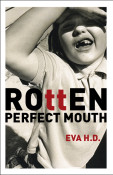
Rotten Perfect Mouth - Eva H.D. (Mansfield Press)

Today's book of poetry:
Rotten Perfect Mouth.  Eva H.D..  Mansfield Press.  Toronto, Ontario.  2015.


Eva H.D. is a conundrum.

I met her briefly at the book launch for Rotten Perfect Mouth here in Ottawa.  Eva H.D.'s reading that night was as bad as any I've ever been to - and I still loved it.  Couldn't help it.  Her casual disdain for the audience and the poetry reading process was palpable, obvious and clearly stated - and we still all loved it.

She has the same tarantula charm as Val Kilmer's Doc Holiday.  Crazy wisdom filtered through an eternally broken/bent heart.

What matters most is the startling poetry Eva H.D. writes.  And my, oh my, does this woman write up a storm.  Rotten Perfect Mouth had me yelling again.  My head runs out of places to contain my enthusiasm for writing like this.

Racing It

The sky never touches the ground but races it, forever and ever.
Amen.
I am driving us home from the church,
away from the last of summer, through the
funeral dusk. There is no bend in the road.
She is riding shotgun, exhausted, curling away
from awful truths. Blowing smoke from a crack
in the window, eyes closed.

We are surrounded by wheat and corn,
just like people always say.
I can feel the farness in my muscles.
I can feel the love in my teeth, humming.

When we get home, we can have a drink,
uncoil, not talk about it. This is what we
do best.

I want to stop the car, walk out into the fields,
and lie down on the ground, flat on my back.
I want to lie flat out, not feeling it,
until forever lets me on for the ride.

...

Today's book of poetry will put Rotten Perfect Mouth up against all comers today.  This poetry shines, I mean literally sparkles like fireworks in front of your eyes.

These poems intersect those tangent lines of cool, wise and charming.

I mean Miles Davis cool, I don't give a rat's ass cool.

Wise like Sharon Olds, wise like your smartest friend.

Charming, because fierce intelligence like this is always charming, whether Eva H.D. likes it or not.

Teenage Stuff Forever

You can continue doing this teenage stuff forever.
You can sit on the road in the perfect summer dark
and listen to a married man rail against the prison
he has built for himself. It's the same street where
you sat and smoked at fifteen, listening to a boy
describe his father's rage, the bruises, the lonely
why. They could be the same man. The man already
jealous of his toddling son, the boy cowering from
his father. It could be the same night, that June
damp, the desire to touch the face of someone beautiful
with your rotten, perfect mouth.

...

Damn it.  I am trying to put on the brakes, curb my enthusiasm but Rotten Perfect Mouth is in Nora Gould, Kayla Czaga, Sue Goyette class.

If you buy one book I recommend, and you SHOULD be buying ever single one of these books I recommend, you can start with this one.  Eva H.D. is not kidding around.  Rotten Perfect Mouth hits like the first frantic riff of Eric Clapton's Layla - and once you read these poems, the melody will stay with you for a long, long time.

Jerusalem Morning

I'm radiofree.
Wandering and orange as a flower,
pale as an orangeblossom,
fullstopped and transiting. Doves
in the gravel.

The cat is after a bird, claims Absal.
The bird is after, an afterthought
in the humming bushes,
a noise on the air that is not
an engine.

A love song to the cats, then
the hibiscus, the cyprus, the
stones.
To the pink plastic lighter
and the pink tracksuits
in the market and the half-eaten
pastries and the schoolgirls and the Gauloises.

A toast to the homeless man
at John's Pizza six years ago,
the Chinese characters like marble beads &
the jade about my neck.

God, it's perfect,
the pink blossoms,
the pink afternoon.
Crates of wine stacked
like pineapples,
the tale the muddy bank
of coffee tells
the china. I was here.
Remember me.

...

"Remember me"?  I dare you to try and forget.

These poems are so packed with energy and weird precise knowing that you almost don't notice the cumulative emotional groundswell building.

Eva H.D. wields a sledgehammer like a scalpel.  She isn't playing with the reader's emotions but she is sharing a complex palate of her own dismay and it is like riding a roller coaster of the heart designed with Edith Piaf aplomb.

Today's book of poetry and our entire staff could simply not recommend a book any higher than this one.  It is instant required reading.

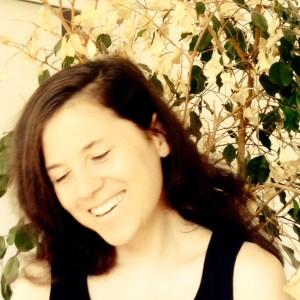
Eva H.D.

ABOUT THE AUTHOR
Eva H.D. lives and writes in Toronto.


361

Poems cited here are assumed to be under copyright by the poet and/or publisher.  They are shown here for publicity and review purposes.  For any other kind of re-use of these poems, please contact the listed publishers for permission.