Showing posts with label university of wisconsin press. Show all posts

Tuesday, January 28, 2020

Gloss - Rebecca Hazelton (University of Wisconsin Press)

Today's book of poetry:
Gloss.  Rebecca Hazelton.  University of Wisconsin Press.  Madison, Wisconsin.  2019.

Image result for gloss rebecca hazelton

Marcus Wicker calls the poems in Rebecca Hazelton's Gloss "wise, sexy, well-tuned language machines."  Now that is a line Today's book of poetry wishes we'd come up with ourselves.  

Today's book of poetry has visited Rebecca Hazelton's poetry movie before.  Back in March of 2014 Today's book of poetry was delighted to hit all you poetry monsters with a look at Hazelton's Bad Star (YesYes Books, 2013).  You can read that here:


We were convinced that Hazelton could burn when we read Bad Star, but you have to get your hands on Gloss to see what she's cooking now.  Today's book of poetry liked Hazelton's Bad Star very much but Gloss is simply at another level.  A very splendid level.  

Gloss is precise, emotionally certain and feverishly honest.  These poems are so, so tasty.  These are adult poems, the more experience the reader has the more these precious-cut diamonds will shine.

Self-Portrait As A Very Good Day

Behind dark glasses I am enormously present
                                 wading in a pool of flickering light
                     algal at the edges
                                           like a sick green dream of California

where dragonflies dip and skim
           the surface of the lightly poisoned water
                                                         some of them
                                 coupling on the fly
                      as if sex weren't already awkward

when I fuck I hardly levitate at all
                                and when I dive
                                beneath the water
         I want to be detached

                    from the searing world above but how
                                         does one stop caring

when there are so many
                     voices calling
                                 where are you where are you
                      come up there are snacks

so I swim back
                     to frozen grapes and lemonade
           to the teenaged boys strolling by
                     with fishing poles and bait

while the young girls spin
          on tire swings and scream to go faster
as if there were some shortage in the world
                     of speed or disaster

💥💥💥

These poems work like a summer sunburn, forcing you to peel back a layer or two so that Hazelton can test her vocabulary on your tenderest skin.  Make no doubt about it, she is going after the real you - and she gets there.

Gloss comes at you from multiple directions but Hazelton is in every word, embrace, every heart rendered bleeding.  Today's book of poetry felt emotionally challenged with Hazelton's magic, we were forced to look closely at ourselves, our faults and our freedoms.  Gloss is all over the gender battle, but like most of us, our theories weaken when surrounded by lust.

Rebecca Hazelton goes there and sets that shit aflame, eloquently.  She writes about the heat of the blaze, the burn on the skin, the cold, black and wet ashes left behind.

When He Is A Woman

When he is a woman I set his hair,
                                the brown strands
                                exit the comb's teeth
                                gold, spill down his shoulders
       to a slender waist I put my hands around
                  when I want him to feel small.

                            When he is a woman I am a man
and as a man I am aware
            of how to make his breath catch as I touch
                                 one freckled breast,
            as I unbuckle
                        my buckle with a definitive air.

When he is a woman the love feels more
                                           real, his eyelashes more real, his mouth
                    like an unkissed girl's more real,
                                                   and I hold to the fiction
                               he's never known another's hand
        sliding up his thigh, not this way,
or another mouth
        speaking these words that glide up his thoughts
the way a man declares
        a land claimed, and then there's a flag.

When he is a woman
                     I feel optimistic,
                                          when he is in a dress that suits
         his small frame, when the heels
                                          he walks in put his round hips to sway,
all these things make the smoke hover
                     above my scotch
                               on the rocks.
In this, as in all things,
            I am traditional.

💥💥💥

Today's book of poetry has been sidetracked in recent months by human business, funerals and weddings, the weight of days, and so on.  Our intention is to return to our "every other day" format of posting blogs/reviews.  Of course Today's book of poetry would like to be taller and sing like Saint Marvin Gaye.  None the less we shall be after the gang to pick up the pace.

We can promise that our enthusiasm has not swayed.  Today's book of poetry has a bookcase full of new poetry joys that we are dying to share with you poetry monsters.

Rebecca Hazelton's Gloss is the 800th blog/review in the Today's book of poetry catalogue.  Who knew?  Today's book of poetry is lucky to have Hazelton.

Self-Portrait With Your Head
Between My Legs

Glazed in sweat, I'm in the hot tropics
        of Florida,
                   where the geckos Velcro across
         the bedroom window
on fine invisible hairs,

                  where a perfunctory promise
         hangs over us like a broken chandelier
too heavy
       to dismantle.

I watch the ceiling
                     for cracks, a water stain
and try to imagine the happy
                                kingdom,
          as if I could punch my own ticket
                                just by wishing harder

but the princess sleeps and sleeps.

Say peach, say plum, say typical
                       to split the velvet nap
                                with a clumsy thumb:

so much depends on
                      the idea of breakfast in bed
                                versus the sloppy practice.

💥💥💥

Rebecca Hazelton's Gloss is just the ticket to get Today's book of poetry back on track.  Gloss has everything you want from poetry.  If you get inside Gloss it will teach you something about yourself.  How often can Today's book of poetry claim that?

Hazelton's Gloss is as intimate as a kiss, as memorable as a crisp slap in the face.

Image result for gloss rebecca hazelton

Rebecca Hazelton

ABOUT THE POET
Rebecca Hazelton is the author of Fair Copy, Vow, and the chapbook Bad Star, and the coeditor of The Manifesto Project. Her poems have appeared in Boston Review, Poetry, and The New Yorker. A two-time Pushcart Prize winner, she is an assistant professor of English at North Central College.

BLURBS
“A masquerade ball of velvety self-portraiture and a subversive parade of cultural norms recast as light kink. This book playacts its anxieties—gender roles and group texts, suburban mansions and contractual commitments—until the violence that underpins them is spotlighted on stage.”
      —Emilia Phillips, author of Empty Clip
“Funny, irreverent, and searingly honest, Hazelton dares to explore the obligations that we have with one another and with ourselves. And who wouldn’t want to trust the speaker of these poems? In prickly, worldly, and intimate poems, Hazelton’s wit and wisdom urge us to understand beauty in our complicated lives.”
      —Oliver de la Paz, author of Post Subject: A Fable
“These poems are wise, sexy, well-tuned language machines, full of stinging humor and quick-witted swagger, interrogating the highs and lows of cohabitation and maturation. Simply put, Gloss is masterful—a knockout collection I will continue to read, teach, and learn from for years to come.”
      —Marcus Wicker, author of Silencer


800

DISCLAIMER
Poems cited here are assumed to be under copyright by the poet and/or publisher.  They are shown here for publicity and review purposes.  For any other kind of re-use of these poems, please contact the listed publishers for permission.
We here at TBOP are technically deficient and rely on our bashful Milo to fix everything.  We received notice from Google that we were using "cookies"
and that for our readers in Europe there had to be notification of the use of those "cookies.  Please be aware that TBOP may employ the use of some "cookies" (whatever they are) and you should take that into consideration.


Thursday, October 25, 2018

The Explosive Expert's Wife - Shara Lessley (University of Wisconsin Press)

Today's book of poetry:
The Explosive Expert's Wife.  Shara Lessley.  University of Wisconsin Press.  Madison, Wisconsin.  2018.


Today's book of poetry has no idea of what it might be like to be close to danger, at least not in the way it plays out in the poetry of Shara Lessley.  Bombs, physical explosives, are being set off both literally and figuratively in Lessley's taught, tense and emotionally titillating The Explosive Expert's Wife.

There were some grim faces in the Today's book of poetry offices this morning.  Yesterday there were bombs in the mail for ex-presidents in the US of A.  And sadly, America no longer has a respected leader but instead they are being led by a fearsome beast who incorporates the worst of human fear and greed into a platform rancid with hate.  I fear more...

Back in poetry world Lessley's poems are polished, but still full of grit; whether it is dust from a recent explosion, or the sudden implosion of a realization come to late.  

Powerful stuff, these poems, both the exploding kind and the emotional.

Advice from the Predecessor's Wife

                 Amman, Jordan

Learn Arabic—your husband won't have time.
At Carrefour Express, aisle one is the tax-free line.
For poultry, go to Sweifieh (the Palestinian
chicken man's shop). Pig, on the other hand,
is impossible to find (frozen pork sometimes
turns up at the co-op). Basha ——'s
wife is pregnant with twins; expect to host
a spa date or two for his mistress. Never make
eye contact with local men. Read Married
to a Bedouin, The Expert Expat guide. (Skip
Queen Noor's book—she's from the Midwest.)
During Ramadan Crumb's breakfast is the best;
everything else is closed. Never ride
in the front of a taxi with an Arab. If you're 
near the embassy, avoid hailing a cab (security says
we're sitting ducks). Help in Amman
runs cheap: hire a driver, a maid, a cook.
Mansef is made with lamb or goat, and stewed
in a hearty jameed. When dining with royalty,
keep conversation neutral. At private parties
be prepared to be the only woman in the room,
save the staff. Look the part, but don't
show cleavage. Lipstick is fine. Laugh hard
(but not too hard) at Colonel ——'s
dick jokes. Know how to properly cut and light
a cigar. When talk turns to politics, smile
and nod, then say something obscure
in Arabic—your husband will give you the cue
(the Jords will think it cute). Never ask
a woman how long her hair is
under the hijab. Don't call anyone
but your husband habibi. Explore the souks.
Steer clear of the mosques. All Arabs hate dogs—
walk yours after dark; comb your yard
for poison and traps. Close your drapes
(Western women are common victims
of peeping toms). When moving among crowds,
expect children and strangers to stop
to stroke your hair. Always carry your passport.
The number one reason a man's relieved
from his post? His wife's unhappy. Avoid this
from the get-go—get a hobby! Play tennis,
take a class, or find a job. (The field's leveled
for spouses: here, education and experience
equal nada.)  The workweek runs Sunday to
Thursday; your husband will clock in Saturdays,
Fridays, too. Pack at least four ball gowns.
Stock up on shirts with sleeves. Gunfire means
graduation, or congratulations — a wedding's
just taken place. Don't be disturbed by
the armed guards outside your apartment
(their assault rifles don't have bullets,
rumor has it.) "Little America" runs perpendicular
to Ring Six (a.k.a. "Cholesterol Circle") — Popeye's,
Burger King, Hardee's — you'll find everything
you need. McDonald's Playland spans three
upstairs levels. Ship a year's worth of ketchup,
mayonnaise. Blondes are often mistaken
for hookers; consider dyeing your hair.
by September or October you'll learn to
tune out the call to prayer.

💫💫💫

Poetry can be the deepest message of love - or the assassin's bullet.  Poetry can be a poisoned bamboo spike or a jasmine scented pillowbook.  Poetry can fall from the invisible nighttime war plane - or from the hand of a child at the edge of the blast wave.  Shara Lessley is looking for every means of detonation.

These aren't always easy poems but they are always completely engaging.  Shara Lessley's The Explosive Expert's Wife bears witness.

The Explosive Expert's Wife

He comes home from the range scorched in dirt;
home from the office, a stain on his suit.
His nails are chewed.
He enters the house without saying a word.
He's jetlagged again. He's got blast-
dust the length of his forearms and hands.
Back from Sa'dah, he's got sand in the shanks of his boots.
He says, Sorry I'm late. He's come home
just to pack —a guard's found C4
stashed in a DCA trashcan.
He needs a haircut and shave. (It's been one of those days.)
He says, This won't show up on the news.
He's been sorting evidence. He has fresh
orders from the president.
                            He says, I do this for us.
They're booby-trapping pizza boxes and books.
They're rigging plastic cars so kids will trip the switch.
They're something else, he says.
He's on edge again.
He promises to be home by six. He promises not to miss
the latest round of tests. He's holding
a daffodil-tulip mix. He shakes his head, When
did we run out of limes?
                            He claims, It was pilot error.
He claims, No one knows. He asks, Did I get an urgent message
from Colonel So-and-So? Straight from the Pentagon,
he makes one drink after the next.
He wants to know what's for supper.
He asks if the oil's been changed.
Screw what Fox and CNN say: It's perfectly safe
to travel by train. Screw what happened
on the southern coast —
The casualty count could've been higher.
                               He's leaving for Kabul again,
this time for sixty-five days.
(It's better for us than Baghdad with overtime and haz-pay.)
He'll need shaving cream and toothpaste, fresh undershirts and socks.
He'll need a ride to the drop-off point
near the strip mall's outlet shops. He's filthy
from hosing the tech teams' Hazmat suits. He's going
to take a shower. Friday, they're predicting
snow. Careful, he warns, the roads will all be slick.
He gives thanks — the chicken tastes just right.
The dog jumps on his lap.
He strokes my arm, asks Later tonight?
Napkin crumpled, he pushes back his plate —
Now tell me everything, he says,
about your day today.

💫💫💫

This mornings read was held under grey, grey skies, we had to turn up the thermostat in the office to greet the day.  Milo, our head tech, upped the furnace and put out our chairs, in a small circle.  We bounced The Explosive Expert's Wife around the room.

There are horrors in these poems but never anything gratuitous.  Shara Lessley understands that the world is made up of tidy consolations we embrace to survive and the messy contradictions that tear us asunder when we let down our guard.

Lines Following a Husband's Departure

Freezing rain clings to the porch screen. An ice-
              quake splices the lakes. I followed you like a fault

line out to western Virginia. Here, it takes a machine
              to defrost the interior. Snowplows barrel down,

a death rattle distressing the streets. This winter, they say,
              is one for the records. You've been overseas

four days; I'm already coming apart. An electric
              blanket heats our bed. Your last catnap, an imprint

on the mattress. Somewhere in the middle
              East, you sip coffee while I sleep. More wind-

storms, and your day's half done. In a temperature-
              regulated room, you shift pieces of postblast

IEDs: copper springs and screws, a cell
              phone's plastic back. I turn and toss. The early

crew clears the street. From a gridded wire sheath,
              you pull it taut between your hands: a single human

hair — his wife's? —caught in a clip, this strand
             so long, so thick, like a shiver unsettling

the darkness — but oh, the heat once held there.

💫💫💫

Today's book of poetry will speak highly whenever Shara Lessley's name comes up in poetry talk world.  With The Explosive Expert's Wife, Lessley has confirmed her place on the poetry dais.

By the time you've finished with Lessley and her fine book, you'll have blast dust on you in places you can't find.


Shara Lessley

ABOUT THE AUTHOR
Shara Lessley is the author of Two-Headed Nightingale. Her awards include a National Endowment for the Arts fellowship, a Wallace Stegner Fellowship at Stanford University, and a Diane Middlebrook Fellowship at the University of Wisconsin–Madison. The coeditor of The Poem's Country: Place and Poetic Practice, she lives in Oxford, England.

BLURBS
“Lessley guides us along the knife-edge of a country on the edge of wars. An ex-pat Penelope wondering about her own Odysseus singed in ash, she keenly and empathically witnesses not only her own vulnerability as a young American mother in Amman but also courageous women around her—from Jordan's all-female demining team to an accused terrorist's wife.”
     —Philip Metres

“These poems teach us that there is astonishment, not just fear, in each moment of displacement. I am hooked on Shara Lessley's music of adventure, intimacy of detail, the great sweeping largesse of address across continents, across ranges of emotion. Wherever you find yourself in this powerful collection, you will learn to see the world slightly differently.”
      —Ilya Kaminsky


725


Poems cited here are assumed to be under copyright by the poet and/or publisher.  They are shown here for publicity and review purposes.  For any other kind of re-use of these poems, please contact the listed publishers for permission.

We here at TBOP are technically deficient and rely on our bashful Milo to fix everything.  We received notice from Google that we were using "cookies"
and that for our readers in Europe there had to be notification of the use of those "cookies.  Please be aware that TBOP may employ the use of some "cookies" (whatever they are) and you should take that into consideration.


Saturday, January 27, 2018

Season of the Second Thought - Lynn Powell (University of Wisconsin Press)

Today's book of poetry:
Season of the Second Thought.  Lynn Powell.  University of Wisconsin Press.  Madison, Wisconsin.  2017.

Winner of the FELIX POLLAK PRIZE in POETRY


Lynn Powell is exactly the tonic that Today's book of poetry needed to get back on track and into gear.  Reading poetry that is this smart and confident reminds us of how the real pros do it.

Season of the Second Thought is audacious.  This is Powell's third book but the first Today's book of poetry has seen.  Reading Season of the Second Thought is like eating that perfect box of chocolates, each one more delicious, every taste a new and exciting experience.  And you can never have enough. Powell calls out the muse, her muse, several times and openly challenges her for higher ground.  Not sure how Powell manages her erudite and sophisticated palette and still comes out speaking in a language we all understand, but it is a true pleasure to read.  And to read again.

Slow Elegy from Afar

     Then the Lord answered Job out of the whirlwind:
      ...Where were you when I laid the foundation of the earth?

What glitch in the genes created shame?
God, the oldest scapegoat, usually gets the rap.

But why would the maker of that granite island--
glacier-polished nub of a Precambrian peak,
with an osprey perched, bellyful of fish, in a wind-bent pine,
the gibbous moon floating up, and the evening star,
on cue, surfacing in a lavender sky--why
would the God of that cold beauty
contrive a hall of mirrors in a human mind?

︷

On our last long walk five springs ago, we sparred, gingerly.
You were a brilliant believer; I had come to believe
that cruelty was the only sin--with the caveat
that cruelty could also be the secret name of subtler sins.
Everything else, I argued, is the blundering of a desire
to be known, loved, or safe. We make mistakes
and know ourselves.

I could see your young, tired face tighten.

So I tried a different tack--
Don't take the perfect so personally.
Don't take shame so much to heart.

︷

Why did you suffer? And why did you leave
your suffering to those you loved?

I can't gird my loins again against my childhood God,
that God with a clipboard and swift red pen.

So I reread Job, and watch the waves wash,
and aim to wash away, the granite shore.
They paraphrase the whirlwind.

As do the oriole that slings her hammock nest
along the path we walked, the doe in the close woods
wary for her fawn, the thunderhead and the downpour,
the firefly galaxies in the blackest field of night,
the forsythia festive once again beside your grave.

...

Lynn Powell's Season of the Second Thought grabbed me by the poetry lapels and shook me senseless.  Powell musing in a blue mood is as good as Miles Davis doing the same.  But somehow I keep hearing W.H. Auden's perfect pitch in these poems.

The thing you learn, early on in Season of the Second Thought, is that you can be confident throwing yourself into each and every poem from the beginning to the end.  Lynn Powell is steady as a metronome with these incandescent poems aglow with "iridescent language."  Powell can burn.  Here's a poet who talks about the weather as though she controlled the sky, like she knows when it is going to rain.

Love Poem from the Wrong Side
of the Rain

What would April do? Tease hidden
meanings from the bulbs, raise the stakes
and double my entendres, and bet
all my roses on the bottom line.

But it's the season of embarrassed trees,
the modest charms of leaf rot and briar
and hawk scat thawing on the muddy path:
skinny March at an earnest latitude.

So tell me, Muse: where around here might a woman
find a little flint and tinder,
some figure of feisty speech, a correlative for kisses
that would make a grown man weep if she put it
all on the table and headed out
for good into the long-stemmed rain?

...

Today's book of poetry is very happy to be back in the saddle, and Lynn Powell is one hell of reminder of why we are in the poetry game.  Today's book of poetry doesn't just love reading great poetry, we aspire to write some of it.  Poets like Powell set the bar to beautiful new heights.

Our morning read was old school.  I made everyone stand up today when they read.  An infinitesimally small gesture of respect in memory of Señor Caballero Nicanor Parra who left us this week after more than a century of being a GREAT poet and a beautiful citizen.

Powell's poems held up splendidly.  The grand old man would have seen the bold beauty of Powell's hard truths, her certainties all tinged a little blue.

October Edge

Mapless and skidding again on a backroad
prickly with teasels and sumac and skeletons
of lace, I glimpse a pink non sequitur:
a winged woman on the stoop
of a whitewashed church, glancing up
from an opened book and lifting
her opened hand--

but I will not brake today for grace,
I round the reckless curve, past pumpkins
with no faces forced yet on them, past
bins and barrels of crimson wholesale fruit,
past tombstones disheveled in the drizzle
staggering after their long-lost
ballast of grief--

the blurred signs vanishing
like everything else in the hindsight horizon,
and the black tires taking my incendiary heart
farther, faster, out past the charred trunks of the maples,
those miles of martyrs with feet
held fast to the banked flames
of their own making.

...

Today's book of poetry is here to tell you that Lynn Powell's Season of the Second Thought is worth every second of time you can spend on it.

Today's book of poetry is built on the idea of sharing the best poetry what we can find.  Lynn Powell's Season of the Second Thought is as stone cold solid as any book Today's book of poetry has sent your way.  Lynn Powell is instantly a poet we will have all the time in the world for.

For Lynn Powell we are ready when she asks "Why don't you put your mouth / where your moody heart is?"  Today's book of poetry is speaking up here and now; Lynn Powell IS the next poet you should read.


Lynn Powell

Lynn Powell

ABOUT THE AUTHOR
Lynn Powell teaches in the Creative Writing Program at Oberlin College, where she directs Oberlin's Writers-in-the-Schools Program. She has published two previous collections of poetry: Old & New Testaments, winner of the Brittingham Prize in Poetry, and The Zones of Paradise. Her nonfiction book Framing Innocence won the Studs & Ida Terkel Award.

BLURBS
“Let Powell's images and figures wash over you. They can be deft and unobtrusive, but they will stick with you; they will illuminate what otherwise might be dark. A poet so sure-handed is irresistible. Dazzling.”
     —Robert Wrigley

“Not just written, but wrought. Powell's new poems deftly combine keen observation with perfect pitch, and their rich chiaroscuro renders them vibrant and painterly as the Dutch masters they often reference. The current running through her lines leaves me shivering with excitement and gratitude.”
     —R. T. Smith, author of In the Night Orchard


Kind of Blue
Lynn Powell
Video: Gabriel Jasso


650


DISCLAIMERS

Poems cited here are assumed to be under copyright by the poet and/or publisher.  They are shown here for publicity and review purposes.  For any other kind of re-use of these poems, please contact the listed publishers for permission.


We here at TBOP are technically deficient and rely on our bashful Milo to fix everything.  We received notice from Google that we were using "cookies"
and that for our readers in Europe there had to be notification of the use of those "cookies.  Please be aware that TBOP may employ the use of some "cookies" (whatever they are) and you should take that into consideration


Tuesday, September 12, 2017

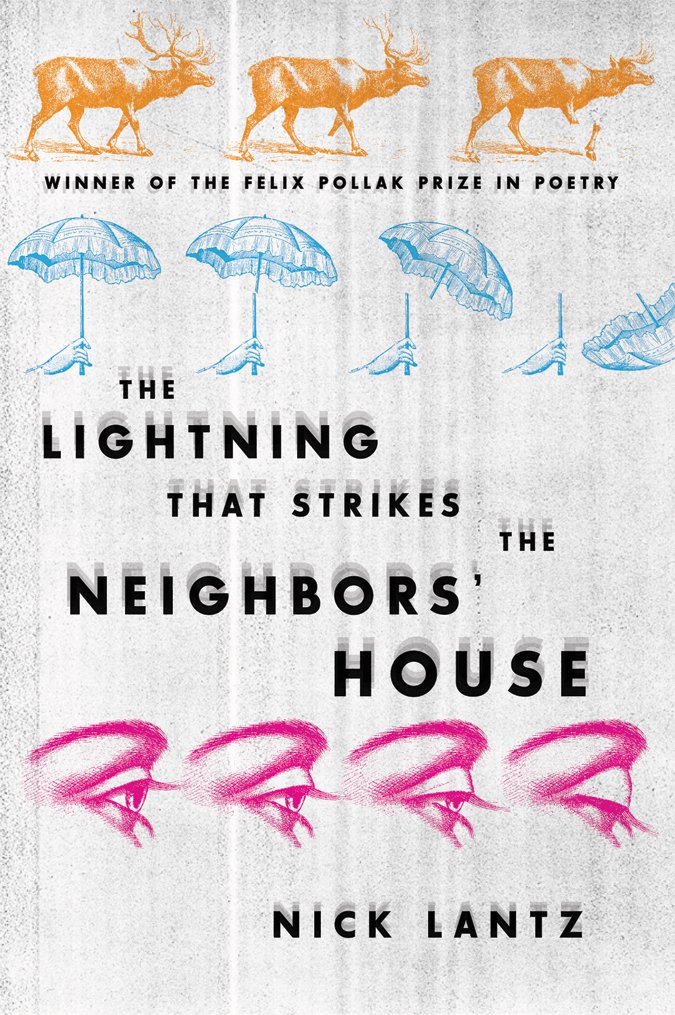
You, Beast - Nick Lantz + The Lightning That Stikes The Neighbors's House - Nick Lantz (The University of Wisconsin Press)

Today's book of poetry:
You, Beast.  Nick Lantz.  University of Wisconsin Press.  Madison, Wisconsin.  2017.

Winner of the BRITTINGHAM PRIZE


The Lightning That Strikes The Neighbor's House.  Nick Lantz.  University of Wisconsin Press.  Madison, Wisconsin.  2010.

Winner of the 2010 FELIX POLLAK PRIZE IN POETRY selected by Robert Pinsky


Today's book of poetry is throwing two books by Nick Lantz at you today and we're doing it for one reason:  Nick Lantz is a poetry monster.  He's a freaking King Kong Frankenstein Dracula Werewolf monster of the first order.  We are clumsily trying to tell you in the calmest manner that Nick Lantz has range, style and moxie beyond most mortal poets, his poetry is beyond superb.

Lantz is the king of juxtaposition, changing direction with machine gun speed but never missing a step.  The Lightning That Strikes The Neighbor's House and You, Beast are both stunning books of poetry.  Lantz is an encyclopedia, a yin/yang salesman.  Lantz is one of the most exciting poets we have ever read.

Based on True Events

So a dolphin gets caught
in a crab trap, then is rescued
and rehabilitated, but loses
his tail, or just flukes,
and is going to die probably
of heartbreak, but some kid
falls in love with him (or her?),
and the dolphin eats fish
from the kid's hand, music
swells, and the dolphin
is fitted with a prosthetic
tail and learns to do tricks
for the amputated soldiers
returning from a desert
(how can a dolphin
ever imagine a desert?),
and the soldiers say
what a huge inspiration
this dolphin is, so someone
makes a movie in which
all the above occurs
and in which the dolphin
will play itself (God, the name
they've given it: Queenie,
or Felicity or something)
and the movie title is a pun
about the dolphin's tail,
its missing tail that was lost
in some asshole's crab trap,
and everyone is crying
tears of joy as the dolphin
cavorts in the 60 x 60 tank
that will be its home
until it dies, and the dolphin
squeaks and jerks
its head, and who knows
what it's trying to say.

(You, Beast)

...

Conditional

We all have them, the lucky cousins. Feckless, blessed.
               One backed over by a bulldozer, treads

                                                                                          up to his chin.
Not a bone broken, not a bruise. Sunk in the soft mud.

               What can be said about grace
                                                           that does not diminish it?
To play a drunk, the best actors pretend to be sober.
               The street mime ladles water
                                                           from his leaky canoe.

Of the blind dog and the three-legged rabbit he chases, only
               one can be lucky tonight. Our cousins race
                                                                                           every train
to its crossing on principle; it's no surprise they win.

               If you had been born to different parents,
                                                           would your stomach still
be cratered with cigarette burns? Let us believe rain
               follows the plow, that the luck
                                                            we earn is indivisible.

Let me believe that the porch security light recognizes
               my particular shape approaching
                                                             the house at night.
Termites carry our poison back to their many cousins.

               Canoeing under the broken
                                                             train bridge, we looked up
and saw a golden bird spray-painted on the belly
               of the trestle, gaps of sunlight
                                                             punctuating the wings.

(The Lightning That Strikes The Neighbor's House)

...

Today's book of poetry is doubling up on the poems today because this double-decker of Lantz demands it.  The experience of reading the poems in both of these volumes is a little like watching the legendary Arturo Gatti/Micky Ward fights.  30 rounds of beautiful back and forth.  These poems never back up, for every left hook there's a right cross.

For every moment of scathing, blistering sarcasm, there is a moment of sublime tenderness.  Today's book of poetry just ate up Lantz's epic, episodic poem, "Toyland" from You, Beast.  Lantz clearly has a sustain pedal option on his wizardry and when he revs up his big engine sparks fly.

The Lightning That Strikes The Neighbor's House and You, Beast will convince you, dear reader, that Nick Lantz is writing from rarefied air.

This morning's read was twice as long as normal, no one wanted to miss a thing.  Poems this smart, fast and agile don't come along all that often.  The staff sat around trading poems with that look in their eyes, you know that look, the one we save for awe.

Drawing the Bee

The five-year-old's drawing:
distended honeybee,
fuchsia-striped,
striding long-legged
through the tiger grass,
eyes wobbly dots of wax
searching for a flower
to bury his face in.

I could say it signified
the tidy apocalypse
of divorce, the slanted light
of a therapist's office,
but that wouldn't be true.

I always drew the stars as black
knots brooding over bruises
(they might have been bears)
that tilted their heads up to gulp
at greenish air.

When I got a microscope
for my birthday, the first thing I ever trapped
on a slide was a flea
taken from the cat's neck. I drew
its delicate hairs, its needle
mouth, those legs long as a dancer's
and still twitching.

When I walked down a street,
I saw every broken
window first, followed the line
of ants to the car-struck sparrow,
heard in the train's long screech
a voice calling a name that had lost
its shape.

Now my mother sends drawings
she's found in old shoeboxes:
today, a pair of wolves on hind legs,
forepaws on each other's shoulders.
"Dancing," she says, but I know
they're strangling one another.

(You, Beast)

...

The Diving Horses

You know how the old stories go: the peasant's hut
               grows a little smaller every
                                              day, the frog by the window
a little louder. It's a miracle we can sleep at all.

               In the hotel room the night after
                                                           your brother's funeral,
we watched a bad movie about horses trained to jump
               from a platform into a small pool
                                                                          forty feet below.

In the first garden, the fruit didn't know when to drop.
               So what if starvation is the only thing
                                                                           that can make
the young albatross use its wings for the first time?

               Why can't I be more
                              like the hermit crab, strutting
around the sea floor in an empty perfume bottle?

               The news cuts in. The president
                                                                            shrugs. So what
if your brother dies? Without the fox's teeth deep
               in the hen's downy neck,
                                                            we would starve.

After the war, when Sherman took his evening walks,
               the fence posts lay down
                                              in the grass and trembled.
The horses, we're told, required very little prodding.

(The Lightning That Strikes The Neighbor's House)

..

Today's book of poetry started this blog primarily so that I could get my grubby little paws on more poetry.  Discovering new poetry has been a fountain of youth, a literal joyous balm.  But when poets like Nick Lantz walk through the door, well, that's when I love poetry most.

As an audience you Today's book of poetry readers must be getting to know my peccadillo's, tendencies and preferences.  You might even be familiar with my quite brilliant wife K.  K is an extremely polite and voracious reader.  She doesn't usually have much to say about poetry but this is what she said after reading Nick Lantz:

"F**k!  I love this guy!"

and then, as though he were right in the room:

"You've shown me what poetry can be!"

Nick Lantz

ABOUT THE AUTHOR
Nick Lantz is the author of The Lightning That Strikes the Neighbors' House, We Don't Know We Don't Know, and How to Dance as the Roof Caves In. He is the editor of Texas Review, cocurator of thecloudyhouse.com, and an assistant professor of English at Sam Houston State University in Huntsville, Texas. He has been a Jay C. and Ruth Halls Poetry Fellow at the University of Wisconsin–Madison and an Emerging Writer Fellow at Gettysburg College.

BLURBS
“Lantz gives us what we could least have anticipated, then makes it seem the most natural thing in the world.”
     —John Burnside

“Poem by poem, book by book, Nick Lantz is becoming one of our time's best poets. He knows the blades and shrieks and pleasures and sweet sick twists in our human hearts, and this bestiary forces us to look, hard and long, in our own mirrors. 'Polar Bear Attacks Woman ... Horrifying Vid (Click to Watch)' is a poem for this moment in the way Auden and Yeats and Rich and Dickey and Komunyakaa gave us poems for their moments.”
     —Albert Goldbarth


Here on Earth - Off The Mic - Nick Lantz
 Reads "TheYear We Blew Up The Whale"
Video: HereOnEarthShow


607
DISCLAIMERS

Poems cited here are assumed to be under copyright by the poet and/or publisher.  They are shown here for publicity and review purposes.  For any other kind of re-use of these poems, please contact the listed publishers for permission.


We here at TBOP are technically deficient and rely on our bashful Milo to fix everything.  We received notice from Google that we were using "cookies"
and that for our readers in Europe there had to be notification of the use of those "cookies.  Please be aware that TBOP may employ the use of some "cookies" (whatever they are) and you should take that into consideration.


Monday, April 17, 2017

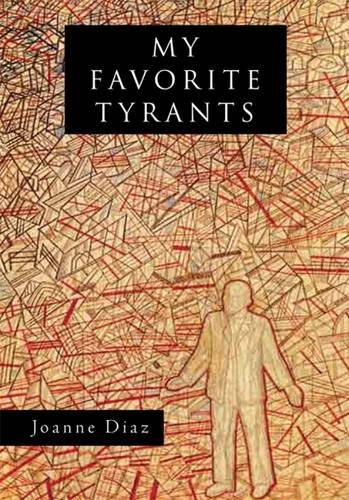
My Favorite Tyrants - Joanne Diaz (The University of Wisconsin Press)

Today's book of poetry:
My Favorite Tyrants.  Joanne Diaz.  The University of Wisconsin Press.  Madison, Wisconsin.  2014.

Winner of the Brittingham Prize in Poetry


American poet Joanne Diaz is as solid as a rock.  My Favorite Tyrants is a second book of poetry from Diaz, following The Lessons.  The Lessons is now at the top of Milo's, our head tech, search list. My Favorite Tyrants has made a deep impression here.

In the past few weeks Today's book of poetry has been in narrative poetry hog heaven.  You'll remember that we recently wrote about B.H. Fairchild and his The Art of the Lathe and were seriously gob-smacked.  I've already warned you readers that a David Lee feature was in the offing, as well as a double-header from the indefatigable David Clewell.  And now Joanne Diaz.

Diaz is no drop in veracity or tenacity from these monsters.  My Favorite Tyrants is outstanding.   Diaz spends no time on false drama or proselytizing, instead she spins such exacting and true sounding tales we are forced to remember how good poetry can be.

Barbershop

To get there, drive past Hajjar Elemenatry School,
named after the child of Lebanese immigrants
who lived here his whole life and died as the much-loved war hero
and town physician. Coast past the ditch where the now-filled
Middlesex Canal once transversed the town lines of Billerica,
Burlington, Winchester, Cambridge, and Boston, transporting
raw cotton in one direction and colorful textiles
in the other. Take a left at the corner of Call and Pollard,
there at the house of Asa Pollard, the first man to give his life
in the Battle of Bunker Hill, twenty miles southeast of here.
Follow the necklace of shabby little ranches on Pollard
until you get to the town center, then drive around the rotary,
built around the tree beneath which George Washington
allegedly sat -- is there any town in the former colonies
that doesn't have such a tree? -- and keep turning
past the old town hall, which is the new library, then
the old library, which is now the senior center
where she got her flu shot the day before, then past
Sweeney's funeral home where she is now, in the basement,
beneath the hands of the mortician who injects her veins
with the formaldehyde that will preserve her until the next day,
when the hearse will drive her coffin to a plot that is being dug,
past Taylor Florist, where they will charge four hundred dollars
for a spray of lavender wrapped with cheap ribbons that say
Mother and Wife, to Jim's where you can see my father
getting his first barbershop haircut in forty-eight years.
The sideburns, already, are not to his liking, and the razor's edge
feels a size off from her Oster home barbershop razor,
and the plastic sheet that covers him now is so uncomfortable
compared with the flowered bed sheet that she used, stained
purple-brown as it was from years of her own home coloring treatments.
If you listen, you'll hear him tell the barber that he hasn't been
to a barbershop since 1961, but now that she is gone, he guesses
that this is what he'll have to do. In these first days, he's relieved
to be with strangers. With them it is almost easy to say,
My wife has died in this, his new language.

...

Joanne Diaz digests this bitter earth and then voices, in songs we recognize, songs we'll remember, the necessary journeys we take to make a family.  My Favorite Tyrants is much bigger than just family, Diaz also manages to work in some geo-political fanning of the flames.

Death is a big Diaz theme but she looks beyond the simple dark mystery and talks to us with reasoned empathy, tearful sympathy and breathless curiosity.  Diaz does all that without ever raising any maudlin excess.

The poems where Diaz talks about the death of her mother resonate with a clean and vibrant hum.   Remorse, respect, loss, wonder.  Diaz works all of them into narratives that play out so true you might think you already know the story.  You don't, but the real truth always sounds familiar.

Demeter's Last Stand

Last night, I alluded to my years as a Camp Fire Girl
and Averill revealed that she had been one, too,
and after she made the sign of a fire rising from her hand,

we chanted the promise that every Camp Fire Girl knows:
WoHeLo means work; I light the candle of work. WoHeLo means
health; I light the candle of health. WoHeLo means love;

I light the candle of love. How many times
did Lori Dembkoski and I giggle
during those camping expeditions in the backyard

of Mrs. D'Angelo, a kind woman who seemed to have invented
recycling when she filled her old knee-highs with soap chips
and knotted the ends to tree branches; when she poked

holes in gallon jugs and forced twigs into them
so that we could start and stop the water
as the jugs swung, unwieldy, from low branches;

when she told ghost stories that originated in her own house.
After a few years, Mrs. D'Angelo left us for a job
in Pennsylvania, and our new troop had to meet

in the low-ceilinged cafeteria at the middle school
where we resigned ourselves to cutting ochre-colored felt
amidst the stench of Tatter Tots. I don't know how long

it took for a janitor named Connie Rock to find us,
but our encounters with him in the hallway
did offer surprises. One week he'd kneel down

to compliment our felt handiwork and knee-socks;
another time he'd ask us to sit on his lap just for a little while;
and eventually we kissed him on his sallow cheeks

that were soured and lined with decades of hard drink
and smoke. One night, when all the parents
came to the cafeteria for an event

not worth the remembering, Connie found me
and called my name, and I went to him as I had
in the weeks before, I imagine now that my mother

saw then: the red sash full of badges that she had hand-sewn,
the blue hat that featured a small bright bird;
my smile at an old janitor as he cradled me on his lap

and smiled back, as if I were Persephone and he were Hades,
just after he had pushed through a cleft in the soil to steal me.
It took only a moment for my mother to seize my wrist

and hurry to the car. Mother, if I thanked you too little,
know that tonight I remember your besting of Demeter's speed,
and that you saved me from a lifetime of winters.

...


Our morning read was a stunner.  Earlier this morning Kathryn, our Jr. Editor, made every one of us listen to/watch the P.J. Harvey/Bjork video of the old Rolling Stones tune "Satisfaction."  Everyone in the room was on the edge of their seat.  Kathryn was convinced the video would be the perfect opener to a reading of My Favorite Tyrants and she was right.  Diaz brought down the house.

Diaz has a fascination for the American producer/actor/writer Larry David.  Larry David was the head writer for Seinfeld and then was the primary attention getter in Curb Your Enthusiasm.  I expect you readers are like me and reside in the love/hate faction for Larry David sentiment.  Diaz doesn't skip a beat as she culturally appropriates his skinny ass for a meeting with Antonin Artaud. In the real world I would pay anything to see that meeting.

On the Meeting of Larry David and Antonin Artaud

      after Philip Levine

In my dream, Antonin Artaud is a patient
at Bellevue, receiving electroshock treatments
for the schizophrenia that shattered him
for all of his adult life, and Larry David
has come to see him during visiting hours.
Antonin's eyes reveal a man who on most days
is frantic beyond reason, but today, Larry's
the one who's at the end of his rope.
He's just starred in his first feature-length film
and it's a flop. He knows he should never
have taken a role written thirty-five years ago
and intended for Zero Mostel, that great
heaving sweat machine who died too soon
to play the part. Larry's a writer, a comedian,
but no actor, and now he's stinking up
an already terrible movie. Even worse,
Larry's wife has left him -- not just
in the TV show, but in real life too, and all
because he probably complained too much
about the environmentally sound toilet paper.

At first, it might seem unlikely that Larry
should meet this great French surrealist.
But Antonin had a soul that could find the meaning
and fulfillment of its perfection only in its own disaster,
and in this regard, he and Larry are twins
born of the same seed. So when Antonin
sees Larry insult a nurse, trip on the foot
of a demented patient, and swear out loud
three times as he crosses the floor of the ward,
Antonin feels delight, perhaps for the first time
in years. Finally, a man who might slice
the veneer of bourgeois reality in two!
Larry is also having a good time. Blind
to socioeconomic distinctions, oblivious
to mental illness or wellness, Larry is pleased
with Antonin's frenetically spun moustache
and pulls on it in the hope that it's a fake.

In a few minutes, visiting hours will end,
and Larry will return to the lonely world
outside, the one that Antonin abandoned
years ago. The men look out the window,
first to the East River and the barges floating
downstream, and then, beyond the water
to the length of Long Island City, the old
PepsiCo sign a halo of bright red curves.
To Antonin, the sign is an interminable Rorschach test,
the answers to which he will never know.
To Larry, it is a reminder that he is thirsty.
When he goes to the vending machine
he loses his change after he pushes the button.
He walks away in disgust, and just as he
is about to leave the ward, he hears
the rubbery footfall of the nurse
whom he had insulted only minutes earlier.
She pushes the same button and gets two Pepsis,
but will not give one to Larry, who takes out
his small notebook to resume his endless work.

...

Today's book of poetry cannot say that the Brittingham Prize in Poetry winning My Favorite Tyrants is the best book of poetry we've ever seen but it is excellent.  We've been awfully lucky here at Today's book of poetry in recent months with the quality of the books we've received and Joanne Diaz can hold water with the very best of 'em.  

My Favorite Tyrants is a pleasure to push.  All you poetry junkies need this fix.

Image result for joanne diaz photo
Joanne Diaz

ABOUT THE AUTHOR
Joanne Diaz is the author of My Favorite Tyrants (University of Wisconsin Press, 2014) and The Lessons (Silverfish Review Press, 2011). She teaches at Illinois Wesleyan University.


BLURB
Forged of equal parts brains and brass, these poems bleed and shine and all but blind us. How wild they are, how beautiful! I love the way Joanne Diaz uses light and noise to tell us more than any history book can of the tyrants who distort yet give meaning to our lives: Castro, Stalin, Our teachers, our parents, ourselves."
     -  David Kirby


572

DISCLAIMERS

Poems cited here are assumed to be under copyright by the poet and/or publisher.  They are shown here for publicity and review purposes.  For any other kind of re-use of these poems, please contact the listed publishers for permission.

We here at TBOP are technically deficient and rely on our bashful Milo to fix everything.  We received notice from Google that we were using "cookies"
and that for our readers in Europe there had to be notification of the use of those "cookies.  Please be aware that TBOP may employ the use of some "cookies" (whatever they are) and you should take that into consideration.