Showing posts with label ilya kaminsky. Show all posts

Thursday, October 25, 2018

The Explosive Expert's Wife - Shara Lessley (University of Wisconsin Press)

Today's book of poetry:
The Explosive Expert's Wife.  Shara Lessley.  University of Wisconsin Press.  Madison, Wisconsin.  2018.


Today's book of poetry has no idea of what it might be like to be close to danger, at least not in the way it plays out in the poetry of Shara Lessley.  Bombs, physical explosives, are being set off both literally and figuratively in Lessley's taught, tense and emotionally titillating The Explosive Expert's Wife.

There were some grim faces in the Today's book of poetry offices this morning.  Yesterday there were bombs in the mail for ex-presidents in the US of A.  And sadly, America no longer has a respected leader but instead they are being led by a fearsome beast who incorporates the worst of human fear and greed into a platform rancid with hate.  I fear more...

Back in poetry world Lessley's poems are polished, but still full of grit; whether it is dust from a recent explosion, or the sudden implosion of a realization come to late.  

Powerful stuff, these poems, both the exploding kind and the emotional.

Advice from the Predecessor's Wife

                 Amman, Jordan

Learn Arabic—your husband won't have time.
At Carrefour Express, aisle one is the tax-free line.
For poultry, go to Sweifieh (the Palestinian
chicken man's shop). Pig, on the other hand,
is impossible to find (frozen pork sometimes
turns up at the co-op). Basha ——'s
wife is pregnant with twins; expect to host
a spa date or two for his mistress. Never make
eye contact with local men. Read Married
to a Bedouin, The Expert Expat guide. (Skip
Queen Noor's book—she's from the Midwest.)
During Ramadan Crumb's breakfast is the best;
everything else is closed. Never ride
in the front of a taxi with an Arab. If you're 
near the embassy, avoid hailing a cab (security says
we're sitting ducks). Help in Amman
runs cheap: hire a driver, a maid, a cook.
Mansef is made with lamb or goat, and stewed
in a hearty jameed. When dining with royalty,
keep conversation neutral. At private parties
be prepared to be the only woman in the room,
save the staff. Look the part, but don't
show cleavage. Lipstick is fine. Laugh hard
(but not too hard) at Colonel ——'s
dick jokes. Know how to properly cut and light
a cigar. When talk turns to politics, smile
and nod, then say something obscure
in Arabic—your husband will give you the cue
(the Jords will think it cute). Never ask
a woman how long her hair is
under the hijab. Don't call anyone
but your husband habibi. Explore the souks.
Steer clear of the mosques. All Arabs hate dogs—
walk yours after dark; comb your yard
for poison and traps. Close your drapes
(Western women are common victims
of peeping toms). When moving among crowds,
expect children and strangers to stop
to stroke your hair. Always carry your passport.
The number one reason a man's relieved
from his post? His wife's unhappy. Avoid this
from the get-go—get a hobby! Play tennis,
take a class, or find a job. (The field's leveled
for spouses: here, education and experience
equal nada.)  The workweek runs Sunday to
Thursday; your husband will clock in Saturdays,
Fridays, too. Pack at least four ball gowns.
Stock up on shirts with sleeves. Gunfire means
graduation, or congratulations — a wedding's
just taken place. Don't be disturbed by
the armed guards outside your apartment
(their assault rifles don't have bullets,
rumor has it.) "Little America" runs perpendicular
to Ring Six (a.k.a. "Cholesterol Circle") — Popeye's,
Burger King, Hardee's — you'll find everything
you need. McDonald's Playland spans three
upstairs levels. Ship a year's worth of ketchup,
mayonnaise. Blondes are often mistaken
for hookers; consider dyeing your hair.
by September or October you'll learn to
tune out the call to prayer.

💫💫💫

Poetry can be the deepest message of love - or the assassin's bullet.  Poetry can be a poisoned bamboo spike or a jasmine scented pillowbook.  Poetry can fall from the invisible nighttime war plane - or from the hand of a child at the edge of the blast wave.  Shara Lessley is looking for every means of detonation.

These aren't always easy poems but they are always completely engaging.  Shara Lessley's The Explosive Expert's Wife bears witness.

The Explosive Expert's Wife

He comes home from the range scorched in dirt;
home from the office, a stain on his suit.
His nails are chewed.
He enters the house without saying a word.
He's jetlagged again. He's got blast-
dust the length of his forearms and hands.
Back from Sa'dah, he's got sand in the shanks of his boots.
He says, Sorry I'm late. He's come home
just to pack —a guard's found C4
stashed in a DCA trashcan.
He needs a haircut and shave. (It's been one of those days.)
He says, This won't show up on the news.
He's been sorting evidence. He has fresh
orders from the president.
                            He says, I do this for us.
They're booby-trapping pizza boxes and books.
They're rigging plastic cars so kids will trip the switch.
They're something else, he says.
He's on edge again.
He promises to be home by six. He promises not to miss
the latest round of tests. He's holding
a daffodil-tulip mix. He shakes his head, When
did we run out of limes?
                            He claims, It was pilot error.
He claims, No one knows. He asks, Did I get an urgent message
from Colonel So-and-So? Straight from the Pentagon,
he makes one drink after the next.
He wants to know what's for supper.
He asks if the oil's been changed.
Screw what Fox and CNN say: It's perfectly safe
to travel by train. Screw what happened
on the southern coast —
The casualty count could've been higher.
                               He's leaving for Kabul again,
this time for sixty-five days.
(It's better for us than Baghdad with overtime and haz-pay.)
He'll need shaving cream and toothpaste, fresh undershirts and socks.
He'll need a ride to the drop-off point
near the strip mall's outlet shops. He's filthy
from hosing the tech teams' Hazmat suits. He's going
to take a shower. Friday, they're predicting
snow. Careful, he warns, the roads will all be slick.
He gives thanks — the chicken tastes just right.
The dog jumps on his lap.
He strokes my arm, asks Later tonight?
Napkin crumpled, he pushes back his plate —
Now tell me everything, he says,
about your day today.

💫💫💫

This mornings read was held under grey, grey skies, we had to turn up the thermostat in the office to greet the day.  Milo, our head tech, upped the furnace and put out our chairs, in a small circle.  We bounced The Explosive Expert's Wife around the room.

There are horrors in these poems but never anything gratuitous.  Shara Lessley understands that the world is made up of tidy consolations we embrace to survive and the messy contradictions that tear us asunder when we let down our guard.

Lines Following a Husband's Departure

Freezing rain clings to the porch screen. An ice-
              quake splices the lakes. I followed you like a fault

line out to western Virginia. Here, it takes a machine
              to defrost the interior. Snowplows barrel down,

a death rattle distressing the streets. This winter, they say,
              is one for the records. You've been overseas

four days; I'm already coming apart. An electric
              blanket heats our bed. Your last catnap, an imprint

on the mattress. Somewhere in the middle
              East, you sip coffee while I sleep. More wind-

storms, and your day's half done. In a temperature-
              regulated room, you shift pieces of postblast

IEDs: copper springs and screws, a cell
              phone's plastic back. I turn and toss. The early

crew clears the street. From a gridded wire sheath,
              you pull it taut between your hands: a single human

hair — his wife's? —caught in a clip, this strand
             so long, so thick, like a shiver unsettling

the darkness — but oh, the heat once held there.

💫💫💫

Today's book of poetry will speak highly whenever Shara Lessley's name comes up in poetry talk world.  With The Explosive Expert's Wife, Lessley has confirmed her place on the poetry dais.

By the time you've finished with Lessley and her fine book, you'll have blast dust on you in places you can't find.


Shara Lessley

ABOUT THE AUTHOR
Shara Lessley is the author of Two-Headed Nightingale. Her awards include a National Endowment for the Arts fellowship, a Wallace Stegner Fellowship at Stanford University, and a Diane Middlebrook Fellowship at the University of Wisconsin–Madison. The coeditor of The Poem's Country: Place and Poetic Practice, she lives in Oxford, England.

BLURBS
“Lessley guides us along the knife-edge of a country on the edge of wars. An ex-pat Penelope wondering about her own Odysseus singed in ash, she keenly and empathically witnesses not only her own vulnerability as a young American mother in Amman but also courageous women around her—from Jordan's all-female demining team to an accused terrorist's wife.”
     —Philip Metres

“These poems teach us that there is astonishment, not just fear, in each moment of displacement. I am hooked on Shara Lessley's music of adventure, intimacy of detail, the great sweeping largesse of address across continents, across ranges of emotion. Wherever you find yourself in this powerful collection, you will learn to see the world slightly differently.”
      —Ilya Kaminsky


725


Poems cited here are assumed to be under copyright by the poet and/or publisher.  They are shown here for publicity and review purposes.  For any other kind of re-use of these poems, please contact the listed publishers for permission.

We here at TBOP are technically deficient and rely on our bashful Milo to fix everything.  We received notice from Google that we were using "cookies"
and that for our readers in Europe there had to be notification of the use of those "cookies.  Please be aware that TBOP may employ the use of some "cookies" (whatever they are) and you should take that into consideration.

Sunday, June 18, 2017

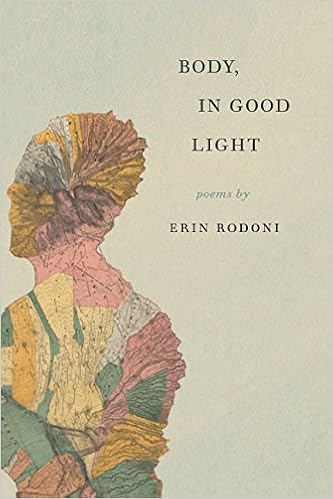
Body, in Good Light - Erin Rodoni (Sixteen Rivers Press)

Today's book of poetry:
Body, in Good Light.  Erin Rodoni.  Sixteen Rivers Press.  San Francisco, California.  2017.


"...bliss, like a memory, can be unearthed by scent."
                                                                                                 "The Body Lathe"
                                                                                                  Erin Rodoni

Erin Rodoni's Body, in Good Light has enough light to charm your eyes open wide but there will be tears enough before the end.  Rodoni has poems built on sustained intensity but without any anxiety, passion without pontification.

Today's book of poetry is a bit distracted today as our associate Odin is putting in his last days with us.   Odin has been presented with a bigger and better playground and is unable to say no.  We understand that and are proud of the work he has done here, we are sorry to see him go.  Odin never talked all that much but we sure listened when he did.

Body, in Good Light is just the sort of book Odin likes best, unapologetic intelligence, open-hearted wit and kindness.

The Ninety-Year-Old Woman On My Table

is speaking into the lavender-spritzed air
between us. Her muscles Braille another
story. She's telling me about her niece,
who lives with a man she'll never marry.
It's complicated, you see. There's so little
between her bones and mine, a thumb's
pad, a tendon's frayed twine. You see,
he has a wife. Sometimes it seems these
bodies just appear under my hands. She has
some kind of condition. They all touch
their own shoulders, their lower backs
to show me where the pain is. Sometimes
they want to touch mine (right there) as if
we don't all inhabit the same sad pockets
of skin. Can't move, can't speak. I imagine
there are people hired just to wash her
where her husband can't. Certainly can't
have sex, and I suppose he has all he wants
with my niece. Our muscles are toned to transfer
gentleness. From lover to child. From stranger
to self and back again. Sometimes the weight
of a toothbrush seems too much when I remember
I must lift it twice a day until I no longer can.
They have children together. I've kissed my own
grandmothers into smaller and smaller beds,
fixed their hair -- all wrong I'm sure. I suppose
he must have loved her. Now he tends her
like a houseplant. Or maybe she's a ghost
orchid in a greenhouse in a snowed in city.
Probably still does, in his way. The globe
unshaken, shelved in one of these little rooms
where hands polish it with love
so unconditional it's cruel.

...

Erin Rodoni talks about cancer and childbirth and chemotherapy and the impending death of a younger brother and when she is doing this she is covering some damned sad territory, sweet and profound.  As a reader you'll feel compelled to turn to the next page, Rodoni keeps the iron under your feet suitably red.

Today's book of poetry also wants to warn you.  Rodoni moved us to real, running down the cheeks, tears more than once.  As much of a crocodile as I can sometimes be those were real emotions running down my old face.

You Kept My Summer Dresses

when I died, and jewels worn closest to my skin.
You warmed them in a fist, watched hemlines swish

dust, once my thigh. When you lie
beside your new love now, do you miss

the little nicks not on her shinbone,
the mole your little finger doesn't brush?

Hush, I know about darkness, how it funnels
a sort of light we see as flesh

through our sealed lids. I know about rooting
toward comfort's infrared.

I only meant to say I can't forgive you.
I'm not God, just a voice inside your head.

You remember, don't you, what I said
about the heart? To do the things it tells you?

Soon she will jump at necklaces curled like cobras
in your sock drawer. Soon it will be time

to wash my dresses, leave them slapping on the line.
All I ask is, just once more at dusk, stand

in the life we shared, let night gather
behind the dresser, beneath the bed.

Let shadows press open the closet and breathe
the last moths of my scent.

...

Our morning read was a tempered emotional affair this morning.  We were all on edge because of Odin's bon voyage.  Every time Rodoni crossed an emotional bridge one of us jumped out of our skin and to be pulled back from the ledge.

Odin calmed us all down, as he always does, kissed everyone, left.  A class act all the way.

When I got back to my office there was a short note from Odin on my desk.  He said "that Rodoni woman is built from strong stuff, first rate poetry from an intelligent woman's voice.  Remember that you grew up under the care of a strong, intelligent woman.  Stay the course."

We Chop Onions, Listen To Billie Holiday

The windows fogged. Our eyes. My brother slides the knife from his
wife's fist, dances her around the room. Her body already out of breath,
he folds her to his chest. They revolve in one place: teenagers during 
the last song of prom. My husband stands behind me. I lean into his
weight. And for a moment I let myself conjure a child with her smile
and my brother's green eyes, a child who will never run through this
house playing tag with the child I don't yet have. Beyond the steam on
the windows, fall's first frost sharpens the marsh grass, and the arced
maps in the stars tick past without us until we are already ghosts.

...

Erin Rodoni's Body, in Good Light is flat out excellent.  You should give a copy to every woman you know.  Wouldn't hurt any of the menfolk either.

Erin Rodoni

ABOUT THE AUTHOR
Erin Rodoni is the author of Body, in Good Light (Sixteen Rivers Press, 2017) and A Landscape for Loss, which won the 2016 Stevens Manuscript Prize sponsored by the National Federation of State Poetry Societies and is forthcoming later this year. Her work has appeared in Colorado Review, Cimarron Review, Drunken Boat, Ninth Letter, Spoon River Poetry Review, Tupelo Quarterly, and The Adroit Journal, among others. Her poems have also been included in the Best New Poets anthology, featured on Verse Daily, nominated for a Pushcart Prize, and honored with an Intro Journals Award from the Association of Writers and Writing programs. She currently lives in the San Francisco Bay Area with her husband and two young daughters.

BLURBS
“I walk toward you barefoot,” writes Erin Rodoni, a poet who can speak with the same ease of private elegies and public journeys, of childbirth and of changing trains in Krakow, of grief on losing a loved one to cancer, and of ‘borrowed countries / where bougainvillea scales balconies // like a romance language.’ Here is a book that journeys out into the world, and also inward—into the mysteries of private life, of the body, where ‘bliss, like a memory, can be unearthed by scent.’ I love how wisdom enters the moment of passion in these poems, where we see ourselves living here, on this earth, ‘believing // in these bodies.’ This is a marvelous debut.” 
     —Ilya Kaminsky, author of Dancing in Odessa 

“The aesthetic that courses throughout Erin Rodoni’s sumptuous debut—tender and bittersweet, but also clear-eyed and unflinching—recalls Rilke’s ninth Duino Elegy, in which the earth’s dream is ‘to resurrect / in us invisibly.’ That ache of regeneration and rejuvenation is made manifest in Body, in Good Light. In the section entitled ‘A Sort of Light We See as Flesh,’ the poem ‘The Chapel’ brings us to a woman’smemorial service, where Rodoni faces ‘an altar draped in fabric / that belongs to no faith.’ At the end, though, she says: ‘We praise/ the faith of whatever machine // keeps the warmth in her hands.’ By extension, that warmth extends to the poet, to those she holds dear, and, thankfully, to us.”
     —Thomas Centolella, author of Views from Along the Middle Way


sixteenrivers.org

585
DISCLAIMERS

Poems cited here are assumed to be under copyright by the poet and/or publisher.  They are shown here for publicity and review purposes.  For any other kind of re-use of these poems, please contact the listed publishers for permission.

We here at TBOP are technically deficient and rely on our bashful Milo to fix everything.  We received notice from Google that we were using "cookies"
and that for our readers in Europe there had to be notification of the use of those "cookies.  Please be aware that TBOP may employ the use of some "cookies" (whatever they are) and you should take that into consideration.

Thursday, November 20, 2014

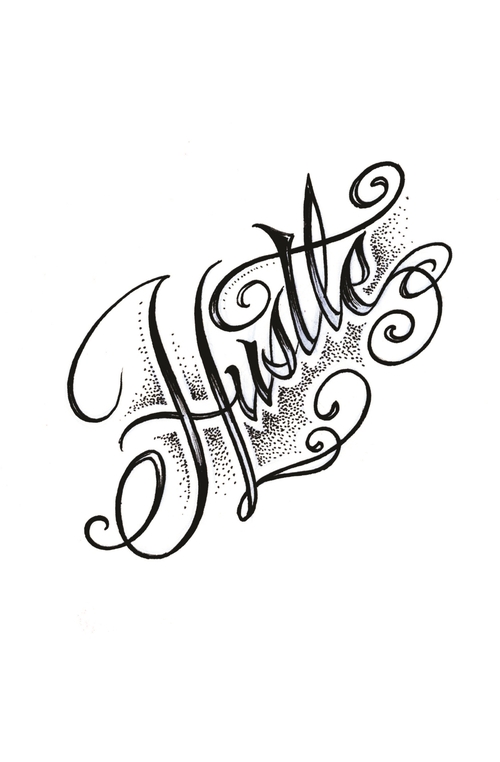
Hustle - David Tomas Martinez - (Sarabande Books)

Today's book of poetry:
Hustle.  David Tomas Martinez.  Sarabande Books.  Louisville, Kentucky.  2014.


"Calaveras" is a long poem in eleven parts and I've chosen the very first poem of the sequence.  It could just as easily been any of them.

David Tomas Martinez makes it look easy.  These poems are unadorned and bursting with beauty.

Calaveras

1.

A car wants to be stolen,
as the night desires to be revved,

will leave a door unlocked,
a key in the wheel well

or designedly dropped from a visor.

A window will always wink,
to be broken by bits of spark plug
or jimmied down the glass.

This is mine.
Where is the window to break
in your life?

In a backyard off the 94, I demonstrate on the moon
how a dent pulled ignition and a toothbrush for a turned key
easily swoon the inner workings of a Ford.

Push the dent puller in,
turn the triangle, burrow the screw,
and metallic light falls in twirled shavings.

Before I snap the weight I say
nobody gets caught with this,

not because this is a felony,
we speak of prison inevitably,
as likely as sweeps and raids,

as common as falling.
Prison, for us,
taxes and deaths.

Nobody gets caught with this
because I took it from my grandfather's tools.

...

To shoot someone we needed a gun;
Albert said he could get a pistol but we needed a car.

That's how, at midnight, on a Tuesday,
we strolled down the street with a dent puller

trying to murder a man.

Not wanting to steal a car
from our neighborhood,

we take alleys we shouldn't,
until cops chase us across
eight lanes of freeway and backyards.

To get away, I ran in a canyon
and a field of cactus.

The needles ripped my clothes,
left spiked fruit behind my knee;

with a knife wet under a garden hose,
I cut away skin and spines.

With arms around my boys' shoulders
we walk home, but only I see god.

It was the Lord from his La Jollan gates,
the big white man in the sky hollered at me.

In pale distance and omniscient beard,
in sky clouded with open azure:

No murder this night for you,
nor any night for you,

only a hot bath and plate of papas fritas
from a grandmother's hands

and four hours of needles
shooting from the skin

and holding the faucet like a gun.

...

I am immediately drawn to poetry of this sort.  It is from the streets and the heart and there is no artifice.  Martinez writes intricate poetry that rattles off of the page and tongue with inspired elan, but it is never cliche or tired.

Shed

In the wood shed
I found my uncle's magazines.

Snooping out of boredom,
looking for a wrench
to loosen a question in my body,

I flipped along glossy women
in kitchens without sinks
and refrigerators without food,
where bored housewives released
frustrations by
fucking the plumber,

where gardeners were pulled into pool houses
by college freshmen, their pig tails
doing most of the raking;
I saw women and horses
and women and circles of men
and women and women.

There seemed to be no shortage of women.

Being eleven with the drain pulled
on my wondered lust, my eyes
began to see sex everywhere,

in the plunging of stopped toilets,
in gas tanks being filled, in the pool halls
where my father circled his cue.

How the world moaned and pumped,
and hope flashed fluorescently through the blinds.

I lost my virginity three years later
to a girl without a name,
a neighbor in my curiosity about the body.

Before we did it, she said,
I don't make sounds during sex
and she didn't, just waited blankly,
waited to have emotion scribbled on her.

Eventually, love marked me
with a woman who walked with tumultuous hips--
she made bathrooms and classrooms more exciting,

and proved old Walt right -- the body does
electric -- when a kiss jumps the body --

as love is the leap of moment suspended
between jumping and landing, learning
and knowing, quitting and starting again

and it hurts more than just in skin,
to walk because your walked away from,
and no hurt scatters, no love vanishes,
and no sorrow dissipates or forgives,
and no words can be eaten.
Nothing can be eaten.

And her climbing up a balcony on the second
floor to break in through the sliding glass door
to leave, on a puffed pillow, music she made for you

wont screw back together what was shed.
No one wants to leave the comfort of wood,
or finally say goodnight.  I wish the world
had left me cuddled with boxes and magazines,

with boxed wine and videos of Vegas.
Can another cigarette break keep
the shell of sleep from cracking,

stay the flashes of her bent under another man?
Wondering if she is across the country, or the street,
how can I stop her monuments, not hear her again?

...

Whoosh, good lord, Martinez is good.  These poems have weight, great substance, but they are never too heavy or overbearing.

Think of the best of old Tom Waits ballads like Romeo is Bleeding.  If you knew me you'd know that in our home and around the Today's book of poetry office that Tom Waits is a deity of the highest order.  He's always been a crazy mad priest poet of popular music.  So when I tell you Martinez is worthy of Tom Waits' praise please pay attention.

Coveralls

The orange coveralls flamed around me in one-size-fits-all,
and no matter how I stood, they slouched and bent me.

In the shipyard there were no mirrors
but in the ocean's reflection or the pools in the dry docks
I could see how the leathers covered my boney clavicle
and my arms were only as wide as my torch.

I interviewed in a flower-spattered rayon,
but was hired because my uncle was foreman.

In training, I met Lucy.

Straightening out the crooked cuts in my bulkheads
she showed me how an orange stream pours off a perfect bevel.

Once in the bilges, I asked what brought her
to the bottom of this boat, measuring and cutting walls.

Pulling off her suede glove,

wiping sweat and ash away,
on her hand shone a green 13.

Secretaries don't have tattoos,
muffled through her respirator.

And by lunch,
we were burnt by sparks,
by three we sneezed black,

but the foreman flirted with her
using the last banging mallets
to get close and whisper.

Wrenching hoses
from our torches,
on our neck, metallic dust
ignited in the sun.

The top half
of her coveralls,
unbuttoned and wrapped,
slowly melted down
as the whistles blew.

After training,
I worked on frigates,
she worked on tankers,

I walked by her worksite
and Lucy'd be cutting
a tanker's wall,

golden ashes
dropping from
a chariot
of rusted pipe
and planks.

Looking up
shaking the wind,

shaking a hole
in my coveralls,

from ankle to knee gone,
the thin blue cloth gone;

I watched Lucy rise.

...

Hustle by David Tomas Martinez announces with authority the arrival of a dynamic new voice in American poetry.

David Tomas Martinez

ABOUT THE AUTHOR
David Tomas Martinez has published in San Diego Writer's Ink, Charlotte Journal, Poetry International, and been featured in Border Voices. A Ph.D. candidate at the University of Houston, Martinez is also an editor for Gulf Coast.

BLURBS 
"David Martinez is like an algebra problem invented by America — he's polynomial, and fractioned, full of identity variables and unsolved narrative coefficients. How does it all go together? And what does it add up to? The speaker in Hustle roams the kingdoms of experience, from stealing cars to explaining post-colonialism to his Mexican grandfather, from celebrating sex to wondering about the crippling mixture of strength and weakness in the men around him. Martinez's poetic voice sings story, talks wisdom, and verbally switches between the sophistications of the academy and those of slang. Out of these trespassings and travels, he makes an original, wise, and tender poetry. Hustle is full of dashing nerve, linguistic flair, and unfakeable heart."
—Tony Hoagland

"Welcome to the world of David Tomas Martinez, where cars want to be stolen and the faucet is held like a gun, and homemade tattoos thicken with age. He breathes fresh air into American poetry by bringing it to the street—away from the Ivory Tower, away from the self-referential jokes and commentary. Martinez allows us to see Neruda's love songs again, but this time they "whoop / a motherfucker's ass." And he makes up his own vocabulary here, one in which the word "weekend" comes from word "weaken," long estranged from "wedded." Open this book on the poems like "Sabbath Fe Minus" or "California Penal Code 266," or "Coveralls," and you will see right away a tone that is restless, metaphors that thrill you, and music that is so contagious it just won't let you be. That is because David Tomas Martinez is a real poet."
—Ilya Kaminsky

"In these intricate, psychologically rich poems, David Tomas Martinez looks back on a harrowing youth in a rough part of town, at one point concluding, "as a boy, I died into silent manhood." Here, the shooting of a school acquaintance becomes an opportunity for a kaleidoscopic investigation of violence, mortality, and doomed youth. Or the ruined landscape of a concrete urban park provokes a meditation on the sadness that smolders just beneath youthful bravado. Elsewhere, the intricacies of family lore mix with the half-understood yearnings of a young man eager to make his name outside of the neighborhood. From maturity, these poems look to the past with resigned brilliance, finding in recollection not just self-knowledge, but a larger truth about the inescapable power of memory and experience to shape us. Hustle is a terrific, electric first book or poems."
—Kevin Prufer

David Tomas Martinez
Border voices 17, part 3

268