Showing posts with label tom waits. Show all posts

Monday, January 28, 2019

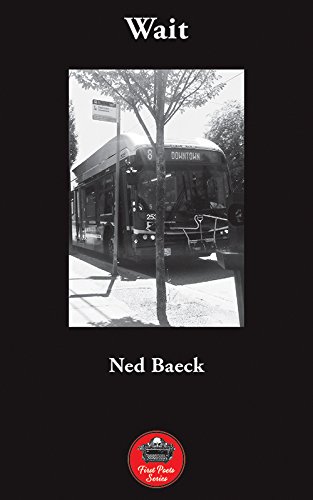
Wait - Ned Baeck (Guernica Editions)

Today's book of poetry:
Wait.  New Baeck.  Guernica Editions.  First Poets Series 18.  Toronto - Buffalo - Lancaster U.K.  2018.

Ned Baeck is down and out in Calgary and Vancouver.  This sort of drinking and poetry and poetry and drinking is suicide.  And from the edge of that precipice Wait mocks and provokes us.

Baeck is bleak and dark and wounded and wild and out of that wolf sneer side of his lucid mouth he's spitting poetry daggers.  Never has a poet so irritated, intrigued and impressed Today's book of poetry at the same time.  It's like Malcolm Lowry and his doomed being "eloquent in their sinking."

Intervene

I jumped from a bridge
into the Niagara River
on a bright February afternoon.

It was cold as hell, and the crows
were frenzied when the man
with the hair-lip briefed me on murder. I followed
a dark horse, aware of breathing, maybe not,

there was in falling an ascendant peace
too heavy for space.
Don't look over your shoulder—
unwavering as I hurtle from the rail.

Plunged in and shot to the surface
gasping, voices calling me from shore.
Man woman dog. Saw them as I fell.
Claw cold water till I lose consciousness.

A torrent of electrodes
tears a ragged scream
from my throat.
Nothing has names
yet.

People cover me like insects.
I was in the river.

Maybe I will draw the crocus
and vole of spring
emerging from the teeth of the earth.
Word of mouth

for a warm breeze and a choked song:
watching, waiting,
adjusting to the light.

and when the sun sinks from the sky
I give my anxiety to the night,
settle in to undulation,

the stills and tosses
in the water
lit by the moon.
A forecast
for tomorrow:
the law of today, the lack

a voluminous glint
on our troubled path
by the highway.

The idyll
is a wrecking yard
and the hospital
can't hold you.

Nor mother nature,
though she is,
softly pursued,
as we carry out in waking
some of what we have in dreams.

A luminous inner body
through which bitter nettles seep,
poised to enter
the sun-ruled world
and fall apart without end.

💫💫💫

And then Ned Baeck's Wait spills out a quiet and tender bon mot like this:

Still

At the centre of the changing world,
someone with a bag of groceries.

💫💫💫

Baeck probably does that just to see the look on our faces.

Today's book of poetry thinks that Ned Baeck has arrived fully formed with a strong disposition.  These poems ripple ripe because Baeck knows how to burn.

Protean Things

Maybe to forestall
I go out, though it's already late
and the dark a wilderness.

Armed and drunk,
a fire burning on each shoulder.

Orange, blue and yellow vines
lick the sides of the head,
ears mold to the hissing
pressure of heat, pulse beats out
its duty to blood.

Bones and notes decompose
like eyes, marrow and frequency like vision,
robust and undying.

Flesh will be
laid to waste,
care will be
present.

All our actions tipping
into the grave before and after
us, chastening our claims, here and there
a face, an eddy in the stream, an important address
blending back to unreadable flow,
its brusque gait like a thief's.

Either you want it to last
or you want it to end
or you know it doesn't matter.

There isn't much time.
I'm not saying it's a rush
but there isn't much time.

Already we may have died,
talking decomposition,
although there may be
some kind of composure.
At least the dogsbody, empathy.

There is the limit
and the old growth within it:
degrees and features
at some level neutral, as people
say of weather.

But we die, stop arguing,
stop balancing,
we die
without consummating a wanted
or repulsive thing.

Until then we live it—the cavalcade
and neglected berths at the road-side,
shared with scarred and programmed
animals and images.
Many hard-won wounds
watched over by bacchanals and Samaritans.

Allotted to sniff out
and shrug off the panic,
eyes to rove for stragglers,
stammers of midday
in the ripening silence
so far behind
but still brought to attention
by the clarion call
of protean things.

So why do we think we can separate
our intent from the future, or metabolize
its gruel of almost and elsewhere?

We recoil from the given
as if it were the acid-burned face
of Pangaea, lissome
grandmother, ordinary girl
we have wanted, warred with,
and may even love.

💫💫💫

Wait is unsettling, unnerving and totally necessary reading.  This is not poetry that will make you happy—but you will be engaged.

There are moments of tenderness and hope but you have to be looking for them.  Today's book of poetry was deeply moved reading Wait, when it grabs you, and it will, it gets in deep, right next to the bone.

A Brother's Sketch

I passed the hunched Knut Hamsun sick-man
in the middle of the crosswalk, red hand flashing—

he going south into the Punjabi village
and I going north, home, across
from the graveyard.

Most days, smoking, I see him from my balcony
overlooking the street—if not on the sidewalk—
scanning the ground for cigarette butts, unkempt
in ill-fitting clothes, the same too large pants
held up by hands in pockets,
grey-blue k-way jacket, colourless sneakers
rain or shine, winter, summer, slush or dust.

I wonder, did he flash
on mortality on morality
(testing victory truce and failure)
a lot and a long
until his mind detached—
undetermined,
undermined,
stopped finishing his dreams
and couldn't flesh it out.

People think the feeling
you'll die is much. It isn't.
It's not a question of dying,
the trouble is entering
an unroofed labyrinth,
the slight one, but not seeing
your way through.

In your mind a sandcastle
based in the imperishable,
no doubt loved,
being slowly, patiently
licked away—
repatriated—and you still in it
not formed again.


And not being able
to go
where you need
to go
with no other worldly concern
is hell, or at least anguished displacement.
Anyone can tell you that,
and the ingredients are still here.

The mixture of disequilibrium
and just a tiny spout of direct reality
is enough to throw a person.
You might think you're capable
of monstrosity and heroism at once
and long for neutrality like an adolescent
for adulthood, maybe he longs like that.

Or maybe he just wants Lethe,
and to sew up the wounds of memory,
walks without stopping.

Once I offered him a cigarette
and he accepted it reluctantly,
disappearing it into his shirt.
But I could tell I was interrupting
a conditioning pattern,
introducing another blip of potential,
a shipment of blood into ghost-hood,
the possibility of it all happening again.
I haven't done it since.

💫💫💫

Today's book of poetry is trying to get back to normal operations but we fear we're going to be a little light on the ground for the near future.  Milo, our head tech, and Kathryn, our Jr. Editor, have vanished.  They left a short note that lacked any detail.  They will be made to pay for it.

In the meantime you might want to listen to Sir Tom of Waits, patron saint and holy warrior, start with his monstrously good "If I Have To Go."  Today's book of poetry is certain that will put you in the perfect space for Ned Baeck's Wait.  It's a trip worth taking.

Ned Baeck

Ned Baeck

ABOUT THE AUTHOR
Ned Baeck lives in Vancouver. His poems have recently appeared in The Continuist, Sewer Lid, Prism International, poemimage, untethered, and Ottawa Arts Review. Wait is his first full-length collection of poems.

BLURB
“Who, now that sadness is forbidden, dares weep, these poems pierce the psyche like spikes through our wooden heads.”
     —Claudio Gaudio, author of the novel Texas


732

Poems cited here are assumed to be under copyright by the poet and/or publisher.  They are shown here for publicity and review purposes.  For any other kind of re-use of these poems, please contact the listed publishers for permission.

We here at TBOP are technically deficient and rely on our bashful Milo to fix everything.  We received notice from Google that we were using "cookies"
and that for our readers in Europe there had to be notification of the use of those "cookies.  Please be aware that TBOP may employ the use of some "cookies" (whatever they are) and you should take that into consideration.

Saturday, June 10, 2017

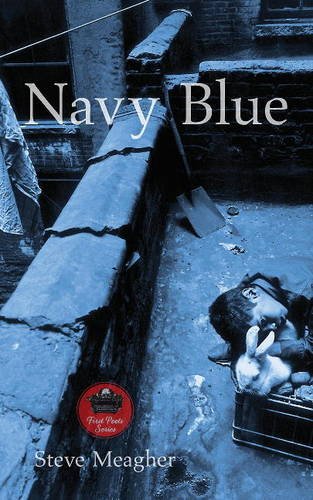
Navy Blue - Steve Meagher (Guernica Editions)

Today's book of poetry:
Navy Blue.  Steve Meagher.  First Poets Series 15.  Guernica Editions.  Toronto - Buffalo - Lancaster (U.K.).  2016.


"Begging penance for his necessary sin"
      - from Have You Seen Him

George Elliott Clarke mentions Bob Dylan, Jimi Hendrix and Marshall McLuhan when attempting to describe the poetry of Steve Meagher.  Not to make this about Today's book of poetry but now is as good a time as any to admit that we here in this office are all members of the George Elliott Clarke fan club - and one time, a long time ago, Today's book of poetry was lucky enough to share a few beers with Sir George of Elliott Clarke at the original Ottawa Royal Oak Inn.  Those beers were probably before Mr. Meagher was born.

As much as Today's book of poetry admires Mr. Clarke we think he got it a little wrong.  If we had to compare Meagher's poetry to anyone  it would be the troubadour of tasty trauma Tom Waits.  That's if Tom Waits were spending a lot of time with the ghost of Richard Brautigan.  Dark wisdom and lyrical splendor from Waits, sweet, tortured and innocent ala Brautigan.

New Saints

Cowboy knows all the shortcuts
He can hop the black fence without stopping
He showed me how to throw a perfect spiral
He's been David's best friend since kindergarten

Scarecrow's brave like a fugitive
He French-kissed Rebecca J. in the catwalk
Told me she tasted like Orange Crush
I saw him smoke a cigarette once
It smelled something like a forest fire
Next day he showed us his brother's magazines

Shark Tooth's got a pair of nunchucks
They came in the mail from Tokyo
His dropkicks are real deadly
He can do cartwheels over the creekbed
He knows how to slay the dragons

Ezekial was my partner at Science Fair
He's quiet as a June bug
He can't come out on Saturdays
His mom keeps him in to study his lessons

Sweet Baby's the smallest
I swear he's full of cobra blood
He threw that rock from a mile away
Hit the sixth grader straight between the eyes
He's the greatest there is
When we ride our bikes to the snack bar
We never even stop for cars

Tin Man's brains don't work right
Some nights he won't stop screaming
About how he shot Hakeem
How he caught the itch
How everybody's gotta come from somewhere
He comes round like the wind
I can hear him from my bedroom
When he's gone I breathe again

Jackson's got the switchblade
He stole it from the Chinaman
He keeps it tucked in his belt loop
Uses it to lop the heads off bullfrogs

Banjo's some kind of genius
He can do his times-tables backwards
Even the sevens and nines
he's gonna be a doctor someday
Most likely he's gonna cure cancer
I give him Oreos to do my fractions

Got In The Log knows some things
He knows the hidden tunnel
All the sweet-spots in the forest
He knows about the beehives and the helicopter leaves
But he don't like being bothered
Me and Sweet Baby are the only ones who visit

There's Moreno he's Mexican
His face looks like a map of Missouri
He killed a black girl once
We found her body in the branches
He's the reason I'm not allowed across the train tracks

David can sing like Frank Sinatra
He's got two pet salamanders
Their names are Dale and Swiss Army Knife
He's the fastest runner in the whole school
Sometimes he gives me beats
But he's still a good big brother
He makes sure nobody fucks with me

I can skip a rock five times easy
I can wallop your nastiest curve
Mostly my mind knocks like a woodpecker
I got the tadpole's shadow on my arm
When I grow up I'm gonna be big time
I'm gonna find my father
I'm gonna make my mother love me
I'm gonna shine like Christmas morning
Don't even try to stop me

...

Sometimes comparisons don't do anyone justice.  Meagher gives us plenty to think about without the comparisons and he does it with panache.  Nothing about Navy Blue feels like a first book.  Meagher has polished these poems till they shine.

Now for some more comparisons.  Meagher's poetry universe is full of great characters that you are going to remember.  Sweet Baby and Banjo conjure up visions/memories of Sodapop and Ponyboy from S.E. Hinton's most excellent novel The Outsiders.  There is a measure sense of menace just under the skin of Navy Blue.  Meagher never comes across as rough or vulgar but he keeps a particular tension that captures the reader, keeps the reader on alert.

Philadelphia Woman

She grew up off South 22nd
Her tongue's got ties in Memphis
She is daughter of the Iron Brigade
She breaks bread with the packrats

There's a shoebox in her closet
Full of Pennsylvania minerals
Years back her father was a collector

The radio's locked on 1060
She keeps up with the weather
Switches to Coltrane after dinner

When the heavy rains fall
She wraps her wrists in grapevine
Her landscapes hang like criminals
They know December's darker roads

She writes longhand letters
Sends them to the man in Fresno
He never calls or writes back
And that's the way she likes it

There are memories she holds
Like grenades with the pins pulled
The worst nights crack like battlefields

When the phone rings
I already know it's her
Only she would call so late
To ask about my broken wings

...

Today's book of poetry was instantly comfortable in Meagher's poetry world.  These poems are immediately accessible and that is something we like a lot.  Meagher is generous and playful, even when his poetry is serious as a heart attack.  We like that too.

Our morning read was as perfect as today's weather here in Ottawa.  We opened all the windows in the Today's book of poetry offices and passed Navy Blue around like a new talisman we were learning to believe in.

Reading Navy Blue is mining a very rich vein, rich enough that we were able to find another splendid list poem.  Regular readers of Today's book of poetry will remember how fond we are of list poems. This one is exemplary, this one came directly from beneath the poets fingernails, the real dirt.

Peter's Dream

The way things used to be
When I wanted a bedtime story
Grandpa would read me the Bible
The Old Testament gave me nightmares

I dreamed I was an Egyptian
With the lizards falling on my head
I dreamed I was a sinner
And the punishment on its way
I dreamed I was Isaac on the mountain
And Abraham had the knife
I dreamed so much
I even dreamed I was the apple

But I don't get stories anymore
Nowadays Grandpa just says goodnight
Then he shuts the door
And I'm alone all of a sudden
So now when I dream it comes like a hurricane
And I don't know how to stop it

I dreamed all the riverfish turned up dead
I dreamed the eastwind broke my pole in two
I dreamed the world was on fire
And our house was burning
And Grandpa was inside taking a nap
And the smoke was in his clothes
I dreamed I stepped in broken glass
And the coyotes could smell my blood
I dreamed I was a soldier
And the Nazis were after me
And I was hiding in a pile of bodies
And I was too scared to breathe
And I could taste the skin
I dreamed I was a madman
I dreamed I was a scientist
I dreamed I was a leper
And I was living in the canyons
I dreamed I was a cannibal
And I bit off Banjo's ear
And spit it in the lake
And it floated like a lilypad
And the catfish fed till morning
I dreamed I kissed the Bag Lady
And my tongue went black and swollen
I dreamed I was being born
With a rattlesnake round my throat
I dreamed a knife in my back
I dreamed a pistol in my pocket
And a thousand of blind children
I dreamed the North Star spoke my name
I dreamed I was in the medicine show
And my mouth shot dust in Cowboy's face
I dreamed it was next Sunday
And I was in church
And the preacher was a cyclops
And he had horns the size of fence posts
I dreamed I was real sick
And my hair was falling out
And the nurse kept feeding me Jell-O
I dreamed Sweet Baby got run over by a truck
So he had no legs
And he wouldn't stop laughing
I dreamed I was dirt poor
And my only friends were gypsies
I dreamed I climbed the tallest birch
And I couldn't get back down
I dreamed I ate a spider for supper
And it laid eggs inside my stomach
I dreamed a horse kicked me in the belly
And it hurt so bad I crapped blood
I dreamed I was Tarzan
I dreamed I was King Arthur
I dreamed I was combing the hairs on Grandpa's chest
I dreamed the killer was licking my fingers
I dreamed I was catching water in a bucket
And it felt like early spring
And the lightning bolts were lasers
And the raindrops hit the metal like a hummingbird
I dreamed I had the shotgun
And the pigs were in the shed waiting
I dreamed I saw David naked
And he got real mad
And said we wasn't brothers no more
I dreamed I was dead at high noon
I dreamed the hangman was my father
But my mother was an angel
So I met her minutes later

...

Books like Steve Meagher's Navy Blue are exactly why Today's book of poetry is in business.  Poetry like this needs to be shared.  Poetry this vibrant can make your body hum, it hits a register that your senses can't ignore.  We are silly human beans who spend so much time looking for truth we don't always recognize it.  Here's a chance.

Steve Meagher, well, I'll remember that name.  Read Navy Blue and you will remember it too.

Steve Meagher
Steve Meagher

ABOUT THE AUTHOR
Steve Meagher grew up in Oakville, Ontario. His poems have appeared in Carousel, The Nashwaak Review and Ottawa Arts Review. Navy Blue is his first book. He lives in Toronto.

BLURBS
Navy Blue is an exhilarating, guerrilla romp through tabloid news talk and Internet inanity to set up the seditious poetry Marshall McLuhan would’ve written if he could’ve. These poems are a cross of Bob Dylan casual strangeness and Jimi Hendrix bluesy surrealism. (Think “Visions of Johanna” mixed with “My Friend”.) Each line could spin off into its own bizarre screenplay: “The doctor kept cutting / Now the blood was everywhere … / I listened to the crickets / Their prayers sounded like my bicycle.” Nicely, Meagher gives shout-outs to Ray Souster and Irv Layton, claiming their street-wise vernacular and sardonic, ironic insights. But I see a touch of Dick Brautigan here too, in the accomplished insouciance, the freedom to just “say” and have the meaning be in that liberty. Ladies, gents, here’s the new vibe. Ready to be experienced?
     - George Elliott Clarke, Parliamentary Poet Laureate

Steve Meagher's Navy Blue is full of ghost voices, fever dreams, cowboy saints and hard scrabble benediction.
     - Singer-songwriter Jason Collett

Navy Blue
Steve Meagher
Video: Guernica Editions


582

DISCLAIMERS

Poems cited here are assumed to be under copyright by the poet and/or publisher.  They are shown here for publicity and review purposes.  For any other kind of re-use of these poems, please contact the listed publishers for permission.

We here at TBOP are technically deficient and rely on our bashful Milo to fix everything.  We received notice from Google that we were using "cookies"
and that for our readers in Europe there had to be notification of the use of those "cookies.  Please be aware that TBOP may employ the use of some "cookies" (whatever they are) and you should take that into consideration.


Saturday, March 12, 2016

Harvest the Dirt - Wil Gibson (Great Weather for MEDIA)

Today's book of poetry:
Harvest the Dirt.   Wil Gibson.  Great Weather for MEDIA.  New York, New York, 2015.


Harvest the Dirt, Wil Gibson, front cover border grey

Spend some very enjoyable time reading Harvest the Dirt by Wil Gibson and you might be inclined to think that he is one dark and rough piece of bark.  

That is until you read his terribly tender ode to Kurt Vonnegut Jr., "So It Goes."  There is almost always an exception to the rule.

Gibson's rules might run along the lines of the "drink 'em, smoke 'em, crank 'em when you've got them" school.  These poems describe a difficult life of great turmoil and torment, a road full of bad turns and bad choices.

So how does Gibson turn this into such bittersweet poetry?

What  I should've said to the older gentleman
who happened into the bar during a poetry
reading and stayed for the duration:

I saw you nod in approval with the first bent heart poem you
heard. Was that the first time you heard someone else speak your
mind? I saw that you dropped a twenty dollar bill in the passed
hat payday, so I assume the open wounds on stage were enough
for you. I saw my Granddaddy nod the same way the first time I
read him a poem. He knew the poem was about him and smiled
a struck match to burn away the lost cause from the dust bowl
lump in my throat. In your open mind I saw Granddad's pride. In
your accidently art-filled evening you gave back to me a reason for
writing I thought I had lost or forgotten.

...

Gibson is a romantic, no doubt about that, but he doesn't give in to it easily.  It's all kicking and screaming, coming across the finishing line on fire sort of stuff.  

Harvest the Dirt is earthy stuff, an eight-ball, dime bag, bobo huffing earthy stuff that hits the nail, repeatedly, right on its big flat head.  Gibson is almost polymorphous in his range of romantic follies. He is affectionate about: certain country singers, Tom Waits, Bobbie Gentry, his family, the American South, meth labs...

Last Man Standing

I refused to smoke or snort meth the first time I did it. The more
experienced tweakers put it in toilet paper and told me to swallow
it. When my stomach acid dissolved the thin wood pulp, the
explosion of crank into my system burned a hole from my hips to
my mouth. Each organ etched its name into my skin with a cattle
prod. Lightning shot through my intestines.

I ran to the bathroom and shit out everything I had ever eaten in
my entire life. I shit out my mother's breast milk, and the amniotic
fluid I floated in for nine months. I shit out things I thought about
eating. I shit our everything I had seen other people eat and all the
food in all the commercials I had ever seen. I vowed to never do
this horrible drug ever again.

Twenty minutes later I had a straw to my nose and was being
passed a freshly packed light bulb to smoke from. I inhaled the
sweet smell of impending snow and hot chemicals. My head
spun like the world around me. I didn't eat, sleep, or do anything
remotely sane for the next fifty-three hours.

The next seven years were facsimile nights and carbon paper days.
Everything was broken light bulbs, broken promises, broken
promises, broken promises, broken hearts, and full-blown crazy.
Most things were broken. I lived awake and died in my dreams
every rare time I slept. I still have trouble sleeping.

...

Wil Gibson's Harvest the Dirt is the meat section of the grocery store, pure bloody protein.

Today's book of poetry's morning read was raucous to say the least.  Milo has seemingly overcome any trace of his previous shyness.  He can't wait to get up in front of us and read and he has become quite good at it.  Many mornings now we simply let him read to the rest of us.  Today everyone wanted to get in on it.  Kathryn insisted on reading the Vonnegut poem, twice.

Whole. South. Side.

Dust bunnies scratched weak scream claw marks down
the hallway.

No milk in a new house,
third this year, another cupboard empty.
June is a terrible month to move,
made easier when you lack clothes and furniture.
The new cockroaches were smaller.
The new neighbors mutter "poor white trash"
under their breath, never to our faces.
They don't mean it as hurtful or angry,
they only mean we were pitiful.
They smile with sad eyes and treat us like
a man whose wife cheats on him.

There is no way to tell someone they have been forgotten.

...

Gibson takes it all on in Harvest the Dirt - poverty, race, violence, drugs, country music and so on.   He does it with the slow grace of a poetic Richard Pryor.  Saint Richard of Pryor never passed a pipe he didn't like and was the best straight-up stand-up there has ever been.  We here at Today's book of poetry like to make big proclamations just to see who is listening.

Wil Gibson is a slap and a caress, not always in equal portions.  Poetry like this can make you squirm in your seat and that is a good thing.  A damned good thing.

Wil Gibson by Vanessa Vrtiak
Wil Gibson

ABOUT THE AUTHOR
Wil Gibson was born from a good idea and a bottle of bourbon and raised in some of the poorest communities northern Illinois and eastern Arkansas have to offer. He is a proud, mistake-prone, father of four.

BLURBS
Harvest the Dirt is the fuck-you-listen-to-me reminder that life is real, and raw, and constantly in a state of push and pull and break. Gibson doesn’t need metaphors to talk about drugs and despair and life. There’s no hidden meaning. This is not a collection of self-help pieces. He’s not going to tell you that anything will ever be better. What Gibson will do though is craft a guide of real-world, worst-case scenarios, so that maybe you’ll give a damn about yourself, or the world around you, or art, or whatever it is to which you yearn to cling. This is Jim Carroll and William Burroughs meets George Carlin and Sam Kinison in a dark alley for an I’ll-raise-you-a-story kind of raw. This is not a book of poetry; this is an experience.—Chris Margolin, The Poetry Question
Harvest the Dirt is a gritty, relentless testament to the survival song that is Wil Gibson. Each poem is a bloody ride out of the city that birthed you; a psalm in the name of recovery; an open window on a stormy day somewhere in the middle of this country. This book is filled with a man’s truth and, while it isn’t always pretty, that truth never apologizes.—Carrie Rudzinski, author of The Shotgun Speaks and The History of Silence

Here, now, in 2015, there is an eye on race, southern culture, and the relationship between the two that is as focused as I remember it being. That eye is large, and general. Wil Gibson’s Harvest the Dirtis specific, and on the street. But no less large. Harvest the Dirt is proof that country music doesn’t need a fiddle, a pedal steel, or even sounds at all. All country music needs is a heart breaking or a heart trying to mend, and a bent ear. Enjoy the listen.—Justin Wells, singer / songwriter
Full of should-have-saids and self portraits, Wil Gibson’s newest collection gives a vivid look at the life he has lead. It is harsh. It is visceral. Most importantly, it is truth. Harvest the Dirt captures the purest of moments and the most honest of self-reflections through remembrances and images of an universal truth about the America we live in. It is an insightful read of contemporary poetry in an unrestricted and accessible tongue.—Katrina K. Guarascio, Swimming with Elephants Publications
Wil Gibson
"Stories"
(NPS 2015)
video: Button Poetry


448


DISCLAIMERS

Poems cited here are assumed to be under copyright by the poet and/or publisher.  They are shown here for publicity and review purposes.  For any other kind of re-use of these poems, please contact the listed publishers for permission.

We here at TBOP are technically deficient and rely on our bashful Milo to fix everything.  We received notice from Google that we were using "cookies"
and that for our readers in Europe there had to be notification of the use of those "cookies.  Please be aware that TBOP may employ the use of some "cookies" (whatever they are) and you should take that into consideration.


Tuesday, February 16, 2016

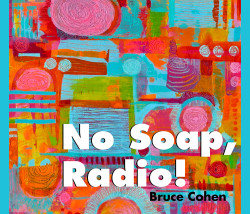
No Soap, Radio! - Bruce Cohen (Black Lawrence Press)

Today's book of poetry:
No Soap, Radio!  Bruce Cohen.  Black Lawrence Press.  Pittsburgh, PA.  2015.

Cohencw

"In this life you are only a tourist and your camera is disposable." - Bruce Cohen

Today's book of poetry might just have a new favourite poet.  Bruce Cohen's No Soap, Radio! is a freakishly big lighthouse in the dark while the rest of us are using candles.  It's not that Cohen is shining his light on happy news and golden horizons, quite the opposite.  No Soap, Radio! is beautifully grim.

Everything happens in these big, big poems.  Cohen rolls out line after line that will take you to your knees, and he does it non-stop.

Take a deep breath before you read this:

Nervous Breakdown

After the opening credits, peasants are lugging their ship over mossy alien terrain.
All I'm saying is there are "circumstances" where people chip in, disassemble their
Mobility & carry it, piece by piece, to a more welcoming landscape.
Sometimes you flip on the car radio & the song you were unconsciously singing
Is actually playing; sometimes a person who you haven't considered since high school
Randomly impregnates your daydream then saunters into your favorite watering hole.
No! It only looks exactly like her, which is quadruple-freaky with a cherry on top.
I hardly half-know people I know. Half-people are the most complete though.
All I'm saying is who doesn't have metaphorical barbed wire encompassing his secret
Playground? In city congestion the honking seems arbitrary -- though directed
At some unknown target. I hardly know my address without
Checking the yellow pages; I lean on that phone book to preserve autumn, not just
To flatten the magnificent colored leaves. I review the expiration date on a can of split
Pea soup before I use it to prop up the sofa after the weakest leg collapses. All I'm 
Saying is some stuff has multiple purposes to the creative mind. One human being
Can be an object of love or blame depending. Numerically, one through ten is not
Adequate; we should have extra digits, flexible numbers, spare pliable days, secret hands.
People in our lives who don't fall neatly into categories, & X-ray sunglasses.
Shouldn't we all pocket at least one saintly friend whose name we never learn?
All I'm saying is we're too obsessed with terminology & order. You see large household
Appliances or sawed-in-half sofas on the highways but never the culprits. Darling,
I think I would like to dump this malfunctioning washing machine off the next overpass.
All I'm saying is I'm really trying, but I'm not sure there's meaning to life
Except to make each other feel okay at times, with unsolicited utterances that may not
Have any loyalty to the truth, but are untucked-shirt-drunk with kindness,
Which is all I'm really saying. We're all extremely depleted & human poverty makes us
Immobile not less mobile, huddled in jungles not exactly jungles per se, trees leafless &
The car skeleton tireless with no windshield but windshield wipers intact.
We all stash photographs in our wallets that are decades from the tender.
I feel odd when I see a neighbor kid driving his parents' luxury car for the first time.
All I'm saying is sleeves nicely camouflage food stains, autumn foliage has cowardly
Tendencies, half-people have mirror-issues & re-wear underwear they take out
Of their hampers & waiters nibble sent-back desserts. Unfinished entrees into eternity.
All I'm saying is life is heart-wrenching enough without making it worse.
We need to scrape barnacles off the underside before the ship is seaworthy again.
Because I'm sick of my music I'm not sure what song I want played at my funeral.
All I mean is I change my mind maybe too much. If God is so clever how come--
How come time travels more slowly than our lives?
Impure forgiveness is like some nasty metallic sugar substitute, the aftertaste.
Where is the actual sweetness? Cars run out of fuel yet we don't junk them
& buy a new jalopy. It ain't perfect is all I guess I'm saying
But there are perfect moments. I want to be unquestionably loved; that puts me
Out there, doesn't it? Doesn't it? I have no qualms about ripping open my favorite
Shirt & inviting, begging, daring the world to stab me as though I were some
Delusional Superman. How come time does travel more slowly than our lives?

...

This morning's read was simply manic.  Everyone was deep-snow-happy.  We've had at least eight inches of snow in the last couple of hours and it is still coming down as though it meant it.  The whole city looks like a bowl of vanilla ice-cream.  It makes people silly-happy as it slows down the world.  And that must be just the right mood for reading No Soap, Radio! because Milo brought the house down, he was operatic and howling.

Kathryn, our new intern, went the other way with her reading, quiet and slowed right down to a crawl.  It was like she haunted the room with the quirky sermons of a drunken priest full of wisdom and spite.

Everyone loved these poems.  They made us feel small in a vast world and then Cohen would say something that made us know he had not given up.  

Regrets Only

My old man knew I always loved music so he pinched a stereo
That "fell off a truck" that dinged all my original recordings,

Made them skip, even though I replaced the diamond needle
& weighted the crooked arm with Scotch Tape & Indian pennies.
When he left for his extended stay in heaven without life
Insurance it was clear the concept of angels was a misconception.

God's associates were more akin to Insurance Claims-Adjusters
Screwing you out of your life's fondest moments. It ain't

Like there's a shortage of things anyone prays would turn out
Differently. At the reunion the cheerleader who doesn't show
Is the girl who bludgeoned her parents with unused garden tools--
No one is surprised by the late arriving transvestite who

You could just tell even then. There are a hundred types
Of forgetfulness wedged between I can't find my car keys

& who am I! I'm at the age where I shouldn't have too many
Individual regrets, when my life is record-skipping into one
Massive regret. Each evening I overfull my whisky glass above
The imaginary line. You are afforded only so many opportunities

To adjust your life--most of us ignore them, zipper our parkas
& trudge head down into the bitter wind, high-stepping

Unpredictable precipitation. You look around--no wonder
Gods a haunted insomniac. You have to admit people were
A very fancy idea. The girl who murdered her parents, when
She comes up for parole, is just an abstraction her sisters nix.

The mixed bouquets, after a few days, regret their involuntary
Violent departure from the cultivated soil though they've earned

Journeyman status at the slow art of decay. Despite my bitter
Intuition, I've been a lazy, angry, irresponsible father, a horrible
Example, pounding the coffee table, threatening what I didn't
Even mean, nicking the mahogany with my father's wedding ring.

...

Cohen takes on all the big subjects, finds a perspective that whittles them into Cohen-reason.  Take Tom Waits, Will Rogers, Ron Koertge, St. Raymond of Carver and the inebriated ghost of a plucky Anne Sexton and swirl them around your head for a bit.  Today's book of poetry is convinced these dandies and dozens more have taken up residence in the noggin of Bruce Cohen.  How else could he spew such splendid poetry like whim.  Every page of No Soap, Radio! is a different and exhilarating slap in the face.

American Vacations

If you are honest with yourself, you'd say life is disappointing
& disappointingly incomplete, more than just a little something
Is missing, like flat soda on a scorching day with no ice; the ice
Machine's busted: a sign posted at the truck stop. You're a fan

Of crushed over cubes anyway. At the motel you peek under
The Murphy bed and instead of customary dust bunnies you find
Actual monsters. The problem with humanitarian traps is once
You trap them you have to deal with releasing them somewhere.

You're not a killer after all. Mornings you wake hopeful till
The bathroom mirror butts in. Your family would run smoothly if
Everyone committed to sing language. Arguments would be more
Vanilla compact. Jerked around by your choke collar, your life tugs

You in this direction, not that. This Saturday, instead of a picnic, tour
The countryside to select the idyllic location for your grave. Isn't this fun
Kiddos? Some knucklehead is scratching his lottery tickets while you're
Trying to pre-pay for your fill-up of high test. Mostly you wish you had more.

Or less. Sometimes even weather fucks you in the ass. Historically speaking,
People paid off their mortgages, had mortgage burning shindigs,
Whisppersnappers torched draft cards and millionaires fired
Their non-Cuban cigars with "fitty" dollar bills. Now people are wicked

Different. It's all very different. The only liberating burning is our skin
On vacation. You'd rather not leave a child or dog unattended in a car.
The windows rolled up, on a sweltering beach-day. And what do you do
About the pieces of fruit rotting in the bowl, drosophila incubating on

The browning bananas and bruised mangos? This is your life now: the heater
And air conditioner simultaneously stuck on full blast and time's a stashed snowball
With a piece of glass meticulously placed in the center. You tuck it in the freezer,
Saving it for summer, snowball monopoly. But there are too many flip-flops

In the world, more flip-flops than feet. Successful people vacation with successful
People. That's why the unsuccessful spill red wine at parties and their suits seem
Wrinkled, out of date. Even Freud dreaded, some days, seeing his patients,
Unable to drag himself to the office. Let's all call in sick for no reason!

Some people nap through their lives and suffer insomnia during
Their deaths. Suspend all your superfluous subscriptions.
You might as well change your phone number. Not unlisted though.
You're not completely anti-social. Just once before you die, China

Would like to visit you. In the grocery, cows with anxiety
Between the meat and milk sections organize an impromptu stampede.
While brushing your teeth the foamy truth rabidly seeps out. Finally,
In this life you are only a tourist and your camera is disposable.

...

Today's book of poetry is completely smitten by the poems of Bruce Cohen.  No Soap, Radio! is a small book, 6" x 7", and it may be the biggest thing I've read in years.

Cohen has mastered an utterly splendid dark geometry of the human heart.

Cohen
Bruce Cohen

ABOUT THE AUTHOR
Born in the Bronx, New York, Bruce Cohen’s poems and non-fiction essays have appeared in over a hundred literary periodicals such as AGNI, The Georgia Review, The Harvard Review, The New Yorker, Ploughshares, Poetry, Prairie Schooner & The Southern Review as well as being featured on Poetry Daily & Verse Daily—He has published three previous volumes of poetry: Disloyal Yo-Yo (Dream Horse Press), which was awarded the 2007 Orphic Poetry Prize,Swerve (Black Lawrence Press) and Placebo Junkies Conspiring with the Half-Asleep (Black Lawrence Press). A new manuscript, Imminent Disappearances, Impossible Numbers & Panoramic X-Rays recently won the Green Rose Prize from New Issues Press and will be published in spring 2016. A recipient of an individual artist grant from the Connecticut Commission on Culture & Tourism, prior to joining the Creative Writing faculty at the University of Connecticut in 2012, he directed, developed, and implemented nationally recognized academic enhancement programs at the University of Arizona, The University of California at Berkeley, and the University of Connecticut.

BLURB
  • "Mutability may be the rightful subject of the twenty-first century, and if it is, Bruce Cohen’s No Soap, Radio! is its funny, wise, and cantankerous handbook. These poems, part Luddite, part intrepid time traveler, inspect, reject, and grumpily give in to the racket of change: the slippage of language from pun to insight, gender transition at the gym, the endless potential of marital argument late capitalism-style, and vacations on which picking out burial sites is every bit as much fun as finding real monsters under the motel room bed. The mission here is to 'pinpoint where it all went chaotic,' and each poem charms us with oddly reassuring reminders of demolished places where, like Cohen’s displaced Tu Fu, we finally discovered we were supposed to be."
    —Lisa Lewis author of Vivisect
  • "No Soap, Radio! is a carnival ride of poetry. This book is whipsmart and strange, unsettling and joyous. Bruce Cohen interweaves the comic and the absurd with heartstopping tenderness. Crackling with jubilant complexity, these poems whirl and gut punch through today’s weird living—where 'most of us / are in a constant state of personal revision.' To shape his body for the beach, Tu Fu is 'all about protein.' But the vivid grace of Cohen’s poems is the way he Frankensteins together giddy and goddamn! In No Soap, Radio! you will find yourself the lucky winner of the most coveted prize in the midway—magnificent fun, jabbing you back into the exuberance of being fully alive."
    —Alex Lemon author of The Wish Book and Happy: A Memoir
"Bruce Cohen knows how to surprise and entertain. In No Soap, Radio! Tu Fu explores New York City, a sheet of paper falls 'Icarus-like,' and a man confesses, 'I speak in a Felix the Cat voice/ after a third vodka.' Wise to both the vetted and the lowbrow, the speaker in these poems is forthright, curious, and snarky. But beneath the exhilarating swagger, a world-weary loneliness pulses. Cohen transforms the loneliness into 'gossip & little reminisces' that tether—sometimes briefly—one life to another life. Highly entertaining, yes. But these poems are also empathic, brave."
—Eduardo C. Corral author Slow Lightning, Yale Younger Poet Winner

blacklawrence.com
438
TBOP  is expierencing some very strange technicals quirks and difficulties today.  Milo is in danger of being fired.  Hopefully we will be back to our regular broadcast on Thursday.  xo
DISCLAIMERS

Poems cited here are assumed to be under copyright by the poet and/or publisher.  They are shown here for publicity and review purposes.  For any other kind of re-use of these poems, please contact the listed publishers for permission.

We here at TBOP are technically deficient and rely on our bashful Milo to fix everything.  We received notice from Google that we were using "cookies"
and that for our readers in Europe there had to be notification of the use of those "cookies.  Please be aware that TBOP may employ the use of some "cookies" (whatever they are) and you should take that into consideration.


Thursday, November 12, 2015

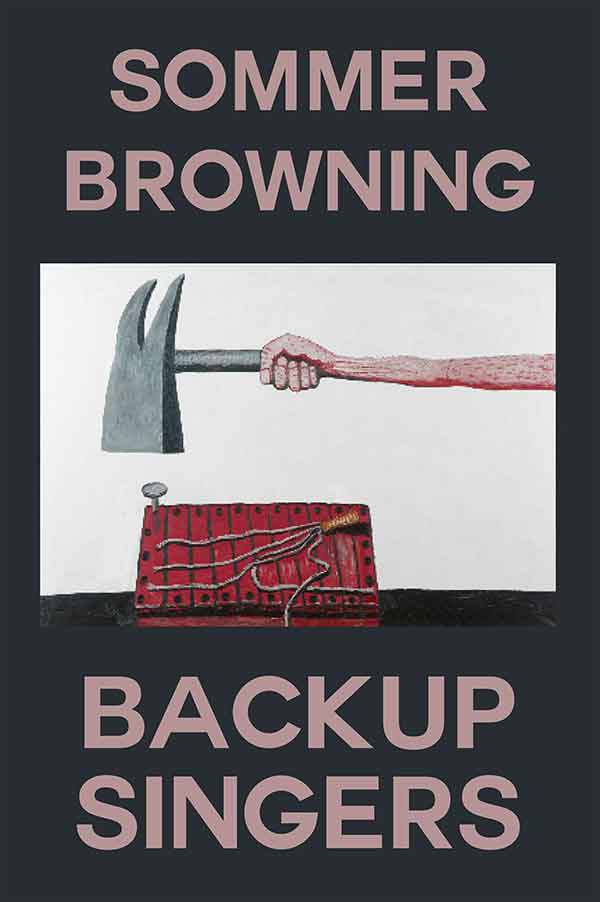
Backup Singers - Sommer Browning. (Birds, LLC)

Today's book of poetry:
Backup Singers.  Sommer Browning.  Birds, LLC.  Austin, Minneapolis, New York, Raleigh, USA.  2014.


Sommer Browning has a world class sense of humour.  The poems in Backup Singers read like the liner notes off of a waitress's cheque book from a Tom Waits' song.  These little ditties are the shadows of the bullets, the echo of some footsteps, the raw retort to a loud nonsensical world. Browning puts together a slick patois for the language she is teaching us.

Sommer, I'm dying

Sommer, I'm dying. I get this message on my phone in line
at Rite Aid. Sommer, I'm dying, you scream in my ear at
the rock show. Sommer, I'm dying, you write in closing on
 a postcard from San Francisco. Sommer, I'm dying, it's my
heart. Sommer, I'm dying, can you feel this? Is it normal?
as we stomp through the snow to get cigarettes. Jesus woke up
but who muscled the boulder away? Some prince kissed the
beauty but who wrote it all down? Let's go to the mummy
exhibition. Let's read aloud Fear and Trembling. Let's slow the
flow through one carotid. Sommer, I'm dying. Present tense.
Subject. Verb. The thinning blood vessel, the soft pulsating
stone, retina shriveled and rattling around in the skull. I can
hear it when I jump. Then don't jump, I say.

...

Backup Singers has a rhythm all its own.  Some of these poems sound like statements for the defense and others like screams from the prosecution.  But they all have the same intelligent urgency about them.

Browning makes juxtapositions by breaking the ankles of the opposition.  There is a pinball energy in these poems and it bounces frantic to connect all of her dots.

When I see a tree bend I feel the thick chill of a church pew

When I see a tree bend I feel the thick chill of a church pew
cooling my ass. When I hear the clang of a flag pole I see a
head, bodiless, chewing words on a screen. When I read the news
I see my baby smile at what's behind me. When I slice an onion
and when I tongue a blackberry seed I slide into a wet bathing
suit, when I run up the cellar steps I sing Bible songs, I cheat at
cards, the city coos to its drunks at night, and the city's shores by
morning flap strips of plastic spank the beach who's your daddy
is all anyone thinks and destruction, older than regret. The pastor
in the parish hall, hidden even as he shakes every hand, and the
fingers, open it up and here's the people.

...

At times Browning is almost sweet/surreal and we love that.  Today's book of poetry also found a couple of list poems in Backup Singers and you just know how much we love those.

When you were with Emily I was with Matt

When you were with Emily I was with Matt,
when you were with Sarah I was with Paul,
when you were with Sarah I was with Brian,
when you were with Kelly I was with Pat,
when you were with Liz I was with Paul,
when you were with Sarah I was with Johnny,
when you were with Kim I was with Robert,
when you were with Liz I was with Matt and Pat and Andy,
when you were with Erica I was with Robert,
when you were with Liz I was with Jason and Robert,
when you were with Apple Pie I was with the Armenian,
when you were with Eliza I was with Noah.

...

Today's book of poetry was won over early by this crisp collection.  Sommer Browning has just become our favourite poet named Browning.  We did a straw poll in the office.  Robert may have been one hell of a Victorian with all his dramatic monologues, and Elizabeth the B. another, but we are Sommer Browning fans here.

there is a problem with your interrogative

there is a funny joke
about the best medicine for
hatred being
an umbrella -- no
a wheelbarrow

...

Sommer Browning

ABOUT THE AUTHOR
Sommer Browning writes poems, draws comics and tells jokes. She is the author of three chapbooks, most recently THE BOWLING (Greying Ghost, 2010) with Brandon Shimoda. Her poems and drawings have appeared in The New York Quarterly, Typo, Octopus, past simple, Free Verse, The Stranger and other places. With Julia Cohen she curates The Bad Shadow Affair, a reading series in Denver.

BLURB
There is an enormous amount of joy that comes with the announcement of a new work by Denver, Colorado poet and illustrator Sommer Browning, and the recent AWP in Seattle saw the release of Browning's second trade poetry collection, Backup Singers (Birds, LLC, 2014). Given the amount of her quirky and hilarious comics were utilized as part of her first poetry collection, Either Way I'm Celebrating (Birds, LLC, 2011) [see my review of such here], I must say that a book by Sommer Browning without comics is unexpected (and even slightly disappointing). Still, there aren't many contemporary poets with her penchant for tight lines and terrible jokes (Montreal poet David McGimpsey is a rare exception), and the results are absolutely stunning.
     -  Rob McLennan

Sommer Browning
Official Trailer for Backup Singers
Video: Birdsllc


406
DISCLAIMERS

Poems cited here are assumed to be under copyright by the poet and/or publisher.  They are shown here for publicity and review purposes.  For any other kind of re-use of these poems, please contact the listed publishers for permission.

We here at TBOP are technically deficient and rely on our bashful Milo to fix everything.  We received notice from Google that we were using "cookies"
and that for our readers in Europe there had to be notification of the use of those "cookies.  Please be aware that TBOP may employ the use of some "cookies" (whatever they are) and you should take that into consideration.


Sunday, October 11, 2015

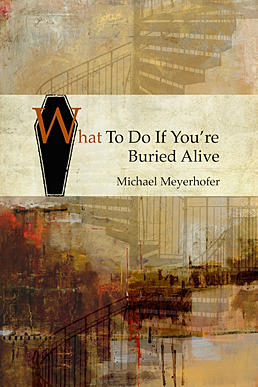
What To Do If You're Buried Alive - Michael Meyerhofer (Split Lip Press)

Today's book of poetry:
What To Do If You're Buried Alive. 
Michael Meyerhofer.  Split Lip Press.  Richmond, Virginia.  2015.


Michael Meyerhofer's What To Do If You're Buried Alive is the work of a seasoned pro.  These poems are solid like that friend who would cut off their own hand before they let you down. Meyerhofer would be typing with one hand before he'd leave a reader stranded on the page.

Today's book of poetry doesn't want to speak for a man we don't know but I'm willing to bet Meyerhofer is from the "try, try, try again -- but don't be a damned fool about it" school of hard knocks.

Returning The Lesson

Three days after my mother's heart
kicked up grave-sod like an errant mule,
my dad's alcoholic father came by,
carting along his oxygen tank,
its little red wheels squeaking down
a sidewalk of women in black dresses.
This man who drank straight gin
and didn't even know for years
how many children or rottweilers he had--
still decades before DHS--
sardined up in that country shack
I only saw once, as a yellow bulldozer
took ten years off my father's eyes.

They kept him away, so I grew up
picturing him as a rural Hitler
who dreamt of twisting out cigarettes
on the scrotum of the baby Jesus.
But there he was--that old grandfather
I'd never seen, frail as a psalm
with plastic tubing stuck up his nose.
This day will pass, he swore,
squeezing my hard shoulder. Meaning
of course my mother in her casket,
her hair all wrong, just a dash
between her first and last breath.

I nodded along, but wondered how
this sentence fragment of a man
ever managed to lock my father in closets
without food--my father,
who can do push-ups until sunrise,
who has three college degrees,
who could have busted him like kindling
but instead, took him inside
with one open fist on his shoulder.
I am tired of the alchemizing the indivisible,
so here is the lesson I want to forget:
after every waste, the heart
like a dog betrays us but we,
when we must, call this forgiveness.

...

These hearty, salt-of-the-earth poems all sound like hard won wisdom.  The first thing Today's book of poetry noticed about What To Do If You're Buried Alive was that almost every single poem in this collection was solid as a rock.

[I've mentioned it to our writers here at TBOP, about their overuse of platitudes and cliche, their insistence of flattery.  I am currently tied to a small chair in the closet of my office.  When you are finished reading this please send someone by to get me out.  I'll discipline my staff at the appropriate time in response to this insurrection.  And they, the writers, pretty much assured me that it would be business as usual, threatened actually.]

What I meant to say is that there are hills and valleys in every book, not so much here, Meyerhofer and his editors are metronome solid, tick, tick, tick.

Like most of us, it sounds like Meyerhofer has had to weather some considerable ups and downs -- but as Rocky Balboa intoned, and I will have to paraphrase, "It's not how many times they knock you down that matters - it's how many times you can get up!"

My Mother Sent Me

a text message
from her coffin.
It said Glad
you're not here.
She's always doing
stuff like that. She says
it's to help me
savor my remaining
days. But I know
it's because I'm
the only one left
who hasn't changed
his number.

...

Michael Meyerhofer's style could be romantic-realism but I doubt it is a label he would embrace.  I heard these poems like music when I was reading them.  They read like a delicious cocktail of Willie Nelson, Tom Waits, a reasonable Charles B. and a tick of Saint Raymond of Carver.  Those are all heroes of mine but I realize it is a little like using spices to describe a stew.  It's all in the way of compliment.  Meyerhofer's camera is both subtle and technicolour and it is on all the time.

Cowboy Buddha

The guy across from me is wearing spurs.
Indiana summer. As far as I can tell,
he got here in a pickup. But there he is, leaning
with a sweating bottle in his fist,
smiling with saffron teeth at the bartender,
big metal sundials trailing his boot-heels
like he meant to saddle up and ride
for the saloon the remembered we have
internal combustion engines now,
plus palominos tend to drip even more
than your average oil gasket. But why the spurs?
Imagine them snagging the floor mats
as he tries to shift gears, driving his knees
into the steering column. Still, there's music
in that steely thump as he strolls
from barstool to pool table, knuckles rapping
the pasture-green felt, a reliable jingle
following him the way they say flowers sprang
from the footprints of the Buddha.
I doubt that lasted, though. So hard
to push through ignorance toward something
called enlightenment when everywhere
we go: blossoms, blossoms, blossoms.

...

What To Do If You're Buried Alive comes from that noble and strong school of narrative poetry, Meyerhofer is driven to tell us his stories.  Some of these we will recognize as ghostly parallels to versions of the stories we all know, our own narratives, other poems will act as maps for the trips we will eventually all be forced to take.

Most importantly we recognize that Meyerhofer's certainty in What To Do If You're Buried Alive casts a strong light to help navigate whatever challenges lay ahead.

Michael Meyerhofer

ABOUT THE AUTHOR
Michael Meyerhofer is the author of four poetry books and a forthcoming fantasy trilogy. He has won the James Wright Poetry Award, the Liam Rector First Book Prize, the Whirling Prize, five chapbook prizes, and other honors. He earned his B.A. from the University of Iowa and his M.F.A. from Southern Illinois University Carbondale. He grew up in Iowa where he learned the value of reading novels, lifting weights, and not getting his hopes up. He currently serves as the Poetry Editor of Atticus Review and lives in Fresno, California.

BLURBS
"Set against a backdrop of brilliantly rusty artifacts, and infused with personal history, this book showcases Meyerhofer's skill at advocating for overlooked people and the places they inhabit. With a compassionate eye, and his trademark sense of humor that hooks readers from the very first page, Meyerhofer sends us back to our earliest memories, and shows us a world of heartbreak and wonder."
     -  Mary Biddinger, author of A Sunny Place with Adequate Water

"Listen to this little sample of Michael Meyerhofer's music as he recalls working in an Iowa warehouse, avoiding 'forklifts / steered by broken / marriages / and thermoses full of Jim Beam,' or remember his mother's failing heart 'kicked up grave-sod like an errant mule.' Whether he's describing the brutal machismo of Iowa high school wrestlers or the tenderness of his father nursing his childhood wounds, Meyerhofer sings in a pure American tenor, his voice haunted by late night diners, small town heartbreak, and somehow, out there in the desolate vastness of the heartland, a flash of humor and a sweet glimmer of hope."
     - George Bilgere, author of Imperial

"Between the marks the world leaves upon us, the designs we choose to mark ourselves and our worlds with--these scars and tattoos are the territory Michael Meyerhofer explores in What To Do If You're Buried Alive. Through pain and loss, Meyerhofer's poems are harrowing prayers searching for 'the charms of language' that might lead to forgiveness, to redemption, to love. While never flinching from confronting the irredeemable damage we do to one another, these urgent and necessary poems remind us 'that if you focus on what hurts, / face it wholly, it dissolves / like a light from a burnt-out bulb, / a curtain gone up in flames.'"
      - John Tribble, author of Natural State

Michael Meyerhofer
STEM reads Interviews
video: STEM Outreach NIU
(In this video Meyerhofer talks about both his work as a fantasy writer and as a poet)

splitlippress.com

391


 DISCLAIMERS

Poems cited here are assumed to be under copyright by the poet and/or publisher.  They are shown here for publicity and review purposes.  For any other kind of re-use of these poems, please contact the listed publishers for permission.

We here at TBOP are technically deficient and rely on our bashful Milo to fix everything.  We received notice from Google that we were using "cookies"
and that for our readers in Europe there had to be notification of the use of those "cookies.  Please be aware that TBOP may employ the use of some "cookies" (whatever they are) and you should take that into consideration.