Showing posts with label a buckrider book. Show all posts

Monday, February 10, 2020

Divided - Linda Frank (A Buckrider Book/Wolsak & Wynn)

Today's book of poetry:
Divided.  Linda Frank.  A Buckrider Book/Wolsak & Wynn.  Hamilton, Ontario.  2018.

Book Cover: Divided, Linda Frank

Clearly Linda Frank's poetry posse includes a world class botonist and a scientist with an eidetic memory.  How does Today's book of poetry know such things?  The answer is quite simple;  no one poetry brain could pull these poems together.  These poems require multiple experts and fathoms upon fathoms of research.

Divided is that completely unexpected cornacopia of delights.  Frank's poems pass all of our poetry tests.  Linda Frank is both remarkbaly insightful and unimaginably thorough.  It isn't enough that her understanding of human nature, emotion and character is illuminating;  Frank sees the big picture so clearly, she can use the various languages of animals and insects, she is able to use their knowledge.  The resulting poems delight.

Thomas, our new Assistant Editor, found Linda Frank's Divided "an absolutely compelling read" and Today's book of poetry couldn't agree more.

Von Frisch's Ten Little Housemates

The housefly he calls a trim little creature. A man
would have to leap from the Westminister Bridge

to the top of Big Ben to compete with the flea.
All living creatures are equal in the great law

of life, he writes. Even bedbugs. Lice can carry
two thousand time their body weight with their forefeet.

Cockroaches are a community that has come down
in the world. Silverfish, entirely harmles sugar guests.

The spider's actions differ in detail according to the weaver's
character. In gnats, the organs of flight have reached a high 

level of perfection. We cannot blame the tick for her bloodthirstiness.
Anyone who has to hatch a few thousand eggs deserves a good meal.

Moths are useful scavengers. What else would happen
to all the decaying hair and feathers that disnintergrate so slowly?

Von Frisch's little housemates are extraordinary, in their own way
exceptional. At the end of each affectionate chapter

he recommends in equally good-natured tone and detail
how each could best be exterminated.

💥💥💥                                                 

Today's book of poetry had some standards blasting out of the box in our office this morning, Coltrane's A Love Supreme, Anita Baker, some Gil Scott Heron.  That sort of tone.

Divided is presented in four sections which include the closest inspections of the beetle, anthropod and arachnid worlds, accounts of women who were pioneers in their scientific fields, accounts of the first balloon flight (untethered) and an account of the first descents into our oceans.  Linda Frank even shares some elements of her own story.  

What Today's book of poetry enjoy most is the consistency of Frank's voice, she can hold a note.  Linda Frank's poems all come at the reader in the same way, as revelations.  Frank uncovers truths we previously never questioned.  All of this good.  But for you poetry monsters the most important question is "does it burn?"

Damned straight.  Today's book of poetry has never seen this particular manner of cooking before but we'd sure like to get our hands on the recipe.  Frank goes all poetry-Julia Child poetry wise and botanically bent.  Divided not only makes the reader feel smart and smarter, Divided makes the reader truly curious.

Falling Stars
CAROLINE hERSCHEL, 1750-1848

Every night up on the flat roof
            over the hayloft

the great man's sister
            with her telescope, hunting
                       for wanderers
messengers that enter the solar system.

Every night up on the flat roof
            over the hayloft
                       in thrall to the polished lens
sweeping the sky for comets.

The great man's sister
                      minded the heavens.

No longer such a lonely thing
                       to open one's eyes.
Every impulse of light exploding.

Only thirty "hairy stars" ever recorded
            and she, the Lady's Comet Hunter

alone and free up on the flat roof
                                    over the hayloft
found eight in a dozen years.

She knew those distant stars ceased to exist
           millions of years ago.
Her starry night, her stellar landscape
                        not really there at all.

Light travels long
            after the heavenly body is gone.

Her sky, so full of ghosts.

💥💥💥    

Today's book of poetry so enjoyed Linda Frank's Divided.  We've tasked Thomas, our new Assistant Editor with procurring Frank's three other poetry titles.  Poetry this exciting and enlighting is juat a full stop pleasure but it doesn't happen by accident.  Today's book of poetry would bet our fortune that Frank's other poetry titles delight as well.

Frank invites the reader into gardens of wonder, deep into the dark sea, and delightfully into an ocean of tulips that decorate an Ottoman rulers pleasure and obsession.  These are all worthy adventures, experienced through a particularly sharp lens.

Today's book of poetry can only begin to imagine what Linda Frank's reading list must look like.  These poems required both difficult magic to conger and encyclopedic dexterity to imagine.  This sort of mastery can only from a poet a the top of the game.

Dragonfly

The Devil's darning needle, ear sewer, eye poker, ear cutter,
                 eye snatcher. Horse stringer. Troll's spindle.
                                     The adder's servant, it follows
snakes around and stitches them up when they are injured.

August god, lady of the weeping willow, widow skimmer,
             water witch. The Devil's little horse sent by Satan
                         to create chaos
                                                 to steal people's souls.

💥💥💥

Here is the new deal.  Today's book of poetry will personaly vouch for any purchase of Linda Frank's Divided.  If any of you poetry monsters buy this book and are dissapointed - you have our address, send your copy to us and we'll refund your money.

That's how good Linda Frank's burn feels.

Salute.
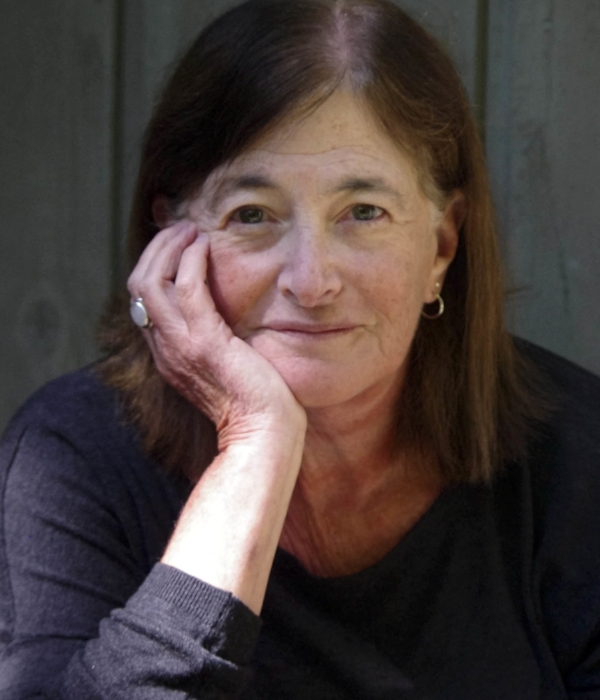
Image result for linda frank photo

Linda Frank
(Photo curtesy of Wolsak & Wynn)

ABOUT THE POET
Linda Frank was born in Montreal and now lives in Hamilton, Ontario. A retired professor from Mohawk College, she has written three books of poetry: Cobalt Moon Embrace, Insomnie Blues and Kahlo: The World Split Open, which was shortlisted for the Pat Lowther Award. She is a past winner of the Banff Centre's Bliss Carman Poetry Award and has been shortlisted for the National Magazine Awards.

BLURBS
Divided, we fall ... for Linda Frank’s poetry
“Wonderstruck by nature and science, [Frank] uses them beautifully in this book to draw out the most myriad and finely observed insights, on everything from sexual politics and bedroom intimacy (or the lack of it) to species extinction, the swiftness of life, religion, control, capture, the call of the wild and children."
     - Jeff Mahoney, The Hamilton Spectator

4 Women with New Books of Poems!
"This is a vital text as there is not a single piece in here that doesn’t consider other life forms than the human. […] These pieces are more than worth an embedding in your empathetic core."
     - Catherine Owen, Marrow Reviews

A Review of Amanda Jernigan's Years, Months, and Days and Linda Frank's Divided
"None of [her] interpretations are ever in conflict with one another. Rather, they enhance an already dense set of poems by offering sundry entry points. In a time where much popular poetry resembles candid notebook entries or performative tantrums, Frank's poems arrive refreshingly and consolingly classroom-ready."
     - Zachary Thompson, Hamilton Review of Books


805
DISCLAIMERS

Poems cited here are assumed to be under copyright by the poet and/or publisher.  They are shown here for publicity and review purposes.  For any other kind of re-use of these poems, please contact the listed publishers for permission.

We here at TBOP are technically deficient and rely on our bashful Milo to fix everything.  We received notice from Google that we were using "cookies"
and that for our readers in Europe there had to be notification of the use of those "cookies.  Please be aware that TBOP may employ the use of some "cookies" (whatever they are) and you should take that into consideration.

Friday, May 17, 2019

Listen Before Transmit — Dani Couture (A Buckrider Book/Wolsak & Wynn)

Today's book of poetry:
Listen Before Transmit.  Dani Couture.  A Buckrider Book/Wolsak & Wynn.  Hamilton, Ontario.  2018.

Listen Before Transmit

Dani Couture is stringing some perfectly good Tangerine Dream soundtrack to the back of your head, her pointed fingers all skulduggery and tectonic.  Listen Before Transmit is a highly sophisticated series of messages sent from somewhere that seems like the present and between someplace that feels like the future.

It's all dreamlike familiar, deju vu freaky and future skeptical.  Dani Couture's voice is uber-modern.  In fact Listen Before Transmit may be seen as an introduction to a new lexicon, a new emotional matrix.

Memoir

The bronze statue of a soldier sits astride
a bronze horse imagined exactly 1.5 times

larger than any known breed. A slayed dragon,
artfully reclined in death, tops well-chiselled notes

on an empire. If the enemy is imagined
as a dragon, the enemy will be unaware

we know they are our enemy. Or recall they
once were and may be again. The recurring

apogee of goals and timelines. In the park, hostas
proliferate, stab up in spring like strip spikes

that puncture all to arrest one. Like dreaming once
to end all waking. Melatonin jet lag, sleep, and here

you are able to float and horses ride men above
a conflict of dented texts. Small details, contrails,

threaded through to make it almost believable - a lie
from the one in your bed, but from and to yourself.

Recombinant data. At rest, your brain selects
a Zeppelin to tour a city of spires. Math

was never your strong suit. You were told
to bring three adapters. The pleasure of plugging in

everything at once is undeniable. By percentage
the galleries had more heads than bodies.

Outside of one, a man, granite, holds up the head
of a woman, granite, emancipated from her body.

Saving her, punishing her, or both. You failed to read
the plaque. A second gallery welcomes visitors

with bay window-sized breasts fashioned in three
colours of neon piping, which, in your mind, flash

OPEN, OPEN, OPEN. Artist's intent aside, you enter
the gallery like a fisherman's knot and leave hooked.

This where you felt most at home away from home.
Home where the grackles are the size of ravens,

ravens the size of dogs, dogs the size of horses,
yet women still variable according to need and purpose.

At the departure gate, you ask a guard if you speak
a different language than your father, are you ensured security

of your own thought outside his borders? Everyone said
this was a long way to go to be somewhere else.

💫💫💫

Today's book of poetry recently heard from our travelling correspondent Otis.  He's currently on assignment in Port Credit.  Years ago Today's book of poetry took up residence in Port Credit with a certain and genuine Blanche Dubois, and her mother.  It's a small world and we're hoping Otis gets out alive and unscathed.  Port Credit can be one dangerous place.  And his mailbox is overflowing.

Kathryn, our Jr. Editor, is a big Dani Couture fan and insisted we get YAW (Mansfield Press, 2014),  Sweet (Pedlar Press, 2010), and Good Meat (Pedlar Press 2006) out of the stacks for the morning read.  Milo, our head tech and just recently back from a honeymoon with Kathryn, shot into action like he was shot out of a love gun.  Kathryn handed out Couture's oeuvre and a splendid morning read ensued.  Dani Couture's poems made our staff sound smart, they all liked that.

Listen Before Transmit reads like it could be the unknown love child of Walter Tevis and Saint Sharon Olds.

Report on the Status of Raccoons
on Fern Avenue

The children have elected them, en masse,
as head gardener, tastemaker, first love.
Individually, some are mistaken for escaped
house cats or nothing at all - renter's side
of a one-way mirror. Assembled, they move
as one. a giant fractal considering
the neighbourhood, licking off shingles
for the gap-toothed view of our pills,
passwords and occasional sex. Last frost
is their favourite formula. Their claws
are fashioned from pull tabs, lighter silver,
and lost earrings. The only words they know
are I am sorry, spoken in varying orders,
velaric, almost, and often, swallowed.
Each animal forms a binary system
with one of the feral chickens of Kauai.
They believe they are an island. Some are
able to camouflage as kitchen-made satellites
moving across telephone wires. They collect
open-window data, half-lives of half-heard
conversations. They party trick refuse, ingest,
then leave it on porches, neatly, in curls. Each
individual hair on their coat is an antenna
to an auxiliary. They reclaim old pelts, cold
crowns, from attics, to commune with their dead,
and wonder why we pick our brushes clean.
They believe we invented the rat and car tire.
Understand construction cranes to be a form
of prayer. They take more meaning
from the lay of flagstones than they should.
They're partial to the sound of human crying.
They sleep unmolested in the eaves
we'll never finish paying for.

💫💫💫

One of the things, one of the many that Today's book of poetry adores in the poetry of Dani Couture, and Listen Before Transmit is no exception, is the catalogue of poets, musicians, artists, painters, thinkers, that Couture folds into whatever she is cooking.  Everyone from Saint Eileen of Myles and the immortal Pink of Floyd, Kate Hall to Joseph Henri Honore Boex.  The point being that Couture is a searcher, fully engaged in a dynamic dialogue with the world.

Today's book of poetry ran into Dani Couture at a recent poetry festival and introduced himself.  Couture read her socks off, dazzled the audience and then walked off the stage with an "aw shucks, it weren't nothin'" grin.  That's how the pro's do it.

Mother, Order Apple

The radio reports there are no
apples this year, so you drive

to the closest orchard and ask
for apples. I would like to buy apples.

When the man at the chained gate
tells you there are none, you say:

I want apples. You tell him
there have always been apples.

Fifty-seven years of apples.
He tells you to drive west

two thousand miles. You'll find apples
there, just down the road

from here. He says if you'd died
in surgery as expected, you would

not be without apples this year.
A perfect record.

Maybe he didn't say those words
exactly, but you knew

he was thinking them
as he walked away to where he keeps

shelves of canned halves, the ones
he saved for a year like this.

💫💫💫

Today's book of poetry has long admired the poetry of Dani Couture, we wrote about YAW back in 2014 and you can read about that here:  


Listen Before Transmit is what happens when an excellent poet gets better.  She has the long sustain, Couture's yawp continues and Today's book of poetry couldn't be happier.  We are all richer to hear it, learn something.

Dani Couture cooks, she's the real burn.

Image result for dani couture photos

Dani Couture

ABOUT THE AUTHOR
Dani Couture is the author of several collections of poetry and the novel Algoma (Invisible Publishing). From 2012 to 2016, she was the Poetry and Fiction Editor at This Magazine. Couture’s work has been nominated for the Trillium Book Award for Poetry, received an honour of distinction from the Writers’ Trust of Canada’s Dayne Ogilvie Prize for Emerging LGBTQ Writers, and won the ReLit Award for Poetry. Her poems have appeared in publications in Canada, the US, and the UK, and several editions of Best Canadian Poetry in English.


BLURBS


"The poems in Listen Before Transmit exist in the slippage between language, experience and memory – deftly moving one way, then another, in a call-and-response to the human condition. A beautiful and accomplished collection."
     – Helen Humphreys, author of The Ghost Orchard

"A deft collage of syntactical fragments, the title poem of Listen Before Transmit foregrounds the principles of uncertainty, estrangement and disconnection that underlie the haunting mindscapes of this book. But there is also a countermusic in the book that strengthens the hold these poems gain over the reader, a music enacting the human search – however fraught, even risible – for connection and coherence in an indifferent universe. In 'Minus Time' both movements are manifest: ‘Who were you when you understood the sun / was simply a star? That you, in part / were made / of collapse. You, smallest sun.' Couture's questing figures probe galaxies within and without, in the process enmeshing us in the excitement and risk of both sorts of journey. Spend time with this book. Agile in its management of form, intellectually and emotionally nuanced, it will repay you with riches."
      – Mary Dalton, author of Edge: Essays, Reviews, Interviews
"Equal parts generous and curious, Dani Couture's Listen Before Transmit is born from the tender space where history ends and the future begins. These beautifully crafted poems place hunger and joy beneath a microscope, attuning the reader to what is magnified there . . . Listen Before Transmit opens the skies for us, demanding we ask more from the science fictive statics our bodies swim inside. Imagine the stars looking down at us when we look up at them: in this intimate and daring book, they do."
     – Jessica Rae Bergamino, author of The Desiring Object or Voyager Two Explains to the      
        Gathering of Stars How She Came to Glow Among Them


Dani Couture
Video: BlackCoffeePoet


756

DISCLAIMERS

Poems cited here are assumed to be under copyright by the poet and/or publisher.  They are shown here for publicity and review purposes.  For any other kind of re-use of these poems, please contact the listed publishers for permission.

We here at TBOP are technically deficient and rely on our bashful Milo to fix everything.  We received notice from Google that we were using "cookies"
and that for our readers in Europe there had to be notification of the use of those "cookies.  Please be aware that TBOP may employ the use of some "cookies" (whatever they are) and you should take that into consideration.


Saturday, May 12, 2018

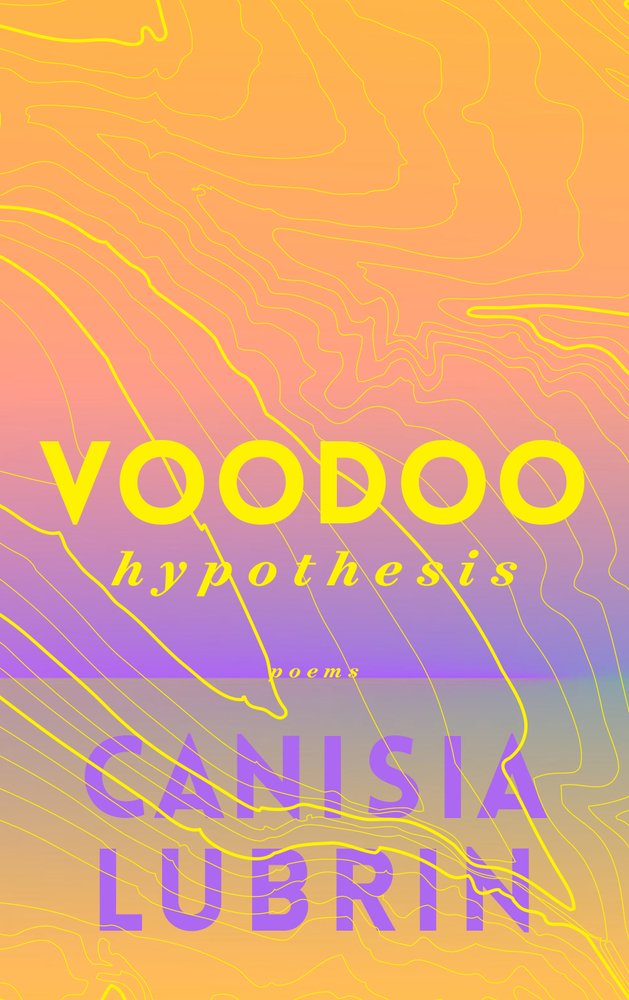
Voodoo Hypothesis — Canisia Lubrin (A Buckrider Book/Wolsak & Wynn)

Today's book of poetry:
Voodoo Hypothesis.  Canisia Lubrin.  A Buckrider Book/Wolsak & Wynn.  Hamilton, Ontario.  2017.

SHORTLISTED FOR THE RAYMOND SOUSTER AWARD


Today's book of poetry does not like to admit that we were wrong, about anything.  Canisia Lubrin's Voodoo Hypothesis has proved Today's book of poetry to be as wrong as we could possibly be.  We have been supping on our own words.

On our first reading of Voodoo Hypothesis our reaction was luke warm.  But not warm enough to get excited enough to write about.

And then, contrary to our belief system about readings and how they relate to the printed page  —  Today's book of poetry heard Canisia Lubrin read.
                                                                                Damn.

It has never felt quite so good to be so wrong.

Today's book of poetry remembers seeing Allen Ginsberg on stage with the CeeDees back in 1980's Toronto.  I even got to shake the hand of the great man.  Saw Irving Layton when he was still close enough to his prime to be a walking God.  I heard Earle Birney read, he came to our home and had tea.  Saw Al Purdy a few times too.  Today's book of poetry read with Milton Acorn once and he was a true giant.

But Canisia Lubrin reciting her title poem Voodoo Hypothesis with nary a page in sight was one of the more prodigious poetic feats I've ever encountered.  Griffin nominated poet Sandra Ridley was in the audience.  Today's book of poetry is a big fan of Sandra Ridley and we listen any times she speaks.  After the reading Sandra and I were talking about Lubrin and agreed, one of the monster readings we'd ever witnessed.  Hands down.

It was stunning to behold.  Lubrin was somewhat sheltered from the view of much of the audience, reading from a well lit corner of the Manx Pub, so not everyone got to see exactly what was happening, but I was front row center.  I saw the lightning bolt she shot across the room.

Voodoo Hypothesis

Before sight, we imagine
that while they go out in search
of God
we stay in and become god,
become: Curiosity,
whose soul is a nuclear battery
because she'll pulverize Martian rock
and test for organic molecules
in her lab within a lab within
a lab. She doesn't need to know our fears
so far too grand for ontology, reckoning.

Did you not land with your rocket behind
you, hope beyond hope on the tip of your rope
with the kindness of antigravity slowing you down,
you, before me, metal and earthen. But I am here to
confirm or deny, the millions of small
things that seven minutes of success were hinged upon
when I was little more than idea and research,
in the hypnotic gestures of flame and Bunsen burner,
and into parachute
no one foresaw, the bag of rags at the end
of the tunnel - all memory now,
this Paraclete.

Where else is a pocket
of air more deadly than the atomic bomb?
Would this only happen on Earth?
Has Mars run out of tolerance for the minutiae

of air pockets, fingerprints and worry?
Aggregates of metal, Curiosity
and her clues to calm our fears for what's coming.
Mars and her epic storms, her gargantuan
volcanoes have long ceased their trembling,
her crazy flooded planes, frozen and in cinema.
Martian life now earth and revelation's phases:
Earth problem,  not Mars problem.

But why
should I unravel over all this remembering?
            Great thing about landing
            is that I've arrived

at your service, at your sand, at your valley
and unsentimental magma.
Before me screams planes like Mojave Desert, Waikiki, Nagasaki,
nothing too strange to keep Curiosity off course.
Even though the Viking missions found no conclusive pulse
and we declared you dead, O Mars,
never mind that we named your heights and depths
from orbit. And from your spheres of minerals
where oceans once roared - we've learned little
of your lenience for empire.
Forgive us what Spirit uncovered in the silica of your ancient hot springs.

Ah, yes, we've come back home.
Phoenix told us we inherited the numberless
stories of your hydraulic pathologies
but I am Curiosity. If I kill the bitch right,
she'll take us deeper and convince us to send earthlings
to set up Earth colonies on your deserts. They won't ever
come back, but that's not so bad when we trade in
the grander scheme.
As though the colonials, the Tribe Traders
and all the pharoanic masquerades of gone times
were not fair threat. That we won't know the depth
of our homeward seas
is nothing when

the sun's still got our backs.
And while waters still vaporize before us
Curiosity will keep on until the organic secrets
of that Martian puzzle become as household to us
as carbon. Oxygen wasn't the only disaster to befall Earth,
to bless her with life.

Apollo drilled on the moon and got stuck
and the harder we've drilled down here
the more we've loosened our screws.
Perhaps there'll be no one left to give
a damn about the death of our privates

unless we prove ourselves enigmas,
the alien we think we know is the alien we only dream
up starting from the bottom
of the Curious.

We wake and die through
the crowns and thorns and craned chapters,
we move too quick for understanding.
Still, through the decades we predict,
Curiosity confirms the cold-slain dust.

Then come her conches blown
in the hard-won postcards travelling
on space dust faster than a bullet
to say:

hey,
I'm here. I safe. Wish you were here.
See Gale Crater, Mount Sharp, just as you've said.
Come bask with me in the wonders of a Martian. Good afternoon,
you of flowering faith. Set sail for home,
because we will all wear the consequences of this choice.
And you never should have said
goodbye.

...

So, Today's book of poetry went back to the poetry drawing board and started over with Voodoo Hypothesis.  Happily we were able to see what we'd foolishly over-looked on our first reading.  Lubrin's engines were running a little faster that what we were used to.  With some slight adjustments, a mental kick in the ass reminder, so to speak, Today's book of poetry was finally able to slip into the correct gear.

Luckily for us and luckily for you too.  

Canisia Lubrin is a poet you are going to want to stay in tune with, her voice is the next generation of strong Canadian women.  This is a vibrant voice keening with history, richly tempered by the lessons of systemic diaspora and frantic with love disguised as hope and reason.

Bjork and PJ Harvey are blasting from the office box, a complete re-invention of the Stones classic "Satisfaction" and it seems to be complete synchronicity.

Today's book of poetry thinks Bjork and Harvey would be down with the Lubrin train.  Voodoo Hypothesis invokes zombies, St. Lucian folklore, the ghost of Saint Derek of Walcott, Creole dynamism and more.

Even more.  Today's book of poetry is going into the future with a word we will borrow from Lubrin.  Frequent readers will recognize that in Today's book of poetry language to "burn" is one of the highest compliments we can manage.  Lubrin introduces Today's book of poetry to the Creole word Bwile.  Bwile/burn, also means lust.  Lubrin has improved our vocabulary and our mood.

Epistle To The Ghost Gathering

Dregs have formed us
molten inside. Here, a road, the core
this earth, a single-celled fire
a break in the vein: no exact archipelago
to dream what sealed its original shape.

Still we hail a fire that buzzes us in,
our swat-genes: still, our song
our burden beyond sanity: don't be afraid.
This may not have been the only home
reshaped by our before-selves- 
Scarlet alphabets breaking the chains
of this age. Music not dialogued
in the cosmic blues.
A castoff in that short fuse, these
dogged admissions in asteroidal jazz.
Even loss can love what we mimic
in tanglewood, found summers in us - 
A dance extinction loves, us until a great
height forms that almost-slay in us: come home.

...

Our morning read had Alexander, our historian, chain smoking and shaking his head.  "This is a deep river" he said, shaking our reading copy of Lubrin's Voodoo Hypothesis, "and we're going to have to all jump in."  

Today's book of poetry did not waltz into Voodoo Hypothesis on first reading and it was our fault.  Our primary reading skills need some honing from time to time.  Canisia Lubrin provided the perfect platform for us to stretch our sympathies as we stretch our understanding, reminding us once again of how much we have to learn. 

Kathryn, our Jr. Editor, and Maggie, our new intern, both adored Lubrin from the get go and looked at me like I were stupid when I passed it by the first time.  Kathryn and Maggie were right, and I was wrong.  (I had to promise to print that)

Up The Lighthouse

Think you are apart from the name
             that stuck, apart from relics of
supersun, vulva and misnomer
   garden and virgin and beast.
   You must know, black isn't always the void:

to be a living fossil, light-years old
perhaps, the bougainvillea must think itself
aloof. that its fruitless state by twilight recalls
the bloom of suns. Small suns considered
suns because they remain, vibrant
no matter how barren the winter - how dark.

Think yourself manly as tiers of black pyramids
you mark, golden with vomit. Think the ancestral
footsteps in that spring-rushed courtyard, a stooled help.

Think yourself womanly as the one-eyed tower,
with patience to turn a thousand years of rancid
butter into a mountainscape
of nigger dreams, ascending - 

black isn't always a void.

...

Canisia Lubrain can burn, burn, burn.  Today's book of poetry never likes to be wrong, but even worse is not learning the lesson.  Voodoo Hypothesis is the next book of poetry you should read.

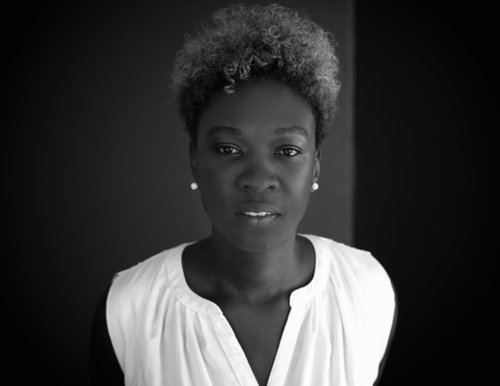
 Photo credit: Anna Keenan

Canisia Lubrin

ABOUT THE AUTHOR
Canisia Lubrin was born in St. Lucia. She has had work published in literary journals including Room, the Puritan, This Magazine, Arc, CV2 and The City Series #3: Toronto Anthology. She has been an arts administrator and community advocate for close to two decades. Lubrin has contributed to the podcast On The Line, hosted by Kate Sutherland for The Rusty Toque. She studied at York University where she won the President's Prize in poetry and the Sylvia Ellen Hirsch Memorial Award in creative writing. Lubrin holds an MFA from the University of Guelph and teaches at Humber College. She lives in Whitby, Ontario.

BLURBS
“In Canisia Lubrin’s debut collection of poetry, she pointedly observes that ‘the alien we think we know is the alien we only dream up.’ Voodoo Hypothesis is an imperative invocation of black dreams, an invitation for the living and the dead to define themselves. With poems at once epic and intimate, Voodoo Hypothesis requires a reverence for the individual word, to bear witness to Lubrin’s ‘brilliance indistinguishable from magic.’”                                                                                                    – Vivek Shraya, author of even this page is white and She of the Mountains
Canisia Lubrin’s lush, winding poetic lines are the incantations of a furious imagining. Lubrin’s speakers seem to have lived in generations of bodies of the African diaspora, and through centuries of migrations, slavery and neo-capitalism. Yet hers is still one single, contemporary vision – grieving, mongrel-cultured, exiled from the Caribbean archipelago’s sun. Here is a brilliant new Canadian voice, in the lyric lineage of Dionne Brand and M. NourbeSe Philip, raising up language like a shield against European histories and sciences, raising up poetry like a sacrifice of sweat and blood.”                – Sonnet L'Abbé, author of Killarnoe and Sonnet’s Shakespeare
Voodoo Hypothesis is an interior in motion: a gorgeous, searching intelligence. It is a womb/tomb of luminous inquiry. A semi-permeable ship where your mind is in concert with Lubrin’s forward propagating lineation, a participatory dreamscape that leads you back to your own culpability. This is a work that reads you, too.”                                                                                                                           – Liz Howard, author of Infinite Citizen of the Shaking Tent and winner of the Griffin Poetry Prize
686
DISCLAIMERS

Poems cited here are assumed to be under copyright by the poet and/or publisher.  They are shown here for publicity and review purposes.  For any other kind of re-use of these poems, please contact the listed publishers for permission.
We here at TBOP are technically deficient and rely on our bashful Milo to fix everything.  We received notice from Google that we were using "cookies"
and that for our readers in Europe there had to be notification of the use of those "cookies.  Please be aware that TBOP may employ the use of some "cookies" (whatever they are) and you should take that into consideration


Thursday, February 9, 2017

On Not Losing My Father's Ashes in the Flood - Richard Harrison (Buckrider Books/Wolsak & Wynn)

Today's book of poetry:
On Not Losing My Father's Ashes in the Flood.  Richard Harrison.  Buckrider Books.  Wolsak & Wynn.  Hamilton, Ontario.  2016.


Micheline Maylor recently referred to Richard Harrison as the best narrative poet in Canada.  Those could be fighting words in some circles because it is a pretty big declaration.  Today's book of poetry certainly thinks that Richard Harrison's On Not Losing My Father's Ashes in the Flood certainly bolsters his case.

Richard Harrison is a masterful story teller and as a result you could be forgiven for assuming these are spontaneous histories, lovingly improvised stories for the fire or late at night in bed, but Harrison's work is anything other than off the cuff.  These gentle and compassionate poems are made of interlocking puzzle pieces so meticulously set into place and rendered that the seams become invisible.  The puzzle becomes a painting and the painting is the poem.

Now is the Winter

With the last ounces of his grace, my father
stands up from his wheelchair, turns toward
the bed as though the floor is ice;
he tilts his spine, knees bent, and waits to shift
his weight to mine; I lay him on the blanket
and kiss his lips. We talk of Shakespeare
who carried him line by line through tropic wars
to the final surgery on his failing hips.
Now is the winter of our discontent,
he recites from those pages of his brain
no disease has yet erased,
the words the prayer of one
who has no god to hear his cries, his powers spent.
When he asks, I promise to be with him when he dies,
and winter stirs in the broken fingers
of my hand that long ago healed winter cold
into mended bone. My father sleeps as the land sleeps --
and I am taught that nothing is immortal
and awake forever. Outside, the heroes, green,
and knowing only what they see,
take their sticks and pucks and
lean into their shots
while the mid-winter's night
dreams water turned to stone beneath their feet.

...


Today's book of poetry first met Richard Harrison in Peterborough back in 1978 or 1979.  Our impression then was that he was a true gentleman with manners beyond his years and we all know how hard they are to find.  Almost as hard to find as a poet who has stayed the course all these years. Richard Harrison had a brilliant mind when I first met him thirty-eight years ago and he has spent the intervening years honing his considerable craft.  Practice and experience.

You see it in every poem in On Not Losing My Father's Ashes in the Flood, practice and experience. Today's book of poetry recently looked at the Alan Feldman's Immortality and feels Harrison can claim some of that same rarefied air.  Bless the cotton socks of the poets who tell stories with experienced wisdom, razor honed craft and hearts as big as locomotives.

Maybe I forgot to mention that Harrison usually leads with his heart.  Most men wouldn't dare and Harrison makes it look easy.

Found Poem

On a line from Margaret Laurence's The Diviners 

At my feet, at a bus stop, a bumblebee and a honeybee
are stinging each other to death. At first I think it's two bees mating,
something I had seen only once: not every bee
has a queen surrounded by a hundred thousand female eunuchs
in the monarchy of a hive; the Bombini, bumblebees,
never gave up motherhood to that degree, and plenty of them pair up
to breed like you and I have done in a selfishness so great
it created more of our own.

Once, in the hot first days of autumn,
out on the soccer pitch, I heard two Bombi fucking in the grass,
buzzing as they did it, and I was afraid for them,
being out on the field where he had come to trample and kick.
So I tried to pick them up as one rich flooding coil
singing the mellifluous bumbling aria of nature and sex.

But they broke away from each other, the one flew off,
while the other let me take it out of bounds and play --
                                                                      and that was it --
                                                                      a coitus interrupted, yes.
but a gene code preserved that would otherwise be lost beneath a pair of cleats.

And isn't it odd that it is not odd to talk of living things this way? These days
                      every object is a kind of page,
                                                                      every life a kind of writing.
I feel comforted, thinking of the unfathomable mystery at the heart of the bee
as piece of paper in a bottle, and on that paper, nothing more than one
                                                                      among an infinite arrangement
                                                                      of words.

The bee is a sentence, a line from a song.

But I know my kind.

Someone arriving after me to wait for the bus
would step on these two insects at war. So I pick them up,
and put them on the lawn away from human feet
so they can settle it in the grass undisturbed.

And I recall the fossil I saw as a child of
two dinosaurs that died together, struggling in the mud,
the carnivore with its arm down the other's throat all the way to its stomach,
the plant eater with its teeth sunk in the predator's shoulder all the way to 
the bone,

a poem composed in flesh,
               preserved in stone
                                       that waited 200 million years for its readers.

...

Our morning read was a little different this morning.  I'm hoping Richard doesn't mind but Today's book of poetry called in some old favours, made a few bribes and called on some old Peterborough friends.  Richard and I used to be loosely connected in a coven of misspent youth and poetry so I called in some old Peterborough Poets.  Of course we already had our Sr. Editor Max, I let him out of his strongbox this morning and made him put on pants and we decided to put on a show for the youngins. 

I met Max in Peterborough almost forty years ago and he was terror.  I was also able to round up Riley Tench and Ian David Arlett and get them into the office this morning -- please don't ask what sort of voodoo was required to accomplish this.

We each took our enthusiastic turns with pleasure, we were all proud of our old friend and the morning wine didn't hurt either.  Happy to do Richard's bidding, we bounced these poems off of the walls.  My old tricks no longer have much affect on the Today's book of poetry staff but when Max, Arlett and Tench were through the effect was jaw-dropped silence.  You'd have thought Marcel Marceau was on stage.  I think GOB STRUCK is the word.

Confessional Poem

Yesterday I wrote a confessional poem,
          but my wife, who always reads me first, said it was just a journal entry.

It's been years since I was that far from a poem and thought I was that close,
                                                                                                     but I trust her.

Today, before class, a student was zipping through a Rubik's Cube,
                        knuckling the box into panels of many colours, then a couplet,
                                                                       then one            then many again.

Within two minutes, without looking, he was done.
         I asked him to do it over so we could all watch, and, having watched,
                       have something with which to begin the writing of the day.

I wrote that the planes of the cube going in and out of order
                       as the student twisted the game were like the drafts of a poem,

sometimes deliberately torquing towards the opposite of the desired end
                       because the poem is a way we give in to a logic that lives within us
                                                                                                    but is not our own.

I was thinking of that poem I couldn't write,
          an apology I wish I'd made years ago,
                                           and carry with me even though two things are true:

          the person I would have apologized to is dead now,
                       and what I want to apologize for is speaking badly of them
                                   thought it was only to my wife and so they never knew.

The poem was like having an argument with someone in a dream,
                        then going up to them in daylight wanting to make amends.

Last time I did that,
          the other person reminded me
                       that I had done nothing.

But I apologized anyway
         because they had done nothing
                       to deserve what I did not do.

...

It's an honour to tell you how much Today's book of poetry enjoyed our old friend's book.  Today's book of poetry still can't tell you whether Micheline Maylor was wrong or right and we see quite a bit of poetry here in the Today's book of poetry offices.   We've admired Richard Harrison's poetry since before most of you were born and On Not Losing My Father's Ashes in the Flood confirms what we already knew, Richard Harrison writes beautiful poetry.

Image result for richard harrison poet photo
Richard Harrison
Photo:  Keeghan Rouleau

ABOUT THE AUTHOR
Richard Harrison’s first comic book was a Marvel Tales collection of Spider-Man’s first battle with the Hulk, Thor vs. Sandu, the Human Torch vs. the Sub-Mariner and a scary cautionary tale told by the Wasp to a kid in the hospital, “Somewhere Waits a Wobbo.” Four fantasies for a quarter: it was a steal. He’s been reading ever since. Richard is a nationally recognized poet (Hero of the Play, Big Breath of a Wish), editor and essayist on topics ranging from philosophy to prayer, literary criticism to mathematics, and poetry to hockey – as well as his work on superheroes. A professor at Calgary’s Mount Royal University, he teaches English, Creative Writing, and courses in comics (with Lee Easton) and the graphic novel.

Richard Harrison
School of Thought - 2016
Video: ciswf


550
DISCLAIMERS

Poems cited here are assumed to be under copyright by the poet and/or publisher.  They are shown here for publicity and review purposes.  For any other kind of re-use of these poems, please contact the listed publishers for permission.

We here at TBOP are technically deficient and rely on our bashful Milo to fix everything.  We received notice from Google that we were using "cookies"
and that for our readers in Europe there had to be notification of the use of those "cookies.  Please be aware that TBOP may employ the use of some "cookies" (whatever they are) and you should take that into consideration.


Friday, April 29, 2016

Thrillows & Despairos - Chris Chambers (A Buckrider Book/Wosak & Wynn)


Today's book of poetry:
Thrillows & Despairos.  Chris Chamber.  A Buckrider Book, Wolsak & Wynn.  Hamilton, Ontario.  2015.


Reading Chris Chambers Thrillows & Despairos reminds me of how much I love Toronto.  Today's book of poetry lived in Scarborough for about ten minutes when I was very young.  Back in the late 70's Today's book of poetry lived in Oakville, Port Credit and finally Etobicoke, 2 Royal York Road.   Our apartment was right on Lake Ontario and we faced the water, I was living with a woman named Blanche Dubois at the time.

Toronto was the BIG SMOKE to me and when I met up with my poet friends it felt electric to be attached to something so big.  The poets I knew then are not names that you would know, but I did meet the iconic Stuart Ross back then, sandwich boards and all.

All of that to say that Chambers' 'Kieslowski's Toronto' had me shouting loud enough to cause a stir here in the office.  The beautiful trick is that Chambers makes the city he loves universal.  

May 1st

The night after chicken korma and aloo gobi
at the Red Rose, I was informed my stomach
made noises never before heard. "Incomprehensible
to some," I trilled, "last night I was dreaming in Hindi!"
And the thrillows sang on behind the blinds.

"Are those sparrows, Bird Poet?" I was asked.
"Despairos?" I said,
"Why despairo?
Those are young enthusiastic children
of jaded homebody parents."

They were not the nagging jay who joined us last week:
so handsome and angry and mean,
his voice a fork on a plate, the screech of a taxi brake.
My second sighting he buzzed an old sleep-drunk squirrel
clambering down the trunk of the maple out front.

Welcome back forsythia --  welcome thrillows and
despairos, pigeons, wood doves, squeaky bikes,
bikes whose seats need raising. Welcome crowded bike posts:
now we'll lock a block away.
Welcome needy grass, magnolia litter.

Welcome squirrels. Welcome jay.

...

Today's book of poetry is big on joy and Thrillows & Despairos offers us up more than the usual helping.  These poems are as easy to put on as flannel pajamas and often just as comforting.

If you get the lucky chance to read Chris Chambers' Thrillows & Despairos you'll see immediately both the quiet charm and resolute heart in these poems.  There's no warm-up period, just like in Chambers excellent Lake Where No One Swims (Pedlar Press, 1999), you get to dive in because it is so welcoming, the poetry, not the lake.  Chambers welcomes the reader with witty reason, common sense disguised in poem.

Chambers opens the door wide with his easily accessible and entirely charming style, he does this so you'll be paying close attention when he drops a bombshell on you.

Ventilator

20th Century driving home drunk from your dead-end job to your
     dead-end house
          hitting SEEK under mauve chemical skies while the Fanta sun sinks
          behind pre-sold pre-sod Major Mack subdivisions.
20th Century your lawns are tan, thirsting for rain, and there's nothing
     on television.
20th Century all your melodies were written 28 years ago, your songs
     are anemic,
          thirsting for rain, they bring only pain with each tired refrain.
20th Century your wife left you long before you even met her -- she was gone,
          and you have taken it out on every woman ever since.
Will you make it in to work tomorrow with your bloodshot eyes and your
     Advil buzz?
          Will anyone notice? Will they get on better without you?
"Whatcha gonna do about it? Whatcha gon uh DO?"
Now you are naked on the Internet, you have waited 40 minutes just to see
          yourself flesh out -- but it is not your body and it's not your face either.
Tomorrow you will wear yesterday's socks. You're all talk, 20th Century,
     foxing nobody.

You are "dreaming you are the pure products of America
          going crazy." Look at yourself. "Stretched out
          in room ten oh nine with a smile on your face and tarot in your eyes."
Y'are a terrified 36-year-old tired beyond the twilight of youth and any cliche.
          20th Century, your heart is fluttering like the wings of a small bird,
          your heart is racing like the heart of a small bird, while you cling
          to your nest; to a torn and frayed dream of nostalgia --
          You Are Poetry, 20th Century?
Lead foot on accelerator
          breathing oxygen through a ventilator suit --
          looking down from the moon -- waning 20th Century -- our one
               lonesome moon,
          did you really think fashion was just perspective?
That all you learned from technology has taught you nothing, albeit painstakingly;
          has restricted the circulation of blood to the heart, actually?
What exactly do you see from up there, 20th Century?
Do you expect us to believe you will ever return;
          that your soul might survive and your bones not cinder up
               on re-entry;
          that you might walk down the streets of your hometown an exile
          in the pale green light breathing etherized pale green air?

Have you had one original thought in your life, 20th Century? One?

You are a footnote.
Y'are a three-line item buried deep in the library's sub-basement:
         "Your face swollen like a purple cabbage: 'Oh I had a bad fall.'
         What kind of staircase could do that?
          Tell us whose fist it was, Twentieth Century, don't lie to us."

...

Today's book of poetry comes away from Chris Chambers' Thrillows & Despairos with nothing but admiration.  It's full to bursting with "I should have thought of that" moments.  This is a book you'll want to buy multiple copies of because you will want to put it into as many hands as possible.  This is poetry that will change minds --  you know the type who always says "I don't get poetry."  They will not only "get" Chambers but Today's book of poetry is certain they will become poetry fans, how can they not be tickled by the human scale Chambers brings to every poem.

This morning's reading made for a grand scale memorable moment, Milo, our head tech, and Kathryn, our new intern, announced that they were moving in together.  Actually what they did was to pass out gorgeous hand printed cards inviting us to come and see their new "shared" poetry collection bookcase.  They were both moon-faced and useless this morning.

So, Today's book of poetry invited a dear old friend, the ghost of Toronto poet Martin Singleton (among Singleton's publications Difficult Magic was published by Wolsak & Wynn back in 1984, Range of Motion, 1989).  Martin and I were friends all those years ago and I used to love to hear him read poetry.  I have a tape recording of a reading he did here in Ottawa at Paul King's Food For Thought Books.  Paul and Martin are both too long gone but were happy to show up for this morning's reading.  Martin loved Toronto almost as much as Chambers and Paul King loved poetry. Martin told me he'd been a big fan of Chambers ever since The Lake Where No One Swims.  So has Today's book of poetry.

Winter Poem

I

In my dream it is as cold as it is in reality tonight.
The wind sears everything but us.
We're in someone's car, driving home across Bloor Street. Westbound.
The bars approaching our neighbourhood vaguely lit.
Cigarette smoke and steamed windows dilute their lights.
Then...ahead...where we live...and beyond...
only darkness. A black that is terrifying the imagination, the subconscious;
our house, our secrets, our streets, our homes appear powerless,
zapped of the current we so take for granted.
It's a blackout familiar in ways to last summer's,
but at minus 30C portends a disaster.
We drive away.
We drive in.
Check the fuel on the gauge.
We have heat here, Here.
Will this car save us? Distract us?
Should we pick up the hatless -- the shivering?
Should we...wake up?

II

The alarm plays the 7 o'clock news
and we turn in to each other, warm skin happy to find
warm skin in a warm flannel-sheet bed.
We hold each other for quite a while - then you get up,
then I get up: Happy Friday!
The sun is up, the days are getting longer,
it remains minus 30C.
The light is brightening the top floor
of the ugly pirate radio apartments at Dovercourt & Bloor: this morning
they're positively radiant in their white and off-white plainness...
Through the kitchen window, around the smoke from the tops of the houses
across the alley, and about a mile away between us
it's light.
Beautiful light. To the west -- black in my dream -- beautiful light.
Heat is pumping, pumping out of Mr. Chong's rads now.
The freezing day the beautiful day is beginning.

...

Today's book of poetry read Thrillows & Despairos like I was eating fine chocolates, what tasty bon-bon is next?  Perfect chocolate covering each time, plethora of delight and wit inside, always comforting, always a surprise.


Chrischambers
Chris Chambers
Photo: Paul Barker

ABOUT THE AUTHOR
Chris Chambers is the author of Lake Where No One Swims and Wild Mouse (with Derek McCormack), which was nominated for the Toronto Book Award. These poems have appeared in Taddle Creek, Jacket, This Magazine, The Literary Review of Canada and were awarded the K. M. Hunter Artist Award.

BLURB
“Every time you reach your hand into the gut of Chris Chambers’ new book, you pull out something writhing, surprising and fresh. But also rare – rare in that poems so damn wit-filled and well-crafted can also be so deeply human and moving: just check out the magnificent centrepiece ‘KieÅ›lowski’s Toronto.’ Chambers insists that every poem needs a bassist – his is equal parts Flea and Jaco Pastorius.”
     – STUART ROSS, author of You Exist. Details Follow.


Chris Chambers
reading the poem 'May 1st"
Video:  Wolsak & Wynn


466

DISCLAIMERS

Poems cited here are assumed to be under copyright by the poet and/or publisher.  They are shown here for publicity and review purposes.  For any other kind of re-use of these poems, please contact the listed publishers for permission.

We here at TBOP are technically deficient and rely on our bashful Milo to fix everything.  We received notice from Google that we were using "cookies"
and that for our readers in Europe there had to be notification of the use of those "cookies.  Please be aware that TBOP may employ the use of some "cookies" (whatever they are) and you should take that into consideration.