Showing posts with label sharon olds. Show all posts

Friday, May 17, 2019

Listen Before Transmit — Dani Couture (A Buckrider Book/Wolsak & Wynn)

Today's book of poetry:
Listen Before Transmit.  Dani Couture.  A Buckrider Book/Wolsak & Wynn.  Hamilton, Ontario.  2018.

Listen Before Transmit

Dani Couture is stringing some perfectly good Tangerine Dream soundtrack to the back of your head, her pointed fingers all skulduggery and tectonic.  Listen Before Transmit is a highly sophisticated series of messages sent from somewhere that seems like the present and between someplace that feels like the future.

It's all dreamlike familiar, deju vu freaky and future skeptical.  Dani Couture's voice is uber-modern.  In fact Listen Before Transmit may be seen as an introduction to a new lexicon, a new emotional matrix.

Memoir

The bronze statue of a soldier sits astride
a bronze horse imagined exactly 1.5 times

larger than any known breed. A slayed dragon,
artfully reclined in death, tops well-chiselled notes

on an empire. If the enemy is imagined
as a dragon, the enemy will be unaware

we know they are our enemy. Or recall they
once were and may be again. The recurring

apogee of goals and timelines. In the park, hostas
proliferate, stab up in spring like strip spikes

that puncture all to arrest one. Like dreaming once
to end all waking. Melatonin jet lag, sleep, and here

you are able to float and horses ride men above
a conflict of dented texts. Small details, contrails,

threaded through to make it almost believable - a lie
from the one in your bed, but from and to yourself.

Recombinant data. At rest, your brain selects
a Zeppelin to tour a city of spires. Math

was never your strong suit. You were told
to bring three adapters. The pleasure of plugging in

everything at once is undeniable. By percentage
the galleries had more heads than bodies.

Outside of one, a man, granite, holds up the head
of a woman, granite, emancipated from her body.

Saving her, punishing her, or both. You failed to read
the plaque. A second gallery welcomes visitors

with bay window-sized breasts fashioned in three
colours of neon piping, which, in your mind, flash

OPEN, OPEN, OPEN. Artist's intent aside, you enter
the gallery like a fisherman's knot and leave hooked.

This where you felt most at home away from home.
Home where the grackles are the size of ravens,

ravens the size of dogs, dogs the size of horses,
yet women still variable according to need and purpose.

At the departure gate, you ask a guard if you speak
a different language than your father, are you ensured security

of your own thought outside his borders? Everyone said
this was a long way to go to be somewhere else.

💫💫💫

Today's book of poetry recently heard from our travelling correspondent Otis.  He's currently on assignment in Port Credit.  Years ago Today's book of poetry took up residence in Port Credit with a certain and genuine Blanche Dubois, and her mother.  It's a small world and we're hoping Otis gets out alive and unscathed.  Port Credit can be one dangerous place.  And his mailbox is overflowing.

Kathryn, our Jr. Editor, is a big Dani Couture fan and insisted we get YAW (Mansfield Press, 2014),  Sweet (Pedlar Press, 2010), and Good Meat (Pedlar Press 2006) out of the stacks for the morning read.  Milo, our head tech and just recently back from a honeymoon with Kathryn, shot into action like he was shot out of a love gun.  Kathryn handed out Couture's oeuvre and a splendid morning read ensued.  Dani Couture's poems made our staff sound smart, they all liked that.

Listen Before Transmit reads like it could be the unknown love child of Walter Tevis and Saint Sharon Olds.

Report on the Status of Raccoons
on Fern Avenue

The children have elected them, en masse,
as head gardener, tastemaker, first love.
Individually, some are mistaken for escaped
house cats or nothing at all - renter's side
of a one-way mirror. Assembled, they move
as one. a giant fractal considering
the neighbourhood, licking off shingles
for the gap-toothed view of our pills,
passwords and occasional sex. Last frost
is their favourite formula. Their claws
are fashioned from pull tabs, lighter silver,
and lost earrings. The only words they know
are I am sorry, spoken in varying orders,
velaric, almost, and often, swallowed.
Each animal forms a binary system
with one of the feral chickens of Kauai.
They believe they are an island. Some are
able to camouflage as kitchen-made satellites
moving across telephone wires. They collect
open-window data, half-lives of half-heard
conversations. They party trick refuse, ingest,
then leave it on porches, neatly, in curls. Each
individual hair on their coat is an antenna
to an auxiliary. They reclaim old pelts, cold
crowns, from attics, to commune with their dead,
and wonder why we pick our brushes clean.
They believe we invented the rat and car tire.
Understand construction cranes to be a form
of prayer. They take more meaning
from the lay of flagstones than they should.
They're partial to the sound of human crying.
They sleep unmolested in the eaves
we'll never finish paying for.

💫💫💫

One of the things, one of the many that Today's book of poetry adores in the poetry of Dani Couture, and Listen Before Transmit is no exception, is the catalogue of poets, musicians, artists, painters, thinkers, that Couture folds into whatever she is cooking.  Everyone from Saint Eileen of Myles and the immortal Pink of Floyd, Kate Hall to Joseph Henri Honore Boex.  The point being that Couture is a searcher, fully engaged in a dynamic dialogue with the world.

Today's book of poetry ran into Dani Couture at a recent poetry festival and introduced himself.  Couture read her socks off, dazzled the audience and then walked off the stage with an "aw shucks, it weren't nothin'" grin.  That's how the pro's do it.

Mother, Order Apple

The radio reports there are no
apples this year, so you drive

to the closest orchard and ask
for apples. I would like to buy apples.

When the man at the chained gate
tells you there are none, you say:

I want apples. You tell him
there have always been apples.

Fifty-seven years of apples.
He tells you to drive west

two thousand miles. You'll find apples
there, just down the road

from here. He says if you'd died
in surgery as expected, you would

not be without apples this year.
A perfect record.

Maybe he didn't say those words
exactly, but you knew

he was thinking them
as he walked away to where he keeps

shelves of canned halves, the ones
he saved for a year like this.

💫💫💫

Today's book of poetry has long admired the poetry of Dani Couture, we wrote about YAW back in 2014 and you can read about that here:  


Listen Before Transmit is what happens when an excellent poet gets better.  She has the long sustain, Couture's yawp continues and Today's book of poetry couldn't be happier.  We are all richer to hear it, learn something.

Dani Couture cooks, she's the real burn.

Image result for dani couture photos

Dani Couture

ABOUT THE AUTHOR
Dani Couture is the author of several collections of poetry and the novel Algoma (Invisible Publishing). From 2012 to 2016, she was the Poetry and Fiction Editor at This Magazine. Couture’s work has been nominated for the Trillium Book Award for Poetry, received an honour of distinction from the Writers’ Trust of Canada’s Dayne Ogilvie Prize for Emerging LGBTQ Writers, and won the ReLit Award for Poetry. Her poems have appeared in publications in Canada, the US, and the UK, and several editions of Best Canadian Poetry in English.


BLURBS


"The poems in Listen Before Transmit exist in the slippage between language, experience and memory – deftly moving one way, then another, in a call-and-response to the human condition. A beautiful and accomplished collection."
     – Helen Humphreys, author of The Ghost Orchard

"A deft collage of syntactical fragments, the title poem of Listen Before Transmit foregrounds the principles of uncertainty, estrangement and disconnection that underlie the haunting mindscapes of this book. But there is also a countermusic in the book that strengthens the hold these poems gain over the reader, a music enacting the human search – however fraught, even risible – for connection and coherence in an indifferent universe. In 'Minus Time' both movements are manifest: ‘Who were you when you understood the sun / was simply a star? That you, in part / were made / of collapse. You, smallest sun.' Couture's questing figures probe galaxies within and without, in the process enmeshing us in the excitement and risk of both sorts of journey. Spend time with this book. Agile in its management of form, intellectually and emotionally nuanced, it will repay you with riches."
      – Mary Dalton, author of Edge: Essays, Reviews, Interviews
"Equal parts generous and curious, Dani Couture's Listen Before Transmit is born from the tender space where history ends and the future begins. These beautifully crafted poems place hunger and joy beneath a microscope, attuning the reader to what is magnified there . . . Listen Before Transmit opens the skies for us, demanding we ask more from the science fictive statics our bodies swim inside. Imagine the stars looking down at us when we look up at them: in this intimate and daring book, they do."
     – Jessica Rae Bergamino, author of The Desiring Object or Voyager Two Explains to the      
        Gathering of Stars How She Came to Glow Among Them


Dani Couture
Video: BlackCoffeePoet


756

DISCLAIMERS

Poems cited here are assumed to be under copyright by the poet and/or publisher.  They are shown here for publicity and review purposes.  For any other kind of re-use of these poems, please contact the listed publishers for permission.

We here at TBOP are technically deficient and rely on our bashful Milo to fix everything.  We received notice from Google that we were using "cookies"
and that for our readers in Europe there had to be notification of the use of those "cookies.  Please be aware that TBOP may employ the use of some "cookies" (whatever they are) and you should take that into consideration.


Sunday, November 12, 2017

Out of Place - Richard Jackson (The Ashland Poetry Press)

Today's book of poetry:
Out of Place.  Richard Jackson.  The Ashland Poetry Press.  Ashland University.  Ashland, Ohio.  2014.


Here's the thing that Today's book of poetry is only learning to accept, only learning to come to terms with.  There are so many fine poets out there it is impossible to know them all.  

To all you regular readers out there, we are doing our best to cover as much ground as we possibly can but we are not Kate Sutherland on the subway.  Sutherland of the beautiful Rhinos.  Bless her cotton socks.  We wrote about the brilliant Kate Sutherland and her book, How To Draw A Rhinoceros, last year.  You can look at that blog/review at the end of this paragraph.  Ms. Sutherland posts daily photos of a legion of unknown (to us) poets/poetry.  She doesn't do it everyday but it is something we here at Today's book of poetry look forward to.


All of that to clumsily say we know we are treading water in terms of the whole range of poetry out there.  But this is one of those cases where we feel a little guilt simply because we hadn't heard of Richard Jackson before.  Out of Place is Jackson's eleventh book of poetry, and as you will see in his biography below, he has won every award and prize but the Selke Trophy.

Bob Gainey has every right to feel nervous in his old Hab's sweater because Jackson might just start piling up those as well - this writing is that good.

There is a very good reason Richard Jackson has rolled up the awards and kudos.  This poetry is so good it is alarming.

About This Poem

          At the beginning...which is to awaken you to the right kind of joy
                        in serious times, we must list all those who have been killed
                                                                               since I last wrote......
                                                              - Bonhoeffer, 1942, Germany

It has to account for its untied shoelaces as well as its Extermination
Camps. Sitting among all those languages in the Munich beer garden.
Hitler's first speech a few blocks away. A masked ball where
the costumes are all switched around. Those carnival grab bags
filled with joy or remorse. Above me the clouds are paralyzed.
I have to wipe the dust from my soul. The wind holds its breath.
Bosnia, 1994: one group of men forced to bite off the testicles
of another group. Others to stand in the snow till their feet rot.
These things orbit now like a planet too far to see. Even the bee
can't figure a way out of my stein. Light staggers through the trees.
Every moment is filled with other moments. According to Bell's
Theorem whatever happens to this bee influences a history yet
to be written. Like the seed stars that smudge the trail of Mira as
it slips across the sky. All my maps are smudged with atrocities.
There are so many voices that are our own voices. Rhythm is just this
oscilloscope of the soul. We come from a place that has always
been inside us. Our words migrate helplessly. The world reflects
only itself. Which is why we have to create our own memories.
The paths from here spread out like shattered glass. The man
across the table's from Krakow. He doesn't want to talk about
the occupation and its lives turned to smoke. One the mechanical
Trumpeter in his church spire. The song stops where his real
ancestor was felled by an enemy's arrow. In the silence that follows
don't we all have to begin again? At the end of a line, the door
left open for a moment where you can fall in love, remember
what you wanted to forget, forget what you wanted to remember.
Why do you think our metaphors will save us? The world is only
itself. Time is just our way of imagining it. At least the bee has
ultraviolet vision to see everything we can't.  We have to light
our dark spaces with the sputtering matches of our words.
We have to follow wherever they lead us. There's this little
hole in existence we all pass through. Someone is always entering.
He's the one who invents me while I think I am writing about him.

...

Today's book of poetry has mountains of admiration, respect and awe where Richard Jackson's Out of Place is concerned, add in a little jealousy.  Jackson seems to have a simple formula, he picks a subject, writes about it with encyclopedic knowledge, dharma bum charm and whimsy and some sort of special poetry detectives trained eye.  This is cherse stuff.  There are no details left behind that we will need later, there is nothing extra to carry.  Jackson is thorough, candid and hard as nails/soft as clowns tears.

Day after day Today's book of poetry shares books of poetry we like with you, best job on the planet, but we are not about to index our poets or their books with scores -- but if you minions are paying attention this guy Jackson is in David Lee, Sue Goyette, David Clewell, Sharon Olds, territory.

Out of Place really is a remarkable book filled to bursting with remarkable poems.  It may even be a little unfair, Jackson having so much good poetry in him.  Somehow Richard Jackson is able to write about exactly what it is that you want to know about.  This is essential voice territory.  As in, the next time Today's book of poetry is asked "who should I read?", Richard Jackson will be part of that conversation.

Belief

                                 after the freeing of the West Memphis Three

Deep in our own inner caves the heart's canary sounds a warning.
On the other side of speech is a language that dreams us.
Echoes hide out in abandoned words. The air hardens.

A home invasion, a meth lab, a father killing his family.
It Had To Be You, Les Paul played on his guitar with seven
crippled fingers, but who is never named, or is us.
                                                                                 These
clouds begin to picket the horizon. Pine sap leaks from 
a wounded tree. Even the flowers seem to take on
the color of night.
                           There are times when it is better
to close your eyes to the world.

                                                  I have been watching
a fledgling drop from its nest, flutter a few feet, and again,
until it flew not back, but into another tree. The wind tests
itself against my torn screen. A few thorns of light jab
out of the darkness on the far hills.
                                                        Who are you
if your dreams are dreamt by somebody else? In a dream
of freedom we return to a place that is not the place.
                                                                                    Orpheus'
poems could not create the world he needed. How
many times do our words become cells? How do we
remove those splinters of memory and remain ourselves?
Most of our dreams are the seeds in sidewalk cracks.

By now my fledgling has its own dream.

        
                                                                 Tonight's clouds
will cover the meteor shower. I remember the fog in
the valley slipping forward like a glacier. At other times
a whole world rippled in the river.
                                                       It was David Hume
who said we had not a single reason to believe in reality,
but we must act as if we do. Even when a whole life
seems mothballed.
                             Now we know that our moon collided with
another moon whose remnants we can't see on its far side.
Moonglow is how Les Paul would have played it. And us?


Who are we if someone else's dream is really ours?

...

Today's book of poetry's morning read was spectacular.  You can blame Richard Jackson.  Many of our staff are becoming old hands in the reading game, at this reading poems aloud, and bless their cotton socks, they've taken a shine to the process.  Milo, our head tech, led the charge this morning while shaking his head with both wonder and the obvious.  Milo already knows his next assignment will be to find us the rest of Richard Jackson's books.  If they hold a candle to Out of Place Today's book of poetry knows they will be essential reading.

This is how the masters do it.  Solid.  Bold.  Beautiful.

That orange fugging fog that is over America is temporary and the poets tell us so.  This title from Jackson is from 2014 and has nothing to do with POTUS.  But it has everything to do with America and it gives us hope.  Jackson writes poems of reflection, inner examination, outer understanding and tolerance.  

Prophecy

                                                    You exist in the delirious illusion of language.
                                                                                                    - Robert Penn Warren

What I want to say to you has already disappeared like the flashlight
beam I aimed at empty space years ago. If Augustine was right
it will hit the edge of the universe in 15 billion years. If Einstein was
right then it will never get to the end of it. My own life is orbiting
a word I don't want to land on. Heisenberg said you can only know
where you have been. Freud said that where we are is the terror
of what we were. He was terrified by sex which he saw as a kind
of impalement. Polls say the happiest people are those in the middle
of sex. So tell me, why have you paused to listen?

                                                                                 Most of our words
come with dress codes to hide the world we never want to see.
Some march to the rhythm of goose steps. All I need to do is
throw another stone at the stars to know how far from any center
we are. Even Charon can't say which shore is which.

Every word here tries to pronounce something that has no name.
The words we don't hear are the words that control us. The words
I want to say edge over the horizon like a sunset sail. Every breath
disturbs the next. Every word erases another word. Nathan, the first
prophet, said no one would come after him. So what did he know?

I don't even know what the end of this sentence says because
while the clock is taking its time to decide, the homeless man
in the cemetery blows a few random notes on a dented trumpet,
a few cigarette butts in the flowerpot have a story they refuse to say,
the wounded day limps home alone, a few more protesters are shot
in Bahrain, a few mothers and children slaughtered in Mexico
in the middle of some drug war.

                                                   Isn't everything we say just some
bit of breath we can't hold any longer. Doesn't every word draw
a picture that hides what it really means. How did all those painters
know what the Apocalypse looks like? The bombed church
in Baghdad thought it was today. The man shot on his porch in East
Chattanooga thought it was another day.

                                                                Sometimes the moon rises
full of hate. Clouds scramble over distant peaks, the wind broods
in a ravine, the flycatcher, perched along, waits for darkness.

In truth, what I want to say to you are these trace elements
lingering in the spaces between words. In truth, nothing we say is
worth the way the hawk slides through the invisible air from
the top of the skeleton of a dead tree.

                                                           In a few years you'll decipher
how these words will create a whole world I never meant to say.
Our windows have their own prophecies. Birdsong crinkles the air.
Everything we say is a self-portrait. The radio preacher says
that flowers can't bloom in hell. I have it on good report that

you can fit 1,737 angels on the head of a pin, excepting fat angels.
Salvation comes before creation, writes Agamben, which is why
we have to say whatever words, however dark, puddle at the end
of each sentence.

                             And isn't what we can't say exactly what attracts us?

And you, would it have made any difference if I said what I wanted
to face back at the beginning, that we have to learn to love whatever
truth will say itself, oh, not at the safe distance words create, but
unconditionally, like the woman who cannot understand why she is
impaled on the branch in the Ivory Coast like one of Goya's
Disasters of War discovering words she never knew would lead her there.

...

Out of Place is another clear lesson for Today's book of poetry.  America remains full of greatness if you know where to look.  Poets like Richard Jackson give Today's book of poetry hope.

Remarkable, remarkable poetry.

Richard Jackson
Richard Jackson

ABOUT THE AUTHOR
Richard Jackson is the author of eleven books of poetry, Out of Place (Ashland Poetry Press, 2014) most recently, two books of criticism, and two translations, one from Slovene and one from Italian. He is a winner of Guggenheim, Fulbright, NEA, NEH and Witter-Bynner Fellowships, five Pushcart appearances, as well as prizes from Prairie Schooner, Rattle and Crazyhorse. Jackson's poems have been translated into 15 languages. He was a recipient of the Slovene Order of Freedom Award for Humanitarian and Literary work in the Balkans and recipient of the 2009 AWP George Garrett Award. Jackson has taught at the Iowa Summer Festival, Prague Summer Program, Bread Loaf and other venues, and teaches at UT Chattanooga and the Vermont College of Fine Arts low residency program, winning teaching awards at both schools.

BLURB
His lines are clouds of love, piercing the sky with enormous empathy, rolling in the azure, torrents of passion, and are arrows at the same time, reaching a peak where they break, crying, cleansing the air, becoming ether. It is impossible to describe this in discursive language. With a melody that is unmistakably his own, his poems seem to come to us in Europe from the heart of the heart of America, the totally open (and hidden) center from where the power of the continent sprouts. He is a kind of Scorzese in poetry, but where Scorzese almost succeeds in his films, then stops, seals and terrifies us, Jackson adds a tender, vulnerable voice that blossoms and transforms us and that is so unique and great, great in its truest sense in Richard Jackson's poems.
    - Tomaž Å alamun

Richard Jackson
Poetry@Tech
Video: poetry@tech

ashlandpoetrypress.com

628


DISCLAIMERS

Poems cited here are assumed to be under copyright by the poet and/or publisher.  They are shown here for publicity and review purposes.  For any other kind of re-use of these poems, please contact the listed publishers for permission.


We here at TBOP are technically deficient and rely on our bashful Milo to fix everything.  We received notice from Google that we were using "cookies"
and that for our readers in Europe there had to be notification of the use of those "cookies.  Please be aware that TBOP may employ the use of some "cookies" (whatever they are) and you should take that into consideration


Friday, October 20, 2017

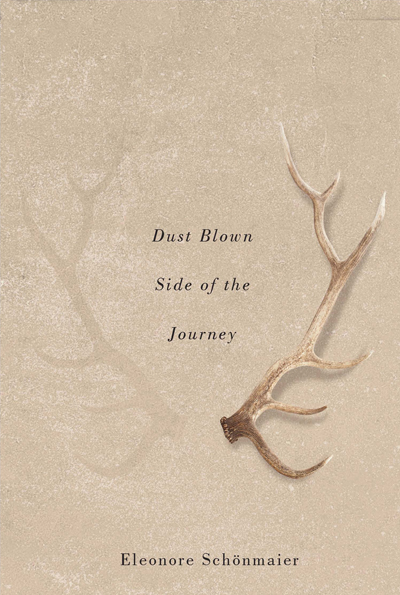
Dust Blown Side of the Journey - Eleonore Schönmaier (McGill-Queen's University Press)

Today's book of poetry:
Dust Blown Side of the Journey.  Eleonore Schönmaier.  Hugh MacLennan Poetry Series.  McGill-Queen's University Press.  Montreal & Kingston, London, Chicago.  2017.


Today's book of poetry comes to you from the waiting room of a CMA Clinic where Today's book of poetry is having x-rays of everything but our memory.  Bless those kind and wise men and women who established a medical care system in Canada that will allow me to leave this building without paying a cent.

I've been here less than ten minutes and already I am in a hospital gown and awaiting my first x-ray.  All of this to explain my recent absences.  That and Today's book of poetry purchased a new computer yesterday, it was needed.  Our steampunk wonder system was an RCA Victor - Westclox hybrid machine that was still running, technically, but it was getting difficult to find a watchmaker-video technician with the right set of brass tipped tools.

Eleonore Schönmaier is such a needed tonic.  Today's book of poetry has been down the remarkable   Eleonore Schönmaier  poetry road before.  You might remember that Today's book of poetry took a look at her back in July of last year.  Wavelengths of Your Song was a pleasure to read and you can see our post here:


Dust Blown Side of the Journey is more of the same wonder.  Schönmaier is a perfect mix of Nelson Ball's wonder and brevity along with the breadth and wisdom, experience and vision of a Lorna Crozier or a Sharon Olds.  That is some fine company and Schönmaier is right at home.

Today's book of poetry has been stuck in a poetry whirlwind, tunnel vortex lately and the only person I can blame is the genius Albert Goldbarth.  I've been reading Goldbarth's The Kitchen Sink as though it were a bible and I had discovered religion.  Our Southern Correspondent, the Twangster, has infected me with Goldbarthism and I'm not sure any other poetry will ever work quite the same way again.  But no.  Eleonore Schönmaier is the perfect antidote/bookend.  Both of these monstrously good poets write poems that stop us with wonder.

But while Goldbarth, bless his cottons socks, is writing long brocaded tapestries that have gold and silver thread and may possibly contain the secrets of the world, Schönmaier, although never terse, is writing with an economy that sustains and winnows to the very heart of things.

Risk

The doorbell has been cut
and the only way to gain entrance is
to stand in the middle of

the bridge jumping up
and down, but this futile
until you begin to sing

and from the upper-floor
window our friends looks
down and lets us in. We sit

at the window and touch
the seashells in their bowl
and our friend picks up

the conch, leans out
the window and lets it sound
so the canal boat captains

travelling below search
for the unseen and
in their confusion they

risk colliding with
the visible. Another
friend arrives and we

wine and dine and play
the Steinway as the storm
quavers against the roof

and the wind and jets flying
low overhead sound
alike as we journey closer

into our true selves
and you talk about
the wind quintet

you're composing
where the clarinet
will sound off stage

and you say all of us
are in your music
along with our missing

friend and walking home
I say, "I've had other
devoted friends before

but this evening's circle
are my soulmates"
and you say, "It's the

soulmates and not
the others who will
break our hearts."

...

Ok.  Today's book of poetry is at home, it is twenty-four hours later.  The clinic visit was just fine, at least they don't pincushion you.  Got home and started to look at the elegant work of Eleonore Schönmaier again and then there was a knock at the 11:30 a.m. door.  Today's book of poetry was expecting guests from out of town but was not expecting them to arrive six hours early.  Now these are world class guests, always arrive with wine and a variety of gifts.  They also always demand to take K and I out to dinner, last night it was Pizzarro's (We've been regulars there for over twenty-five years, I remember writing a poem for the head waiter when his first son was born.  A couple of months ago his first born was our waiter.  We've never had a meal there we didn't enjoy.)  Before our guests left this morning I was the owner of a brand new pair of winter gumboots.  Like I said, world-class guests.  But six hours early and in need of our complete attention.

Eleonore Schönmaier is a worker.  You only have to look at one of her poems to recognize the craft.  These poems are worked on, shaved here, strengthened there, and then a perfect coat of clear varnish has been applied.  These poems are weather-proof epistles aimed right at your reasonable heart and your emotional head.  

Take a hard look at this tidy effort, "Vertebrae of Humans and Art Animals."  It's all in there, Schönmaier shows us how it's done.

Vertebrae of Humans
and Art Animals

the breeze against my back
            as I cycle through narrow
                        streets were tattooed

men stroll and when
            I make a wrong
                        turn I'm face to

face with a sculpture
            of Mandela and the real
                        Desmond Tutu stepping

down from the podium
            photographers swarm
                        but I'm unable to stop

since I'm racing
            against time to a stretch
                        of beach where I film

the strandbeest
            small sails as wings
                        and multiple legs

the skeletal animal
            all plastic bone
                        races forward

frangible
            how easily
                        it topples

on my route home I watch
            an old man place a metal
                                   ladder against

the barbed wire fence
          he hangs a bird feeder
                     up as high as he can reach

in the center a young friend
            (attacked by a mob) undergoes
                                                         surgery

vertebrae, scapulae,
                          phalanges
                                       osteo-sculpture

which bones
              fit where
                           ossicles of

ear
    tympani
                  a wave a wind lifted leaf

under a tree a woman shows
                       her children how to read
                                               the tally marks

and tells them this is
            how many thousands of 
                                     days Mandela

had to wait to hear
                       bird song
                                   when his

captors knew
     exactly how
                 fragile bone is

...

Schönmaier isn't yelling about anything, this poet has far too much class for that.  But you read her and you see the strength, you see that she is a strong voice for women against the systemic in justices they endure.  You'll see that she is political but never proselytizing.  Reading Dust Blown Side of the Journey is like that first long cool and quenching gulp of fresh spring water after a long hike.

Considerable upheaval here at the Today's book of poetry offices these days.  Our morning reading was interrupted several times to continue negotiations.  It didn't matter much, Eleonore Schönmaier's crisp poems settled the room as we each took our turn and read them like prayers.  Of course we threw Wavelengths of Your Song into the mix.

We Are Alone

and lost along
the shore
the gentle slope
of the hill upwards
and we are found
again only when we
recognize the war
memorial where
resistance fighters
were shot and buried
in the sand of the dunes
you were imprisoned
in your youth for being
at the wrong place at the
wrong time, for trying
to make a better world
darkness falls upon
us and there is no
better world, only
the calls of the
nameless birds
in these brief
moments when
the birds still
exist for us: the bell
in the dunes tolls
once a year to
remind us of what
we still have
to lose

...

It doesn't get any tidier.  As long as poetry as fine as Eleonore Schönmaier's keeps arriving at the door Today's book of poetry will continue to want to tell you about it.

Today's book of poetry is hoping to return to regular programming as soon as possible.  Please stay tuned.

Eleonore Schönmaier

ABOUT THE AUTHOR
Eleonore Schönmaier is the award-winning author of Wavelengths of Your Song. She divides her time between Canada and coastal Europe.


"Knot"
by 
Eleonore Schönmaier
Video:  Eleonore Schönmaier


mqup.ca

618


DISCLAIMERS

Poems cited here are assumed to be under copyright by the poet and/or publisher.  They are shown here for publicity and review purposes.  For any other kind of re-use of these poems, please contact the listed publishers for permission.


We here at TBOP are technically deficient and rely on our bashful Milo to fix everything.  We received notice from Google that we were using "cookies"
and that for our readers in Europe there had to be notification of the use of those "cookies.  Please be aware that TBOP may employ the use of some "cookies" (whatever they are) and you should take that into consideration.




Tuesday, October 10, 2017

Dear Ghost - Catherine Owen (A Buckrider Book/Wolsak & Wynn)

Today's book of poetry:
Dear Ghost.  Catherine Owen.  A Buckrider Book.  Wolsak & Wynn.  Hamilton, Ontario.  2017.


Why am I not surprised when "Caligula and his freak show" show up in the nightly dreams of a young Catherine Owen?  Ms. Owen likes to give us the impression of a bookish youth full of church going Sundays and tempered innocence - but we are fairly certain she has "burn it down if necessary" tattooed on the insides of her eyelids.

Today's book of poetry has ventured into Catherine Owen territory before.  Back in April of 2013 Today's book of poetry took a look at her chapbook Steve Kulas & Other Autopsies (Angel House, 2012) and then in August of the same year Today's book of poetry cased Owen's Trobairitz (Anvil Press 2012).  You can see both of those blogs here:


Dear Ghost is a more mature voice from the irrepressible Owen.  This Owen, four years later, is more contemplative than reactive, more deliberate than spontaneous.  The resulting poems still vibrate with her tangible energy and intelligence but Owen's focus has tightened.

What I Remember About What We Weren't
Allowed in Childhood

Pop-Tarts certainly. Anything processed. The worst being hot dogs
which I gobbled once guiltily at the Stardust roller rink at thirteen
and puked, imagining entrails in my intestines. Condiments. Definitely
not on the acacia table in gauche plastic containers.
And Halloween candy was entirely out. My father shifting
through our sacks for all but the Glosette peanuts and Sun-Maid
raisins that, rationed, we were able to gobble over later weeks
to flee the dreaded sugar rush. Mostly all not carob or bean sprouts
or hard-boiled eggs were verboten. And then too there was no Happy Days,
never Knight Rider or The Monkees except when we snuck them
at Nana's by lying to her and after she would always exclaim
- "You pulled the wool right over my eyes!" So, aside from educational
programming, the small B & W stayed dark while we clicked Meccano
bits together, read the Brothers Grimm or played doctor with toothpaste.
Absolutely no Barbies or anything that would break, rot our teeth,
show us a false world in which dolls sport slip-on pink heels
and grown men in leather jackets say "Ehhhhh!" Only the dentist
could give us video games, hand-held Donkey Kong and Frogger
while he tightened our headgear, pain overwhelming the transgressive
pleasure and we couldn't say we didn't believe in God.

...

This past weekend Today's book of poetry read about a publishing record set by a Canadian poet, this article was in the Globe & Mail.  The poet's first book just pushed by 2,000,000 in sales.  Simply astounding.  I saw this young poets work in a globopulous bookstore recently.  Most of the bookstore was given over to the selling of various other products ranging from chocolate to computers to decorative rocks.  I spent a few minutes reading the poetry of the young superstar, well, she calls them poems.  In the Globe & Mail article it was made clear that this young woman, the current best selling poet in the entire English language, best selling by a factor of at least 10X, meaning that her current book has sold ten time more copies in the last year than any other book of poetry, ever, doesn't read.  She does peruse covers though.

Catherine Owen, on the other hand, is a big reader.  You can tell in every poem she writes that she has read.  Today's book of poetry has yet to meet Ms. Owen but it is easy to see, feel and hear the influence of other poets, it is a tangible thing.  Owen even gives us an "apprompted" poem which has verses that start with a line of poetry by Sharon Olds.  "Apprompted" is a term borrowed from Kimberly Gibson's paper Lines by Someone Else: The Pragmatics of Apprompted Poems written for Ms. Gibon's thesis at the University of North Texas. Owen's poems Two Stanzas on My Father Begun by Sharon Olds and The Journal of John Berryman From 1948 to 1971: A Reverse Glosa of First Lines are all the evidence we need of Owen's direction and intentions.  Owen has nothing but respect for the long line of poets who have worn down the path before her.

Just The Way Things Are (He Said)

That day at the tracks was overcast.
We cheered for a filly called Morning Coffee
and then Swagger Cat went down and had to be shot.

At the pub, the dealer wore a bandana beneath a dark fedora.
"It's the law of supply, you know," he said.
Two men played soccer in the cemetery beneath the train,

white ball pinging off the old grey of graves.
The horse went down as it graced a curve with its hooves,
and when it tried to rise, its leg was a shred of skin.

At the Met, the dealer moved a scrim in front of it
and slowly the hearse that smelled of hay drew towards us.
A ball bounced between our tables on which were placed small

shooters of blood. "I clean my asshole with Baby Wipes," the dealer
piped up, "that's the kind of pure guy I am." Graves took on the rain again
as they had for the past century. At the track, the crowd gasped,

briefly, then pretended their vision of glory hadn't
just been shattered as #5 racehorse was loaded cold
into the law of demand.

...

Another thing about Catherine Owen is that she is getting better with every book and that is an exciting poetic prospect.  If Owen is this good now, and she is, how good will her future books of poetry be?  Today's book of poetry has little in common with Owen, not gender, musical taste or propensity for excitement - but what Today's book of poetry appreciates is that Owen doesn't seem to be able to write a boring/bad poem.  

She catalogues her hopes, dreams, failures and success but never without suitable acoutremont, Owen's poems always come dressed for the dance.  It's not what Owen talks about but how.

Today's morning read was a little quieter than usual as were missing several of the usual suspects.  Our office was light on the ground for readers this morning.  Those of us who were present gave Dear Ghost the robust read it deserved.

A Few Delightful Sound Bites From A Downtown
Tragedy In Three Parts

      But since I don't understand myself, only segments
      of myself that misunderstand each other, there's no
      reason for you to want to, no way you could
      even if we both wanted it.
      JOHN ASHBERRY, "A Poem of Unrest"

1.
So I sit in my happy face socks being maudlin.
If there are still voodoo dolls in this age of Barbie Almost
Becomes President, someone bought one with my aging mug
on it and is plunging pins into its batting with glee.
"All I know is, it's Wednesday and I'm going to work." the harried
blonde barks into her phone at Starbucks. Knowledge: a severely

2.
abridged edition. Yes, I'm aware you don't love me. It's OK, says my mouth
while my psyche has issues with loneliness. Holding hands is gross; hold
hand with me in public! Multiple personalities of the somewhat-busted
heart, though few come as close to sorrow as Jerry the Boxer - 
"I'm just an old dog," he admits. "but someone should cuddle me at night anyway."
Alright, listen. Every onesie in the universe won't

3.
make us whole again and when being spat on "a compliment, girl" then there
will be fewer calls for tables d'hotes and strolls on the parapet my moonlight.
Of course gender is my obsessive topic and how people deal with death.
Not much else but sex and flowers and your final instructions on a 3 x 5 lined
recipe card that you are sorry you haven't covered all costs, we can sing
the requiescat and you want the casket closed.

...

Catherine Owen is building a reputation as one of the better young poets in Canada.  Dear Ghost  will only enhance those prospects.  This is the good work we've come to expect from Catherine Owen.  We will be expecting more.

Catherine Owen

ABOUT THE AUTHOR
Catherine Owen is the author of ten collections of poetry and three of prose, including her compilation of interviews on writing called The Other 23 & a Half Hours: Or Everything You Wanted to Know that Your MFA Didn’t Teach You (Wolsak & Wynn, 2015) and her short story collection, The Day of the Dead (Caitlin Press, 2016). Her work has been nominated for awards, toured Canada eight times and appeared in anthologies, as well as translations. She has been employed by both the Locations and the Props department in TV land, plays metal bass and has two cats: Solstice and Equinox.

Catherine Owen
Reading from Trobairitz
Video: P.C. Vandall


617


DISCLAIMERS

Poems cited here are assumed to be under copyright by the poet and/or publisher.  They are shown here for publicity and review purposes.  For any other kind of re-use of these poems, please contact the listed publishers for permission.


We here at TBOP are technically deficient and rely on our bashful Milo to fix everything.  We received notice from Google that we were using "cookies"
and that for our readers in Europe there had to be notification of the use of those "cookies.  Please be aware that TBOP may employ the use of some "cookies" (whatever they are) and you should take that into consideration.

Saturday, September 30, 2017

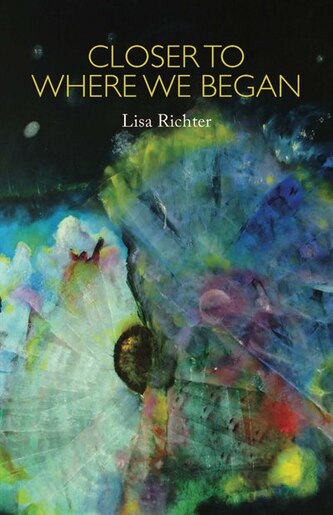
Closer To Where We Began - Lisa Richter (Tightrope Books)

Today's book of poetry:
Closer To Where We Began.  Lisa Richter.  Tightrope Books.  Toronto, Ontario.  2017.

Closer To Where We Began by Lisa Richter

Lisa Richter's dreamy Closer To Where We Began starts off with a quote from Sharon Olds, a poet Today's book of poetry has nothing but admiration for.  Who a poet reads, is influenced by, quotes often, tells us much about where a poet wants to go, where their head is at.  Richter's would seem to be firmly in the right place.

sometimes I can feel it, the way we are
pouring slowly toward a curve and around it
through something dark and soft, and we are bound
to each other.
- Sharon Olds

These poems feel as though you are inside of Richter's dreamscape and looking out onto a horizon of her making where "pomegranate juice light" illuminates the darker corners.

Today's book of poetry doesn't want to dance into dangerous territory when he says that only a woman would have written these poems.  Perhaps women see the world through a different coloured prism?  I know my almost perfect wife and I often disagree on the colour of a particular object.  We are looking at the same thing but not seeing the same thing.  Richter's Closer To Where We Begin looks at our world through lucid dreams and then she writes it all down.

Ouroboros

The year I was born, my great-grandmother
died. Skimming sides and glances, we conducted
love through our bones, memory
and foreshadowing encoded in the rings

of skipped stones across drumskin-smooth
water. She wore cat's-eye glasses and a daffodil
grin, paisley polyester and wind-puffed
canvas smocks.

Her face gleamed a heavy moon white, pock-
marked with the scars of long-dried seas--
lips of calcified salt, teeth of fossilized
spine, jaw-bone, femur. They say the marbles

rolled in her head, that there, the mind lounged
and lolled. Deep in the quarry of her body
the sun-stroked fields of Belarus sang, drowning
out the traffic of Outremont life.

Once, as she danced around the Passover
table, voluminous breasts swinging, hips bumping
the backs of chairs, her feet pushed the sweet
air and she soared around the room. I too felt

the pull of Bubbe's circular laps, slipped
from my mother's arms, floated
up to join her (it took three men
over an hour to get us down).

This is how we were meant to be
acquainted: her life at the tip
of the snake's tail, mine at the apex
of its open mouth.

...

Richter doesn't just see light through different prisms, she drinks it, absorbs it.  She carries light around in a secret satchel, lets it seep into these poems like a "hash-fogged" thought.

Richter's dream state includes nightmares, the horrors of systemic hatred, war, religious conflict and so on.  Sometimes the ghosts of dead children infect the light.  These poems cover a lot of geography from Gaza to a rockabilly Chuck Berry, Lisa Richter lights it all up.

Gaza under Siege

You are house-sitting--a two-bedroom, air-
conditioned townhouse in Liberty Village, watering
aloe and spider monkey, serving two cups
of dry food a day to a fat white cat named Luca.
Stackable washer and dryer in the hall closet.
You slide open the cool, mirrored doors while
your clothes are kept from shrinking. No laundromat
trips, duffle bag of clothes over your shoulder,
just the nearby shudder of brushed steel machines
doing the labour, while you sit with your laptop
and a glass of cheap Malbec on a couch that's not
yours. King-sized bed in the master too hard, you sleep
on the queen in the guest room: not as firm, just
right. Goldilocks with a key fob, helping yourself
to steel-cut oats and memory foam sleep.
Meanwhile, the death toll of children in Gaza
reaches five hundred. You brush the long-haired cat, sip
your wine, swirling it until it reads as diluted
blood. Read the horror. Remember the sound
of the fireworks in Tel Aviv, on Yom Ha'atzmaut,
you were told could just easily have been
rockets. Long ago, at Hebrew day school, you celebrated
that day in May with blue-and-white-frosted cake,
how proud you were that  Eretz Yisrael was the same
age as your parents. Meanwhile, in Gaza, bodies
and the city's wood and metal bones amass
in baroque jumble, Biblical disarray. On Facebook
you scroll through feeds of loathing, fear culled
from recipes that you once followed -- they brought
this onto themselves, they hate us more than they love
their own -- morsels you can no longer keep down,
no longer digestible nor kosher, which never mattered
before, but for some reason, matters now.

...

Our morning reading here at the Today's book of poetry offices was a bit overshadowed and subdued by my own sad, slow state.  Today's book of poetry has been away for a few days to attend the funeral of my Uncle Sparky.  Don't think Don "Sparky" Brault ever read much poetry and I know he was a deeply flawed man but he showed great kindness to my mother and I when I was very young.  And he always treated me like he was happy to see me.

Today's book of poetry's big family is shrinking.  In the last five or six months I've had two Aunts, Alice and Dora, and two Uncles, Dan and Sparky - leave this mortal coil.  The rest of my Aunts and Uncles must be checking each other out to see who's next.

Lisa Richter's Closer To Where We Began world was enough to lift me and my minions out of our shadowy morning, these poems lit the place up.

How to Write a Hanukkah Poem

1.
Choose your preferred spelling of Hanukkah,
from the seven or eight available. Assemble
your arsenal: dreidls your father would show off
by spinning upside down. Latkes. Paper towels
to soak up the grease from latkes, paper bags
to soak up the grease from the paper towels, candles
that will melt and harden in the menorah, scraped

out next year with the tip of a steak knife, hard flakes
of coloured wax. Whatever you do, don't call
the menorah the hanukkiah, the proper word
you learned long ago in Hebrew school:
it will sound too specific, too accurate, above-
board. You will alienate most people, or worse,
charm them with your exoticness.

2.
Subvert. Make dreidl games dirty. Strip off clothing
if the dreidl lands on the letter gimmel. Truth
is daring. Make "space latkes" that will get you
higher than the most mystical of cabbalists,
taste the colours of candles bursting with sweet

liquid. Snort lines off pages of the Talmud. Forget
about inviting distant relatives who always tell
you what they prefer to do. None of this will give
you joy, only stories to display like dark ribbons
on your chest, a catalogue of scars for the shocked listener.

3.
Write. Invoke the light. Invoke the hand that holds
the shamash, moving from light to light. Invoke
small haloes around each candle, pancake moons
around the heads of gaunt-faced Russian icons.

Invoke more light, the light that ushers you through
December's dark, the light that leaves nothing
in its wake that is cold or unkind.

...

Richter has a sharp, laser type tongue, even if it often resides in her cheek.  Or at least that's what Closer To Where We Began leads Today's book of poetry to believe.

We never get tired of smart here at Today's book of poetry.  We never get tired of new modes of illumination.  Lisa Richter lit up the room.

Photo by Matthew Burpee
Lisa Richter
Photo: Matthew Burpee

ABOUT THE AUTHOR
Lisa Richter‘s poetry has appeared in The Malahat Review, The Puritan, Literary Review of Canada, The Toronto Quarterly, Crab Creek Review, among other journals and anthologies. She was longlisted for the CBC Poetry Prize in 2015, and won first place in CV2 Magazine’s 2-Day Poem Contest in 2017. Closer to Where We Began is her first collection of poetry. She lives, writes, and teaches English as a Second Language in Toronto.

BLURBS
“Lisa Richter weaves time and place with grace and expertise throughout the poems in this her first collection, Closer to Where We Began. Sensual, delicate yet biting, these poems sweep forward and back with energy and insight proving ‘the heart is a finite muscle of blood and music.’ By following the rhythm of each poem’s unfolding we are led to a ‘deeper quiet.’ A rich and resonant book.”—    -      - Catherine Graham, author of Her Red Hair Rises with the Wings of Insects
‘”Invoke the light…” writes Lisa Richter, ‘the light that leaves nothing / in its wake that is cold or unkind.’ With a richness in metaphor and a clarity of vision, Richter deftly travels the reader through seasonal tapestries of nature, across many identities, into many cities, and inside the bounds of family. Yet losses, and the world’s coldness and cruelty are not ignored, but rather, their pains and truths explored poetically: ‘the tongue finds its muse in the most sour of ripenings.’ The confidence and tenderness of Richter’s voice, and her mastery of form, makes Closer to Where We Began a rich and compelling read.”
     - Maureen Hynes, author of The Poison Colour

“Richter excavates memory as a geography forged by the complexities of human relationships. To read her work is to be transported into an alternate landscape wherein each encounter has been dissected and reassembled with a simultaneously commanding and vulnerable acuity.”
     - Robin Richardson, author of Knife Throwing Through Self-Hypnosis


614


DISCLAIMERS

Poems cited here are assumed to be under copyright by the poet and/or publisher.  They are shown here for publicity and review purposes.  For any other kind of re-use of these poems, please contact the listed publishers for permission.


We here at TBOP are technically deficient and rely on our bashful Milo to fix everything.  We received notice from Google that we were using "cookies"
and that for our readers in Europe there had to be notification of the use of those "cookies.  Please be aware that TBOP may employ the use of some "cookies" (whatever they are) and you should take that into consideration.