Showing posts with label lorna crozier. Show all posts

Monday, October 1, 2018

Thin Air of the Knowable — Wendy Donawa (Brick Books)

Today's book of poetry:
Thin Air of the Knowable.  Wendy Donawa.  Brick Books.  London, Ontario.  2017.


Oh Thank You, thank you, thank you, Wendy Donawa.  The spirit of St. Earle of Birney is alive and well and kicking in Canadian poetry and Wendy Donawa has made it so.  Listen to this:

          Reefs—
          crenellated sawback
          dogtooth, lace—
          pouring scree down cross-hatched gullies,
          sending shale, sandstone, limestone,
          spilling this chert, cousin to flint, to chalcedony.
          And slate—shale's bastard progeny—fine-grained,
          foliated, its fossils' traces
          measuring Earth's time scales.

                                                     from "Stone's Deep Accord, Its Steady Presence"

You'd almost think big Earle was standing behind her dictating magic through a tall angels breath.  And this is not to suggest in any way that Ms. Donawa is anything but original, in a day when it is hard to do so.  And she's not borrowing diddly from Sir Earle, but Thin Air of the Knowable will remind you that giants and their ghosts still roam, we can hear them whisper when we can incant their names.

And then, in her poem "Travelling Light" Donawa invokes the voice of the graceful, subtle and wise  Phyllis Webb's "Wilson's Bowl."  Turn the page, put your foot on the gas and all of a sudden you are neck deep in "Coming Down Through Rockfall" and you realize you could be under the pen of Patrick Lane, maybe even a gentler Peter Trower, Lorna Crozier too.

On My Bedroom Window, Frost Flowers

Chunter and clunk from the basement
where my father stoked the morning furnace
by the concrete laundry tub, the coal bin.
The old house coughed up lukewarm air
through baseboard's metal grates,
I dressed fast,
             cold toes clenched on colder lino.
             On my bedroom window, frost flowers.

After school that day
chrysanthemums tapped frozen heads
against the fence
where I leaned my bike.

I let myself in, groped
in the darkening kitchen, blowing
on red knuckles, when,
just perceptibly, the house groaned,
gathered and puckered the air like
skin on scalded milk, like
hair prickling my neck.

Only my father, home early still
overcoated in the desolate front room,
moaning.  My brother dead these six weeks, I 
slammed the cocoa tin down
hard as anything and 
lit the fire.


Odd to find the old place still there.
It stands quiet in the dusk; it seems smaller,
its sensible brown shingles now a heritage palette
of caramel, cobalt, plum,
liquefying through a scrim of mist,
and the first lights coming on.

πŸ’«πŸ’«πŸ’«

Why is Today's book of poetry seeing all these great Canadian poets?  Because Wendy Donawa evokes memories of the poems we love best, there is an old time elegant wisdom inside this musical voice.  It's that we've heard songs like these from voices we looked up to, learned from.

Today's book of poetry wants to draw attention to every line on Donawa's "Time is Enough."  Donawa draws these poems right out of the earth beneath her feet.

Time is Enough

                   Time is enough, more than enough, and matter multiple and given.
                                     — Annie Dillard, "Newborn and Salted"

Time arrested, the nutty kernel secret in its shell.
And prairie burrow, either trap or haven.
Perhaps the marrow, soft and fatty in its boney cavities?
Or should I say, the spikey peach pit of the stalled heart?
Stasis, something diminished, but still
                                     time is enough, more than enough.

The coiled fiddlehead unfurls, glaciers melt and
hurtle down riverbeds, a child's soft weight
turns to bone and sinew and denial, and we transport
the day's gleamings into night:
those astonishments of sorrow, of joy.

In the brown shallows at the lake's edge,
three ancient pickerel—as long as my arm!—
scraped their bellies on smooth stones.
Slow arching backs, fins signalling out of water,
a lolling pod of miniature breaching whales.
Their languid progress through bright air,
dappled water, lattice of branch and root,
                                    and matter multiple and given.

πŸ’«πŸ’«πŸ’«

This morning's reading was a quieter affair than the norm for two reasons; half our usual gang were at large and Wendy Donawa's poems are quietly insistent.  Maggie, our newest intern, has been strangely absent for the past few days.  Kathryn and Milo, our Jr. Editor and Senior Tech, apparently have foot and mouth disease but it could also be foot in mouth.  I called their doctor, Dr. Vinnie Boombauts, and he denied knowing both of them, by name.

Today's book of poetry cannot adequately cover all the ground Donawa's Thin Air of the Knowable tracks over.  Cancer raises its villainous head in Thin Air of the Knowable, so does treaty rights, feeding pots and Schrodinger's cat and all the while Daedalus is watching as Icarus shrugs himself into the sea.  David Blackwood and Rip van Winkle conspire.  All the while Wendy Donawa comports herself with class, finds the story, rips out the poem, and shares the landscape.

Consider the Heart and its Breaking

A hollow fist-sized muscle, an incessant
knock on the door of our lives—
whether in love or terror,
ennui or tranquility.
Its receiving galleries set the beat of our breath,
our passion's pulse and cling,
and the long sleep after.

Buddhists have one word for heart-mind.

Mammals, we have fully divided hearts, two pumps.
Fully divided. We know this well:
The heart is deceitful above all things, and desperately wicked,
says the Book. But with heartbreak our two-ness splits, falls apart,

our woe bypasses reason, hijacks self-respect,
leaks through Vivaldi's adagios and the radio's hurtin' songs,
sobs abjectly.

Heartbreak, intransitive, parses the body,
puts on old clothes I thought had gone to Oxfam.

Longing's soundscape is ecstasy's simulacrum;
its cadence moaning oh, oh, oh,
and stretching vowels: alienate, ache, crave.

Consider whales' hearts, car-sized.
You could somersault in them.
How to imagine their unfathomable longing;
the massive adagio of their briny lust
must roll down ocean trenches,

cross latitudes,
fill the abyss.

Envy the hummingbird the tiny berry of its savage heart.

πŸ’«πŸ’«πŸ’«

Today's book of poetry was entirely enthralled by Wendy Donawa's excellent Thin Air of the Knowable.  We suggest reading these poems out loud with the person you love most.

Image result for wendy donawa photo

Wendy Donawa

ABOUT THE AUTHOR
Wendy Donawa, formerly a museum curator and academic in Barbados, now lives on the West Coast and participates in Victoria’s vibrant poetry scene. Her poems have appeared in anthologies, magazines, and online publications across Canada. She was a finalist in The Malahat Review’s 2013 Open Season Competition, and in 2015 she was runner-up in the inaugural Cedric Literary Awards. She has published three chapbooks, Sliding Towards Equinox (Rubicon Press, 2009), Those Astonishments of Sorrow, of Joy (Leaf Press, 2012) and The Gorge: A Cartography of Sorrows (JackPine Press, 2016). Thin Air of the Knowable is her first collection.

BLURBS
“Wendy Donawa’s poetry rests at the very edge of beauty where a wild delicacy resides.” 
     —Patrick Lane

“Like the watchmakers of old, Wendy Donawa puts a spyglass to her eye and fixes her vision to the minute, to all that carries on beneath our imperfect sight—worlds upon worlds brought into the sharpest focus.” 
     —Pamela Porter


Wendy Donawa
Reads from Thin Air of the Knowable
Video:  Brick Books


718
Poems cited here are assumed to be under copyright by the poet and/or publisher.  They are shown here for publicity and review purposes.  For any other kind of re-use of these poems, please contact the listed publishers for permission.

We here at TBOP are technically deficient and rely on our bashful Milo to fix everything.  We received notice from Google that we were using "cookies"
and that for our readers in Europe there had to be notification of the use of those "cookies.  Please be aware that TBOP may employ the use of some "cookies" (whatever they are) and you should take that into consideration.


Monday, August 13, 2018

Blackbird Song — Randy Lundy (University of Regina Press)

Today's book of poetry:
Blackbird Song.  Randy Lundy.  University of Regina Press.  Oskana Poetry & Poetics.  Regina,  Saskatchewan.  2018.


What Today's book of poetry sees most, when we rumble through the pages of Randy Lundy's sublime Blackbird Song, is optimism.  These poems have a knowing bigger than our puny understanding, an entire belief system fueling kindness.  What Randy Lundy does in Blackbird Song is nothing less than reconciliation with the earth, directed by heartsong.

Randy Lundy is a Cree poet so why do I keep thinking of Li Po, the Poet Knight-Errant?  Randy Lundy's poetry makes me think of Robert Bly because these poems are based in the natural world.  Lundy doesn't write like Li Po or Robert Bly but he writes with the same certainty, the knowledge is real.

Happiness

          after Jane Kenyon

It's true what the dying woman said,
there's no accounting for happiness.

No matter the good will you have spent
trying the patience of family and friends,
some of whom have died. Never mind
that every time you dig deep in your pockets
you find those cold, bright coins
of anger and regret.

Sparrows gather daily at the feeder
you have hung in the elm tree in the backyard
and at the earthen bowl you will fill with water
for their raucous bathing.

Sleek, bright wings glisten in the sun.
They have no shame.

πŸ’«πŸ’«πŸ’«

In Randy Lundy world there is time for contemplation and consideration, these aren't meditations, yet.  But in some future world where reasonable people reside, Today's book of poetry could see Blackbird Song as a cornerstone text.

Today's book of poetry is a city boy.  Not a New York City boy, but I grew up with asphalt under my feet.  Lundy, almost instantly, convinces the reader that they inhabit a world only understandable by being in step with nature.

Come to think of it, other than the short mention of a train in one of his poems, the inclusion of an axe and a cigarette in another, Lundy gives us no evidence of civilizations marring of his resplendent nature.  Lundy's world begins and ends in the natural world beyond roofs and ceilings.

Cypress Hills

Here the trees hold the stars
in their spheres. This neither a metaphor,
nor a clever trick. It is simply what to fear
from wind when the cliffs step forward
fall into emptiness.

There is no need for you
to quiet your mind, to shrink your soul
like a drought-dormant root to fit
the coulee's begging bowl.
The coyote and buffalo rubbing stone
pay no heed. The restless dead
wander through pine shadows muttering,
unable to hear your desperate invocations.

Even if they could, they would not pause
but simply vanish into the moon-soaked night
like the white-tailed deer on gleaming hooves
stepping into the mist and darkness, leaving
opposing crescent glyphs in wet earth.

Constellation after constellation turning
on the spears of the trees.

πŸ’«πŸ’«πŸ’«

Today's book of poetry believes that Blackbird Song is a celebration and that's how we played it with this morning's reading.  We didn't want to appropriate any one's anything but we did give thanks to the maker of all things with a little tobacco smoke before starting in.

Tomas and Frieda dropped by again this morning so we were sure to get them in the reading line-up.

Randy Lundy's poems read more like good prayers, mantra's for future progress, songs for souls deeply attached to the earth under foot.  These poems feel the liturgy, a guide to new rituals, new empowerment.  Most importantly to Today's book of poetry; they embrace the earth and come back future hopeful.

Another Season

Buds on the mountain ash this spring,
a green paler than you have ever seen.

Sunlight, blackbird singing.
What more could you ask, friend?

Pilgrim, what more?

πŸ’«πŸ’«πŸ’«

Blackbird Song is a book of poetry you will always treasure.  These poems are as ageless as the blue, blue sky we hope to see every morning.

Image result for randy lundy photo

Randy Lundy

ABOUT THE AUTHOR
Randy Lundy is a member of the Barren Lands (Cree) First Nation. He has published two previous collections of poetry, Under the Night Sun and Gift of the Hawk. His work has been widely anthologized. He lives in Pense, Saskatchewan.

BLURBS
“Lundy has entered the place where the masters reside. His poems join the shades that walk among them. There aren’t many people who get to that place and sometimes it can feel very lonely there, but the masters are saved by the brilliant and humble work they have done, their poems the crevices in our lives where the light shines through." 
     – Patrick Lane, author of Washita

“Randy Lundy’s poems bring forward the spirit of his Cree ancestry, and place our species humbly among the creatures of Earth—who are all observed with deep reverence and perceptive care.” 
     – Don McKay, author of Strike/Slip

“This is the book of poems I’ve been waiting for … His poems burn us, feed us, and make us feel beloved even if we have been broken. Language, as he uses it, holds us and leads us to a place where we can mourn and pray and wonder.” 
     – Lorna Crozier, author of What the Soul Doesn’t Want

uofrrpress.ca/poetry

713

DISCLAIMERS

Poems cited here are assumed to be under copyright by the poet and/or publisher.  They are shown here for publicity and review purposes.  For any other kind of re-use of these poems, please contact the listed publishers for permission.

We here at TBOP are technically deficient and rely on our bashful Milo to fix everything.  We received notice from Google that we were using "cookies"
and that for our readers in Europe there had to be notification of the use of those "cookies.  Please be aware that TBOP may employ the use of some "cookies" (whatever they are) and you should take that into consideration.


Tuesday, February 6, 2018

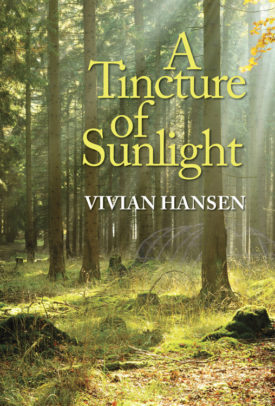
A Tincture of Sunlight - Vivian Hansen (Frontenac House Poetry)

Today's book of poetry:
A Tincture of Sunlight.  Vivian Hansen.  Frontenac House Poetry.  Calgary, Alberta.  2017.


A Tincture of Sunlight makes me think of Hemingway's The Old Man and the Sea along with Robert Ruark's The Old Man and the Boy or The Old Man's Boy Grows Older for a moment.  Vivian Hansen's "Old Man" is Cree/white and he is everyone's "Old Man."  And old men are smart.

Part Trickster and part Gulley Jimson, Hansen has appropriated the "Old Man" voice, as narrated by his lover, as a tool to bend and fold as needed to tell these remarkable little stories.

Acapella Wind

Old Man says he likes to hear the wind
stealing past
my kitchen window,
howling, like a coyote
wailing and trolling,
echo through a storm.

Air and anger shove
through the window's eyes.

For these speechless lamentations,
he is back in depression Saskatchewan.

Wind sucking
through dead-pine clapboards slats,
moaning inside his head,
soothing edges,
singing past
the drunken blasts
of father-yells below the staircase.

This is A Capella.
The lyric of wind.

Coyotes in spring heat.

The used-to-be of smoking
willow leaves
sucked
through a prairie howl.

Almost 85,
he says he's in his second childhood
drags on a roll-your-own.
Sucks.

Listens.

I ask him what his dreams are about inside the wind.

He says:
They're wet.

...

The "Old Man" seems to know almost everything that has happened and everything that is going to but he doesn't know how to soothe his own aching heart.  In this life "Old Man" has been a soldier and a lover and a scientist and a father and so on.  Hansen shares some of the vast research she has assembled as inserts in the text when necessary and it is helpful, it adds context.  Hansen also borrows a little from some friends:  from Leonard Cohen, Robert Service and Don McKay, Annie Dillard and Lorna Crozier, G.D. Burgess and more...

The resulting poems have a seductive quality to them, it's a tone in the Lover's voice that she has adopted from the "Old Man."  That tone comforts the reader like the smell of an evening fire, a subtle invitation to sit down and talk or to just sit and listen.


Counting Coup

Got to thinking it wasn't a bad idea
to steal something from the enemy.

There was one stinking battle one night.
We shelled the square-heads most of the night.
Left them to rot.
Battle of Falaise Gap.

I strolled through the field the next morning.
Sun was up and bright,
shining on a field of dead German stumps.
Sunlight landed on light
from the ring -- nearly blinded me.

young guy, blonde, about my age.
Just married, I guess.
Couldn't get the ring off of his finger because his carcass
had blown into a balloon.

The ring had a beautiful design --
a switchback criss-crossing the circle of gold.
Inside, the engraving of an Iron Cross.
I wanted it.

Old Man waves his pinky finger,
still wearing the wedding ring of the dead German soldier.
He takes it off and shows it to me.
All the years wore off the switchback design
from its hopeful circle.
It no longer held a pattern, except in his memory.

I peer at the engraved Iron cross.
Imagine the widow identifying the body,
looking for the ring and finding -- a missing finger.

...

Today's book of poetry wants to take a moment to tip our hats in the direction of Frontenac House Poetry for their new direction in design.  Neil Petrunia designed A Tincture of Sunlight and it is both elegant and cool.  Frontenac House Poetry's new books are striking.

Vivian Hansen has created a universe in A Tincture of Sunlight that seems far more generous and warm then our present one.  Today's book of poetry knows that each universe has it's own Gods and Demons and the "Old Man's" Lover carries him and us with tender determination.

Our morning read got started late again.  More snow today.  Winter in Ottawa, who knew?  When the troops stumbled in they were all snow-shovelling beat and weary.  Vivian Hansen's "Old Man" and his lover both soothed their snow bruises and inspired their poetry engines.

Milo went into the stacks and brought out a copy of Hansen's A Bitter Mood of Clouds (Frontenac House Poetry, 2013), which we happily threw into the mix when the gang had finished reading A Tincture of Sunlight.  Hansen apparently knows how to inhabit any voice she wants.  What A Bitter Mood of Clouds demonstrated to Today's book of poetry, thoroughly, is that Hansen may be the real Trickster.

Sticking to Bones

Old Man's subtle sarcasm:
why don't you do some praying
for your own sins, if you believe there's a God at all!

-- imagine that --

I tell him it's really his own he wants forgiven.

His Old Bones,
etched with arthritis,
grieve him with the treachery
in his own body.

Pain that forces him to stop
driving, off an eternal highway
to stretch the seams of his knees.

It must have been here
I began inhaling grace,
exhaling whispers.

Enfolding him in my heart, praying
for Jesus to touch him.
And he kept driving, his knees suddenly painless.

I couldn't believe it

He said later, the simple
testimony of the unbeliever.

When I asked God to touch Old Man,
I meant his Old heart,
his tortured mind.

But instead, a laughing God
began to work
on his aching, arthritic, knees.

...

Today's book of poetry loves a book that swallows you whole like Jonah in the Whale; Okay, the whale was a big fish, but still.  Vivian Hansen writes poems that border on myth and she does it with a natural elan that welcomes the reader into every poem.  Hansen's "Old Man" is trying to make sense of the world and his life which is both a big job and to him, a big joke.  Making sense of the world, ha.  Hansen's ribald Lover and her "Old Man" can take a joke.

A Tincture of Sunlight is as pleasantly surprising as it is impressive.

Image result for vivian hansen photo

Vivian Hansen

ABOUT THE AUTHOR
Vivian Hansen has published in genres of fiction, nonfiction, and poetry. A Bitter Mood of Clouds was published by Frontenac House in 2013, a Long Poem that tells the story of Arne Petersen, who received gender reassignment in Denmark in 1953. Earlier work includes Angel Alley: the Victims of Jack the Ripper and Never Call it Bird: the Melodies of AIDS (Passwords Enterprises) and Leylines of My Flesh (Touchwood 2002), which chronicles the immigration experience of Danish Canadians. Vivian’s essay ‘Hundedagene and the Foxtail Phenomena” appears in Coming Here, Being Here: A Canadian Migration Anthology (Guernica 2016). Vivian teaches creative writing at Mount Royal University and the University of Calgary, as well as at the Alexandra Writers Centre. She is a member of The League of Canadian Poets and The Writers Guild of Alberta. She holds an MFA in Creative Writing from the University of British Columbia.


Vivian Hansen
Reads from A Bitter Mood of Clouds
Video: Frontenac House


654

DISCLAIMERS

Poems cited here are assumed to be under copyright by the poet and/or publisher.  They are shown here for publicity and review purposes.  For any other kind of re-use of these poems, please contact the listed publishers for permission.
We here at TBOP are technically deficient and rely on our bashful Milo to fix everything.  We received notice from Google that we were using "cookies"
and that for our readers in Europe there had to be notification of the use of those "cookies.  Please be aware that TBOP may employ the use of some "cookies" (whatever they are) and you should take that into consideration

Saturday, November 18, 2017

Collected Poems of Alden Nowlan - Edited by Brian Bartlett (Icehouse Poetry/Goose Lane Editions)

Today's book of poetry:
Collected Poems of Alden Nowlan.  Edited by Brian Bartlett.  Icehouse Poetry.  Icehouse Poetry is an imprint of Goose Lane Editions.  Fredericton, New Brunswick.  2017.

Collected Poems of Alden Nowlan

Three reminders of why I love this poetry game.  Earlier this week we finally heard from our Sr. Editor, Max, who had gone on a bit of walkabout.  He's fine, keeping out of the bad weather and we are greatly relieved to hear he is okay.  Today's book of poetry also got a phone call from our Southern Correspondent, the Twangster.  A phone call from his lair is as rare as hen's teeth but more welcome than Christmas.  Damn it, for the first few minutes of the call my short-term memory left the room and my old brain didn't even recognize the voice.

Why were these calls so important to Today's book of poetry?  Max knew me back in the day and tolerated my poetry just enough that I kept going.  The Twangster, through a variety of selfless acts of charity has helped Today's book of poetry renew his love for poetry and our small community.

The third.  Sir Alden Nowlan.  I gave him the Sir moniker and if you want to make something out of it - you know know where I live.  Alden Nowlan (1933-1983) was around when there were real giants roaming the poetry earth, Laytons, Cohens and such.  But Alden didn't get quite the same sort of press or recognition or fame.  I'm here to tell you that long before I worshipped the legendary Irving Layton I was hip deep in Alden Nowlan.  The perfect gateway to a life of loving poetry.

Bread, Wine and Salt (Clarke, Irwin & Company Limited, 1967), The Mysterious Naked Man (Clarke, Irwin & Company Limited, 1969) and Between Tears and Laughter (Clarke, Irwin & Company Limited, 1971) were cornerstones of my early poetry world.  Today's book of poetry never met or knew Alden Nowlan but we loved him because his poetry was real to us in the most important sense of being real.  The emotions I felt as a young man reading Sir Alden of Nowlan have never gone away.  When I read these poems they still feel fresh.

Did I say Sir?

Saint Alden of Nowlan is a genuine Canadian poetry hero.  Brian Bartlett, the editor of this massive completest's joy, the Collected Poems of Alden Nowlan says it all much tidier and with less emotional bombast.  Here is his opening salvo:

     Czeslaw Milosz once wrote of another great twentieth-century Polish poet,
     Wislawa Szymborska: "Poetry that speaks to the enduring and irreversible
     coordinates of human fate -- love, striving, fear of pain, hope, the fleeting
     nature of things, and death -- leads us to believe that the poet is one of us,
     and shares in that fate." The same could be said about one of Canada's most
     distinctive and beloved poets, Alden Nowlan.  He once wrote of a desire to
     leave behind "one poem, one story / that will tell what it was like / to be
     alive" ("Another Poem").  Many times he did just that, with candour and 
     subtlety, emotion and humour, sympathy and truth-telling.  Only now is the
     true range of Nowlan's poetic achievement finally available between two 
     covers.  Collected Poems offers in one volume all his poems previously
     published in three early chapbooks, eight full-length collections, "new
     and selected" compilations, and the script of a long poem for voices.

And here is mine.  The first time I opened a book by Alden Nowlan I was in high school, I graduated over 47 years ago.  Alden Nowlan was one of the first poets on my bookshelf.  Because...

In Those Old Wars

In those old wars
where generals wore yellow ringlets
and sucked lemons at their prayers,
other things being equal
the lost causes were the best.

Lee rode out of history
on his gray horse, Traveller,
so perfect a hero
had he not existed
it would have been necessary to invent him--
war stinks without gallantry.

An aide, one of the few who survived,
told him,
Country be damned, general,
for six months these men
have had not country but you.
They fought barefoot
and drank blueberryleaf tea.

The politicians
strung up Grant
like a carrot,
made him a Merovingian.
They stole everything
even the coppers from Lincoln's dead eyes.

In those days, the vanquished
surrendered their swords like gentlemen,
the victors alone
surrendered their illusions.
The easiest thing to do for a Cause
is to die for it.

...

Today's book of poetry's old copies of Bread, Wine and Salt and The Mysterious Naked Man have been rifled through so many times the bindings are loose, they have so many paper page markers sticking out of the tops -- they look like they've grown plumage.  

What Today's book of poetry found in Alden Nowlan was a voice that sounded so real and true and fine you wished he were your Uncle.  Your smart/wise Uncle who wrote poems like this:

The Hollow Men

They tell me they have never aspired to be poets.
Their jobs, when they were young, were more
     demanding than mine.
With their sweetest smiles: "Nothing great was ever
     accomplished
by writing before breakfast; to create a man must
     be free."
Someday, perhaps, they'll live in Mexico or Italy.
Meanwhile, they endure as they must...
Then hand me the poem
they've preserved since their last year
in university.

...

or

The Last Waltz

The orchestra playing
the last waltz
at three o'clock
in the morning
in the Knights of Pythias Hall
in Hartland, New Brunswick,
Canada, North America,
world, solar system,
centre of universe--

and all of us drunk,
swaying together
to the music of rum
and a sad clarinet:

comrades all,
each with his beloved.

...

Our morning read was splendid.  The air in Ottawa is crisp, the way it always is before the first big storm of winter.  The sky that foreboding sunless gray.

The minions did Sir Saint Alden of Nowlan proud, we read poems from every lovely section of the Collected Poem of Alden Nowlan as though they were the Psalms and we were all religious.  Even though we are not.

Here's the truth of it.  Alden Nowlan never seemed to be speaking over us, he spoke directly to us, me.  It felt like I was being included in an erudite conversation about things that mattered, it was  a conversation I wasn't expecting to be included in.

Snapshot

It takes even more than this to make you cry
or laugh
     aloud
            when you are old enough
to find a forgotten snapshot of yourself,

take it up in your hands,
hold it close to the light,

discover slowly
     and for the first time

that once
     long ago
             you were almost

beautiful.

...

Nowlan was a gem factory.  A high class jeweller.  Try this jewel on for size:

Fireworks

Fireworks are being set off
from the highest point in the city
and because explosions scare me
I sit here sullenly, bracing myself for the next one,
hoping it will be the last.
       After all, we've set off so damn many
explosions this past seven or eight hundred years
it stands to reason God must be getting sick of them.
One of these days he's going to hear a firecracker
and decide that's it, I've had it, they've gone far enough.

What a hell of a bang there'll be when that day comes.

...

Icehouse Poetry and Goose Lane Editions have done a national service with this handsome book.  The Collected Poems of Alden Nowlan may be the most important book of poetry published in Canada this year.  Every poetry bookshelf in the country should have this book on it!

Why I am not more afraid of the dark

You are:
                 windows.
                                    That
is the name
                    for you.
And the darkness
                                 moving
within
and behind
                      your terrible brightness
is not
           the wings
                            of bats caught
in a furnace, not
something nameless
                                  rising, but
men
and women
behaving like humans.
                                     Still I all but
say it aloud:
                     Windows.
                                      Humans.
And am grateful
that I possess words:
                                     charms
unknown to animals.

...

Sir Alden Nowlan, bard, poet-Saint and namer of things, names it here.  "I possess words: /  charms / unknown to animals.  

Today's book of poetry has looked up to Alden Nowlan since we first picked up Bread, Wine and Salt in it's tidy small paperback format.  It didn't take me long to realize it was one of the biggest books on my shelf.  Over forty years later -- nothing has changed.

Alden Nowlan should be remembered from that time when giants strode the earth for he was their equal in every way.  I know, he took giant steps into this poet's heart all those years ago.  And just like Mr. Coltrane and his own Giant Steps, they are there to stay.

Photo credit: A painting of critically acclaimed Canadian poet, novelist and playwright Alden Nowlan by Stephen Scott.

Alden Nowlan

ABOUT THE AUTHOR
Born in Hants Co., Nova Scotia, in 1933, Alden Nowlan moved to Hartland, New Brunswick, when he was nineteen, and worked on the Hartland Observer as reporter, editor, and general facilitator until he went to Saint John (and the Telegraph Journal) in 1963. In 1968 he was invited to take up the position of Writer-in-Residence at the University of New Brunswick in Fredericton. Alden Nowlan died on June 27th, 1983.

ABOUT THE EDITOR
Brian Bartlett has published many books of poetry and non-fiction, including The Watchmaker's Table, Ringing Here & There: A Nature Calendar, and Wanting the Day: Selected Poems. He teaches creative writing at Saint Mary's University in Halifax.

BLURBS:
"Both the Ukraine and Russia lay claim to Gogol, Wales has Dylan Thomas, and America, Poe. We (in Atlantica) have Alden Nowlan. He might tell you you've got the balls of a bull moose to say something like that. Just think how hard as a youngster he was treated by his native place. That doesn't matter now, since he turned it all to gold. Nowlan reminds us our English is good. Our cold winter-tempered Irish English, modern, spare, and mythological. These poems are enough to make you want to put your guitar down." 
     — Al Tuck

"The publication of this book is an historic event in our literature. The collection is a life's work, and like the work of life, this writing wrestles with ancient forces that are pure and unchanging. Nobody else saw the world with Alden's kind of clarity and nobody else worked the language so hard — trying to make it hold, or embrace, our shared experience with such furious tenderness. If you still think honesty is possible, if you worry sometimes about truth and the struggle for sincere connection, Collected Poems of Alden Nowlan will give you comfort." 
     — Alexander MacLeod

"Well over thirty years after his death, Alden Nowlan's poems are still hot-blooded — living, breathing incantations that beat with the pulse of Eastern Canada. Imbued with what Brian Bartlett dubs "the illusion of speech," Collected Poems of Alden Nowlan brings together the work of a master craftsman, a writer whose rangy, conversational poems benefit from appearing where they emerged within his career arc. A definitive volume that consolidates Nowlan's standing in Canadian letters." 
     — Jim Johnstone

"After I was brought up on the Romantics in school, my love of Alden Nowlan's poetry began with his dense, metrically perfect lyrics, some of them so dark they made me shiver. Later, his plain-speaking voice, his honesty and vulnerability drew me in. My husband and I hold Alden in such high regard that shortly after his death we named our first cat after him. He is our laureate of human frailties. No one makes me feel less alone in life and in literature than Alden." 
     — Lorna Crozier


Alden Nowlan: The People's Poet
video: Norflicks Production


630


DISCLAIMERS

Poems cited here are assumed to be under copyright by the poet and/or publisher.  They are shown here for publicity and review purposes.  For any other kind of re-use of these poems, please contact the listed publishers for permission.


We here at TBOP are technically deficient and rely on our bashful Milo to fix everything.  We received notice from Google that we were using "cookies"
and that for our readers in Europe there had to be notification of the use of those "cookies.  Please be aware that TBOP may employ the use of some "cookies" (whatever they are) and you should take that into consideration

Friday, October 20, 2017

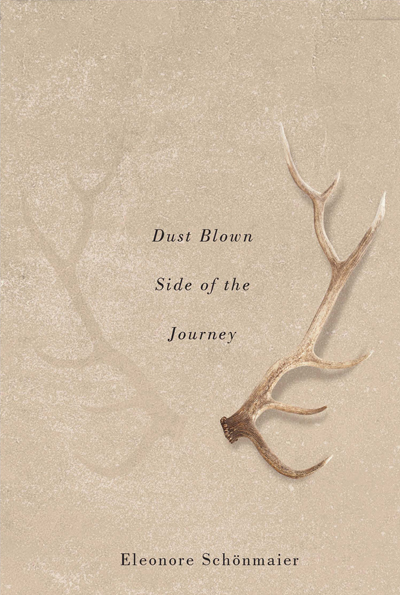
Dust Blown Side of the Journey - Eleonore SchΓΆnmaier (McGill-Queen's University Press)

Today's book of poetry:
Dust Blown Side of the Journey.  Eleonore SchΓΆnmaier.  Hugh MacLennan Poetry Series.  McGill-Queen's University Press.  Montreal & Kingston, London, Chicago.  2017.


Today's book of poetry comes to you from the waiting room of a CMA Clinic where Today's book of poetry is having x-rays of everything but our memory.  Bless those kind and wise men and women who established a medical care system in Canada that will allow me to leave this building without paying a cent.

I've been here less than ten minutes and already I am in a hospital gown and awaiting my first x-ray.  All of this to explain my recent absences.  That and Today's book of poetry purchased a new computer yesterday, it was needed.  Our steampunk wonder system was an RCA Victor - Westclox hybrid machine that was still running, technically, but it was getting difficult to find a watchmaker-video technician with the right set of brass tipped tools.

Eleonore SchΓΆnmaier is such a needed tonic.  Today's book of poetry has been down the remarkable   Eleonore SchΓΆnmaier  poetry road before.  You might remember that Today's book of poetry took a look at her back in July of last year.  Wavelengths of Your Song was a pleasure to read and you can see our post here:


Dust Blown Side of the Journey is more of the same wonder.  SchΓΆnmaier is a perfect mix of Nelson Ball's wonder and brevity along with the breadth and wisdom, experience and vision of a Lorna Crozier or a Sharon Olds.  That is some fine company and SchΓΆnmaier is right at home.

Today's book of poetry has been stuck in a poetry whirlwind, tunnel vortex lately and the only person I can blame is the genius Albert Goldbarth.  I've been reading Goldbarth's The Kitchen Sink as though it were a bible and I had discovered religion.  Our Southern Correspondent, the Twangster, has infected me with Goldbarthism and I'm not sure any other poetry will ever work quite the same way again.  But no.  Eleonore SchΓΆnmaier is the perfect antidote/bookend.  Both of these monstrously good poets write poems that stop us with wonder.

But while Goldbarth, bless his cottons socks, is writing long brocaded tapestries that have gold and silver thread and may possibly contain the secrets of the world, SchΓΆnmaier, although never terse, is writing with an economy that sustains and winnows to the very heart of things.

Risk

The doorbell has been cut
and the only way to gain entrance is
to stand in the middle of

the bridge jumping up
and down, but this futile
until you begin to sing

and from the upper-floor
window our friends looks
down and lets us in. We sit

at the window and touch
the seashells in their bowl
and our friend picks up

the conch, leans out
the window and lets it sound
so the canal boat captains

travelling below search
for the unseen and
in their confusion they

risk colliding with
the visible. Another
friend arrives and we

wine and dine and play
the Steinway as the storm
quavers against the roof

and the wind and jets flying
low overhead sound
alike as we journey closer

into our true selves
and you talk about
the wind quintet

you're composing
where the clarinet
will sound off stage

and you say all of us
are in your music
along with our missing

friend and walking home
I say, "I've had other
devoted friends before

but this evening's circle
are my soulmates"
and you say, "It's the

soulmates and not
the others who will
break our hearts."

...

Ok.  Today's book of poetry is at home, it is twenty-four hours later.  The clinic visit was just fine, at least they don't pincushion you.  Got home and started to look at the elegant work of Eleonore SchΓΆnmaier again and then there was a knock at the 11:30 a.m. door.  Today's book of poetry was expecting guests from out of town but was not expecting them to arrive six hours early.  Now these are world class guests, always arrive with wine and a variety of gifts.  They also always demand to take K and I out to dinner, last night it was Pizzarro's (We've been regulars there for over twenty-five years, I remember writing a poem for the head waiter when his first son was born.  A couple of months ago his first born was our waiter.  We've never had a meal there we didn't enjoy.)  Before our guests left this morning I was the owner of a brand new pair of winter gumboots.  Like I said, world-class guests.  But six hours early and in need of our complete attention.

Eleonore SchΓΆnmaier is a worker.  You only have to look at one of her poems to recognize the craft.  These poems are worked on, shaved here, strengthened there, and then a perfect coat of clear varnish has been applied.  These poems are weather-proof epistles aimed right at your reasonable heart and your emotional head.  

Take a hard look at this tidy effort, "Vertebrae of Humans and Art Animals."  It's all in there, SchΓΆnmaier shows us how it's done.

Vertebrae of Humans
and Art Animals

the breeze against my back
            as I cycle through narrow
                        streets were tattooed

men stroll and when
            I make a wrong
                        turn I'm face to

face with a sculpture
            of Mandela and the real
                        Desmond Tutu stepping

down from the podium
            photographers swarm
                        but I'm unable to stop

since I'm racing
            against time to a stretch
                        of beach where I film

the strandbeest
            small sails as wings
                        and multiple legs

the skeletal animal
            all plastic bone
                        races forward

frangible
            how easily
                        it topples

on my route home I watch
            an old man place a metal
                                   ladder against

the barbed wire fence
          he hangs a bird feeder
                     up as high as he can reach

in the center a young friend
            (attacked by a mob) undergoes
                                                         surgery

vertebrae, scapulae,
                          phalanges
                                       osteo-sculpture

which bones
              fit where
                           ossicles of

ear
    tympani
                  a wave a wind lifted leaf

under a tree a woman shows
                       her children how to read
                                               the tally marks

and tells them this is
            how many thousands of 
                                     days Mandela

had to wait to hear
                       bird song
                                   when his

captors knew
     exactly how
                 fragile bone is

...

SchΓΆnmaier isn't yelling about anything, this poet has far too much class for that.  But you read her and you see the strength, you see that she is a strong voice for women against the systemic in justices they endure.  You'll see that she is political but never proselytizing.  Reading Dust Blown Side of the Journey is like that first long cool and quenching gulp of fresh spring water after a long hike.

Considerable upheaval here at the Today's book of poetry offices these days.  Our morning reading was interrupted several times to continue negotiations.  It didn't matter much, Eleonore SchΓΆnmaier's crisp poems settled the room as we each took our turn and read them like prayers.  Of course we threw Wavelengths of Your Song into the mix.

We Are Alone

and lost along
the shore
the gentle slope
of the hill upwards
and we are found
again only when we
recognize the war
memorial where
resistance fighters
were shot and buried
in the sand of the dunes
you were imprisoned
in your youth for being
at the wrong place at the
wrong time, for trying
to make a better world
darkness falls upon
us and there is no
better world, only
the calls of the
nameless birds
in these brief
moments when
the birds still
exist for us: the bell
in the dunes tolls
once a year to
remind us of what
we still have
to lose

...

It doesn't get any tidier.  As long as poetry as fine as Eleonore SchΓΆnmaier's keeps arriving at the door Today's book of poetry will continue to want to tell you about it.

Today's book of poetry is hoping to return to regular programming as soon as possible.  Please stay tuned.

Eleonore SchΓΆnmaier

ABOUT THE AUTHOR
Eleonore SchΓΆnmaier is the award-winning author of Wavelengths of Your Song. She divides her time between Canada and coastal Europe.


"Knot"
by 
Eleonore SchΓΆnmaier
Video:  Eleonore SchΓΆnmaier


mqup.ca

618


DISCLAIMERS

Poems cited here are assumed to be under copyright by the poet and/or publisher.  They are shown here for publicity and review purposes.  For any other kind of re-use of these poems, please contact the listed publishers for permission.


We here at TBOP are technically deficient and rely on our bashful Milo to fix everything.  We received notice from Google that we were using "cookies"
and that for our readers in Europe there had to be notification of the use of those "cookies.  Please be aware that TBOP may employ the use of some "cookies" (whatever they are) and you should take that into consideration.





Thursday, February 23, 2017

Selah - Nora Gould (Brick Books)

Today's book of poetry:
Selah.  Nora Gould.  Brick Books.  London, Ontario.  2016.


There is much debate as to the actual meaning of the word Selah.  Some Biblical scholars insist it is a musical notation while others suggest it means "praise" or "lift-up." Today's book of poetry is convinced that in Nora Gould world it means "sorrowful song."

Selah is one long poem made out of a myriad of poetic fragments and it is damned sad territory.

You may remember that Nora Gould's first book of poetry, I see my love more clearly from a distance (Brick Books, 2012) won the first Today's book of poetry KITTY LEWIS HAZEL MILLAR DENNIS TOURBIN POETRY PRIZE.   Today's book of poetry still raves about I see my love more clearly from a distance to everyone who will listen.

Selah roams the same hard ranch country of east central Alberta but the focus has changed.  Love, mutual respect and hard earned companionship have given way to a battle with her husband's recently diagnosed frontotemporal dementia.  And with that diagnosis a new future replaces the old.

from Selah

He had misplaced my mouth
that night he wanted me.
Even I couldn't discern this
as because of something I did or didn't do.

This was not long before the potato pails --
everything happened before or after,
windblown around markers themselves

eluvial. I set that night aside,
next to the candles
above the pegs where we hang our jeans.

...

Today's book of poetry feels for Gould, how could you not?  You can feel the sullen drift apart as tangibly as if her husband had mounted a passing ice-floe and was disappearing, sailing off to a foggy horizon.

Neither Selah nor Nora Gould descend into the full and justified gloom you might expect.  But that doesn't mean these melancholy prayers and sad asides won't render you to tears.

from Selah

I am writing to you from inside this,
my confusion. You will recognize yourself.
I don't know you, who you are, how to find you,
but I am aware I'm a person while I am with you.
Please forgive all the simple declarative sentences.

I am exhausted, lonely for you. Your refusal --
I didn't know I had asked, was it something
I said? body language? -- told me what I carry,

how impossible it would be.
If you were to hold me, let me hold you --
these are two different things. Could
either of us allow either?

I miss him. That is
where I would be, where I am anyway,
not in his arms. This is not
guilt or impropriety.

Caffeine-tired, I can't sort this out
in a coffee shop
far enough from home to believe that
it is not true. Charl is himself

at the farm; he will still grab his chin
in mock consternation.
The shelf above the potato pail is
undisturbed. This is all my fault.

I will go home and Charl will be himself.
He is himself. That's the thing. He is.

I miss you. I miss
the possibility of you,
us.


I am in a hayfield, snow gathering
in folds and creases -- my coat sleeves.

...

This morning's read was a fairly sombre affair but we did Selah proud, our office is full of Nora Gould fans.

Most home health care in Canada is provided by women, as though they weren't already busy enough.  Nora Gould has allowed herself full candor when it would be easier to hide every wound.
For better or worse, in sickness and in health, these are promises many of us make without ever really having to face any sort of big test.  Nora Gould's Selah is one big honking final exam into a new and harsh reality.

What happens to love when the object of that love is vanishing into the ether and being replaced with an angry shadow?  Most of us, regardless of what we signed up for, never have to answer these terrible questions.

from Selah

At his first appointment with the neurologist
the receptionist called me his caregiver.
I said, No, his wife.

Wearied by incremental mourning,
his withdrawal into 
a culture of one,

I ache
for his songs,
his intricate drawings.


His Einstein hair, his six a.m. piano.

...

Nora Gould's Selah is a restrained and prolonged scream at the fickle nature of nature.  All the future hoping and planning and dreaming in the world doesn't mean a thing when that messy bastard fate sidles in and sits down.

Gould resists all temptations to have a pity party, instead she lives this new life, perseveres.  Paints the future with memories of the past.

Nora Gould

ABOUT THE AUTHOR
Nora Gould writes from east central Alberta where she ranches with her family. She graduated from the University of Guelph in 1984 with a degree in veterinary medicine. Her debut poetry collection, I see my love more clearly from a distance (Brick Books, 2012), was winner of the 2013 Robert Kroetsch Edmonton Book Prize and the Stephan G. Stephansson Award for Poetry (Writers Guild of Alberta); it was also shortlisted for the Gerald Lampert Memorial Award and was a finalist in the Poetry category for the High Plains Book Awards. Selah is her second poetry collection.

BLURBS
“This poem never slips into sentimentality but it breaks the heart. The fragments are wind-scoured, they startle like a fox and coyote suddenly appearing against the snow, they leave their marks on you like hard work scars the hands. I love them.”
      —Lorna Crozier

“Nora Gould’s second collection, Selah, works with presence and absence: fingertips versus touch, the burrs of a long marriage vs. the voids of dementia, a beloved’s body vs. anatomical drawings. “Breathe,” Gould advises, in a voice that is stuffed full of hand-made quilts and rusty barbed wire, “There is air in the room.” Air enough for Gould to take on birth and illness, maturity and sadness and death: “If I outlive him, when he dies / my grief will be stillborn.”
      — Ariel Gordon

Nora Gould
Interview with Nora Gould at HOWL at CIUT 89.5 FM.

Video:  Brick Books

brickbooks.ca

555


DISCLAIMERS

Poems cited here are assumed to be under copyright by the poet and/or publisher.  They are shown here for publicity and review purposes.  For any other kind of re-use of these poems, please contact the listed publishers for permission.

We here at TBOP are technically deficient and rely on our bashful Milo to fix everything.  We received notice from Google that we were using "cookies"
and that for our readers in Europe there had to be notification of the use of those "cookies.  Please be aware that TBOP may employ the use of some "cookies" (whatever they are) and you should take that into consideration.