Showing posts with label louis armstrong. Show all posts

Friday, February 7, 2020

Silence Like Another Name - John Levy (Otata's Bookshelf)

Today's book of poetry:
Silence Like Another Name.  John Levy.  Otata's Bookshelf.  Otatablog.wordpress.com.  2019.

48889174

Today's book of poetry is taking another stab at the poetry of John Levy.  Silence Like Another Name is another brilliant flight of character appropriation, time travel and driftwood.

Today's book of poetry wrote about John Levy's On Its Edge, Tilted (Otatat's Bookshelf), back in June of last year and you can see that here:


Levy is a special sort of magician, hypnotist, slight of time trickster.  One minute he's standing beside Diane Arbus and being photographic, moments later Anthony Bourdain cooks his last meal.  John Levy uses cultural icons and celebrity to help weigh the moment, as a diving board, a particular short-cut to your brain - and once there he jackknives right into your poetry sense of ability.

How Diane Arbus Would've Photographed Me

Say she happens to be in Tampa when my
family is staying at a hotel there. Summer of
'58, which makes me
six or seven. She's out by the pool.

She likes pools, just as she likes beaches
and nudist camps, and positions herself
near the steps at the shallow end as I begin to
climb out. Surprised by the fully-clothed woman

with a big black camera around her neck I
stop, one foot on a higher step, water dripping down my face,
thin arms drooping at my sides. I have my mouth open
for that first photo, the one

she exhibits, as I look
into her camera
with no thought in my head that I should do
anything with the face I forget all about.

💥💥💥

John Levy has the serious burn and we are happy to have him aboard.  Dexter Gordon would be proud of what Levy is cooking, Levy might even get Miles to smile.  Levy invites everyone to the world inside his poems, he invites them to play, to live it out like a tapestry of how it could be.  

Levy writes letters to the characters he admires and employs, he admits himself directly into their lives.  This is marvelous poetry magic.  Today's book of poetry admires the voices Levy is able to conger at will, he inhabits them enough to be poetry truthful.  

At this point a brisk solo by Louis Armstrong, listen closely, Levy is in there.

Occasionally

when I am reading a book and have
my hand on the page I notice my hand
as if it belonged somewhere
else, or to some other

being. Knuckles, veins, fingers,
skin, color, all peculiar and
as if also
by an author I'll never meet.

💥💥💥

Silence Like Another Name invokes experience as a saintly charm.  Collectively these poems have a strong effect on the reader, the reader feels experienced.  Levy isn't afraid of the big question so death strolls in and out of the pages just like in real life.

Levy mentions a rainy day in Ljubljana and a poor poet writing his last poem there.  Today's book of poetry is lucky enough to have been in Ljubljana.  Then it clicked for Today's book of poetry, how appropriate - Levy's poems give Today's book of poetry the same sense of light-headed glee and mystery glow as our trip to that beautiful city.  

In our first night in Ljubljana we were with family and friends.  We choose a resturant with a patio, the weather was excellent, we were seated as though we were old friends of the chef, we had excellent wine and excellent food and just as we were about to enjoy our excellent deserts the sky opened with fireworks.  It felt like the fireworks had been arranged and orchestrated just for us.  John Levy's Silence Like Another Name presents dire from time to time but Today's book of poetry felt optimism in the air with these poems, much like Ljubljana.

"Death frequents the poems..."

John Wilson writes, in an Introduction
to a book of essays on Robert
Creely, of Creeley's later

poems. The entire
sentence
reads

"Death frequents the poems, but the intense
loneliness
of the earlier poetry

has subsided." Of course those are my
line breaks. The use of
frequents

as a verb
isn't
unusual, but somehow

gets to me. Wilson
continues and quotes
part of a poem by Creely about his late

mother, "Mother's Voice." Creely begins
by saying it has only been a few yearss
since she died and he can hear her

say "I wont want
any more of that." Paraphrase
the poem. No.

Creely has been dead
more than a few years now (I'm writing
in June 2018, so more than 13.) I saw him

twice, once in Canada giving a reading and then
30 years later in Tucson giving another. Now
he

frequents death, if it makes any sense
to use that verb.
I bought every book of his and

double copies of several, thinking
I'd use one to mess up with notes
and leave its double pristine. I always wanted

more of what he offers, still do. Where
he frequents, in his poems, doesn't
subside. At 66 I recall being about 21

in a small house in Seattle that someone made
into a bookstore. Alone in a room I found
a copy of For Love, a book I already owned,

and opened it again, facing the
corner, and while I can't remember
the specific poems I chose to enter I see its

cover,
still 
hold it open.

💥💥💥

We should all pay such lovely homage to our heros, to those whose steps we now try to follow.  Today's book of poetry thinks everyone should read some John Levy.  Start with Silence Like Another Name and then, like me, start hunting for the rest.  The man can burn.

Today's blog/review was written with Sacramento poet Richard Lopez and Norwegian poet Dag T.
StraumsvÃ¥g in mind.  Both of these men swim beatifully in the same waters as John Levy, we should all be so lucky.


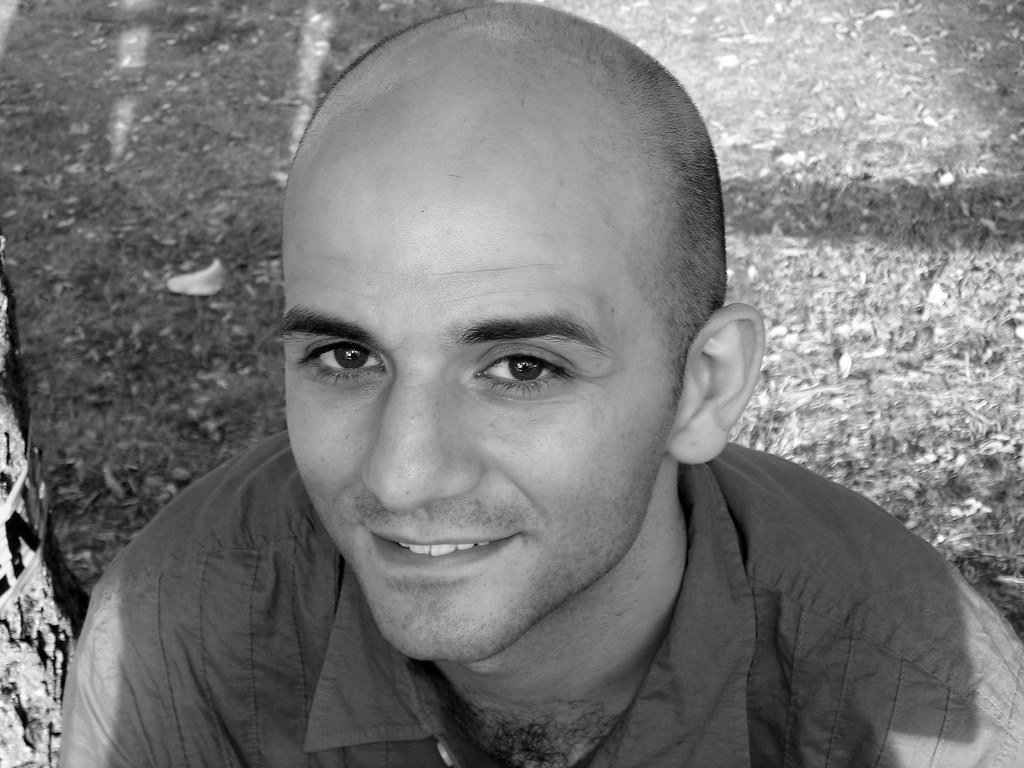
John Levy
(Photo by Paul Matthews)

ABOUT THE POET

John Levy was born in Minneapolis. His father, a businessman, went to law school at the age of 45 and then opened his own law firm (and later began a solo practice). Levy's mother is a sculptor and painter.
When Levy was a young boy, his family moved to Phoenix. His first exposure to poetry was in the sixth grade, when his older brother began playing recordings of Dylan Thomas reading his poetry.
Later, Levy began to read e. e. cummings and at age 15, after finding a book of William Carlos Williams poems, began writing poems.
Levy graduated from Oberlin College in 1974. He worked in a factory that summer and earned the money to fly to Kyoto, where he lived for a year and a half. For six months he worked as a waiter and dishwasher with the American poet Cid Corman in a coffee and ice cream shop Corman had started with his wife Shizumi. He briefly returned to Arizona in early 1976, where he was a poet-in-residence at a private school (K - 12) for a month, having been awarded a grant by an arts commission. Levy then moved to Paris where he lived for just over a year, earning his living by babysitting a young Canadian boy and by working as a personal secretary for a retired diplomat.
Levy published his first collection of poetry, Suppose a Man, at the invitation of James L. Weil, publisher of The Elizabeth Press. Weil also published Levy's second collection, Among the Consonants (in 1980), and Weil became a generous and supportive friend until his death in 2006.
In 1980 Levy moved to Tucson and continues to live there. After moving to Tucson, he worked as a carpenter with a high school friend who had started his own construction company. From 1983 to 1985, Levy moved to Meligalas, Greece where he taught English as a second language at private language schools in Kalamata. After returning to the United States, Levy took up the study of law in 1988 at the University of Arizona College of Law. After graduation, he clerked at the Court of Appeals (1991-1992), then undertook a solo practice for three years (doing both criminal and civil work). He then joined a small firm that specialized in plaintiff's securities fraud class action cases. In 1997 Levy joined the Pima County Public Defender's Office, where he has worked in the felony trial division (except for a nine-month stint in the appellate unit).
Levy's poetry has appeared in various poetry magazines in the United States and in England, and has been anthologized in How the Net Is Gripped (Stride Press, 1992) and A Curious Architecture: A Selection of Contemporary Prose Poems (Stride Press, 1996), both anthologies edited by Rupert Loydell & David Miller.

804

DISCLAIMERS

Poems cited here are assumed to be under copyright by the poet and/or publisher.  They are shown here for publicity and review purposes.  For any other kind of re-use of these poems, please contact the listed publishers for permission.

We here at TBOP are technically deficient and rely on our bashful Milo to fix everything.  We received notice from Google that we were using "cookies"
and that for our readers in Europe there had to be notification of the use of those "cookies.  Please be aware that TBOP may employ the use of some "cookies" (whatever they are) and you should take that into consideration.


Thursday, February 15, 2018

Send - Domenico Capilongo (Guernica Editions)

Today's book of poetry:
Send.  Domenico Capilongo.  Essential Poets Series 244.  Guernica Editions.  Toronto - Buffalo - Lancaster (U.K.).  2017.


Today's book of poetry knew we'd heard the name Domenico Capilongo before so we sent Milo into the stacks.  As soon as Milo sat Capilongo's first two books down on my desk I remembered.

Domenico Capilongo does plenty in his first book but Today's book of poetry remembered how Capilongo nailed that whole furtive first kiss with his poem "Shera-Lee" from I Thought Elvis Was Italian (Wolsak & Wynn, 2008).  Today's book of poetry remembered thinking that maybe Capilongo was another Len Gasparini character but he soon wrote us out of that illusion.  I Thought Elvis Was Italian was all James Brown hip and e.e. cummings poetic, quoting John Lennon and tipping the old hat to Saint Michael of Ondaatje.  We loved it.

Hold That Note (Quattro Books, 2010) had Louis Armstrong, Theolonious Monk, Billie Holiday, John Coltrane and Tom Waits as angels in the wings.  You just know that Today's book of poetry is going to have a lot of time for that, all the time in the world.

Send is a whole new ball game.  A clean slate.  But Today's book of poetry doesn't own a phone, of any kind.  There is a land-line phone in our office, plugged into the wall.  Today's book of poetry has never sent or received a text.  Domenico Capilongo's Send bursts at the seams with messages that you need to receive.

Contrary to the constantly public display of "texting" by the current POTUS there are texts worth reading, messages worth hearing.  Send is full of them.

Capilongo gives us instant access in his efforts to capture the languages and means we use to communicate. Capilongo catalogues it all from Morse Code to "whistled languages."

after

all the selfies. all the shame. after all the tex-
ting. all the comments. all the sexting. after
all the nakedness. all the pain. after all the
instagram. all the secret tattoos. after all the
tweeting. all the play-by-play. after all the
facetime. all the snapchat. the skype. after
all the auto-correct email. all the googling
after all.

...

Marconi and Alexander Graham Bell both put in cameos in Capilongo's efforts to search out every step forward in our haste to communicate faster.  Today's book of poetry suspects that some of these communiques are "found poems" and we can only celebrate Capilongo's keen sense of every methodology.  Domenico Capilongo is an all-in type poet if his first two books are any indication and in Send he invests it all in how we communicate.

Capilongo's sense of humour is abundant in these compellingly readable poems.  Today's book of poetry fears I am out of my depths because I can only think I know what it means when Capilongo titles a poem "Christopher Marlow Pocket Calls William Shakespeare."  The poem itself is hilarious.

kiss me like houdini's wife

straightjacketed and ready to take the plunge
in the dark. his mind racing through steps.
through the math of the weight of water. the
pressure of oxygen in his lungs. the sound
of the eyes of the crowd all around him. the
kiss from his wife. his tongue meets hers.
she slips a key into his mouth. he pushes it
into the corner of his cheek for later. the
crowd takes a breath. kiss me.

...

Our morning read started a little later than usual today.  It's not snowing in Ottawa for the first time in weeks but there is a misty rain that is falling and coating everything it touches in a lovely coat of ice.  Milo insisted we use all three Capilongo titles for the morning read but agreed we would hammer through Send first. 

Much to Capilongo's credit he happily jumps into concrete poems when he feels the need.  Here Today's book of poetry feels terribly unqualified to comment except to say that in most cases these poems surprised us with the clarity of a particular message, for us they were dead on.  And that is first time Today's book of poetry has ever said that!

During the reading we passed those poems around for everyone to see and then kept on with the rest.

In Capilongo's exhaustive and almost encyclopedic search for examples of how we choose to communicate he never loses sight of the reader, always makes certain they are engaged, Capilongo is communicating in a direct line with us.  The poems in Send got Today's book of poetry on Capilongo's side early.  After that the intriguing entertainment/exploration never let up.

carretto siciliano

in argentina or brazil there are ex-nazi soldiers in their
eighties who still hide in the shadows of trees. who still
wear large hats with sun glasses. they try to speak spanish
or portuguese. they try to walk slowly with knees bent but
you can still see the stiffness in their backs. the harsh ac
cent hanging at the ends of words. these men, in the early
morning, still wonder how the allies managed to take sicily.
     it was one man, a lowly carretto driver, some salvatore
or giuseppe, who came up with the idea. the germans were
everywhere with their checkpoints. no one was safe. they
even looked under hats. it came to him in a dream. the sky
was purple. his carretto flying over palermo like some sicil-
ian santa. his horse turned head back and spoke to him.
     we can send the messages with the horses, he thought
to himself over morning coffee, but how? the germans
even check under the horses' balls. later when he fed his
horse he saw it shove some food in its cheek only to share
it with another horse in the plazza.
     messages were sent in little walnut-sized capsules
from horse-to-horse piazza-to-piazza all across sicily. the
german soldiers often commented about the strange sicil-
ian horses, seltsame kussende pferde. strange kissing horses.
     this sicilian secret is know only to a chosen few. if
you want to know the truth about how this really hap-
pened you will have to go to sicily and ask one of the
horses yourself.

...

Domenico Capilongo writes solid poetry that you can depend on, every time out.  These are sweet, smart, clever, witty, funny, incisive poems that will re-wire your future communication.  All Today's book of poetry can say to Mr. Capilongo is thank you.

It's usually three strikes and you are out in almost every league.  What does it mean when you hit a homer out of the park your first three times up to the plate?

Capilongo's Send is a book of poetry you can hang your hat on.  This cat can seriously burn.

Image result for Domenico capilongo photo

Domenico Capilongo

ABOUT THE AUTHOR
Born when rotary telephones came in multiple colours, Domenico Capilongo began writing with pencil and paper, passing poetry notes from the back of the class. He still writes in notebooks, used a typewriter in high school, and his earliest published poems were printed on a dot-matrix printer. His first books of poetry, I thought elvis was Italian (2008) and hold the note (2010), as well as his first book of short fiction, Subtitles (Guernica, 2012), came very close to winning awards and were all mailed in the post. A high school creative writing teacher and karate instructor, he lives with his wife and children in Toronto. Find out more on the information superhighway at domcapilongo.wixsite.com/home.

BLURB
In his latest book, Dom Quixote mounts a new smartphone and tilts away at our digital windmills. His chivalry is analogue: what is lost in our twittering is the seed-bed of his musings. Messages between and underneath communications—tender, sensuous, comically misaligned and/or brutal by turn—are gathered up and offered back to us as rebus: an oracular operating system where what we mean is not always how we speak.
     - Chris D’Iorio, author of Without Blue


Book teaser for
Domenico Capilongo's Send
Video: Capilongo Poetry


657


DISCLAIMERS

Poems cited here are assumed to be under copyright by the poet and/or publisher.  They are shown here for publicity and review purposes.  For any other kind of re-use of these poems, please contact the listed publishers for permission.
We here at TBOP are technically deficient and rely on our bashful Milo to fix everything.  We received notice from Google that we were using "cookies"
and that for our readers in Europe there had to be notification of the use of those "cookies.  Please be aware that TBOP may employ the use of some "cookies" (whatever they are) and you should take that into consideration