Showing posts with label dorianne laux. Show all posts

Saturday, February 23, 2019

Rail - Kai Carlson-Wee (BOA Editions Ltd.)

Today's book of poetry:
Rail.  Kai Carlson-Wee.  A. Poulin, Jr. New Poets of America Series No. 41.  BOA Editions Ltd.  Rochester, New York.  2018.

Rail - BOA Editions, Ltd.

Kai Carlson-Wee lays out his songs of joy and sadness with such careful modulation that it is easy to miss the big moments.  

Nope, that doesn't cut it, another lesson in "first thought" not always "best thought."

Today's book of poetry will start over, try again.

Rail by Kai Carlson-Wee is a little unlike any ride we've ever taken here at Today's book of poetry.  We see and hear Kerouac, Whitman, W.C. Williams, and we're not even warmed up.  Carlson-Wee is world-weary and yet believably innocent at the same time.

We are all "hoping for some other miracle" as Carlson-Wee sings in his poem "Oaks."  Reading Rail will cement connect you to this young writer as though you had stumbled onto a crime scene you won't ever forget.

Rail

I find it here in the wild alfalfa, head full
of antipsychotics and blue rain. Twenty years old
on a freight train riding the soy fields
into the night. Leaning away from the shortgrass
prairie, the black Mississippi of dream.
My brother asleep on the well-wall beside me,
nodding his head to the sway. What home
are we leaving? What distances blur
the electric fence? What hundred low thundering
wheels of darkness are coming to carry us
there? Rain and the singing wind, over
the auto-racks. Staring out west at the stars
of our gods and the lonely dark stars of our hearts.
Boarded-up storefronts, burned-down
apartments, highway signs that only name
the dead. We cross the station tracks,
the broken legs of Sunday chairs left rusting
in the yards. We know the way the story ends.
Still, the whistle blows. The flare stacks whip
their excess methane candles against 
the night. The wheels that brought us this far
still roll, still churn the polished iron ash.
The road goes on. The highway turns a deeper
shade of black. And as the sun sinks down
on the eastern Montana hills, peppered with horses
and gun-shot cars, the rails still lead us
somewhere else, and shine in the falling light.

💫💫💫

Kai Carlson-Wee is no Tom Sawyer or Huckleberry Finn, but he may be the new American generation given voice.  And it is one clever and clear siren cry.  Mr. Carlson-Wee is young in age only, his voice is pure experience.  

Pure of heart but stripped of dreams, these poems promise nothing.  No promises, but a loud and unmistakable sirenwail that Carlson-Wee is on the job, he will mark the passing.

Damn it.  Today's book of poetry just turned Rail over and read the blurbs.  Today's book of poetry tries to avoid the blurbs until finished so they don't upset the works.  In this case, Robert Bly is as impressive as Dorianne Laux.  But then Sir Campbell McGrath.  Sinner/Saint/Savant/Seer and one of our heroes....

In Today's book of poetry poetry world it does get much more hallowed than Campbell McGrath.  Today's book of poetry was very pleased to see that McGrath has the same, very high, esteem for Kai Carlson-Wee.

Today's book of poetry thinks Carlson-Wee writes poems so well you might be lead to think he found them, carved in stone, in some sacred poetry place.

King

                               for Nik Zeidlhack 1981-2007

I go to the guardrail, looking out over the sea-foam.
Looking out over the salmon heads breaking
the waves. Muscling back to the place of their birth.
Trapped in the floodlights, failing to leap up the dam.
Sometimes the clarity. Sometimes the clarity
and night-river steaming. Time standing still
in its permanent memory. Flies in the backwater
gathered to feed on the skin. The smell of the ocean.
The waters combining with other more powerful
waters. Riding away from whatever would save them,
knowing the other direction is pointless and not worth
suffering through. What holds us together but also
what trembles. The first time you look at an actual lion,
pacing the length of its cage. The small irreversible
ink-stain breaking the face of whatever we skate on.
Slumped at the edge of your girlfriend's bed. Your
pulse gone flat. No sweat. No resistance. No steam
on the hand-held mirror they tested for breath.
The day you were found I watched ducks drop down
on the Nooksack River in pairs. Drifting together
in multicolored light, leaving small growing trails
behind them. At first I thought only the lights
were alive. The river, the fish, the clusters of flies—
they were tricks being played on the eyes. But now,
getting up on the guardrail, watching the line
where the river and ocean waves meet, the half-formed
outriders failing inside us, and something behind
all the highway signs shining. Not clarity of thought,
or light, or time. But clarity of small things believing
in themselves. Dark heads breaking the surface
again. More than the living. More than the dead.

💫💫💫

Our morning read was a delight.  Spring is in the air in Ottawa, although we know all too well that winter is not over.  Spring is in the air; that's the same thing as saying "we have new hope."  Rail could be seen as simply that, new hope.  But there is so much more going on.  Kai Carlson-Wee's Rail is an embarrassment of riches.

Our small cabal here at Today's book of poetry read Rail out loud with sentiments approaching glee and astonishment.  

Such extraordinary gifts and Carlson-Wee is a young man — there will be, we hope, much more poetry from this marvel.  Today's book of poetry will be waiting.

Seven-Day Fast

Now I forget what I wanted to say about hunger.
The tree's sharp arrangements of lines
on the white sky, clusters of off-shooting
branches dissolving among them
like outdated scans of the brain.
Faded by sunlight, or disuse, or whatever.
I barely imagine by what. The gathering
dust on the shoebox they wait in.
Filed away for a future appointment
with some other specialist, talking of
networks, compatible pathways,
unsourced receptors, the closest
approximate rate of attrition. They talk
with the same sympathetic restraint
used for death. We see the sterility first,
predictions unfolding in ribbons
of uncharted highways beyond
other skies. We use metaphors
like this. We say the spirit is more
than the critical mass. We say prayers
are reflected in atoms, in snowflakes
freezing, in magnified raindrops.
We say there is no way of knowing
the will. The hand held flat to the palm reader's
always astonished tones. We say dreams.
A series of blackouts, minor strokes.
We say there is more than the body's
measurable electrics. The forgotten
children who stand at the bedrail,
showing us pictures of speedboats and horses,
our own selves posing with tulips and lilacs
in front of our whitewashed homes.
We say the soul. The out-riding weather
inside us. The down-pouring water
that runs from the mountain, that sleeps
in the frozen beet field, that denies
this hunger, that sings in the blood.

💫💫💫

Kai Carlson-Wee is a cowboy/poet/prophet, just like his publisher claims.  It ain't bragging if it's true.

Image of Kai Carlson-Wee

Kai Carlson-Wee

ABOUT THE AUTHOR
Kai Carlson-Wee is the author of Rail (BOA, 2018). He has received fellowships from the MacDowell Colony, the Bread Loaf Writers' Conference, the Sewanee Writers' Conference, and his work has appeared in Narrative, Best New Poets, TriQuarterly, Blackbird, Gulf Coast, and The Missouri Review, which awarded him the 2013 Editor’s Prize. His photography has been featured in Narrative Magazine and his co-directed poetry film, Riding the Highline, received jury awards at the 2015 Napa Valley Film Festival and the 2016 Arizona International Film Festival. With his brother Anders, he has co-authored two chapbooks, Mercy Songs (Diode Editions) and Two-Headed Boy (Organic Weapon Arts), winner of the 2015 Blair Prize. A former Wallace Stegner Fellow, he lives in San Francisco and is a lecturer at Stanford University. For more information about Kai Carlson-Wee, visit kaicarlsonwee.com.

BLURBS
“Rail is a lovely book, strong and inspired.”
     —Robert Bly

“This is a wholly unique and powerful collection of poems. The sense of purpose puts one in mind of Whitman’s ‘Song of the Open Road.’ Encounters with fellow vagabonds recalls the tramp-poetry of Vachel Lindsay. But the darker need to search for meaning in the American plains and points farther west—a vastness forlorn and almost unknowable—belongs to the particular vision of this poet. His journey through our national ambiguity discovers a flicker in our roots, a spark popping from obscurity that rises into the heavens. The lived experience behind these deft and subtle poems seems necessary, and reiterates the fact that resilience is not only a feature of the American character, it is a recurring tenet of American art.” 
     —Maurice Manning

“Brotherly love, a sense of displacement and lost time, and the deep care that reminds us of our humanity, form the heart of this book. These poems are a scavengers guide, a survivalist manifesto, a reminder of the way our daily experiences can fuel and forge our faith. A hauntingly beautiful and unusual debut.”
      —Dorianne Laux

“Equal parts dithyramb and lament, the great American bardic tradition celebrates lonesome wandering even as it hungers for enduring communion. Kai Carlson-Wee is a worthy inheritor of its dusty mantle, worn by Whitman and Kerouac before him, and Rail is a moving testament to the territories of freight trains, Minnesota roads, dumpster diving, and brotherhood. ‘The road goes on. With or without us.’ Yes, but how much better to have this unforgettable music to guide the way.”
      —Campbell McGrath


Kai Carlson-Wee
Reading the poem Thresher at the Best New Poets Reading in Madison Wisconsin, December 9th, 2010
Video: Kai Carlson-Wee


740

DISCLAIMERS

Poems cited here are assumed to be under copyright by the poet and/or publisher.  They are shown here for publicity and review purposes.  For any other kind of re-use of these poems, please contact the listed publishers for permission.
We here at TBOP are technically deficient and rely on our bashful Milo to fix everything.  We received notice from Google that we were using "cookies"
and that for our readers in Europe there had to be notification of the use of those "cookies.  Please be aware that TBOP may employ the use of some "cookies" (whatever they are) and you should take that into consideration




Friday, April 21, 2017

Duet - Dorianne Laux | Joseph Millar (Jacar Press)

Today's book of poetry:
Duet.  Dorianne Laux | Joseph Millar.  Jacar Press.  Durham, North Carolina.  2016.


Books of poetry that share two authors come in a variety of forms and styles.  In Duet by Dorianne Laux and Joseph Millar the poems are unattributed, written separately but presented as a unified front.  This takes some seriously elastic tolerance and trust, one poet allowing herself/himself to be represented by the words of another, to speak with your name and approval.

This duet is made up entirely of solos but the reader never knows who is playing lead.  It doesn't matter because Laux and Millar are in the same key throughout, they have found the same rhythm section, the bass is steady and the drumming is tight.  Laux and Millar riff like scat singers on a legion of our musical heroes from Bo Diddley to Cher, Dolly Parton's breasts are balladized and Elvis, the King, has his mansion/mausoleum costed for affect.

Listening to Paul Simon

Such a brave generation.
We marched onto the streets
in our T-shirts and jeans, holding
the hand of the stranger next to us
with a trust I can't summon now,
our voices raised in song.
Our rooms were lit by candlelight,
wax dripping onto the table, then
onto the floor, leaving dusty
starbursts we'd pop off
with the edge of a butter knife
when it was time to move.
But before we packed and drove
into the middle of our lives
we watched the leaves outside
the window shift in the wind
and listened to Paul Simon,
his tindery voice, then fell back
into our solitude, leveled our eyes
on the American horizon
that promised us everything
and knew it was never true:
smoke and cinders, insubstantial
as fingerprints on glass.
It isn't easy to give up hope,
to escape a dream. We shed
our clothes and cut our hair,
our former beauty piled at our feet.
And still the music lived inside us,
whole worlds unmaking us in the dark,
so that sleeping and waking we heard
the train's distant whistle, steel
trestles shivering across the land
that was still our in our bones and hearts,
its lone headlamp searching the weedy
stockyards, the damp, gray rags of fog.

...

This morning our read was also a concert.  Laux and Millar write such instantly approachable and easily digestible glee that the poems powered off the lips of the readers as though they were the rock stars of their dreams.  

Because Laux and Millar were calling out the spirits of Elvis, Bo Diddley, Quicksilver, Willie Dixon, The Who, Paul Simon, Cher and Sonny too, Theolonious Monk, Julie London, Lightnin' Hopkins, Mick Jagger, Joe Williams, Mel Torme and his beautiful velvet fog, Ray Charles, Dolly Parton, James Taylor, Ladysmith Black Mambazo, Lil Wayne and more -- Today's book of poetry gave the challenge to Milo, our head tech.  Not surprisingly he was able to fire up a dance card on the box with everyone present.  Our morning read involved much music.

Who Do You Love

This is the night after Bo Diddley died
and we sit in the cafe drinking iced tea
reading his lyrics in the newspaper
along with the story of the hairline crack
in the left front hoof of Big Brown,
another American original.
Outside the long cars prowl the dusk
trailing their ribbons of smoke,
heat lightning flickers over the street
and the waitress Arlene
brings salsa and chips.

I want to say thanks
for the cavernous voice
and the black cowboy hat,
the triangle rhinestone Fender guitar
and the scratchy beat everyone stole--
Quicksilver, Willie Dixon, The Who,
easy to shuffle to,
easy to dance to:
"walk 47 miles of barb wire
with a cobra snake for a necktie"
Chonk-chicka-chicka-chonk-chonk.

...

Laux and Millar's Duet pays all of their guests the deepest respect they can offer up on the way to immortalizing them in poem.  Of course this playlist covers a particular and time specific era that includes mostly older gray haired souls like myself, but Kathleen, our young Jr. Editor, corrected me once again when she said the word I was looking for was "timeless,"

Laux and Millar taste just a little bittersweet and caramel while lamenting Gene Vincent and others with the certain knowledge that beauty dies young while songs live forever.

Dolly's Breasts

                    are singing
from the rafters of her chest,
swaying beneath sheeny satin,
suspended in the choreography
of her bra: twin albino dolphins
breaching from her ball gown's
rhinestone cleavage.  Her breasts
are sisters praying at twilight, a pair
of fat-cheeked Baptists dreaming
of peaches, her nipples the color
of autumn, two lonely amber eyes.
When she shakes her metallic bodice,
tinsel swimming up her pink fonts
of nourishment, the spotlight hums
and shimmies with them, the audience,
open-mouthed, stunned into silence
as she crosses her legs and bows, her hair
hanging down, a permed curl caught
in that soft, improbable seam.

...

Laux and Millar's Duet made the day here at Today's book of poetry, they hit just the right chord.  For Today's book of poetry our only complaint was pages, we were ready for more.

Image result for dorianne laux joseph millar photo
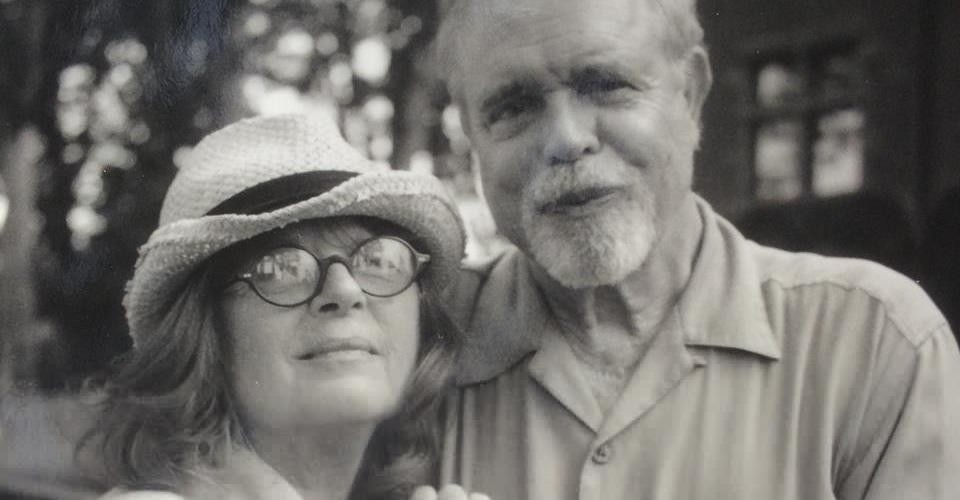
Dorianne Laux  |  Joseph Millar

ABOUT THE AUTHORS
Dorianne Laux's most recent collections are The Book of Men, winner of the Paterson Poetry Prize and Facts about the Moon, winner of the Oregon Book Award. Laux is also author of Awake, What We Carry, and Smoke from BOA Editions. She teaches poetry in the MFA Program at North Carolina State University.

Joseph Millar is the author of Kingdom, Blue Rust, Fortune, and Overtime, which was a finalist for the Oregon Book Award. He has received grants from the National Endowment for the Arts and the Guggenheim Foundation. He teaches at Pacific University's Low Residency MFA Program.

Joseph Millar
International Poetry Library of San Francisco
Video: Evan Karp

Dorianne Laux
International Poetry Library of San Francisco
Video: Evan Karp


574

DISCLAIMERS

Poems cited here are assumed to be under copyright by the poet and/or publisher.  They are shown here for publicity and review purposes.  For any other kind of re-use of these poems, please contact the listed publishers for permission.

We here at TBOP are technically deficient and rely on our bashful Milo to fix everything.  We received notice from Google that we were using "cookies"
and that for our readers in Europe there had to be notification of the use of those "cookies.  Please be aware that TBOP may employ the use of some "cookies" (whatever they are) and you should take that into consideration.


Monday, December 19, 2016

Show Time at the Ministry of Lost Causes - Cheryl Dumesnil (Pitt Poetry Series/University of Pittsburgh Press)

Today's book of poetry:
Show Time at the Ministry of Lost Causes.  Cheryl Dumesnil.  Pitt Poetry Series.  University of Pittsburgh Press.  Pittsburgh, PA.  2016.

Showtime at the Ministry of Lost Causes (Pitt Poetry Series) by [Dumesnil, Cheryl]

Do you have the patience to wait
till your mud settles and the water is clear?
                                           Lao-Tzu

Cheryl Dumesnil must have all the patience in the world at her fingertips to get to the clear water she shares with us in Show Time at the Ministry of Lost Causes.  

We are a big fan of good titles for books of poetry and Show Time at the Ministry of Lost Causes is an absolute classic.  We knew it was going to be almost impossible not to like a book with this title and a juggler without hands on the cover.  We were right.

Dumesnil starts this collection with a quote from our old buddy Lao-Tzu and ends the book at "Lake Dharma" and along the way we see/hear Dumesnil fight the good fight (as John Hoppenthaler suggests), set that good example.  These very human poems remind us all of what we require of love, what it takes out of us.

That I Could Keep You Like This

That you were
           falling, we all knew.


                  How sound travels across
                                a morning lake is how

                  I hear voices calling
                                always -- that's what you

                  need to remember about me.


That you have fallen
is a fact the water

will neither swallow
nor erase.

                    Trust this: You will
                                 not understand me

                    when I stitch sound
                                 in the language of my mind.


The last time you left,
          I carried your glass

to the sink, dunked it
          in soapy water. That your

fingerprints sifted upward
          like lace is what I imagined,

that I could pinch them up
          off the water's surface,

press them to my lips --


                    A distance, by definition,
                                  cannot be closed,

                    not even by sound.


              -- is what I dreamed.

...


Today's book of poetry has been distracted this past week.  A series of heavy snowfalls, the death of a family friend and a big old 750 page What About This - Collected Poems of Frank Stanford  (Copper Canyon Press, 2015) have kept me from due diligence.  I'd purchased the Stanford book several weeks ago and had gone through it lightly but hadn't had a chance to dig in.  Well Frank Stanford is an astonishment and What About This reminded me of how exciting it was to discover a new poet I admire.  

Same thing with Dumesnil.  From now until the end of time I will automatically pick up anything with her brilliant name on it.  Why?  Same reason as Stanford.  Poems about the lives we live that are so full of wonder and new reason that you don't want to finish.

Cheryl Dumesnil's Show Time at the Ministry of Lost Causes is just the excellent vehicle needed for Today's book of poetry to get back on track and everyone at this morning's read seemed to agree. Dumesnil's San Francisco birds enthralled Kathryn, our Jr. Editor, "Love Song for the Drag Queen at Little Orphan Andy's" did the trick for Milo, our head tech.

At the Reunion of Lost Memories

High School snorts Ritalin in a bathroom stall,
smears lipstick across the back of her hand,

snags her stiletto in her skirt hem, tears it
while slam dancing with the custodian's assistant.

Streamers droop from the ballroom ceiling,
crepe eels lolling in the fan breeze.

Fifth Grade hocks a loogie in the fruit punch
while College works hard to recall names,

anyone's names. Who painted Air Force insignias
on his '64 Mustang? Whose kiss felt like

a dead slug in her mouth? Which sorority
sister got caught poaching care packages

from the dormitory mail room? Nothing
to worry about, Old Age whispers, this is just

how it goes; even the good ones get lost --
the midwife who caught your first baby,

the coworker who let you sleep on her couch
after your divorce.  At the podium, Midlife

taps the microphone, clears her throat -- this was,
after all, her idea: the chicken croquettes,

the all-star band. She wants to explain why
she's called everyone here, but before she can speak,

Etta James saunters onstage, croons, At last...
In a botched confetti drop, ripped-up secrets

flutter down, accumulating on the polyester rug,
like the snow that fell and fell that one spring day,

cloaking all the cars, covering their tracks.

...

Dumesnil is funny when she wants to be but Today's book of poetry was swayed by some deeper force at work.  Dumesnil wants us to see through the veneer of our lives.  Reading Show Time at the Ministry of Lost Causes was like having a freight train pull into the yard, car after car, solid as a rock, each one as dependable as the last and the next and each filled with its own necessary and perfectly delivered cargo.

Melodrama of the Suburban Kindergartener

You would think I had asked him to swim
          naked across an alligator-spiked swamp,

my son whom I have sent walking across
          a flat acre of asphalt, to his classroom,

alone. though I pressed language
          into his hand: this feels scary, but it's not

dangerous; you are taking one
          for the team, twenty-five yards in,

he looks back at me and melts his face
         into a tragedy mask. This morning

his aunt is losing her breasts to cancer.
          He doesn't know. This morning Cairo

has erupted into chaos. He has
no idea. How many kids ate hunger

for breakfast? In the car, his sick brother
          coughs spit into a cup, while I watch

my blond boy shuffle away from me,
          molasses pace and sobbing. This is where

survival begins: that boy finally crossing
          his threshold, this mom letting him go.

...

Cheryl Dumesnil's ferociously smart poetry is exactly what Today's book of poetry needed on this cold, cold Monday.  Survival songs for the new age.

Oh yes, Cheryl Dumesnil is a lesbian and it is clear a lesbian is the narrator of some of these poems. Today's book of poetry is often confused about how big of an issue this is.  To ignore the obvious might imply some sort of negative implication, and to point it out sometimes implies the same.  Show Time at the Ministry of Lost Causes rattled my cage in the best poetry ways possible, Cheryl Dumesnil meets every criteria we have.

Cheryl Dumesnil

ABOUT THE AUTHOR
Cheryl Dumesnil's books include the 2008 Agnes Lunch Starrett Poetry Prize winner, In Praise of Falling, the memoir Love Song for Baby X: How I Stayed (Almost) Sane on the Rocky Road to Parenthood, and the anthology Dorothy Parker's Elbow: Tattoos on Writers, Writers on Tattoos, co-edited with Kim Addonizio.

BLURBS
“Cheryl Dumesnil transforms the seemingly useless—the discarded, the broken off, what we keep in the kitchen drawer—into proof of our humanity, asserting that it’s to the things of this world, whether they be oil-slicked puddles, cathedrals, tampons or Pink Floyd, that our lives are anchored. These poems are as tactile as that kitchen junk drawer and just as rewarding to rummage through. Each poem begs to be picked up, turned over in the palm.”
     —Dorianne Laux

“Dumesnil’s precise observations, vivid images, deft humor, and brave willingness to invite in the whole of life, makes for a poetry that’s rich and meaningful. This collection gives us the world with its beauty and love and the loss that always hovers close.”
     —Ellen Bass

“Dumesnil navigates the hallways of illness and childbirth with grit and grace. She offers us soaring birds, revolutions and plums. This is a book full of the love of women and sons, drag queens and last calls, and always the gospel of the body, and its constant prayer of falling.”
     —Sean Thomas Dougherty, author of All You Ask for is Longing: Poems 1994-2014
“What the poet knows is this: there are no lost causes. There is loss, of course, but to love enough to take up a cause is to keep faith. Dumesnil’s collection is the good fight in miserable times; it is how we endure knowing that part of us always / stays back, while the rest marches on. This fabulous book is the part marching on.”
     —John Hoppenthaler


Cheryl Dumesnil
at Radar Reading Series
Video courtesy of San Francisco Public Library


537
DISCLAIMERS

Poems cited here are assumed to be under copyright by the poet and/or publisher.  They are shown here for publicity and review purposes.  For any other kind of re-use of these poems, please contact the listed publishers for permission.

We here at TBOP are technically deficient and rely on our bashful Milo to fix everything.  We received notice from Google that we were using "cookies"
and that for our readers in Europe there had to be notification of the use of those "cookies.  Please be aware that TBOP may employ the use of some "cookies" (whatever they are) and you should take that into consideration.


Friday, January 16, 2015

Revising The Storm - Geffrey Davis (BOA Editions)

Today's book of poetry:
Revising The Storm.  Geffrey Davis.  BOA Editions, Ltd.  Rochester, N.Y.
2014.

Winner of the A. POULIN JR. POETRY PRIZE


Geffrey Davis writes with harsh beauty.  His poems are an honest and eloquent attempt to suss out what it really means to be a man, and what it takes to get there.

Fatherhood is opened up like a gutted crack-smoking fish -- yet Davis finds moments of subtle and soothing beauty with a lock on language that staggers the reader.  Davis is not playing fair, he's a rumbling storm of lightning.

Revising The Storm is one of those books of utterly complex simplicity.  You think that Davis is operating with a new spectrum of light in order to see the black and white truth.  He let's you believe those things, momentarily at least, and then educates the reader with an expansive understanding of all shades of grey.

What I Mean When I Say Farmhouse

          Time's going has ebbed the moorings
to the memories that make this city-kid

          part farm-boy. Until a smell close enough to
the sweet-musk of horse tunes my ears back

          to tree frogs blossoming after a country rain
I'm back among snakes like slugs wedged

          in ankle-high grass, back inside that small
eternity spent searching for soft ground, straining

         not to spill the water-logged heft of a drowned
barn cat carried in the shallow scoop of a shovel.

          And my brother, large on the stairs, crying.
Each shift in the winds of remembering renders me

          immediate again, like ancient valleys reignited
by more lightning. If only I could settle on

          the porch of waiting and listening,
near the big maple bent by children and heat,

          just before the sweeping threat of summer
thunderstorms. We have our places for

          loneliness -- that loaded asking of the body.
My mother stands beside the kitchen window, her hands

          no longer in constant motion. And my father
walks along the tired fence, watching horses

          and clouds roll down against the dying light --
I know he wants to become one or the other.

         I want to jar the tenderness of seasons,
to crawl deep into the moment. I've come

          to write less fear into the boy running
through the half-dark. I've come for the boy.

...

These poems read like the potent prayers of a new kind of mystic.  Geffrey Davis has deeper vision, wider breadth, a bigger wounded heart, than most of us.  But good Lord, this man can write.

The journey he takes with his father is epic in scale and junkie broke.

These poems are emotionally searing but you don't always see it coming.  They work on you like a pot of water on the stove for the lobster, you start it off cold, flame up slowly, and the lucky/unlucky lobster never sees the flame, doesn't notice the rising temperature (or so we think), and then these brilliant poems sneak up on you, cook your ass off.

King County Metro

In Seattle, in 1982, my mother beholds this man
boarding the bus, the one she's already

turning into my father. His style (if you can
call it that): disarming disregard -- a loud

Hawaiian-print shirt and knee-high tube socks
that reach up the deep tone of his legs,

toward the dizzying orange of running shorts.
Outside, the gray city blocks lurch

past wet windows, as he starts his shy sway
down the aisle. Months will pass

before he shatters his ankle during a Navy drill,
the service discharging him back into the everyday

teeth of the world. Two of four kids will arrive
before he meets the friend who teaches him

the art of roofing and, soon after, the crack pipe --
the attention it takes to manage either

without destroying the hands. The air brakes gasp
as he approaches my mother's row,

each failed rehab and jail sentence still
decades off in the distance. So much waits

in the fabulous folds of tomorrow.
And my mother, who will take twenty years

to burn out her love for him, hesitates a moment
before making room beside her -- the striking

brown face, poised above her head, smiling.
My mother will blame all that happens,

both good and bad, on this smile, which glows now,
ready to consume half of everything it gives.

...

This is supposed to be a first book but I find it hard to believe.  So did everyone around the office, the consensus was that Davis must have published a dozen or so under different names.

Geffrey Davis writes with such hard won experience you'd think some these poems came from a deeper well than his tender years would allow, further than we can fathom.  These poems personify grace under pressure.

These poems resonate with such tenderness that the terror almost vanishes.

More Than Forgery

I.

In middle school, I practiced
signing my father's name, for days,

filled empty sheets of paper secretly in class,
comparing his graceful autograph to the frauds.

The beginning tripped me up -- the capital A --
his detail so hard to copy: the tight flourish

of ink just before the first downstroke of the pen.
Because I worried over penmanship, because,

like him, I favored an unfinished cursive,
I watched my forgeries lean toward the real thing

before endorsing the backs of his V.A. checks,
piled up during the months he vanished into rehabs

or chased fixes: Pay to the order of food to hush
our rumblings. The checks kept us

in lights and warm water.


II.

                                            Or the way my father
tapped his foot while playing the guitar: he kept

a different, distant beat -- the one to play against.
The lyrics he belted became wounds riding the air

and left me, the boy who wished and wept for birds,
fighting off tears so he would sing another hour.

By high school, I knew he'd left for good.
His A stayed in my hand.

It flares up in every Adam or Alinique
I write -- in every love letter I end, Always yours.

...

Today's book of poetry is honoured to present this book to its' readers.  Geffrey Davis, in Revisiting The Storm, is what most poets aspire to, except better.

This collection is so strong, but never brash, it's tender broken love fills your heart with every page.

Astounding stuff - the consensus around the office is that Revising The Storm is one of the best we've seen.

Geffrey Davis

ABOUT THE AUTHOR
Geffrey Davis holds an MFA from Penn State University, where he is completing a doctoral dissertation on American poetics. A Cave Canem fellow, Davis is also the recipient of the 2013 Dogwood First Prize in Poetry, the 2012 Wabash Prize for Poetry, the 2012 Leonard Steinberg Memorial/Academy of American Poets Prize, and the 2013 A. Poulin, Jr. Poetry Prize.

BLURBS
“...Geffrey Davis translates and transforms our contemporary modes of love, violence and history. Revising the Stormfeels written by a poet who has traversed several previous lives and honed them into a language of beautiful survival. Urgent, tender, imaginative: this is a tremendous debut.”
 —Terrance Hayes

“Geffrey Davis interrogates masculinity— as brother, son, father, lover—to examine the sources of love’s enduring and failed aspects ... I admire Davis’ emotional vocabulary, his attentive generosity and tenderness. Keep your eye on this gifted newcomer.”
 —Robin Becker

"Geffrey Davis is spellbinding. He knows how to bring even the smallest heartbreaking detail to light. Tenderly but firmly, he leads us down many paths toward the center of a life..."  
--Dorianne Laux

ANNE HALEY PRIZE READING
Geffrey Davis reading from Revising The Storm


292


Poems cited here are assumed to be under copyright by the poet and/or publisher.  They are shown here for publicity and review purposes.  For any other kind of re-use of these poems, please contact the listed publishers for permission.

Friday, January 2, 2015

Smoke Of Her Body - Stephanie Levin (Jacar Press)

Today's book of poetry:
Smoke Of Her Body.  Stephanie Levin.  Jacar Press.  Durham, North Carolina, 2011.


Winner of the Jacar Press Poetry Book Contest

Dorianne Laux has it right.  Ever actually been punched so hard in the stomach that all of the air in your body simply leaves?

It's like an instantaneous vacuum that leaves you on your knees sucking air.  At first you don't even realize it hurts.

It's only when you gasp, your throat in some raspy almost silent prayer.

Well, sit down on the floor so you'll have less far to fall.

Stephanie Levin just sucker punched Today's book of poetry.

Devotion

God was a beautiful man
who was deeply in love with me.

He said, I know you're only seven,
but you have an old soul.
He knew everything about me. He knew
what the backs of my knees smelled like.

I imagined all my past bodies cut out
and standing up in a row behind me
as he'd tug my T-shirt over my head.

...

Smoke Of Her Body goes to some harrowingly dark places.  I'll go you one further -- unless you've seen a certain type of evil, a particular shade of darkness and malice -- you may not recognize anything here.

These poems are the sound that might have come out of the silent maw of Edvard Munch's "The Scream".

I exclaimed, quite loudly, as frequent readers of Today's book of poetry may remember, after reading each of the first several pieces in Levin's Smoke Of Her Body.  I swore loudly, multiple times.

I swear for two reasons, the first is when poems are so bad I'm annoyed at their ability to have found a publisher.  The second reason is the exact opposite, when the poems are so good that I'm instantly transfixed.

The Teachings

Later, when I wanted to know about Hell--
if I would end up there--
she'd nod her chin for me to lie back down,
lift the tail of the sheet and lower it
so air rolled in waves beneath
and the cotton landed
cool on my knees, then pull
the quilt over me, place the end
in my fingers balled up beneath my chin,
and say, We're there already.

...

Well, these are that -- instantly game changing, welding me into place, so to speak.  

But now a third reason to swear -- along with excellence, Stephanie Levin has introduced fear as a criteria.  I was mortified and exhilarated as to where she would go next.

Not a roller-coaster thrill but definitely an amusement park, perhaps a fun-house, filled with monsters.

Second Anniversary of His Death

In the linen aisle of Target, I mouth the words
to Barry White in Muzak overhead,
and there's my brother in this movement:
chin bobbing to the left, neck moving

snakelike to the beat.
I see him driving, seat pushed back
like a La-Z-Boy, eyes bloodshot,
nodding to the music just like this.

A saleswoman approaches; I have to leave here.
I won't cry in a store like this.
But they make those aisles long
so you're sidetracked as you try to leave,

and I find something for him:
pizza plates in the shape of an extra large slice,
with pigs in chef hats, pepperonis flying.
The perfect gift for my brother, and he's dead.

...

Put on your seat-belt, turn off your phone.  "This is" to quote the toughest dame out there, "going to be a bumpy ride".

Stephanie Levin

ABOUT THE AUTHOR
Stephanie Levin received her MFA in Poetry from the University of Virginia. Her work has appeared in Green Mountains Review, Folio, River Styx, Prairie Schooner, and Shenandoah. Her collection, Smoke of Her Body, was chosen by Dorianne Laux as winner of the 2011 Jacar Press Poetry Book Prize. The mother of two, she teaches reading at Carrboro High School.

BLURBS
"This one just has that punch in the stomach, 'wow, who the &#!% wrote this' factor going for it. I like how the poems are strong, yet understated, loud and quiet at the same time."
     - Dorianne Laux, author of The Book of Men

"Unrelentingly harrowing."
     - Marie Howe, author of The Kingdom of Ordinary Time


287

Poems cited here are assumed to be under copyright by the poet and/or publisher.  They are shown here for publicity and review purposes.  For any other kind of re-use of these poems, please contact the listed publishers for permission.