Today's book of poetry: Every Ravening Thing. Marsha de la O. Pitt Poetry Series. University of Pittsburgh Press. Pittsburgh, Pennsylvania. 2019.
Marsha de la O waltzed in to our office like she owned the place. Once we read Every Ravening Thing we weren't sure. It was like a new kind of wind had swept through Today's book of poetry's brain, maybe a new type of sirocco or chimera. These poems, happy or sad, play out like marvelous candies you can roll around your poetry mouth. Not trivial penny candy, no Sir, these are not the lint-bound mints of Sunday disappointment, no, these are pure gold. Toffee so pure and carmel smooth, these poems are almost smoky.
Every Ravening Thing is smart, smart, smart. Today's book of poetry would suggest that instead of embracing any one narrative style, or structural framework, school, etc, de la O never boxes herself into a process induced corner. de la O burns with extra sauce and comes out looking like the quintessential everywoman.
de la O isn't afraid of the dark and she's not offering up solutions, but she sure is taking a good look at what is important. She certainly has things to say, worth listening to things.
In Those Months Gold Leaf Drifted onto His Skin
Late nights, late nights, rain fingered his guitar,
He played bars every weekend, trained dogs
on the side, dreamed an orchard out back,
white peaches, dark plums.
Once he made a barbecue
from a fifty-gallon drum, simmered mussels
in wine.
Late nights, late nights,
talking through winter, his laugh turned to velvet
when the temperature dropped.
Scorpion on his bicep, at his heels an Alsatian.
All through summer his garden spoke in tongues,
stone fruit, dark plums.
The day they told him no,
not a chance for a transplant, he took a whisk
broom to the cemetery, swept his father's grave.
Dark nights, dark nights, rain pierced his eyes.
When the Feather River overtopped its banks
he finally got down
to the slow work of drowning.
❢❢❢
2020 is upon us and this past year's hangover feels worse, a little more difficult than others. Even when President Reagan was standing under the red, white and blue Today's book of poetry didn't feel this particular sense of dread. Today's book of poetry believes that a regular diet of helpful poetry is called for. Marsha de la O falls right into this prescription, she is step ahead of the curve, leading, not following. Take two helpings of Every Ravening Thing and call Today's book of poetry in the morning.
Today's book of poetry has to admit that de la O got under our skin, turned us around once or twice, Every Ravening Thing has weight. Marsha de la O's landscapes resemble our own, it's when she explains the old terrain and makes it burn new that our eyes widen.
Star Pine
Time can slow to a halt in a hallway
with a view of a star-pine
by the pharmacy, and the roof below
with its carpet of asphalt and small rocks.
I've got a window seat and minor piety,
I've got a chant, thrumming:
You, my faith, my ark, my bricks and mortar.
We've already said good-bye.
My rule is: keep your mouth shut.
We don't know how it gets in a body.
If I yawned, a tumor could flit inside
about the size of a cream puff or a golf ball
without symmetry - spikes and folds and webs
like a baby dragon.
And when it hatched, the mother
bent her fearsome neck
and moved that nestling
near where your blood bustles.
I've got a thick skull of hope
unwinding a vision, a picture
for afterwards:
you're pink faced and twinkling, rosy-all-over,
maybe shambling a little, but otherwise
the same.
You're looking good.
I'm the life form with a sour smell.
It's fear, but I tell myself that's covered here
by the dead smell of caution, they're non-committal.
They pad by in booties and hairnets, careful
of the I.V., the pole, the whole awkward procession,
a movable bed, a bag of clear liquid
dripping like mercy.
And the patients
with sheets drawn up to their chins
have suffered themselves to be tethered and pressed
like good and sweet animals.
The elevator opens, they're pushed inside,
the door closes behind them.
I watch them leaving, and wait for you.
The star pine leans toward the glass.
I'm mouthing thank you
and whispering please.
That star pine is your lost sister.
That star pine is your brother's soul,
sane and calm and cleansed.
The dragon
bends her fearsome neck;
the tree
is breathing next to the window.
Let it breathe for you.
❢❢❢
"I've got a thick skull of hope." Today's book of poetry is going to have to contact Marsha de la O and ask if we can use that as a title for a book.
So de la O goes up one side of illness, fear and grief and comes down the other somehow hammering splendid. And then she pulls out the Upanishads. Today's book of poetry has a particular fondness of the Upanishads from our last time in a classroom. We remembered "the essence of all beings is the earth," and more. de la O has an understanding of the complications every life faces. Every Ravening Thing takes a look at it all in these robust and lush poems where we learn, like de la O, to: "let touch teach me."
To the Grandmothers
Chernobyl, thirty years later
Old women with side gardens and jars
of moonshine alone in empty villages,
tell me, solitary lynx, multitudinous wolf
pack, how do you do it - all my life I've lived
in cities, bought food from grocery stores -
what's it like to return to the abandoned zone
on foot, reclaim your cottage beside the dank
canal, to howl, to hunt in packs, to foal calves,
fell trees, light down in the bodies of swans
and swim in cooling ponds, why would you
fly three thousand miles to build a nest
inside the cracked concrete sarcophagus
over the remains of reactor four? She grins,
hands over a jelly jar of vodka, the good stuff,
Motherland is motherland, she says.
❢❢❢
Today's book of poetry is proud to start off 2020 with Marsha de la O's Every Ravening Thing. We are big believers in the "start as you mean to go on" vibe. We are all about the poetry burn and de la O is aces.
No promises for the forthcoming year but we are looking forward to reading all the poetry that comes through the door. Our deepest gratitude to University of Pittsburgh Press and the almost 200 other poetry presses who send work Today's book of poetry's way.
Luckily we already know the line up for the next little while. It makes Today's book of poetry blush it is so rich.
Stay tuned.
Marsha de la O
ABOUT THE POET
Marsha de la O is the author of Antidote for Night, winner of the 2015 Isabella Gardner Award, and Black Hope, winner of the New Issues Press Poetry Prize and winner of an Editor’s Choice, Small Press Book Award. Other awards include the Morton Marcus Poetry Award and the da Poetry Award. She has published extensively, including recent poems in The New Yorker and the Kenyon Review, with work forthcoming in Prairie Schooner. De la O lives in Ventura, California, with her husband, poet and editor Phil Taggart. Together, they produce poetry readings and events in Ventura County and edit the literary journal Spillway.
BLURBS
Every Ravening Thing presents a matchless intensity and intellectual grit, a fearless investigation into the world amplified by a vision that is both cosmic and detailed in our common suffering. This is a brave book of poetry.
- Christopher Buckley
What is ferocious – ravenous – here is the poet’s driven need to tell things as they truly are, which means it’s not always a pretty picture that she so carefully assembles for the reader. And I love the raucous regard she has for diction: reckless and powerfully inventive and fresh the way air can be fresh. All of this is held together by a commitment to the music that drives these poems in a way that soothes the ear. Every Ravening Thing could serve as a warning to all of us about our failures as men and women, and as a celebration of the good we’re capable of doing and in that way is a necessary part of our reading.
- Bruce Weigl
This is poetry meant to open hearts and change attitudes in fundamental and necessary ways, poetry of witness and utility. It is also often deeply moving.
-South Florida Poetry Review
MARSHA DE LA O at Writers Resist LA 2019 Reading
Video: Poetry L.A.
upress.pitt.edu
798
DISCLAIMER
Poems cited here are assumed to be under copyright by the poet and/or publisher. They are shown here for publicity and review purposes. For any other kind of re-use of these poems, please contact the listed publishers for permission.
We here at TBOP are technically deficient and rely on our bashful Milo to fix everything. We received notice from Google that we were using "cookies"
and that for our readers in Europe there had to be notification of the use of those "cookies. Please be aware that TBOP may employ the use of some "cookies" (whatever they are) and you should take that into consideration.
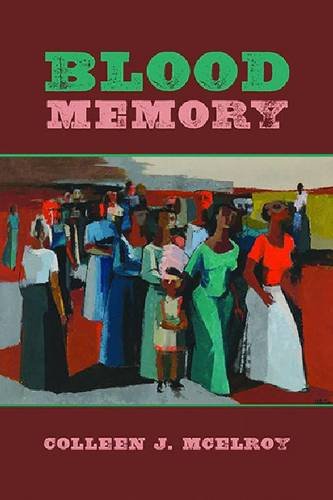
Today's book of poetry: Blood Memory. Colleen J. McElroy. Pitt Poetry Series. University of Pittsburgh Press. Pittsburgh, PA. 2016.
Can a joyous shout still be a protest? Blood Memory tells us that it can. Colleen J. McElroy makes it so. Poems like McElroy's "Lessons in Deportment" will teach you almost everything you need to know.
Today's book of poetry is over seven-hundred blogs/reviews into this project and we are still subject to being totally amazed. Awed.
Colleen J. McElroy has mastered voice. These tear-blinding and immaculate poems are damned near perfect. Voice and place, McElroy, like the very best film directors has mastered mise en scene. Having set flawless stages her characters simply tell their stories and we believe every word.
Sunday Best
before Aunt Jennie joined Visitation
Catholic Church I walked Mama
to Lane Tabernacle CME and settled her
in a pew next to Aunt Ethel
the two of them demure in small
pancake hats with fragile veils
among the grand feathered hats of the ladies
who hid a week's worth of bad hair earned
in hot kitchens or sweaty laundries
the ladies of Visitation were all but hidden
in stained glass windows incense and stations
of the cross, their dresses as dull as nun's habits
at Lane Methodist Mama and her sister
sat together their heads tilted toward each other
hats pinned to clouds of kinky white hair
around them ladies in gingham and worn coats
fanned away the heat that had kept them all week
in white kitchens or scrubbing office floors
all week they had been no more than
wallpaper seen and never heard
come Sunday when they sang Amen, feathers
and flowers nodded along with them
when I was older I went with Aunt Jennie
to mass at Visitation, rosary beads matching my dress
on my head a white lace handkerchief pinned
into my curls, my missal white to match
around me ladies of various hues cradled
their rosaries and echoed a prayer of redemption
come Sunday we were all of the same cloth
women who sought to be what we dreamed
💫💫💫
Reading Colleen J. McElroy taught Today's book of poetry a new way of looking at his long dead father and allowed us to see him in a kinder light. That's some trick. That's a good trick.
Good poetry will do that to you; take you places you've never been, teach you things you didn't know were missing.
Blood Memory is an astonishing collection that will resonate with Today's book of poetry for a long time. These poems are good enough to take an entitled and aging, old and cranky, sad white man, and for a moment, we got to see the world from the joyous eyes of innocent youth. There are layers and layers of white privilege weighing down on these poems yet McElroy's world is peopled with strong, strong women helping each other abide.
Today's book of poetry doesn't see many books like Blood Memory, a book dedicated to how intelligent young Black women endure and grow. In Blood Memory strength is gathered, cultivated and nurtured in the hands of an elaborate matriarchal maze. Blood Memory affirms our belief that great poetry can come from any source, whether it is the lessons learned while grooming natty hair or the pride/fear confused emotions about the first Black cop in St. Louis.
Precocious
my mother is angry with me
I am barely four just young enough
to get on the bus for free
but my mother is angry with me
when I read aloud the bright
placards curved high
above the bus windows
I read aloud the placards
asking us to buy nothing
that is free and my mother
grows angry as I read
everything I can barely see
I want to tell her letters
go all mushy melting together
before my very eyes
but my mother is angry
when the bus driver tells her
she must pay for me since
children who are truly young
can not read the ads they see
my mother yanks my collar
tells me sit be still
you'll ruin your eyes
reading everything you see
she threatens to put me
in school a year before
I'm ready and I smile
my mother frowns and asks
what will become of me
if I insist on reading
every little thing I see
💫💫💫
Our morning reading was lovely. The Today's book of poetry staff doesn't always come to a consensus with our poetry choices but Colleen J. McElroy had us all close ranks, come together, and celebrate as one. Didn't matter who was doing the reading; these poems bounced around our offices like they were purely electric and everyone got shocked.
Consensus is rare enough, enthusiastic consensus is another. Kathryn, our Jr. Editor, and Maggie, our newest intern, found Blood Memory touched them to tears.
They weren't alone.
The Answers to Why
because her daughter, Claudia, had babies while Mama
was still having babies family lines blurred
mothers and daughters waltzing just out of reach
because her daughter, Jennie, turned Catholic
Mama took me to Lane Methodist each Sunday
because a photographer penciled an outline
around Mama's cottony hair Jennie studied
tinctures and rouges and one-eyed camera could find
because she could not read Mama memorized
all the songs in the hymn book
the communion wine tasted like grape juice
because Mama fed me from a bowl that read: find the bottom
I ate my vegetables sipped pot liquor while she sang old time songs
spoon to mouth: Ol'Dan Tucker too late to git his supper
because Mama's fingers grew thick in winter
I learned to braid her hair
because Mama got too old to do fine work as she called it
I became her eyes to thread needles and pick loose hems
I made sure the white butcher didn't put his thumb on the scale
because my mother, Ruth, worked at Fort Leonard Wood
Mama taught me how to cook
what's a Leonardwood? I asked
because my mother opened mornings like a can of beans
fussing and cussing and quoting Shakespeare
between dammit-I'll-bite-you and scrambled eggs
because Mama said my mother was moody and needed help
I watched my mother paint fake stocking seams down her legs
shapely as Betty Grable high heels clicking on the linoleum
heading to the door factory head scarf tied neat as a Sunday hat
because we had afternoons alone Mama taught me
how to knead bread dough the proper way — knuckles down
because Mama singed her eyebrows when the pilot light
went out Papa bought a brand new stove
I missed the old stove and its stand-up oven
because Papa said none of his girls would do day help
I read the papers and dialed the telephone for Mama
because Papa died on the train coming home from California
Mama sat by the window all day and wouldn't talk
because Claudia had become a widow before Papa died
my mother and her sisters fought to get Mama's attention
because Mama said the four poster was too big
after Papa died I slept with her
in the same bed she'd birthed babies who lived
and those who didn't
I counted angels carved in the chifferobe door
because a spider bit me the first night I slept
in the four poster Mama propped me on pillows
so I wouldn't roll onto the blister on my back
because Mama covered the bite in goose grease
there was no trace of the spider come morning
because the chifferobe held Papa's shaving basin
and shoes I spent hours inspecting the little shelves
because Mama put plugs in the locks of Papa's
roll top desk and chifferobe I always had a way out
because Mama said there were two places
she wouldn't want to be: hell and west Texas
we lived in that railroad house on Kennerly for years
because Mama didn't trust white people after the Klan
shot the mules dead in front of the old family house
because after they moved to Missouri Mama said she saw
ghosts walking the long hallway that banked the house
because she said it so much I thought I saw them too
and my mother said don't talk about the old ways Mama
because my mother worked long days I learned Mama's stories
because Mama lived in the past when Papa was alive
and lived every day when he wasn't she couldn't stop
because my mother caught Mama telling me stories
of the time before Lincoln freed us my mother argued
but Mama said she had to tell me what was just because
💫💫💫
It has been a long, long time since Today's book of poetry posted a "list" poem but Colleen J. McElroy's is a cake stealer. McElroy is now on our radar and will be celebrated by us when Today's book of poetry talks poetry.
Today's book of poetry lives for the pleasure of sharing poetry with you readers, today it is an honour.
Colleen J. McElroy will help inspire a new generation of poets.
Colleen J. McElroy
ABOUT THE AUTHOR
Colleen J. McElroy is professor emeritus of English and creative writing at the University of Washington. She is the former editor in chief of the literary magazine Seattle Review and has published numerous poetry collections, most recently Here I Throw Down My Heart. Her latest collections of creative nonfiction include A Long Way from St. Louie and Over the Lip of the World: Among the Storytellers of Madagascar. She has received a PEN/Oakland National Literary Award, the Before Columbus American Book Award, two Fulbright Research Fellowships, two NEA Fellowships (in both fiction and poetry), a DuPont Visiting Scholar Fellowship, and a Rockefeller Fellowship.
BLURBS
"There is much to admire in Blood Memory, from the general impulse to preserve a family against the onslaught of time to the details of this particular African-American family in the twentieth-century heartland, to McElroy's style, at once spare and dense with incident and observation."
—The Potomac
“She is the last woman of her line. Her new poems end and begin with A. Phillip Randolph and Pullman Porters, her enjambments are Ma Rainey and Lawdy Miz Clawdy, her leading men are the last Black men on the planet named Isom, her major planets are porches and backroads. She is still the master storyteller to the 60 million of the Passage. When I didn't know how to be a poet, I first read Colleen McElroy to slowly walk the path to how.”
—Nikky Finney
“There is music in her memory—a music of prayer. Moon. Stars. A music of generational flesh. Revered. Remembered. A testimonial to family that startles us with its beauty. And blood. ‘Frozen in time as if with the next breath they will reveal everything under that mask.’ Thank you, my dear sister, for our rescued memory.”
—Sonia Sanchez
An Interview with Colleen J. McElroy, author of Here I Throw Down My Heart
Poems cited here are assumed to be under copyright by the poet and/or publisher. They are shown here for publicity and review purposes. For any other kind of re-use of these poems, please contact the listed publishers for permission.
We here at TBOP are technically deficient and rely on our bashful Milo to fix everything. We received notice from Google that we were using "cookies"
and that for our readers in Europe there had to be notification of the use of those "cookies. Please be aware that TBOP may employ the use of some "cookies" (whatever they are) and you should take that into consideration.
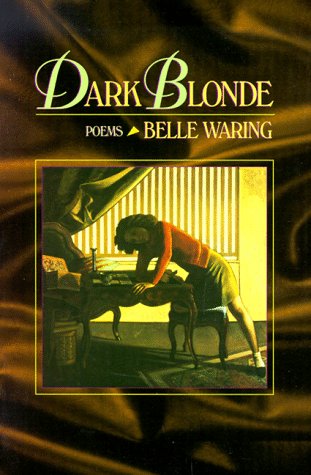
Today's book of poetry: Refuge. Belle Waring. University of Pittsburgh Press. Pittsburgh, Pennsylvania. 1990 Dark Blonde. Belle Waring. Sarabande Books. Louisville, Kentucky. 1997.
"and the thrum of you jazzed me up like a champagne."
(Aftertaste)
Today's book of poetry will be happy to tell you how we came to hear of Belle Waring as soon as we finish telling you what reading her poetry is like. Reading Belle Waring is like walking into a room full of reason, decorated with grace.
It's also a slap up side your head.
When Belle Waring's two books arrived, I knew from their source that there would be something special inside and Today's book of poetry was not disappointed. Waring belongs to the narrative school of plain speaking, real life, real time, true this. But when her poems start to play out in front of you, you realize you've heard this voice from your sisters, honest and untethered.
Belle Waring knows what it is to be pixilated and she knows "how Dostoevsky said: People are unhappy because they don't know how happy they are."
Today's book of poetry is going both barrels for Belle, two poems a shot.
Reprieve on the Stoop
If your first memory was the arms of your father
about to chuck you out the window of that catpiss
apartment in Downington, you couldn't dream.
You don't remember dreams, like when I got
robbed, the scumface
broke in my room while I was alone
asleep and naked and when he left
I woke up
untouched. Now if the sun
abides in these brassy leaves
quivering over my ankles which talk
to you and you ask me to sit
so I do—you and I
were both alive and how bad is that—on the stoop
like a girl with her front door key on two feet of green
string around her neck, watching the boys shoot
hoops, how they crouch and leap extending to the rim
and sweat on the sweet lunette of neck over their T-shirts
only now we're not slinking
home for supper in time to boil a pork dog
and watch dad throw his liquid obituary in mom's
face. We sit down on the stoop and watch the earth
swing her hips to the next dance hit and the dark
slide his arms around her waist. Listen
—I'm not romantic, baby, but I do
know grace when I see it.
✍✍✍
I Dream I Am Back in Paris
walking east. It's hard to forgive
anything. The sky billows with a million
wild roses, backlit, as Monseigneur Soliel
crawls up the horizon. Nobody's awake but me & I'm
two places at once: Paris, district twenty, and my
grandparents' house in Virginia with its huge blue
spruce and roses all colors went nuts in summer
and lightning bugs fired with silencers into the dark.
I am going to surprise you on Rue St. Blaise. When I
burst into the courtyard the dream falls
dark like a curtain dropped on the photographer's
head. The government of Paris razed your house and left
a mess of squatter's huts. That house survived
the Revolution. Cows grazed there. You took in
all of us. Middle class renegades. Refugees
blasted from Chile. Algerians. Americans. Mornings,
I'd climb over the ones huddled in sleeping bags
and step out to see the sun sweet-talking its way down
the street. Now the light wakes me up
tapping its toes on the window ledge, same seductive
rosy light, only this time I'm not going anywhere,
my grandparents are dead, you're in Paris
turning thirty-seven and the most I can manage is to phone
transatlantic to report my dream which digs in
its Anglo-Saxon heels and sputters like Donald Duck
on dope. I wish to tell you that the sky I dreamed
vaults over our hearts, that we leap with its rose
in the night and return to each other, that the dream
dangles the old place intact, like a kid stalking light
at sunup, wound up in joy too big to put your arms around.
✍✍✍
Waring doesn't know her own strength or limitations so these poems come off the page entirely untethered. Today's book of poetry was terribly saddened to know that Belle Waring, who was born in 1951, died in 2015, we would have very much liked to express our admiration to her in person.
And on that sad note Today's book of poetry must remember the former American Poet Laureate Donald Hall. Hall died this past week, he was ninety. Back in the late 80s when Today's book of poetry moved to Czechoslovakia to teach English as a second language, I read Hall's The One Day (Mariner Books, 1987), a book length poem. I loved it and wrote to Mr. Hall, the result was that we had a brief correspondence where he was generous to a fault and very kind. I've always remembered his line "don't ever do anything you don't want to do." I might not have that exact, I read that book more than thirty years ago, That One Day. Great and simple advice but hard to follow through on. Donald Hall was a great American poet and we are less for his passing. Goodnight Donald Hall.
Back to Belle Waring. "I laugh like a struck match." (Blackout), inflames Waring, early on in her debut collection, Refuge. And Today's book of poetry was caught. Today's book of poetry became the proverbial "deer in the headlights." I could not turn my gaze away from the electric charms of Belle Waring.
Aftertaste
"It's the combat zone," the cop said, a Portuguese
fine-doll, mixed-up fine, black cheeks
sleek as an aubergine. I am letting you know
what you missed. "South Station's two miles,"
he warned me. "Cab's reasonable. Why walk?"
Because reasonable was too high. Like you,
I was limping home with a prepaid ticket
and change for the paper. "Globe!" the newsboy
wore an arm cast grubby with ink. I gave him an extra
quarter. You missed dodging the shark-faced men
who'd cut just to smell the blood. If you'd come
with me I wouldn't be moving
unescorted through these pisshole streets,
eyes front, with the faith of a firewalker,
while the powerglide car radios bunched up
throaty with pick-up songs.
South Station smelled like stranded worry,
gun metal. Soon the train was racing me
down the coast like a rock 'n' roll hit,
but instead of you, who's next to me is a college
girl leaving home. When the train rattled me down
to dream your face floated out of the dark
and the thrum of you jazzed me up like a champagne
✍✍✍
Letter to Morley, Never Mailed
My life was that moment when the train breaks
free: as the city retreats, one begins to hope.
You taught me how to lean into the wind
so stiff it blew the rank smoke out of my head.
What was it like growing up on the beach?
Did the wind suck the words off your tongue?
You said you slapped glue on the trees
so when the finches got stuck, you caged them
to sell. The morning I left, your face was a cloud
blown over the curve of the earth. You gave me
a rose that got slugged on the bus. We screwed
everything up. I came back to my country
more lost than a foreigner. You get drunk and tell
lies. Oui, je t'aime, mais je craque.
In the name of the finches, I take myself back.
✍✍✍
So, that ends the Belle Waring tasting menu for her first book, Refuge. Get comfortable because Dark Blonde is flashing aces while the rest of us are holding nines and tens. Hang on to something.
Oh, save us Belle Waring, save us all. Today's book of poetry is here to tell you the truth as we know it. Belle Waring's poems have steamrolled through our office, flattened us right the fuck out. This woman has the power and when she turns on the gas everything else disappears.
Dark Blonde jumps right off of the damned page, jumps up and grabs the reader by our lazy lapels and shouts, "listen up!" And we have to obey. Waring came into the poetry game late and left early but make no mistake, dear reader, she left a mark. Dark Blonde is a rogue pilot, willing and able to drop down anywhere. No runway needed. Waring must have been a spectacular conversationalist because these poems are ripe and verdent with the perfect line, the perfect pause.
People Think All Wrong About Manhood
When I met Jacob, he's just escaped a police state.
Scrawny white guy, he talked all jacked up on nicotine,
laughed like a .22
crak-crak echo in the alley. Eyes
you already know about—how they undercut
this dodobird reception chat, where Jacob looks forty-five, except
at me—his eyes like a kid who gets hit.
Hit. Then they tell him
Strip. And nobody calls the cops.
Because they are the cops.
I got a cat with six toes per foot who can smell the landlord
down the block. Jacob thinks I'm a sentimentalist.
So what. This past winter I worked just enough to pay my rent,
lived on greens and greasy cornbread, slept with the light and the radio on
so no one would think I was alone. I had bad dreams where I found
little boys in a cold steel sink, face down on a wire brush.
A dusky pulse threads one boy's arm. They have been
sexually tortured
then shadows grease over the windows and
the door no lock
I would wake up seized with a sick headache,
and lose whole days like that.
Jacob says there's no such thing as love at first sight.
You all know the lightning bolt—
Juliet and Romeo. But this is no
play. One morning after I hadn't slept
a silver stretch limo
nearly hit me in the alley where the neighbor kids hang
and the pigeons peck over the cobblestones,
when here comes this limo
with its minky black windows all rolled up tight so you can't name
names
and the sucker never even slowed down. Made me jump back,
skin my hand on the door of the shed.
I wanted to live
after that.
There's a park near my place
where the creek cuts the city clean down to the river.
Sunlight mottles the poplars, aggie-eyes the small water.
If you toss cat chow to those citified ducks, you draw
mamas in camouflage, splendid green heads,
a white rascal like Donald minus jacket and cap,
shimmying his dignified tush.
Ducks are appointed by God to give doofy people a safe date.
We walked through the city
counting up different riffs that we heard on the street—
boom boxes, radios, churches, jukes
girls jumping Double Dutch
boys drumming drywall buckets in their sidewalk bateria
a twelve-piece band of trombones and a tuba
a guy slamming cups of spare change for percussion
—count 'em up.
Get twelve tunes, go on home
and there the man next door plays Villa-Lobos on piano
'til he hits a change and splatters jazz riffs that feel like the rush
you get in a plane when the glaze-blue day pops out of the murk
then you're back inside and Jacob is just somewhere
quiet in the house with you.
These moments are underrated because they're not a Pepsi commercial
—no big male teeth, no young women with important hair.
Things quite silently
shift.
And when a man is brave enough
to cry whatever he's saved up—
you recognize him.
And you—you save up what comes
after he's finished his crying.
✍✍✍
Twenty-Four-Week Preemie, Change of Shift
We're running out of O2
screaming down the Southwest Freeway in the rain
the nurse-practitioner and me
rocking around in the back of an ambulance
trying to ventilate a preemie with junk for lungs
when we hit
rush hour
Get us the hell out of here
You bet the driver said
and pulled right onto the median strip
with that maniacal glee they get
I was too scared for the kid and drunk with the speed
—the danger didn't feel like danger at all
if felt like love—to worry about my life
Fuck that
Get us back to Children's so we can put a chest tube in
this kid
And when we got to the unit
the attending physician—Loretta—was there
and the nurses
the residents
they save us
Loretta plants her stethoscope on the kid's chest
and here comes the tech driving the portable
like it's a Porsche
Ah Jesus he says
The baby's so puny he could fit on your dinner plate
X-ray says the tech
and everybody backs up
except for Loretta
so the tech drapes a lead shield over her chest
X-RAY! says the tech
There's a moment after he comes down the lens
just before he shoots
You hold your breath
You forget
what's waiting
back at your house
Nobody blinks
poised for that sound
that radiological meep
and Loretta with her scrub top on backwards
so you can't peep down to her peanutty boobs
Lorette with her half-Chinese, half-Trinidadian
half-smile
Loretta, all right, ambu-bagging the kid
never misses a beat
calm and sharp as a mama-cat who's just kicked the dog's butt
now softjaws her kitten out of the ditch
There's a moment
you can't even hear the bag
puffing
quick quick quick
Before the tech shoots
for just that second
I quit being scared
I forgot to be scared
God
How can people abandon each other?
✍✍✍
Belle Waring sounds so reasonable, even with her big and hopeful heart just hanging off of her sleeve. Think of the Rev. Al Green and how his songs are all about the same thing: quiet intensity. You can feel, hear, sense the immense power, the sheer human will, the force. But the Rev. Al Green knew how to give just enough, every time. Today's book of poetry posits that Belle Waring's focused gaze spills with the same sort of intensity.
Volume has never been the way to judge a voice, Waring, like the Rev. Green, always knows how much to give, how much to hold back, when to breathe.
Our Today's book of poetry staff were in the dark about Belle Waring, as was I. I passed Belle's two books, Refuge and Dark Blonde around the office for the last couple of weeks.
At Today's book of poetry you can come to work drunk and we'll find a couch for you, bring aspirin and a cold drink, wipe your brow if needed. Today's book of poetry hates tardiness, but in truth, our head-tech and most valued assistant, Milo, has never been on time for anything a day in his life and we love him just fine. BUT if you work for Today's book of poetry and don't/won't/can't be bothered to read the poems—that is it.
Kicking stones, fired. Goooooodbyyyyyyye.
(It's never happened, every single one of the staff have a poetry Jones.)
Maggie, our new intern, and Kathryn, our Jr. Editor, both flamed out, red-eyed about a dead poet they'd never met, and Today's book of poetry understood. We often don't know what we love/need
until it is gone. Max, our Sr. Editor, came out of his dungeon, walked over to the podium (we stand to read here at Today's book of poetry) and quietly with exactly the right gravitas he read us Refuge and then read us Dark Blonde. Maggie and Kathryn were not the only poetry moles with red, red eyes.
So What Would You Have Done?
On the train to D.C., a priest sat beside me, and outside Philly
he turned and said, My daughter has only days to live.
Rawboned man. Under his eyes were purple crescents
like bruises dug out by a surgeon's thumb.
He wept, I was scared, but not for myself.
Of course, for myself.
I took his hand then—cold as inside of a limestone chapel.
Wilmington next. He pressed both my hands before he left.
I wanted him please
to bless me again, bless the train and the tracks for they could
snap like
fingers like the string of smoky pearls my sweetheart gave to me
before he got sick.
Before they admitted him.
One day, on my way to the hospital, I saw some movers drop a baby
grand—
it broke from its harness to the street.
One honors the chord of a crashed piano by scrounging ivory
for a charm.
There is logic in this.
When I walked into my sweetheart's room,
I saw the chemo had gotten to his scalp, he was ripping out
handfuls of his own hair, black dandelion seedfluff, shouting,
Take it. It doesn't even hurt.
I wound his hair round the shard of ivory to conjure the elephant
to save him. But on the train, I didn't tell the priest I had a charm
and after he left, a teenaged boy
with a ripped leather jacket took the same seat, still warm.
He looked at me staunchly: You all right?
I said, My boyfriend's dead.
Kid gave me a cigarette.
I showed the charm to him and he said
I should give it to my Mom to keep my Dad off her.
Crossing the Susquehanna, he fell asleep, twitching in a dream.
High arched brows. Eyes chasing, or being chased.
I unwound from the charm the black hair of my boyfriend,
and wrapped my own hair around it, to slip in the kid's pocket.
There was a pistol in it.
The train cut close by suburban yards
where cars roosted up on blocks, an upside-down dory perched like
a hen
warming herself in the sun-shot dirt, a kid climbing into a tulip poplar
tore off whole blossoms to toss to his mother
as dusty babies swarmed on the grass below.
They never looked up.
All I wanted was to hear them, please
calling each other.
✍✍✍
To Them, To Their First Conversation
Sunlight: Her pituitary balks at the lack of it
and he's an engraver, so for them
light is not taken for granted. On this day in October
downtown, lunch hour, the sun's acting paternal.
Showing them off to each other. The man
is flushed with the debonair mutiny of blowing off
his day job, of loafing on the sidewalk, flirting with a woman
and bobcat green eyes. Between the edge of her scarf
and the scoop neck of her sweater there's a crescent of her skin,
unprotected. Their first conversation alone.
Blaring noon. People have to step around them.
A southeastern sky tips down to them its light,
half cloudy, like tea dashed with milk,
which, after a long illness, is brought—
slowly now—
to the lips.
✍✍✍
Our Southern Correspondent, David Clewell, former Missouri Poet Laureate, introduced Today's book of poetry to Belle Waring. Our Southern Correspondent has been a little under the weather of late so if you don't mind Today's book of poetry would appreciate some collective love/karma combination sent in his direction.
Mr. Clewell has taught Today's book of poetry more about poetry and friendship than we quite know what to do with. Bless his cotton socks. So please send some love to St. Louis.
And while we are at it, let us send a joyous yawp out into the poetry ether, a yawp that lets Belle Waring know, wherever she is, that we read her, every word—and are better for it.
Goodnight Belle Waring. Thank you.
Belle Waring
ABOUT THE AUTHOR
Waring worked as a neo-natal intensive care nurse and as Writer-in-Residence at Children's National Medical Center in Washington D.C. Her first collection of poetry, Refuge, won the Associated Writing Program's Award for Poetry in 1989, the Washington Prize in 1991, and was cited by Publishers Weekly as one of the best books of 1990. Her second collection Dark Blonde received the San Francisco Poetry Center Poetry Prize and the Larry Levis Reading Prize in 1997. It was published by Louisville's Sarabande Books. Belle Waring died in 2015.
BLURBS
"Drawing from her work as a neonatal nurse and from some more common experiences (e.g. nervous breakdowns, incest and poverty), Waring exhibits the street-smart ear and unflinching eye that made her first collection, Refuge, one of PW's Best Books of 1990. The images and headlong rhythms of these new poems exert a wide-ranging, often irresistible pull."
--Publishers Weekly
"Waring creates a voice that we feel we can trust to lead us to the center of an experience, maybe because her language never feels artificial but seems to grow naturally out of the situation it presents. The remarkable range of subjects and characters in Waring's poems leads to an equally remarkable variety of tones and vocabularies."
-Word House, Baltimore's Literary Calendar
"When Belle Waring reads her poetry, the jazz-inflected words escape her mouth like a Lester Young solo: quietly, melodically, forcefully. . . . she provides weight to each short line, drawing out her words like sensuous kisses. Her work is also punctuated with politics and humor."
-D.C. City Paper
"Poetry, Robert Frost once said, is a way of taking life by the throat. It is in this tradition that poet and nurse Belle Waring approaches her craft-seizing difficult subjects and holding them in time. . . . "
-Salon
Waring has written a collection that doesn't renege on us the promise of her first book and indeed has honed her craft to include a wider range of tonal shifts and allow for a finer lyricism while not losing the syncopated snap and humor of her earlier voice."
-Indiana Review
Belle Waring
Friends of the Scranton Public Library Poery Series: Belle Waring
Poems cited here are assumed to be under copyright by the poet and/or publisher. They are shown here for publicity and review purposes. For any other kind of re-use of these poems, please contact the listed publishers for permission.
We here at TBOP are technically deficient and rely on our bashful Milo to fix everything. We received notice from Google that we were using "cookies"
and that for our readers in Europe there had to be notification of the use of those "cookies. Please be aware that TBOP may employ the use of some "cookies" (whatever they are) and you should take that into consideration
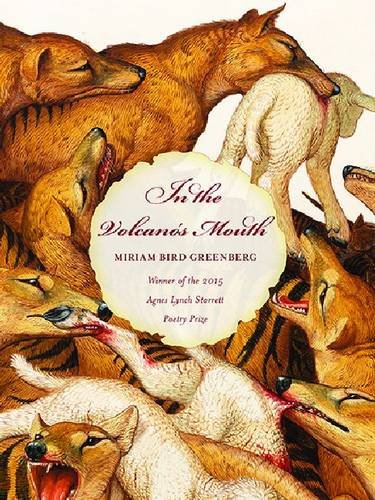
In The Volcano's Mouth. Miriam Bird Greenberg. Pitt Poetry Series. University of Pittsburgh Press. Pittsburgh, Pennsylvania. 2016. Winner of the 2015 Agnes Lynch Starrett Poetry Prize Winner of the 2017 Bob Bush Memorial Award for Best First Book of Poetry from the Texas Institute of Letters
It's two days in to the new year and Today's book of poetry finds himself outside of a medical clinic shortly after eight in the morning. I'm in a warm car, the engine running and I have Miles, Trane and the Cannonball keeping me company. An old friend is in the clinic doing clinic stuff.
Knowing I'd be here a while, it's -25C which is why I'm keeping the car running instead of enjoying the heated waiting room in the clinic, I brought along Miriam Bird Greenberg's In the Volcano's Mouth. If I'd known what was about to happen I might not have bothered with turning on the heat.
This is why Today's book of poetry got into this game. Let the banners fly and the bells ring, call out the trumpets, because Today's book of poetry is opening the year with a stunner.
Miriam Bird Greenberg is a beautiful poetry monster. How else to describe the delicious havoc these poems leave in their tidy wake, how else to describe these powerhouse narratives that arrive at their harsh conclusions so gently? Greenberg totally disarms the reader with one sweep of her disarming brush and then knocks them all over with the return pass.
Would You Believe
Three blocks from the Cyprus Freeway in Oakland,
which collapsed in the 1989 Loma Prieta earthquake,
with a line by Susan Moon
We climbed from the mouth of a volcano
all year, the year I moved west with my sweetheart
to live three blocks from where the earth had broken
open. Men in the Acorn Projects
remembered pulling strangers
trapped in their cars to safety. Brother,
one told me he'd said, we can be afraid
of each other again tomorrow. Twenty
years past, they'd made good
on their promise. By then I waited weekly in a food line
alongside Chinese immigrant women who fished
plastic bottles from the trash, eyes
roving for a coin, a lost prize, at the curb. Sometimes
I'd lift my hand to the lip--
look out over the volcano's rim, and there,
in a crevice, a scrap of paper, shining:
someone's private prayer
or prophecy. Everybody held out
hope, tended their small hustle. Women knocked
on the door selling broken-heeled shoes, loquats
picked in an abandoned yard, would try the knob
if no one was home. Could I make change
for a twenty, asked someone, unfolding one
she'd manufactured from a dollar bill.
Would you believe
what lengths I went to, to call myself
happy then? Star of blood that blooms
beneath a bruised fingernail, star
of silence left high in the heart of a room
after the door's slammed. A couple sits, watching
one another's reflections in a mirror. The two
talk like this as evening falls
around them, and neither has the heart
to get up and turn on the light. "My body's here
but no one's in it." writes a friend; for me
it's different. I'd spent my childhood
in a house made of bees; on hot days honey
dripped through cracks in the ceiling. Me, I hummed,
coiled tight. It hadn't been long since I'd slept
in a creosote field while grainers crashed
in the switchyard nearby. Actual tumbleweeds
turned like prayer wheels crossing the tracks
and the constellations coyotes called to,
streaked across the night, were more miraculous
than freckles on the face of god. Around then,
hitchhiking past Death Valley, a pair of truckers
stopped for me. I used to haul cattle
to LAX, one said. But I couldn't take looking
into their mournful eyes anymore. I guess I wear my heart
on my sleeve, he said. They were climbing
through the Sierras to pick up a load of honey, telling jokes,
they both had wild white beards. I hadn't yet come
in my life to peer over the lip of a volcano,
I wasn't yet made of cicada's coils
and tymbal. Still, I carried a bit of string, a quipu I used
for eavesdropping on the passage of time.
If someone had put a knife in my hands, even then,
I'd have taken it. I can hear
two birds quarreling, tangled in midair. I'm afraid
one day I'll find myself trash picking, tearing
corners from a twenty. I'm afraid I'm no longer
lost as the runaway I met hopping a train
out of Colton that summer
who carried a small jar of her own baby teeth
with her in her pack.
...
Today's book of poetry is tickled to bring such a high-stepping collection up to bat for our first book of the year. It's too early for any "best book" of the year comparisons but we are certain In the Volcano's Mouth will be part of that discussion. This is superb poetry.
Greenberg writes poems that are full of new information that feel like old knowledge, these poems feel like a modern folk tale happening in real time, stories we've known all along. It's not quite haunting but it is close to unnerving as Greenberg unleashes her formative artillery and these poems spill out in front of us like accidents that were meant to happen, prophecies we are only hearing about now.
A Thousand Wire Humming
My room is hemmed with rain; otherwise its windows
are a scrim of moths pressed
against the light, tracing feverishly
their dizzy script, and I am made from shadows
they cast,
passport stamps from Moldova
and Suriname. If you passed me working
at a telephone box on the corner, a thousand wires
humming, and I
in my mechanic's jumpsuit, phone co.
logo over the breast pocket, you'd never glance back
twice. One night I sat drinking
on someone else's porch
after a rainstorm. The light was off, it was late, and no one
came home. The moon cast my dim shape
into the yard, and the clouds racing over it
were skittish
as rabbits. I am getting ready
to see you--shaving
my legs, painting my fingernails
and my toes. I put on a black lace bra
you've never seen me wear. I've held the throat
of an animal,
and broken its neck. I'm climbing
out of my skin. One night
a woman I knew immersed herself in a bath
of India ink, came out
darker than the rafters
of a empty house. Her mouth
burned red, open as instinct
makes a fledgling's mouth open, and her ankles
were more beautiful
than a sapling bent
by wind. More beautiful than the new body
of a snake emerging
from its winter skin in the rafters. Somewhere far off
I can hear the sound of a telephone
ringing in an empty house.
Don't empty houses ring? Listen
how echo inhabits a place it knows
no one's home. Sometimes on the subway
you catch sight of someone familiar--your eyes meet
but there's nothing to say that won't be swallowed
by the throng.
Your shadows are tangled
in the legs of the crowd, are talking already, or fighting,
or fucking. Whatever you wish for
in secret, and each one's ankles
are more beautiful than the other's. Do you remember
the morning when,
before I'd laid the iron to my work clothes,
you pinned one arm
behind my back? Something trembled
in the palm of your other hand--
an egg yolk--and you poured it
into my mouth. Breath
chasing breath's dizzy script,
it was slippery in my throat
as a minnow passing through your fingers
into shadow, as a paw print
on the loamy creek bank
tires of the rain
that erodes it, and I became a swarm
of dust-winged moths
then that filled the air where a moment before
my shape had stood.
...
Our first morning read of the new year had to wait until the afternoon. More snow and slow minions meant for a later start than normal to our poetry world. Milo, our head tech, was all Campbell McGrath happy as Santa brought him three early McGrath titles. Kathryn, our Jr. Editor, was happy because I told her the David Lee had another book in the offing. She likes to refer to him as Sir David of Lee, and rightly so.
The rest of the staff seemed to have made it through those damned reindeer and Fat Man in Red. Miriam Bird Greenberg brought everything into focus real quick. Milo was the first to say it out loud when he said "if In the Volcano's Mouth is any indication of what is ahead in 2018 we are in for one hell of a year."
Living in the End Times
We sat in the ruins
and made tea from the flowers.
Who among us knew
anything? The mourning machine
sowed furrows in the distance
and a little while later came the mourning machine
to reap what had grown. There
at the edge of the field
crouched some children, ready
to dash through the field stubble
to pick through the wrecked rabbits' burrows
the machine had uncovered, then left behind.
...
Miriam Bird Greenberg writes with such clarity that it breeds instant familiarity, gives instant access to the undercurrents, the swirl darkly at the edges of all these poems, she is almost tender about it. Today's book of poetry is excited to start 2018 with such an outstanding books of poems. This is Greenberg's first book but it never shows, before she is done you will want to have every word she has written.
Greenberg's In the Volcano's Mouth is a book you'll want on your poetry shelf, you'll want Greenberg in your poetry brain.
Today's book of poetry starts the year with a bang. Miriam Bird Greenberg's In the Volcano's Mouth will cook your poetry brain from the inside out.
ABOUT THE AUTHOR
Miriam Bird Greenberg teaches creative writing and English as a second language. She is the author of two chapbooks, All Night in the New Country and Pact-Blood, Fevergrass. Greenberg has been honored with fellowships from the National Endowment for the Arts, the Provincetown Fine Arts Work Center, and The Poetry Foundation. Her work has appeared in Poetry, the Missouri Review, and in the anthologies Best New Poets 2014 and The Queer South. A former Wallace Stegner Fellow, she lives in the San Francisco Bay area.
BLURBS
“These poems do what the best poetry sometimes does: reveal and deepen our understanding of the strangeness in the ordinary. And do so in language clear as a bell.”
—Ed Ochester, judge
“In the Volcano’s Mouth is rich with mysterious and heartrending images. Miriam Bird Greenberg blends scraps of the harshness of life, of what would be ugly in less skillful hands, with the beautiful, even beatific. These are poems that are acutely aware of the world: The flame/of a match that flares/at the tip of his cigarette/before he draws in his breath/deepens the darkness/that falls just beyond/ his illuminated face. Paul Eluard wrote, ‘There is another world and it is in this one.’ These poems give us a glimpse into that world. They are poems I will come back to for inspiration.”
—Ellen Bass
“Although many of the poems in this haunted book are ‘pastoral’ in a Classical sense, the natural world is not a place of peace and serenity. Rather, it’s unstable, a setting not devoid of meaning, but a realm where meaning is always on the move, like the many characters wandering through this book, and the mind of the poet who has carefully made it. These poems are harrowing and wounding, and yet retain a quiet, sustaining reserve of beauty.”
—Maurice Manning
Poems cited here are assumed to be under copyright by the poet and/or publisher. They are shown here for publicity and review purposes. For any other kind of re-use of these poems, please contact the listed publishers for permission.
We here at TBOP are technically deficient and rely on our bashful Milo to fix everything. We received notice from Google that we were using "cookies"
and that for our readers in Europe there had to be notification of the use of those "cookies. Please be aware that TBOP may employ the use of some "cookies" (whatever they are) and you should take that into consideration