Showing posts with label red hen press. Show all posts

Saturday, October 19, 2019

Every Atom - Erin Coughlin Hollowell (Boreal Books)

Today's book of poetry:
Every Atom.  Erin Coughlin Hollowell.  Boreal Books.  An Imprint of Red Hen Press.  Pasadena, California.  2018.


There are few things harder than watching your parents fade away in front of your eyes.  The loss of memory can narrow a parents universe to the point where you can no long provide comfort.  Welcome to Erin Coughlin Hollowell's Every Atom.

This mother and daughter diorama is poignant, prescient and palliative.  Parts of our lives, the end parts, are often lived out in slow operas of dissension.  Those we love slowly ebbing to the side of the stage and then out of lights until we become them and then full curtain to black.

Every Atom narrates a horrific battle wrought tender, a one way abandonment, not deliberate, but terminal.  Hollowell understands mortality but can't embrace it, can't fight it.

Who learns under it to
destroy the teacher

First they taught us how
to put on our white

gloves. How to scrub each
night to keep them clean.

Never mind that I
was six and that boys

just twelve years older
died every day in

the jungle. Totted
where they fell. We learned

to diaper babies,
to pin away from

the child's skin and
toward our own. How

to curtsy and sit,
ankles crossed, our hands

like sleeping birds in 
our laps. Each dinner,

the television 
detonated with

gunfire from helicopters.
Mother had me set

the dinner table.
I had been trained which

direction the knife
blade should face. I knew

how to use a shrimp
fork. I could iron

anything smooth. I 
was a child, but I

knew that white gloves
and party manners were

best, because when I
was silent, clean, and

neat, my mother
would love me.

Or so I was taught.

⛱⛱⛱

Every Atom is lamentation and prayer, fear and the cost of freedom, Erin Coughlin Hollowell renders us hopelessly hopeful, dutifully doomed.  There is no getting out alive.  The lead in every single story will do this dance, one way or another.  Hollowell's lamentations have character and beauty mixed in with the sadness.

Hope raises her innocent resilience higher with almost every turn of the page in spite of the obvious stations of impending doom waiting.

One of the hardest parts of living is continuing on when those we love most leave, perish, die.  Perhaps even harder are those circumstances where a loved one leaves in stages.  Cognitive skills and memory echo out hollow canyons where our love used to be.  A loved voice recedes in fear from the very souls who love hardest and longest.  Hollowell's sorrows are not unique, we all have them.  That Hollowell makes these circumstances into art is the joy.

If they are not the riddle and the untying
of the riddle, they are nothing

We are built for breaking. We know this
and yet still more babies are born
with their soft skulls and hunger.
What word can stop a bullet? Walking

down the wrong street, a woman is in the sudden
embrace of a stranger drunk on luck's spittle.
All of us put our hope in time, as if simple
accretion will make our lives valuable.

For some people, it rains every damn day.
All of those names etched in stone, all
the different ways we shine ourselves
like tiny moons reflecting a broken code.

We scatter. The sea rises and gnaws away
at the territory we mapped so assuredly.
So many stories we thought we would
never forget. A lost saint for every family.

At night, I rest my lips against my lover's throat,
his pulse beneath carries me along in my little boat
of affection and need. Oh this wreckage life,
the breath of a hare dreaming in a hawk's shadow.

⛱⛱⛱

Our morning read spawned some invigorated conversation as Hollowell skirts and flirts with the big death thing.  Every Atom drapes the notion of the big nap and the dance to get there with a cloud that will eventually embrace us all.  She gets away with this grim reportage and prognostications by colouring her palette with compassion.  Her poems are beautiful poems even when recording the brutal.

Today's book of poetry has been going through a period of transition, technical and otherwise.  This will be the first blog/review done on our newish office equipment.  When I say newish I mean that there have been previous owners, but it is all new to us.  Beautiful and mysterious.  Today's book of poetry is on a serious computer learning curve.  Stick around though, we anticipate good things as a result.  

Not asking the sky to come down
to my good will, scattering it freely forever

The crow's compass swings wildly.
See him tumble from the sky, a flung rag,
a scrap of darkness plummeting.

I want to own such reckless practice.
To find the taproot of doubt and dig it out,
be scraped clean on the sun-bleached soil.

Saint Crow, I am a shabby petitioner.
One of your feathers tucked behind my ear,
I am hungry for your spring song gospel.

Teach me how to scull through the day
with wings pinioned, lucky, afflicted,
ready to abandon this broken and whole.

When I woke this morning, night's trespass
still on the water but horizon igniting,
I pledged myself to your gape-mouthed ministry.

Hurl me beyond the wildfire of my mind
into air. Into that crystalline shatter
so I might, like too-bright light, scatter.

⛱⛱⛱

Today's book of poetry has some personal experience with the horrors of the last act but we've never managed to find Erin Coughlin Hollowell's grace or her emotional precision.  Today's book of poetry is continuously surprised at how many ways there are to burn, but burn Hollowell does.

Hats off to Hollowell for showing us.


Erin Coughlin Hollowell

ABOUT THE POET
Erin Coughlin Hollowell is a poet and writer who lives at the end of the road in Alaska. Prior to landing in Alaska, she lived on both coasts, in big cities and small towns, pursuing many different professions from tapestry weaving to arts administration. In 2013, Boreal Books published her first collection Pause, Traveller. She has been awarded a Rasmuson Foundation Fellowship, a Connie Boochever Award, and an Alaska Literary Award. Her work has been most recently published in Prairie Schooner, Alaska Quarterly Review, Sugar House Review, and was a finalist for the 49th Parallel Contest for the Bellingham Review.

BLURBS
"With clarity and grace, Erin Coughlin Hollowell cleaves into the liminal spaces between living and merely existing, between the past and forgetting, between mother and daughter, and brings us these hard-won and resilient gifts from her journey. Every Atom is a book that you need to read, because in it are the poems that matter." 
      --Kevin Goodan, author of Let the Voices
"Erin Hollowell has written a stunning and beautiful tribute to a mother as she slips away into loss of memory and belonging in a body and family. And yet the richness of relation here?wreckage and tenderness?is a balm for the losses we all know we will suffer on behalf of those who have given us our lives and for our very selves. 'Saint Crow,' she writes, for darkness is indeed an entrance into the holy in these wise and nourishing poems."
     --Alison Hawthorne Deming, author of Stairway to Heaven
"There comes a moment in every Erin Coughlin Hollowell poem when the heart threatens to burst open and spill light."
      --Luis Alberto Urrea, author of The Hummingbird's Daughter
borealbooks.com

791


DISCLAIMER
Poems cited here are assumed to be under copyright by the poet and/or publisher.  They are shown here for publicity and review purposes.  For any other kind of re-use of these poems, please contact the listed publishers for permission.

We here at TBOP are technically deficient and rely on our bashful Milo to fix everything.  We received notice from Google that we were using "cookies"
and that for our readers in Europe there had to be notification of the use of those "cookies.  Please be aware that TBOP may employ the use of some "cookies" (whatever they are) and you should take that into consideration.






Friday, October 5, 2018

Cairn - New and Selected — Peggy Shumaker (Red Hen Press)

Today's book of poetry:
Cairn - New and Selected.  Peggy Shumaker.  Red Hen Press.  Pasadena, California.  2018.


Perhaps there is no better time than now to look at the very considered poetry of Peggy Shumaker.  Shumaker, as Keven Clark says in his introduction to Cairn - New and Selected, that Shumaker has "a need for inclusion and affection."  Today's book of poetry felt exactly that after reading Cairn.  We did feel included by the instantly accessible poetry of Shumaker; and we certainly felt a great affection by the time we got to the end of Cairn, all four-hundred pages.

Today's book of poetry wanted to write about  Peggy Shumaker because of her apparent need for joy.  She comes by it honesty, the need for joy.  Maybe that is the search we all need most, the need for joy.  Today's book of poetry guesses there might be some prose in Cairn but we're not certain, it all seemed poetic to us.  The prose-poems sound just like poems should when read aloud.   

Peggy Shumaker comes by her chops honestly and they are cherse.  These are poems that want to find that warm space between people, they strive to create community.  And to hold back chaos.

Owls' Cough Balls

Snake season—we bushwhack
sneezing past bobbling quail

start the unoiled windmill whir of
Inca doves

feigning wounds to draw us past
chicks and nest.

Globemallow, pinkeye bush,
childhood legends, lesions,

fears grown up with us—don't touch—stay
other, safe, apart. Mummy Mountain,

steep hillside named for the wrapped
and embalmed, the body hot

in its sarcophagus, graven
images outside of the idealized

ruler, divine, not guessing.
The soul sure for once—

this earth dances, palo verde
delirious yellow dances

blue-banded lizards skitter, waxy purple
petals on the prickly pear

samba their brief lives in splendor
then make way for ripe fruit.

Ocotillo for its cool day tangos
lush, abundant

stiff leaves secure
among thorns,

graceful droop of the sexual
blossoms, flamboyant

for their moment, this morning.
Foxtails' fine plum brushes

stroke, poke through to bare skin
skin still harboring

early morning chill of the snake nest,
coyote den, the burrows

of ground squirrels, the refuge
all creatures born of this earth

return to. Abandoned
radio spires

pick up signals
beyond our ken. Wiry

perches for three harbingers
among the spatters—screech owl

cough up
what they can't digest—

minute molars, half a skull,
femur and pelvis

mashed together, mangled
matted among clumps

of rodents' coats
of many colors

dried fur binding
this new body, matter

immobile, but filled
with stories,

lush,
left over.

💫💫💫

The reader gets the feeling that Peggy Shumaker is a woman with great patience, and the experience to back it up.  From the start, Shumaker's poems have had the relaxed pace of a good story-teller.  These poems resist urgency and fill up that space with necessary inquiry.

Shumaker's poems are very essential in a world where truth is suspect and lies the great rhetoric of the powerful.  Shumaker says it all in her poem "Anyone Who Comes Here Must Be Transformed" when she says:

          ...you refine
          
          loss's life-giving
          language—

          how to keep love
          laughing.

There is a certain type of bravery involved, Shumaker is fearless to be sure, when you are laying it all bare and searching for the best of us.

A Meditation

Come closer. Ask your foot to widen
as it meets the floor.

Ask twin handrails
to lead you on.

Flirt. Play
with your food.

Be hands-on
with your love.

Touch your tongue
to your teeth, fire pose.

Breathe in
Breathe out.

Relax
until language remembers you,

relax
until words bask in your light.

💫💫💫

Reading Cairn - New and Selected Today's book of poetry was happy to discover that Shumaker is a big believer in grace and honour and spends considerable time searching it out with these poems.  One of the ways Shumaker searches is by sharing.  

Shumaker writes about nature with both awe and simplicity.  Shumaker is trying, constantly, for the hardest thing a poet can do:  she is trying to be true.

Today's book of poetry will argue that Shumaker is totally successful.

Sand Rubies

The best treasure came to us mostly after rain, when the arroyo
rearranged itself to suit the wet. We'd have to kneel at least, or
sit quietly for a long time. This meditation turned us into vi-
sionaries, ones who could see what lay buried not far beneath.
Red glints, stones precious because they disappeared. Sand
rubies.  Deep red and transparent one moment, flecks diving
out of sight the next.  In this way, we learned to savor what is
always there, especially when we can't see it.  In this way we
learned to love ephemera: the sand of the ancient ocean, this
earth, this life, everything loaned for a brief time to us.

💫💫💫

Our morning read was splendid.  Kathryn, our Jr. Editor, took a real shine to Peggy Shumaker, and why wouldn't she?  Cairn is a massive collection with nary a let down moment.  This morning's reading was a real pleasure for both the readers and the listeners.  Cairn lent itself to reading aloud because Shumaker imbues a calm and certain assurance to the reader.  These are journeys you are going to enjoy, be enriched by.  You can be a friend and follow.

Cairn - New and Selected is exactly what Today's book of poetry wants from a book of poetry; beautifully true and intellectually fulfilling (if Today's book of poetry can say such a thing), and emotionally satisfying.  Nothing simple about Peggy Shumaker's poetry, anyone who says so can't read.

That's the whole can of soup.

Image result for peggy shumaker photo

Peggy Shumaker
Photo: Cybela Knowles

ABOUT THE AUTHOR
Peggy Shumaker is the daughter of two deserts—the Sonoran Desert where she grew up and the subarctic desert of interior Alaska where she lives now. Shumaker was honored by the Rasmuson Foundation as its Distinguished Artist. She serves as Alaska State Writer Laureate. She received a poetry fellowship from the National Endowment for the Arts. Shumaker is the author of eight books of poetry, including Cairn, her new and selected volume. Her lyrical manner is Just Breathe Normally. Professor emerita from University of Alaska Fairbanks, Shumaker teaches in the Rainier Writing Workshop MFA at Pacific Lutheran University. She serves on the advisory board for Storyknife and on the board of the Alaska Arts and Culture Foundation. Shumaker is editor of the Boreal Books series (an imprint of Red Hen Press), editor of the Alaska Literary Series at University of Alaska Press, poetry editor of Persimmon Tree, and contributing editor for Alaska Quarterly Review.  Please visit her website at www.peggyshumaker.com.


Peggy Shumaker
at Boston Court/Pasadena
Video:  Poetry.LA


719

Poems cited here are assumed to be under copyright by the poet and/or publisher.  They are shown here for publicity and review purposes.  For any other kind of re-use of these poems, please contact the listed publishers for permission.

We here at TBOP are technically deficient and rely on our bashful Milo to fix everything.  We received notice from Google that we were using "cookies"
and that for our readers in Europe there had to be notification of the use of those "cookies.  Please be aware that TBOP may employ the use of some "cookies" (whatever they are) and you should take that into consideration.

Saturday, August 12, 2017

Dementia, My Darling - Brendan Constantine (Red Hen Press)

Today's book of poetry:
Dementia, My Darling.  Brendan Constantine.  Red Hen Press.  Pasadena, California.  2016.

Image result

Brendan Constantine's Dementia, My Darling.  Narrative poetry, mostly.  Surreal but surprisingly narrative.  Surprising poems.  Narrative, surreal when Constantine needs it, surprising and witty. Witty and surprising narrative poems with a surrealist kick.

Inconsolation

There used to be different words here,
a lawn with benches, a statue of wind.
This is where your hand would go, my
shoulder, a good laugh. We shared
a sixth sense of humor, that is,
we always knew what the dead found
funny: calendars, money, an informed
opinion. Now the birds sing like
car alarms. The bees just want out.
You can push the night around
with your tongue.      We do.
We go to the cafe and order a bed.
We ask for curtains, a notebook, then
blow on our cups without drinking,
blow away. Say, How long's it been?
When's it gonna' be soon? What
we wouldn't give for what we gave.
And this is when the dead start
laughing, when you and I decide
to keep waiting. Let tomorrow cool
awhile, until we're two other people.
They'll know if we're inconsolable.
They'll know how to drink lying down.

...

Today's book of humour greatly enjoys Constantine's "sixth sense" of humour.

Today's book of poetry has been reading Edward Hirsh's How to Read a Poem and Fall in Love with Poetry.  It's an insightful and gracious read, a sterling guide if you ever feel you need one.  Brendan Constantine's Dementia, My Darling made me think of Hirsh's concept that poems contain "stored magic."

      I believe such stored magic can author in the reader an equivalent capacity
      for creative wonder, creative response to a living entity.  The reader completes
      the poem, in the process bringing to it his or her own past experiences...

      ...the kind of knowledge--one gets from poetry cannot be duplicated elsewhere.
                                                                    
                                                                                             Edward Hirsh
                                                                                             How to Read a Poem

Dementia, My Darling bursts at the seams with "stored magic."  In Constantine's poetry universe logic is one step ahead or behind.  That's not quite right.  In Constantine world he builds invisible bridges to some parallel universe that chugs along next door to ours so that he can traverse that distance at whim.  It makes for some sharp poems brimming with considerable guile.

Another Natural Cause

People die from falling out of bed--
five hundred a year--more than are
killed by tigers, sharks, crocodiles.
There's a quota, a "stat" on a big
chart, next to famine & disease,
murder & plane crashes. Mostly
small children, the elderly, people
who can dream too hard. At least
twice as many have to explain it
to somebody else. Thousands of 
relations, not to mention cops,
medics, morticians, have to say
out loud, No really, it happens
all the time. Tonight, while we go
to school naked, get chased by bees,
discover we can fly, a few of us
pass into nothing, into bright light,
into marble stations of cloud. We
come yawning, rubbing our faces,
our faces creased by books, cups,
clocks, whatever we kept close by.

...

The poems we liked most, the superior poems, in Dementia, My Darling, and they were many in number, were top flight cooking.  Constantine can burn, there are new recipes here, some unusual spices, but the kitchen smells wonderful and all the plates keep coming back clean.

Today's book of poetry wanted to call in some big guns for morning's read but Milo, our head tech, and Kathryn, our Jr. Editor, said they had it covered.  Constantine's poetry made for a very engaged reading for both the readers and the listeners.  These poems rarely stretch to a second page but they all read longer, short stories, novels and so on bursting out of these few short lines.

The Bear Chapter

No one watches the stewardess anymore;
how she demonstrates the belt, the mask,
the life vest. We've got it down. Maybe
not our lives, our money & regret, or how
to breathe while kissing, but, by God,
we know how to survive a water landing.
The stewardess doesn't look at us either,
but at someplace that's really behind her,
the way dancers do. It's a recital, after all.
In the wild we're told not to sleep too near
our food, to put ever our champagne far
away. There's a checklist of other things,
written by a man so bored, he's forgotten
what survival is. Bears attack, he says,
if we surprise them. But he won't say
how; whether bears are easily frightened
or just don't like parties. When shipping
a bear by air, its ticket must be taped to
the cage in a waterproof bag. Someone
has to check this, someone who long ago
stopping imagining a sea full of floating
luggage, full of drowned bears in boxes.
The stewardess swims by. We call to her,
she to us; the ocean swallows our cries.
No surprises here.

...

Dementia, My Dear is Constantine's fourth book of poetry and these poems read every bit like they are from the hand of an old pro.  These poems are strong enough to swagger but Constantine is a little subtler than that.  These poems strut with confidence.

Brendan Constantine joins a long list of poets Today's book of poetry admires.  We have already assigned Milo the task of finding Constantine's previous three poetry titles.

Brendan Constantine
Brendan Constantine

ABOUT THE AUTHOR
Brendan Constantine is a poet based in Hollywood. His work has appeared in numerous journals, most notably Ploughshares, FIELD, Zyzzyva, Ninth Letter, Poetry Daily, Verse Daily, ArtLife, PANK, and L.A. Times Best Seller, The Underground Guide to Los Angeles. His first book, Letters To Guns (Red Hen Press 2009), is now required reading in creative writing programs across the nation. His most recent collections are Birthday Girl With Possum (Write Bloody Publishing 2011) and Calamity Joe (Red Hen Press 2012).

BLURBS
““Brendan Constantine’s Dementia, My Darling is a mediation on memory. Poems address the difficulty of the death of memory and how does a survivor deal with recollections of a father’s lie, a collective lie about snow, school desk carvings, sleep talking, moths, and hospital ceilings. This collection examines consciousness, connotations, and relationships. Constantine is a master poet illuminating the ordinary and extraordinary with his distinct voice holding humor and heart equally.”
     —Steven Reigns, author of Inheritance

“Dementia, My Darling is a suite of acute, beautiful poems about coming apart, slippage, love, emptying out, transformation, and carrying on. Every absurdly human moment in them is handled with smarts and just the right mix of inventiveness and delicacy. Each poem leaves its mark on the reader. Tender and humane and unsparing, the poems never surrender to despair. They all have a kind of brightness. Constantine renders the creeping surrealism of dementia from many angles, with the awe that is its due. Gaps, anagrams, collage and montage are employed to convey the myriad ways we fragment, multiply, dissolve. A fly is described as ‘an ink blot with wings / a blood spot / that sings a thin hymn.’ (!!) This book is a lyrical wrestling match with mortality.”
     — Amy Gerstler, author of Dearest Creature

“I love this collection. I’m dazzled by its spectacular acts of imagination, the places it invents, the ways it invents of describing those places. Its most wondrous feat, though, is the heart it allows to beat behinds its intelligence, the person that peers from its intricate, sharp, brilliant latticework: so much structure, so much sharpness, and that softness, too. Bravo.”
     —Mandy Kahn, author Math, Heaven, Time


Brendan Constantine reads at the 2014 Dodge Poetry Festival
Video: Dodge Poetry


596
DISCLAIMERS

Poems cited here are assumed to be under copyright by the poet and/or publisher.  They are shown here for publicity and review purposes.  For any other kind of re-use of these poems, please contact the listed publishers for permission.

We here at TBOP are technically deficient and rely on our bashful Milo to fix everything.  We received notice from Google that we were using "cookies"
and that for our readers in Europe there had to be notification of the use of those "cookies.  Please be aware that TBOP may employ the use of some "cookies" (whatever they are) and you should take that into consideration.

Monday, February 27, 2017

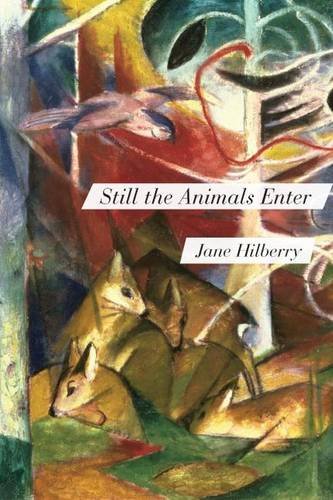
Still the Animals Enter - Jane Hilberry (Red Hen Press)

Today's book of poetry:
Still the Animals Enter.  Jane Hilberry.  Red Hen Press.  Pasadena, California.  2016.


Today's book of poetry thinks that Jane Hilberry is a somewhat-tormented-but-the-glass-is-half-full-anyway character.  Still the Animals Enter could be seen as an occasionally bawdy bestiary but Hilberry really isn't much on moralizing.

These are narrative poems full of the everyday lives of people just like you and another person just like you.  Hilberry writes about the everyman/everywoman that inhabits us all and she does so with insightful charm.

A Seat for Everyone
    -for Rick Perry

And you were never a child, correct?
You never missed your father when he was on a business trip.
You walked home from school alone and maybe you were so safe you didn't even think
of safety, or maybe you were a little afraid, am I right, about the bigger boy,
who might call you names as you walked past his house? Or were you never a child?
Send them home!
Or maybe you had a mother who would have packed your lunchbox
and put you on a yellow school bus to another country, with strangers,
knowing she might not see you again. Your mother would have done that, right?
Because the world is safe for children. Or because you were never a child.
If your father didn't come home one night (no body in the rosebushes,
nothing gruesome, but say he disappeared), well, things happen.
Not every child has the luxury of a father. Or brothers.
And when you walk back into that place you call childhood,
if you had a childhood, is that the place you send these children
when you send them home? Maybe so. Maybe you send them
to a house with brick walls and a fireplace, to mother waking them for school
at the same hour every morning and dinner at six hot in the serving dishes,
the table set, a seat for everyone. Maybe you were a child.
Maybe you think you were every child.

...

Deer sneak through lovely fences, romantic characters from nature, to eat ripe apples from dangling branches -- but they also leave ticks for the family dog, ticks that will find their way to human flesh. Hilberry's universe is populated with dark surprises from the real world.  

Battle hardened mice are thwarted into submission with a copy of David Copperfield, lions, tigers and bears roam at will, yet Jane Hilberry's Still the Animals Enter gets you in the familiar.  When she talks family you can feel your own tree shake, hear your sisters' voices.

Ours

Each step stitches them together
as they walk the dog, each breath at night
winds them, together, into sleep's cocoon.
Even the fights, sharpening
the blades of anger and accusation:
knives side by side
in a drawer. Her clumsiness
so familiar he knows when to reach
beneath the bowl she lifts.
                                            When he sees me,
he says a word that meant something to us,
the name of a planet. We camped by a lake
and read out loud until it was too dark to see.
It was already over then, the sky
borrowing its color from the fire,
then both out.
Still I wanted his hand, to wind his fingers
into mine.
                   At night he and his wife lock the doors,
extinguish the lights and turn to each other.
I am a conversation never had.
                                                   We had a time
that was ours. He held my new kitten
inside his shirt. We threaded roads to mining towns
in his truck. When he touched me,
I couldn't believe--

I couldn't believe my luck.

...

This morning's poetry reading had the Today's book of poetry offices hopping.  Monday morning is usually a pretty grim affair, a kind of wine-dipped, wet cigarette affair with numerous breaks for fresh air and a nasty smoke. 

Still the Animals Enter was read like the poems were all letters from a home we had somehow shared. They rolled out and into the room like they owned the place.

Squirrel with an Apple

Sitting on its haunches, its back curved, a human-like pose,
it held a green apple and ate, its mouth moving fast as a machine --
so fast I thought it must be an illusion of the flickering leaves --
its mouth in furious, impersonal motion. It looked at me as its teeth ticked
and rotated the apple slowly in its paws. I wanted to be more interested
than I was, wished for a naturalist's curiosity -- then felt consigned
to be myself. It's hard to know when to push to improve,
and when to simply say, this is what I am. I am the luckiest
in the world -- born into stability, a genteel poverty that grew
quickly into enough. I have wine with dinner. I am well loved,
well employed. And no, this is not moving toward a but,
a lyric emptiness. I have been reading Larry Levis this morning.
I know that way: the poem that always swerves towards loneliness.
One of my students wishes I were her mother. She was hurt, tortured:
scalding baths, ground glass in the applesauce. But I can't
be her mother. When the painter makes a mistake, something unsightly,
she says the remedy is to continue. To fill the hole the mother made
is a life-long, impossible task. I say this as if I knew something.
I've only learned to trust my body, which says sleep, sleep, sleep some more.
Says touch. Yellow-orange squash blossoms and the fat green
of the leaves. If there's any cure, it is color, on the slab of paper,
or sown into dirt, the sky before dark when it arrays itself
in gauzy grays, and orange traces the underside of clouds. See,
this is not longing. A deep quiet rises sometimes, when I wait
in line at the grocery, the movies. Something I can rest in,
all opinions set aside, as if they could dissolve. They don't.
They will be back. But this is real, an almost-sleepy peace,
my back straight, hands slack, among the breathing others.

...

Today's book of poetry felt the warmth pulsate when Hilberry took it to the sheets.  We felt sad when called upon, but mostly Today's book of poetry felt an odd familial connection.  Reading Jane Hilberry was like discovering a sibling you didn't know you had, one who had the same photo album of cherished, revered and sometimes only tolerated family mug shots.

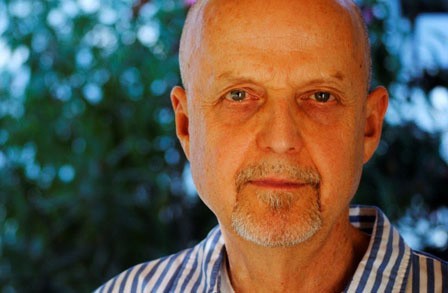
Jane Hilberry
Jane Hilberry

ABOUT THE AUTHOR
Jane Hilberry has written two previous books of poetry, including Body Painting, which won the Colorado Book Award and got Hilberry banned from speaking at a Colorado Springs high school. She has written a book of biography/art criticism titled The Erotic Art of Edgar Britton; edited The Burden of the Beholder: Dave Armstrong and the Art of Collage; and co-authored a little volume on email titled Get Smart: How Email Can Make or Break Your Career—and Your Organization. Her poems have appeared in The Hudson Review, The Virginia Quarterly Review, The Women’s Review of Books, Denver Quarterly and many other journals. She was one of the first editors of the Indiana Review. In addition to teaching Creative Writing, Creativity, and Literature at Colorado College, Hilberry has also facilitated arts-based leadership development programs at The Banff Centre in Canada.

BLURBS
"In 'Possibly, this time,' Jane Hilberry makes a startling and haunting poem out of the passage of a tick through people's lives and deaths. Is this possible, you ask? Oh, yes, this and much more. 'All else, stripped back, came down to love,' she writes in another poem. Hilberry's book, Still the Animals Enter, is the record of this stripping down: its glory and its purpose, these poems."
     --Jim Moore

"The poems in Still the Animals Enter evoke an embodiment both tangential and deep. They travel like a bead on a string between a charged, sublime solitude and a nuanced connection with the natural world and the 'smooth stone' of the lover's body. Hilberry has given us something necessary and rare, an adult perspective that does not lose itself in nostalgia or swerve toward loneliness but finds its way to a language of profound erotic vitality. This collection is located at a powerful edge where memory and loss are in contact with a forward-looking present tense, where longing gives way to a deep quiet 'among the breathing others,' and where the animals find their way through every barrier to enter the poem?--still, and in stillness."
     --Diane Seuss

Jane Hilberry
English Professor Jane Hilberry says poetry should be wild and unpredictable. If you let it be free and don’t try to constrain it, a poem can reveal profound insights that can help spark innovation in many arenas such as business and organizational change. 
Video: ColoradoCollegeWeb


557

DISCLAIMERS

Poems cited here are assumed to be under copyright by the poet and/or publisher.  They are shown here for publicity and review purposes.  For any other kind of re-use of these poems, please contact the listed publishers for permission.

We here at TBOP are technically deficient and rely on our bashful Milo to fix everything.  We received notice from Google that we were using "cookies"
and that for our readers in Europe there had to be notification of the use of those "cookies.  Please be aware that TBOP may employ the use of some "cookies" (whatever they are) and you should take that into consideration.

Tuesday, August 23, 2016

Vampire Planet - New and Selected Poems - Ron Koertge (Red Hen Press)


Today's book of poetry:
Vampire Planet - New and Selected Poems.  
Ron Koetrge.  Red Hen Press.  Pasedena, California.  2016.


Today is our 500th poetry blog here at Today's book of poetry and we've saved something very special for the occasion.  Ron Koertge's Vampire Planet - New and Selected Poems is simply Divine. Bloodsucking otherworldly in fact.

Today's book of poetry first read Ron Koertge in the early 80's.  Diary Cows (Little Caesar Press, 1981) jumped off the shelf and into my hands the first time I darkened the door of City Lights Bookstore in San Francisco.  I was working as a chauffeur at the time and had a three day stopover in the city by the bay.  I was all Charles Bukowski and Jack Kerouac in the head at the time and Koertge was like a drink of some very fresh water.

Diary Cows did it then, Vampire Planet is doing it now.  How any one poet can be so hilariously insightful at full gallop simply baffles the bejesus out of me.  How splendid.

Diary Cows

Got up early, waited for the farmer.
Hooked us all up to the machines as usual.
Typical trip to the pasture, typical
afternoon grazing and ruminating.
About 5:00 back to the barn. What
a relief! Listened to the radio during
dinner. Lights out at 7:00.
More tomorrow.

...

Ron Koertge is an accomplished author outside of poetry world -- but we here at Today's book of poetry are so happy that this man continues to write poems.  In a perfect Today's book of poetry world Koertge would translate every bedtime story, rewrite every nursery rhyme, as far as we are concerned you could put a Koertge filter on it all.

Cinderella's Diary

I miss my stepmother. What a thing to say,
but it's true. The prince is so boring: four
hours to dress and then the cheering throngs.
Again. The page who holds the door is cute
enough to eat. Where is he once Mr. Charming
kisses my forehead goodnight?

Every morning I gaze out a casement window
at the hunters, dark men with blood on their
boots who joke and mount, their black trousers
straining, rough beards, calloused hands, selfish,
abrupt...

Oh, dear diary--I am lost in ever after:
those insufferable birds, someone in every
room with a lute, the queen calling me to look
at another painting of her son, this time
holding the transparent slipper I wish
I'd never seen.

...

Had to call Max, our Sr. Editor, out of his booky lair this morning to discuss the use of more than three poems for today's Today's book of poetry.  He enthusiastically exclaimed that for Saint Ron of K he'd take the heat from the front office.

Kathryn and Milo bebopped Koertge poem after poem to anyone who would listen this morning including three passers-by from the street.  They liked this next poem so much that they came in to our office, sat down and volunteered to work at Today's book of poetry.

Moving Day

While sitting home one night, I hear burglars
fiddling with the lock. This is what I've been
waiting for!

I run around to the back and open the door
invite them in and pour some drinks. I tell them
to relax, and I help them off with shoes and masks.

In a little while we are fast friends, and after
a dozen toasts to J. Edgar Hoover they begin
to carry things out. I point to the hidden silver,
hold the door as they wrestle with the bed,
and generally make myself useful.

When they get the truck loaded and come back
inside for one last  brandy, I get the drop on them.
Using Spike's gun, I shoot them both and imprint
Blackie's prints on the handle.

Then I get in the van and drive away,
a happy man.

...

All silliness aside I want to tell you faithful readers that it is poets like Ron Koertge and books like Vampire Planet that make this blog possible.  Vampire Planet should be on every single poetry shelf out there just like Billy Collins says.  This level of wise humour is two moons in the sky rare.

I talked to my brilliant wife K last night about today's blog and expressed deep concern that after 499 other poetry blogs where I suggested that they were all books you should read how do I express my enthusiasm for Vampire Planet with sufficient enthusiasm and originality?  She said she figured that by now the readers were either with me or long gone so just say what you feel.  So, take my word for it, Mr. Ron Koertge gives more poetry happiness per page than any other living poet I've found.

Why I Believe in God

I'd failed the examination allowing me to bypass the MA
          and go straight for a PhD, so I was forced to let
my friends forge ahead reading, if possible, longer and fatter
          books than before while I worked on something
by the Pearl Poet for my thesis.

          My advisor was Mrs. Hamilton, a world-class
medievalist and the most patient lady in the world.
          Every week I'd bring her a few pages of translation.
She would smile and correct everything. With her help,
          I finished.

An orals board consists of three members of the English
          Department and someone from another
discipline, usually an assistant professor from chemistry
          who drinks coffee from a beaker. But my guy
was from the German Department. He had a scar, for God's
          sake, that might've come from a duel. He
also wanted to begin because he had a few questions.

          "Vhat was the root of zis word? Zah root for zhat?
Who in his right mind vould mistake zhat as zis!" I glanced
           as Mrs. Hamilton who looked like she was watching
Thumper get hit by a tank. I took a deep breath and replied
          that I knew I was less prepared in German than
I should have been but German was the very next course
          I planned to take. I then hoped to move
to Germany and become German.

He sneered, but Dr. Rosenblatt, God bless him, asked me
          something easy: "What was Keat's first name?"
Then Mrs. Hamilton wanted to know if Whitman had a beard.
          Yes or no would be enough.

I was just getting my sea legs when Dr. Death leaned
          forward. "Vhat," he hissed, "is zah function
of zah ghost is Hamlet?" Actually he may have been
          trying to be nice because it isn't that hard
a question. The ghost is the key that starts the engine
          of the play. Without him, Hamlet is just
another pouty prince.

          But I froze. I couldn't think of anything.
My teachers stared at me. They leaned forward
          encouragingly. "Do you remember the ghost,
Mr. Koertge?" asked Mrs. Hamilton. "Yes, ma'am.
          "What was he in the play for?" My mind
was a blank. Less than a blank, a cipher. Less than
          a cipher, a black hole. Finally I said.
"Uh, to scare people?"

          They almost collapsed. Mrs. Hamilton put her
head in her hands. Dr. Rosenblatt murmured, "Oh, my God."

          Then they sent me out of the room. I pictured
myself selling aluminum siding. Or going into the Army.
          Or both. Then I heard the arguing begin:
Shakespeare had not been part of my course work. I'd
          been blindsided from the beginning by
an arrogant outsider. Dr. Hamilton said she knew the German's
          publisher; all she had to do was pick up
the phone and he would never see another word in print.

          They called me back in, said congratulations
and (all but you-know-who) shook my hand. Mrs. Hamilton
          gave me a hug and said she'd never wanted
a cocktail so badly in her life.

I stepped outside into the Tuscon heat. God was sitting on
          the steps in front of Old Main staring at his sandals.
"Ronald!" He waved me over. "I protected you when you
          drove home drunk, I introduced you to Betty Loeffler,
and I got you through that."
          "You introduced me to Betty?"
          "You were lonely."
          "Gosh, thanks."
          "You don't believe in me, but I believe in you. So I'm
interested in what you plan to do next.
          "Not get a PhD. I'm a terrible student."
          "You're telling me."
          "I like writing poetry."
God stood up. He had a great smile and, except for those sandals, a cool
outfit. "Fine. Be a poet. But don't say mean
things about people in your poems. Be generous. Don't be deep
           or obscure. Try and make people laugh." Then, just
before he disappeared, He kissed me. And that is why I am
           standing here tonight.

...

Vampire Planet is one big Olympic sized swimming pool and I don't want to leave.  In Koertge world other dimensions reveal themselves.  These dimensions present different future options, different distant pasts.  Koertge has a real knack for retelling stories we already know but with better endings.  In Koertge world future happiness is possible and the past is made more easy to bear knowing things are not always what they seem.

Koertge has a big bag of tricks.  Good poetry tricks.

Happy Ending

King Kong does not die. He gets hip to the biplanes,
lets them dive by and ionizes them. Halfway down
the Empire State, he leaps to another skyscraper,
then another and another, working his way north
and west until people thin out and they can disappear.

Fay's boyfriend is sure she is dead OR WORSE,
but just as he is about to call out the entire U.S.
Army, a scandal mag breaks this story: the couple
has been seen in seclusion at a resort somewhere near
Phoenix. Long lens telephoto shots show them sunning
by a pool. There are close-ups of Fay straddling
the monster's tongue and standing in his ear whispering
something Kong likes. Look, his grin is as big as
a hundred Steinways.

...

Ron Koertge is a poet I've been looking up to for a long time.  When Vampire Planet came through the Today's book of poetry doors - that was the day I knew this blog had been a worthwhile venture. Vampire Planet is a place I'd like to go.  Think of this book as a problem solver.  From now on, whenever someone asks you why you like poetry you can just go the shelf, pick up your well thumbed copy of Vampire Planet and hand it to them.  Say "here, eat this!"

Kathryn, our Jr. Editor, and Milo, our head tech, Max, our Sr. Editor and the three passers-by from the street have just opened a ten a.m. bottle of Tuscan red and are all sitting on the floor in a circle in an apparent happy poetry place.

Koertge will do that to you, he did it to me in San Francisco over thirty years ago and now he is doing again.  The old poems sound as fresh as morning rain, the new poems amaze and astonish.
Today's book of poetry has been in love with poetry since I was twelve years old and in a few days I'll be 60.  I saved Vampire Planet for my 500th blog mostly as a gift to myself for getting old but damn it, Koertge makes me feel young.

Vampire Planet

On weekends we go to movies. Pay a fortune
for plush, satin-lined seats.

We sip V-8 and bitch about six dollar popcorn.
A medium, if you can believe that.

But tonight's movies is worth it. A robot kidnaps
a blonde. He carries her everywhere.

We are out of blondes here. We should have
planned ahead.

At home, I'm restless. I hate the way some
moonlight sprawls acorss the children's

playhouse in the yard. I remember plunging
through heavy air toward some lamp-lit

room brimming with smooth flesh. My wife
tugs at my cape and asks, "What are you

thinking about, sweetheart?" We've been
married for light years, so I know when to lie.

"That robot. I feel sorry for him." Her, draped
across those stovepipe arms, his staggering

like a tipsy groom looking for the bridal
suite with its scarlet, heart-shaped bed.

...


Ron Koertge

ABOUT THE AUTHOR
Poet and young-adult novelist Ron Koertge grew up in rural Olney, Illinois, and received a BA from the University of Illinois and an MA from the University of Arizona.

Comfortable in both free verse and received form, Koertge writes poetry marked by irreverent yet compassionate humor and a range of personas and voices. He has published numerous collections of poetry, including the ghazal collection Indigo (2009), Fever (2006), and Making Love to Roget’s Wife (1997). His novels and novels-in-verse for young readers include Shakespeare Bats Cleanup (2006), The Brimstone Journals (2004), and Stoner & Spaz (2004).

Koertge’s honors include a fellowship from the National Endowment for the Arts, a California Arts Council grant, and inclusion in numerous anthologies such as Best American Poetry, Poetry 180, and Ted Kooser’s “American Life in Poetry” column. Koertge’s young-adult fiction has won awards from the American Library Association and PEN.

Koertge lives with his wife in South Pasadena, California and teaches in the MFA in Writing for Children & Young Adults program at Hamline University in St. Paul, Minnesota.

BLURBS


“"Whimsey meet Oddness. Meet Oddness, Pathos. Hey, Pathos let me introduce you to Funniness. Don't make fun of her name, though, don't try to be funny—leave that to her. Fantastical! Say, I'd like you meet Whimsey, Oddness, Pathos and Funniness. (Yeah, shush, we've heard that joke—stick with the fantastical, O.K.?) Is that . . . ? Look, it’s Ron Koertge, hanging out with Tenderness. Hey Koertge! C’mere, I want you to meet Whimsey, Oddness, Pathos and Fun . . . Oh, you know them already? Oh. You guys know Ron? For a long time? Oh. Yes. Right. I knew that.”"

—--Suzanne Lummis


“"Wit, the impeccably dressed and better educated sibling of funny, suffers an unstable reputation: clever yet aloof, socially polished but oddly cold. In the warmer, less formal surroundings of Ron Koertge’s poems, however, wit lets down its guard and, behold: charm, intelligence, amazing inventiveness, and a kind of sweetness in its patient regard for a world so frequently bereft of those qualities. So what could be more welcome than a new Koertge collection, where wit presides, and wisdom elegantly clothed in laughter is always in attendance.”"

—--B.H. Fairchild


“"Ron Koertge is an expert in the art of disorientation. His tongue-in-cheek poems are clever, of course, but they also dispense an unsettling, probably illegal mixture of Novocain and Kool-Aid. When you finish a poem by Koertge, you look around with the sensation that your living room furniture has been rearranged while you were away. This is his long-standing, one-person campaign for wakefulness in the human situation. The New & Selected Poems is a serious cocktail.”"

--—Tony Hoagland


“"Many Koertge classics are gathered here (like ‘Coloring’ and ‘Cinderella’'s Diary’) alongside new and surprising poems that journey deep into the imagination’s outer limits.Vampire Planet deserves a place in the poetry section of every heads-up reader.”"

—--Billy Collins

Ron Koertge
video:  edwinvasquez


500

DISCLAIMERS

Poems cited here are assumed to be under copyright by the poet and/or publisher.  They are shown here for publicity and review purposes.  For any other kind of re-use of these poems, please contact the listed publishers for permission.

We here at TBOP are technically deficient and rely on our bashful Milo to fix everything.  We received notice from Google that we were using "cookies"
and that for our readers in Europe there had to be notification of the use of those "cookies.  Please be aware that TBOP may employ the use of some "cookies" (whatever they are) and you should take that into consideration.

Sunday, April 10, 2016

Country of Ghost - Gaylord Brewer (Red Hen Press)

Today's book of poetry:
Country of Ghost.  Gaylord Brewer.  Red Hen Press.  Pasadena, California.  2015.


"The earth is mostly just a boneyard.  But pretty in the sunlight."
     - Larry McMurtry

And so begins Gaylord Brewer's hypnotic litany Country of Ghost.  It is not  a small accident that Brewer begins with a quote from one of America's least appreciated boneyard specialists.  McMurtry has put down his own trail of ghosts in his fine body of work.  Showed some pretty fine sunlight as well.

Brewer follows suit.

Becoming Ghost

As you withdraw from the beloved ones,
first in mind, then abused beast of the body
following, you will find speech no longer
plausible. Suggestive turns of hip or shoulder

suffice. The night as long surmised
requires no further recompense. The sweat
of your face, your wetted hair nothing more
than a fevered baptism of exchange.

Fly, wraith. Your secrets mean nothing
to anyone now. Fly to a moon-washed city
of dust and stone. To the cemetery
locked to you, the church undiscovered,

shuttered houses murmuring as you pass.
Ghost breathes on for awhile, sorry nostalgia--
so breathe. If the heart still struggles,
you may share too that fading urgency.

Where were you going? Where you have
arrived of course. Recognize this place
and, perhaps, weep or smile at the knowledge
you pursued. The loneliness found instead,

its barbarism and solace. There, seeker--
crevasse, mountain, flickering shore.
Dark turn of wing. The bridge where you
pause, a last bittersweet time, as you cross.

...

Death does not come easy, not even to a Ghost.  

Ghost is like the rest of us, longing for love, wanting to be able to play jazz piano, wanting to absolve grief.  It's all in here, the aching human need to belong, the bittersweet tragedy of loss.

Brewer knocks 'em down like pins at the end of an alley where he know all the grooves.

Ghost Considers the Altered Nature
of His Sleep and a Consummation to Be Wished

But not sleep as you may recall suspended hours,
not dream as dream per se, pitiless collage
of exactly what you deserved--deserved or not.
Any bed a benign bed now, good enough for Ghost.
The clocks count, wind rises, again it's late.

Lay the burden of thy body down, close eyes
to a story of forgetting, what passed, what never was.
Inhale the night and its useless truth,
no harm now. Here, say, a red canvas, a staircase
descending. There, a piano in a library of babel once

revered as wisdom, the slight hands of a woman
raising a dead man's song from the keys,
lamentation and joy learned by rote. Too,
a bridge, thighs of brick and steel impassive
in the river's filthy, freezing current, body toll rising.

And there: Your wife in her soft coat, waiting
and anxious in the new snow that hides the road.
In other words, Ghost, same ole razzmatazz
of mortal coil, nightly nonsense. What else
distracts during the long darkness that has returned?

Look; She steps forward, the mark of her boots
a white trail announcing her closer, closer still.
Hair wild in her eyes and her face flush and cold. But
she is smiling, she is glowing, ice bows bare limbs
where she passes and the morning light dazzles.

...

Country of Ghost is every country.  It's where you live.  It's where I live.  Ghosts are everywhere.   This particular ghost is a Rahsaan Roland Kirk ghost.  Always more than one instrument at hand, although sometimes he will play two just for the hell of it, sometimes three, absolutely for the hellish joy of it.  Brewer is singing in the dark corners.  Sometimes illuminations comes from the most unlikely sources.

We here at the Today's book of poetry offices almost expected a return of the ghost of John Steinbeck,
or perhaps another ghost.  No such luck.  Gaylord Brewer had the center of the floor today for the morning read.  Milo, our head tech, did his usual excellent job.  Kathryn, our new intern, read them like she owned them, and so on.  As we worked around the room Today's book of poetry realized how sturdy Brewer had built his Ghost, all haunting and hardy.

Ghost Reconsiders the Romance
of the Piano Player

During your life, Ghost, you longed
for the skill, cool and unannounced:
at evening's end, when that moment
arrived, or as surprise life-of-the-party
to those who'd known you forever,

Ghost nonchalantly on the stool, without
preamble tickling a jazzy improv
or just pounding out three blunt-force
minutes of unbridled rock'n'roll
'til you bust the damn thing or burn it.

But now, as you've surrendered
beloved biblioteque where you passed
so many peaceful hours, reclined
on cushions beneath enormous beams
centuries old in their silence, or touching

frayed volumes, opening a cover,
turning a yellowed page to inhale
the musk of its quiet history, as you've
surrendered these pleasures to the pasty
young man arrived without request

as the Bechstein in the window, who taps on
morning and night--a tortured Chopin,
lurching Beethoven to make you glad
for the master's deafness, worst of all
the droning tinker, tinker, tinker

of the mule at the wheel, round and round--
your only recompense, Ghost, is pride
you never took a lesson, practiced only
the muted score of the earth, only,
say, an art of listening, rather than

shitting one's endless noise into every
passing ear that didn't ask for it. Sorry,
all this racket makes a ghost testy,
who just wanted to step out of the rain
without assault of genius--blank-eyed,

slack-jawed, idiot savant light on the savant.

...

Today's book of poetry has always been an admirer of the good Ghost story.  We often think of poems as short movies and with Gaylord Brewer's Country of Ghost we get the range, Ghost memoir to Ghost romance, Ghost history and Ghost comedy.  A poetic film festival.

Country of Ghost can be haunting as a bad dream in search mode, it is constantly perceptive and ultimately we discover we need a Ghost to tell us what it means to be human.

Gaylord Brewer
Gaylord Brewer

ABOUT THE AUTHOR
Gaylord Brewer, a native of Louisville, Kentucky, earned a PhD from Ohio State University. He currently teaches at Middle Tennessee State University, where he founded and for twenty-one years edited the journal Poems & Plays. His most recent publication is a cookbook/memoir, The Poet's Guide to Food, Drink, & Desire (Stephen F. Austin UP, Spring 2015). He has published 900 poems in journals and anthologies, such as Best American Poetry and The Bedford Introduction to Literature.
- See more at: http://redhen.org/gaylord-brewer/#sthash.Sby72DRX.dpuf

BLURBS
Brewer writes as if a sly old god, wounded, lost and yet to renounce his magic. Ghost is a tour de force, part Caliban, part Ariel. Revenant, bored, hungry and amazed, Ghost will be with us ever hereafter.”
     - —Robert Olmstead

In this work of haunting, the possibilities for fruitful speculation and reflection are great. Gaylord Brewer’s poems in Country of Ghost are, at once, whimsical and deeply affecting in their pathos. The many ghosts that inhabit these poems contend with the conundrum of regret, and desire. It takes precise, well-modulated poetry that is alive with metaphor, wicked puns, image, and acutely observed detail to achieve what Brewer does in Country of Ghost.”
     - —Kwame Dawes

The world of feeling that Brewer so urgently describes is complicated and dynamic.”
     - —Asheville Poetry Review

“The poems are eerie, achingly honest, conversational, and beautifully, darkly funny. Even if we are tempted to turn away from the rotting, breaking, bruised, and bleeding body, we are drawn in by the human need, the fragility, the nostalgia, the bittersweet longing of the speaker and his Ghost.”
    - —Prick of the Spindle

Brewer manages to masterfully balance the ordinary and extraordinary. The consequent contrasts and juxtapositions elevate both conditions of ‘ordinariness’ into a kind of equilibrium of the sublime. A trademark Brewer poem: craft, precision, self-analysis, humor, endurance, and a razor-sharp epiphany.”
     - —The Evansville Review


Gaylord Brewer
Meacham Conversations, 22.3.2013
Gaylord Brewer talks with Meacham director Richard Jackson about his experiences with "Ghost," how travel has influenced his writing, his work with fiction and editing, and his growth as a poet.
video: Meacham Writer's Workshop


458


DISCLAIMERS

Poems cited here are assumed to be under copyright by the poet and/or publisher.  They are shown here for publicity and review purposes.  For any other kind of re-use of these poems, please contact the listed publishers for permission.

We here at TBOP are technically deficient and rely on our bashful Milo to fix everything.  We received notice from Google that we were using "cookies"
and that for our readers in Europe there had to be notification of the use of those "cookies.  Please be aware that TBOP may employ the use of some "cookies" (whatever they are) and you should take that into consideration.