Showing posts with label diane seuss. Show all posts

Monday, August 21, 2017

Primer - Aaron Smith (Pitt Poetry Series/University of Pittsburgh Press)

Today's book of poetry:
Primer.  Aaron Smith.  Pitt Poetry Series/University of Pittsburgh Press.  Pittsburgh, Pennsylvania.  2016.

Primer (Pitt Poetry Series) by [Smith, Aaron]

Today's book of poetry is going to start today's blog with a message directly to Aaron Smith.  NO "Blue Exits" please.  There aren't enough excellent poets with your particular mix of bawdy guilt and formidable chutzpah.

It might be hard to imagine that a totally straight sixty-year-old finds common ground with an entirely randy and frequently angry younger gay poet.  But Smith's ribald renunciations of the status quo in Primer come from a deep well of lucid and loquacious lust.  Smith kicks the shit out of Eros.

Notes For A Lecture:  Keith Haring

I like Haring best when he's raw,
so large the image might smear,

so thick on the page I could
tear off my underwear.

When I was a kid, I hated the word
"pleasure." It made me feel like

my parents knew my penis got stiff
in the tub, that the washcloth

felt good on the tip. Imagine our veins:
graffitied tunnels desire moves through,

brakeless, rumbling into thrust.
Just relax, the man said, as he opened

my legs, fingers slick with his own wet.
His tongue in my ass unlocked

a place in my chest I was afraid of.
A friend told me he thought the great revelation

of his life would be a phrase from Keats
or Yeats, not a married man at his throat.

I want to fuck you boy-pussy.
He said he never felt closer to god.

Cartoon hard-ons, dicks with faces, mouths
stuffed with cock. Nameless fucking

self-loathing finally brought me to.
I'm so glad to have a body I hated.

...

Primer is boldly, beautifully frank about the journey to manhood for a young man uncertain of his sexuality, and if not uncertain, terrified.  It doesn't take Smith that long to find certainty but he never quite finds peace.

These poems despair a sexuality some still see as "other" but Today's book of poetry thinks that for all his justified anger and rage Aaron Smith has created a hopeful text in Primer for those about to follow.  And an entirely entertaining book of poetry for the rest of us in the process.

Homosexuality

Dad said someone shot
the albino deer, with

a gun, out of season. Eyes
pink, white fur, a reverse

shadow in dusk against
the hillside. Not in all

the years I've hunted
have I seen an animal

like that. It's cruel, he says,
for nature to make

such a thing, unable
to hide when hiding

is how it survives. He looks
through my eyes, then

away, he wants us to stay
ordinary men.

...

Primer throbs with visceral lust and desire.  Gay men will identify these poems, recognize themselves, their friends, their stories.  But every reader will be able to identify with the human need for love and acceptance, contact.  And it is not just the acceptance of other but the real struggle to accept oneself as we really are.

Aaron Smith's Primer swings carnal but addresses those big questions of who we are and who we see when we look in the mirror.

Jennifer Lawrence

I want to tell the woman
selling self-published christian
fiction at Starbucks, who says,
god has made her a fisher of men
that I didn't think I could come
standing up until a man
I fucked stuck three
fingers in my butt. I want
to tell her that if the asshole
is the crucifixion then
the prostate is the second
coming. Once I thought
it was possible to be an ethical
person until the guy I was dating
said Jennifer Lawrence is our
greatest living actress. He wept
during sex and left his socks on
in bed. I could live with the cold
feet and the crying.

...

Bravo Aaron Smith.  For Today's book of poetry Primer comes across as so damned honest and true that you feel the heat of Smith's fire.  Any poetry lover will recognize the battle with despair and celebrate beating it back into the darkness.

Thank you Mr. Smith.

Aaron Smith

ABOUT THE AUTHOR
Aaron Smith is the author of Appetite, and Blue on Blue Ground, winner of the Agnes Lynch Starrett Poetry Prize, as well as the chapbooks, Men in Groups and What's Required. His work has appeared in a number of literary magazines, including Ploughshares and Prairie Schooner, and The Best American Poetry 2013. He is associate professor of creative writing at Lesley University in Cambridge, Massachusetts.

BLURBS
“Aaron Smith’s poems have always exuded a blue that’s simultaneously melancholy and bawdy. Primer sharpens his seemingly paradoxical blend of vigor and vulnerability. These marvelous poems are confrontational not simply for readers, but for the poet/self kissing the window between light and darkness, splendor and despair. Smith writes with more provocativeness and compassion than any poet of his generation.”
     —Terrance Hayes

“Shame is the crux, in Smith’s austere poems; an aching, inescapable force that closes the gay boy into his own body, making sex abject, until ‘there’s not enough city//to fill you up.’ The world may have changed, but we can’t help but carry into the new life the ineradicable weight of the past.”
     —Mark Doty

“In Primer, Aaron Smith has not only upped the ante, he’s been penetrated and eviscerated by it. These poems arouse me with their brazen, indecorous explicitness. The collection throbs with sex and the death wish, but also with wit and an exhilarative rage. This book makes me want to live bareback, to write ever-more-recklessly; it makes me not want my ‘stupid, tiny life to end.’”
     —Diane Seuss


Aaron Smith reading at The Poetry Center, Paterson, Nj
Video: Michael Byro


600

DISCLAIMERS

Poems cited here are assumed to be under copyright by the poet and/or publisher.  They are shown here for publicity and review purposes.  For any other kind of re-use of these poems, please contact the listed publishers for permission.

We here at TBOP are technically deficient and rely on our bashful Milo to fix everything.  We received notice from Google that we were using "cookies"
and that for our readers in Europe there had to be notification of the use of those "cookies.  Please be aware that TBOP may employ the use of some "cookies" (whatever they are) and you should take that into consideration.

Monday, February 27, 2017

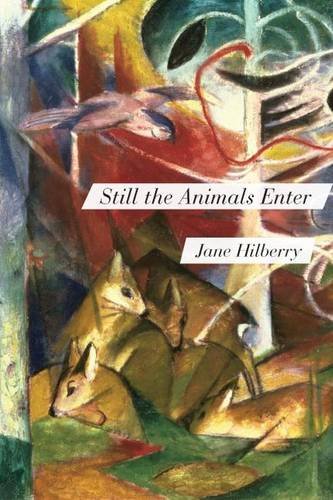
Still the Animals Enter - Jane Hilberry (Red Hen Press)

Today's book of poetry:
Still the Animals Enter.  Jane Hilberry.  Red Hen Press.  Pasadena, California.  2016.


Today's book of poetry thinks that Jane Hilberry is a somewhat-tormented-but-the-glass-is-half-full-anyway character.  Still the Animals Enter could be seen as an occasionally bawdy bestiary but Hilberry really isn't much on moralizing.

These are narrative poems full of the everyday lives of people just like you and another person just like you.  Hilberry writes about the everyman/everywoman that inhabits us all and she does so with insightful charm.

A Seat for Everyone
    -for Rick Perry

And you were never a child, correct?
You never missed your father when he was on a business trip.
You walked home from school alone and maybe you were so safe you didn't even think
of safety, or maybe you were a little afraid, am I right, about the bigger boy,
who might call you names as you walked past his house? Or were you never a child?
Send them home!
Or maybe you had a mother who would have packed your lunchbox
and put you on a yellow school bus to another country, with strangers,
knowing she might not see you again. Your mother would have done that, right?
Because the world is safe for children. Or because you were never a child.
If your father didn't come home one night (no body in the rosebushes,
nothing gruesome, but say he disappeared), well, things happen.
Not every child has the luxury of a father. Or brothers.
And when you walk back into that place you call childhood,
if you had a childhood, is that the place you send these children
when you send them home? Maybe so. Maybe you send them
to a house with brick walls and a fireplace, to mother waking them for school
at the same hour every morning and dinner at six hot in the serving dishes,
the table set, a seat for everyone. Maybe you were a child.
Maybe you think you were every child.

...

Deer sneak through lovely fences, romantic characters from nature, to eat ripe apples from dangling branches -- but they also leave ticks for the family dog, ticks that will find their way to human flesh. Hilberry's universe is populated with dark surprises from the real world.  

Battle hardened mice are thwarted into submission with a copy of David Copperfield, lions, tigers and bears roam at will, yet Jane Hilberry's Still the Animals Enter gets you in the familiar.  When she talks family you can feel your own tree shake, hear your sisters' voices.

Ours

Each step stitches them together
as they walk the dog, each breath at night
winds them, together, into sleep's cocoon.
Even the fights, sharpening
the blades of anger and accusation:
knives side by side
in a drawer. Her clumsiness
so familiar he knows when to reach
beneath the bowl she lifts.
                                            When he sees me,
he says a word that meant something to us,
the name of a planet. We camped by a lake
and read out loud until it was too dark to see.
It was already over then, the sky
borrowing its color from the fire,
then both out.
Still I wanted his hand, to wind his fingers
into mine.
                   At night he and his wife lock the doors,
extinguish the lights and turn to each other.
I am a conversation never had.
                                                   We had a time
that was ours. He held my new kitten
inside his shirt. We threaded roads to mining towns
in his truck. When he touched me,
I couldn't believe--

I couldn't believe my luck.

...

This morning's poetry reading had the Today's book of poetry offices hopping.  Monday morning is usually a pretty grim affair, a kind of wine-dipped, wet cigarette affair with numerous breaks for fresh air and a nasty smoke. 

Still the Animals Enter was read like the poems were all letters from a home we had somehow shared. They rolled out and into the room like they owned the place.

Squirrel with an Apple

Sitting on its haunches, its back curved, a human-like pose,
it held a green apple and ate, its mouth moving fast as a machine --
so fast I thought it must be an illusion of the flickering leaves --
its mouth in furious, impersonal motion. It looked at me as its teeth ticked
and rotated the apple slowly in its paws. I wanted to be more interested
than I was, wished for a naturalist's curiosity -- then felt consigned
to be myself. It's hard to know when to push to improve,
and when to simply say, this is what I am. I am the luckiest
in the world -- born into stability, a genteel poverty that grew
quickly into enough. I have wine with dinner. I am well loved,
well employed. And no, this is not moving toward a but,
a lyric emptiness. I have been reading Larry Levis this morning.
I know that way: the poem that always swerves towards loneliness.
One of my students wishes I were her mother. She was hurt, tortured:
scalding baths, ground glass in the applesauce. But I can't
be her mother. When the painter makes a mistake, something unsightly,
she says the remedy is to continue. To fill the hole the mother made
is a life-long, impossible task. I say this as if I knew something.
I've only learned to trust my body, which says sleep, sleep, sleep some more.
Says touch. Yellow-orange squash blossoms and the fat green
of the leaves. If there's any cure, it is color, on the slab of paper,
or sown into dirt, the sky before dark when it arrays itself
in gauzy grays, and orange traces the underside of clouds. See,
this is not longing. A deep quiet rises sometimes, when I wait
in line at the grocery, the movies. Something I can rest in,
all opinions set aside, as if they could dissolve. They don't.
They will be back. But this is real, an almost-sleepy peace,
my back straight, hands slack, among the breathing others.

...

Today's book of poetry felt the warmth pulsate when Hilberry took it to the sheets.  We felt sad when called upon, but mostly Today's book of poetry felt an odd familial connection.  Reading Jane Hilberry was like discovering a sibling you didn't know you had, one who had the same photo album of cherished, revered and sometimes only tolerated family mug shots.

Jane Hilberry
Jane Hilberry

ABOUT THE AUTHOR
Jane Hilberry has written two previous books of poetry, including Body Painting, which won the Colorado Book Award and got Hilberry banned from speaking at a Colorado Springs high school. She has written a book of biography/art criticism titled The Erotic Art of Edgar Britton; edited The Burden of the Beholder: Dave Armstrong and the Art of Collage; and co-authored a little volume on email titled Get Smart: How Email Can Make or Break Your Career—and Your Organization. Her poems have appeared in The Hudson Review, The Virginia Quarterly Review, The Women’s Review of Books, Denver Quarterly and many other journals. She was one of the first editors of the Indiana Review. In addition to teaching Creative Writing, Creativity, and Literature at Colorado College, Hilberry has also facilitated arts-based leadership development programs at The Banff Centre in Canada.

BLURBS
"In 'Possibly, this time,' Jane Hilberry makes a startling and haunting poem out of the passage of a tick through people's lives and deaths. Is this possible, you ask? Oh, yes, this and much more. 'All else, stripped back, came down to love,' she writes in another poem. Hilberry's book, Still the Animals Enter, is the record of this stripping down: its glory and its purpose, these poems."
     --Jim Moore

"The poems in Still the Animals Enter evoke an embodiment both tangential and deep. They travel like a bead on a string between a charged, sublime solitude and a nuanced connection with the natural world and the 'smooth stone' of the lover's body. Hilberry has given us something necessary and rare, an adult perspective that does not lose itself in nostalgia or swerve toward loneliness but finds its way to a language of profound erotic vitality. This collection is located at a powerful edge where memory and loss are in contact with a forward-looking present tense, where longing gives way to a deep quiet 'among the breathing others,' and where the animals find their way through every barrier to enter the poem?--still, and in stillness."
     --Diane Seuss

Jane Hilberry
English Professor Jane Hilberry says poetry should be wild and unpredictable. If you let it be free and don’t try to constrain it, a poem can reveal profound insights that can help spark innovation in many arenas such as business and organizational change. 
Video: ColoradoCollegeWeb


557

DISCLAIMERS

Poems cited here are assumed to be under copyright by the poet and/or publisher.  They are shown here for publicity and review purposes.  For any other kind of re-use of these poems, please contact the listed publishers for permission.

We here at TBOP are technically deficient and rely on our bashful Milo to fix everything.  We received notice from Google that we were using "cookies"
and that for our readers in Europe there had to be notification of the use of those "cookies.  Please be aware that TBOP may employ the use of some "cookies" (whatever they are) and you should take that into consideration.