Showing posts with label mark doty. Show all posts

Monday, August 21, 2017

Primer - Aaron Smith (Pitt Poetry Series/University of Pittsburgh Press)

Today's book of poetry:
Primer.  Aaron Smith.  Pitt Poetry Series/University of Pittsburgh Press.  Pittsburgh, Pennsylvania.  2016.

Primer (Pitt Poetry Series) by [Smith, Aaron]

Today's book of poetry is going to start today's blog with a message directly to Aaron Smith.  NO "Blue Exits" please.  There aren't enough excellent poets with your particular mix of bawdy guilt and formidable chutzpah.

It might be hard to imagine that a totally straight sixty-year-old finds common ground with an entirely randy and frequently angry younger gay poet.  But Smith's ribald renunciations of the status quo in Primer come from a deep well of lucid and loquacious lust.  Smith kicks the shit out of Eros.

Notes For A Lecture:  Keith Haring

I like Haring best when he's raw,
so large the image might smear,

so thick on the page I could
tear off my underwear.

When I was a kid, I hated the word
"pleasure." It made me feel like

my parents knew my penis got stiff
in the tub, that the washcloth

felt good on the tip. Imagine our veins:
graffitied tunnels desire moves through,

brakeless, rumbling into thrust.
Just relax, the man said, as he opened

my legs, fingers slick with his own wet.
His tongue in my ass unlocked

a place in my chest I was afraid of.
A friend told me he thought the great revelation

of his life would be a phrase from Keats
or Yeats, not a married man at his throat.

I want to fuck you boy-pussy.
He said he never felt closer to god.

Cartoon hard-ons, dicks with faces, mouths
stuffed with cock. Nameless fucking

self-loathing finally brought me to.
I'm so glad to have a body I hated.

...

Primer is boldly, beautifully frank about the journey to manhood for a young man uncertain of his sexuality, and if not uncertain, terrified.  It doesn't take Smith that long to find certainty but he never quite finds peace.

These poems despair a sexuality some still see as "other" but Today's book of poetry thinks that for all his justified anger and rage Aaron Smith has created a hopeful text in Primer for those about to follow.  And an entirely entertaining book of poetry for the rest of us in the process.

Homosexuality

Dad said someone shot
the albino deer, with

a gun, out of season. Eyes
pink, white fur, a reverse

shadow in dusk against
the hillside. Not in all

the years I've hunted
have I seen an animal

like that. It's cruel, he says,
for nature to make

such a thing, unable
to hide when hiding

is how it survives. He looks
through my eyes, then

away, he wants us to stay
ordinary men.

...

Primer throbs with visceral lust and desire.  Gay men will identify these poems, recognize themselves, their friends, their stories.  But every reader will be able to identify with the human need for love and acceptance, contact.  And it is not just the acceptance of other but the real struggle to accept oneself as we really are.

Aaron Smith's Primer swings carnal but addresses those big questions of who we are and who we see when we look in the mirror.

Jennifer Lawrence

I want to tell the woman
selling self-published christian
fiction at Starbucks, who says,
god has made her a fisher of men
that I didn't think I could come
standing up until a man
I fucked stuck three
fingers in my butt. I want
to tell her that if the asshole
is the crucifixion then
the prostate is the second
coming. Once I thought
it was possible to be an ethical
person until the guy I was dating
said Jennifer Lawrence is our
greatest living actress. He wept
during sex and left his socks on
in bed. I could live with the cold
feet and the crying.

...

Bravo Aaron Smith.  For Today's book of poetry Primer comes across as so damned honest and true that you feel the heat of Smith's fire.  Any poetry lover will recognize the battle with despair and celebrate beating it back into the darkness.

Thank you Mr. Smith.

Aaron Smith

ABOUT THE AUTHOR
Aaron Smith is the author of Appetite, and Blue on Blue Ground, winner of the Agnes Lynch Starrett Poetry Prize, as well as the chapbooks, Men in Groups and What's Required. His work has appeared in a number of literary magazines, including Ploughshares and Prairie Schooner, and The Best American Poetry 2013. He is associate professor of creative writing at Lesley University in Cambridge, Massachusetts.

BLURBS
“Aaron Smith’s poems have always exuded a blue that’s simultaneously melancholy and bawdy. Primer sharpens his seemingly paradoxical blend of vigor and vulnerability. These marvelous poems are confrontational not simply for readers, but for the poet/self kissing the window between light and darkness, splendor and despair. Smith writes with more provocativeness and compassion than any poet of his generation.”
     —Terrance Hayes

“Shame is the crux, in Smith’s austere poems; an aching, inescapable force that closes the gay boy into his own body, making sex abject, until ‘there’s not enough city//to fill you up.’ The world may have changed, but we can’t help but carry into the new life the ineradicable weight of the past.”
     —Mark Doty

“In Primer, Aaron Smith has not only upped the ante, he’s been penetrated and eviscerated by it. These poems arouse me with their brazen, indecorous explicitness. The collection throbs with sex and the death wish, but also with wit and an exhilarative rage. This book makes me want to live bareback, to write ever-more-recklessly; it makes me not want my ‘stupid, tiny life to end.’”
     —Diane Seuss


Aaron Smith reading at The Poetry Center, Paterson, Nj
Video: Michael Byro


600

DISCLAIMERS

Poems cited here are assumed to be under copyright by the poet and/or publisher.  They are shown here for publicity and review purposes.  For any other kind of re-use of these poems, please contact the listed publishers for permission.

We here at TBOP are technically deficient and rely on our bashful Milo to fix everything.  We received notice from Google that we were using "cookies"
and that for our readers in Europe there had to be notification of the use of those "cookies.  Please be aware that TBOP may employ the use of some "cookies" (whatever they are) and you should take that into consideration.

Sunday, November 27, 2016

Primary Source - Jason Schneiderman (Red Hen Press)

Today's book of poetry:
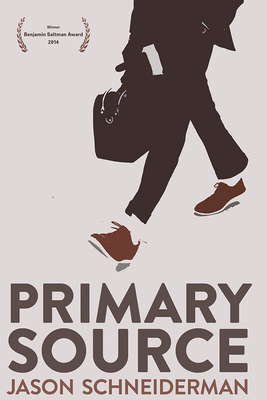
Primary Source.  Jason Schneiderman.  Red Hen Press.  Pasadena, California.  2016.

Winner of the Benjamin Salter Award, 2014


To Please and Instruct

       The purpose of art is to please and instruct
       -- Horace, Arts Poetica

The moral of this poem is fuck you.

The moral of this poem is I'm drunk.

The moral of this poem is I'm too drunk to be held responsible for what I'm
saying to you right now.

The moral of this poem is you're fat.

The moral of this poem is if you come after me, I will have your Hotmail
account turned off, true story.

The moral of this poem is herpes.

The moral of this poem is the Pope's a liar.

The moral of this poem is I'm sorry I threw up through my nose on you.

The moral of this poem is getting through customs without a passport.

The moral of this poem is gestalt therapy.

The moral of this poem is terrorists.

The moral of this poem is you like Tarantino movies because you're stupid
and I like Tarantino movies because I'm smart.

The moral of this poem is cats that look like Hitler.

The moral of this poem is reality television.

The moral of this poem is don't have sex with your siblings, parents, or
anyone under eighteen, sixteen if you're in Greece, fourteen in Denmark.

The moral of this poem is meth mouth.

The moral of this poem is gun-show loophole.

The moral of this poem is Gawker.

The moral of this poem is two state solution.

The moral of this poem is too much rage.

The moral of this poem is rehab sucks.

The moral of this poem is your wife being fingered in the bathroom at a 
party by this guy you invited because you thought he was cool and look
where that got you. 

The moral of this poem is rules change.

The moral of this poem is George Washington filling his dentures with
teeth pulled from his slaves.

The moral of this poem is kill me.

The moral of this poem is hip surgery.

The moral of this poem is drone strike wedding massacre.

The moral of this poem is thong.

The moral of this poem is shut up.

The moral of this poem is make me.

...

Let's get this party started with a kick-ass list poem.  That's the ticket.  Today's book of poetry loves a good list poem and "To Please and Instruct" is a stone-cold killer and the best list poem we've come across in a good while.

Jason Schneiderman's Primary Source is a playground for avid readers of poetry.  There is no commitment by the poet to any particular school or style of poetry, Schneiderman is all over the stylistic map and that is a total win for the reader.  This poet tears it up with ribald wit, no obvious sympathies, and a willingness to go in for the kill.  If Schneiderman were an athlete Today's book of poetry is convinced he'd be a wicked smart decathlete.

My Rich Friend

My rich friend wasn't always rich
but now he's very good at it,
by which I mean he's generous,
has excellent taste, never makes
anyone uncomfortable, has good
boundaries, and please don't tell him
but if I were ever to kill myself,
he has this wonderful window
in this perfect little dining nook
that's fifteen stories up and opens
all the way. The last thing
I would see is a soapstone zodiac
carved into a recess in the ceiling,
and then the city going by
ever so fast. I'm not usually tempted
by an open window. I don't know
how he survives it every day.

...

Primary Source does all those things Today's book of poetry looks for in a book of poems.  These poems are clever but not coy with wicked dry humour and instructive without ever being overbearing. 

Schneiderman dives into Cole Porter water with a pseudo-song of three verses that he uses to start off each of the three sections of Primary Sources.  Schneiderman is tipping his hat and it is a big hat because he has something to say and is surrounding himself with a litany of poets and a peppering of cultural pop shots.  Here's a partial list:  James Merrill, Helen Vendler, Stephen Spender, Yoko Ono, William the Shake, Thom Gunn, David Lee Roth (of all spandex wearing people), Marie Howe, John of Ashbery, Farah Fawcett, Frank O'Hara, the Beats, Dale Young, Ashton Kutcher, Robert Pinsky, Mark Doty, Robert Lowell, Ted Hughes, Sylvia Plath, William Matthews and so on.  It's a hearty list of playmates and influences and guilty pleasures.

Jason Schneiderman knows how to play hard and in these poems he talks about gender and the performative nature of gender and how cruel and ignorant love and lust can be.  Schneiderman also muses on racism, John Cage and the fear of bears.  Today's book of poetry found it all compelling.

The Turing Test

        It might be urged that when playing 'the imitation game' the best strategy for
          the machine may possibly be something other than the behaviour of a man.
          -- Alan Turing

Who do you think he is, this boy in the Midwest
jerking off to the end of Alan Turing's biography,
getting aroused by the parts where the shame
and degradation are exactly what he's always wanted,
at a pornographic remove, and his history teacher
knows nothing about the end of Alan Turing's life,
which this boy will wisely leave out of his report.
Chemical castration? Hot. Nascent breasts? Hot.
Driven to suicide? Hot. Hot. Hot. And yes,
in the morning, on the school bus, or in the passenger
seat of his friend-girl's car, he'll think, That was
seriously fucked up, jerking off to that, and he won't 
even tent his pants by the light of day, knowing
he erased his browser history of all the chastity
blogs, and all the chat rooms where he gets to be
six-foot-two and the captain of the football team
who always just turned eighteen yesterday and
is enslaved to his coach, but that fantasy is getting
tired, and his mind wonders to tomorrow's trig
exam, and soon he'll get back to Alan Turing,
cock-slave to his government. Hot. Defeater of Nazis.
Hot. And by day, this you're-not-fooling-anyone
president of the Gay/Straight alliance may be furious
at how this hero was treated, will start a petition
to get the science lab named for Alan Turing,
but at night he wonders, in one recurring fantasy,
if he could ever pass the Turing test, but in the other
direction. If maybe, just maybe, no one could ever tell
he was human.

...

Sunday morning usually makes for a quietish office read but the Today's book of poetry staff were full of piss and vinegar today.  Schneiderman isn't just brilliant he can be incendiary.  Milo, our head tech, was particularly taken by the strong and fearless head on Schneiderman's shoulders.  Milo insisted we include a fourth poem today and he made a good case for it.  Today's book of poetry was easily swayed.

In the Next Room

She said, "Remember when you liked me
more than crack?" and he said, "Yeah, that
was when I hadn't met crack yet." and when
she huffed and tried to leave the booth
he grabbed her arm, and pulled her back
and said, "We have to talk about the dog,
remember?" and she said, "I thought
we were talking about the dog?" and he said,
"We have to finish talking about the dog,"
and she said, "So fucking finish talking
about the dog." and he said, "So stop being
a giant cunt and I will," at which point,
in a single sweeping movement of her arm
she knocked every single thing off the table,
and the cups and plates broke against
the floor, and the coffee flew up and stained
my pants, and the silverware clattered, and
we weren't overhearing anymore, we were
paying rapt attention, and he said, "You're paying
for that, you bitch," and she said,
"Pick up the tab, asshole," and not one
single person tried to stop her as she left.

...

Image result
Jason Schneiderman

ABOUT THE AUTHOR

Jason Schneiderman was born in San Antonio Texas, but was raised around the United States and Western Europe owing to his father s military service. He holds BAs in English and Russian from the University of Maryland, an MFA from NYU, and a PhD from the Graduate Center of CUNY. He is the author of two previous collections of poems: Sublimation Point (Four Way Books, 2004) and Striking Surface (Ashland Poetry Press, 2010), winner of the Richard Snyder Prize. He is also the editor of the anthology Queer: A Reader for Writers (Oxford University Press, 2015). His poetry and essays have appeared in numerous journals and anthologies, including American Poetry Review, The Best American Poetry, The Bloomsbury Anthology of Contemporary Jewish Poetry, Verse Daily, The Poetry Review, and The Penguin Book of the Sonnet. Schneiderman has received Fellowships from the Fine Arts Work Center in Provincetown, Yaddo, and the Bread Loaf Writers Conference, and is the recipient of the Emily Dickinson Award from the Poetry Society of America. He is an Assistant Professor of English at the Borough of Manhattan Community College and lives in Brooklyn with his husband, Michael Broder."

BLURBS
Jason Schneiderman's Primary Source is a sparkling demonstration of this principle: a poet evolves by making as many aspects of the self as possible available on the page. By turns sardonic and sincere, nakedly vulnerable or armored in irony, the wild magpie intelligence shaping these poems plucks threads from Shakespeare and Stein, borrows forms from Cole Porter and Wittgenstein, and bows to a variety of influences so vast (Sylvia Plath and David Lee Roth?) as to constitute a way of situating the self, influencing the dizzily happy reader to a queer subject, a livewire thinker at work, a breathing human presence."
     -  Mark Doty

Schneiderman's poetry goes beyond camp, slapstick, and coterie aesthetics, although that's his terrain, too; his quick-dazzle intellect is its own happening, a commedia dell'arte cutting through the noise, offering both literary and social critique. The pleasures are here, the mystique of Schneiderman is Schneiderman."
     --  Major Jackson


 'Elegy VII (Last Moment)' by Jason Schneiderman
Video: PBS Newshour

redhen.org

529
DISCLAIMERS

Poems cited here are assumed to be under copyright by the poet and/or publisher.  They are shown here for publicity and review purposes.  For any other kind of re-use of these poems, please contact the listed publishers for permission.

We here at TBOP are technically deficient and rely on our bashful Milo to fix everything.  We received notice from Google that we were using "cookies"
and that for our readers in Europe there had to be notification of the use of those "cookies.  Please be aware that TBOP may employ the use of some "cookies" (whatever they are) and you should take that into consideration.


Thursday, August 6, 2015

Blood Work - Matthew Siegel (The University of Wisconsin Press)

Today's book of poetry:
Blood Work.  Matthew Siegel.  The University of Wisconsin Press.  Madison, Wisconsin.  2015.

Winner of The Felix Pollak Prize in Poetry


Matthew Siegel bleeds sad and tragic/romantic all over every page of this fine book.  Sometimes his mother's blood does a Stanley Kubrick moment from The Shining, the walls all glimmering crimson.

Siegel is engaged in a battle with blood and body that he cannot win, only endure.

The poems in Blood Work go in like a quick/smart/sharp prick from an experienced and talented nurse taking blood - but they linger like bruises, both big and bigger.

We here at Today's book of poetry aren't the only admirers of Siegel.  A goodly number of these poems have appeared in journals and magazines of note.  It is no wonder, these poems are tight and often tender, never maudlin and thank our lucky stars, Siegel has a sense of humour.  Poetry without some humour can be a grim ride.

"Fox Goes to the Fox Hospital"

And look there he is back in the hospital
in the easy blue dressing gown, at this facility
with a delicate floral print on the walls.
He'd always had an affinity for flowers.
Healthy yet being repaired, he is back
in this gown and it is like an old costume
pulled out of a locked trunk in the attic
of bad dreams. In the gown he feels naked,
notices his softness, how his sex has never seemed
     less willing
to rise. As if there could be such a cause in this place.
He is healthy but writing a poem.
It is called "going back to the hospital" and written
in lowercase, most notably the first person "I"
which so often had stood properly capitalized
but for some reason today feels diminished.
He's writing a poem called "going back to the hospital"
but really he wishes he could draw a comic
featuring a small mammal version of himself.
His animal would be a fox, he decides, and promptly
changes the title to "fox goes to the fox hospital."

...

Today in our office, here at Today's book of poetry, we are listening to Dexter Gordon's sublime One Flight Up.  In particular we have been listening to the song "Tanya".  Milo is complaining because we will not give him equal time for whatever German-march-techno-blackhead-death-funk he has most recently discovered.  Milo is one strange cat, but he's beautiful and brilliant.  And today even Milo liked the poetry, he called it "sublime, not like Dexter, but subtle in it's own bloody way, so sad, so strong."  Milo is hard to impress.

Blood Work

The white sky presses a gauze pad
over my vein as the needle slips out.

The woman who draws from me smiles, always
remembers me, no matter how skinny I get.

No matter how dark the circles under my eyes,
she remembers me and how easy my veins are,

so visible, so thick, she doesn't even have to tie my arm,
but she does, and takes the smaller vein

the bigger one too easy. I don't tell her
the best to take my blood was a woman

who used to draw blood from animals,
part their fur, find their blue tap and drain.

She lets me play with my filled tubes. Can you feel
how warm they are? That's how warm you are inside

and I nod, think about condoms, tissues,
all the things that contain us but cannot.

...

You don't really hear any fear in the steady voice of Matthew Siegel but you feel the weariness in the bones of these poems.  The reader also learns some lessons in resilience.

This next poem is a stone-cold killer.  Wait for the ending, it falls like a feather, lands like a punch.

[In the Kitchen Mom Stands
With Her Back to Me]

In the kitchen Mom stands with her back to me
facing the window, a joint between her fingers
entranced by Enya. I ask her way she's crying
when I see a single wet trail on her cheek.

She says it is not a tear but I touch it with my finger
and taste it. It tastes like a tear, I say, but she smiles
and passes me the joint. Isn't it beautiful, she says,
it's in Gaelic, her smile as real as her pain.

Her pain that touches my chest with its fingers.
I almost want to hold the fingers but I don't, instead
I puff the joint, look out the window beside her. Rain
all day until now, the sky a dark cream color

almost backlit with orange--mist tumbles
over wet black pavement.  Her eyes, switched-off
depositories for this light, tell a story I cannot bear.
The memory of him rises with this music
and she smiles as if the hurt is the balm.

...

"and she smiles as if the hurt is the balm."

That is my new favourite line of poetry.  It is almost bleak enough to be an outburst from the excellent Canadian poet Eva H.D., or perhaps a line from the ghost of Edith Piaf, even a pouty Judy Garland.

And if you are paying real attention, and I am not mistaken, there might even be a nod to Ezra's Metro.  I had Milo look it up.

Siegel's Blood Work is a dark portal to a world where survive, survivor and survival all take on new meaning, they may even be tinged with hope.

And you all know how much we love any evidence of hope here at TBOP.

Matthew Siegel

ABOUT THE AUTHOR
Matthew Siegel was a Wallace Stegner Fellow at Stanford University. He teaches literature and creative writing at the San Francisco Conservatory of Music.

BLURBS
“This unexpected book—a genuine contribution to the literature of illness—centers on containment: how we contain our blood, how blood is contained in tubes and vials, how sometimes we do not seem contained by our bodies, and sometimes the body seems to contain nothing, and even how in the face of control or self-reliance leaking away, we might manage to contain ourselves, to feel held, to feel held in place. The deceptive directness of Siegel’s debut is remarkable; in his capable hands, illness reveals how barely contained any human being is, and how we reach, alone and together, for whatever will hold us.”
     —Mark Doty, author of Sweet Machine

“Siegel’s poems see the world with an immediacy and compassion that could only come from the decision to be vulnerable. It’s such a simple-seeming principle of poetry—yet it is as rare as hen’s teeth. I honor this young poet for the freshness and skill in these poems, his allegiance to the most unpretentious areas of experience, and his courage-teaching heart.Blood Work is a wonderful first book.”
     —Tony Hoagland, author of Twenty Poems That Could Save America and Sweet Ruin

“These poems resist the dualities of lyric versus narrative, confessional versus impersonal, real against surreal, formal/improvisational, comic/sad. Matthew Siegel manages to tick off all the boxes at once, while remaining compulsively readable. The trick that he’s pulled off is to make a book that simultaneously tickles you and shakes you by the scruff of your neck.”
     —Lucia Perillo, Felix Pollak Prize judge

Matthew Siegel
Reads his poem "On your birthday," featured in the fall 2013 issue of Southern Indiana Review.
video:  SolnRev


371
DISCLAIMERS

Poems cited here are assumed to be under copyright by the poet and/or publisher.  They are shown here for publicity and review purposes.  For any other kind of re-use of these poems, please contact the listed publishers for permission.

We here at TBOP are technically deficient and rely on our bashful Milo to fix everything.  We received notice from Google that we were using "cookies"
and that for our readers in Europe there had to be notification of the use of those "cookies.  Please be aware that TBOP may employ the use of some "cookies" (whatever they are) and you should take that into consideration.