Showing posts with label lucia perillo. Show all posts

Friday, August 12, 2016

The Names of Birds - Daniel Wolff (Four Way Books)

Today's book of poetry:
The Names of Birds.  Daniel Wolff.  Four Way Books.  New York, New York.  2015.


Daniel Wolff riffs fantastic all over The Names of Birds.  This is an avian splendor, bird watching on a human scale we can relate to.  

Wolff is the most recent provocateur in a noble tradition that gives meaning to our world by taking meaning from the acrobats of the sky, their flight and song.  Canada's Don McKay most nobly flew over this terrain with his magnificent Birding, or Desire (McClelland and Stewart, 1983).  McKay concerned himself with the "deep rhythms of family life" and Wolff filters through the whistle and birdsong of winged beasts to do the same.

Northern Mockingbird

How do I know which song is yours
when yours is composed as imitation,
culled from the calls of dozens of others?

I suppose if I knew the cardinal's solo
and could spot how you follow that with the sparrow's,
I could hear the two as one.

I could call you a hopeless romantic:
in thrall to others, forever trilling,
wintering only where the wild rose grows.

But for me to superimpose such meaning,
I suppose I'd have to believe I wasn't. Have to believe
it was you, not me. And that truth was never a mimic.

...

It's not that Wolff anthropomorphizes flight but instead he has learned to listen hard enough to decipher the difference between chirp and chip.

Today's book of poetry has often talked about joy in poetry and the genuine thing seems to be a rare commodity - which makes The Names of Birds that much more of a treat to share, there is optimism here, Daniel Wolff gives us reason to look up and forward.

Red-Tailed Hawk

"Easily identified by its distinctive, dark red tail."
Easy, maybe, if the northerly wind
would pin the bird as it rounds the point,

but it blows past, as does another
--smaller? barred? with black markings?
Gone before I can see what it is.

          No: gone before
          I can tell what it is.

A spotless day for migration: a spray
of old snow still left on the ground
and cold: the harbor frozen tight.

I walk as far as the channel markers.
They're dark red, too, but anchored in place
as if you could chart water.

...

This morning's read was a quiet and gracious ramble.  Milo, our head tech, did us proud with projections of each and every bird onto the wall behind our readers.  Milo came prepared this morning.  Today's book of poetry should have told you that each of the poems in The Names of Birds is the name of a bird.  Duh.  

While I'm no naturalist I do marvel at birds, and now marvel at Daniel Wolff, an emotional Audubon who got these poems down in spite of the speed of flight.  These poems quick scrabble over the page with such easy delight and elan that you are convinced the wisdom is real.  The final feeling you are left with upon completing The Names of Birds is akin to witnessing the murmuration of starlings.  And it is a damned good feeling.

Try this video and see if aren't smiling when it is over:

Barn Swallow

The pond is punctuated with weed.
The puddles along the road contain
microscopic, shell-shaped eggs:
code for mosquitoes-to-be.

Up in the air, barn swallows
sign what look like their signatures
by catching what I can't see.

     One lands on a willow festooned with puffs
     of pale yellow. Check the book:
     "catkins."

They divide and subdivide the sky
at such speed that at some time
surely the bits have to collide? Never. Never.
They don't know their names.

...

Daniel Wolff has done something splendid with The Names of Birds.
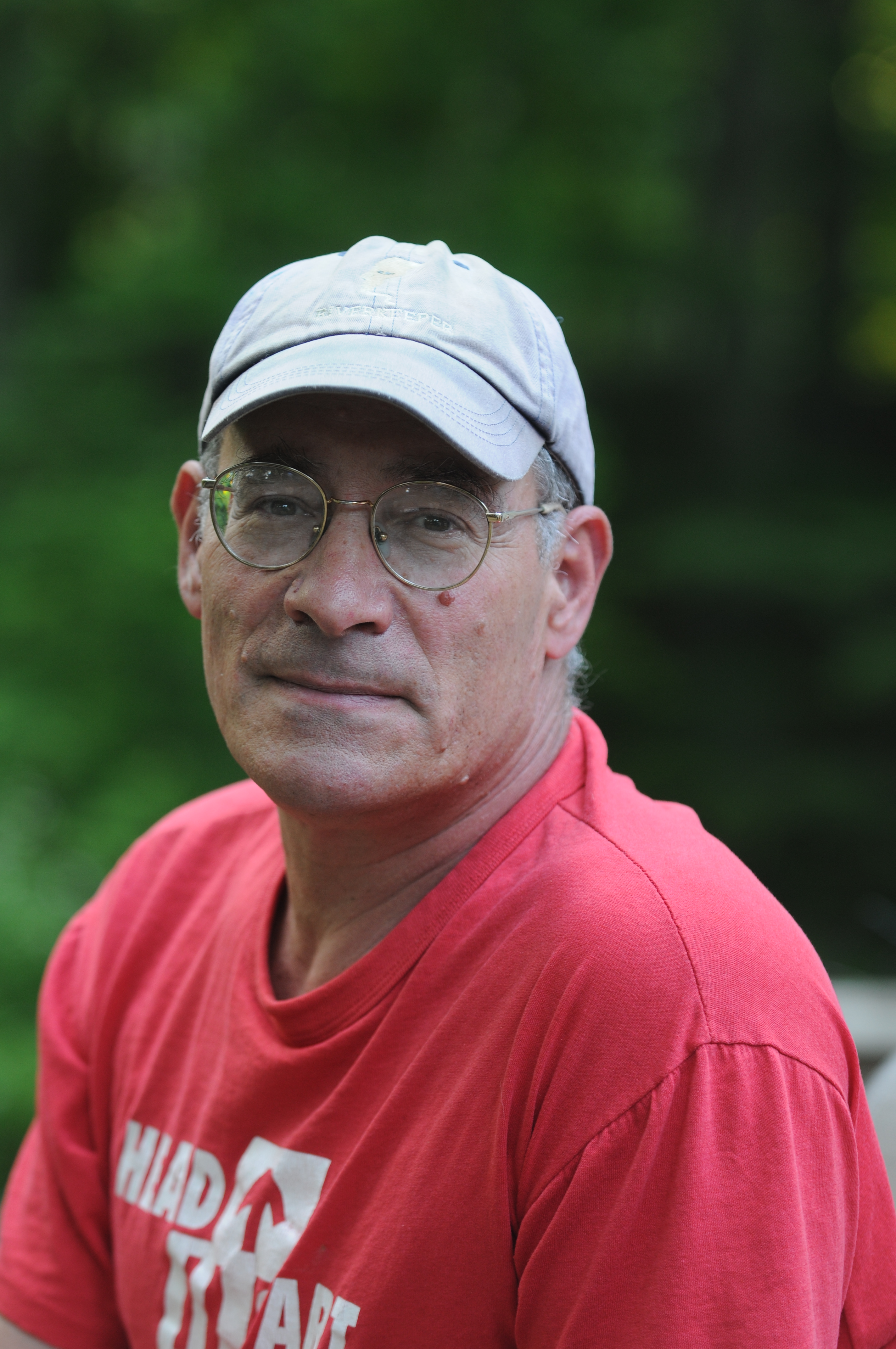

Daniel Wolff

ABOUT THE AUTHOR
Daniel Wolff has published numerous well-received non-fiction books, including a national best-seller that won the Ralph J. Gleason Award for the best music book in 1985. He was nominated for a Grammy in 2003 and was named Literary Artist of 2013 for Rockland County, New York. He has also collaborated on documentary films with Oscar-winning director Jonathan Demme, pop songs, and performance pieces.

BLURBS
"A beautiful book. Decisive and moving."
      -- Jonathan Galassi
"The poems in The Names of Birds aren't really about birds. Instead each individual species is a filter through which the human is seen, so that observation and introspection become overlaid and compounded acts. These poems show us the more accurately we can look outward, the more deeply we can see within our human selves."
      -- Lucia Perillo
"This poet ushers in a year's seasons by counting and naming 17 pages of birds for Fall; for Winter, only 7 actual birds as well as some featherless presences (in one poem, he sees instead of a bird a tanker!); of course Spring returns to a good many birds, 12 in fact, though he sees blue jays twice; then Summer concludes with a mere 5 birds -- what's going on here? You'll soon see if you read for yourself (take it slow: lots is told -- learned, cherished, despised, even worshipped -- besides those very real birds. Like that Horned Grebe, as the poet says: 'His dive extends and still extends. / I leave. The water mends / behind me. Funny how the brain defends / desertion. It hears the cry the grebe (finally) sends / as laughter.' Birds and all, as you can see. I promise you, Daniel Wolff is a wonderful poet."
     -- Richard Howard
"Traveling the seasons with Daniel Wolff's stunning poetry collection is indeed a great gift. Big questions collide with nature's majesty here, moving us closer to see not just 'how the nest is attached to the tree' but how we are attached (or dis attached) to ourselves. The narrator of the poems 'Eastern Screech-Owl' declares that he is not an ancient poet, but there is so much heart and Art is these pages to show that neither he nor Wolff have to be. We are more than grateful for all they have already offered."
     -- Edwidge Danticat

498

DISCLAIMERS

Poems cited here are assumed to be under copyright by the poet and/or publisher.  They are shown here for publicity and review purposes.  For any other kind of re-use of these poems, please contact the listed publishers for permission.

We here at TBOP are technically deficient and rely on our bashful Milo to fix everything.  We received notice from Google that we were using "cookies"
and that for our readers in Europe there had to be notification of the use of those "cookies.  Please be aware that TBOP may employ the use of some "cookies" (whatever they are) and you should take that into consideration.

Tuesday, January 19, 2016

Hive - Christina Stoddard (University of Wisconsin Press)

Today's book of poetry:
Hive.  Christina Stoddard.  University of Wisconsin Press. Madison, Wisconsin.  2015.
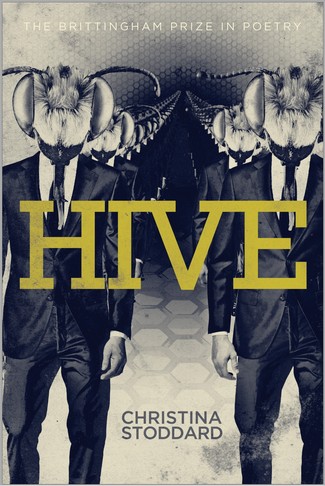
Winner of The Brittingham Prize in Poetry

Hive Cover

Christina Stoddard "brings the hammer down" hard.  These poems are the flaming sparks you get from raising a hammer high and bringing it down hard on an anvil.  And she doesn't miss a beat.   Every time you turn a page in this spellbinding collection you can feel the heat.  Stoddard is fully armed and taking names, and she is shooting in every direction.  

Hive is as rewarding a book of poetry as you'll find out there, this woman can burn.

Stoddard grew up in the Mormon Church and she is not all that happy about it.  These poems are brutal and beautiful, terrifying and exciting.

The Oxford Unabridged

was how I learned the word fellatio,
though I paused to look up orgasm
and my understanding of male genitals was abstract
at best. I had read the word fellatio in the newspaper,
Local section, in a story
about three runaways, two boys and a girl.
A man held them in a cabin
for two weeks. He raped the girl
and forced the boys to perform fellatio on him
repeatedly. I didn't have to look up rape--
I'd know that word since fourth grade
when Takeisha told me
that her uncle took off his pants
when he babysat and we told
our teacher. But I read
the definition of fellatio
and I considered what I knew
about repeatedly.
The man picked up the kids
hitching o the freeway
and said he'd take them as far
as Enumclaw. The girl
gave her testimony yesterday,
which sounded strange when I read it
because in our church
testimony was when we all stood up
to bear witness of Christ
on the first Sunday, in lieu of a sermon.
The article said the girl had a glass eye.
the man stabbed out her real one
when she tried to escape. The man
told her: I will not kill you, I will
take some things away.

...

One of the many things Today's book of poetry absolutely loved about Christina Stoddard's Hive is the sustain.  Stoddard never takes her foot off of the gas.  She pops these out of the park, page after page, like she was taking batting practice for fun.

There is a dark menacing undertoad that rolls under these pages.  Its a dark cloud hanging over the prayer you cannot retract.  Stoddard controls all the momentum with the precision of a surgeon.

The entire Today's book of poetry staff were sitting around our large central table this morning for today's read.  Everyone seemed in a rather solemn, somber mood.  We agreed that Stoddard did have a sense of humour but she is one tough nut.  The laughs don't come often but the dazzle is always on. Every person in the room ate up these intense little diamonds because they are such perfectly articulated anger.  Unanimous.

I Ask My Father If the Green River
Killer's Victims Go to Heaven

Because we are not equally loved on this earth,
because we are all God's children,
in the temple we baptize

lists of the dead. It is why
I step into the font, white dress
dragging like sailcloth.

An Elder takes both wrists
and pushes my body underwater
while saying a stranger's name.

In the water, I'm supposed to go absent.

I baptize you in the name of Lynette Snyder, who is dead
In the name of the Father, the Son, and the Holy Ghost

As I go under, I glimpse
the howling green river,
the parade of persuaded girls.

I see you, I tell them, I know
you are here.

I baptize you in the name of Karen Haskill, who is dead
In the name of the Father, the Son, and the Holy Ghost

Fifty times I drown.

I baptize you in the name of Melissa Porter, who is dead
In the name of the Father, the Son, and the Holy Ghost

I am weightless, light as a nest.
To save the others, the Elder
has to hold me down.

...

Christina Stoddard has a luminous career ahead of her.  Today's book of poetry knows great when we see it.

Hive questions faith in a world where faith is the beginning and the end to all things.  In a world where faith means belonging and questions mean banishment/escape to the dark and foreboding woods.  Stoddard response is to scream like she has been scalded.

God Made Everything Out of Nothing,
But the Nothingness Shows Through

The woman you are trying to love
has finally let you see her naked.
A clutch of seagull-shaped scars
ranges over her breasts
and you have never seen anything
like it, but that only means
you haven't seen much.
You have questions and 
all I can tell you is that the earth
is full of ashes. I know
it is beautiful sometimes to be violent.
That flood of surprise and pleasure
at what we are capable of
in the instant before blood
escapes the skin. We are
often told that loves comes
from inside us and maybe
she tired of waiting for it.
I know it is power
to open yourself. It is power
to stand naked before a man.
And there are those of us who need
to look upon the face
of the deep, who know
that emptiness was first, before God
allowed there to be light.

...

Today's book of poetry doubts that Hive was written in blood, but it sure seems that honest, it certainly feels that true.  This is brave stuff.  

Stoddard had better be working on her next book or TBOP will be sending out our Poetry Swat Team to investigate.

If Today's book of poetry handed out stars Hive would get them all.

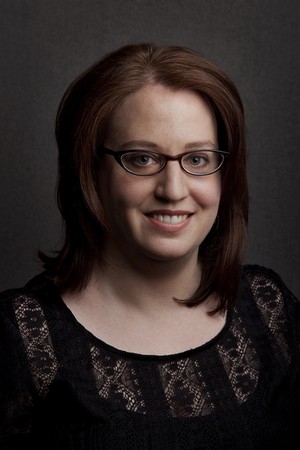
Christina Stoddard
Christina Stoddard
photo: Dennis Wile

ABOUT THE AUTHOR

Christina Stoddard is the author ofHive, which was selected by Lucia Perillo for the 2015 Brittingham Prize in Poetry (University of Wisconsin Press). Christina’s poems have appeared in various journals includingstorySouth, DIAGRAM, and Spoon River Poetry Review. Originally from Tacoma, WA, Christina received her MFA from the University of North Carolina at Greensboro, where she was the Fred Chappell Fellow. Christina is an Associate Editor at Tupelo Quarterly and a Contributing Editor at Cave Wall. She currently lives in Nashville, TN where she is the Managing Editor of a scholarly journal in economics and decision theory.


BLURBS
“Hive is a joyride in a fast car that sometimes gets pulled over by a man in a suit with a Bible in his hand. Read these poems and you’ll know what I’m talking about!”
     —Lucia Perillo, Brittingham Prize judge

“Hive investigates the intersections of religion, race, class, and sexuality with grace and knowing. This is a revisiting of a Pacific Northwest that we often forget in our rush toward nostalgia—while the world was busy lauding the grunge scene, women went missing in the woods, and children died in the streets. Stoddard’s exquisite craft never forgets the errand: she raises the dead and offers full tribute and salve for those of us who have survived it.”
     —TJ Jarrett, author of Ain’t No Grave

“Christina Stoddard’s stunning first collection begins in ruin and the buzz of gathering flies. And that buzz grows into a more and more menacing hum in a journey through rapes and murders, through stray bullets and serial killers, through mental and physical and emotional and sexual and even spiritual abuse until the voice speaking the poems seems to come from a ‘mouth / fill[ed] with swarm.’ Yet in the end, miraculously—by their sheer courageous existence—these fierce poems soothe as much as they sting.”
     —Dan Albergotti, author of Millennial Teeth


427
DISCLAIMERS

Poems cited here are assumed to be under copyright by the poet and/or publisher.  They are shown here for publicity and review purposes.  For any other kind of re-use of these poems, please contact the listed publishers for permission.

We here at TBOP are technically deficient and rely on our bashful Milo to fix everything.  We received notice from Google that we were using "cookies"
and that for our readers in Europe there had to be notification of the use of those "cookies.  Please be aware that TBOP may employ the use of some "cookies" (whatever they are) and you should take that into consideration.


Thursday, August 6, 2015

Blood Work - Matthew Siegel (The University of Wisconsin Press)

Today's book of poetry:
Blood Work.  Matthew Siegel.  The University of Wisconsin Press.  Madison, Wisconsin.  2015.

Winner of The Felix Pollak Prize in Poetry


Matthew Siegel bleeds sad and tragic/romantic all over every page of this fine book.  Sometimes his mother's blood does a Stanley Kubrick moment from The Shining, the walls all glimmering crimson.

Siegel is engaged in a battle with blood and body that he cannot win, only endure.

The poems in Blood Work go in like a quick/smart/sharp prick from an experienced and talented nurse taking blood - but they linger like bruises, both big and bigger.

We here at Today's book of poetry aren't the only admirers of Siegel.  A goodly number of these poems have appeared in journals and magazines of note.  It is no wonder, these poems are tight and often tender, never maudlin and thank our lucky stars, Siegel has a sense of humour.  Poetry without some humour can be a grim ride.

"Fox Goes to the Fox Hospital"

And look there he is back in the hospital
in the easy blue dressing gown, at this facility
with a delicate floral print on the walls.
He'd always had an affinity for flowers.
Healthy yet being repaired, he is back
in this gown and it is like an old costume
pulled out of a locked trunk in the attic
of bad dreams. In the gown he feels naked,
notices his softness, how his sex has never seemed
     less willing
to rise. As if there could be such a cause in this place.
He is healthy but writing a poem.
It is called "going back to the hospital" and written
in lowercase, most notably the first person "I"
which so often had stood properly capitalized
but for some reason today feels diminished.
He's writing a poem called "going back to the hospital"
but really he wishes he could draw a comic
featuring a small mammal version of himself.
His animal would be a fox, he decides, and promptly
changes the title to "fox goes to the fox hospital."

...

Today in our office, here at Today's book of poetry, we are listening to Dexter Gordon's sublime One Flight Up.  In particular we have been listening to the song "Tanya".  Milo is complaining because we will not give him equal time for whatever German-march-techno-blackhead-death-funk he has most recently discovered.  Milo is one strange cat, but he's beautiful and brilliant.  And today even Milo liked the poetry, he called it "sublime, not like Dexter, but subtle in it's own bloody way, so sad, so strong."  Milo is hard to impress.

Blood Work

The white sky presses a gauze pad
over my vein as the needle slips out.

The woman who draws from me smiles, always
remembers me, no matter how skinny I get.

No matter how dark the circles under my eyes,
she remembers me and how easy my veins are,

so visible, so thick, she doesn't even have to tie my arm,
but she does, and takes the smaller vein

the bigger one too easy. I don't tell her
the best to take my blood was a woman

who used to draw blood from animals,
part their fur, find their blue tap and drain.

She lets me play with my filled tubes. Can you feel
how warm they are? That's how warm you are inside

and I nod, think about condoms, tissues,
all the things that contain us but cannot.

...

You don't really hear any fear in the steady voice of Matthew Siegel but you feel the weariness in the bones of these poems.  The reader also learns some lessons in resilience.

This next poem is a stone-cold killer.  Wait for the ending, it falls like a feather, lands like a punch.

[In the Kitchen Mom Stands
With Her Back to Me]

In the kitchen Mom stands with her back to me
facing the window, a joint between her fingers
entranced by Enya. I ask her way she's crying
when I see a single wet trail on her cheek.

She says it is not a tear but I touch it with my finger
and taste it. It tastes like a tear, I say, but she smiles
and passes me the joint. Isn't it beautiful, she says,
it's in Gaelic, her smile as real as her pain.

Her pain that touches my chest with its fingers.
I almost want to hold the fingers but I don't, instead
I puff the joint, look out the window beside her. Rain
all day until now, the sky a dark cream color

almost backlit with orange--mist tumbles
over wet black pavement.  Her eyes, switched-off
depositories for this light, tell a story I cannot bear.
The memory of him rises with this music
and she smiles as if the hurt is the balm.

...

"and she smiles as if the hurt is the balm."

That is my new favourite line of poetry.  It is almost bleak enough to be an outburst from the excellent Canadian poet Eva H.D., or perhaps a line from the ghost of Edith Piaf, even a pouty Judy Garland.

And if you are paying real attention, and I am not mistaken, there might even be a nod to Ezra's Metro.  I had Milo look it up.

Siegel's Blood Work is a dark portal to a world where survive, survivor and survival all take on new meaning, they may even be tinged with hope.

And you all know how much we love any evidence of hope here at TBOP.

Matthew Siegel

ABOUT THE AUTHOR
Matthew Siegel was a Wallace Stegner Fellow at Stanford University. He teaches literature and creative writing at the San Francisco Conservatory of Music.

BLURBS
“This unexpected book—a genuine contribution to the literature of illness—centers on containment: how we contain our blood, how blood is contained in tubes and vials, how sometimes we do not seem contained by our bodies, and sometimes the body seems to contain nothing, and even how in the face of control or self-reliance leaking away, we might manage to contain ourselves, to feel held, to feel held in place. The deceptive directness of Siegel’s debut is remarkable; in his capable hands, illness reveals how barely contained any human being is, and how we reach, alone and together, for whatever will hold us.”
     —Mark Doty, author of Sweet Machine

“Siegel’s poems see the world with an immediacy and compassion that could only come from the decision to be vulnerable. It’s such a simple-seeming principle of poetry—yet it is as rare as hen’s teeth. I honor this young poet for the freshness and skill in these poems, his allegiance to the most unpretentious areas of experience, and his courage-teaching heart.Blood Work is a wonderful first book.”
     —Tony Hoagland, author of Twenty Poems That Could Save America and Sweet Ruin

“These poems resist the dualities of lyric versus narrative, confessional versus impersonal, real against surreal, formal/improvisational, comic/sad. Matthew Siegel manages to tick off all the boxes at once, while remaining compulsively readable. The trick that he’s pulled off is to make a book that simultaneously tickles you and shakes you by the scruff of your neck.”
     —Lucia Perillo, Felix Pollak Prize judge

Matthew Siegel
Reads his poem "On your birthday," featured in the fall 2013 issue of Southern Indiana Review.
video:  SolnRev


371
DISCLAIMERS

Poems cited here are assumed to be under copyright by the poet and/or publisher.  They are shown here for publicity and review purposes.  For any other kind of re-use of these poems, please contact the listed publishers for permission.

We here at TBOP are technically deficient and rely on our bashful Milo to fix everything.  We received notice from Google that we were using "cookies"
and that for our readers in Europe there had to be notification of the use of those "cookies.  Please be aware that TBOP may employ the use of some "cookies" (whatever they are) and you should take that into consideration.