Showing posts with label tightrope books. Show all posts

Saturday, September 30, 2017

Closer To Where We Began - Lisa Richter (Tightrope Books)

Today's book of poetry:
Closer To Where We Began.  Lisa Richter.  Tightrope Books.  Toronto, Ontario.  2017.
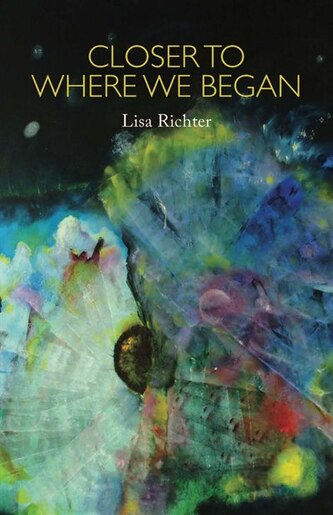
Closer To Where We Began by Lisa Richter

Lisa Richter's dreamy Closer To Where We Began starts off with a quote from Sharon Olds, a poet Today's book of poetry has nothing but admiration for.  Who a poet reads, is influenced by, quotes often, tells us much about where a poet wants to go, where their head is at.  Richter's would seem to be firmly in the right place.

sometimes I can feel it, the way we are
pouring slowly toward a curve and around it
through something dark and soft, and we are bound
to each other.
- Sharon Olds

These poems feel as though you are inside of Richter's dreamscape and looking out onto a horizon of her making where "pomegranate juice light" illuminates the darker corners.

Today's book of poetry doesn't want to dance into dangerous territory when he says that only a woman would have written these poems.  Perhaps women see the world through a different coloured prism?  I know my almost perfect wife and I often disagree on the colour of a particular object.  We are looking at the same thing but not seeing the same thing.  Richter's Closer To Where We Begin looks at our world through lucid dreams and then she writes it all down.

Ouroboros

The year I was born, my great-grandmother
died. Skimming sides and glances, we conducted
love through our bones, memory
and foreshadowing encoded in the rings

of skipped stones across drumskin-smooth
water. She wore cat's-eye glasses and a daffodil
grin, paisley polyester and wind-puffed
canvas smocks.

Her face gleamed a heavy moon white, pock-
marked with the scars of long-dried seas--
lips of calcified salt, teeth of fossilized
spine, jaw-bone, femur. They say the marbles

rolled in her head, that there, the mind lounged
and lolled. Deep in the quarry of her body
the sun-stroked fields of Belarus sang, drowning
out the traffic of Outremont life.

Once, as she danced around the Passover
table, voluminous breasts swinging, hips bumping
the backs of chairs, her feet pushed the sweet
air and she soared around the room. I too felt

the pull of Bubbe's circular laps, slipped
from my mother's arms, floated
up to join her (it took three men
over an hour to get us down).

This is how we were meant to be
acquainted: her life at the tip
of the snake's tail, mine at the apex
of its open mouth.

...

Richter doesn't just see light through different prisms, she drinks it, absorbs it.  She carries light around in a secret satchel, lets it seep into these poems like a "hash-fogged" thought.

Richter's dream state includes nightmares, the horrors of systemic hatred, war, religious conflict and so on.  Sometimes the ghosts of dead children infect the light.  These poems cover a lot of geography from Gaza to a rockabilly Chuck Berry, Lisa Richter lights it all up.

Gaza under Siege

You are house-sitting--a two-bedroom, air-
conditioned townhouse in Liberty Village, watering
aloe and spider monkey, serving two cups
of dry food a day to a fat white cat named Luca.
Stackable washer and dryer in the hall closet.
You slide open the cool, mirrored doors while
your clothes are kept from shrinking. No laundromat
trips, duffle bag of clothes over your shoulder,
just the nearby shudder of brushed steel machines
doing the labour, while you sit with your laptop
and a glass of cheap Malbec on a couch that's not
yours. King-sized bed in the master too hard, you sleep
on the queen in the guest room: not as firm, just
right. Goldilocks with a key fob, helping yourself
to steel-cut oats and memory foam sleep.
Meanwhile, the death toll of children in Gaza
reaches five hundred. You brush the long-haired cat, sip
your wine, swirling it until it reads as diluted
blood. Read the horror. Remember the sound
of the fireworks in Tel Aviv, on Yom Ha'atzmaut,
you were told could just easily have been
rockets. Long ago, at Hebrew day school, you celebrated
that day in May with blue-and-white-frosted cake,
how proud you were that  Eretz Yisrael was the same
age as your parents. Meanwhile, in Gaza, bodies
and the city's wood and metal bones amass
in baroque jumble, Biblical disarray. On Facebook
you scroll through feeds of loathing, fear culled
from recipes that you once followed -- they brought
this onto themselves, they hate us more than they love
their own -- morsels you can no longer keep down,
no longer digestible nor kosher, which never mattered
before, but for some reason, matters now.

...

Our morning reading here at the Today's book of poetry offices was a bit overshadowed and subdued by my own sad, slow state.  Today's book of poetry has been away for a few days to attend the funeral of my Uncle Sparky.  Don't think Don "Sparky" Brault ever read much poetry and I know he was a deeply flawed man but he showed great kindness to my mother and I when I was very young.  And he always treated me like he was happy to see me.

Today's book of poetry's big family is shrinking.  In the last five or six months I've had two Aunts, Alice and Dora, and two Uncles, Dan and Sparky - leave this mortal coil.  The rest of my Aunts and Uncles must be checking each other out to see who's next.

Lisa Richter's Closer To Where We Began world was enough to lift me and my minions out of our shadowy morning, these poems lit the place up.

How to Write a Hanukkah Poem

1.
Choose your preferred spelling of Hanukkah,
from the seven or eight available. Assemble
your arsenal: dreidls your father would show off
by spinning upside down. Latkes. Paper towels
to soak up the grease from latkes, paper bags
to soak up the grease from the paper towels, candles
that will melt and harden in the menorah, scraped

out next year with the tip of a steak knife, hard flakes
of coloured wax. Whatever you do, don't call
the menorah the hanukkiah, the proper word
you learned long ago in Hebrew school:
it will sound too specific, too accurate, above-
board. You will alienate most people, or worse,
charm them with your exoticness.

2.
Subvert. Make dreidl games dirty. Strip off clothing
if the dreidl lands on the letter gimmel. Truth
is daring. Make "space latkes" that will get you
higher than the most mystical of cabbalists,
taste the colours of candles bursting with sweet

liquid. Snort lines off pages of the Talmud. Forget
about inviting distant relatives who always tell
you what they prefer to do. None of this will give
you joy, only stories to display like dark ribbons
on your chest, a catalogue of scars for the shocked listener.

3.
Write. Invoke the light. Invoke the hand that holds
the shamash, moving from light to light. Invoke
small haloes around each candle, pancake moons
around the heads of gaunt-faced Russian icons.

Invoke more light, the light that ushers you through
December's dark, the light that leaves nothing
in its wake that is cold or unkind.

...

Richter has a sharp, laser type tongue, even if it often resides in her cheek.  Or at least that's what Closer To Where We Began leads Today's book of poetry to believe.

We never get tired of smart here at Today's book of poetry.  We never get tired of new modes of illumination.  Lisa Richter lit up the room.

Photo by Matthew Burpee
Lisa Richter
Photo: Matthew Burpee

ABOUT THE AUTHOR
Lisa Richter‘s poetry has appeared in The Malahat Review, The Puritan, Literary Review of Canada, The Toronto Quarterly, Crab Creek Review, among other journals and anthologies. She was longlisted for the CBC Poetry Prize in 2015, and won first place in CV2 Magazine’s 2-Day Poem Contest in 2017. Closer to Where We Began is her first collection of poetry. She lives, writes, and teaches English as a Second Language in Toronto.

BLURBS
“Lisa Richter weaves time and place with grace and expertise throughout the poems in this her first collection, Closer to Where We Began. Sensual, delicate yet biting, these poems sweep forward and back with energy and insight proving ‘the heart is a finite muscle of blood and music.’ By following the rhythm of each poem’s unfolding we are led to a ‘deeper quiet.’ A rich and resonant book.”—    -      - Catherine Graham, author of Her Red Hair Rises with the Wings of Insects
‘”Invoke the light…” writes Lisa Richter, ‘the light that leaves nothing / in its wake that is cold or unkind.’ With a richness in metaphor and a clarity of vision, Richter deftly travels the reader through seasonal tapestries of nature, across many identities, into many cities, and inside the bounds of family. Yet losses, and the world’s coldness and cruelty are not ignored, but rather, their pains and truths explored poetically: ‘the tongue finds its muse in the most sour of ripenings.’ The confidence and tenderness of Richter’s voice, and her mastery of form, makes Closer to Where We Began a rich and compelling read.”
     - Maureen Hynes, author of The Poison Colour

“Richter excavates memory as a geography forged by the complexities of human relationships. To read her work is to be transported into an alternate landscape wherein each encounter has been dissected and reassembled with a simultaneously commanding and vulnerable acuity.”
     - Robin Richardson, author of Knife Throwing Through Self-Hypnosis


614


DISCLAIMERS

Poems cited here are assumed to be under copyright by the poet and/or publisher.  They are shown here for publicity and review purposes.  For any other kind of re-use of these poems, please contact the listed publishers for permission.


We here at TBOP are technically deficient and rely on our bashful Milo to fix everything.  We received notice from Google that we were using "cookies"
and that for our readers in Europe there had to be notification of the use of those "cookies.  Please be aware that TBOP may employ the use of some "cookies" (whatever they are) and you should take that into consideration.

Monday, February 6, 2017

Lady Crawford - Julie Cameron Gray (Palimpsest Press)

Today's book of poetry:
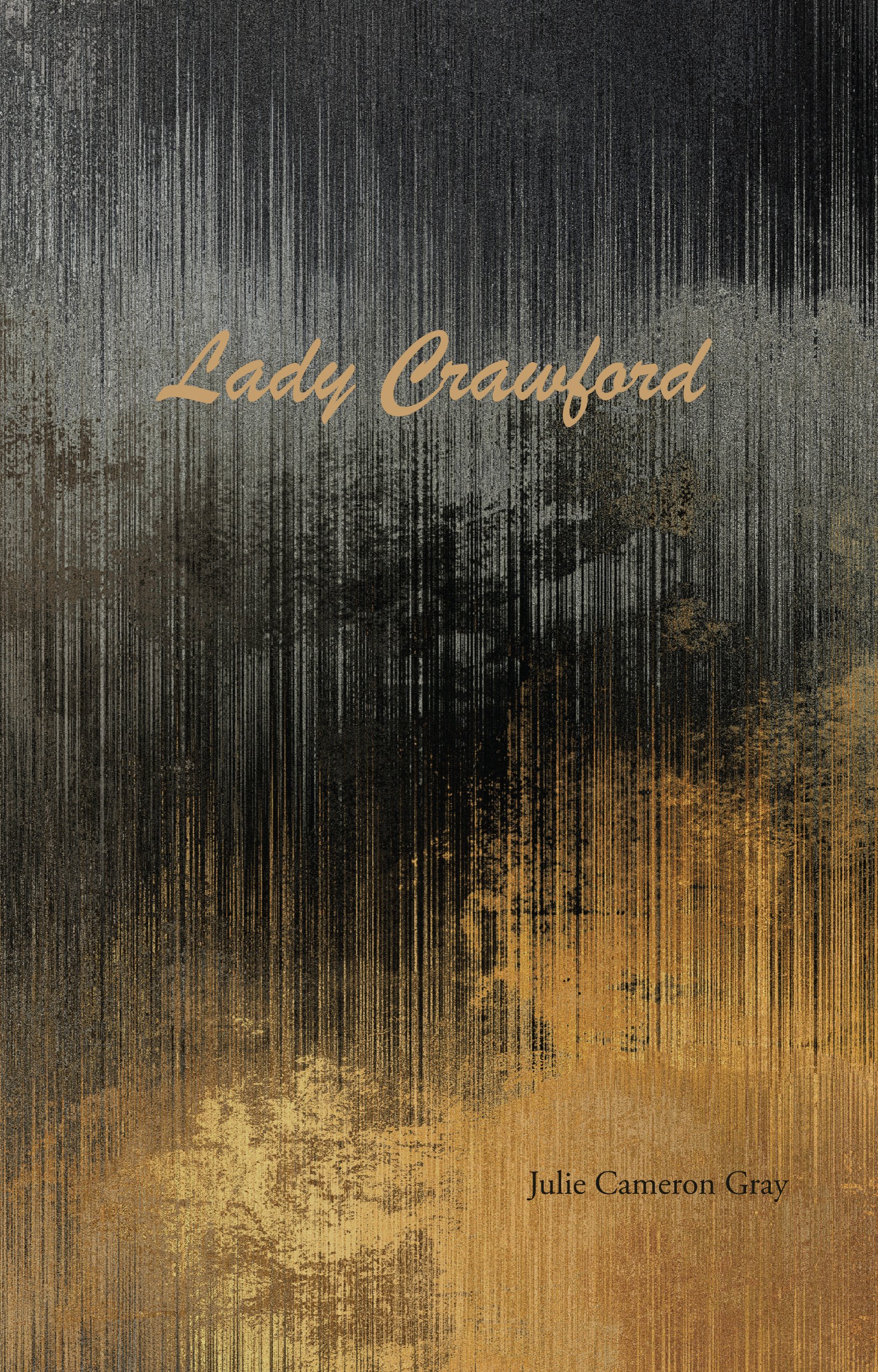
Lady Crawford.  Julie Cameron Gray.  Palimpsest Press.  Windsor, Ontario.  2016.


Julie Cameron Gray can burn with the best of them.  These wicked smart poems get to the edge of sophistication without Today's book of poetry feeling a plebeian kink in the neck.  Gray is a post-modern feminist to our way of thinking and determined to reveal some chinks in that old patriarchal order.  She has to open up her heart to do it.

Gray never allows Lady Crawford to become any sort of strident dialectic tract all weighed down with agenda.  These poems offer all the variety of subject, tone and result that you can ask for from a book of poetry.  Today's book of poetry sees that Gray has some serious chops and it's all tempered with a reasonable sense of humour.  Humourless poetry will be the death of us all.

A Classic Pack of Camel Cigarettes

Some days it feels like nothing
will ever change in this town,
other days it's a landscape
like the front of a classic pack
of camel cigarettes, exotic black
angles under a different sun.
We hunt for specifics, anything

overlooked in the ashed-out
twilight to claim our own:
bottle cap, earring, a piece
of blue glass worn opaque
by the beach, the novelty of egrets
mating in the green garden
your neighbour made after his wife

died in a five-car pileup.
Each spring as he turns the earth
he recalls the state trooper awkward
at his front door, describing
interstate constellations of car
parts scattered like satellites
that got lost on their way home.

...

Today's book of poetry has all sorts of reactions to poems but my lovely wife K is a little more direct and forthcoming.  Today's book of poetry usually reads Today's title the night before, in bed.  Today's book of poetry has always read the title at least once by this point in our process.  So last night, I tried a couple of Julie Cameron Gray recipes on K.

As it turns out K was reading Plutocrats by Chrystia Freeland and she offered up a trade.  She'd listen to as much poetry as I wanted if I promised to read Plutocrats.  Well a nod's as good as a wink to a blind horse.  Fair enough.  Of course K never knows what is coming.  In general I only read her the very best or the very worst of my nightly poetry feed.

I'm sure you can guess which I thought Gray had to offer - but in this case the guarantee comes from higher up the food chain, K loved it.

Lineage: Hugh and Margaret Crawford (1195 -1265)

This is what I know: The Chief of Clan Crawford was like every
other father. Ambition bred not in the bone but in the fervent dinner
conversations with his wife, suggesting that things would be better
if the Norse would bugger off already. He baited and led them until
October, when the fall shores gave way to storms and their ships were
no match for the rough seas of Scotland. To the confused Norsemen
dying on the shore, arrows were a kind of weather.

...

Julie Cameron Gray published her first volume of poetry, Tangle (Thightrope Books, 2013) a few years ago and Today's book of poetry has yet to see it but we are assured by our reading of Lady Crawford, this is fine poetry by any standard and all full of future.

Gray has that ability to make her intimacy and knowledge yours.  The reader can feel certain beats of Julie Cameron Gray's generous and challenging heart.

Fight or Flight

In some countries, a daughter
is fear made flesh.

Once there was movie about college girls
clad in bikinis and pink ski
masks, clutching berettas
in Florida's manic orange juice sun.
Soon, all the men are dead
and the girls, sexual as overkill,
drive off in a Lamborghini.

Not unlike the onna-bugeisha--
Samurai women wielding a naginata,
defending their homes and children
and honour from marauders
while their husbands were away at war.

Young girls taught
the loft of a sword so long
it pulled horsemen from the air
and thrashed them to roses.

...

As good as Today's book of poetry demands you believe Lady Crawford is we are convinced this meal is just beginning.  Julie Cameron Gray will burn down the house before she is through.


Image result for julie cameron gray photo
Julie Cameron Gray

ABOUT THE AUTHOR
Julie Cameron Gray is originally from Sudbury, Ontario. She is the author of Tangle (Tightrope Books, 2013), and has previously published in The Fiddlehead, Prairie Fire, Event, and in Best Canadian Poetry 2011(Tightrope Books, 2011). She currently lives in Toronto.

BLURB
"An impressive transformation has occurred from Tangle. Cameron Gray's debut, to Lady Crawford:
writing out the small familiar tragedy of we live, we sorrow, this wrecking ball of a book smashes myths of femininity. It is as if this poet woke from the slumber of a young woman's dreams and, seeing how all the dreams were broken, set about describing her experience of the broken castle as more than lies -- as cultural reconstruction. Among many other feats, this beautiful poetry of impassioned reason ironizes the lives of famous women as heart broken. Reading it, our hearts are broken as our hearts were, once, already.
     - Shane Neilson

Julie Cameron Gray
Lady Crawford - Performance Art
video: Julie Cameron Gray


549

DISCLAIMERS

Poems cited here are assumed to be under copyright by the poet and/or publisher.  They are shown here for publicity and review purposes.  For any other kind of re-use of these poems, please contact the listed publishers for permission.

We here at TBOP are technically deficient and rely on our bashful Milo to fix everything.  We received notice from Google that we were using "cookies"
and that for our readers in Europe there had to be notification of the use of those "cookies.  Please be aware that TBOP may employ the use of some "cookies" (whatever they are) and you should take that into consideration.


Monday, September 19, 2016

To Greet Yourself Arriving - Michael Fraser (Tightrope Books)

Today's book of poetry:
To Greet Yourself Arriving.  Michael Fraser.  Tightrope Books.  Toronto, Ontario.  2016.

To Greet Yourself Web

Michael Fraser's To Greet Yourself Arriving works a bit like hot magma, lava.  Left undisturbed it forms a thick and eventually rock solid black crust, any disturbance at all and you soon see it is red hot, in transition, and capable of scorching any surface on earth.

These poems are celebratory odes to a pantheon of black heroes throughout history.  They also work as a syllabus to an endless litany of injustice.  George Elliott Clarke, our poet laureate, wrote, "Fraser gives us characters who, even if tortured by their experience of "race" and/or racism, win through to a stardom that edges into heroism."

And Today's book of poetry must admit to a clinical weakness.  Pretty much any poem that mentions Miles Davis is going to hit a weak spot in my anatomy.  Michael Fraser knows the way straight to my heart.

Miles Davis

The day I met Miles Davis,
he poured gold tunes
out box speakers
and sailed ahead
out over coffee table plains
and climbed the foothill couch.
Each note carried its own light.
His trumpet called from the walls
and the ceiling was
a swollen cloud.

I was flung into brass moods,
my fingers pulsed to
the walking bag's groove.
I became a yard bird
with blues for sale,
a young rebel soul
counting the air-blast hang time,
all the hazed rhythms
taking a new wave elevator
to warm sound shallows.

Transfixed, I grabbed
onto the aural sculpture.
Water refused to go
down the drain,
time spiralled 'Round Midnight,
the air lit itself
and glowed like a June day.
It glossed Miles' Italian suit.
My eyes rode the album cover
with coolness coiling itself
into my bones.

...

Michael Fraser adeptly moves through a complicated cast of characters from the Cuban singer Celia Cruz, the Queen of Salsa, the Central Park Five, Gordon Parks, P.K. Subban, Miles Davis and so on. This is distinguished company by any standard but Fraser immortalizes them all once again with his passionate and all too reasonable To Greet Yourself Arriving.

The Lynched

The veins of these trees
know the night's flavour
as it climbs and
washes each leaf
in summer's moon shade.

The aging bark listens
and peers through time
back to laughing crowds
with their army of words.

How the boy swung
over the loose voices.
How flies chewed his face.

Morning brings its scavenger tide,
an establishment of worms and beetles
crawl from the dangling tongue,
sound of something feasting
from the inside out.

How a man suffocates in air.
How a man breaks down
in the deadfall earth.

...

Many heroes, big and small, famous and unknown hurdle through Fraser's book and towards eternity and all that judging.  By the time eternity arrives perhaps none of this will need explaining -- but the stories of these brave, brave, brave and beautiful men and women will always need to be told.

Fraser never lets anger get in the way of his retelling although you can feel it under the smoldering crust.  To Greet Yourself Arriving is going to be a guilty pleasure by association for many readers.   Someone is responsible for the horrible hellish rain of racism that continues unabated today.  The poems in Fraser's To Greet Yourself Arriving stand fiercely on their own as poems, tight and clear and clean, but as a chorus this book raises itself to a beautiful black sound.

MichaĆ«lle Jean

Mountain hinges cracked and
snapped earth in a fly's wing beat.
Screams percolated up dusted rock
and waved galvanized roofs.
Everything was veined in stone.

The living stood at the rubble's end,
listened to the wounded sear in the
Caribbean's unforgiving heat.
My birth country stumbled against its
history. Flat bodies peppered streets.
Survivors cursed the ground's blowtorch.

There was never enough of it--
time. We jumped planes and cranked
our world's cupboards while doctors
severed limbs freeing wounded scores.
It was always more than we could take,
but we continued for those slipperless
street girls, each one reflected in me.

...

Today's book of poetry is happy to find hope in poetry and astonishingly enough Fraser is up to the task, he is able to pull that off in the middle of all that sad history.  Fraser's heroes remind us of the deeds in the very worst of human folly, all those terrible things our brothers and sisters have had to endure at our hands, and then in the same poems Fraser allows us to celebrate the absolute best in human achievement - in spite of the barriers, 

To Greet Yourself Arriving is one hell of a kick in the poetry pants.

fraser pic
Michael Fraser
Photo:  Krystyna Wesolowska

ABOUT THE AUTHOR
Michael Fraser is a Toronto high school teacher, poet, and writer. He has been published in various national and international journals and anthologies, including The Best Canadian Poetry in English, 2013. His manuscript, The Serenity of Stone, won the 2007 Canadian Aid Literary Award Contest and was published in 2008 by Bookland Press. He won FreeFall‘s 2014 and 2015 poetry contests and is the creator and former director of the Plasticine Poetry Series.
Michael Fraser
Spring Poetry Salon @ Urban Gallery
May 31, 2014
video:  Brenda Clews


504


DISCLAIMERS

Poems cited here are assumed to be under copyright by the poet and/or publisher.  They are shown here for publicity and review purposes.  For any other kind of re-use of these poems, please contact the listed publishers for permission.

We here at TBOP are technically deficient and rely on our bashful Milo to fix everything.  We received notice from Google that we were using "cookies"
and that for our readers in Europe there had to be notification of the use of those "cookies.  Please be aware that TBOP may employ the use of some "cookies" (whatever they are) and you should take that into consideration.