Sunday, August 30, 2015

When We Were Old - Peter Unwin (Cormorant Books)

Today's book of poetry:
When We Were Old.  Peter Unwin.  Cormorant Books Inc.  Toronto, Ontario. 2014.


When We Were Old not only echoes the title of the great and under-appreciated Raymond Souster's When We Were Young, the poetry contained within maintains the high standards of Saint Raymond of Souster's work.  That is no small accomplishment.

But it is another excellent Canadian writer that comes to mind when I read and reread these hard packed gems.  Many years ago I had the honour of sharing a scotch or two with Alistar MacLeod. MacLeod  is absolutely one of the best writers ever and I'm willing to bust heads on this one. MacLeod is sacred territory in this house so when I tell you that Peter Unwin's poems impart some of that same sense of hard earned wisdom, that sense of urgency towards kindness, I am not giving faint praise.

The Family Place

The children are up
even if we are not.

The dew is on the land
even if we are somewhere else.

The mice are in the traps,
even if we prefer to think

otherwise about ourselves.
The brush is in the hair, the birds

are at it, the coffee's cooked
and the day

is about to get cracked
by us.
...

Unwin writes with a great sweetness that is entirely devoid of saccharine.  These poems are never sentimental but they are deeply tender and moving.

There is also a feeling of hope and we here at Today's book of poetry are big fans of optimism of any kind.  These poems make clear that it's a thin, thin line, perhaps even that old razor's edge that Somerset ranted so eloquently about - but there are reasons to hope.  We do have a chance.

As I'm typing this blog up from the tatters of the notes my staff confettied I realized Unwin has a dark sense of whimsy under his encyclopedic noggin'.  Dark whimsy and hope, that's the ticket.

The Cost of Life

It doesn't get any cheaper than this;
to be wide awake at an early hour, partnered
to a sleeping woman who snores softly,
the cat yawning from the corner
of the bed, the stupid but inoffensive
dawn chatter of birds who mean no harm
unless you're a worm. The children
are spent, but soon they will bolt from bed
in search of Cheerios and tales of Athena;
the part where she explodes from Zeus's
head is irresistible to them and they can't
get enough of it. Outside the window
the sunlight puts poetry on the leaves
of the maple tree. I am enriched by this but
I can't describe it, it beggars both
the imagination and the family budget.
We are set for now; there is no milk
in the fridge, the washing machine
is broken and the clock ticks too loudly
but all of the household cancers
are in remission, the medical bills
getting paid by an imaginary uncle
who made a fortune in the Maldives.

...

Unwin's When We Were Old is his first volume of poetry although he is well established in other writing fields - we will be wanting much more from Mr. Unwin.  It is clear he has much to say and now that we know how excellently he says it - we want more.

This is mature poetry and it sings an adult song with humour, grace and intelligent candor.  Raymond Souster would be tickled.

Cabin at Night

At night this cabin is a ship
captained by you and me
lit by kerosene
and lurching to the North Star.

Over us the constellations fall
like harpoons. We have survived
every phase of the moon
you and me, but we will drown

with the smell of each other's hair
in our nostrils. This cabin
will wreck for generations
without us

but it will sail, it will lurch on
with another you tapping
at the face of a compass
and another me, straining at the pumps.

...

Today's book of poetry is very fond of the poetry of Peter Unwin.  Once you read When We Were Old you will be too.

Peter Unwin

ABOUT THE AUTHOR
Peter Unwin was born in Sheffield, England, and raised in Southern Ontario. He studied at Carleton University in Ottawa.
His previous fiction includes the short story collection The Rock Farmers, which was shortlisted for the Stephen Leacock Medal for Humour, and the novel Nine Bells for a Man.
His non-fiction includes The Wolf’s Head: Writing Lake Superior and Hard Surface: In Search of the Canadian Road.   Peter published a collection of short stories, LIFE WITHOUT DEATH (2013) which was a finalist for the Trillium Book Award in 2014.
He has travelled extensively in the Canadian north. Currently, he is a Master’s candidate in Culture and Communications at York and Ryerson universities. An avid practitioner of martial arts, baseball, and literature, he lives in Toronto with his wife and two daughters.

Peter Unwin
Reading his poem "Fighting in Poetry"
Video: clipin


377
* * *

Today's book of poetry would like to acknowledge our recent sporadic posts.  I'd like to blame it on my horrid staff of lolligagers and miscreants, but in fact, it is all my doing.  My father, Russell William White, passed away recently and as a result there have been some logistical difficulties.  A great door has closed and in my mind a great man has passed.  My father was as kind as any man you've ever met.  The world is slightly off kilter but we are righting our ship.

We will continue with a flexible schedule for another couple of weeks and then it is back to our regularly scheduled program

* * *

DISCLAIMERS

Poems cited here are assumed to be under copyright by the poet and/or publisher.  They are shown here for publicity and review purposes.  For any other kind of re-use of these poems, please contact the listed publishers for permission.

We here at TBOP are technically deficient and rely on our bashful Milo to fix everything.  We received notice from Google that we were using "cookies"
and that for our readers in Europe there had to be notification of the use of those "cookies.  Please be aware that TBOP may employ the use of some "cookies" (whatever they are) and you should take that into consideration.

Thursday, August 27, 2015

Music from Small Towns - Al Maginnes (Jacar Press)

Today's book of poetry:
Music from Small Towns.  Al Maginnes.  Jacar Press. Durham, North Carolina.  2014.


Almost every poem in Al Maginnes' fine Music from Small Towns has previously been published in a magazine or journal that you and I would be tickled pink to appear in.  That is an enormous accomplishment, colour me green.

These poems are tremendous machines of muscle galloping across the page like a red-haired Secretariat.

Mingus and Stars

I am writing this on my 56th birthday.
On my father's 56th birthday, he died,
leaving little to measure my steps against
from this day forward. This day when I'm afraid
to close my eyes. The day Charles Mingus died
fifty six sperm whales died on the beaches in Baja.
And Mingus was 56. He left behind
a garden as sweet and thorny as the fields
father and sons have warred in since the first
measure of time, since stick or rock
first pounded imitation of the human heart.
Tonight, presents and phone calls, the prizes
for completing a year, done, the little cake I can
be allowed, gone, I should listen to music

instead of watching a movie whose outcome
I know, turning pages in books I read last year.
I'm old enough now for real listening, to close
my eyes and let music have its way with me.
"I want to be a star," said Mingus after he knew
he was dying, meaning not the faces on magazines
or the metal shapes in Hollywood sidewalks,
but the burning orbs or rock and gas we see
only at a distance, whose light continues long after
they go out, the way music continues after
the hand that wrote it is done. When I close my eyes,
fields of stars unfurl there. Those are the stars, bright,
unreachable, each singular as bass notes, stars
I want to shine among, but not today.

...

These poems say too much, go on too long, have streamers in their tails -- but they do sing.

Milo, our office crank and technical wizard, always claims to hate jazz but unabashedly loves poems that he calls "Charlie Rich voice ditties", that Milo is a romantic at heart.  And so is Al Maginnes.

Maginnes calls on various Gods both large and small to pepper these poems with notes hard as hammers, soft as your heart.

Something Words Will Not Say
                                    For Don Adock, 1926-2011

How long will it be before I buy
some jazz or see an announcement
for a show without thinking I need
to burn it for you or call to see
if you want to go. Last night, I listened
to different piano players until
I told myself I could hear the difference
in the pressure of fingers, could tell
their signature licks, small decorations
of melody, apart. Perhaps I can,
but it's knowledge that only lasts
until the next disc comes on.
One night you came in the bookstore
where I worked between semesters, pointed
to the speaker and said "That's Cedar Walton,"
and when, a few nights later, it was
Red Garland, you knew it too.
One evening while we watched a quartet
work through "Body and Soul,"
the piano player stumbled on his solo.
"He doesn't know what to do with it."
You elbowed me as the hapless pianist
nodded it to the sax player,
whose playing all night had surged
with invention. "He knows what to do
with it," you chuckled and leaned back.
Watching you was a lesson
in how to listen. There are chords
underneath the chords being played.
There are leaves blowing down sidewalks,
alleys filled with wind, the sound
of a name broken into three long notes.
I have always believed music was
trying to tell me something
words will not say. When I drive
at night, I sometimes listen to CDs
you copied for me--there are enough
to fill a shoebox--and those hours
are empty enough for the searching horns,
the splash of drums, the piano waiting
to drive, empty enough for me
to listen until I think I hear you say,
"He knows what to do with it."

...

Al Maginnes gets it.  Marcus Aurielius might be walking around in these suckers along with Charles Mingus, Billie Holiday, the Prez, John Keats, Eldridge Cleaver and Malcolm too.  Thomas Edison and Peter Coyote drop in.  You just cannot predict who is going to sit in on something to make it just right, but everyone plays nice.  The quartets and quintets Maginnes finesses out of his noggin astound just a little.

You get the drift though, these poems are full of hard-edged knowing and charm.

Passage Through the Body of Fire

Impossible to fathom lightning without
          dark and silence. One of our commandments
is contrast. There is silence so deep
          words, even thunder, will not find
the end of it. The house burning down
          on the news might be the church
of your childhood, dissolving in fire
          while half the town watches.

Can't faith crumble the same way?
          The nameless man pulled from the lake
offers the same excuse to break
          our soft code of silence as rain
or any weather we can name but can
          do nothing to change. Give us anything,
and we learn to make language,
          the way prisoners invent code to send

shorthand messages tapping through stones
          or flashing in bolts of light from mirrors.
His eyes were still open, said a woman
          at the bank; his body showed
he was not in the water long.
          The finger of lightning that touched
the church into flame, the ragged scars
          across the drowned man's chest

hold us in a place language will not
          free us from. Words will never be
all we have of language, as flame
          cannot be the whole of fire. The stare
of the drowned man, the architectures
          of burning wood might be signals from
the unspeaking world, like sullen braids
          of smoke rising from the ruin

of the church the night after the fire
          did its work, shards of metal, glass,
even wood still undigested after
          their passage through the body of fire,
the ghost of what had been there
          more real than when the door could be
opened, the body entered. Some prayers
          outlast every vow to forget them.

What you have of the fire-eaten church
          is smoke so thick it was language
all its own, body that might insist
          on seeking its own path,
as you resisted the hand that seized you,
          shoved you into the soundlessness
of water, making an unreachable heaven of
          the surface you suddenly prayed for.

...

We here at Today's book of poetry are especially fond of narrative poetry.  We love poems that tell a good story.  Al Maginnes is a master storyteller and they are rarer then hen's teeth.

Maginnes has a voice we want to listen to.

Al Maginnes

ABOUT THE AUTHOR
Al Maginnes was born in Quincy, Massachusetts and teaches at Wake Tech Community College in Raleigh, NC. His poems have appeared in many journals and magazines, including Poetry, The New England Review, The Georgia Review, The Antioch Review, Shenandoah and Quarterly West. He has been the recipient of a Writer’s Fellowship from the NC Arts Council and is the author of two collections: Taking Up Our Daily Tools (St. Andrews Press, 1997) and The Light in Our Houses (Pleiades Press, 2000), which won Lena-Miles Wever Todd Poetry Prize.

BLURB
“What I love about these poems is how they manage to be so eloquent without being pretentious. I’m also drawn to the way Maginnes juxtaposes fire and its quick losses with fire’s complement, slow vanishing. Not all the poems in this collection directly address either of those ideas — Maginnes is too smart for that — but I finished these pages thinking it was change that infuses the finest of them and that Maginnes, like so many of us, has striven to accept what is, even when it’s transition, and through that acceptance find peace. I admire that, and this book.”
— Lola Haskins, The Grace to Leave, Still the Mountain, Desire Lines, New and Selected Poems

Al Maginnes
Reading at Poetry Hickory
12-24-2010
Video:  T. Peeler


376

DISCLAIMERS

Poems cited here are assumed to be under copyright by the poet and/or publisher.  They are shown here for publicity and review purposes.  For any other kind of re-use of these poems, please contact the listed publishers for permission.

We here at TBOP are technically deficient and rely on our bashful Milo to fix everything.  We received notice from Google that we were using "cookies"
and that for our readers in Europe there had to be notification of the use of those "cookies.  Please be aware that TBOP may employ the use of some "cookies" (whatever they are) and you should take that into consideration.

Monday, August 24, 2015

For Your Own Good - Leah Horlick (Caitlin Press)

Today's book of poetry:
For Your Own Good.  Leah Horlick.  Caitlin Press.  Halfmoon Bay, British Columbia.  2015.


If a collection of poetry starts with a quote from Sharon Olds I generally sit up a bit straighter and pay a little more attention.  Sharon Olds holds a lot of weight at Today's book of poetry.

We've always believed the maxim that what you read isn't as interesting as what you read twice.  We read Sharon Olds every chance we get.  And now we'll do the same with Leah Horlick.  Not for using the Olds blurb, no, for hammer and chiseling this heart of darkness to share with us.

Ringmaster

There's an alleyway, and a secret place,
     and you know it's right because the books

tell you as an invert, all your love stories begin
     in hiding. And you love her because she is angles

and shoulders, twin blue yard lights for eyes. How her teeth gleam
     sharp when she throws those hoops in the air, how the listeners

leap to twist through them, flames so close they singe
     your hair. She wears a horse's bridle on her

left wrist to signal she is not to be kept, and she blisters
     under its chafe. One night you reel her

into a corner with a bandage. She says she thought you
     were going to kiss her, she doesn't love women

but anything could happen. She has a talent, dreams
     the future, won't reveal the one

that wakes her with you in it. But it's closing night. She has an empty
     seat, passenger side, with your name on it. You say of course,

because you have a backpack, a matching ring of red
     skin around your wrist, and you thought you'd never find her.

...

These poems blister gentle as they get under your skin.  Leah Horlick is doing us all a favour in For Your Own Good, these poems snap you alert like the first crack from Billy the Kid's pistol.

Let me take another shot at that -- I was thinking about the German film Lola und Bilidikid (Lola and Billy the Kid, 1999).  In that spectacular film, Lola and Bili are fighting a battle of sexual identity in a world that is not openly welcome to their particular disparity.

Leah Horlick's poems are a coming of age tapestry of punk circus and shadowed violence colliding in a rich vein of sexual tension.  These poems trace a journey through self doubt brought about by sexual abuse.  Our protagonist moves quickly through the animated joy of her first sexual discovery headlong into an abusive relationship that deteriorates into a dismal hell.

These poems delve into that murky water of guilt and desire and fear, but even at the lowest ebb you always sense that Horlick is swimming towards clear, clean water.

Little Voice

That morning in the motel
     where your best friend lived,
new snow outside, at least in the memory

and the stranger--he was eighteen,
     you were alone, she was downstairs
at the pop machine or something

while you watched the snow, the nest
     of beached antlers in the yard
behind the pine trees and then he was there, too

in the room, telling you about
     a guitar, or something useless
and you thought

empty room, you thought quiet house
      you were a very smart girl and you felt
the footstep he took one step closer behind you

at the window, and from the rising star
     of your gut you heard it, like twin
drops of water--you have to leave the room

Right. Now. And quietly, and you did.
     That was smart. You were a smart
girl, and you did not tell anyone

not when they found out he was
     in her room at night, not
when they sent him away, not

until you were a grown woman, and what
     you wouldn't give
for that little voice again, now

...

Leah Horlick's For Your Own Good may be the best book of poetry to come out of Canada this year. I've read hundreds of 'em and this is as good as any,  Had the rest of the staff read it out loud.  Great, now Milo is in a funk, two other interns are crying, that might be over something else.  But consensus was excellent.

These poems are Fran Lebowitz smart and that is damned smart indeed.  They are Dorothy Parker funny and that is wicked,  They are Erica Jong horny and it is as zipless as it gets.  Add a Sapho/Lesbian undercarriage, some time at the circus, a sassy pseudo-masochistic mistress, some Sharon Olds wisdom and that is one hell of a Grand Old Opera.

Fran Lebowitz and Sharon Olds.  I can't throw out any higher compliments.

Crows

In the dream of the new house, I have my own window
     facing west; cherry blossom and fig trees,

monkey puzzle and magnolia. Everything flowers.
     Whatever city this is will be good to me.

And then, the crows, tiny shreds of black cloth
     thrown over the sunset, and I think the world

is ending. A kind hand tells me, this is the largest murder
      in North America. If I ride my bike far enough,

I can roost with them at night, east beneath the mountain.
     A stray crow wings away from the path of feathers, back

towards the squares of land I imagine, flat and brooding.
     You're going the wrong way, crow! Come Back!

But she was never really going, and I watch as she returns
     with that other bird, as dark and near as her own shadow.

...

This is a book about survival.  And survive Horlick does.  It's the reader who is in danger of being spun out of control.  These fierce poems deserve your attention.

Leah Horlick

ABOUT THE AUTHOR
Leah Horlick is a writer and poet from Saskatoon. A 2012 Lambda Literary Fellow in Poetry, she holds an MFA in creative writing from the University of British Columbia. Her first collection of poetry, Riot Lung (Thistledown Press, 2012), was shortlisted for a 2013 ReLit Award and a Saskatchewan Book Award. Her second collection, For Your Own Good, comes out Spring 2015. She lives on Unceded Coast Salish Territories in Vancouver, where she co-curates REVERB, a queer and anti-oppressive reading series.

BLURBS
“Reading Leah Horlick’s collection, I felt a sense of relief. Finally, we’re here. Finally, we’re talking about this.”
     –Mette Bach, Plenitude magazine

“It is not often that a collection of poems can be read like a book; For You Own Good will grab you by the collar and demand consumption. It is a page turner in the most literal sense of the term…readers will venture through the narrator’s experiences with enough ease to make it consumable and enough complication to leave room for thought and interpretation. The more you read, the more you want to read. You will feel what she feels. You will want for her to heal, but you will know she may not. You will find solace in her escape, but you will feel the anguish of her past as it remains in her present. But, still, you read because you are invested in her journey.”
     –Emily McGaughy, After Ellen
“Arresting poems…[these] impassioned but meditative pieces explore uneven power dynamics and the confused interior life of the solitary young woman who blames herself and is trying to make sense of a suddenly restrictive and harmful relationship.”
     –Brett Josef Grubisic, Xtra West

“Sometimes it feels as though there are Poems About Important Issues and Good Poems, and the two camps rarely meet. For Your Own Good is a startling combination of the two, skillful poems both defiant and self-aware, and close to my femme heart. We need this book.”
     –Zoe Whittall, Holding Still for as Long as Possible
“‘Magic,’ which is the title of one of the poems in this collection, is a word I’d use to describe Leah Horlick’s work. Each piece takes us through a transmutation–from frightened girl to woman, from lover to abuser, from audience to performer, from alone to beloved. Horlick doesn’t back away from hard realities, deep longing or fierce desire, and drapes language around them like fitted silk–revealing and reflecting.”
     –Jewelle Gomez, author of Waiting for Giovanni

‘These poems are beautiful. Solid and glittering as ice or crystal, they hold secrets and hard truths in their core. The wonder and lushness of Horlick’s voice imparts a loveliness to countless hidden tragedies, never sugaring them but bearing an elegant, whispering witness.”
–Michelle Tea, author of How to Grow Up

“Leah Horlick’s most recent collection of poetry is a beautiful rendering of grief, love and survival. This poignant poetic offering left me feeling the sensitive grace of her words long after I finished reading. The way she weaves stories into poetry is both haunting and powerful, elegant and unsettling. While reading, I had to keep reminding myself to breathe!”
     –Lishai Peel, author of Why Birds and Wolves Don’t Trade Stones

Leah Horlick
Streetcrossing
Vancouver Poetry Slam
video courtesy of: Vancouver Poetry Slam


375


DISCLAIMERS

Poems cited here are assumed to be under copyright by the poet and/or publisher.  They are shown here for publicity and review purposes.  For any other kind of re-use of these poems, please contact the listed publishers for permission.

We here at TBOP are technically deficient and rely on our bashful Milo to fix everything.  We received notice from Google that we were using "cookies"
and that for our readers in Europe there had to be notification of the use of those "cookies.  Please be aware that TBOP may employ the use of some "cookies" (whatever they are) and you should take that into consideration.

Monday, August 17, 2015

Today's book of poetry - Update

Today's book of poetry will be absent for a few days.

A funeral and a wedding.  Almost like in the movies.

Back soon.

Michael Dennis

Wednesday, August 12, 2015

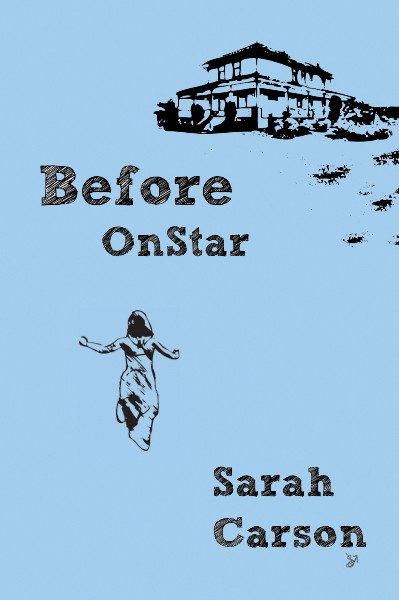
Before OnStar - Sarah Carson (Etched Press)

Today's book of poetry:
Before OnStar.  Sarah Carson.  Etched Press.  Wilmington, North Carolina.  2010.


Today's book of poetry frequently writes this blog from his late night bed, my beautiful wife sound asleep beside me.  So it wasn't until this morning that I was able to do some Sarah Carson searching.
First thing in the morning my staff are useless as old pasta left in a watery pot so this was all they could come up with.  Since publishing Before OnStar in 2010 Carson has published at least four other books/chapbooks, Twenty-Two (Finishing Line Press, 2011), Whey You Leave (H_NGM_N, 2012), Poems In Which You Die (BatCat Press), and Buick City (Mayapple Press, 2015).  Good on her, we'll be looking for these - because Before OnStar hits like a brick through the window.

These short pugnacious prose poems glitter.  Sarah Carson writes poems as good as the best Johnny Carson stand-up, as good as Carson McCullers painting a sad and sweet corner of love.  These short little suckers are atomic bombs.

Every single poem in Before OnStar rattles around the corner like a firetruck on three wheels, siren blarring.

The Half-Trailer

When the investment firm bought the trailer park, they
decided they could make more money if they remodeled
the mobile homes into two rental units each, with a wall
straight down the middle that separated the spaces. I
shared my half trailer for about a year with a part-time
hairdresser named Donna until she got picked up for
trying to hire a hit man outside the Pick Quick. It took me
nearly a month to notice she was gone. It wasn't long
after that Jimmy came strolling through, balancing an
armchair on top of a wheelbarrow and stopping every few
feet to pull his jean shorts back up around his waist. That
night I came home from work and stayed awake for hours
listening to the movies he was watching, full of
explosions and gun fire, underscored by the gentle
rumble of his smoker's cough, the flick of his lighter, the
sweet smell of his fat girlfriend's Family Dollar perfume.

...

Once I had my staff awake these poems had them dancing around their desks again.  Carson's touch is so cheerfully maudlin it's startling.  These poems come straight at you and still surprise.  These characters are so tragic, so comic, as they relentlessly embrace hope regardless of their poetic trajectory.

Reading Sarah Carson's poems is like watching a bunch of short movies, or accidents, where you see the collision coming and just can't turn away.  In this sad cafe these emotionally fragile roustabouts fight hard to keep their heads above water.  So why do these poems taste so good?  Today's book of poetry will say it is because they are as clear as water gets, entirely see-through, without disguise.

The Twenty-Four Hour Grocery Store, Part I

Ron Bowman got fired from the twenty-four hour grocery
store for no-call-no-shows after his girlfriend had him
arrested for trying to kill her with his Tupac chain. They'd
been trying to fire him for months. They thought he'd
been carving swastikas into the card table in the smoking
break room, but the smokers knew it wasn't him. Joe
Fischer took full credit for it the night he quit, telling Matt
from bottles while they were smoking cigarillos beneath
the black lights in his living room, and Matt told everyone.
That's the way Matt is. Someday Matt'll end up dead
behind a jewelry store.

...

Before OnStar is a little like reading a script for a grown up version of "Spanky and Our Gang."  The lovable imps fully grown into impoverished disappointment, not quite losers but each attractively crippled by things unknown to us, remembered by time.

Carson writes with authority, a nuanced clarity that TBOP really likes.

The Twenty-Four Hour Grocery Store, Part III

His wife found out the week before Christmas, and he
ended up dragging both of his daughters through the
twenty-four hour grocery store in search of the cashier
who was causing all of his problems, each little girl with a
tiny hand wrapped around one of his index fingers, the
bells their mother had tied to their snow boots a flurry of
quiet jingling as they hurried awkwardly down the soda
aisle like late entrants in a three-legged race.

In the front yard that night the cops told the grown-ups to
scatter, but the cashier felt like she was the only one who
listened. For months she'd find herself pulling up next to
the payphone outside the Speedy Q off the highway,
dialing their number and listening intently to the chatter in
the background before they'd hang up. Something they'd
let one of the girls answer, and it was all she could do not
to tell them who their father was, the kind of things he did
when they weren't around.

...

Before OnStar is a chapbook of modest appearance from the small Etched Press.  As modest as it is in appearance -- Carson and Etched Press can take a deep bow and hold their heads high in any company.  This is first rate stuff,

Sarah Carson

ABOUT THE AUTHOR
Sarah Carson was born and raised in Michigan but now lives in Chicago where she works at a church. Her poetry and short stories have appeared in Cream City Review, Columbia Poetry Review, Diagram, Guernica, and the Nashville Review, among others. She is also the author of three chapbooks and the full-length collection: Poems in which You Die (Bat Cat Press).

BLURB 
Sarah Carson has an imaginative gift for transporting us within the nuances & netherworld of her hometown. I can’t imagine are more dead-eye illumination of the region—told with incredible wit & a rough-minded passion. Many might steer you from the town itself, but missing out on Buick City would be a decidedly wrong turn. I will gladly enjoy returning to these pages—and often. 
     — Ben Hamper
374
DISCLAIMERS

Poems cited here are assumed to be under copyright by the poet and/or publisher.  They are shown here for publicity and review purposes.  For any other kind of re-use of these poems, please contact the listed publishers for permission.

We here at TBOP are technically deficient and rely on our bashful Milo to fix everything.  We received notice from Google that we were using "cookies"
and that for our readers in Europe there had to be notification of the use of those "cookies.  Please be aware that TBOP may employ the use of some "cookies" (whatever they are) and you should take that into consideration.