Showing posts with label caitlin press. Show all posts

Wednesday, July 31, 2019

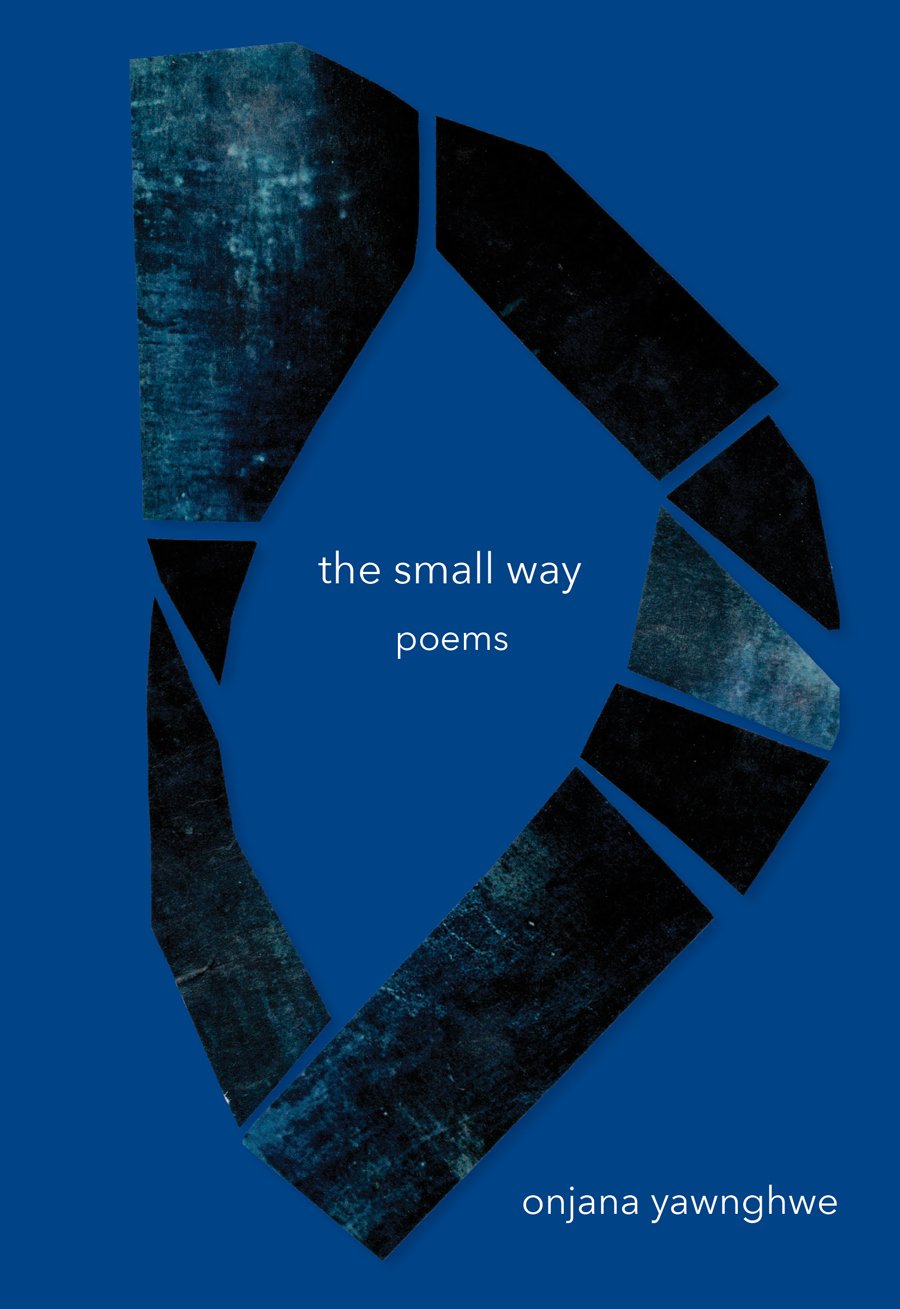
the small way — Onjana Yawnghwe (Caitlin Press)

Today's book of poetry:
the small way.  Onjana Yawnghwe.  Caitlin Press.  Halfmoon Bay, British Columbia.  2018.

Many years ago, somewhere around 1984-1985, Today's book of poetry moved to Prince Edward Island and while there we had the honour of meeting a great Canadian artist named Erica Rutherford.  Erica was a former Eric, had been an artist with the original Goon Show with Peter Sellers and Dudley Moore, he had also been a filmmaker in South Africa. Eric had married, had children and then eventually Erica arrived.

When I met Erica she was with Gail, the same woman Eric had married when she was a man, all those many years ago.  When asked, and this is a badly remembered paraphrase, but when asked about the differences between being married to Eric and married to Erica, Gail replied "plumbing."

Onjana Yawnghwe's the small way tells a parallel love story of sorts and does it with a generous heart and a kindness of spirit.  Today's book of poetry applauds the story - but what we really care about is the poetry.  We care about whether or not these poems work.  Like clockwork.

Very intense emotional clockwork.  Yawnghwe has a tempered spirit that inhabits these poems, a tempered spirit that proves, once again, that tough comes in a million disguises.  These poems lead us to believe that Onjana Yawnghwe is that sort of tough.

The Big Bang

I thought you'd tell me you were going to die, your face was so serious.
Or you'd fallen in love with another woman, to leave me behind.
These were my greatest fears.
Your face leaked shadows, spilling little light.
When you told me, I felt relief. An ocean crossed my eyes. I thought
you were brave, knowing this dark place you had come from and the
dangerous place you would be travelling to.

I wrapped my arms around you. You wept.
You were afraid I would cut you down and reject you.
But how could I reject the only person I have ever loved?

The land you were standing on was waterlogged and sinking.
You did not know what decisions to make, how you would be in the
world, if you would be transitioning or staying tight with this secret.

I wanted you free. I was impatient for you to decide your life, and thus mine.
This ache in the background. The world on its head. We were travelling
to the edges of the known universe, where no light would return.
Somehow, our story is ancient.
We were each other's shadow, each taking turns in the moonlight.

There were things to be done.
I swallowed it all with straining mouth, the doubts, the fears, the
unknown, questions of identity, sexuality, stars, satellites, black holes,
supernovas and all the rough cosmic debris.

💫💫💫

These poems are inside of the gender politic, a woman and her husband, who is transitioning to her natural state as a woman, make for the story line.  Yawnghwe transverses all of it with a level of class this is both admirable and necessary.  Onjana Yawnghwe has deep questions about the nature of gender and desire.  Yawnghwe is a willing participant, a loving partner with her eyes on the future.  But when you start spinning out of your known universe and into the unknown uncharted territory of the future - things change.

One partner changes so much they can no longer find each other and the searing pain of that disassociation is searing.  White hot.  Yawnghwe indulges in no whining, nor much in the way of second guessing, these poems meet the events straight on, with respect and hope.  When Yawnghwe's partner moves on Onjana is left to pick up the pieces.  These are challenging and rewarding poems of crystal clear precision, haunting poignancy.

Regret

It was my choice
to end our marriage.

Something I couldn't imagine,
being attracted to women.
I saw you as a woman.

Only later did I realize
how you have fused into my heart
how by your mechanism it beats.

I thought it would always be so.
Everything was spinning, you see.
The earth was something to hold on to.

This conventional conception of self was familiar.
It had been hanging there like a dirty
dish towel, flapping in the breeze.
I took it up, raised it as flag.

It was my mistake to think I'd never lose you.
but love and time pick you up and shake
you loose into this new body.
All yours. All alone.
Reaching out.  Open arms.

💫💫💫

How tender, tender, tender our fragile hearts are.  It's remarkable we've survived as a species at all.  the small way is an emotional roller-coaster, the most stereotypical and trite descriptive for an utterly unique, or at least decidedly rare in Canadian letters, glimpse into a relationship where gender and identity actually change in front of your eyes.  What was loved has vanished in plain sight of our eyes and no amount of love can change that.

Return to Sender

You refuse to take our wedding picture,
the one with you smiling, embracing me
from behind, cherry blossoms in the distance.
Your mother had given it to us, framed.

Today you return the letters I wrote you,
the whole box of them, saying "It will help me move on."
Move from where to where, I wonder?

The day we were married
the sun lit the Japanese pond
and the trees were nearly
exhausted of pink blossoms.
It was April.

💫💫💫 

As much as the small way was a book of poetry that Today's book of poetry "poetry enjoyed", we weren't alone in being a little saddened by it all, the loss.  After our morning read our newest intern, Maggie, went and sat in the corner in one of our large reading chairs.  She surrounded herself with books from the stacks and sent out a cosmic "do not disturb" sign.  She also put Puddles Pity Party on the box.

Today's book of poetry admired Onjana Yawnghwe's honesty but it wouldn't count for scat without these precise poems and her excellent poetry chops.  And of course it wouldn't have happened without the consent of Yawnghwe's ex Hazel.  Today's book of poetry takes our hat off to both women, both brave women.

These poems burn.

Onjana Yawnghwe

Onjana Yawnghwe

ABOUT THE POET
Onjana Yawnghwe was born in Thailand but is from the Shan people in Burma (Myanmar). She grew up in Vancouver and received an MA in English from UBC. Her poems have been featured in numerous anthologies and journals, including The Best Canadian Poetry in English 2011, 4 Poets, CV2, Room, and The New Quarterly. Her first poetry book, Fragments, Desire, was published by Oolichan Books in 2017.

BLUBS
“Onjana Yawnghwe’s The Small Way is a book that has never before been written: poems of love & grief for a spouse’s transitions to becoming a woman within the continued cradle of support that art and empathy creates. From acknowledging the gentleness that was at the heart of the bond to dealing with the weariness that learning how to cope with another’s transformations brings, Yawnghwe’s poetry is searingly honest, steeped in lyrical resonances that attempt to effect and honour her own transition to a different kind of relationship with the person she once married, and with her own fragile, fierce self: still singing, ‘still, it shines.’”
     —Catherine Owen, author of The Day of the Dead

“Yawnghwe rigorously examines how falling out of a lovers’ narrative is more shattering than falling out of love itself. Gender is dissected and disassembled as her spouse transitions, as is the very notion of intimacy itself. Eloquent. Startling original.”
     —Betsy Warland, author of Oscar of Between

Deftly aphoristic, startlingly vivid and affecting, The Small Way breaks open the love poem and presents us with a vital story of change, loss and persistence. Each line resonates with the fundamental mystery of other lives, other bodies, other desires, yet the book is also suffused with indelible traces of connection. This is some of the finest writing on love in recent years.
     —Warren Cariou, director of the Centre for Creative Writing and Oral Culture, University of                    Manitoba


774

DISCLAIMERS

Poems cited here are assumed to be under copyright by the poet and/or publisher.  They are shown here for publicity and review purposes.  For any other kind of re-use of these poems, please contact the listed publishers for permission.

We here at TBOP are technically deficient and rely on our bashful Milo to fix everything.  We received notice from Google that we were using "cookies"
and that for our readers in Europe there had to be notification of the use of those "cookies.  Please be aware that TBOP may employ the use of some "cookies" (whatever they are) and you should take that into consideration.

Saturday, June 9, 2018

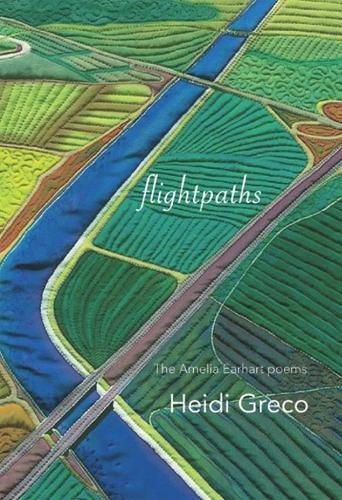
Flightpaths: the lost journals of Amelia Earhart — Heidi Greco (Caitlin Press)

Today's book of poetry:
Flightpaths: the lost journals of Amelia Earhart.  Heidi Greco.  Caitlin Press.  Halfmoon Bay, British Columbia.  2018.


Reading Heidi Greco's Flightpaths: the lost journals of Amelia Earhart is like falling into a Saturday afternoon matinee at the movies of my youth.  Greco has imagined and made real all those things we've so longed to discover about the ending to the Amelia Earhart story, the beginning of the legend.

Greco's done her homework.  Today's book of poetry knew about the "friendship" between the high flying aviatrix and the President's wife.  But Greco takes them up among the stars where they make snow out of one of Eleanor's boas.  Greco reveals dark secrets and hidden gems, jewels for the inquisitive historian.

The theories Heidi Greco expands on as to the demise of Amelia Earhart have been given light of day before but Greco affectionately moves past rumour to give rich flesh and bone back to the narrative.  Just like those afternoon movies of my youth; Greco sets up the audience and then delightfully mows them down.

July 8

Made an awkward wade to the plane, for another quick series of maydays.
Dumb luck revealed a little sack of fruit floating beside my seat (how
could I have missed it?), a gift from one of the sweet women at Lae. She'd
handed it over smiling, saying repeatedly "po, po." She should have said
"poo poo" as it's not agreed with me. Shit, shat, shatted. Enormously. I
may have lost more fluids than the soggy fruit supplied. Modesty long
gone between Noonan and me. Even so, this is beyond normal, requires
a skirt. Eleanor and Katharine, my cohorts in independence, would laugh
at how ladylike I've become.

...

Heidi Greco's Flightpaths: the lost journals of Amelia Earhart offers up more than one solution to the famed pilot's true story.  We deduce that Earhart had an open relationship with her husband and a thoroughly modern and adventurous dance card that spanned both gender and expectation.

These poems fantasize more than one perilous end for Earhart, but any real fan of Earhart, or any ardent reader, will already have heard these theories.  What Greco does that amazes is to create a narrative the reader can and does believe.  We believe the movie as it is playing out in front of us.  

With a variety of conjured tricks, Heidi Greco has us eating her fictionalized account of an unknown story right out of her poetry hands.  She doesn't even bother with a poetry bowl.  Greco gets us to believe a thing is true even though we already know it is made up.  That's some good poetry cooking.

This, my new husband

The father sells shoes, shiny as the pomade
he slicks into his thinning hair.
This dull groom of mine welcomes the war,
explains to me, as if to a child,
"An army marches on its feet,"
What am I to learn from this?
Surely, the measuring of feet cannot
fill the needs of his mind.

I would stand with the women
in the factory, if I could.
But no, I am cautioned:
I might show my hand, reveal
some bold trait, one that could draw
unwanted attention. Or worse,

speak out with too strong a thought
one not befitting this pretty head I now wear,
maybe get sent to the loony bin
along with the other hysterical wives,
the ones who didn't behave.

Hair this long annoys me, tangling in the brush,
this continual dyeing of roots to keep them brown,
mouse enough to blend with this dun-colored world
the sentence I must serve, rest of my too-lifeless days.

Oh, for a pinch of danger, a taste of sudden intrigue,
anything to fire up my engines.

,,,

Today's book of poetry morning reading was just a little off track today, everyone remains a little subdued and saddened by the passing of the great Canadian poet David McFadden.  Earlier this week David finally succumbed to a lengthy illness.  

David McFadden was a big influence on Today's book of poetry.  Mr. McFadden had been to our home a couple of times and for a brief period of time we corresponded regularly.  We were never buddies but we were friends.  Today's book of poetry was very honoured to be included in 70th birthday book for David.  We weren't buddies — but I wish we had been.  David McFadden was looked to up by an entire generation of Canadian poets and Today's book of poetry is saddened by his passing. 

Stuart Ross, celebrated poet and close friend, has suggested that he is going to read a David McFadden poem at all of his readings in the future.  Today's book of poetry thinks we should all follow the same plan of action.

After a round of David McFadden poems, mostly from Poems Worth Knowing (Coach House Books, 1971), we got back in to the proper flow and gave Heidi and Amelia a proper flight test.

July 12

To think I used to mope about the thickness of my ankles, call them my
elephant legs. Bigger than ever the ankle is blooming, like an overfed dahl-
ia in my cousin's flower bed. Now it truly holds the shape of an elephant's
leg, would make a good umbrella stand for someone's elegant foyer. Yet
despite its bulbous shape, it feels as if the bones are disintegrating. As if
the constant salt air has seeped inside and begun dissolving them. Can't
distract myself from the pain anymore. Reciting poems, making up songs,
repeating my times tables, nothing does the trick. Zero times 180 is still
zero. Since Fred no longer needs the pills, I may try using the ones that
remain. What effect they may have on me, I cannot say. Tomorrow I mean
to begin some letters to family and friends. Perhaps a batch of sweet fare-
thee-wells.

...

Heidi Greco puts belief in the hands of the reader.  We come to believe that this movie is real.  Poetry that transports is a hard currency to deny.  Flightpaths is money.

Heidi Greco

Heidi Greco

ABOUT THE AUTHOR
Heidi Greco is a longtime resident of Surrey, BC. In addition to writing and editing, she often leads workshops – on topics that range from ekphrastic poetry to chapbook making. She’s been an advocate for the literary arts in her community and was instrumental in establishing two distinct reading series, but she considers her greatest success to have been convincing her city to hire an official Poet Laureate. She writes in many genres – with poems, fiction, essays and book reviews to her credit. Her books include a novella, Shrinking Violets which was co-winner of the Ken Klonsky Award in 2011. Her work has also appeared in many anthologies, most recently in Make it True: Poetry from Cascadia (Leaf Press, 2015) and The Revolving City: 51 Poems and the Stories Behind Them (Anvil, 2015). In addition to making Sunday suppers for her adult sons, she keeps a sporadic blog at outonthebiglimb.blogspot.ca.

BLURBS
“Flightpaths: The Lost Journals of Amelia Earhart slips easily from windowpane prose to lyric as Heidi Greco delivers the realities, the fantasies, the possibilities of Amelia Earhart’s last flight over the Pacific Ocean with a complex simplicity that gives us both what probably was and what might have been — building a poem/story of a life bigger than history.”
—Brian Brett, author of Tuco: The Parrot, The Others, and The Scattershot World

“In this unique and intriguing fictional tale, Heidi Greco convinces us that Amelia Earhart’s Lockheed 10 Electra went down near a remote Pacific island. This tragic event, and the disappearance of Amelia’s plane into the ocean, leaves the reader wondering what happened to this brave pilot who accepted the challenge of a world flight in 1937.”
— Ann Holtgren Pellegreno, Pellegreno was the first to fly a Lockheed 10 Electra around the world on the Earhart Trail. On July 2, 1967, she dropped a wreath on Howland Island.

“I am not one to read a lot of poetry, but when combined with contextual passages and based on a historical event, my interest was piqued and my imagination stimulated by the fascinating concept that Ms Greco has penned. Recommended.”
—The Miramichi Reader


Heidi Greco


Feature Poet @ PJ/PNW
Video: TheVideoGuys


695

DISCLAIMERS

Poems cited here are assumed to be under copyright by the poet and/or publisher.  They are shown here for publicity and review purposes.  For any other kind of re-use of these poems, please contact the listed publishers for permission.
We here at TBOP are technically deficient and rely on our bashful Milo to fix everything.  We received notice from Google that we were using "cookies"
and that for our readers in Europe there had to be notification of the use of those "cookies.  Please be aware that TBOP may employ the use of some "cookies" (whatever they are) and you should take that into consideration

Sunday, February 19, 2017

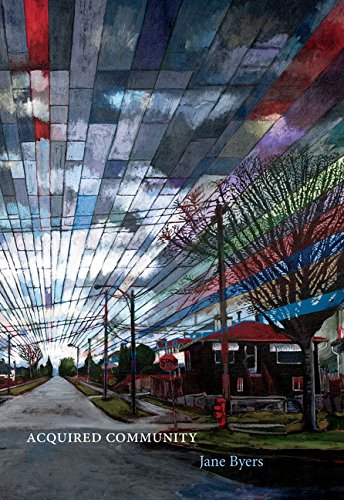
Acquired Community - Jane Byers (Caitlin Press)

Today's book of poetry:
Acquired Community.  Jane Byers.  Caitlin Press.  Halfmoon Bay, British Columbia.  2016.


When I dare to be powerful, to use my strength in the service of my vision, then it
become less and less important whether I am afraid
- Audre Lorde

...that without tenderness, we are in hell.
-Adrienne Rich, Twenty-One Love Poems, X

Today's book of poetry had to borrow these two epigraphs from Jane Byers brilliant Acquired Community because they synthesize in such a beautifully acute fashion everything that is about to occur.  Byers gives us a deeply personal and highly politicized march into her queer experience and it is riveting.  

These poems are a proud parade of perseverance rendered gallant under extreme duress; not everyone gets out alive.

The Lavender Scare
According to a concerned mother of a Women's Army Corps recruit,
Fort Oglethorpe was full of homosexual sex maniacs in WWII,
"women having the appearance of perverts have been observed--
mannish haircuts, clothing, posture, stride...
seeking to date other girls, paying all the bills."

--from "Coming Out Under Fire"

Only if we were "addicted to the practice", could we be discharged in wartime.
It was a gay time, the war.
The General ignored all our signals--
               we whistled that ode to secret lovers, the Hawaiian War Chant,
               said, "We're going to have a gay time tonight"
               or "Are you in the mood?"
The Inspector General ignored civilians
cruising servicemen along highways near bases,
the bars we frequented, men in drag, women arm in arm.

Ignored, that is, until peacetime,
when, addicts after all, we were given blue discharges.

The Lavender Scare rendered us
               shunned from civilian jobs
               ineligible for GI benefits,
               unable to go back to small towns and family farms.
Some of us moved to D.C., L.A., SanFran,
               some started homophile groups,
               some men got married but fucked other men in the bushes,
               some women became stone butches and never let their lovers touch them,
               some of us jumped from tall buildings.

...

Jane Byers writes with such mature assurance, such a steady hand.  Today's book of poetry had never read Jane Byers before but the connect was immediate, instantaneous.  There is always lots and lots of room on our shelves for such impassioned and intelligent reason.  There is always room at our table for this sort of company.

Byers shares with us a history, a herstory, that for the majority of Canadian and Americans will be entirely new news.  For the legions of our LGBTQ sisters and brothers it is a new documentation of a sad history they are all too familiar with.

Regardless of gender or disposition Today's book of poetry defies you not to be moved by these compelling narratives.  Whether singing out a questioning tune in call and response or intoning a solemn prayer Byers is captivating.

Come Out

Stylized geometry,
pink triangle shadowed by black
above purple text--
Toronto's pride theme, 1993.

Come Out, urging,
statement--
it changes through years.
Some took offense,
mostly conservative men who had a lot to lose
but no, that's too simple.
There were women too, unwilling
to lose what little they had.

I was righteous, thought I had come out.
I'd told my high school friends, my parents, my aunt by then.
I celebrated in the streets with my friends,
eight of us in solid-coloured shirts,
walked in rainbow formation,
Made the cover of Xtra.
In my naivete, I thought I was done.

Twenty years later, I'm still doing it,
the only thing i want to have come out of is my mother's womb.
Not to the kindergarten teacher, the triage nurse,
the dentist, the law clerk, the adoption worker,
or the post woman in the condo elevator
who asks, Which one of you is the mom?
then turns to press any button she can
when I say, We both are.

The agent at the ticket counter,
glances at us with a question,
I nod before he gets the chance--
no words, but he understands.
Resignation passes over his face
with a raised eyebrow as if to say,
"When did this happen?"
I feign ignorance, glance at our kids, say,
"Follow Mama while Mom gets our bags checked."

It's like breathing, not birth.

...

Sometimes, and this is one of those cases, the limited selection of three poems doesn't speak to the breadth of a book at all.  Acquired Community speaks to that sense of community we find with new friends and cherished old friends, mutual understanding and respect, in the modern era this is how we build family.  We acquire people less joined by blood than by bonds of empathy.

When Today's book of poetry reads about Byers being "gay-bashed" by her brother and the subsequent torment and disappointment that ensue -- our entire staff sends out an appropriate hug for Byers.  As a brother who cherishes the ground his sisters walk on I've also sent out our entirely inappropriate Poetry Hit Squad searching for Byers brother.  Not to worry, they only use poetry. They'll poeticize him to reason, tolerance and compassion or they'll dance him outside.

Blood Orange

Joppa, Tarocco, Cara Cara, Sanguinello.
A hybrid between mandarin and pomello,
oranges grow near the Blood River in Limpopo,
alongside the ungraded dirt road, where the runners train,
barefoot, through the bush
in the red/orange co-mingle of sunrise,
in the descending crescendo of sunset.

After she shattered the 800 metre world record in Berlin,
Caster Semenya, of Limpopo, breathtakingly butch,
was accused of being a man,
jeered by the sixth and eighth place runners.
Deep voice, chiseled deltoids and biceps,
she visited the bathroom with competitors,
to show them her labia, again and again.

Her auntie says she knows what Caster is. she changed her nappies.
Turns out how we measure gender is complex.
No menses, not a big deal,
few female athletes bleed.
There is no definitive test.

She finds out she is intersex.
Undescended testes.
Mosiac female.

Caster retains the world record that she broke that night,
after the freak-show coverage and gender verification testing.
Hormone therapy renders her armour-like chest more curved,
her cheeks less angular, attenuated her power,
until we believe she is female.
Semenya goes on to win Olympic bronze, then gold.

Forget what you know.
Limpopo is South African slang for nowhere.

Imagine the dismay when you split one in half.
Red.
No, orange.
No, red.
There will be blood.

...

Byers poems are a magnificent bridge that span the years from imperilled hostility and even imprisonment for any LGBTQ citizen, through the marching and the parades, the hidden clubs and hidden desires - right up to today and the marvelous imperfect present.  Steps have been made, there has been progress, new laws, but we are all still a long way from home.

Acquired Community is not only a fine book of poetry it is a necessary piece of social history, a reminder, an entreaty.  Hope.

Image result for jane byers photo
Jane Byers

ABOUT THE AUTHOR
Jane Byers lives with her wife and two children in Nelson, British Columbia. She writes about human resilience in the context of raising children, lesbian and gay issues, and health and safety in the workplace. She has worked as an ergonomist and vocational rehabilitation consultant for many years and is passionate about facilitating resilience in ill and injured workers. She has had poems, essays and short fiction published in a variety of books and literary magazines in Canada, the US, and the UK, including Grain, Rattle, Descant, the Antigonish Review, the Canadian Journal of Hockey Literature, Our Times, Poetry in Transit and Best Canadian Poetry 2014. Her first book of poetry, Steeling Effects, was published by Caitlin Press in 2014. Her latest book of poetry is Acquired Community.

BLURBS
“Byers’ poems are an important reflection on the devastation of the AIDS crisis, the ‘veiled love and lament’ of the early gay rights movement, and the memories held by queer elders.”
     — Leah Horlick, author of For Your Own Good and winner of the 2016 Dayne Ogilvie Prize

“Jane Byers’ Acquired Community fills an often overlooked niche in Canadian queer history. Written in strong, careful poetics, both personal and political, Byers gives readers a glimpse into what was possible then, what is possible now. If you care about queer lives, this is an important book to read, to enjoy!”
     —Arleen Paré, author of Lake of Two Mountains (Winner of the 2014 Governor General’s Award             for Poetry), and He Leaves His Face in the Funeral Car

Jane Byers
reads "Red is the Colour of Spring"
Video: Amy Bohigian's Channel


553

DISCLAIMERS

Poems cited here are assumed to be under copyright by the poet and/or publisher.  They are shown here for publicity and review purposes.  For any other kind of re-use of these poems, please contact the listed publishers for permission.

We here at TBOP are technically deficient and rely on our bashful Milo to fix everything.  We received notice from Google that we were using "cookies"
and that for our readers in Europe there had to be notification of the use of those "cookies.  Please be aware that TBOP may employ the use of some "cookies" (whatever they are) and you should take that into consideration.


Monday, August 24, 2015

For Your Own Good - Leah Horlick (Caitlin Press)

Today's book of poetry:
For Your Own Good.  Leah Horlick.  Caitlin Press.  Halfmoon Bay, British Columbia.  2015.


If a collection of poetry starts with a quote from Sharon Olds I generally sit up a bit straighter and pay a little more attention.  Sharon Olds holds a lot of weight at Today's book of poetry.

We've always believed the maxim that what you read isn't as interesting as what you read twice.  We read Sharon Olds every chance we get.  And now we'll do the same with Leah Horlick.  Not for using the Olds blurb, no, for hammer and chiseling this heart of darkness to share with us.

Ringmaster

There's an alleyway, and a secret place,
     and you know it's right because the books

tell you as an invert, all your love stories begin
     in hiding. And you love her because she is angles

and shoulders, twin blue yard lights for eyes. How her teeth gleam
     sharp when she throws those hoops in the air, how the listeners

leap to twist through them, flames so close they singe
     your hair. She wears a horse's bridle on her

left wrist to signal she is not to be kept, and she blisters
     under its chafe. One night you reel her

into a corner with a bandage. She says she thought you
     were going to kiss her, she doesn't love women

but anything could happen. She has a talent, dreams
     the future, won't reveal the one

that wakes her with you in it. But it's closing night. She has an empty
     seat, passenger side, with your name on it. You say of course,

because you have a backpack, a matching ring of red
     skin around your wrist, and you thought you'd never find her.

...

These poems blister gentle as they get under your skin.  Leah Horlick is doing us all a favour in For Your Own Good, these poems snap you alert like the first crack from Billy the Kid's pistol.

Let me take another shot at that -- I was thinking about the German film Lola und Bilidikid (Lola and Billy the Kid, 1999).  In that spectacular film, Lola and Bili are fighting a battle of sexual identity in a world that is not openly welcome to their particular disparity.

Leah Horlick's poems are a coming of age tapestry of punk circus and shadowed violence colliding in a rich vein of sexual tension.  These poems trace a journey through self doubt brought about by sexual abuse.  Our protagonist moves quickly through the animated joy of her first sexual discovery headlong into an abusive relationship that deteriorates into a dismal hell.

These poems delve into that murky water of guilt and desire and fear, but even at the lowest ebb you always sense that Horlick is swimming towards clear, clean water.

Little Voice

That morning in the motel
     where your best friend lived,
new snow outside, at least in the memory

and the stranger--he was eighteen,
     you were alone, she was downstairs
at the pop machine or something

while you watched the snow, the nest
     of beached antlers in the yard
behind the pine trees and then he was there, too

in the room, telling you about
     a guitar, or something useless
and you thought

empty room, you thought quiet house
      you were a very smart girl and you felt
the footstep he took one step closer behind you

at the window, and from the rising star
     of your gut you heard it, like twin
drops of water--you have to leave the room

Right. Now. And quietly, and you did.
     That was smart. You were a smart
girl, and you did not tell anyone

not when they found out he was
     in her room at night, not
when they sent him away, not

until you were a grown woman, and what
     you wouldn't give
for that little voice again, now

...

Leah Horlick's For Your Own Good may be the best book of poetry to come out of Canada this year. I've read hundreds of 'em and this is as good as any,  Had the rest of the staff read it out loud.  Great, now Milo is in a funk, two other interns are crying, that might be over something else.  But consensus was excellent.

These poems are Fran Lebowitz smart and that is damned smart indeed.  They are Dorothy Parker funny and that is wicked,  They are Erica Jong horny and it is as zipless as it gets.  Add a Sapho/Lesbian undercarriage, some time at the circus, a sassy pseudo-masochistic mistress, some Sharon Olds wisdom and that is one hell of a Grand Old Opera.

Fran Lebowitz and Sharon Olds.  I can't throw out any higher compliments.

Crows

In the dream of the new house, I have my own window
     facing west; cherry blossom and fig trees,

monkey puzzle and magnolia. Everything flowers.
     Whatever city this is will be good to me.

And then, the crows, tiny shreds of black cloth
     thrown over the sunset, and I think the world

is ending. A kind hand tells me, this is the largest murder
      in North America. If I ride my bike far enough,

I can roost with them at night, east beneath the mountain.
     A stray crow wings away from the path of feathers, back

towards the squares of land I imagine, flat and brooding.
     You're going the wrong way, crow! Come Back!

But she was never really going, and I watch as she returns
     with that other bird, as dark and near as her own shadow.

...

This is a book about survival.  And survive Horlick does.  It's the reader who is in danger of being spun out of control.  These fierce poems deserve your attention.

Leah Horlick

ABOUT THE AUTHOR
Leah Horlick is a writer and poet from Saskatoon. A 2012 Lambda Literary Fellow in Poetry, she holds an MFA in creative writing from the University of British Columbia. Her first collection of poetry, Riot Lung (Thistledown Press, 2012), was shortlisted for a 2013 ReLit Award and a Saskatchewan Book Award. Her second collection, For Your Own Good, comes out Spring 2015. She lives on Unceded Coast Salish Territories in Vancouver, where she co-curates REVERB, a queer and anti-oppressive reading series.

BLURBS
“Reading Leah Horlick’s collection, I felt a sense of relief. Finally, we’re here. Finally, we’re talking about this.”
     –Mette Bach, Plenitude magazine

“It is not often that a collection of poems can be read like a book; For You Own Good will grab you by the collar and demand consumption. It is a page turner in the most literal sense of the term…readers will venture through the narrator’s experiences with enough ease to make it consumable and enough complication to leave room for thought and interpretation. The more you read, the more you want to read. You will feel what she feels. You will want for her to heal, but you will know she may not. You will find solace in her escape, but you will feel the anguish of her past as it remains in her present. But, still, you read because you are invested in her journey.”
     –Emily McGaughy, After Ellen
“Arresting poems…[these] impassioned but meditative pieces explore uneven power dynamics and the confused interior life of the solitary young woman who blames herself and is trying to make sense of a suddenly restrictive and harmful relationship.”
     –Brett Josef Grubisic, Xtra West

“Sometimes it feels as though there are Poems About Important Issues and Good Poems, and the two camps rarely meet. For Your Own Good is a startling combination of the two, skillful poems both defiant and self-aware, and close to my femme heart. We need this book.”
     –Zoe Whittall, Holding Still for as Long as Possible
“‘Magic,’ which is the title of one of the poems in this collection, is a word I’d use to describe Leah Horlick’s work. Each piece takes us through a transmutation–from frightened girl to woman, from lover to abuser, from audience to performer, from alone to beloved. Horlick doesn’t back away from hard realities, deep longing or fierce desire, and drapes language around them like fitted silk–revealing and reflecting.”
     –Jewelle Gomez, author of Waiting for Giovanni

‘These poems are beautiful. Solid and glittering as ice or crystal, they hold secrets and hard truths in their core. The wonder and lushness of Horlick’s voice imparts a loveliness to countless hidden tragedies, never sugaring them but bearing an elegant, whispering witness.”
–Michelle Tea, author of How to Grow Up

“Leah Horlick’s most recent collection of poetry is a beautiful rendering of grief, love and survival. This poignant poetic offering left me feeling the sensitive grace of her words long after I finished reading. The way she weaves stories into poetry is both haunting and powerful, elegant and unsettling. While reading, I had to keep reminding myself to breathe!”
     –Lishai Peel, author of Why Birds and Wolves Don’t Trade Stones

Leah Horlick
Streetcrossing
Vancouver Poetry Slam
video courtesy of: Vancouver Poetry Slam


375


DISCLAIMERS

Poems cited here are assumed to be under copyright by the poet and/or publisher.  They are shown here for publicity and review purposes.  For any other kind of re-use of these poems, please contact the listed publishers for permission.

We here at TBOP are technically deficient and rely on our bashful Milo to fix everything.  We received notice from Google that we were using "cookies"
and that for our readers in Europe there had to be notification of the use of those "cookies.  Please be aware that TBOP may employ the use of some "cookies" (whatever they are) and you should take that into consideration.