Showing posts with label silverfish review press. Show all posts

Sunday, February 2, 2020

Acacia Road - Aaron Brown (Silverfish Review Press)

Today's book of poetry:
Acacia Road.  Aaron Brown.  Silverfish Review Press.  Eugene, Oregon.  2018.

Winner of the 2016 Gerald Cable Book Award
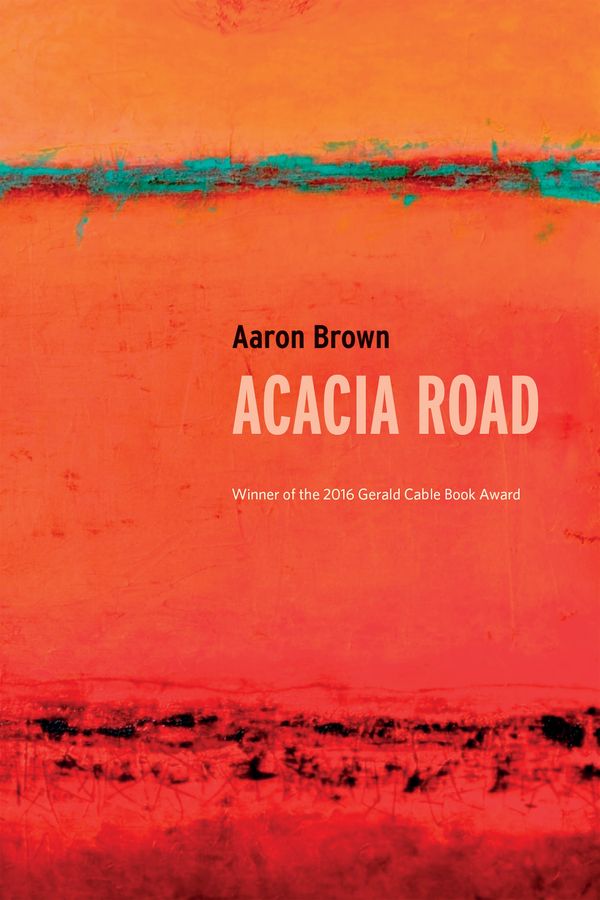
image7

Last night Today's book of poetry found ourselves at Aaron Brown's Acacia Road.  We'd been there before when we first read Brown's poems.  Most of Acacia Road either occurs in Chad, Africa, or is a memory of an experience Aaron Brown had while living in Chad.  Born in Texas but his family moved to Chad when he was young, he is back in America now, and the emotional pull of the great continent is in every word Brown puts on the page.  Brown's poems are in English but the reader soon sees that Brown is speaking a language of his own.

Acacia Road is cinematic and often joyous in the rich and complicated splendor of Brown's African experience.  Literally and unabashedly Brown shares mango inspired sugar-high romps of memoir, and then the shells begin to drop.  Machine gun fire.

Maternal

when I see you again
     what will we say

     to each other
my Chadian grandmother

you brought me
     spiced and steaming coffee

     you made me sit and drink
your eyes proud of who

I was becoming
     a rajil you said so emphatically

     the same eyes with which
you gazed at your blood-son

your youngest given to you
     in husband's memory

     conceived before they took your love
and shot him at the outskirts

your Madri would grow
     to care for you in old age

     to provide for his brothers
who couldn't find a job

for drink and lounging around
     but he was taken too

     dead from his motorcycle
and what must you say

to the shriveled tree
      in your backyard

the one under which you sit
      pouring coffee for guests

serving them sweet biscuits and dates

💥💥💥 

Aaron Brown's childhood ended in synchronization with a neighbouring war, violent rebel activity and a hasty but necessary farewell to Chad.  As an adult back in America he bids his memory into action trying to remember the names of his African friends and family.  It seems they both fill Brown with joy and the harrowing realization that time chips away at all, the memory fades.

Brown is looking for some sort of redemption and these poems are his evidence and his prayer.  To get memory right, make it true, you sometimes have to take the long way around.

Acacia Road

From thirteen thousand feet, the twisting acacias -- thirsty thorn-trees reaching
     a web of fingers up to the sky, into the earth -- look like shrubs

shriveled under the sun seeming so distant, yet so present with its heat.
     Streams of cattle ridge like ocean waves across the plains, the sleek

and sheen of their backs, ants' exoskeletons, labor for miles
     to the burst of brush beyond the endless nagga. Rising from earth

mountains pepper the plain: mounds of rocks, marbles of God, pile high
     above dom trees whose black seeds clump like fistfuls of obsidian --

when they fall they make the sound of a bullet rushing through a dust devil,
     rushing to the point of impact in the sand silencing

the sound of lead. From thirteen thousand feet, I wonder if a shepherd
     roaming the road remembers the rebel trucks that breathed death

into the dust, clouding the air with sandgrain, cloaking black barrels of kalashes
     aimed across a land I now study, five years later through the plexiglass,

a land sucked dry, flying to the town at the world's edge, the place no soldier
     would go. The circles of huts and thatch swell as the empty oxbows

wind a road to follow -- a road that breaks at carcasses of colonial homes
     and people streaming in polyester gold and deep azure sky --

and somewhere, down there, a three-part gate along chari kabir stands
     as the entry to mine, but to find it, turn at the broken cement mixer,

the one left lying abandoned by a truck traversing the desert so far it makes
     light its load, casting off the disrepaired, losing its cargo piece by piece.

💥💥💥

Today's book of poetry was in, hook, line and sinker, the first time we read Acacia Road.  With each subsequent reading more was revealed.  Aaron Brown is willing to take his time, he is a natural story teller.  We had Dexter Gordon on the box this morning, Tanya.  Simply one of the best songs in the jazz canon.  The mood seemed to fit our office reading of Acacia Road.  Sophisticated, emotional and always just a little cool.

Aaron Brown can burn and Today's book of poetry is happy to share.

Tuareg Prayer

Twenty years you waited for me to believe
in the same God as you -- you, travelling
by horsecart with the rest of us, pitching
your tent next to the rainy-season-filled
pond, the gum trees sapping tears for our poverty.
We followed rain clouds. You followed us.
Showing us love. We showed you ours.

Now, as the meat on my bones passes
through death's teeth, will you remember me?
Will you, during the rainwind afternoons,
think of the date-tree shade and the tea
we shared? Will you think of our children
growing up together with the goats,
rolling bike tires with sticks
and singing to the full moon?

You have waited for me this long.
Now I ask you to hold out a little while
longer -- until the millet stalks have grown
past your shoulder, and the camels come
back from the north.

Then, you too will close your eyes
one last time when the sun is at its hottest
and your belly full of camel meat.

On the other side, you will walk
the twisting path between the knife-tipped bush.
You will find me at the entrance
to the camp, waiting for you,
waiting to go in together.

💥💥💥

When we got to the last verse of "Tuareg Prayer" during our morning read, there wasn't a dry eye in the place.  We even heard a sniffle from the office where it is rumoured Max lives.  Full points all around for Aaron Brown's sublime Acacia Road.

Brown proves that poetry is the best way to travel.

Image result for aaron brown poet photo"

Aaron Brown

ABOUT THE POET

Born in Texas and raised in Chad, Aaron Brown is the author of the poetry collection, Acacia Road, winner of the 2016 Gerald Cable Book Award (Silverfish Review Press). He has been published in World Literature Today, Tupelo Quarterly, Waxwing, Cimarron Review, and Transition, among others, and he is a contributing editor for Windhover and blogs regularly for Ruminate. Brown now lives in Texas, where he is a professor of English and directs the writing center at LeTourneau University. He holds an MFA from the University of Maryland.

BLURBS
"Acacia Road is a vivid, brilliant, and haunting memory palace, evoking Aaron Brown's childhood spent in Chad on the cusp of its civil war, and while at times the 'second space' of recollection, seems idyllic, the sound of shelling and gunfire, and news of human violence is never far away."
     - Michael Collier

"These poems proceed by an earnest story-telling and remembering. And while the surfaces of the poems are characterized by skillful narrative and descriptive impulses, underpinning most of them runs a deeper agon and self-critique, uncovering both a fear of and a relentless thirst for the ecstatic. These poems embody, at their best, that thirst."
     - Li-Young Lee

"Aaron Brown’s poetry is beautifully written and has a strong sense of description, thus transforming the ordinary into exquisite, blissful bits of writing. From the precious time spent with friends come these poems in which not a particular geographic region, but the land of youth, generosity and love is the true mother country so longed for." 
    -African Book Review

"Aaron Brown’s Acacia Road moves between the past and the present, and the known and the unknown, wandering the rooms of memory and the knowledge of the body. But Acacia Road also evokes real places, full of real lives and hard lessons, deeply felt and evocatively rendered. The narratives in this book resist easy certainty, and the images suggest how distance is both a measure of miles, and an important emotional register, as a cloud-like voice rises up to say, 'pay attention / or you will / miss your destination.' And these poems do pay close attention. To language—'I knew how to sing a little.' To time—'then and only then could we share a kind of silence, the pause between one cup of tea and the next.' And, ultimately, to the questions that remain for all of us as we travel together: 'Now, as the meat on my bones passes through death’s teeth, will you remember me?' One way I measure the impact of a book is in my desire to start over again when I am finished, and it was a deep pleasure to turn and return to the mysterious and familiar roads of these richly imagined poems." 
     -Jenny Browne

"Acacia Road is a collection I want to return to and hold my ear against. I swear, you can hear the silence violence brings about, splintering."
     - Collateral Journal

sfrpress@earthlink.net

802

DISCLAIMER

Poems cited here are assumed to be under copyright by the poet and/or publisher.  They are shown here for publicity and review purposes.  For any other kind of re-use of these poems, please contact the listed publishers for permission.
We here at TBOP are technically deficient and rely on our bashful Milo to fix everything.  We received notice from Google that we were using "cookies"
and that for our readers in Europe there had to be notification of the use of those "cookies.  Please be aware that TBOP may employ the use of some "cookies" (whatever they are) and you should take that into consideration.


Tuesday, April 12, 2016

The Deepest Rooms - Randolph Thomas (Silverfish Review Press)

Today's book of poetry:
The Deepest Rooms.  Randolph Thomas.  Silverfish Review Press.  Eugene, Oregon.  2015.

Winner of the 2013 Gerald Cable Book Award


SFRPThomasDeepestCover.jpg

Randolph Thomas won the 2013 Gerald Cable Book Award and the judge was Rodger Moody.  You might remember the affection Today's book of poetry has for Rodger Moody.  We looked at Moody's Self Portrait/Sixteen Sevenlings back in February of 2014 and Moody's History back in December of 2015.  You can see both of those here:


So, Randolph Thomas had a bit of in before we opened The Deepest Rooms.  Today's book of poetry sank into Randolph Thomas world as soon as I read the first poem.  Think big couch and Old Yeller on the Sunday afternoon box.  That sort of comfort, not that sort of content.

Somehow, and I suggest some dark and magical Cajun influence, the reader is immediately emotionally invested in these poems, invested in whatever it is Thomas is selling.

Bird Island Jetty, 1969

My mother warns me about the water.
It will be cold, so I should ease into it.
Only if I can feel its bite
will it cleanse me, will it reclaim me.
She pulls her cap on tight, hiding her hair
and lowers her goggles
over her eyes.
Staring down at her feet, bent over
like the small bear we watched crossing the yard
one day in the fall,
she steps across the slick, black rocks,
stops near the edge, and glances back at me.
Why should I want to be so clean,
to be reclaimed?
I search the gray goggles
for my mother's eyes,
but they are not ever a bear's.
They are plastic, fogged.
Follow, her hand, reddened by the cold,
beckons.
Crossing the rocks, I almost topple.
When we saw the bear
she had already begun to say that time, like pain,
would form crystal shadows we would have to relearn
to see.
She'd said that, like animals, we would have to break
with all we knew.
Even an animal
knows when it's time to find the warm places,
the deepest rooms of caves,
the darkest water below the freeze,
where blood can thaw and flow anew.
Her mute face to me, backside to the sea,
she climbs down out of sight,
and I feel icy water on my legs, at my groin,
goose-pimples on my arms.
Come closer, someone, maybe even the water, says.
Inching along the rocks, I come to the edge.
I stare down at the surface as her head,
capped in rubber, slips under.
I stand looking down at the green, lapping water
twenty seconds,
then a minute.
There is no sign of her.
My breath quickening,
lost to the cold, clean air,
I turn to look for the pale blue station wagon
a quarter of a mile back where we left it
after driving all night through the Carolinas,
after reaching the marshes at dawn,
the cattails tipped in frost.

...

Thomas is a first class story-teller and the panoramic scenes he sets in almost every poem take the reader to memories long forgotten, he also gives us a few new ones to ponder.  We think Thomas is telling a story when he is really opening a door.

Thomas is like the rest of us, searching for redemption through understanding.  Each of us is at battle with the narratives we think are playing out, as though we had a say.  Ghosts and Randolph Thomas will tell us that we are in short stories with uncommitted endings, life is the big anthology.  The best stories have some idea of hope in them and Thomas knows that.

Scenic Highway

When your body welcomes mine, when we
come together on the bed, the sad
nomad I was before
takes the keys from the nightstand, makes his excuses
and slips out of the bedroom.
After drinking the dregs of our wine, puffing
the last of our tamped out cigarettes
he leaves the apartment, closing the door
and zigzagging through the light rain
across the parking lot to the car.
All afternoon while we make love, he drives highways
between here and New Orleans,
past oil refineries and through towns
of shotgun houses and tall churches.
After gliding down from the gray sky, coupling love bugs
squash against the windshield.
In one town, at a busy grocery store, he stops for coffee
and watches women he's sure are as lonely as he has been
pushing their carts along the aisles, his lips buzzing
with suggestions of getting in the car with him,
running away for a while, just for fun,
nothing heavy, no strings.
Only the uniformed guard by the door
will catch his eye, then it seems everyone
is watching him.
He shrugs, pushes open the glass door, and goes out.
The day is hot and damp, but he's dry inside,
and like some of the country he's seen
in the shadows of oil refineries along Scenic Highway,
desolate and poor. How can people
find hope here? How do they
go on? He sees himself wrecking
the car, leaving it in a ditch
or driving all night, as far as night
will take him,
but before long he stops
for a few beers, sits alone
crushing the cans, leaving them
in a line on the bar.
Soon enough he'll drive back, for he must
drive back, the road
darkening and spiraling before him,
at the tail end of many dreams; he sees himself
as a man leaving, for better or worse,
a world of fantasies, of dreams,
waking from the hypnotic roads, from the tired heat
of long similar days, from the aftertaste of beer,
and coming in late, finding the doors to the building
locked, having to knock on the window
to rouse the blurry figures
tangled together on the bed.

...

Hope always comes with some cost attached and Thomas knows that too.

This mornings read was elegantly subdued.  Milo, our senior tech, brought in a collection of Stanley Turrentine recordings and our entire office had a quiet, easy buzz.  Turrentine blowing elegant.
Kathryn, our new intern, led the way with the reading and it was superb.  Randolph Thomas' poems marched across the room like they owned it, each and every one of them built for survival.

It might be important to note that almost every poem in this superb first collection has appeared in a journal or literary magazine of some note.  

The Deepest Rooms comes fully loaded, if these poems were jokes the punch lines would be killers.
If they were hockey players they'd have a wicked slap-shot.

The Course of the Telling

I returned from the war to plant spring crops,
was at work in the field when news arrived
that my brother was dead at Chattanooga.
My daughter ran from the house, found me
beside my plough, tugged my sleeve.

I was ninety-six, a year from death
when your mother heard me tell this
in the breezeway of my dog-trot house
in Franklin County, Virginia. She was
only five, and I, her father's father's
father, was feeble, she would say, with
pale, piercing eyes that frightened her.
She did not recall my brother's name,
but carried my likeness and story to you,
who used my birthdate, ten years past the death
of Jefferson, to teach your children how close
generations are, while my brother's face
was lost in history's unmarked grave.  
Our stories are where we go when we die,
for a brief time resurrected by the living
--and then finally forgotten. As my story
is cut short, as it dims with the voices
that remember and tell--or do not
remember in full, but tell anyway,
vary by invention of fact--when all
of even these are gone, familiar things
I thought were lost come closer in the dark:
my brother's face, my daughter's steps, even
your mother's frightened eyes, and you--who kept
my tale alive--your name will be buried
with ours in the course of the telling, lost
in the stories that are no longer told.

...

"Our stories are where we go when we die,"  Today's book of poetry loves this line like no other.  It rings so true I want to paint it on the front of my house.  I've asked Milo if it is possible, he's looking into it.

Today's book of poetry finds it almost impossible to consider that this is a first book of poetry, The Deepest Rooms is simply too good for that.

Randolph Thomas

ABOUT THE AUTHOR
Randolph Thomas is the author of the short story collection, Dispensations, recipient of the Many Voices Project Award. His poems have appeared in Poetry, Quarterly West, The Greensboro Review, Seneca Review, Witness, Louisiana Literature, and Puerto Del Sol. He teaches at Louisiana State University in Baton Rouge.

BLURB
[The Deepest Rooms,] this accomplished first collection of poems by Randolph Thomas, announces itself in rich poetic narrative and character invention, well wed in the art of the persona, which has too often been rendered as unmasked autobiography in much of the poetry of the second decade of the twenty-first century. We can happily detect a sweet new sound in the work of Randolph Thomas, a young master in full career.
     — Michael Heffernan


459


DISCLAIMERS

Poems cited here are assumed to be under copyright by the poet and/or publisher.  They are shown here for publicity and review purposes.  For any other kind of re-use of these poems, please contact the listed publishers for permission.

We here at TBOP are technically deficient and rely on our bashful Milo to fix everything.  We received notice from Google that we were using "cookies"
and that for our readers in Europe there had to be notification of the use of those "cookies.  Please be aware that TBOP may employ the use of some "cookies" (whatever they are) and you should take that into consideration.