Showing posts with label walt whitman. Show all posts

Saturday, March 14, 2020

CIRCADIA - kevin mcpherson eckhoff (Gaspereau Press Limited)

Today's book of poetry:
CIRCADIA.  kevin mcpherson eckhoff.  Devil's Whim Occasional Chapbook Series.  Devil's Whim Chapbook No. 37.  Gaspereau Press Limited.  Kentville, Nova Scotia.  2018.


kevin mcpherson eckhoff's CIRCADIA gives us twelve absolutely engaging list poems.  Those of you poetry babies who regularly attend Today's book of poetry will remember our fondness of the form.  eckhoff's poems, each of the twelve is titled for a month of the year, are scatalogical gold.

Before you are finished the all too brief CIRCADIA, you really will not want it to end, eckhoff will have you travel from lemming history and Play-Doh to the Violent Femmes and the male CEO of Mother's Against Drunk Driving. This is deep-sea diving without taking a breath.

If this were a road trip, it would be one of the best; CIRCADIA is poetry rendered into hilarious and somewhat doomed hopscotch.  Not sure if eckhoff would ever take his foot off of the gas, but what a ride.

September

    Play that song,
     Play it again.
     Now, improvise.
          JOHN LENT, "INTERSECTIONS"

I ate some cotton candy. I bought a plastic Wonder
Woman cup for a dollar. I lifted some weights. I'm
not in a classroom teaching. I didn't vomit. I picked
up four boxes of books and papers and puppets and
knickknacks that the custodian had cleaned out of 
my office at Okanagan College. I ate five peaches. I
asked the president of the board of directors to step
down. I spit my gum out the car window. I brought
home an orphaned baby vole. Kiddo named the baby
vole, which we've since learned may actually be a
pack rat, Diggin' Smily. I ran. We moved the toddler-
sized armchair into the bathroom because my
3-year-old was spending so much of his day on the
potty and the milking stool gets so hard on the butt
after reading five books. I lifted some weights. My
3-year-old asked: "What does God think of John
Lent?" I flipped a table to emphasize a point. I drove
to Vancouver. Playing at the park with my 1-year-old,
the moonrise was a word thief. I ran. There were
many toads on the road. I ate some popcorn. A kid at
the park told me that he is really into parkour and
that he just learnt about it yesterday. I watched a
lawyer cage his tears, in part, because I questioned
his actions and abilities. I petted a capybara. I didn't
go to the lantern festival. I deactivated my Facebook
account. I cried. I texted so much while driving. I
wondered how dreams work. I took three boxes of
books to the bookstore to sell. I spotted a fawn on
the side of the highway nuzzling a large lump of
brown fur.

πŸ“£πŸ“£πŸ“£πŸ“£

The twelve monthly missives make for a eventful year, eckhoff is hammering out poems that are consistent, anti-cryptic, clear cut, and clean of artifice.  What more could the poetry angels ask for?

Today's book of poetry loves the way kevin mcpherson eckhoff rolls the dice and we cannot wait to see more of this obviously smarty-pants brilliant poet's poetry.  

CIRCADIA makes it all simple, a grandfather dies as easily as a snack of warm nuts appears.  A crossword puzzle and Max Ernst's The Hundred Headless Woman appear on the same palette and with the same simple but vivid colours.

March

     Between thought and expression, let us now kiss the culprit.
     Ooh, I don't know just what it's all about
          VELVET UNDERGROUND, "SOME KINDA LOVE"

I almost had sex. I ran. I didn't wear a seatbelt. I got
shit-eared by Laurel because her favorite foliage in
the front yard, a red twig dogwood, which she kept
calling forsythia, was by her judgement, irreparably
over-pruned by my mother. I played at the park. I 
auditioned for the role of James. I Googled "how to
cook frozen steaks." I drank three coffees. I lifted
some weights. I watched my 3-year-old reveal how a
cattail that has survived the winter contains the fluff
of roughly a hundred thousand billion dandelion
seeds. I had a new passport photo taken. I went to
the chiropractor. I went swimming in the public
pool. I cleaned up my 3-year-old's puke from the bed.
I lifted some weights. I bought the hedgehog a 
wheel, in which it ran for 90 minutes. I threw up. I
did not lift any weights. I wondered about the word
"hide" --how its noun and verb meanings collide. I
threw rocks into a creek. I lifted some weights. I had
sex. I momentarily fell asleep on the hardwood floor
while my 3-year-old and I hid from Jehovah's
Witnesses who were knocking on our door. I started
watching the second season of Daredevil. I shaved. I
ran. I beat up the cherry tree using a scythe to sap
my anger. I ate a lot of chocolate. My 3-year-old
tossed a shred of toenail into the hash browns
as they were frying. I picked up my new passport.
I didn't buy my mom a birthday gift.

πŸ“£πŸ“£πŸ“£πŸ“£πŸ“£

It's almost spring here in Ottawa and we are all anxiously awaiting "open-window-weather", in the meantime we will rely on poetry like kevin mcpherson eckhoff's refreshing CIRCADIA.  There is so much to enjoy in these inventories, catalogues, lists, poems.

Today's book of poetry has Pharoah Sanders blasting out of the box, his seminal recording of "Oh Lord, let me do no wrong."  Today's book of poetry bought this recording many years ago, in Los Angeles, and then played it non-stop as we drove our rented car up and down California.  Sanders always gives Today's book of poetry more than we asked for, always a life-confirming Walt Whitman "barbaric yawp."  CIRCADIA dances like that, a rhythm all of its own.

June

          I waited in the shadow of my stupid house.
               JAMES FRANCO, "THERE IS A LIGHT THAT NEVER GOES OUT"

I rolled down a grassy hill. I went to my first gala film
premiere. I lifted some weights. I only had one
coffee. I sneezed. I killed a mosquito. I cleaned the
vegetable crisper. I saw my best friend. I self-taped
an audition for the role of Shawn in a film called He's
Out There, even though I know I won't get it. I was
hot. I ate some buffalo-wing-flavoured combos. I
swam in Okanagan Lake. I ran. I didn't get a
callback. I thought about Orlando, the city, not the
book. I clipped my fingernails. I saw a fly trapped in
a Ziploc bag at the playground and I didn't let it out.
My parents visited. I read 36 chapbook-length
manuscripts. I tried teaching my 10-month-old how
to gesture "momma" in American Sign Language,
which he could only imitate as "bitch." I lifted some
weights. I lamented not having found Anne Tardos
and her work 10 years ago. I felt like a hammer. I
nabbed a feral kitten out from under a red minivan at
Caravan Farm Theatre and brought it home. I went
swimming at the green boathouse. The kitten went
to live with our friend Cody. I signed up for a 
LinkedIn account. I ran. I read about Yuxweluptun's
proposal to rename B.C. I worked out at the Vernon
Boxing Club for the first time.

πŸ“£πŸ“£πŸ“£πŸ“£πŸ“£πŸ“£

Today's book of poetry looks out over our big wooden desk and sees the room Michael Hewko built for me.  A quick and simple look at our shelves quickly reveals how poetry beasts like David Clewell, Stuart Ross, Cameron Anstee, David Collins, et al., have showered on our office with generosity.  The poetry world can be like that.  We have much to be thankful for in these offices and it gives Today's book of poetry hope.

In CIRCADIA eckhoff circumnavigates some difficult terrain but with such elan that the lasting impression is one of giddy comfort.  You will have a poetry smile on your face after reading this book, our new intern Tomas guarantees it.
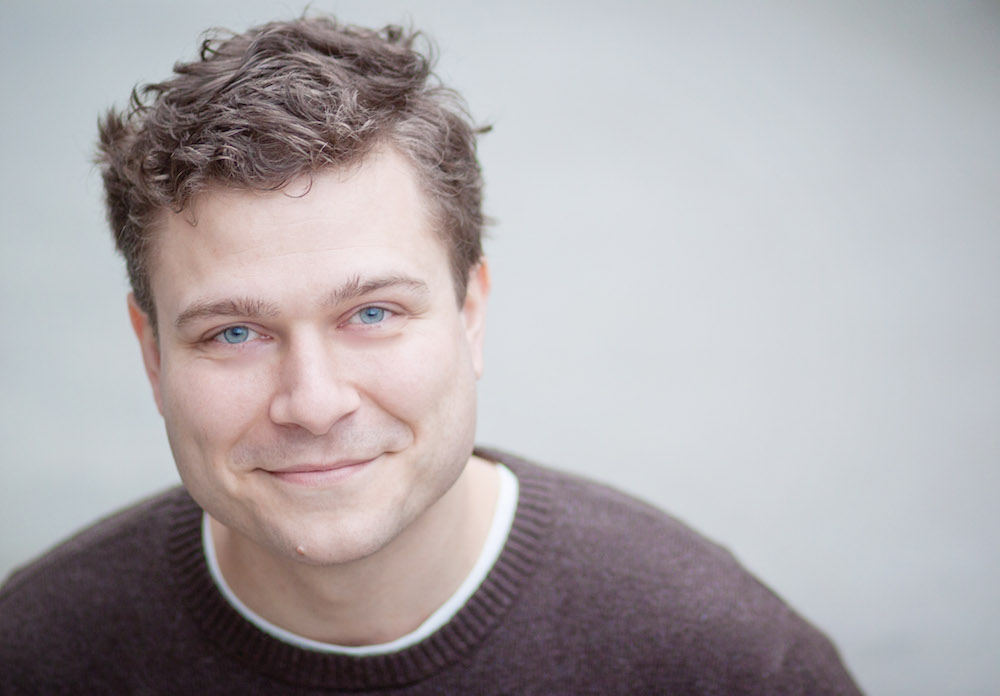
Image result for kevin mcpherson eckhoff photo

kevin mcpherson eckhoff

ABOUT THE POET
Kevin McPherson Eckhoff is a writer, an actor, a teacher, a hubbub and a daddoo. The Globe & Mail described his most recent book—their biography (BookThug)—as “wide-ranging” and “incredibly playful.” He plays one of the lead characters in Sean Braune’s feature film Nuptials. By day, he teaches writing and shit at Okanagan College with his very star bff, Jake Kennedy; by night, he lives on unceded Splats’in Territory with a Laurel and two miniscule muscular men.

gaspereau.com

809


DISCLAIMERS

Poems cited here are assumed to be under copyright by the poet and/or publisher.  They are shown here for publicity and review purposes.  For any other kind of re-use of these poems, please contact the listed publishers for permission.

We here at TBOP are technically deficient and rely on our bashful Milo to fix everything.  We received notice from Google that we were using "cookies"
and that for our readers in Europe there had to be notification of the use of those "cookies.  Please be aware that TBOP may employ the use of some "cookies" (whatever they are) and you should take that into consideration.

Thursday, September 12, 2019

Cyclone - Robert Peake (Nine Arches Press)

Today's book of poetry:
Cyclone.  Robert Peake.  Nine Arches Press.  Rugby, United Kingdom.  2018.


Today's book of poetry liked Robert Peake's Cyclone very much, hence today's blog/review.  But we love, love, loved Peake's series of poems "The man with the kindest face...".  In this mad weary world Peake is only too happy to tell us about the horrors, about "Waking Up to the Last Winter on Earth."  Peake's "kindness" poems offer us a balm, a salve, a hope, a chance.

The man with the kindest face
pumps up your bicycle tyre

He keeps his eye on the task, fitting the hose and
squeezing the bulb, like a man-sized pollinator. The
tyre lets out a sigh of relief. "Good as new," he lies,
admiring your beat-up Schwinn. His eyes are trained
to see chrome, not rust, skip over the tar-blackened
chain. He glances up. He'd best be on his way.s

πŸ’«πŸ’«πŸ’«

Today's book of poetry always thought old Willy the Shakes' Prospero was the keeper of storm knowledge but Peake makes a strong case for his own expertise in Cyclone.  Robert Peake seems a little tired of our clumsy nonchalance with the world we've inherited.  In these poems there is a dark ring of foreboding around any ray of hope.

Then, the cheek of the man, to leave us at the end of all these various miseries, he leaves us with a love poem, of genuine sweetness and cheer, to tie up the loose ends.  Peake is doing it with his tongue in his cheek, but it is still part of Whitman's "yawp" ("I sound my barbaric yawp over the roofs of the world.") or WCWilliams' "Paterson" ("we sit and talk"), and Ginsberg's "Howl".

Horse Optimism

Rain sweetens the grass,
and the sun makes it tall;
no flies on windswept days;
no restless leaves when calm.

At a distance, I see where you are.
Up close, I smell where you've been.

Sun dries the mud,
dew decorates the field.
Lie down in summer heat,
stamp against the chill.

Halfway through every journey out
we begin the ride back home.

Sweet grass from rainy days
a field sparked with dew
breeze to blow the flies away
the sight, then smell of you.

πŸ’«πŸ’«πŸ’«

Things in the Today's book of poetry universe are in flux at the moment.  There are always some transitions to be made at the end of the summer, students coming and going, new interns, old office tech.  So our morning read changes as people come and go.  Kathryn, our Jr. Editor, and Milo, our head tech, met here at Today's book of poetry, married last spring, and they are now getting ready to go off and write some poetry of their own.

Maggie, our newest intern, just celebrated her first anniversary here at Today's book of poetry, intern no more, she'll be taking over from Kathryn.  No one can replace Milo so don't even talk to me about it.  They will be missed but loved.

Robert Peake's Cyclone made for a lovely read despite the numerous changes here.  Strong poetry holds up, simple as that.

And isn't this the way all poets feel, frequently...

Failure to Thrive

I awoke, late afternoon, to a summer storm,
realising I had done none of the things
that the dead white men, who wrote history
expected me to do to get added to their book,
and that the stream of productivity, running on
like an endless sentence from the past, was one
I punctuated far too often with a nap. The smell
of the rain came through the smallest window crack.
It was late summer. The rain had no idea of its
ending, and the smell was great with promise
for a week of gentle breezes pushing sculptures
of white cloud, the kind I could never write about
well enough to distinguish myself from the 773,000
cloud poems Google offers up to me for a click,
in point three eight seconds, because that's how fast
you have to be now to be somebody. The spare room
I favour sleeping in by day became almost imperceptibly
green, in the shadow of the thunderhead's contemplation,
yet I was there to see it, with the cat, who said nothing.

πŸ’«πŸ’«πŸ’«

Most poets at my end of the pool share these sentiments with regularity.  Robert Peake is not alone in his self-assessment but he is somewhat misleading.

Today's book of poetry thinks Peake has done enough to distinguish himself.  Cyclone is one eloquent burn.


Robert Peake

ABOUT THE POET
Robert Peake is an American-born poet living near London. He created the Transatlantic Poetry series, bringing poets together for live online readings and conversations. His film-poem collaborations have been widely screened in the US and Europe. He is a poetry surgery tutor for the Poetry Society in Hertfordshire, and writes for the Huffington Post. His debut The Knowledge, was published by Nine Arches Press in 2015, and his second poetry collection Cyclone is published in July 2018, also from Nine Arches Press.

BLURBS
‘Cyclone takes the strengths of Robert Peake’s previous work - candour, intensity, a hard-won wit - and enters the storm, in search of an answer to the question raised by his heartbreaking ‘Why I Should Be Over It By Now’. Built around four remarkable sequences, this new collection takes him into the most difficult of territories - grief and parental loss - to recover the possibility, however fugitive, of healing. The ‘Cyclone’ here is both personal and political. In such turbulent and shrill times, this is his most powerful work to date.'
     - Michael Symmons Roberts

'Homesickness, belonging, and travelling without arriving are just some of the terrain covered in Peake's Cyclone, but it’s the vitality and emotional courage in the language of these poems that one is most struck by — language stepping in and out of the shadows and yearning ‘in the silt-choked afterlife of someone’s grief.’ A beautiful book that deserves to be lingered over and read widely.' 
     - Mona Arshi

'Relentless and gorgeous, Cyclone is where poems of awe and of mourning the infinite “Cognates of Grief” converge, bless and roar. In its searching for “What Will Survive Us,” Robert Peake’s second collection is as tender as it is overwhelming, as intimate as it is expansive. He asks “What becomes of longing / when the fire goes out?” “Has there ever been such a thing as progress?” “How much do you need?” and answers with aftermaths, the “wild dance...between the gathering clouds and ionised land,” a braving of history and memory and home. I am deeply thankful for this book—its guts, its grace.'
     - R.A. Villanueva


15. 10. 2017 Robert Peake & Paul Stephenson read new works from their new poetry books at The Tennessee Bar = 2, rue AndrΓ© Mazet 75006 Paris, France. 
Video: Poets Live


783
DISCLAIMERS

Poems cited here are assumed to be under copyright by the poet and/or publisher.  They are shown here for publicity and review purposes.  For any other kind of re-use of these poems, please contact the listed publishers for permission.

We here at TBOP are technically deficient and rely on our bashful Milo to fix everything.  We received notice from Google that we were using "cookies"
and that for our readers in Europe there had to be notification of the use of those "cookies.  Please be aware that TBOP may employ the use of some "cookies" (whatever they are) and you should take that into consideration.


Monday, August 19, 2019

A Girl's A Gun — Rachel Danielle Peterson (University Press of Kentucky)

Today's book of poetry:
A Girl's A Gun.  Rachel Danielle Peterson.  The University Press of Kentucky.  New Poetry and Prose Series.  Series Editor Lisa Williams.  Lexington, Kentucky.  2017.

34331918. sy475

Today's book of poetry has no idea what to make of Rachel Danielle Peterson's A Girl's A Gun.  Oh, we know we like it, we like it a lot.  But we are unable to put our finger on exactly where Peterson took flight to dance fancy with her angels of desire, her demons too.

A Girl's A Gun hits the bull's eye with her first shot, it is splendid from the opening salvo.  But some consideration is required to get inside Peterson's patois, mountain codes.  Her language is heartbreakingly familiar and at the same time foreign enough to make us feel unsure, nervous.

A Girl's A Gun feels like your first time drinking corn liquor, you know you're drunk but where did this speaking in tongues come from?  Suddenly language and voice become magical.

Love Song of the Sea-Girl

In the rearview mirror:
             passenger's side,
             marine eyes, patina.
Sweat. Just you and me
in a hushed, hothouse flush.

Scrape and save,
             just scrap the sulk
             of holy here.
No priest to crook my knee,
say naughty. Naughty!

Feel the god within me
             flee somewhere low,
             like a
hanged man's soul
flees where? We don't know.

Lover, you smile
             that solid grin
             from braces and bleach,
sign a heart on
each beaded windowpane.

I should just shush,
             be sweetie pie, dove,
             beneath the dread
lull, the hymn, the
windshield's swift wipe.

Catastrophe can be fine
             sometimes, when found
             in a catapult, words
from a slur.
I won't get hurt again.

I'll leave, caress the steel,
             the wheel that bends
             this way, neither
a king nor prince of anything,
just a trim-coifed queen alone.

Cleopatra and her billions,
             those stoney-eyed ,
             mermen so swoony,
they still crave
a tune about then.

I'll give them a song.
             Way down in Egypt's land,
              I grow up, I grow up.
O Lordy, let my people do the same,
but they will never grow up.

So, I will watch
             the Derby and sip
             a mint julep, elegant
and be forgot.
You'll enter from behind.

My gods, still my eyes,
             extend us beneath
             that delicate shell.
Any moon is made of honey,
if you hold fast, tight,

when you open my mouth
             red as a gill
             or a wound,
I'll croon for you, sweet baby
Only you.

πŸ’«πŸ’«πŸ’«

A Girl's A Gun gets smoking hot.  The poems range from coming-of-age poems to songs of pure romantic need and joy, all of it in a language both ancient and new to us.  At times A Girl's A Gun sounds like it might be coming from a pulpit of a new religion.  In this religion the heart rules the realm and we know the power of women.  We are witness to a new conflagration of faith.

Rachel Danielle Peterson burns.  Peterson burns electric and blue, burns with, as Walt the Whitman said:

     "Do I contradict myself?
     Very well then I contradict myself,
     (I am large, I contain multitudes.)
     Keep your face always toward the sunshine -
     and shadows will fall behind you.
     I celebrate myself, and sing myself."

Peterson embraces herself, lets loose a fiery torrent that the reader cannot help but admire.  These poems all come heavy strength.

The One

I was cursed with eyes of emerald, to leave
the backdoor unlocked, and he would see
would fill the room, such a head of honey-hue,
more blonde than most I've found.
Amid acres of soybeans lush, strange,
like he always was, like I could be,
I was Dorthy to his Cheshire King.
He ran, shirtless, through fields.
He had a smile without a cat.
It would spread from him to me,
from one kiss from the red tenderness of lips.
One breath, and you'd disappear, you'd die.
Dangerous predicament for those without soul.
Though different in many ways, there was little
I held back, wouldn't let him slip in,
a cancer stick shared between the meeting
of our eyes. I felt responsible, do it right,
for goddamn once. But, always there are always but's.
Sometimes, there was grass in his mouth,
and his face held a look like brass,
cattish, inward. One pregnancy scare made him
Existential to cross his emptiness,
fear of death. No human could comfort him,
no matter how he'd worship a knee.
At the back door with some SoCo, he said,
write but don't write about me, so I didn't,
I tried to do it right, and write about
Odysseus, another sharp one. Didn't you know
that he could dive like a shark?
Like him, I have few fears now
because I've been beneath clothes,
beneath water, until a part of me was gone.
He loved the crush of ocean in his ear,
like I love the reach of the sea.
Even if he forgot my smell, I recollect
the aroma of Old Spice, bourbon whiskey
as clear as anything can be. How I wish,
why do always wish for what will never be?

πŸ’«πŸ’«πŸ’«

Old Walt insisted on sticking around for the morning read here in the Today's book of poetry offices.  He crushed Peterson's poems every time his turn came around.  Great reader and great sport.  A Girl's A Gun takes dead aim, every sharp shot more clearly defining Peterson's poetic identity.  There were some struggles with dialect and idiom but it never got in the way of Peterson's sense of purpose or direction.

Today's book of poetry was in full learning/loving mode as these poems spread across our horizon, seemingly at the speed of light.  A Girl's A Gun cracks your head open.

Redbird

            for Sarah Hubbs
     
     "If happiness never comes, what is a life?"

       July 2015, Saipan

When you live in Ohio, you live for oxygen,
even the girl who was shot in the mouth
in her bedroom on a very clear day.
Ohio was hard on us, but I will always survive,
take more than I need, yessir, wrap my legs
around something, even as they hush me.

     ❧

Boom, that's what tragedy feels
Like you can never return again.

     ❧

Even if you've lost your eyes,
I will tell you wonders that will drip
lifeblood onto lashes,
Even if you can't hear me,
does it matter?

     ❧

I wasn't as good a friend
As I should be, never am.

Sometimes, I'm afraid that I
Don't need people enough.

Sometimes, maybe, too much.
I tell myself a lie older than any cemetery.

Lean close, maybe I'll tell you.
Only the dead should hear it,

Maybe you're dead—or will be.
The page you touch now,

the sly soul that fills in
when dense eye strays down.

You want a good story.
So, I'll have to improvise:

Imagine this—

jagged outline, molten galaxies
coal and volcano, we have tears that beat
the brain an' heart, the inevitable groans.
Their need? Ta crack open, like a comet's flame,
a tangle hand down into black hair,
gray or blue—none of it matters then!
the flare of the sun, one constellation,
Three Fingers that spark the tenderness.
    
    ❧

So, let the suns explode,
But will my lover come

Dripping honey?
The question you dead can't ask,

but I can. I have to.

     ❧

Cardinals do,
but who can truly
mate for life?

No one
that I have
clenched mid-flight.

Can birds
be truer
than we suppose?

O plumes
of gray-blue,
crimson-hue we'll have.

Yes, I'll lose
myself,
and have to wing it.

The cardinals
will somehow
gore, scatter the

glistening
seedpods of
these graves,

their flowers,
hibiscus, and—God—
red-violet leaves

falling in
an April shower,
another flaming tree,

not just
in Kentucky,
but everywhere,

something red
will break out.
Sweat honey

on the rock,
that's what they say
on the day

the past can be revised.

Here's my attempt, anyway:

Around 2005, the porch-light flickered off, then on. He blocked
             the doorway with a human outline, a shadow.
Either, we stumbled toward the falls. The wallop grazed each
        eardrum.
                        Wading in calf-deep, I was happy, strong, splashed him
wanting to peel off my clothes, the water to whir like a prism
                        hiding every distraction. I wanted to be hip-deep,
in you and me, at you, at us, before inevitability.

Close your eyes, feel this lay on your forehead. Tell me
                     again about the faucet, water Mama drew so hot
that the porcelain wept deep as anguish.
                     Hard to tell. Maybe the wet came from over there,
your lashes hesitating to give way, to flutter.
                     Either way, you bit that pouting bottom lip,
groaning all the while for the content you get
                     from lipstick on nose's cradle, you don't
wanna rub it off. Just like I am made to hunger
                     after the musk of your dark, hidden hairs,
trilling for each and all. Even you, marked by
                     freckles, scars, divides, be proud of each,
these kisses savored under sun, yes
                     the sun inside, and someday right now
my fragrant, flowered love. By some magic bullet
                     or by sunshine, some way, every page will rise
into sky, like oxygen, from those red lips to mine.

πŸ’«πŸ’«πŸ’«

Today's book of poetry loved Rachel Danielle Peterson's A Girl's A Gun.  Wickedly powerful, powerfully wicked.

Peterson has an honest authority, she wields language like a sharp knife, she cuts clean.  These poems burn hard.

Rachel

Rachel Danielle Peterson

ABOUT THE POET
Rachel Danielle Peterson is a contributing editor at Poet’s Quarterly and a member of VIDA. Her work has received numerous honors and has been featured in Front Porch, Literary Imagination, Arsenic Lobster, Midwestern Gothic, Los Angeles Review, Upstart, Her Royal Majesty, the Inspirer, and Revolver.

BLURBS
Rachel Danielle Peterson’s collection, A Girl’s A Gun, reads as part tall tale, part bildungsroman, part geode. These are poems meant to be enclosed in a palm and pressed against the heart. Peterson’s strengths are in her cinematic depictions of women, her vibrant imagery, and the precision with which she code-switches into the tongue of the mountains. The heady combination leaves the reader a bit breathless and we plummet with her into a line that feels like proverb, such as in ‘Birthday,’ ‘The heart is cruel/an organ with no song.’ These poems do not balk at their own content, circling around love that is tough or risky or absent or misplaced. They press on, lead the way, suggest that there’s no way around but through.
      — Bianca Lynne Spriggs, author of Call Her by Her Name: Poems and The Galaxy Is a Dance Floor and coeditor of Undead: Ghouls, Ghosts, and More and Black Bone: 25 Years of the Affrilachian Poets

With a mouth full of sticky mountain laurel, Appalachian soul liquor, exclamatory verve, iconoclastic Biblical gospel, and tender purchase, Rachel Peterson’s A Girl’s A Gun cross-talks with a prodigious and prodigal personal and poetic tribe that includes family members, figures from mythology, Jeanne d’Arc, Apollinaire, and a host of hymns and rock ballads. 'Home is in the vocal chords— / the sound,' she writes in 'Harlan County.' By turns vernacular and soaring with lyricism, Peterson’s foray into the emotional violence, Eros, and beauty of the places that hold us, and that we hold inside, evokes another American innovator, Emily Dickinson, who not only felt her life to be a loaded gun but who also, like Peterson, puts language under such unique psychological pressure that it almost seems to be its own tongue. 
     —Lisa Russ Spaar, author of Vanitas, Rough and Orexia


778

DISCLAIMERS

Poems cited here are assumed to be under copyright by the poet and/or publisher.  They are shown here for publicity and review purposes.  For any other kind of re-use of these poems, please contact the listed publishers for permission.

We here at TBOP are technically deficient and rely on our bashful Milo to fix everything.  We received notice from Google that we were using "cookies"
and that for our readers in Europe there had to be notification of the use of those "cookies.  Please be aware that TBOP may employ the use of some "cookies" (whatever they are) and you should take that into consideration.

Saturday, February 23, 2019

Rail - Kai Carlson-Wee (BOA Editions Ltd.)

Today's book of poetry:
Rail.  Kai Carlson-Wee.  A. Poulin, Jr. New Poets of America Series No. 41.  BOA Editions Ltd.  Rochester, New York.  2018.

Rail - BOA Editions, Ltd.

Kai Carlson-Wee lays out his songs of joy and sadness with such careful modulation that it is easy to miss the big moments.  

Nope, that doesn't cut it, another lesson in "first thought" not always "best thought."

Today's book of poetry will start over, try again.

Rail by Kai Carlson-Wee is a little unlike any ride we've ever taken here at Today's book of poetry.  We see and hear Kerouac, Whitman, W.C. Williams, and we're not even warmed up.  Carlson-Wee is world-weary and yet believably innocent at the same time.

We are all "hoping for some other miracle" as Carlson-Wee sings in his poem "Oaks."  Reading Rail will cement connect you to this young writer as though you had stumbled onto a crime scene you won't ever forget.

Rail

I find it here in the wild alfalfa, head full
of antipsychotics and blue rain. Twenty years old
on a freight train riding the soy fields
into the night. Leaning away from the shortgrass
prairie, the black Mississippi of dream.
My brother asleep on the well-wall beside me,
nodding his head to the sway. What home
are we leaving? What distances blur
the electric fence? What hundred low thundering
wheels of darkness are coming to carry us
there? Rain and the singing wind, over
the auto-racks. Staring out west at the stars
of our gods and the lonely dark stars of our hearts.
Boarded-up storefronts, burned-down
apartments, highway signs that only name
the dead. We cross the station tracks,
the broken legs of Sunday chairs left rusting
in the yards. We know the way the story ends.
Still, the whistle blows. The flare stacks whip
their excess methane candles against 
the night. The wheels that brought us this far
still roll, still churn the polished iron ash.
The road goes on. The highway turns a deeper
shade of black. And as the sun sinks down
on the eastern Montana hills, peppered with horses
and gun-shot cars, the rails still lead us
somewhere else, and shine in the falling light.

πŸ’«πŸ’«πŸ’«

Kai Carlson-Wee is no Tom Sawyer or Huckleberry Finn, but he may be the new American generation given voice.  And it is one clever and clear siren cry.  Mr. Carlson-Wee is young in age only, his voice is pure experience.  

Pure of heart but stripped of dreams, these poems promise nothing.  No promises, but a loud and unmistakable sirenwail that Carlson-Wee is on the job, he will mark the passing.

Damn it.  Today's book of poetry just turned Rail over and read the blurbs.  Today's book of poetry tries to avoid the blurbs until finished so they don't upset the works.  In this case, Robert Bly is as impressive as Dorianne Laux.  But then Sir Campbell McGrath.  Sinner/Saint/Savant/Seer and one of our heroes....

In Today's book of poetry poetry world it does get much more hallowed than Campbell McGrath.  Today's book of poetry was very pleased to see that McGrath has the same, very high, esteem for Kai Carlson-Wee.

Today's book of poetry thinks Carlson-Wee writes poems so well you might be lead to think he found them, carved in stone, in some sacred poetry place.

King

                               for Nik Zeidlhack 1981-2007

I go to the guardrail, looking out over the sea-foam.
Looking out over the salmon heads breaking
the waves. Muscling back to the place of their birth.
Trapped in the floodlights, failing to leap up the dam.
Sometimes the clarity. Sometimes the clarity
and night-river steaming. Time standing still
in its permanent memory. Flies in the backwater
gathered to feed on the skin. The smell of the ocean.
The waters combining with other more powerful
waters. Riding away from whatever would save them,
knowing the other direction is pointless and not worth
suffering through. What holds us together but also
what trembles. The first time you look at an actual lion,
pacing the length of its cage. The small irreversible
ink-stain breaking the face of whatever we skate on.
Slumped at the edge of your girlfriend's bed. Your
pulse gone flat. No sweat. No resistance. No steam
on the hand-held mirror they tested for breath.
The day you were found I watched ducks drop down
on the Nooksack River in pairs. Drifting together
in multicolored light, leaving small growing trails
behind them. At first I thought only the lights
were alive. The river, the fish, the clusters of flies—
they were tricks being played on the eyes. But now,
getting up on the guardrail, watching the line
where the river and ocean waves meet, the half-formed
outriders failing inside us, and something behind
all the highway signs shining. Not clarity of thought,
or light, or time. But clarity of small things believing
in themselves. Dark heads breaking the surface
again. More than the living. More than the dead.

πŸ’«πŸ’«πŸ’«

Our morning read was a delight.  Spring is in the air in Ottawa, although we know all too well that winter is not over.  Spring is in the air; that's the same thing as saying "we have new hope."  Rail could be seen as simply that, new hope.  But there is so much more going on.  Kai Carlson-Wee's Rail is an embarrassment of riches.

Our small cabal here at Today's book of poetry read Rail out loud with sentiments approaching glee and astonishment.  

Such extraordinary gifts and Carlson-Wee is a young man — there will be, we hope, much more poetry from this marvel.  Today's book of poetry will be waiting.

Seven-Day Fast

Now I forget what I wanted to say about hunger.
The tree's sharp arrangements of lines
on the white sky, clusters of off-shooting
branches dissolving among them
like outdated scans of the brain.
Faded by sunlight, or disuse, or whatever.
I barely imagine by what. The gathering
dust on the shoebox they wait in.
Filed away for a future appointment
with some other specialist, talking of
networks, compatible pathways,
unsourced receptors, the closest
approximate rate of attrition. They talk
with the same sympathetic restraint
used for death. We see the sterility first,
predictions unfolding in ribbons
of uncharted highways beyond
other skies. We use metaphors
like this. We say the spirit is more
than the critical mass. We say prayers
are reflected in atoms, in snowflakes
freezing, in magnified raindrops.
We say there is no way of knowing
the will. The hand held flat to the palm reader's
always astonished tones. We say dreams.
A series of blackouts, minor strokes.
We say there is more than the body's
measurable electrics. The forgotten
children who stand at the bedrail,
showing us pictures of speedboats and horses,
our own selves posing with tulips and lilacs
in front of our whitewashed homes.
We say the soul. The out-riding weather
inside us. The down-pouring water
that runs from the mountain, that sleeps
in the frozen beet field, that denies
this hunger, that sings in the blood.

πŸ’«πŸ’«πŸ’«

Kai Carlson-Wee is a cowboy/poet/prophet, just like his publisher claims.  It ain't bragging if it's true.

Image of Kai Carlson-Wee

Kai Carlson-Wee

ABOUT THE AUTHOR
Kai Carlson-Wee is the author of Rail (BOA, 2018). He has received fellowships from the MacDowell Colony, the Bread Loaf Writers' Conference, the Sewanee Writers' Conference, and his work has appeared in Narrative, Best New Poets, TriQuarterly, Blackbird, Gulf Coast, and The Missouri Review, which awarded him the 2013 Editor’s Prize. His photography has been featured in Narrative Magazine and his co-directed poetry film, Riding the Highline, received jury awards at the 2015 Napa Valley Film Festival and the 2016 Arizona International Film Festival. With his brother Anders, he has co-authored two chapbooks, Mercy Songs (Diode Editions) and Two-Headed Boy (Organic Weapon Arts), winner of the 2015 Blair Prize. A former Wallace Stegner Fellow, he lives in San Francisco and is a lecturer at Stanford University. For more information about Kai Carlson-Wee, visit kaicarlsonwee.com.

BLURBS
“Rail is a lovely book, strong and inspired.”
     —Robert Bly

“This is a wholly unique and powerful collection of poems. The sense of purpose puts one in mind of Whitman’s ‘Song of the Open Road.’ Encounters with fellow vagabonds recalls the tramp-poetry of Vachel Lindsay. But the darker need to search for meaning in the American plains and points farther west—a vastness forlorn and almost unknowable—belongs to the particular vision of this poet. His journey through our national ambiguity discovers a flicker in our roots, a spark popping from obscurity that rises into the heavens. The lived experience behind these deft and subtle poems seems necessary, and reiterates the fact that resilience is not only a feature of the American character, it is a recurring tenet of American art.” 
     —Maurice Manning

“Brotherly love, a sense of displacement and lost time, and the deep care that reminds us of our humanity, form the heart of this book. These poems are a scavengers guide, a survivalist manifesto, a reminder of the way our daily experiences can fuel and forge our faith. A hauntingly beautiful and unusual debut.”
      —Dorianne Laux

“Equal parts dithyramb and lament, the great American bardic tradition celebrates lonesome wandering even as it hungers for enduring communion. Kai Carlson-Wee is a worthy inheritor of its dusty mantle, worn by Whitman and Kerouac before him, and Rail is a moving testament to the territories of freight trains, Minnesota roads, dumpster diving, and brotherhood. ‘The road goes on. With or without us.’ Yes, but how much better to have this unforgettable music to guide the way.”
      —Campbell McGrath


Kai Carlson-Wee
Reading the poem Thresher at the Best New Poets Reading in Madison Wisconsin, December 9th, 2010
Video: Kai Carlson-Wee


740

DISCLAIMERS

Poems cited here are assumed to be under copyright by the poet and/or publisher.  They are shown here for publicity and review purposes.  For any other kind of re-use of these poems, please contact the listed publishers for permission.
We here at TBOP are technically deficient and rely on our bashful Milo to fix everything.  We received notice from Google that we were using "cookies"
and that for our readers in Europe there had to be notification of the use of those "cookies.  Please be aware that TBOP may employ the use of some "cookies" (whatever they are) and you should take that into consideration


Friday, March 30, 2018

Union River - Poems and Sketches - Paul Marion (Bootstrap Press)

Today's book of poetry:
Union River - Poems and Sketches.  Paul Marion.  Bootstrap Press.  Lowell, Massachusetts.  2017.

Union River: Poems and Sketches

"The United States themselves are
essentially the greatest poem."
                                                                             - Walt Whitman, Leaves of Grass

Today's book of poetry almost walked into a wall last night while trying to remember just how attached Jack Kerouac was to Lowell, Massachusetts.  Today's book of poetry heard through the poetry grapevine that Paul Marion was involved with a Kerouac book a few years ago.  Then I'm thinking Robert Lowell's For the Union Dead for some damned reason.  Kerouac was searching for an America that was yet to exist and Lowell was lamenting a generational slaughter and still embracing that "greatest poem" the United States.  For the Union Dead is, as G.S. Fraser said in The New York Times, "a song of praise."

All of that to lead us to Paul Marion's Union River which we will contend is another song of praise and a worthy inclusion in that great American songbook.  Paul Marion has sunk over forty years of poetry into Union River and there is some deep water.

Mississippi Delta Blues Ballets Russes

     Muddy Waters (McKinley Morganfield) and George Balanchine (Giorgi Balanchivadze) both died
      on April 30, 1983.

America's all over the map.
Pick your plague, grab your cure.
There's no front curtain, no wall in back.
Every ticket has its price,
Any fence is full of holes,
And it's an open field from Montana to Canada.
America's all over the map,
It's a human soup boiled from scratch in gypsy pots,
Crazed vessels, rare skillets, iron bowls that were stashed in bags,
Lugged by hands of every language over purple hills,
Along the glacier trail, through a plasma sky, straight from the steppes.
America's all over the map, its mix a staple crop..
Muddy Waters pirouettes on steam-guitar, spreads the blues on canvas.
He's a rolling stone in the bayou, a boatman on the Volga.
There's a French Quarter balalaika, there's a jazz master in Red Square,
There's George Balachine in a golden cowboy suit.

...

It is an American dream of sorts although we never see Grand Funk Railroad in here anywhere.  Marion rambles over the American psyche, landscape, and his vision of the vast impressionist painting of a country spread like a quilt under the 49th parallel.  Paul Marion's catch-all is over-flowing with love for the American dream in all of its variations.  Not a vulgar image of jingoistic hysteria but a genuine exploration and understanding of what really does make America great.

It's not like Union River is beyond noticing some of the enduring legacies of discord and the painful truths that accompany systemic racism, aboriginal neglect/genocide, the American war dead and the emotional cost of demanding the lives of the poor in payment to feed a nation's war-machine.  Marion is packing it all in there along with the bread and circuses.

The Blackfeet Indian Pencil

I've been told I'm part Indian, but don't believe it.
North American tribe. Canadian blood.
Snow country natives. First people to make love on the continent.
The Marion, Ohio, All-Indian NFL team of 1922
Fielded Arrowhead, Black Bear, Deerslayer, Wrinkle Meat,
Laughing Gas, Red Fang, Baptiste Thunder, Lone Wolf, and Deadeye.
Indians made this pencil I'm using.
Same business as Henry Thoreau before his trip up the Merrimack River.
Like Jefferson and Lincoln, Marion spreads across the states,
Praise for the Swamp Fox, General Francis Marion,
Who tied the British in revolutionary knots down Carolina way.
Southerners captured the North's Merrimack, renamed the ship Virginia,
Then armored it for a clash with the Union's ironclad.
Marion Drive crosses Sunset Boulevard.
When actress Ruth Marion died in Carmel last week,
The L.A. Times praised her as "a stroke of good luck to her friends."
Her screen-star father had romanced Greta Garbo.
Jazz Age-script whiz Frances Marion earned Academy Awards.
I had not heard of the Hollywood Marions.
Costa Mesa, California, has a Merrimac Street.
In Missouri, one river is called Meramac.
The word can mean "Strong Place" in Algonkian,
Language of tribes from Massachusetts to the Rockies:
Pawtucket, Pemigewasset, Ojibawa, Cree, Fox
Shawnee, Arapahoe, Wamesit, and Blackfoot.

...

Most importantly, to Today's book of poetry, is how Marion is doing all this hard work and still coming up with poems that read like apple pie, peach pie, cherry pie, American Pie.  Paul Marion's Union River is tackling Ken Burns documentary territory in an attempt to tell the American story with as much unfettered and unfiltered honesty as his lens will endure.  These are fine poems and damned good stories.

The morning read here at Today's book of poetry was held under some minor duress.  It's a holiday weekend here in Canada and even though each and every one of our considerate and considerable staff is a complete heathen they all claimed religious fevers of one sort or another and abandoned their posts with considerable haste yesterday afternoon.  Only Max, our Sr. Editor, remains in the office today - and he was drunk on communal wine and rum-balls when I first opened the door to his dark cavern around eight this morning.  He was mumbling about the double-space after a period and whether the name Stormy was going to ruin weather based nom de plumes for the considerable future.

Harry at the Lowell Conference

He kept telling us he dropped out of high school, but Harry spoke as well
as any old politician at a hotel banquet. He asked why the U.S.A. and
South Africa are the only modern countries without national health care.
He called Reagan "a turkey" and described a White House full of smoky
mirrors. Harry Callahan of the Industrial Workers said Nancy's idea of
cruel and unusual punishment is being dragged to Sears and forced to
pick a dress off the rack.
     Harry isn't sure Labor should be a political party, but won't rule
it out. "We're like rats," he said, "and when cornered, we'll fight -- fight
dirty if needed." Harry went to the Soviet Union. He said they have
hearts and put pants on the same way we do. "Why shouldn't I go to
learn something? The Pepsi and Caterpillar executives go twice a month."
He wonders why Americans don't know history. He said most people
want to be in unions, but aren't -- people can see that union workers
make more a week.
     Harry said, "The democracy has problems. There's no democracy
at work -- never has been. American businessmen want authoritarian
systems at work." He said he might be the first guy to put a bullet between
the eyes of a capitalist if the fight goes to the street. He tells that to
businessmen, he said, and they listen, confident that it will never happen.

...

Today's book of poetry was very impressed with the passionate voice of Paul Marion and the reasonable speech of his sound and hearty Union River.  This is mature poetry and flawless story-telling from a first rate poet.

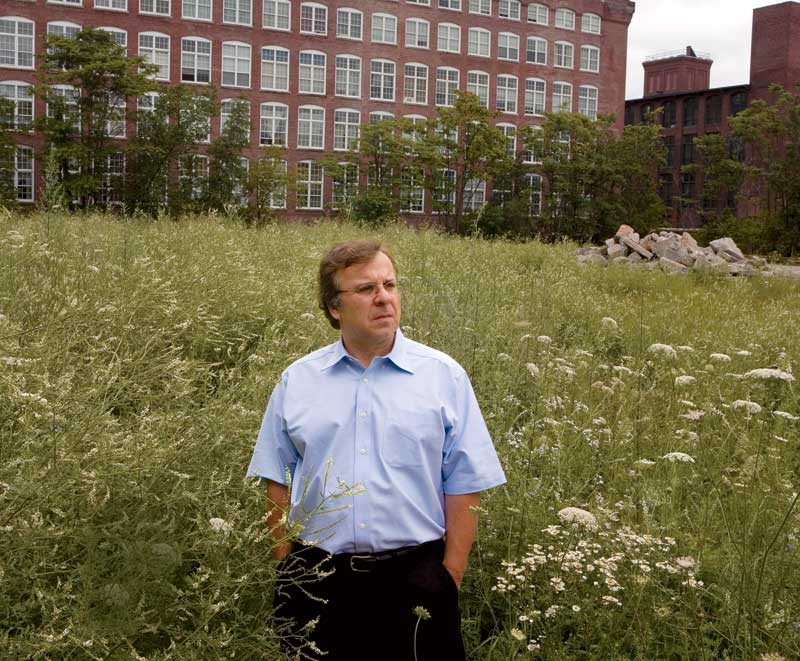
Image result for paul marion photo

Paul Marion

ABOUT THE AUTHOR
Paul Marion is the author of several collections of poetry, including Strong Place (1984) and What Is the City? (2006), and editor of Atop an Underwood: Early Stories and Other Writings by Jack Kerouac (Viking/Penguin, 1999), which has been published in translation in Italy (Mondadori) and France (DeNoel). His book Mill Power: The Origin and Impact of Lowell National Historical Park (Rowman & Littlefield, 2014) documents the making of a new kind of national park in Lowell, all told in the context of the city’s notable urban renaissance since 1970. A new collection of poems and sketches, Union River, is due in 2017 from Bootstrap Press. The book is a lyrical Americana address spanning 40 years of writing.

His poems and essays have appeared in Alaska Quarterly Review, Bohemian (Japan), Bostonia, The CafΓ© Review, Slate, Carolina Quarterly, The Christian Science Monitor, The Massachusetts Review, Public Art Review, Salamander, The Salmon Literary Quarterly (Ireland), Wisconsin Review, Yankee, and several anthologies, including For A Living: The Poetry of Work (University of Illinois Press), French Connections: A Gathering of Franco-American Poets (Louisiana Literature Press), Line Drives: 100 Contemporary Baseball Poems (Southern Illinois University Press), QuΓ©bec KΓ©rouac Blues (Canada), and Visiting Frost: Poems Inspired by the Life and Work of Robert Frost (University of Iowa Press).

bootstrappress.org
672


DISCLAIMERS

Poems cited here are assumed to be under copyright by the poet and/or publisher.  They are shown here for publicity and review purposes.  For any other kind of re-use of these poems, please contact the listed publishers for permission.
We here at TBOP are technically deficient and rely on our bashful Milo to fix everything.  We received notice from Google that we were using "cookies"
and that for our readers in Europe there had to be notification of the use of those "cookies.  Please be aware that TBOP may employ the use of some "cookies" (whatever they are) and you should take that into consideration