Today's book of poetry: Vs. Kerry Ryan. Anvil Press. Vancouver, British Columbia. 2010. (Finalist for the Acorn-Plantos Award)
Kerry Ryan's Vs. is a book of narrative poems about her experiences in the cloistered world of boxing.
I have been a boxing fan since I was a very young man. I've always loved the intensity.
If you watch much boxing at all you'll begin to notice the most remarkable thing. Almost without exception, when a match is over, the two boxers hold each other like lovers.
throat
Watch the twinned ridges
of gristle twitching
with every strained breath
Never look at gloves
or she'll get you like a pickpocket;
the left distracting with magic and jabs
while the right sneaks in, ransacks
Read next punch
in the shadow of clavicle
Don't let her eyes hook yours,
drown your resolve
in reedy undertow
Lock onto her heaving collar,
throw six inches north or south
look at her nose, chin,
only with the steady leather attention
of your unflinching fists
...
These poems do the leg work that all boxers must. They are up before dawn and shadow-boxing the sunrise. Ryan romanticizes nothing about the feel of leather on the nose as the fist behind it tries to dispose of your need or the bruised ribs that fight off sleep, dust your dreams.
Joyce Carol Oates wrote a great book in 1987 called On Boxing that received much acclaim and deserved attention. Kerry Ryan's Vs. belongs on the same shelf, the same pantheon.
There aren't that many great boxing books by women and this is certainly the first poetry collection I've encountered that dares slip on the gloves.
Muhammed Ali is famous for his poetry and wit - but his poetry, as much as I admire the great man, is the child's nursery rhyme. Ryan gives us so much more.
ribbing
Hours after, her glove still pries
your ribs apart,
clenches lung, twists
You whimper in the bed,
wake with every breath,
shudder at the lapse
that left you prone
to the boulder of her right
Days later, clinic waiting room
each breath a thimbleful of air,
you press palms against ribcage,
try to contain the fury of a sneeze
ask when you can go
back in the ring
...
Ever had a cracked rib? It hurts like every sin you've ever committed.
The "beautiful science" is not always beautiful but Kerry Ryan makes it real. These poems look like an examination of a woman's journey into the gym and into the ring - but a jab is a jab, and a right-cross will flatten you, gender doesn't come into it, and Kerry Ryan is no dilettante.
matched
We never fight
both youngest children
still wanting to please, appease
who learned early small never wins
that injury, injustice
fuel poems and pictures
our different victories
We never compete
except in Scrabble
or sleeping in Sunday mornings
the gap never
wider than five points
such satisfaction in symmetry
So when I demonstrate
a one-two on your shoulder--
soft as a sparrow landing
one foot then the other--
you startle at confrontation,
seep toward the door
I know I've upended our balance
don't want to bully,
but my fists have been taught
to feed on the fear
in your flailing palms
...
Ali's poems were wind-whisp entertainments, the vapour of the cult of celebrity. Ryan's are the ongoing interior dialogue of a fighter, what it means to hit and be hit.
These poems go the distance with vigor.
Joe Frazier would be proud of her grit.
Kerry Ryan
ABOUT THE AUTHOR
Kerry Ryan’s poems have appeared in literary journals across the country. Her first collection, The Sleeping Life, was published by The Muses’ Company in 2008 and nominated for the Aqua Books Lansdowne Prize for Poetry in 2009. In March 2009, she competed in, and won, a white collar boxing match. She lives in Winnipeg.
BLUBS
"Muhammed Ali, keep your guard up. You're being measured by a better boxing poet. Kerry Ryan has the clarity of vision that comes with a boxer's discipline and daring, the grace of a true poet's music of body and mind made one."
Robert Kroetsch
"The poems in Kerry Ryan's Vs. come at you like quick jabs of light -- the writing is taut, worked over, sinewy, spare, and lean -- but never mean. A delightful collection. What else can be said? These poems pack a punch."
Today's book of poetry: A Gathering. Nelson Ball. Book Thug. Toronto, Ontario. 2014.
A Gathering is an elegy to the Canadian poet David W. Harris, better known as David UU.
Want some illumination in your life, a brighter clarity, open a book by Nelson Ball. His poems are short sharp beacons of light.
Nelson Ball is the master of beautifully controlled restraint.
In the interests of full disclosure I need to tell you that I am a member of the Nelson Ball Fan Club. I have never had the privilege of meeting the man but I am slowly building a small cache of his books.
Ottawa poet and publisher of Apt.9 Press, Cameron Anstee, has a trove of Nelson Ball's work and as soon as I can figure out how to take it without his noticing, it will be mine.
Although Ball's poems are short, there is nothing slight about the impact.
May 23: Sunset
An edge of coolness
in the air
yellow
sunset
cold
earth
birds
less noisy.
*
David
did not stay
for this day's
wondrous
light.
I want
to tell him
what he
is missing
...
Book Thug, the Toronto small press that published this handsome chapbook, continues to push open the gates of resistance to new poetry. It would seem they have a mandate to publish the most original and adventurous poetry in Canada.
Nelson Ball is that sort of magician, you could swear there were more words on the page when you have finished reading. How could so little impart so much?
A Final Question
Was the light dazzling
near noon, May 23rd
expanding cracks
between the boards
melding with the white
light of approaching death
before you dimmed
to blackness
in the shed's
dark interior?
...
There is a tenderness in these poems but it does not diminish or salve the terrible sense of loss with the death of a friend.
Ball doesn't gloss over his dear friend David UU's suicide but instead treats his fallen comrade with respect, love and controlled grief. This is sad glamour indeed.
Ingrid On The Phone
Ingrid on the phone says that David is dead.
She is crying.
I can't believe it.
Was it an accident?
She says no.
He locked himself in the shed with the car running.
...
This tiny volume is a limited edition reprinting of the original Rubblestone Press edition from 2003.
I hope David UU would be pleased.
Nelson Ball
ABOUT THE AUTHOR
Nelson Ball is a poet and bookseller living in Paris, Ontario. He has worked as a labourer, chauffeur, clerk, seasonal forest ranger, record store clerk and janitor. From 1965 to 1973 he ran the legendary Weed/Flower Press, publishing mimeo editions of early books by Victor Coleman, Carol Bergé, David McFadden, David UU, bill bissett, bpNichol and many others. Ball edited a new edition of Nichol's Konfessions of an Elizabethan Fan Dancer, published by Coach House in 2004. He is the author of 30 poetry books and chapbooks.
Today's book of poetry: Easy Fix. Blair Trewartha. Palimpsest Press. Windsor, Ontario. 2014.
Easy Fix reads like a video of a major league baseball batting champion at batting practice.
Ka-Pow! Another one out of the park.
Time Lapse of a City
Across the city someone wraps
a lit apartment around their shoulders,
reads a book until
the last word is sleep.
A doctor grips the steering wheel,
pulls a scalpel front beneath the seat
and prays for the next red light,
a sudden traffic jam.
An engineer spreads his wings
and jumps. Telemarketers still
dial their Mothers' numbers
at the start of every shift.
Somewhere a man forgets
his address at Starbucks
and sits for hours, body
pressed up to the window
until he's baptized.
Somewhere loud music hits
and the city becomes a flock of pigeons,
cooing. An entire world
with its ducks
in a row. Feathers brushing
against feathers for warmth.
...
I had the pleasure of reading and writing about Trewarthas' chapbook Porcupine Burning from the impeccable Baseline Press. You can see that here:
That was a chapbook that raised expectations. Easy Fix exceeds all expectations.
As usual, I trundled off to bed last night with a pile of poetry to read. First poem I read - I started swearing in kind of a hushed awe, one of those muttered "Oh what the f**k"s. I know, I'm vulgar at bedtime. The second poem had me exclaim, rather loudly, "Damn it!"
By now I was interrupting my wife's quiet reading. She was deep into Malcolm Gladwell's David and Goliath.She knows I only swear at the very worst poetry - or the very best. She could tell from my muttering that I had stumbled onto gold.
The Darkest Day of the Year
For a split second, the snow
is a glacial overhang,
a frozen levy ready to melt
the moment I step indoors.
I picture myself swinging
from a web of hydro wires
in a snowsuit: crashing
through windows and slapping
husbands, kissing their wives.
Lighting my blowtorch
in their bedrooms to bring spring.
Everyone cheering for the man on fire.
...
Trewartha doesn't adorn his poetry with baubles, he is a straight ahead, straight-out no-holds-barred assassin of good poetry. I loved this book and threatened to dismiss any intern who didn't. I'm a tyrant.
It all happens so seamlessly, effortlessly, and with such little fuss but the resulting poems hit like beautiful sledgehammers.
Procedures for Escape
The train hovers along the track
between Oshawa and Belleville
and I sit in seat 14
in the aisle across from the emergency window
with a little red hammer
in a small gray box--
the one which every kid, including me
would give up their seat
just to smash
The attendant explains the procedures of escape
to the family of five sitting ahead of me
She's a cute brunette with high cheekbones
and low lips and probably close to my age
and she asks me if in the event of an emergency
would I be willing to climb out the window with her first
and help her assist all the woman and children off the train
I tell her yes, and stare back out the window
at the blurred trees and old telephone wires
listening to the sounds the train wheels make
across the rails
which always sound a bit like thunder
or a steel mill in a full work-day swing
and I imagine the two of us, hand in hand
leaping out the shattered window
looking like two children jumping off a small cliff
into blue water on a sun-blind afternoon
using our fear of heights
as a meager excuse to hold hands
I look back at the tiny red hammer
in the little gray box
displayed like a javelin
and repeat her question over again in my head
thinking, yes I'm willing to do that
you're just the first person
to have asked
...
If I were giving out any prizes today Trewartha would be the first in line. This is poetry you want to see more of.
Excellent, simply excellent.
Blair Trewartha
ABOUT THE AUTHOR
Blair Trewartha is a Toronto-based poet whose work has appeared in Carousel, Prism, CV2, Event, Existere, and Qwerty. His first full length collection, Easy Fix is published this fall with Palimpsest Press. He has published 2 chapbooks, Break In, (Cactus Press in 2010) and Porcupine Burning (Baseline Press 2012). Formerly co-host of the Toronto reading series, The Vagabond Trust, and a co-editor of Misunderstandings Magazine, he currently lives in Sudbury.
BLURBS
"Released from the myth of historical telos, these poems dare to articulate the idiosyncratic tics and mercurial oscillations of our present moment."
Chris Hutchison
"Trewartha's poems are encounters with both recklessness and stoicism...steeped in the urban and rural histories of a poet aware of the gamble of love, and the lucid dreams.
Today's book of poetry: As if. E.D. Blodgett. The University of Alberta Press. Robert Kroetsch Series. Edmonton, Alberta. 2014.
E.D. Blodgett's As if is not the water I usually tread. I will call his formalism precision and you should too.
Blodgett is a stone-cutter of the highest order. Whatever gemstone it is he starts with is impeccably tailored until only the finest facets endure. These are jewels.
...
how can music tell
the edge where silence ends
a colour that appears
of a sudden at
the corners of your eye
as one might pluck a string
in darkness and a sun
of music might spring up
the echo of it all
along horizons of
every living thing
rains and tree and air
whatever they are
they sing themselves in one
I am of colours that
no one can recall
and music fades into
a second silence more
profound than what had come
before without the pitch
of music that might say
what silence had been
...
Surprisingly, the most frequent question asked about this blog is whether or not I copy the poems from some on-line source or actually type each and every one of them out from the book. It is the latter. I like to think of it in the same way that old painters used to have apprentices paint copies (usually in a slightly different size) so that they could learn the Masters' strokes.
And although it may not have improved my own poetry it certainly helps me get inside the poems in a way I can't access by simply reading them.
Mr. Blodgett's poems are a perfect example of that. To read them is a joy. To type them out word for word is a lesson.
...
so the stars are
so stubborn through the night
turning through the space
of dark eternities
and right before your eyes
where all the world that you
can see moves past
the window where you sit
reach out and you can touch
the whole of night and stars
if you were blind you would
possess knowledge there
beneath your fingers stars
and where they have come from
...
As if is a sequence of connected poems where one poem is the preface for the next. This seamless incantation breathes clarity.
As if reads like a cherished book of prayer until you are inside the poems and a willing participant in the conversation.
This is what happens when a masterful poet in full-bloom has honed his craft. Perhaps it is not perfect but it certainly quietly grand, humbly majestic.
...
were we born for this
we were born to be amazed
to gaze forever toward
beauty that cannot
be fathomed standing in
barely visible
veils of morning mists
upon its highest height
the sun careful in
its matutinal awe
almost turning away
ashamed almost to reveal
...
Matutinal. I had to look it up. It means "of or occurring in the morning". I love learning new words.
Blodgett is one of Canada's great poets. If he has somehow managed to fly below your radar you can fix that by reading As if.
Today's book of poetry is proud to write about Mr. Blodgett.
E.D. Blodgett
ABOUT THE AUTHOR E.D. Blodgett, F.R.S.C. and Distinguished University Professor Emeritus of Comparative Literature, taught at the University of Alberta for 34 years. Having contributed to a number of journals both here and abroad, he has also written and edited a number of books on aspects of the Canadian Literatures. He has published more than 22 books of poetry. Apostrophes: Woman at a Piano (Ottawa: BuschekBooks, 1996) was given the Governor General’s Award and the Canadian Authors Association Award for Poetry. Two collections were awarded the Stephan G. Stephansson Poetry Award by the Writers Guild of Alberta. The University of Alberta Press has published six of his books of poetry: Apostrophes II: through you I, Apostrophes IV: speaking you is holiness, Apostrophes VI: open the grass, An Ark of Koans, Elegy, and Apostrophes VII: Sleep, You, a Tree. He has also published a renga with Jacques Brault, entitled Transfiguration (BuschekBooks and Editions de Noroît, 1998), which was given the Governor General’s Award for Translation. From 2007 to 2009 he was Edmonton's Poet Laureate. He lives in South Surrey, British Columbia and is married with four children and five grandchildren.
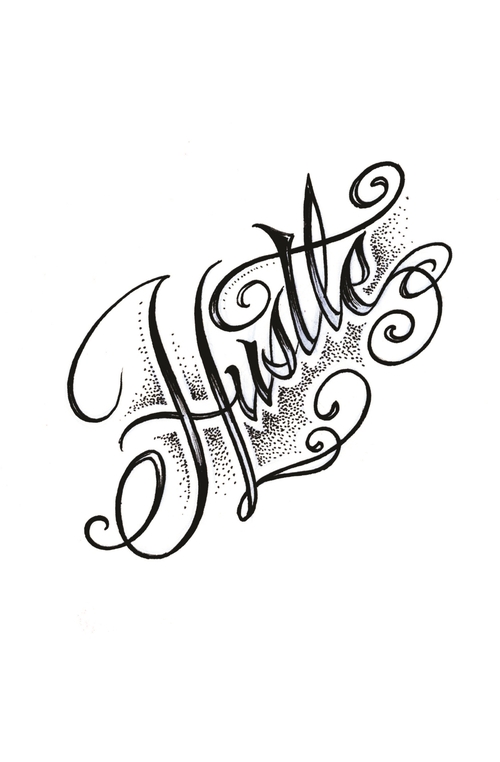
Today's book of poetry: Hustle. David Tomas Martinez. Sarabande Books. Louisville, Kentucky. 2014.
"Calaveras" is a long poem in eleven parts and I've chosen the very first poem of the sequence. It could just as easily been any of them.
David Tomas Martinez makes it look easy. These poems are unadorned and bursting with beauty.
Calaveras
1.
A car wants to be stolen,
as the night desires to be revved,
will leave a door unlocked,
a key in the wheel well
or designedly dropped from a visor.
A window will always wink,
to be broken by bits of spark plug
or jimmied down the glass.
This is mine.
Where is the window to break
in your life?
In a backyard off the 94, I demonstrate on the moon
how a dent pulled ignition and a toothbrush for a turned key
easily swoon the inner workings of a Ford.
Push the dent puller in,
turn the triangle, burrow the screw,
and metallic light falls in twirled shavings.
Before I snap the weight I say
nobody gets caught with this,
not because this is a felony,
we speak of prison inevitably,
as likely as sweeps and raids,
as common as falling.
Prison, for us,
taxes and deaths.
Nobody gets caught with this
because I took it from my grandfather's tools.
...
To shoot someone we needed a gun;
Albert said he could get a pistol but we needed a car.
That's how, at midnight, on a Tuesday,
we strolled down the street with a dent puller
trying to murder a man.
Not wanting to steal a car
from our neighborhood,
we take alleys we shouldn't,
until cops chase us across
eight lanes of freeway and backyards.
To get away, I ran in a canyon
and a field of cactus.
The needles ripped my clothes,
left spiked fruit behind my knee;
with a knife wet under a garden hose,
I cut away skin and spines.
With arms around my boys' shoulders
we walk home, but only I see god.
It was the Lord from his La Jollan gates,
the big white man in the sky hollered at me.
In pale distance and omniscient beard,
in sky clouded with open azure:
No murder this night for you,
nor any night for you,
only a hot bath and plate of papas fritas
from a grandmother's hands
and four hours of needles
shooting from the skin
and holding the faucet like a gun.
...
I am immediately drawn to poetry of this sort. It is from the streets and the heart and there is no artifice. Martinez writes intricate poetry that rattles off of the page and tongue with inspired elan, but it is never cliche or tired.
Shed
In the wood shed
I found my uncle's magazines.
Snooping out of boredom,
looking for a wrench
to loosen a question in my body,
I flipped along glossy women
in kitchens without sinks
and refrigerators without food,
where bored housewives released
frustrations by
fucking the plumber,
where gardeners were pulled into pool houses
by college freshmen, their pig tails
doing most of the raking;
I saw women and horses
and women and circles of men
and women and women.
There seemed to be no shortage of women.
Being eleven with the drain pulled
on my wondered lust, my eyes
began to see sex everywhere,
in the plunging of stopped toilets,
in gas tanks being filled, in the pool halls
where my father circled his cue.
How the world moaned and pumped,
and hope flashed fluorescently through the blinds.
I lost my virginity three years later
to a girl without a name,
a neighbor in my curiosity about the body.
Before we did it, she said, I don't make sounds during sex
and she didn't, just waited blankly,
waited to have emotion scribbled on her.
Eventually, love marked me
with a woman who walked with tumultuous hips--
she made bathrooms and classrooms more exciting,
and proved old Walt right -- the body does
electric -- when a kiss jumps the body --
as love is the leap of moment suspended
between jumping and landing, learning
and knowing, quitting and starting again
and it hurts more than just in skin,
to walk because your walked away from,
and no hurt scatters, no love vanishes,
and no sorrow dissipates or forgives,
and no words can be eaten.
Nothing can be eaten.
And her climbing up a balcony on the second
floor to break in through the sliding glass door
to leave, on a puffed pillow, music she made for you
wont screw back together what was shed.
No one wants to leave the comfort of wood,
or finally say goodnight. I wish the world
had left me cuddled with boxes and magazines,
with boxed wine and videos of Vegas.
Can another cigarette break keep
the shell of sleep from cracking,
stay the flashes of her bent under another man?
Wondering if she is across the country, or the street,
how can I stop her monuments, not hear her again?
...
Whoosh, good lord, Martinez is good. These poems have weight, great substance, but they are never too heavy or overbearing.
Think of the best of old Tom Waits ballads like Romeo is Bleeding. If you knew me you'd know that in our home and around the Today's book of poetry office that Tom Waits is a deity of the highest order. He's always been a crazy mad priest poet of popular music. So when I tell you Martinez is worthy of Tom Waits' praise please pay attention.
Coveralls
The orange coveralls flamed around me in one-size-fits-all,
and no matter how I stood, they slouched and bent me.
In the shipyard there were no mirrors
but in the ocean's reflection or the pools in the dry docks
I could see how the leathers covered my boney clavicle
and my arms were only as wide as my torch.
I interviewed in a flower-spattered rayon,
but was hired because my uncle was foreman.
In training, I met Lucy.
Straightening out the crooked cuts in my bulkheads
she showed me how an orange stream pours off a perfect bevel.
Once in the bilges, I asked what brought her
to the bottom of this boat, measuring and cutting walls.
Pulling off her suede glove,
wiping sweat and ash away,
on her hand shone a green 13.
Secretaries don't have tattoos,
muffled through her respirator.
And by lunch,
we were burnt by sparks,
by three we sneezed black,
but the foreman flirted with her
using the last banging mallets
to get close and whisper.
Wrenching hoses
from our torches,
on our neck, metallic dust
ignited in the sun.
The top half
of her coveralls,
unbuttoned and wrapped,
slowly melted down
as the whistles blew.
After training,
I worked on frigates,
she worked on tankers,
I walked by her worksite
and Lucy'd be cutting
a tanker's wall,
golden ashes
dropping from
a chariot
of rusted pipe
and planks.
Looking up
shaking the wind,
shaking a hole
in my coveralls,
from ankle to knee gone,
the thin blue cloth gone;
I watched Lucy rise.
...
Hustle by David Tomas Martinez announces with authority the arrival of a dynamic new voice in American poetry.
David Tomas Martinez
ABOUT THE AUTHOR David Tomas Martinez has published in San Diego Writer's Ink, Charlotte Journal, Poetry International, and been featured in Border Voices. A Ph.D. candidate at the University of Houston, Martinez is also an editor for Gulf Coast.
BLURBS
"David Martinez is like an algebra problem invented by America — he's polynomial, and fractioned, full of identity variables and unsolved narrative coefficients. How does it all go together? And what does it add up to? The speaker in Hustle roams the kingdoms of experience, from stealing cars to explaining post-colonialism to his Mexican grandfather, from celebrating sex to wondering about the crippling mixture of strength and weakness in the men around him. Martinez's poetic voice sings story, talks wisdom, and verbally switches between the sophistications of the academy and those of slang. Out of these trespassings and travels, he makes an original, wise, and tender poetry. Hustle is full of dashing nerve, linguistic flair, and unfakeable heart." —Tony Hoagland
"Welcome to the world of David Tomas Martinez, where cars want to be stolen and the faucet is held like a gun, and homemade tattoos thicken with age. He breathes fresh air into American poetry by bringing it to the street—away from the Ivory Tower, away from the self-referential jokes and commentary. Martinez allows us to see Neruda's love songs again, but this time they "whoop / a motherfucker's ass." And he makes up his own vocabulary here, one in which the word "weekend" comes from word "weaken," long estranged from "wedded." Open this book on the poems like "Sabbath Fe Minus" or "California Penal Code 266," or "Coveralls," and you will see right away a tone that is restless, metaphors that thrill you, and music that is so contagious it just won't let you be. That is because David Tomas Martinez is a real poet." —Ilya Kaminsky
"In these intricate, psychologically rich poems, David Tomas Martinez looks back on a harrowing youth in a rough part of town, at one point concluding, "as a boy, I died into silent manhood." Here, the shooting of a school acquaintance becomes an opportunity for a kaleidoscopic investigation of violence, mortality, and doomed youth. Or the ruined landscape of a concrete urban park provokes a meditation on the sadness that smolders just beneath youthful bravado. Elsewhere, the intricacies of family lore mix with the half-understood yearnings of a young man eager to make his name outside of the neighborhood. From maturity, these poems look to the past with resigned brilliance, finding in recollection not just self-knowledge, but a larger truth about the inescapable power of memory and experience to shape us. Hustle is a terrific, electric first book or poems." —Kevin Prufer