Showing posts with label tony hoagland. Show all posts

Monday, February 11, 2019

Losers Dream On - Mark Halliday (Phoenix Poets - The University of Chicago Press)

Today's book of poetry:
Losers Dream On.  Mark Halliday.  Phoenix Poets.  The University of Chicago Press.  Chicago & London.  2018.
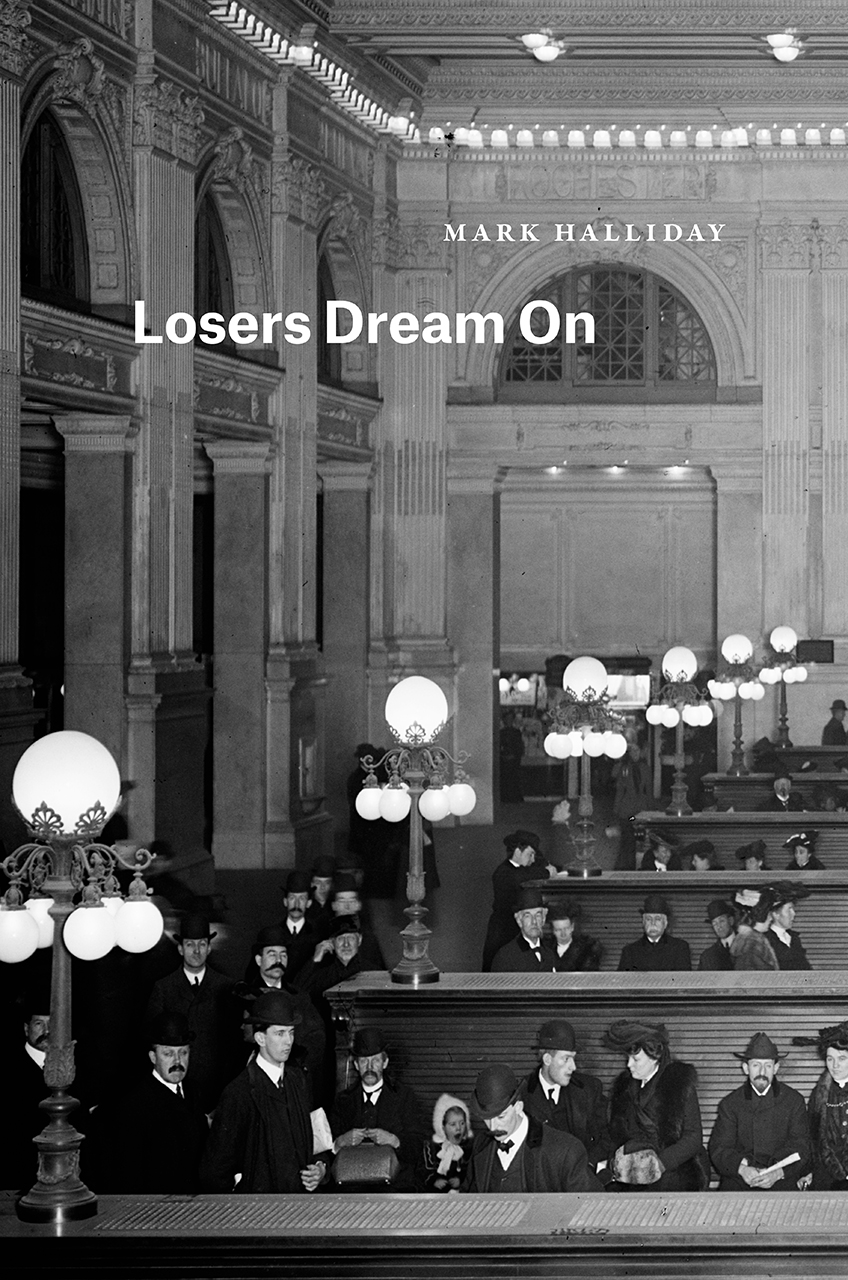

Mark Halliday's Losers Dream On is for the Hoi polloi even though they are unlikely to ever read it.  More's the pity.  Losers Dream On.

Losers Dream On was written for stand-up comedians at the end of hope and in need of a laugh.  There's plenty strange happening as Losers Dream On but somehow it all plays familiar.

Halliday is thoroughly transparent, all of his magic tricks are done right in front of you, no slight of hand.  

A Gender Theory

Women are right:
There must be meaning;
and the meaning will die.

Men are wrong:
They suppose there can be a deathless meaning;
or else that there can be joy without meaning.

Women know the double truth:
There must be meaning;
and the meaning will die.

💫💫💫

Here in Ottawa today we are trying to enjoy the sunshine and the blue, blue sky because tomorrow all hell is about to break loose.  We are expecting 30-40cm. of snow tomorrow (15 inches or so), along with the snow there will be wind gusts up to 90km. (60mphish).  Batten down the hatches.

On a snowy day when you can't leave the house Today's book of poetry says that a book of poetry might make for some fine quiet time.  Mark Halliday is your huckleberry today.  We recommend getting you hands on a copy of it and marking out some time.

Mark Halliday likes to look at time, how things work out over time, or don't.  You can feel the undertoad in Losers Dream On even when Halliday is tickling the old funny bone.

First Wife

Each of us carries secret scars in spirit always ready
to be wakened into wounds, ready as if waiting
as if to be wakened into wounds is a debt forever unpaid:
a song suddenly brings the invoice again
and finds the screen door forever unlatched—

as when I hear "Save the Last Dance for Me"
and think immediately of Annie
and how I always said I would.

💫💫💫

Mark Halliday is pretty matter of fact in his optimism regardless of the obstacles he invents and/or endures.  Losers Dream On is a totally solid poetry read.  You all know the Today's book of poetry drill; when I'm reading a book for the blog, in this case Losers Dream On, it is only during the second reading where I'll start to mark up a notepad with page numbers of essential poems.  These are the poems that Today's book of poetry wants/needs to share.

Halliday ran up some impressive Today's book of poetry numbers as we marked up our header with page after page of poems Today's book of poetry wanted to share.  Halliday's batting average is All-Star material.  Here's one more taste.

Index to Hamaday: A Questionable Life

Addicted to salted cashews,   64
Apologizes to two women in past,   55
Baffled by human acquiescence in gush of time,   49   
Complacently accepts middle-class white male privilege,   56
Considerably less funny than thinks,   66  
Doubts greatness of Philip Roth,   49 
Dozes off over important books,   38, 39, 40, 41, 42, 43, etc.
Eats more than friends deem possible,   19, 20, 22, 24, 26, 28, 31ff
Feels "smaller than his life,"   57, 62
Forgets smart things said in restaurants,   28, 33, 39, 47, 60
Forgets that everyone else's heart is beating,   38, 48, 58
Honors Paul Violi via less funny imitation,   see Index
Hopes candor can substitute for lapidary brocade,   38
Hopes mild flickering wit better than no wit,   67
Jilted by series of women insensitive to poetic virility,   23, 24, 26, 27 ff.
Keeps daily diary because is center of world,   41
Loses track of criteria for good poems,   45, 55, 67
Means more than can quite express,   passim
Melon balls, metaphorical references to,   33, 44
More talented than enemies, by long shot,   48
More talented than friends, why not admit,   58
Mutters to self, unaware of being observed,   59-65
Ogles young women in airports,   45-66
Opposes own sexist tendencies,   24, 47, 56
Plans day around caffeine,   43, 45, 46, 48, 50, 52, etc.
Rejects "reference," "impact," and "grow" as transitive verbs,   54
Salves conscience by sending small contributions to
      Amnesty International, Planned Parenthood, Doctors Without Borders
      and ACLU,   32, 40, 50, 61
Sings like George Thorogood while alone in car,   62
Still trying to impress women unimpressed forty years earlier,   61
Suddenly sees self as tiny fleck of ego amid billions of such,   70
Surprisingly clever after two gin and tonics,   56
Testosterone in odd relation to existential bafflement,   51, 55, 60
Time, mystery of, unable to stop exclaiming about,   39, 49, 59
Undeserving of luck but very glad to have it,   68
Wishes had been kinder on certain occasions,   71

💫💫💫

It's been a while since Today's book of poetry had a list poem and all of you regulars will know that Today's book of poetry is a sucker for the list poem.  Halliday's "Index to Hamaday: A Questionable Life" is an ace.

Yep, Mark Halliday can burn.

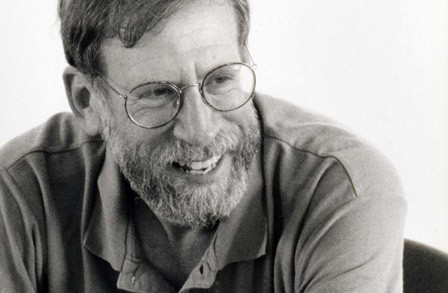
Image result for mark halliday poet photo

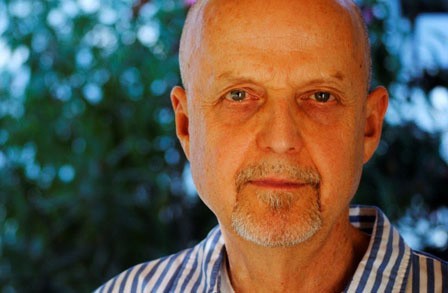
Mark Halliday

ABOUT THE AUTHOR
Mark Halliday has taught in the creative writing program at Ohio University since 1996. His six previous books of poems include Jab and Thresherphobe, both published by the University of Chicago Press.

BLURBS
" 'And you try to be awake,' growls Mark Halliday. These poems are fully awake, practicing vivisection on their own delusions, complacencies, and sublimities, carving into the tissue of language. Song here sounds more like invoice than voice. Yet its wit reveals the timeless: sorrow for a dying father, a lost wife, and the core recognition of our 'dustitude.' A remarkable book."
     - Rosanna Warren, author of Ghost in a Red Hat

“Reading Losers Dream On is like listening in on the constantly shifting, uncomfortable thoughts of a mind brilliantly attuned to the world of memory and to its own intricate (often hilarious) processes. These poems take place in landscapes that seem familiar at first—snow-covered parking lots, an empty Mexican restaurant, airport gates crowded with travelers—but, under Mark Halliday’s gaze, they become dazzling and strange, filled with troublesome knowledge and the possibility of mortality and transcendence. Witty, exciting, and wide-awake, Halliday is one of the best poets at work in America today.”
     - Kevin Prufer, author of In a Beautiful Country

“Mark Halliday is one of our foremost technicians of the American vernacular. In Halliday's poems, James Joyce, Leave It To Beaver, and Sir Walter Raleigh all get their turn at the microphone. I admire Halliday's dedication to coherence, self-interrogation, and endless verbal playfulness. His voice is one of the most reliable, hilarious, effervescent, and moody pleasures in the contemporary canon. His rich new collection, Losers Dream On, holds its own with the high standard of his best work.”
      - Tony Hoagland, author of Application for Release from the Dream


Mark Halliday


Poetry@Tech:  Mark Halliday
Video: Poetry@Tech


738


DISCLAIMERS

Poems cited here are assumed to be under copyright by the poet and/or publisher.  They are shown here for publicity and review purposes.  For any other kind of re-use of these poems, please contact the listed publishers for permission.
We here at TBOP are technically deficient and rely on our bashful Milo to fix everything.  We received notice from Google that we were using "cookies"
and that for our readers in Europe there had to be notification of the use of those "cookies.  Please be aware that TBOP may employ the use of some "cookies" (whatever they are) and you should take that into consideration

Wednesday, January 25, 2017

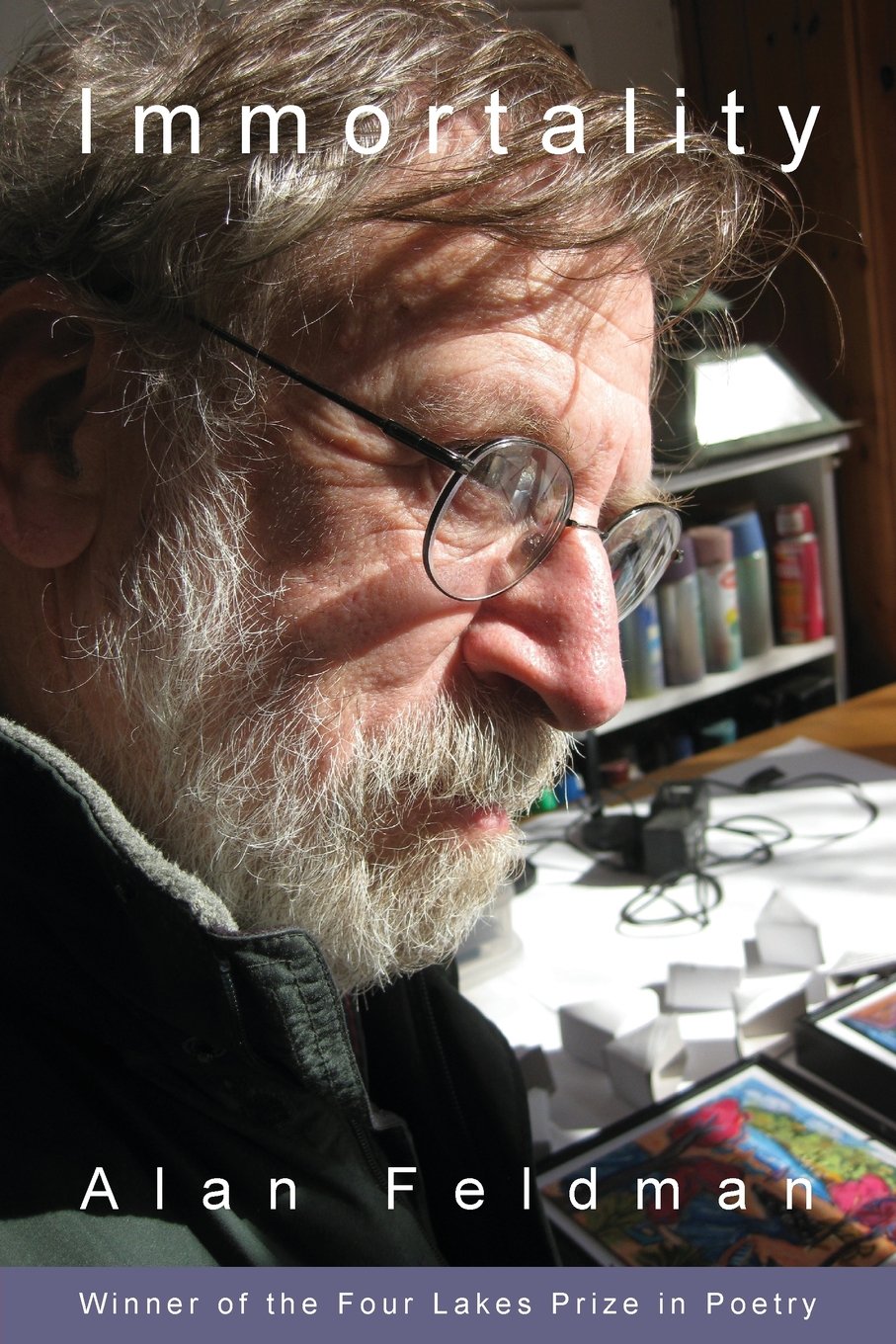
Immortality - Alan Feldman (University of Wisconsin Press)

Today's book of poetry:
Immortality.  Alan Feldman.  University of Wisconsin Press.  Madison, Wisconsin.  2015.
Winner of the Four Lakes Prize in Poetry


Alan Feldman reads like the gentlest of men but that doesn't stop him from taking you to the deep end of the pool.  Immortality is an emotional assault without aggression or violence.

Alan Feldman reads like the wisest of men.  These poems have that uncanny warmth you feel around a stranger whom you know is going to become a friend.

Alan Feldman reads like a poet bursting at the seams with loving reason and even seasoned hope.

The Afterlife

There's a lot of light in her apartment,
falling on the rented hospital bed.
I've been told the dying like to be held,
so, though we're just friends, I make myself
hold her hand, as if the conversation is final,
matters more than others, though most have mattered.

She's seen a couple of rabbis, who were helpful.
It seems there are Jewish angels. (Why argue?)
And she likes the story I brought her,
"The Death of Ivan Ilych," how before the end
he learns so much nobody knows about,
except the reader.

"So many faces," she says of the people who came
for the songfest yesterday evening, over a hundred
crowded into this little place. "Each face a flower.
Each face..." and here she pauses
(the medicines are affecting her word retrieval?)
"so full of memories."

It all makes a strange image in my head:
faces that aren't faces, but wide open,
as if she's discovering that she's lived
everything they have -- centuries
more than she thought.

"Our life in others," I remind her,
citing Pasternak, "that is our immortality."
But she knows that doesn't go far enough.

I'm glad she's thinking of her own afterlife,
since not being alive is, apparently, unthinkable
on the brink of it happening, a kind of shallowness
to imagine it's merely like going to sleep,
though lately her dreams have been so vivid:
an all-night argument with her sister about a dog,
over what color it should be, white or black.

Outside the weather appears to be changeable,
I'm dying to go out there, on the small terrace.

"Go out on the terrace," she says, "before you leave.
The view is wonderful."

...

Reading Immortality reminds Today's book of poetry of what it is we truly love about poetry.  We like to be moved by words.  We like our heart to pound in our chest when we read something we have just discovered but know to be true. 

These smart, smart poems avoid any melodrama or fuss, emotional or otherwise, with intelligent humour and a sensitive dash of pathos.  Whatever the emotional temperature called for, Feldman knows how to dial it in.

Feldman starts his conversation with the reader with his rejection of a suggested mantra, a plea from a friend to "drop the personal."  Today's book of poetry is familiar with that strident battle cry and is pleased to report that Feldman went the other way.

These are deeply personal poems full of universal good intent, maybe even a moral imperative. Today's book of poetry is never sure of anything but we're pretty certain about Feldman's Immortality.

Watch Battery

Who knows if my father ever thought
what Montaigne's father did: That every city
should have a place where people in need
could go to meet. How somewhere
a man is starving, and another with a surplus
would grieve if he only knew, and offer the man
a modest but reasonable living. That giving man
could have been my father. Not grieving, perhaps,
but regretful he couldn't be of more help --
a man you could trust to fix things.

Like the man who helped the watchmaker
fix my watch. How, when he couldn't decide
how to loosen the clasp that holds in the battery,
itself no bigger than a small coin,
without breaking it, he turned to someone
more experienced -- a Dutchman, actually,
who seemed happy to demonstrate this very skill,
and upload it to YouTube. Demonstrate it
with a camera in his lap, so we could see his two hands
familiarly, competently, and rapidly
opening the watch to replace the battery,
the way a father would automatically retie his son's shoes.

And there was also his calm voice with its accent,
like the woodcarver's in Pinnocchio,
telling the confused and despairing who were ready
to lose patience and snap the band holding the battery
and ruin the watch -- the watch that could keep running --
how to prolong its life by exercising patience,
the very quality my dad had in abundance,
that quality I always loved him for, of solving the problem
without getting exasperated. Though it's unfair
he didn't have parents like that himself.
Or that -- when the amount of pain rose to be greater
than any pleasure he'd be able to feel --
the little watch-sized defibrillator near his heart
wouldn't simply stop, and let him go.

...

Feldman's Immortality has travel poems for those that need to go somewhere and political poems for people who need to politicize.  There's a great kick at Walter Cronkite's can in a sailboat poem tart as the lemon and gin in a sunset cocktail.  

This morning's reading was attended by our bon ami Alexandre whose enthusiasm and energy gave us all a lift.  Immortality read like the best parts of a story you've been waiting to hear.  Odin, our quiet right hand man, made it clear he liked these poems and then he gave the room a solid once over, looked everyone in the eye.  Kathryn and Milo both read with warmth and grace, just like the poems asked for.

In November

When my daughter calls
and I can hear her baby
crying in the back seat
and she asks, "Dad, would you mind if I stop by
for a quick diaper change and feeding?" --

I'm so glad I picked up the phone,
glad I hadn't set off on my walk,
and quite soon I see her car rolling into the driveway,
and the baby is stretching open her little mouth
and wailing, as babies do --
so enraged not to be able to speak,
not even to be able to think this or that is wrong
except that the whole universe is wrong.

And when they're settled in the little bedroom off the kitchen,
and the baby is suckling noisily,
and then, contented once more,
rolling both eyes, not always in the same direction --
mother and baby in the bedroom
where my daughter herself was once diapered and fed --

I feel so thankful for never having strayed very far
into the wide world, never having served
in the foreign wars of my time, and grief for fathers
who do, the ones swaddled in flags --
maybe because yesterday was Veterans Day,
and though she says she's never done this before,
my daughter tells me she called up a soldier's family she knew
just to say she'd been thinking of them, just hoping
the war we have now will end soon.

And the thin November light is straining through the window curtains
we've never changed,
and I feel thankful for my years right here in this house
the way I imagine a tree might feel thankful
if it were given an opportunity to roam around the world--

how it might say, "So good of you, but no thank you,
where would the birds be without me here? --
the ones that fly back unpredictably
to perch in my thinning hair,
this and every November."

...

Ronald Wallace and the University of Wisconsin Press consistently send Today's book of poetry crackerjack fare.  Alan Feldman is a new discovery for Today's book of poetry and already we are a devoted admirer.

Alan Feldman

ABOUT THE AUTHOR
Alan Feldman is the author of several collections of poetry, including Immortality (2015), winner of the Four Lakes Prize; A Sail to Great Island (2004), winner of Pollak Prize for Poetry; and The Happy Genius (1978), winner of the annual George Elliston Book Award for the best collection published by a small, U.S. non-profit press. His work has appeared in the Atlantic Monthly, the New Yorker, and Kenyon Review, among many other magazines, and included in The Best American Poetry anthology in 2001 and 2011. Feldman's recent work appears in Hanging Loose, Cimarron Review, upstreet, Southern Review, Yale Review, Salamander, Southwest Review, Cincinnati Review, Catamaran, Worcester Review, and online in Boston Poetry Magazine and Cortland Review. His poem "A Man and A Woman" was featured in Tony Hoagland's 2013 article for Harper's, "Twenty Little Poems That Could Save America."

Feldman was a professor and chair of English at Framingham State University, and for 22 years taught the advanced creative writing class at Harvard University's Radcliffe Seminars. He offers free, drop-in poetry workshops at the Framingham (MA) public library near his home, and in the summer at the Wellfleet library.


BLURBS
“Alan Feldman is our greatest American poet of the household and family, as a loving, growing, struggling, and essential institution. He manifests the kind of love we rarely see in our poetry, and this familial love pours into the world around him. I am personally thankful every time I read an Alan Feldman poem, and Immortality, the book you are holding in your hands right now, makes us understand that immortality lies all about us, in everything we experience as a human being.”
     — Bill Zavatsky, author of Where X Marks the Spot

“A richly engaged, near flawless collection. Like those magic mineral waters pumped from deep in the earth, Feldman’s poems can cure emotional arthritis and ventilate the soul. Better poems than these cannot be written in this confiding, intelligent humanist mode.”
     — Tony Hoagland, author of Twenty Poems That Could Save America and Sweet Ruin

“These poems enact with grace and intelligence the process by which one comes to possess the life one is actually living. This is an enlarging journey that no reader of poetry will want to miss, offering the pleasures of discovery every step of the way.”
     — Carl Dennis, Pulitzer Prize–winning author of Practical Gods

“Alan Feldman’s poems offer the companionship of a witty, thoughtful, sometimes bewildered friend testing his life in language; telling it all. This is a heartening, deeply satisfying collection from a seasoned poet at the top of his game.”
     — Linda V. Bamber, author of Taking What I Like

Alan Feldman
reading In November
Video: Nan Hass Feldman


uwpress.wisc.edu

545
DISCLAIMERS

Poems cited here are assumed to be under copyright by the poet and/or publisher.  They are shown here for publicity and review purposes.  For any other kind of re-use of these poems, please contact the listed publishers for permission.

We here at TBOP are technically deficient and rely on our bashful Milo to fix everything.  We received notice from Google that we were using "cookies"
and that for our readers in Europe there had to be notification of the use of those "cookies.  Please be aware that TBOP may employ the use of some "cookies" (whatever they are) and you should take that into consideration.


Tuesday, August 23, 2016

Vampire Planet - New and Selected Poems - Ron Koertge (Red Hen Press)


Today's book of poetry:
Vampire Planet - New and Selected Poems.  
Ron Koetrge.  Red Hen Press.  Pasedena, California.  2016.


Today is our 500th poetry blog here at Today's book of poetry and we've saved something very special for the occasion.  Ron Koertge's Vampire Planet - New and Selected Poems is simply Divine. Bloodsucking otherworldly in fact.

Today's book of poetry first read Ron Koertge in the early 80's.  Diary Cows (Little Caesar Press, 1981) jumped off the shelf and into my hands the first time I darkened the door of City Lights Bookstore in San Francisco.  I was working as a chauffeur at the time and had a three day stopover in the city by the bay.  I was all Charles Bukowski and Jack Kerouac in the head at the time and Koertge was like a drink of some very fresh water.

Diary Cows did it then, Vampire Planet is doing it now.  How any one poet can be so hilariously insightful at full gallop simply baffles the bejesus out of me.  How splendid.

Diary Cows

Got up early, waited for the farmer.
Hooked us all up to the machines as usual.
Typical trip to the pasture, typical
afternoon grazing and ruminating.
About 5:00 back to the barn. What
a relief! Listened to the radio during
dinner. Lights out at 7:00.
More tomorrow.

...

Ron Koertge is an accomplished author outside of poetry world -- but we here at Today's book of poetry are so happy that this man continues to write poems.  In a perfect Today's book of poetry world Koertge would translate every bedtime story, rewrite every nursery rhyme, as far as we are concerned you could put a Koertge filter on it all.

Cinderella's Diary

I miss my stepmother. What a thing to say,
but it's true. The prince is so boring: four
hours to dress and then the cheering throngs.
Again. The page who holds the door is cute
enough to eat. Where is he once Mr. Charming
kisses my forehead goodnight?

Every morning I gaze out a casement window
at the hunters, dark men with blood on their
boots who joke and mount, their black trousers
straining, rough beards, calloused hands, selfish,
abrupt...

Oh, dear diary--I am lost in ever after:
those insufferable birds, someone in every
room with a lute, the queen calling me to look
at another painting of her son, this time
holding the transparent slipper I wish
I'd never seen.

...

Had to call Max, our Sr. Editor, out of his booky lair this morning to discuss the use of more than three poems for today's Today's book of poetry.  He enthusiastically exclaimed that for Saint Ron of K he'd take the heat from the front office.

Kathryn and Milo bebopped Koertge poem after poem to anyone who would listen this morning including three passers-by from the street.  They liked this next poem so much that they came in to our office, sat down and volunteered to work at Today's book of poetry.

Moving Day

While sitting home one night, I hear burglars
fiddling with the lock. This is what I've been
waiting for!

I run around to the back and open the door
invite them in and pour some drinks. I tell them
to relax, and I help them off with shoes and masks.

In a little while we are fast friends, and after
a dozen toasts to J. Edgar Hoover they begin
to carry things out. I point to the hidden silver,
hold the door as they wrestle with the bed,
and generally make myself useful.

When they get the truck loaded and come back
inside for one last  brandy, I get the drop on them.
Using Spike's gun, I shoot them both and imprint
Blackie's prints on the handle.

Then I get in the van and drive away,
a happy man.

...

All silliness aside I want to tell you faithful readers that it is poets like Ron Koertge and books like Vampire Planet that make this blog possible.  Vampire Planet should be on every single poetry shelf out there just like Billy Collins says.  This level of wise humour is two moons in the sky rare.

I talked to my brilliant wife K last night about today's blog and expressed deep concern that after 499 other poetry blogs where I suggested that they were all books you should read how do I express my enthusiasm for Vampire Planet with sufficient enthusiasm and originality?  She said she figured that by now the readers were either with me or long gone so just say what you feel.  So, take my word for it, Mr. Ron Koertge gives more poetry happiness per page than any other living poet I've found.

Why I Believe in God

I'd failed the examination allowing me to bypass the MA
          and go straight for a PhD, so I was forced to let
my friends forge ahead reading, if possible, longer and fatter
          books than before while I worked on something
by the Pearl Poet for my thesis.

          My advisor was Mrs. Hamilton, a world-class
medievalist and the most patient lady in the world.
          Every week I'd bring her a few pages of translation.
She would smile and correct everything. With her help,
          I finished.

An orals board consists of three members of the English
          Department and someone from another
discipline, usually an assistant professor from chemistry
          who drinks coffee from a beaker. But my guy
was from the German Department. He had a scar, for God's
          sake, that might've come from a duel. He
also wanted to begin because he had a few questions.

          "Vhat was the root of zis word? Zah root for zhat?
Who in his right mind vould mistake zhat as zis!" I glanced
           as Mrs. Hamilton who looked like she was watching
Thumper get hit by a tank. I took a deep breath and replied
          that I knew I was less prepared in German than
I should have been but German was the very next course
          I planned to take. I then hoped to move
to Germany and become German.

He sneered, but Dr. Rosenblatt, God bless him, asked me
          something easy: "What was Keat's first name?"
Then Mrs. Hamilton wanted to know if Whitman had a beard.
          Yes or no would be enough.

I was just getting my sea legs when Dr. Death leaned
          forward. "Vhat," he hissed, "is zah function
of zah ghost is Hamlet?" Actually he may have been
          trying to be nice because it isn't that hard
a question. The ghost is the key that starts the engine
          of the play. Without him, Hamlet is just
another pouty prince.

          But I froze. I couldn't think of anything.
My teachers stared at me. They leaned forward
          encouragingly. "Do you remember the ghost,
Mr. Koertge?" asked Mrs. Hamilton. "Yes, ma'am.
          "What was he in the play for?" My mind
was a blank. Less than a blank, a cipher. Less than
          a cipher, a black hole. Finally I said.
"Uh, to scare people?"

          They almost collapsed. Mrs. Hamilton put her
head in her hands. Dr. Rosenblatt murmured, "Oh, my God."

          Then they sent me out of the room. I pictured
myself selling aluminum siding. Or going into the Army.
          Or both. Then I heard the arguing begin:
Shakespeare had not been part of my course work. I'd
          been blindsided from the beginning by
an arrogant outsider. Dr. Hamilton said she knew the German's
          publisher; all she had to do was pick up
the phone and he would never see another word in print.

          They called me back in, said congratulations
and (all but you-know-who) shook my hand. Mrs. Hamilton
          gave me a hug and said she'd never wanted
a cocktail so badly in her life.

I stepped outside into the Tuscon heat. God was sitting on
          the steps in front of Old Main staring at his sandals.
"Ronald!" He waved me over. "I protected you when you
          drove home drunk, I introduced you to Betty Loeffler,
and I got you through that."
          "You introduced me to Betty?"
          "You were lonely."
          "Gosh, thanks."
          "You don't believe in me, but I believe in you. So I'm
interested in what you plan to do next.
          "Not get a PhD. I'm a terrible student."
          "You're telling me."
          "I like writing poetry."
God stood up. He had a great smile and, except for those sandals, a cool
outfit. "Fine. Be a poet. But don't say mean
things about people in your poems. Be generous. Don't be deep
           or obscure. Try and make people laugh." Then, just
before he disappeared, He kissed me. And that is why I am
           standing here tonight.

...

Vampire Planet is one big Olympic sized swimming pool and I don't want to leave.  In Koertge world other dimensions reveal themselves.  These dimensions present different future options, different distant pasts.  Koertge has a real knack for retelling stories we already know but with better endings.  In Koertge world future happiness is possible and the past is made more easy to bear knowing things are not always what they seem.

Koertge has a big bag of tricks.  Good poetry tricks.

Happy Ending

King Kong does not die. He gets hip to the biplanes,
lets them dive by and ionizes them. Halfway down
the Empire State, he leaps to another skyscraper,
then another and another, working his way north
and west until people thin out and they can disappear.

Fay's boyfriend is sure she is dead OR WORSE,
but just as he is about to call out the entire U.S.
Army, a scandal mag breaks this story: the couple
has been seen in seclusion at a resort somewhere near
Phoenix. Long lens telephoto shots show them sunning
by a pool. There are close-ups of Fay straddling
the monster's tongue and standing in his ear whispering
something Kong likes. Look, his grin is as big as
a hundred Steinways.

...

Ron Koertge is a poet I've been looking up to for a long time.  When Vampire Planet came through the Today's book of poetry doors - that was the day I knew this blog had been a worthwhile venture. Vampire Planet is a place I'd like to go.  Think of this book as a problem solver.  From now on, whenever someone asks you why you like poetry you can just go the shelf, pick up your well thumbed copy of Vampire Planet and hand it to them.  Say "here, eat this!"

Kathryn, our Jr. Editor, and Milo, our head tech, Max, our Sr. Editor and the three passers-by from the street have just opened a ten a.m. bottle of Tuscan red and are all sitting on the floor in a circle in an apparent happy poetry place.

Koertge will do that to you, he did it to me in San Francisco over thirty years ago and now he is doing again.  The old poems sound as fresh as morning rain, the new poems amaze and astonish.
Today's book of poetry has been in love with poetry since I was twelve years old and in a few days I'll be 60.  I saved Vampire Planet for my 500th blog mostly as a gift to myself for getting old but damn it, Koertge makes me feel young.

Vampire Planet

On weekends we go to movies. Pay a fortune
for plush, satin-lined seats.

We sip V-8 and bitch about six dollar popcorn.
A medium, if you can believe that.

But tonight's movies is worth it. A robot kidnaps
a blonde. He carries her everywhere.

We are out of blondes here. We should have
planned ahead.

At home, I'm restless. I hate the way some
moonlight sprawls acorss the children's

playhouse in the yard. I remember plunging
through heavy air toward some lamp-lit

room brimming with smooth flesh. My wife
tugs at my cape and asks, "What are you

thinking about, sweetheart?" We've been
married for light years, so I know when to lie.

"That robot. I feel sorry for him." Her, draped
across those stovepipe arms, his staggering

like a tipsy groom looking for the bridal
suite with its scarlet, heart-shaped bed.

...


Ron Koertge

ABOUT THE AUTHOR
Poet and young-adult novelist Ron Koertge grew up in rural Olney, Illinois, and received a BA from the University of Illinois and an MA from the University of Arizona.

Comfortable in both free verse and received form, Koertge writes poetry marked by irreverent yet compassionate humor and a range of personas and voices. He has published numerous collections of poetry, including the ghazal collection Indigo (2009), Fever (2006), and Making Love to Roget’s Wife (1997). His novels and novels-in-verse for young readers include Shakespeare Bats Cleanup (2006), The Brimstone Journals (2004), and Stoner & Spaz (2004).

Koertge’s honors include a fellowship from the National Endowment for the Arts, a California Arts Council grant, and inclusion in numerous anthologies such as Best American Poetry, Poetry 180, and Ted Kooser’s “American Life in Poetry” column. Koertge’s young-adult fiction has won awards from the American Library Association and PEN.

Koertge lives with his wife in South Pasadena, California and teaches in the MFA in Writing for Children & Young Adults program at Hamline University in St. Paul, Minnesota.

BLURBS


“"Whimsey meet Oddness. Meet Oddness, Pathos. Hey, Pathos let me introduce you to Funniness. Don't make fun of her name, though, don't try to be funny—leave that to her. Fantastical! Say, I'd like you meet Whimsey, Oddness, Pathos and Funniness. (Yeah, shush, we've heard that joke—stick with the fantastical, O.K.?) Is that . . . ? Look, it’s Ron Koertge, hanging out with Tenderness. Hey Koertge! C’mere, I want you to meet Whimsey, Oddness, Pathos and Fun . . . Oh, you know them already? Oh. You guys know Ron? For a long time? Oh. Yes. Right. I knew that.”"

—--Suzanne Lummis


“"Wit, the impeccably dressed and better educated sibling of funny, suffers an unstable reputation: clever yet aloof, socially polished but oddly cold. In the warmer, less formal surroundings of Ron Koertge’s poems, however, wit lets down its guard and, behold: charm, intelligence, amazing inventiveness, and a kind of sweetness in its patient regard for a world so frequently bereft of those qualities. So what could be more welcome than a new Koertge collection, where wit presides, and wisdom elegantly clothed in laughter is always in attendance.”"

—--B.H. Fairchild


“"Ron Koertge is an expert in the art of disorientation. His tongue-in-cheek poems are clever, of course, but they also dispense an unsettling, probably illegal mixture of Novocain and Kool-Aid. When you finish a poem by Koertge, you look around with the sensation that your living room furniture has been rearranged while you were away. This is his long-standing, one-person campaign for wakefulness in the human situation. The New & Selected Poems is a serious cocktail.”"

--—Tony Hoagland


“"Many Koertge classics are gathered here (like ‘Coloring’ and ‘Cinderella’'s Diary’) alongside new and surprising poems that journey deep into the imagination’s outer limits.Vampire Planet deserves a place in the poetry section of every heads-up reader.”"

—--Billy Collins

Ron Koertge
video:  edwinvasquez


500

DISCLAIMERS

Poems cited here are assumed to be under copyright by the poet and/or publisher.  They are shown here for publicity and review purposes.  For any other kind of re-use of these poems, please contact the listed publishers for permission.

We here at TBOP are technically deficient and rely on our bashful Milo to fix everything.  We received notice from Google that we were using "cookies"
and that for our readers in Europe there had to be notification of the use of those "cookies.  Please be aware that TBOP may employ the use of some "cookies" (whatever they are) and you should take that into consideration.

Thursday, August 6, 2015

Blood Work - Matthew Siegel (The University of Wisconsin Press)

Today's book of poetry:
Blood Work.  Matthew Siegel.  The University of Wisconsin Press.  Madison, Wisconsin.  2015.

Winner of The Felix Pollak Prize in Poetry


Matthew Siegel bleeds sad and tragic/romantic all over every page of this fine book.  Sometimes his mother's blood does a Stanley Kubrick moment from The Shining, the walls all glimmering crimson.

Siegel is engaged in a battle with blood and body that he cannot win, only endure.

The poems in Blood Work go in like a quick/smart/sharp prick from an experienced and talented nurse taking blood - but they linger like bruises, both big and bigger.

We here at Today's book of poetry aren't the only admirers of Siegel.  A goodly number of these poems have appeared in journals and magazines of note.  It is no wonder, these poems are tight and often tender, never maudlin and thank our lucky stars, Siegel has a sense of humour.  Poetry without some humour can be a grim ride.

"Fox Goes to the Fox Hospital"

And look there he is back in the hospital
in the easy blue dressing gown, at this facility
with a delicate floral print on the walls.
He'd always had an affinity for flowers.
Healthy yet being repaired, he is back
in this gown and it is like an old costume
pulled out of a locked trunk in the attic
of bad dreams. In the gown he feels naked,
notices his softness, how his sex has never seemed
     less willing
to rise. As if there could be such a cause in this place.
He is healthy but writing a poem.
It is called "going back to the hospital" and written
in lowercase, most notably the first person "I"
which so often had stood properly capitalized
but for some reason today feels diminished.
He's writing a poem called "going back to the hospital"
but really he wishes he could draw a comic
featuring a small mammal version of himself.
His animal would be a fox, he decides, and promptly
changes the title to "fox goes to the fox hospital."

...

Today in our office, here at Today's book of poetry, we are listening to Dexter Gordon's sublime One Flight Up.  In particular we have been listening to the song "Tanya".  Milo is complaining because we will not give him equal time for whatever German-march-techno-blackhead-death-funk he has most recently discovered.  Milo is one strange cat, but he's beautiful and brilliant.  And today even Milo liked the poetry, he called it "sublime, not like Dexter, but subtle in it's own bloody way, so sad, so strong."  Milo is hard to impress.

Blood Work

The white sky presses a gauze pad
over my vein as the needle slips out.

The woman who draws from me smiles, always
remembers me, no matter how skinny I get.

No matter how dark the circles under my eyes,
she remembers me and how easy my veins are,

so visible, so thick, she doesn't even have to tie my arm,
but she does, and takes the smaller vein

the bigger one too easy. I don't tell her
the best to take my blood was a woman

who used to draw blood from animals,
part their fur, find their blue tap and drain.

She lets me play with my filled tubes. Can you feel
how warm they are? That's how warm you are inside

and I nod, think about condoms, tissues,
all the things that contain us but cannot.

...

You don't really hear any fear in the steady voice of Matthew Siegel but you feel the weariness in the bones of these poems.  The reader also learns some lessons in resilience.

This next poem is a stone-cold killer.  Wait for the ending, it falls like a feather, lands like a punch.

[In the Kitchen Mom Stands
With Her Back to Me]

In the kitchen Mom stands with her back to me
facing the window, a joint between her fingers
entranced by Enya. I ask her way she's crying
when I see a single wet trail on her cheek.

She says it is not a tear but I touch it with my finger
and taste it. It tastes like a tear, I say, but she smiles
and passes me the joint. Isn't it beautiful, she says,
it's in Gaelic, her smile as real as her pain.

Her pain that touches my chest with its fingers.
I almost want to hold the fingers but I don't, instead
I puff the joint, look out the window beside her. Rain
all day until now, the sky a dark cream color

almost backlit with orange--mist tumbles
over wet black pavement.  Her eyes, switched-off
depositories for this light, tell a story I cannot bear.
The memory of him rises with this music
and she smiles as if the hurt is the balm.

...

"and she smiles as if the hurt is the balm."

That is my new favourite line of poetry.  It is almost bleak enough to be an outburst from the excellent Canadian poet Eva H.D., or perhaps a line from the ghost of Edith Piaf, even a pouty Judy Garland.

And if you are paying real attention, and I am not mistaken, there might even be a nod to Ezra's Metro.  I had Milo look it up.

Siegel's Blood Work is a dark portal to a world where survive, survivor and survival all take on new meaning, they may even be tinged with hope.

And you all know how much we love any evidence of hope here at TBOP.

Matthew Siegel

ABOUT THE AUTHOR
Matthew Siegel was a Wallace Stegner Fellow at Stanford University. He teaches literature and creative writing at the San Francisco Conservatory of Music.

BLURBS
“This unexpected book—a genuine contribution to the literature of illness—centers on containment: how we contain our blood, how blood is contained in tubes and vials, how sometimes we do not seem contained by our bodies, and sometimes the body seems to contain nothing, and even how in the face of control or self-reliance leaking away, we might manage to contain ourselves, to feel held, to feel held in place. The deceptive directness of Siegel’s debut is remarkable; in his capable hands, illness reveals how barely contained any human being is, and how we reach, alone and together, for whatever will hold us.”
     —Mark Doty, author of Sweet Machine

“Siegel’s poems see the world with an immediacy and compassion that could only come from the decision to be vulnerable. It’s such a simple-seeming principle of poetry—yet it is as rare as hen’s teeth. I honor this young poet for the freshness and skill in these poems, his allegiance to the most unpretentious areas of experience, and his courage-teaching heart.Blood Work is a wonderful first book.”
     —Tony Hoagland, author of Twenty Poems That Could Save America and Sweet Ruin

“These poems resist the dualities of lyric versus narrative, confessional versus impersonal, real against surreal, formal/improvisational, comic/sad. Matthew Siegel manages to tick off all the boxes at once, while remaining compulsively readable. The trick that he’s pulled off is to make a book that simultaneously tickles you and shakes you by the scruff of your neck.”
     —Lucia Perillo, Felix Pollak Prize judge

Matthew Siegel
Reads his poem "On your birthday," featured in the fall 2013 issue of Southern Indiana Review.
video:  SolnRev


371
DISCLAIMERS

Poems cited here are assumed to be under copyright by the poet and/or publisher.  They are shown here for publicity and review purposes.  For any other kind of re-use of these poems, please contact the listed publishers for permission.

We here at TBOP are technically deficient and rely on our bashful Milo to fix everything.  We received notice from Google that we were using "cookies"
and that for our readers in Europe there had to be notification of the use of those "cookies.  Please be aware that TBOP may employ the use of some "cookies" (whatever they are) and you should take that into consideration.

Thursday, November 20, 2014

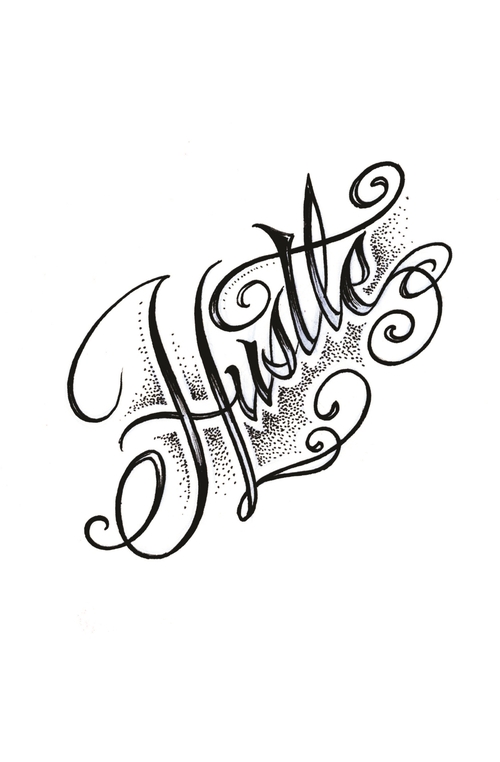
Hustle - David Tomas Martinez - (Sarabande Books)

Today's book of poetry:
Hustle.  David Tomas Martinez.  Sarabande Books.  Louisville, Kentucky.  2014.


"Calaveras" is a long poem in eleven parts and I've chosen the very first poem of the sequence.  It could just as easily been any of them.

David Tomas Martinez makes it look easy.  These poems are unadorned and bursting with beauty.

Calaveras

1.

A car wants to be stolen,
as the night desires to be revved,

will leave a door unlocked,
a key in the wheel well

or designedly dropped from a visor.

A window will always wink,
to be broken by bits of spark plug
or jimmied down the glass.

This is mine.
Where is the window to break
in your life?

In a backyard off the 94, I demonstrate on the moon
how a dent pulled ignition and a toothbrush for a turned key
easily swoon the inner workings of a Ford.

Push the dent puller in,
turn the triangle, burrow the screw,
and metallic light falls in twirled shavings.

Before I snap the weight I say
nobody gets caught with this,

not because this is a felony,
we speak of prison inevitably,
as likely as sweeps and raids,

as common as falling.
Prison, for us,
taxes and deaths.

Nobody gets caught with this
because I took it from my grandfather's tools.

...

To shoot someone we needed a gun;
Albert said he could get a pistol but we needed a car.

That's how, at midnight, on a Tuesday,
we strolled down the street with a dent puller

trying to murder a man.

Not wanting to steal a car
from our neighborhood,

we take alleys we shouldn't,
until cops chase us across
eight lanes of freeway and backyards.

To get away, I ran in a canyon
and a field of cactus.

The needles ripped my clothes,
left spiked fruit behind my knee;

with a knife wet under a garden hose,
I cut away skin and spines.

With arms around my boys' shoulders
we walk home, but only I see god.

It was the Lord from his La Jollan gates,
the big white man in the sky hollered at me.

In pale distance and omniscient beard,
in sky clouded with open azure:

No murder this night for you,
nor any night for you,

only a hot bath and plate of papas fritas
from a grandmother's hands

and four hours of needles
shooting from the skin

and holding the faucet like a gun.

...

I am immediately drawn to poetry of this sort.  It is from the streets and the heart and there is no artifice.  Martinez writes intricate poetry that rattles off of the page and tongue with inspired elan, but it is never cliche or tired.

Shed

In the wood shed
I found my uncle's magazines.

Snooping out of boredom,
looking for a wrench
to loosen a question in my body,

I flipped along glossy women
in kitchens without sinks
and refrigerators without food,
where bored housewives released
frustrations by
fucking the plumber,

where gardeners were pulled into pool houses
by college freshmen, their pig tails
doing most of the raking;
I saw women and horses
and women and circles of men
and women and women.

There seemed to be no shortage of women.

Being eleven with the drain pulled
on my wondered lust, my eyes
began to see sex everywhere,

in the plunging of stopped toilets,
in gas tanks being filled, in the pool halls
where my father circled his cue.

How the world moaned and pumped,
and hope flashed fluorescently through the blinds.

I lost my virginity three years later
to a girl without a name,
a neighbor in my curiosity about the body.

Before we did it, she said,
I don't make sounds during sex
and she didn't, just waited blankly,
waited to have emotion scribbled on her.

Eventually, love marked me
with a woman who walked with tumultuous hips--
she made bathrooms and classrooms more exciting,

and proved old Walt right -- the body does
electric -- when a kiss jumps the body --

as love is the leap of moment suspended
between jumping and landing, learning
and knowing, quitting and starting again

and it hurts more than just in skin,
to walk because your walked away from,
and no hurt scatters, no love vanishes,
and no sorrow dissipates or forgives,
and no words can be eaten.
Nothing can be eaten.

And her climbing up a balcony on the second
floor to break in through the sliding glass door
to leave, on a puffed pillow, music she made for you

wont screw back together what was shed.
No one wants to leave the comfort of wood,
or finally say goodnight.  I wish the world
had left me cuddled with boxes and magazines,

with boxed wine and videos of Vegas.
Can another cigarette break keep
the shell of sleep from cracking,

stay the flashes of her bent under another man?
Wondering if she is across the country, or the street,
how can I stop her monuments, not hear her again?

...

Whoosh, good lord, Martinez is good.  These poems have weight, great substance, but they are never too heavy or overbearing.

Think of the best of old Tom Waits ballads like Romeo is Bleeding.  If you knew me you'd know that in our home and around the Today's book of poetry office that Tom Waits is a deity of the highest order.  He's always been a crazy mad priest poet of popular music.  So when I tell you Martinez is worthy of Tom Waits' praise please pay attention.

Coveralls

The orange coveralls flamed around me in one-size-fits-all,
and no matter how I stood, they slouched and bent me.

In the shipyard there were no mirrors
but in the ocean's reflection or the pools in the dry docks
I could see how the leathers covered my boney clavicle
and my arms were only as wide as my torch.

I interviewed in a flower-spattered rayon,
but was hired because my uncle was foreman.

In training, I met Lucy.

Straightening out the crooked cuts in my bulkheads
she showed me how an orange stream pours off a perfect bevel.

Once in the bilges, I asked what brought her
to the bottom of this boat, measuring and cutting walls.

Pulling off her suede glove,

wiping sweat and ash away,
on her hand shone a green 13.

Secretaries don't have tattoos,
muffled through her respirator.

And by lunch,
we were burnt by sparks,
by three we sneezed black,

but the foreman flirted with her
using the last banging mallets
to get close and whisper.

Wrenching hoses
from our torches,
on our neck, metallic dust
ignited in the sun.

The top half
of her coveralls,
unbuttoned and wrapped,
slowly melted down
as the whistles blew.

After training,
I worked on frigates,
she worked on tankers,

I walked by her worksite
and Lucy'd be cutting
a tanker's wall,

golden ashes
dropping from
a chariot
of rusted pipe
and planks.

Looking up
shaking the wind,

shaking a hole
in my coveralls,

from ankle to knee gone,
the thin blue cloth gone;

I watched Lucy rise.

...

Hustle by David Tomas Martinez announces with authority the arrival of a dynamic new voice in American poetry.

David Tomas Martinez

ABOUT THE AUTHOR
David Tomas Martinez has published in San Diego Writer's Ink, Charlotte Journal, Poetry International, and been featured in Border Voices. A Ph.D. candidate at the University of Houston, Martinez is also an editor for Gulf Coast.

BLURBS 
"David Martinez is like an algebra problem invented by America — he's polynomial, and fractioned, full of identity variables and unsolved narrative coefficients. How does it all go together? And what does it add up to? The speaker in Hustle roams the kingdoms of experience, from stealing cars to explaining post-colonialism to his Mexican grandfather, from celebrating sex to wondering about the crippling mixture of strength and weakness in the men around him. Martinez's poetic voice sings story, talks wisdom, and verbally switches between the sophistications of the academy and those of slang. Out of these trespassings and travels, he makes an original, wise, and tender poetry. Hustle is full of dashing nerve, linguistic flair, and unfakeable heart."
—Tony Hoagland

"Welcome to the world of David Tomas Martinez, where cars want to be stolen and the faucet is held like a gun, and homemade tattoos thicken with age. He breathes fresh air into American poetry by bringing it to the street—away from the Ivory Tower, away from the self-referential jokes and commentary. Martinez allows us to see Neruda's love songs again, but this time they "whoop / a motherfucker's ass." And he makes up his own vocabulary here, one in which the word "weekend" comes from word "weaken," long estranged from "wedded." Open this book on the poems like "Sabbath Fe Minus" or "California Penal Code 266," or "Coveralls," and you will see right away a tone that is restless, metaphors that thrill you, and music that is so contagious it just won't let you be. That is because David Tomas Martinez is a real poet."
—Ilya Kaminsky

"In these intricate, psychologically rich poems, David Tomas Martinez looks back on a harrowing youth in a rough part of town, at one point concluding, "as a boy, I died into silent manhood." Here, the shooting of a school acquaintance becomes an opportunity for a kaleidoscopic investigation of violence, mortality, and doomed youth. Or the ruined landscape of a concrete urban park provokes a meditation on the sadness that smolders just beneath youthful bravado. Elsewhere, the intricacies of family lore mix with the half-understood yearnings of a young man eager to make his name outside of the neighborhood. From maturity, these poems look to the past with resigned brilliance, finding in recollection not just self-knowledge, but a larger truth about the inescapable power of memory and experience to shape us. Hustle is a terrific, electric first book or poems."
—Kevin Prufer

David Tomas Martinez
Border voices 17, part 3

268