Wednesday, October 21, 2015

Wolf Doctors - Sara Woods (Artifice Books/Curbside Splendor)

Today's book of poetry:
Wolf Doctors.  Sara Woods.  Artifice Books, an imprint of Curbside Splendor Publishing.  Chicago, Illinois.  2014.


Today's book of poetry flat out loves Sara Woods' Wolf Doctors.  

If you are anything like the staff here at Today's book of poetry you spent almost all of your time reading poetry.  Every type of poem.  So, when someone comes along and Wolf Doctors you, it is always going to be a surprise.

Sara Woods masterfully uses her cynical wit like a whip in a cage full of lions.  The speed of sound reality we all live in  is quickly snapped to attention by the stinging end of her report.

Close-up Photo Of Flowers With
Leaves


touching your hair is a slow death /
single parent families and holding
tighter / tighter. keep your chin up
ballerina. wasting time we are wast-
ing / time, you made me coffee and I
appreciate that, glow-worm, dressed
for the weather, holding, / in my
swimsuit i will dive in the ocean / i
will swim in the waves / like a con-
gress of wolf doctors / scrubbing
themselves down.

...

There are no instructions with Sara Woods' marvelous Wolf Doctors but seat-belts should be required. Woods has the ability to turn on a dime, dance on the head of pin.  These poems are deadly serious and inhumanly hilarious at the same time.

One of the things about this wildly inventive collection that sticks with the reader is that Woods renders the impossible so real.  She makes improbably connections, absurdly astute connections that simply open new doors of perception.  Sara would have the attention of Aldous, Jim Morrison too.

Stream

Christopher wanted to live in a mountain stream in the
winter. He wanted to push his fingers into the mud and
watch the salmon spawning. He currently lived above a
taqueria on Halsted. Sometimes at night he would open
his bathroom window and stand in the shower with the
nozzle on all the way cold and feel the wind and the water
trickling down over him and look out at the people mill-
ing up and down the street and pretend. He was a bear.
He was going to eat them.

...

These poems kick you in the kilter.  At every turn Woods turns just that much more and leaves your feet searching for purchase.  You know the feeling of being on a flight of stairs of irregular height, where one step is too high or too low, and you are momentarily suspended in a new disbelief.  Woods does this to the reader all the time.  Once she has you on shaky ground she plays around with your firmament.

There are moments of joy in Wolf Doctors, they happen all the time, peppered into the text with a Master Chef's touch -- but mostly it is the polite unease the Wolf Doctor prescribes.  Woods' has invented new ways to see the world and is ready to poke you in the eye if necessary.

The Opposite Of Killing 1000 People

i am going to sneak into 1000 homes
& leave 1000 bath & body works gift baskets.

replace the tile in 1000 bathrooms
while the owners are on 1000 vacations.

i will slip 1000 winning lotto
tickets under 1000 doors

& sneak all daily essential vitamins &
minerals into 1000 blueberry oatmeals.

watch me do 40000 covert chores
& send 20000 anonymous, gushing

letters to 1000 people's bosses.
they won't know what hit them.

then i will expand my purview:
all of america you are next!

i will pay your netflix bills &
cat-sit when you didn't ask me to!

you will wake up to a gleaming
freshly waxed car & the realization

that your folgers can has been filled with real
columbian-grown, hand-roasted beans!

then much, much later, while you sleep,
maybe in late autumn when there

is no sound but the rustling
of the trees' last golden leaves,

i will come whisper in your ear,
you are as good as the opposite of dead.

...

Another straw poll at the office read this morning.  Milo broke his vow of silence and is now demanding he be called "Wolf Doctor".  At the same time he has taken to snarling while checking our pulses on demand.  Kathryn, our new intern, is insisting we call her Kat and has affirmed that she "WILL NOT BE GIVING THIS BOOK BACK".  Everyone in the office was charmed by Kat and Woods, myself included.

Utterly charmed, enchanted, entertained.  How often does that happen?


Sara Woods

. . .


ABOUT THE AUTHOR
Sara Woods lives in Portland. She is the author of nine chapbooks, most recentlyWarm Morning (The New Megaphone). Her poetry and collaborations have been published in magazines like Diagram, The Denver Quarterly, Gulf Coast, Guernica, PANK, Barrelhouse, Dusie, Sixth Finch, and Columbia Poetry Review.

BLURBS
"You know when you're reading a book and you recall a strange moment from childhood, one hiding in you you hadn't looked at in years? You were at the grocery store with your mother, browsing produce under the cold fluorescents, staring at prices, when you, your mom, everyone else in there felt a tug, from nowhere, and another, and were snagged into the quickening of time and flung into each other, into shelves, through walls, flying out into the sunlight; glad, together, wearing the names of pets... This is Wolf Doctors, and it is a true joy."
     —Donald Dunbar, author of Eyelid Lick

"Sara Woods is a writer of the moment. Her words are alive; each piece masterfully straddles the line between prose and poetry. I dare your heart not to race faster and faster with each turning page. And when you're done reading this book, you can use it to prop up your gaping jaw."  
     —Lindsay Hunter, author of Ugly Girl and Don't Kiss Me

"Sara Woods is a jewel hotel when it comes to the impossible account of the individual thrill. Give her a sentence, and she'll build a monument made out of dissolvable grocery lists. Give her a word, and she'll make it adventurous and personal. No, listen to me! I'm not just a traffic cop! Sara Woods knows what it means to witness your own wilderness."
     —Carrie Lorig, author of NODS

"Sara Woods pulls off good tricks in these prose-y poemish things, like when she addresses the people who aren't reading them, or when she calls one a writing prompt and then tells you it's a poem, or when a poem is sponsored by Red Bull. But what sends me reeling is what a great writer she is. With all the oddities and uncanny ideas, this book would be strange indeed—if it wasn't so impeccably composed, so cohesive in the way it's arranged, and in how everything bounces off each other, how it all makes sense of what's senseless. Wolf Doctors is an easy book to be enthusiastic about."
     —Adam Robinson, author of Adam Robison And Other Poems


396

DISCLAIMERS

Poems cited here are assumed to be under copyright by the poet and/or publisher.  They are shown here for publicity and review purposes.  For any other kind of re-use of these poems, please contact the listed publishers for permission.

We here at TBOP are technically deficient and rely on our bashful Milo to fix everything.  We received notice from Google that we were using "cookies"
and that for our readers in Europe there had to be notification of the use of those "cookies.  Please be aware that TBOP may employ the use of some "cookies" (whatever they are) and you should take that into consideration.

Monday, October 19, 2015

Cement Shoes - Judy Ireland (Evening Street Press)

Today's book of poetry:
Cement Shoes.  Judy Ireland.  Evening Street Press.  Dublin, Ohio.  2014.


Reading Judy Ireland's Cement Shoes is a little like sitting down with the best friend you have, you know the one I mean, the one that will cotton no bullshit.  Naturally they have a great sense of humour, otherwise how could they be trusted.  Friends like Ireland will say the hard thing.

Today's book of poetry was fully committed from the start.  Ireland's honesty is as vibrant as it is illuminating.

January - Dry Run Creek

Every year Dry Run Creek
is fed by January thaw.

Every year a boy falls
through the ice,
struggles for air,
too cold for words.

Every year they try
to revive him.

It almost never works.

You could line up all the mothers
on the bank, shoulder to shoulder.

With one breath
you could make them fall
like dominoes.

...

These poems can be haunting, when Ireland opens the gate her lament in tangible, the reader feels it in their bones.  These poems crawl over the catacombs of family, they damned near drown on remorse tinged loss, but they are always startlingly clear.

Ireland's Cement Shoes has poems filled with such delicate and endearing love and loss that your throat tightens and your mouth dries.  These frank poems sting.

Turning Fifty

I take my years to bed with me,
make room beneath my best-intentioned covers,
throw my arm across
and feel the lumpy consistency
of a life's body, aging.
I gather myself in -- restless limbs,
eyes that look for faces
that haven't seen light in years.

There were summers, before breasts,
when I played outdoors without a shirt.
Every third year, the lilac bush bloomed large,
and the liquid light-purple smell came in
through my bedroom window.
There were hard winters, when ice broke the surface
of everything, and frost made cruel floral patterns
on the glass outer door. There were years when
people died, and we kept putting on dresses.

This night will be too short.
I have save no one I intended.

...

Cement Shoes is solid, one of our biggest compliments here at Today's book of poetry.  Each and every poem in the collection is solid enough that you can step on it, by the end of this rock solid collection the reader has moved to higher ground, clearer perspective.

I felt emotionally involved with these poems from the first pages, invested.  I passed Cement Shoes around the office for our morning read.  Milo, who has taken a vow of silence, nodded his assent.  Our new intern Kathryn, who up until now has been as silent as Marcel Marceau, said that these poems "were some of the saddest sweet she'd ever gotten under her nails."  Then she kicked Milo's chair is an oddly gentle gesture of solidarity.

People used to sit up all night with the dead

so here I sit with you. No body, just your ghost,
probably waiting for me to make a move, like the girls
who used to fuck with me in high school, who waited
and then jumped around corners
as I walked, deep in thought.

I should get up and go to bed
but I cherish these throat-stopped hours
when grief is new, and it takes a chisel
to mark off the minutes, divide one day from another.
Time splits into before, and after.

When you can't sleep, my yoga teacher says,
lie down and find the place where your spine
needs a twist. Lie down, see where the truth
lies. As if it's somewhere in between
the box spring and the mattress.

I'm sitting here, saving up things I would tell you,
if you were to wake. I'd tell you what a brave
girl I was, how I knelt in the dirt, cupped a grasshopper
in my hands and let that green bug spit tobacco juice
all over my fingers. I'd tell you about the time
my sister and I sat face to face and touched tongues
for what seemed like hours, until a spark
of electricity flew between our two upper lips,
and we jerked apart, for forever.

...

Today's book of poetry is now a big admirer of Judy Ireland.  These honest poems can walk into any room and take a seat at the table.

Judy Ireland
photo by: Roosevelt

ABOUT THE AUTHOR
Judy Ireland’s poetry benefits from the verdancy and barefaced authenticity of the Midwest's working class culture, which keeps her work grounded and focused in the ordinary world, where extraordinary ideas reside with great subtlety and power. Her work is also influenced by the lush excesses of South Florida, where she currently lives and works. Her poems have appeared in Calyx, Saranac Review, Eclipse, Cold Mountain, Hotel Amerika, and other journals.

BLURBS
Early in Judy Ireland’s debut collection, in “Lot’s Wife,” the speaker laments “how unfair it was/to turn her into a pillar of salt when all she was doing/was looking.” Daring to look back carries risks—whether it’s seeing an Iowa landscape where “Seven AM hog reports on the radio” become a young girl’s “cement shoes” or a father who “voted for Nixon” and whose “shame for me/was a big flashlight” nonetheless lives on “in the dim sun/of my yearning”—but so does looking at the present carry risk, for a lover may suddenly announce as if she were “someone saying, ‘I’m partial to strawberries’” that she’s “afraid of dying.” Risk is everywhere in this collection—the rewards are these wonderful poems.
     —Stephen Gibson, author of Rorschach Art Too, 2014 Donald Justice Prize winner

Judy Ireland grew up wild with her sisters and their corn silk hair, barefoot in the dark Iowa earth. In the title poem of this beautiful collection, Cement Shoes, we hear the poet’s brother from his Harley tell her, … “your soul is different,/ your soul is full of books, / and your feet are in cement shoes.” He couldn’t be more right … cement carrying the landscape of Iowa, the land, the creeks, the earth, and the girls growing up among the rows of corn, whose “hair hung down, crazy silks among the rows; / banshees in the corn, …/. Here are lines that resonate long after reading these strong and radiant poems envisioned with an eye as clear as you might imagine an Iowa sky sees in reflection. Here is a poet grounded in her Iowa as in her poems … observant, wry and beautiful lines that weave to water’s edge, from Dry Run Creek, to New Orleans, to New York and back to Iowa … the poet tells us, “I have come so far from Iowa / only to find it in my body. / The blackest dirt on earth and I am every inch and acre of it./ bones planted deep, where no light nor rain can reach. The tall corn grows … and still my hair grows / like prairie.” This wildness pressing the edges of her lines, compels the poet’s voice in this gorgeous body of work. 
     —Susan R. Williamson, Director, Palm Beach Poetry Festival, author of Burning After Dark,           winner of the Hannah Kahn 25th Anniversary Chapbook Prize.

To hear Judy Ireland read some of her poems go to the following link:


395

DISCLAIMERS

Poems cited here are assumed to be under copyright by the poet and/or publisher.  They are shown here for publicity and review purposes.  For any other kind of re-use of these poems, please contact the listed publishers for permission.

We here at TBOP are technically deficient and rely on our bashful Milo to fix everything.  We received notice from Google that we were using "cookies"
and that for our readers in Europe there had to be notification of the use of those "cookies.  Please be aware that TBOP may employ the use of some "cookies" (whatever they are) and you should take that into consideration.

Saturday, October 17, 2015

Endangered Hydrocarbons - Lesley Battler (Book Thug)

Today's book of poetry:
Endangered Hydrocarbons.  Lesley Battler.  Book Thug.  Toronto.  2015.


Lesley Battler's absolutely incendiary Endangered Hydrocarbons continues Toronto's Book Thug's tradition of publishing the most cutting edge poetry in the country.  This tome weighs in at 175 pages and it is one hell of a dirty dance.  These poems are a scathing indictment of the policies, systems and practices that surround petrochemical production and usage.

Battler isn't just making up stuff, this is Joyce Cary Horse's Mouth stuff of the highest order.  As Gulley Jimson said:
   
“Nothing like poetry when you lie awake at night. It keeps the old brain limber. It washes away the mud and sand that keeps on blocking up the bends.Like waves to make the pebbles dance on my old floors. And turn them into rubies and jacinths; or at any rate, good imitations.”
Joyce Cary, The Horse's Mouth

These poems are collages made out of the misdirection and technospeak from the industry itself. Battler explains the text with this statement:

"All of the poems in this project are derived from texts generated in a multinational oil company. I spliced items such as wellbooks, mudlogs, geological prognoses, and meeting notes with a variety of found material, including histories and critical theoretical works, as well as travel, real estate, and home decor magazines - basically anything that crossed my path."

The following poem is an excerpt from the longer poem Pax McMurray.

the Edson wars 

for centuries
Edson's conventional well culture
had bullied the intellectuals
at Fort Mac

of course
this meant war

knowing
they were outnumbered
the Murrians pioneered
supply-chain
logistics

burned coke
with quick & dirty electricity
met intensity targets

transported
entire work camps
by horse-drawn chariot

routing the Edsonites
who continued utilizing
slaves, suffering
endless LTIs

at the same time,
commodity prices
bottomed

stymied by diminishing
sweet gas returns, Edson
surrendered to the
Bitumenites

who released one
of the most important
documents in history
Pax McMurray 1964

the Pax relied
on bulk modules
a surplus of joules
& Alcogel 1 to fuel
the imperial army

upholding the victors'
moral claim to the Regional
Municipality of Wood Buffalo

Syncrude imposed a
provisional government
wrote off the decline rate
cut supply to debt-ridden
territories

thus
the gentle colony
of bitumen worshippers
became a modern client-based
project team

...

Because Today's book of poetry is an old fart and getting older our selection of works from Endangered Hydrocarbons does not include any of the more adventurous and experimental of Battler's texts.  But I am here to tell you that you can be sure she is brilliantly convincing at every turn.

It's not just that Battler is turning OILWORLD upside down and sideways -- these are poems written by an effervescent neologism, a master of neolexia.  If you don't believe me just ask William Gibson. Battler invents language we somehow already know.  There is much marvelous fun buried at every turn in this new encyclopedic examination of the absurd, it is enthralling.

RADIANT DIACEL

Martin Luther and the birth of
Individual Reservoir Pressure

hollowed in autumn shadow
Luther pursues the hermeneutics
of pneumatic drills
              i lost hold of the Methane
              made of Him, Stockmaster
              and Hangman over my
              poor Soul

the young monk sobs over the antics
of apostolics at critical point on
the risk matrix
              pontiffs siphon pipelines
              fill their empty mitres

              nuns run wireline
              down saline caverns

              archbishops cache gas
              in lavish Vaticans

              mud-filtrate desecrates
the Holy Writ

haunted by hydraulic pumps
caught in faulty logic, he
promises to rid the world of
Cathodic corruption
              salvation is a gift of God's grace
              music of the chemical
              Eucharist is received
              by tests alone

personal revelation

on the very day condensate gas
goes retrograde, God reveals
His Five-Year Plan
              the Reservoir Fluid
              Composition of Tool
              1200 is tabulated
              on Pages 6 & 7

early temperature
vs. pressure plots

Luther burns the bull allowing nuncios
to sell Unleaded at Stations of the Cross

writes 600 million cubic feet a day
a personal best
              but i know You
              can pressure even
              the most heinous
              eicosane into a
              straight-chain
              only You
              my God

              we can not exist
              in two phases

              must
              choose

              heavy oil or
              natural gas

Marburg

Luther edits his viscosity
deposits the excess slurry
of his vocabulary

deviates from vertical wells
drilled by the Colloquy

dares test Ethyl Lead
declares it Unready

insists on the physical
wettability of the Holy Spirit

              one must open
              the perforation tunnel
              in his heart to bathe
              in Radial Flow

Wittenberg

flushed with success from first-run tests
Luther emulsifies 95 theses from his treatise
              the Compositional Analysis and Transfer
              of Bottomhole Samples

              civil authority
              can enact no law
              against the Diacel
              of the Christ who
              liquefied for our sin

...

Books like Endangered Hydrocarbons are rare as hen's teeth, poetry books like Endangered Hydrocarbons are once in a lifetime explorations of where flame meets fuel and our collective responsibility for lighting the match.

Battler isn't just being a well-informed reporter, she's turning a world upside down by being an enemy submarine in their lexicon ocean of oil.

There is much to entertain and enthrall in Battler's opus, but sit somewhere safe when you read it, Battler is going to be fracking with your head.  She is sending out information stylishly dazzled into poetry, it is under pressure and it is going to go in deep.  You won't be the same afterwards.  From now on you will aftertaste kerosene.

ADVANCES IN UNCONVENTIONAL ONEIROLOGY

at 25 barrels per capita
(60 barrels Alberta)
Canadians are the world's
heaviest dream users

my subconscious contains
a semantic core encased
in mundane sand, sulphur
salt water

heat, pressure, decay
eventually compress
past and present into
a tarry ooze

early oneirologists ran
small diameter pipes
through my limbic
system

flared off random
thought mutations
until my amygdala
blew out on Seepage
Lake

for weeks, phantasms
and psychoses clogged
the Old Man River
terrorizing Lethbridge

finally in '55 the great
Conrad Schlumberger
analyzed a lump of my
reverie and just knew

dimethyltriptamine
could increase dream
production 60%

Imperial Oil approved
gravimetric testing on
my hippocampus

cholinergic ponto-genicul-
occipital waves stimulated
my cortical structures

technicians injected
nitroglycerine into my
parietal lobe

shot-point vibrations
released dissociated
imagination from
sensory traps

REM converters allowed
thousands of metres of
uncaptured by-products
to push up the standpipe

rendering a whole new
source of my dreams
(whimsy, hypnagogia)
safe for your factory
your car, your furnace

...

This book is an indictment.  A stunning first book.  Lesley Battler has our full attention.

Lesley Battler

ABOUT THE AUTHOR
Born in Barrie, Ontario, Lesley Battler’s work has been published in Alberta Views, Arc, Contemporary Verse 2, dandelion, filling Station, Matrix, Other Voices, PRISM international, and west coast line. She won the PRISM international Earle Birney Award (2012), and the University of Calgary Poem of the Season Award (2009) for a poem that became part of Endangered Hydrocarbons. Battler received an MA in English from Concordia University, and currently lives in Calgary, where until recently she worked in the petrochemical industry.

BLURBS
“Electric and unexpected … Lesley Battler’s ‘Idylls of Inuvik’ [is] a zinger of a poem that uses the internal, molecular energy of words to enact a merciless takedown of the still-colonial attitudes at play in the economics of Canada’s North.” 
     — Anita Lahey, Arc Poetry Magazine

“Lesley Battler’s cut-up work will continue to remind me that it will always be easier to remove overburden than it will be to clear-cut a small forest. Her work brings us the spectacle of the wars of rhetoric – with their victors and victims of ideology, hijacking knowledge and power with approved terms of vocabulary.” 
     — Paul Zits, filling Station


Lesley Battler
Reading from Endangered Hydrocarbons at the 2015 BookThug Spring Launch
video: Jay MillAr

Endangered Hydrocarbons is a 49th Shelf Most Anticipated Spring 2015 Poetry Selection


394
 DISCLAIMERS

Poems cited here are assumed to be under copyright by the poet and/or publisher.  They are shown here for publicity and review purposes.  For any other kind of re-use of these poems, please contact the listed publishers for permission.

We here at TBOP are technically deficient and rely on our bashful Milo to fix everything.  We received notice from Google that we were using "cookies"
and that for our readers in Europe there had to be notification of the use of those "cookies.  Please be aware that TBOP may employ the use of some "cookies" (whatever they are) and you should take that into consideration.

Thursday, October 15, 2015

Monologue Dogs - Méira Cook (Brick Books)

Today's book of poetry:
Monologue Dogs.  Méira Cook.  Brick Books.  London, Ontario.  2015.


"Hunger fights Appetite to the death."
                                                                                     from Little children, little children

Early in  Méira Cook's excellent fifth book of poetry a young boyfriend spits W.H. Audenesque and Today's book of poetry was captivated.  But it did raise my suspicions about being up to the task as Cook rumbles through classical antiquity with a Tarantino grin.  Monologue Dogs is one of those books where your appreciation grows with every page.

Méira Cook's monologues are crisp and refined as she inhabits her characters like a mindful and diligent ghost.

The Devil's Advocate

My lords and ladies, gentlemen of the jury--
when you hear hoofbeats, assume horses, not zebras.
This is true in almost all parts of the world
except the African savannah, where it is safer
to assume zebras. Also eland, giraffes, herds
of this and that. In India, assume cows; in Spain,
bulls, matadors with their sun-blurred hooves.
In Tuscany, angels; in Kingdom Come, horses again,
pale quartets of Wish You Were Here.

My client sends his regrets. He is busy
falling through blank verse for all eternity, while a mere afternoon
passes its shadow over us. The sun moves from one window
of the courthouse to the next, and then it's tea time.
One sugar or two? Perhaps a bun. Stretch
and yawn and back we go. I submit
for your perusal Exhibit A.
This is a map of the world, of God, and of everything.
Above is heaven, below is hell--

the future is to the right, the past to the left.
My client, in his plea for mercy, wishes me to recall
his salient points. His sense of humour, direction, and yes, style,
his tendency to violent foreshortenings, and that finding
himself irredeemably zebra, he hoofed the streets
of his brawling, captious nature, kicking
up dust and all the limping platitudes
of this earth, our home. They tell you dreams
don't come true. But they never tell you how.

...

Today's book of poetry is always interested in listening to a smart Devil, there is generally some heat generated in his presence.

Cook has brought together a stellar cast from the staples of our literature, folk/fairy tales and the Bible.  Cook covers these bases, and more, with both vigour and a wicked sense of humour.  These poems compel you to a quick second and third reading.  That is because they are layered like a cake where you don't know what is beneath the icing until you bite in.  Devil's cake served up by Cook, who certainly likes to stir things up.

Once upon a time a mother...

I could say not hard or not very often
or his pain was worse than mine.
I could say I deserved it,
or I don't remember, not much,
or hunger is a flame blued through to salt.

First the rats come out of the fields
and into the city,
like one great rat with a million mouths
and each mouth with a thousand teeth
and the will to grind our lives exceedingly small.

Then hunger enters without knocking,
as if he's lived here forever.
He lays a place at the table and draws up a chair.
Good evening, good evening. Pass the butter, do.
My goodness, this porridge is thin!

The more he eats the leaner he becomes.
A skeleton, a piece of gristle, a singing bone.
The brats climb into my belly
and begin to gnaw their way out again,
cracking me like an egg,

not in half but in pieces.
I have put all my yolks in one basket,
now I can't sleep for the sound
of lapping in the dark.
In the morning, a cough of eggshell

on the sheets and the brats lolling
with their blue Persian tongues.
My darlings, my parasites!
One day their father returns
from the empty fields and the empty seas

and the sky where nothing grows.
Hunger, my lover, sits at the head of the table,
sharpening his knives and his teeth,
while the brats crawl
from their mother's eyes.

Little maggoty things, little grubs that feed
on the truculent gaze.
I could say not hard.
Not very hard at all. I could say
pain is a proof in the Theorem of Love,

or something less complicated to do
with the bruise and the sweetness
of the after-fruit.
I thought God would hear.
I knew the neighbours wouldn't.

...

Today's book of poetry sees Monologue Dogs as a gallery full of fine tapestry, you have to wander around, take your time, return to each well woven beauty like a warm memory.

Cook's cast of characters include Hansel and Gretel, Persephone, Federico Garcia Lorca, Vasco da Gama drops by and thinks he may be God, and then there are the rumpled pages of the Bible to contend with as well.  Cook takes it all with aplomb, gives her characters ample room to explain themselves, both in Eden and out in the rest of the world.

CRACKED

Young Eve

Summer's head of cabbage, each next
breath, the garter snakes oozing from the undergrowth,
fat ripples of black and gold. Some loose

green fuse tripped our intention.
I drove north along the highway with my boyfriend
in his daddy's pickup, looking for a place to park.

The day had a crack down the middle
was one way of looking at it.
Then I opened my shirt and unhitched my bra,

more for the relief of air than his distraction
although I achieved both.
Before was the garden, after the burn of day

down to the wick, the scuffle and cut,
his mouth stubbed out against my own.
And where did you hear we were naked

is what I want to know? Unzip unzip--
my jeans round my ankles, his open at the waist.
Blames me for what happened next, wants to snap

my thighs for a wishbone. As if there were wishes
(there are none). As if he could extinguish
himself in me.

...

Monologue Days has that thing, that mojo, vibe, rumble, whatever.  You recognize the feeling when you open the book and it never goes away.  

Méira Cook is entirely convincing.

Méira Cook

ABOUT THE AUTHOR
Méira Cook has published four poetry collections, most recently A Walker in the City (Brick Books). Her poetry won first place in the CBC Literary Awards, garnered a Manitoba Publishing Award (a “Maggie”), and has been featured in Winnipeg Transit’s “Poetry in Motion” program. She won the inaugural Walrus Poetry Prize in 2012. Her first novel, The House on Sugarbush Road (Enfield & Wizenty), won the McNally Robinson Manitoba Book of the Year Award in 2013. She has just completed her tenure as the Winnipeg Public Library’s Writer-in-Residence. Her latest collection of poetry is Monologue Dogs; her new novel, Nightwatching, was published in May 2015. 

BLURBS
“Again Méira Cook proves herself to be one of Canada’s most compelling poets.” 
     —Molly Peacock

“These are poems to read and reread with growing pleasure and admiration.”
     —Steven Heighton

Méira Cook
Read from Toward a Catalogue of Falling
video:  Brick Books

Méira Cook's poem "The Devil's Advocate" won the Walrus Poetry Prize in  http://www.thestar.com/entertainment/books/2012/10/19/walrus_magazine_announces_winners_of_its_inaugural_poetry_contest.html in 2012.


brickbooks.com

393

 DISCLAIMERS

Poems cited here are assumed to be under copyright by the poet and/or publisher.  They are shown here for publicity and review purposes.  For any other kind of re-use of these poems, please contact the listed publishers for permission.

We here at TBOP are technically deficient and rely on our bashful Milo to fix everything.  We received notice from Google that we were using "cookies"
and that for our readers in Europe there had to be notification of the use of those "cookies.  Please be aware that TBOP may employ the use of some "cookies" (whatever they are) and you should take that into consideration.

Tuesday, October 13, 2015

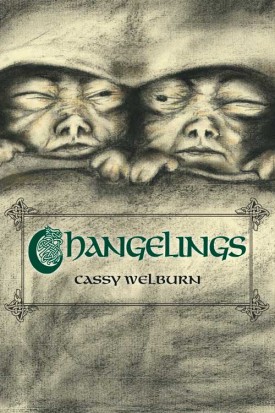
Changelings - Cassy Welburn (Frontenac House Poetry)

Today's book of poetry:
Changelings.  Cassy Welburn.  Frontenac House Poetry.  Calgary, Alberta.  2015


Cassy Welburn's Changelings reads like a book of incantations.  Welburn has an other-worldly noggin' and is translating these missives from languages we are yet to know.

These are deeply personal narrative poems that are attempting to make us see new worlds, better understand our own.

The Solitary Cyclist

My thirteen year-old self comes unbidden
out of the sky,
always on the same strip of road
on the outskirts of memory,
coming right at me
cycling home from school
in the wide green spring,
birds chattering through the pedals
to the click and whir of wheels,
leaning over the handlebars,
her eye on me,
she startles with familiarity,
beckons me slowly
from my life of glass--
this state of emergency.

Nothing should be lost,
she says,
and I'm caught
on this path, this hill,
while my body
whatever age it has become
or injury sustained,
remembers
her centre of gravity,
the spokes beneath me
turning.

...

"in the wide green spring."  This is such a simple perfection, Welburn laces these poems with gems like this as though she were tightening her skates and about to do double-axles, score on a breakaway.

Todays' book of poetry was utterly enchanted by Welburn's poetry.  Although there are many voices at hand the reader always feels secure because Welburn's steady countenance cornerstone's every poem.

Welburn counts on a little help from friends like William Butler Yeats, a quick kick in the pants from Walt Whitman.  David Bowie, Francis Child and Mary Oliver make guest appearances.  Gerard Manley Hopkins rears his old head and the nicest man on the planet, President Jimmy Carter, kicks in his two lovely cents.

Welburn understands the universe and our small part in it.  These poems feel wise but hard won.

At a Morning Truck Stop

The waitress calls out orders
over the sound of retarder brakes
and exhaust,
will that be to stay or to go?

Men climb down from their
diesel bodies, pull off caps,
as heat goes picking its way
across the parking lot
looking for plunder--
the swollen bag the busboy leaves in the bin,
a squirrel's bid for freedom
before the lid clangs shut--
a young woman leaning against the tire
of her car to smoke, a map of her whole life
spread out on the pavement--
Will that be to go or to stay?

Her young daughter's small
round head peeks
up through the sun roof,
eyes blue and cloudless,
cheeks catching the air,
right here,
one small glimpse
of paradise.

...

These poems are aching to connect.  The characters Welburn inhabits and conjures flay themselves open to make that human connection, that moment where understanding reveals the hearts' intent.

Today's book of poetry was consistently surprised reading Changelings.  Reading Welburn is a bit like watching the high jump competition at the Olympics, the bar just keeps getting raised by one gloriously beautiful leap after another.  We forget that this flight is human effort as we learn to enjoy to the soar.

Wade in the Water

The drowning man
still has a hospital bracelet around his wrist
though the name is washed out.
I've changed my mind, he says
almost cheerfully
allowing us to pull him from the river.
A light jacket and pajama pants
cling in sodden embrace,
outline his lean bones.
Memory fading, he's aging
before our eyes, forgetting already,
why we are there.
They're taking my wife away,
he says, teeth beginning to chatter.
We have a blanket around him,
carry him from the cold current of his mind
into the lap of the present,
jolt him with questions, pull down his patience
take him back where he does not belong.
There's a river flowing, he says, I saw
it from the window. Reminds me of the
sound of my own blood.
I wanted to go down there,
you know how they dunk you,
let the river wash over you, give you a new name?

...

It's a dark and rainy morning here at Today's book of poetry, Pharoah Sanders is wailing away on the box, "Save Our Children", live, it's booming and I'm blog-happy.  Day after day I get these marvelous books of poetry in the mail and Cassy Welburn's Changelings makes for an ear-mark day.  Good poetry is something magical because it changes your view of the world.  Welburn casts a spell that is both desolately honest and human about our grim world and yet she manages to find hope.

President Carter is quoted in the last poem of this collection, the last two lines in fact.  I think it sums up Welburn's poetry and frame of mind:

"We are attempting to survive our time
      so we may live in yours."    - President Jimmy Carter


Cassy Welburn

ABOUT THE AUTHOR
CASSY WELBURN is a poet and storyteller whose work has appeared in literary journals, anthologies and on CBC radio. She has travelled across Canada sharing her work at festivals, and for audiences of all ages. She works part time as a teacher to new Canadians and as Artist in Residence at many schools. She lives in Calgary, Alberta.

BLURB
“Cassy Welburn writes with insight and revelation, as she examines the nuances of personal story, transformation and healing. Her poetic narratives integrate strong images with lamenting vignettes. Welburn presents her reader with rich portraits of people and landscape, through a tight lens and then again through the optic of a hermetic breath.”
      – Sheri-D Wilson


392

 DISCLAIMERS

Poems cited here are assumed to be under copyright by the poet and/or publisher.  They are shown here for publicity and review purposes.  For any other kind of re-use of these poems, please contact the listed publishers for permission.

We here at TBOP are technically deficient and rely on our bashful Milo to fix everything.  We received notice from Google that we were using "cookies"
and that for our readers in Europe there had to be notification of the use of those "cookies.  Please be aware that TBOP may employ the use of some "cookies" (whatever they are) and you should take that into consideration.