Thursday, October 13, 2016

Take This Stallion - Anais Duplan (Brooklyn Arts Press)

Today's book of poetry:
Take This Stallion. Anais Duplan.  Brooklyn Arts Press.  Brooklyn, New York.  2016.

Take-This-Stallion-website

Anais Duplan has a big voice and Take This Stallion is loud.  Duplan is marvellously excessive in her exasperations, take this title:  "An Account Of A Child Born Alive Without A Brain And The Observables In It Upon Dissection."  

Duplan would also have us believe that her dog is God.  Today's book of poetry followed along with rapt and somewhat nervous attention.

A Fledgling Is A Young Bird
That Has Its Feathers
And Is Learning To Fly

[1]

S-H-E-D-E-V-I-L,
I, on the other hand,
make sure to wash my mouth
whenever I say something slippery. I am washing
right now, ma cherie, with a pen
in my left hand and my page on the rim of the sink
and my right hand is reaching toward you,
you in the mirror, to pull your hair out.

[2]

The terror of having to realize the unrealizable: I am a baby
on the kitchen counter, one of many. My mother continues
to unload us from a crate. The counter is littered with knives.
No one is hurt except all of us are hurt and yearning
to sleep. It is cold. Keep this in mind, it is cold.
My mother, the woman, she is wearing a chain
of children's molars. A man wearing the same chain
appears in the doorway and begins to eat us one by one.

[3]

My mother in a blue apron. It is springtime inside
and outside the kitchen. I hear the dog screech from the yard,
his "body" is caught under the lawnmower
my father is driving. I tell my mother to get off
the machine, to let this one live, but he doesn't listen,
he takes off his apron and steps outside,
sees the dog screeching and by now, it is still springtime.

[4]

You are in control. The day is yellow
in the sense that the grasses are dying. There are animals
dying every minute, waiting, even after their deaths,
to be adopted. Pick up the phone. Pick up the baby
and set it in a meadow. Wait for a bird to settle
on its head and take a photo. Mail the photo to your mother.
Write to her, write, Just this once, just this once,
would you please come to my recital. I promise I will do better
than Jenny. Take the baby back into your hands
and promise me.

[5]

What makes us go all the way to the bottom. The brother had severed
one of his fingers attempting to slice a fig. The mother took him
to the emergency room but only the brother returned. Since then,
I have had to be the woman of the house. I am proud to say
that the brother's fingers have grown six inches since I took over and the father
is very well near portly. I promise to fill them up. I say this every time
I pass the emergency room on the way to bed.

[6]

At least we have our authenticity. This is the last time
I'll ever lend my skin to a man who tells me he'll give it
right back. Keep this in mind: it is cold and my eyes
are too bloated for my head. I have had to squeeze them dry
at day's end. I do this in the bathroom, where a lady is safe
to take her apron off and her eyes out.

[7]

I say to Michael, I say, Michael,
why don't you go out and find yourself a woman. I say,
Michael, any lady would be lucky to let you have her. I say, Take
this cake and take it into your arms and find a woman.

[8]

You are in control. Take this stallion and ride it
to your demise. (Read: the sunset, behind the stars,
the green green garden.) Compare my flesh to yours. Look at my hair:
my neck hair and my toe hair. (Read: I am a woman and a woman
is a woman.) My unconscious is under siege,
Papa Bear. Take up your arms
and throw them around me. Bring a bouquet,
bring your big cowboy hat. Show me how to kill a horse.

...

It's clear Anais Duplan is comfortable going all back-beat to the regular rhythms of things but this doesn't stop her from finding a big, deep groove.  Take This Stallion isn't an easy get - the reader has to take a minute to find firm footing because this is surprisingly new ground.  Anais Duplan is teaching us her new vernacular and it is splendid.

Why Would You Ever Go
To A Pool Party Anway

I.

Anais, you needn't cry
like a baby seal. You needn't wear
your hair long, just to divert
the passing sailors--
                O what flag waves outside the windows
of all fledgling girls
when they detect
what lives
between their legs.
                                   John Paul once said to me,
O Anais, o Anais, what lives between your legs,
and I opened up to him, put his hand inside me
and said, This is the fiery throat of God -- be careful.
You may find you are no longer every-
thing you had been
before you arrived.

II.

He said, she said, we wrote of a great awakening.
Instead of death we only moaned
every time the sun did wane and how
it waned every morning. Today could be
the day that does not end
in your death-
ly embrace.

...

A lot of fun at this morning's read.  Take This Stallion lent itself to a dramatic show.

Not sure how Anais Duplan has done it but Take This Stallion feels like a strange familiar.  I know I have never been here before and some of the language is foreign but these poems ring the ears off of my inner reader.  I'm happy/sated, deja-vued and curious for more.

I Felt Like A Traffic Light
As Soon As I Got Inside You

I.

This is how to be honest:
I learned it on the subway: look
me in the eyes and tell me

I'm not beautiful. Sometimes
it's best just to drop out tune down
let go so ever so deep. So deep

was her throat and how the gods
did sing, how the dog doth sing,
Happy birthday, darling. And thank you, too.

II.

I met a girl named Martha
with eyes as big as Arizona,
relative to other states.

Martha, I promise to change
your bandages forever 'n'ever,
and if the doctors should ever say,

O Anais, Martha will not survive
without your limbs, I would
tear them off one-by-one.

III.

Lift me up --

I am looking at the neighbor's wife,
I am looking at the neighbor's wife
and wond'ring where she buys her things.

Lower me down, just below your eye-
level and tell me about the time

your mother made you wear clothes you didn't want to wear.

IV.

Never forget to greet the doctor in the room,
I know it was your birthday but I never got
the prescription you wrote me.

Dancing is not permitted in certain towns and that's ok
for some. Don't stop get it get it get it get it get it get it
before it gets you.

As soon as you walked into the room
all the flowers said O hell yes.

V.

My life is a ballad, it goes: O
ooooo! I can't breathe
when you hold me so

cold. Get paid get paid
tomorrow. Wake up get
paid tomorrow. You deserve
everything you get.

You don't know nothing and you never did, silly bill.
I don't have a gun but maybe one day I will.

...

It can't just be me.  There are a strokes worth of vicarious thrills both carnal and poetic in this rambunctious first book of poems.  Today's book of poetry will happily champion Take This Stallion until Anais Duplan gives us some more sugar.

Anais-Duplan-BAP
Anais Duplan

ABOUT THE AUTHOR
Anaïs Duplan was born in Jacmel, Haiti. She is the director of a performance collective called The Spacesuits and of The Center for Afrofuturist Studies, an artist residency program in Iowa City. Her poems and essays have appeared in Birdfeast, Hyperallergic, The Journal, [PANK], and other publications. She is an MFA candidate at the Iowa Writers’ Workshop.

BLURBS
“I have never before read a book like Anaïs Duplan’s Take This Stallion. Her major talent is recognizing the self in the other, making for poems that flow forward in a tone of oneness—is oneness a tone?—poems that make evident an ever-expanding world by opening themselves up into that world. This debut does what poets in their fifth or sixth collections are still trying to figure: it balances the intellect, image, music, and emotion in ways so unfamiliar that a blurb couldn’t possible characterize the work.”
     - Jericho Brown

“For all the ways we pad our language with qualifier, with apology, with hedge, Anaïs Duplan is antidote. Her poems are talkative, inappropriate, obsessive, and sexy. They put everything on the table and if there’s no table, she erects one: of the mechanic’s lobby, of men selling peanuts at her door, of the George Washington Bridge underpass, of the ocean. Sometimes the poems hang the air with obsession like tangential rope. like snake. Sometimes they pick up their skirts and dust the ground. Duplan’s work is at once this methodical, and this unhinged. She confirms a fear that drones and Kim Kardashian have more to do with our therapy sessions than we wish. And then at times, she puts all that away, and the poems wash out their mouths. This first collection is, after all, of this world. And though it might be haunted by a voice that says “Don’t be too cocky,” on nearly every page it talks back. Heroic, inspired, and smart: these poems are on their own two feet, saying “I’m always cocky.””
     - francine j. harris

“Take This Stallion is the sound of a generation finding its voice; it is a sound of a generation that has more rapidly than any since the generation that came of age in the 1960’s turned the world on its head, both exposing the faithlessness of the generations before it, and reifying the promises those generations made. Listen: “When she was lost to them/ they took to striking/ each other over the head with empty fists,/ striking until blood ran freely in the city/ ditches. All of this sounding like horses thundering/ into each other, peeling themselves/ off of each other, and thundering/ again. The whole city, this sound.”In Take This Stallion, the whole city is made new, and the maker who re-makes it is new, and the songs they sing as they work are the new songs.”
     - Shane McCrae

Anais Duplan at SPECTRA
Video:  Therese Guise


513
DISCLAIMERS

Poems cited here are assumed to be under copyright by the poet and/or publisher.  They are shown here for publicity and review purposes.  For any other kind of re-use of these poems, please contact the listed publishers for permission.

We here at TBOP are technically deficient and rely on our bashful Milo to fix everything.  We received notice from Google that we were using "cookies"
and that for our readers in Europe there had to be notification of the use of those "cookies.  Please be aware that TBOP may employ the use of some "cookies" (whatever they are) and you should take that into consideration.

Tuesday, October 11, 2016

The Blue Hour - Jennifer Whitaker (University of Wisconsin Press)

Today's book of poetry:
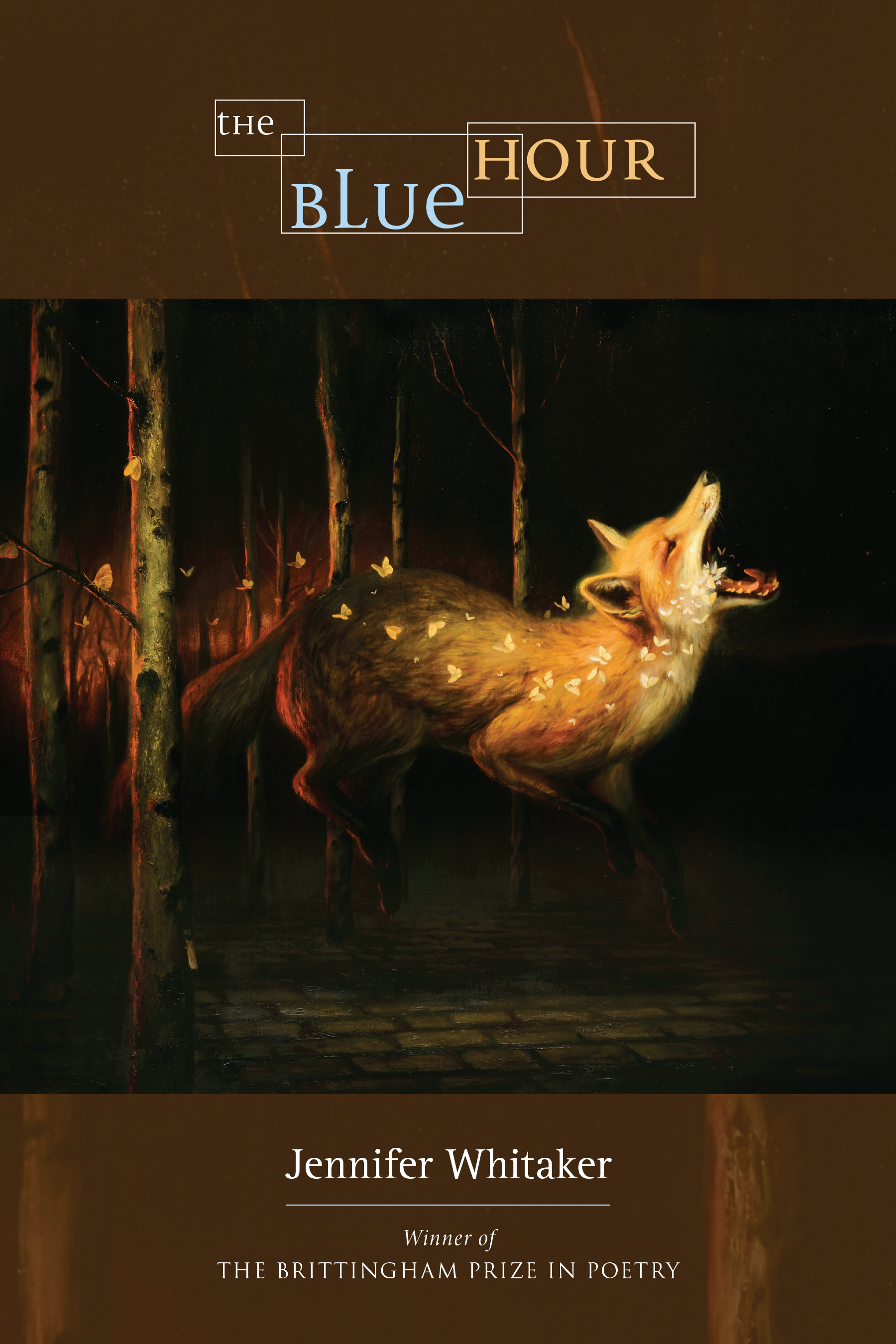
The Blue Hour.  Jennifer Whitaker.  University of Wisconsin Press.  Madison, Wisconsin.  2016.

Winner of the Brittingham Prize in Poetry


Jennifer Whitaker credits the seventeenth century poet Gianbattista Basile's Pentamerone as a big influence on these poems.  She doffs her hat to Frannie Lindsay, Christine Garren, Karyna McGlynn and Brian Teare's collection The Room Where I Was Born.

Jennifer Whitaker may have been influenced by these writers, we will take her word for it, she might want to include the poetry Gods though, they have shone down on her.  Whitaker makes it all her own despite whatever influence trails in these vapours.

The Blue Hour is incendiary, these poems are white hot and unless handled with care - they will burn you.

Habit

When I followed him to the river, I narrowed myself
to a needle's point -- the morning clear,

the cicadas' swelling hum a comfort.
Lures spread out carnival-bright on newspaper,

those feathers trembling. The day's catch usual:
fish too tiny left on the banks, a snake flayed open to the light.

The field beyond the river: the cattails bending
with the wind, those daffodils' pursed lips.

When rocks bit the backs of my knees,
the haze of insects crowding around us,

my skirt pushed back like a gasp and the water
the water a stagnant slash across the land

I didn't fight. I was older then. I wasn't scared;
I was tired. -- Back at home, I brushed my hair,
put on my clean dress.

...

Brutish and wickedly candid, Whitaker makes us believe these are fairy tales, and they are, of the grimiest sort.  The Blue Hours pour gasoline over a number of sad ballets and Jennifer Whitaker keeps throwing in the match.  

These are horrifying poems laced with chilling beauty and delicately tender observation.  Whitaker infuses these poems with a weary sense of danger and foreboding.  Not even death will reconcile or console the demons left by this litany of orchestrated sexual violence.

Blue Hour

The whole world swells
underneath the house;
old newspapers bloat
in their plastic skins,
a black heat damps
like the inside of a mouth.

I quit the whine that sent me here,
I crouch in the bright six o'clock dark
like a cave cricket, in its fear
and ricochet frenzy blind
and springing toward that which frightens,

that which could easily be you --

...

Today's book of poetry didn't know where to scream when I read some of these poems but I couldn't turn away either.  Poems this highly charged should come with an early warning system.  Poems this highly charged are as rare as hen's teeth.

Kathryn, our Jr. Editor, was stranded on the distraught/angry/seething train after reading The Blue Hour so she excused herself from the morning read.  She sat beside Milo and didn't say a word. There were no smiles in our office as we solemnly read through Whitaker's violations.  I think the men felt guilty for being men, the women, some sort of kindred and justified outrage.  Everyone agreed the poems were Sterling.

I let things cool for a while after the reading, filled the office with some quiet Chet Baker on the box, later on some Billie.  There's a reverent quiet now, except for the music.  

Jennifer Whitaker's The Blue Hours left marks.

Father as Distant Boat

Far across the lake, on the other shore, the family takes off their hats,
loosens their neckties, unbraids their hair. There is a man and a woman,
a girl and small dog with soft ears. They board you
through the mist and stink of weeds. You pitch wildly.

Not until the shore's too far gone will they realize
the wood underfoot is rotten soft. Delicately,
like a slowly flooding room, it will dawn
on them: no one ever survives you. At sunset
they'll leap from your edges like flames.

...

Today's book of poetry wants to celebrate The Blue Room because this book is an achievement.  What a horrible, horrible world we inhabit that these evil fairy tales might be true.  Jennifer Whitaker takes us where no one wants to go and tries to bring us out clean on the other side, but great books leave a residue that stays with you forever.

Sublime and violent, and oh, what a cost to be wise.

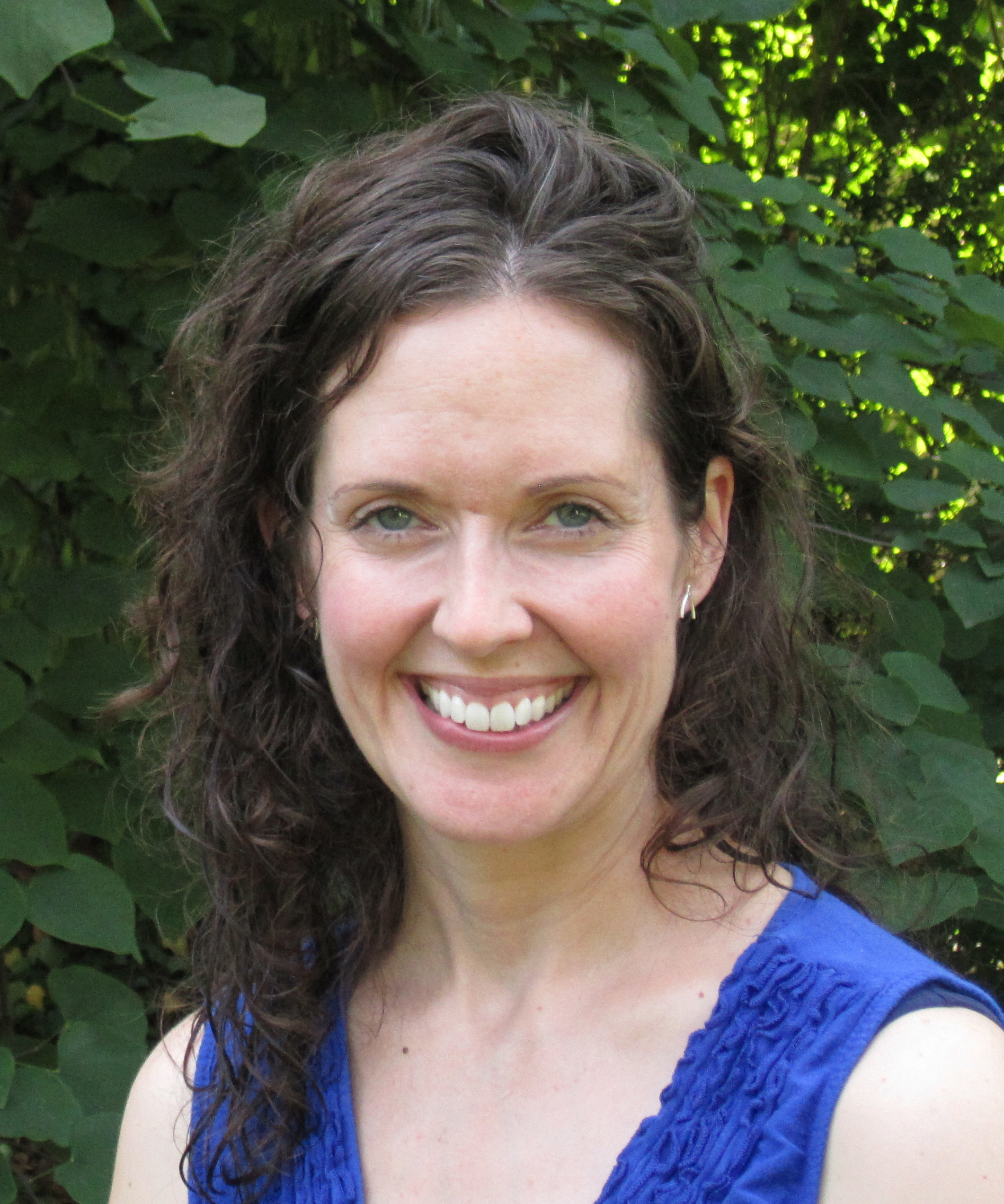
Jennifer Whitaker

ABOUT THE AUTHOR
Jennifer Whitaker is the director of the University Writing Center at the University of North Carolina at Greensboro and assistant poetry editor for storySouth. This is her first book.

BLURBS
“Whitaker’s debut collection wrenchingly captures an abusive parent-child relationship in a hardscrabble, desolate environment where, for instance, feral kittens fight off flies. . . . And though what follows is hard-bitten and relentless, with the sure knowledge that every twinkling gift has its price, Whitaker writes with a richness and variety that offers sustained reading throughout.”
      —Library Journal

“The Blue Hour casts a blue spell, using the tropes and gestures of traditional fairy tales—riddles, disguises, wishes, shape-shifting, entrapment, escape, and transformation—to trace a daughter’s experience of incestuous abuse. With language as sonically and somatically intricate as the subject she narrates, Whitaker looks unflinchingly at an ancient taboo and the infinite hour of its endurance.”
     —Lisa Russ Spaar, author of Vanitas, Rough

“Whitaker’s skills with sentence and sound, with spare yet suggestive language, with telling juxtapositions, with metaphor and misdirection, make the unbearable bearable just long enough that it can be seen, contained, and transcended. These are riveting poems, hard won, from a poet of exceptional talent.”
     —Jim Peterson, author of Original Face

“Chronicles a daughter in danger, a girl trapped in the dark underbelly of fairy tales. Predators—fathers, wolves, witches and their ghosts—drag us into the dark forest of sadism with no prince or woodsman in sight. Whitaker is a fearless poet whose subject is fear.”
     —Denise Duhamel, Brittingham Prize judge


512


Saturday, October 8, 2016

roly poly/bicho bola - Victoria Estol (Toad Press)

Today's book of poetry:
roly poly/bicho bola. Victoria Estol.  Translated by Seth Michelson.  Toad Press.  La Verne, California.  2014.


roly poly/bicho bola is exactly the tonic that Today's book of poetry needed.  The air is cooling and the skies turning grey here in the nation's capital, winter is approaching, so what better than a chapbook that heats things up.  

Victoria Estol is a quick slap up the side our complacent heads.  These little ditties crack like a wisecracker cracks gum, a short tack of sound like the thwack of a silencer on a pistol.

Estol is bold and brash and brazen and we couldn't be happier.  roly poly/bicho bola is chapbook short and the poems are sometimes only two lines long but this stuff has a sizzle all its own.

dramatic arts

A new couple sits down up front. The work begins. They're close, almost
hand in hand. She laughs when there's no reason to. Her Poodle laughter in-
vades the piece. He grows increasingly uncomfortable with each outburst.

I don't touch my partner. I like to look without being touched. He makes
             a couple
attempts
but I pull away.

False applause.

The lights come on. The guy wants to ditch the laughing girl. Their
gestures are proof of it.

In the hallway, while they comment on the show's good and bad,
I drift past the guy and goose him. I look coyly at him and head to the
             bathroom.

I drop my panties, knowing he's sure to come.

...

Victoria Estol writes with a sexual candor and energy that raises the readers pulse.  Seth Michelson's translation warms right up to Estol's passion and bravado.

One thing Estol makes clear in these poems is that she sets her own agenda.  The women in these poems are empowered - they react to men if they choose, but never for them.

flesh and fingernail

i become again the cell that gave me life
i walk past the packets of sweetener you're not using
and lodge myself under the nail of your ring finger

i chew through your flesh, worm
carve your bone, termite
swim in your contradictory blood

against the current

i traverse you hippopotamus neck
scale your trachea
cut your vocal cords so you'll stop your speaking

arrive at your inner ear
scratch
slash your tympanic membrane

i fall in a crouch to the table and retake my seat
perch on my elbows on cold marble

and smile at you while i plot my coup.

*

You say, Your silence makes me nervous.
I look for my panties and leave.

...

Kathryn, our Jr. Editor, tried some reverse translating at our morning read today.  She took roly poly/bicho bola to her desk for an hour or so and came back with flames coming out of her nostrils. She gave us her version of roly poly/bicho bola in Spanish and it sounded beautiful - but to our dull ears only as beautiful as birdsong.  But after her swinging Espanol treat Kathryn turned around and hoodwinked us all with a knowing reading of it all in English.  Bless her cotton socks.

The staff of Today's book of poetry were in total agreement, roly poly/bicho bola rocked.

Airport

The bloodstain remains in the bathroom carpet. A watchful owl,
motionless, reminding them daily when they wake of what happened.

From intense red it fades to dry brown.

She'd once tried to clean it. Dropped to her knees and scrubbed it
till her bones ached, but failed.

Now she's heading to New York. In her carry-on she takes the book
by Carver that he'd gifted to her.
There's no dedication.

They did everything possible to avoid leaving tracks in each other's
              lives, Like
two expert assassins, they erased every footprint, set the runways ablaze.

He turned 45 degrees left. Found cloudless skies for his journey.

She'll never again wear high heels.

...

After reading roly poly/bicho bola Today's book of poetry really has only one response - we want more.  A full length collection from this Uruguayan gunslinger is in order.  Her aim is true.

Image result for vitoria estol photo 
Victoria Estol
(Today's book of poetry believes this is a photo
of the poet Victoria Estol, our apologies if we
got it wrong.)

ABOUT THE AUTHOR
Victoria Estol was born in Montevideo, Uruguay, in 1983. Her poetry has earned a commendation from National Pablo Neruda Competition for Young Poets, and it is featured in the anthologies Cualquiercosario (2013), co-edited between Uruguay (Yaugurú) and Spain (Libros de la imperdible), and Fixture (2014), co-edited by the Argentine publishers Chuy and Malaletra. Her poetry also has appeared in a diversity of international journals. Bicho Bola (Yaugurú, 2013) is her first full-length book of poetry.

ABOUT THE TRANSLATOR
Seth Michelson is the author of Eyes Like Broken Windows (Press 53, 2012), as well as the chapbooks House in a Hurricane (Big Table, 2010), Kaddish for My Unborn Son (Pudding House, 2009), and Maestro of Brutal Splendor (Jeanne Duvall, 2005). His translation of El Ghetto(Sudamericana, 2003), by the internationally acclaimed Argentine poet Tamara Kamenszain, appears as The Ghetto (Point of Contact, 2011). He teaches the poetry of the Americas at Washington and Lee University, and he welcomes contact through his website.

Check out this video trailer for Victoria Estol's roly poly/bicho bola:
https://www.youtube.com/watch?v=XSC9IvWqRJo


511
DISCLAIMERS

Poems cited here are assumed to be under copyright by the poet and/or publisher.  They are shown here for publicity and review purposes.  For any other kind of re-use of these poems, please contact the listed publishers for permission.

We here at TBOP are technically deficient and rely on our bashful Milo to fix everything.  We received notice from Google that we were using "cookies"
and that for our readers in Europe there had to be notification of the use of those "cookies.  Please be aware that TBOP may employ the use of some "cookies" (whatever they are) and you should take that into consideration.


Thursday, October 6, 2016

Ex-Ville - Rhona McAdam (Oolichan Books)

Today's book of poetry:
Ex-Ville.  Rhona McAdam.  Oolichan Books.  Fernie, British Columbia.  2014.


How about this?  Rhona McAdam writes with quiet distinction.  What I mean is that extraordinary events full of miraculous people are not her terrain.  Instead McAdam's poems trace, with elegance, the small movements and moments of our real lives in real time.

What a convoluted attempt to intone what McAdam handles with ease  -  the straight forward goods.

Sleep

We court it with deep breaths:
quietly at first, so it will not hear us
and startle.

But then as we circle the darkness
where it may be hiding, we begin to forget
and from far down in our throats, songs escape
through creaking doors, our guttural
wood-cutting songs, our sea-lion songs,
our songs of the heron, night-fishing
interrupted, whose singing can wake the dead.

We cannot hear the sound of those songs.
They stop us remembering
how we called up sleep, we once-young, once-dreamers.

We are too tired to remember how to sleep,
how to find our way in
to what takes us safely to morning.

When morning comes we are still in the forest
with burning eyes, looking for shadows
to step into, a mossy bank where we can set down
our mind full of burdens and be still,
take a long silent breath
the length of a moon's arc, and be still.

...

Today's book of poetry has been here before.  Back in March of 2015 we looked at McAdam's Cartography (Oolichan Books, 2006).  You can see that here:


Not much has changed.  Today's book of poetry is still enamored by McAdam's gentle certainty.  And then again in the eight years between Cartography and Ex-Ville we bet that a lot has changed for McAdam.  She has seen more of the world, and it has seen her, the poems in Ex-Ville come from a voice of experience.

McAdam sees the frayed edges of the world, it's in these narratives, in her voice - but she remains an optimist, you can hear that too.

Today's book of poetry feels at home in McAdam world.

Greyhound

What is this but a race
against comfort. The question
is not when to sleep
but how small
can you become, just where
is your soft forgiving self, and can it
accommodate an armrest, the ridge
of a windowsill, another armrest.
Will your knees endure, your neck?

The viewing screens
stay blank, their content too long
ago contested. The audio is mute.
Entertainment is officially
dead on this bus.

The air twists with illicit smoke
and the driver's heavy reprimand
fills a silence lanced
with the tinning beat
of inadequate headphones.

Full moon watches
over my shoulder. Big headphones guy
pulls his hoodie over baseball cap;
drug dealer's got a big gold ring
on every finger, one eye open, one
closed hand on his suitcase.

Junkie girl stays locked
in the washroom for another hour.
Young runaway wraps himself
in a sleeping bag and bangs
the seat rest when he turns. Old guy
snores and stinks in the seat ahead of me.

Through this choppy night
every town that wakes us
has a Walmart, Tim Hortons,
a Shell and McDonalds
guarding its flank, heralded
by a shock of streetlights.

At every stop the driver bangs
the microphone to life.
He's a long way from home,
his accent undefiled.

At every stop the girl with AIDS
shuffles from the back and down the steps
for a smoke, hoarding its crushed remains.

At every stop the young men
follow her, shivering in their caps
and gleaming sneakers, they all blow smoke
at the oblong windows of every station,
watching the driver's weary loadings
and unloadings.

When we make the last stop
before dawn, everyone descends
then boards again, rustling sandwiches,
cracking cokes and iced tea. Drug dealer
hauls his case back on board,
knocks back burger after burger,
his iPhone finally mute. The runaway
peels back the plastic from his breakfast,
a pale cross-section of bleached bread,
pink strata of luncheon meat.

Mountains loom, showing their
snowing teeth as light cracks the summits.
We follow its spill down the hill into morning,
all the night road's bleary citizens
gathered in this battered ship.

...

Today's book of poetry has been on that bus, more than once. 

Whether it is on a bus, in a tired airport or a European city we've longed to see Rhona McAdam makes us feel a little less like a stranger in a strange land.

This morning's reading was interrupted by the sounds of construction next door.  The guy on the gas-powered radial stone saw had it timed perfectly.  Whenever one of us started to read a poem he'd whip into a stone cutting frenzy with his diamond tipped monster.  Of course it was all coincidence, he couldn't see into our offices and from an earlier conversation I'm pretty sure he's a poetry fan.

Once we got over the noise outside Ex-Ville gave us a damned good morning read.

Furlough

The soldier joins our flight in Dallas:
twitchy, red-eyed, pungent,
his stories sandstorms
of words accelerating
during take-off, then levelling
to a steady hum of detail,
two days and sixteen drinks
out of the desert.

Six years in to a four year tour of active duty.
Seen it all at 24. Infinite the things he'll do
in two years' time when he's pretty sure
they can't call him back again... but rules
change, he knows, in times of war.
He's done with Bosnia, Afghanistan.
Passed over for promotion every time.
Peacekeeping now, a guard at Abu Ghraib. Their hands
are tied; they can't do a thing. Prisoners
spitting in his face. Do we know how hot
the desert gets? 140 in summer, no lie.
He used to love the beach, now he craves rain,
snow, silence. Or not silence, but the sounds
of Bellingham, the streets he grew up on,
homeless with his mother from the age of two.
The army seemed like heaven the way they explained it.
A free education. Maybe med school. Now he'd like
to go back to that recruiting office.
Take his gun apart, and clean it, piece by piece.
Eye to eye with the recruiter. Do we want to read
his novel? He wrote it nights, on guard at Abu Gharib.
Maybe he'll be a writer after this. He has a girl
back home; she's always asking him
for money. Maybe this time he'll end it. Not yet
but in two weeks, before he gets back on that plane.
The flight attendant slips him
another drink in spite of his uniform.
Because of it. He drains it
for the guys he left behind.
A drink for each of them
while he's out. He promised.
One more down. 133 to go.

...

We think Rhona McAdam must be one hell of a listener.  Ears wide open.  The more we read of Rhona McAdam's fine poetry the more we like it.  There's a fierce clarity to her compassion and we always have room for that.

Rhona McAdam

ABOUT THE AUTHOR
Rhona McAdam was born in Duncan—a great-granddaughter of the town's namesake—and grew up on Vancouver Island. She lives in Victoria, BC. She has post-graduate degrees in communications planning, adult education and library and information science, and has worked in Canada, England and throughout Europe. Her poetry has been published in Canada, the US, Ireland and England and has been praised for her unique and engaging voice, her clarity, and her ability to balance the ethereal with the real. She has a gift for creating vivid landscapes, both actual and emotional.

Rhona McAdams
Winter Poets
Video: Times Colonist


510

DISCLAIMERS

Poems cited here are assumed to be under copyright by the poet and/or publisher.  They are shown here for publicity and review purposes.  For any other kind of re-use of these poems, please contact the listed publishers for permission.

We here at TBOP are technically deficient and rely on our bashful Milo to fix everything.  We received notice from Google that we were using "cookies"
and that for our readers in Europe there had to be notification of the use of those "cookies.  Please be aware that TBOP may employ the use of some "cookies" (whatever they are) and you should take that into consideration.

Monday, October 3, 2016

Necessary Acts - Peter Huggins (River City Publishing)

Today's book of poetry:
Necessary Acts.  Peter Huggins.  River City Publishing. Montgomery, Alabama. 2004.


If you follow Today's book of poetry you'll remember Peter Huggins, back in May of this year we took a look at Huggins excellent second book of poetry Blue Angels (River City Publishing, 2001). You can see that here:


We've made a promise to our publishers that we will happily read all of the books of poetry they send our way regardless of when they were published.  Although we do try to post blogs about recently published books first we believe all books of poetry are new until the reader opens them.

So today we're going to take a shot at Huggins third book of poems, 2004's Necessary Acts. Necessary Acts seemed a necessary inclusion.  Huggins is one polished poet, we've become very fond of the way he works through a poem.  These poems feel as fresh as new snow, clean too.  Huggins writes with focused breadth.  His poems free range from the deaths of little white rabbits to the unfortunate chain saw skills of grandfather and the readers feels that given time Huggins would artfully encompass the universe and render it in terms we could understand.

My Grandfather's Chain Saw

My grandfather thought flesh was like air,
Nothing sharp could hurt it. Or maybe
He was just careless, he dropped his tools--
Hammer or saw, level or plane--

Wherever he was and spent half his time
Looking for them under boards, in cabinets,
By sawhorses or on stairs. The right tool,
Never at hand, was always out of reach.

His chain saw, though, he found without trouble.
Eager for wood, it gobbled up limb,
Branch and trunk. Nothing slowed its drive
As it chewed the ring and middle fingers

Of his left hand, dusted the half-cut
Hickory with his blood, gave his flesh and bone
To the blue air, and left a space in hand
And hickory he never touched or cut again.

...

Today's book of poetry is convinced that Peter Huggins is building a poetry mansion and each of the poems from Blue Angels and Necessary Acts are a solid, beautiful and necessary stone, one after the other like a master mason.  It's like Huggins is preparing meals for a poetry feast.  If one succulent treat doesn't do the trick, turn the page,  Necessary Acts will rumble out another Cordon Bleu plate.

Necessary Acts was one of those books that Today's book of poetry wanted to slow down, read more slowly to get all that gravy.

The Man Who Thought He Was Dead

My friend Rick and I
Were fishing in my boat
On Logan Martin Lake
When it started to rain.

We went ashore and got under
A sweet gum. I thought the lightning,
When it hit the sweet gum,
Cut Rick's face off.

I heard Rick's voice.
His hands and then someone else's
Worked my chest like a pump.
I guess I was dead.

I didn't mind.
I was having a good time,
Floating around the ambulance,
Watching the paramedics

Try to shock me into life.
I felt good. I
Didn't want them to help me.
I wanted them to leave me dead.

Then I saw my body jump.
Sucked
Into myself, I
Woke up in the hospital

With a terrible headache.
Rick said it's strange
The same thing that killed me
Brought me back to life.

I told Rick
I'm damned if I know
What to make of being dead,
Or what to do with my life.

...

Today's morning read was a serious affair.  All of our readers were on the same reverent page, they'd all read Blue Angels so they had a good idea of what was coming.  Huggins aren't necessarily solemn but they sure do carry some weight.

Necessary Acts is Huggins third book of poetry, his fifth and most recent books of poems is Audubon's Engraver (Solomon & George Publishers, 2015) and Today's book of poetry feels confident they are Huggins gold, he doesn't seem to mine anything else.

Killing White Rabbits at Tulane Medical School

Not with poison or guns or traps.
A wrench, something to grip and swing,
To heft like an axe and bring down
With one sharp blow. In a white coat
I held the rabbits over the sink
While they yellowed their fur. Bob hit
The rabbits on the backs of their heads,
Then cut their throats, drained their blood,
Opened their chests and clipped
Their aortas with stainless steel scissors.

I wrapped the bodies in brown paper,
Put them in the freezer,
Cleaned the wooden dissecting board,
Watched the white aortas bubbling
In the medium I'd prepared earlier
That morning. All day I hoped
Our results tallied with yesterday's
And the days' before. Repeatable, confirmed.

Some days we used guinea pigs.
Bob kept them in his coat pocket
Until he was ready for them. They cried out
When he grabbed their hind legs
And flicked their bodies against the sink.
I wrapped the guineas in white paper
And stacked them in the freezer
Beside the rabbits. On Fridays
The guineas and rabbits were incinerated,
And I got paid. That job prepared me
For life and for work and I'm grateful.

...

Peter Huggins has quickly become a crowd/fan favourite here in our office.  Now if we can only get our hands on his other books...

Peter Huggins

ABOUT THE AUTHOR
Peter Huggins is the author of five books of poems, Audubon's Engraver (Solomon & George Publishers, 2015), South (Solomon & George Publishers, 2013), Necessary Acts, Blue Angels, (both from River City Publishing, 2004 and 2001), and Hard Facts (Livingston Press, 1998). Audubon's Engraver was shortlisted in 2016 for the International Rubery Book Award, and South was shortlisted for that same award in 2014. He has published over 300 poems in many journals and magazines, and was awarded a literature fellowship in poetry from the Alabama State Council on the Arts in 2006.
In the Company of Owls, a middle grade novel, appeared from NewSouth/Junebug Books in 2008. In addition, he has published a picture book, Trosclair and the Alligator (Star Bright Books, 2006), which has appeared on the PBS show Between the Lions, received a Mom's Choice Award, and been selected as a best book by the Bank Street College of Education and by the CCBC at the University of Wisconsin-Madison. He has recently retired from teaching in the English Department at Auburn University where he served for thirty-one years, and he and his wife live in Auburn, Alabama.

BLURBS
"Necessary Acts is ripe with characters, from Dante to Sherlock Holmes to Elvis -- and ripe with poetical occasions, from a persona poem that converys the indignation of the animals Noah left behind to a narrative poem that recalls killing white rabbits at Tulane Medical School. Peter Huggins is unstoppable."
     - Beth Ann Fennelly, author of Tender Hooks

"Peter Huggins is a rarity - a poet who writes with the clarity of a silver bell."
     - Thomas Rabbitt, author of Prepositional Heaven

rivercitypublishing.com

509

DISCLAIMERS

Poems cited here are assumed to be under copyright by the poet and/or publisher.  They are shown here for publicity and review purposes.  For any other kind of re-use of these poems, please contact the listed publishers for permission.

We here at TBOP are technically deficient and rely on our bashful Milo to fix everything.  We received notice from Google that we were using "cookies"
and that for our readers in Europe there had to be notification of the use of those "cookies.  Please be aware that TBOP may employ the use of some "cookies" (whatever they are) and you should take that into consideration.