Friday, June 5, 2015

Dante's House - Richard Greene (Signal Editions/Vehicule Press)

Today's book of poetry:
Dante's House.  Richard Greene.  Signal Editions/Vehicule Press.  Montreal, Quebec.  2013.


The title poem of Richard Greene's fourth book of poetry, Dante's House, does take Today's book of poetry back to Sienna and the Il Palio.  And that is a great place to visit.

There is no feeling quite like the feeling one gets in Sienna.  It is where the old world, the really old world, meets the new world.  No city glows quite like Sienna when that sun sets all orangeyred over the roof tiles and the Tuscan hills.

The other eleven poems in Dante's House gave me jitterbug feet.  I had to get up and walk about my house after reading each of these poems.

These narratives fully, completely, inhabit the reader.  You are in prison.  You are at Yankee Stadium.  You are in Haiti.

Corrections

1.

My friend works medium security and says
of his mad charges, 'You can't be angry.
They're sick -- shouldn't be here.' To the near-sane,
he doles punishments when 'Fuck you, screw'
is prelude to a shank -- some soup spoon snatched
and ground against the whetstone of the bars,
a razor blade bound into a pencil's
eraser tip, or merely the handle
of a toothbrush made murder-one sharp.
And strange things: back in stir after
his biopsy a man threatened to force a pen
through the incision and crush his liver
unless given Tylenol Three. He settled for
Extra Strength and the promise of a doctor:
'I was just joking,' he added meekly,
knowing threats of self-harm bring sanctions too --
days apart in an observation cell,
diaper-clad and deprived of any thing
imagination could turn into a noose.
Others would cut themselves or even rip
open the skin and muscle with their hands;
one inmate slashed deeper than his scrotum,
poured blood and half his entrails on the floor;
luckless, he missed the artery and lived.
Some lifers, almost done, can no longer mount
the stairs to the range or have left their
wits at the scene -- time's muddled fugitives
who could not pick themselves from a line-up.
Beyond correction, a man with one leg
weighs 500 pounds and may no longer lift
himself. Torpid, he pisses and shits among
the blankets, cannot wash or move,
cuffed to a history of offences,
manslaughter (released) and then child rape.
His heart and kidneys wind down -- my friend,
tall as a linebacker, joins a staggering
scrimmage of guards and paramedics,
as they hoist the stretcher down stairwells
and across a lighted courtyard to the gate
where an ambulance waits to parole him.

...

Green so thoroughly inhabits  each world he explores that the poems become visceral experience for the reader.

These poems are visits to strange places, odes to friendship, musings on a "winter's God who mingles grace and grief."  This is one of those cases where Today's book of poetry just liked listening to Richard Greene talk.

Crooked Eclipses

     In Memory of James Gray Watson
     (1939-2010)


     Nativity, once in the main of light,
     Crawls to maturity, wherewith being crowned,
     Crooked eclipses 'gainst his glory fight,
     And Time that gave doth now his gift confound.

                                        - Shakespeare, Sonnet 60

New on the ground in Tulsa, you fought off
the boyishness of the newly hired prof
with a bow tie: you said, 'I want to look
different from the students,' and some old book
worm said, 'It makes you look different from
anyone', and so it did, added to the sum
of the things that made you -- the things clung to
by friends as now the sun-shadow takes you.

Once you showed me your surehanded father
surgeoning in photographs. A brother
and a son of yours took up scalpel and clamp
while your work lay under a table lamp,
five books mapping Yoknapatawpha,
the slippery Snopes and what Sartoris saw,
and, in the time I knew you, Matthiessen --
always gags on Killing Mr. Watson.

Austin was our place; din makers
over manuscripts, our jokes and whispers,
shenanigans through bookish afternoons
drawing reproachful looks over half-moons.
In the evenings, there was Johnny Walker Red
and things men say as they leave them unsaid.
Yet, clear spirit, you counselled me by poem,
recommended Frost for troubles back home:
you sent me to 'An Old Man's Winter Night',
while, to me, friendship was your gift outright.

Yesterday, your son checked your email,
read you my silly note, conveyed a hail
from your sickbed, sent your love, spoke plainly:
'In short, his condition worsens daily.'
Just pain and sleep: chemo becomes morphine
and seventy years of being have been:
I substitute have seen you for will see.
Tenses shift and I prepare for memory.

...

There is a tender elegance in the way Richard Greene looks at the world through his poet's gaze.  
There is a little bit of everything, awe and anger, beauty and brass.  The one thing you won't see in a Richard Greene poem is naivete.  He is never that.

Greene is worldly without being pompous, these erudite and articulate poems and never showy, they're knowledgeable.

Oils

Black and white and nationally portable,
a TV occupies half the kitchen table,
serves up The Edge of Night or Coronation Street,
as my mother, among copies of Vogue
and Chatelaine and The Daily News,
lays oils on the rough side of Masonite.
The brushes seem never to need replacing,
and the tubes of Winsor and Newton go
from year to year, the same ones never empty:
manganese blue hue, phthalo turquoise,
cobalt chromite, viridian, and terre verte,
purple lake, raw umber light, and Payne's grey.
Her gardens are decorative and terrible
as vined or beasted letters of a manuscript,
and undersea, whales and plankton and octopi
of equal proportion, as when sleeping
shortens the gap between dead and living.
Mind always elsewhere - on Adam Trask
and Mike Karr in mobbed up Monticello,
on Ena Sharples and Elsie Tanner,
the Barlows, all that marriage and murder
at Rover's Return - her automatic
touch making intricacies on the board,
shapes of memory from which she can
never turn away - a tiny brother
throttled by whooping cough, her father
weeping in the pantry, all the dailiness
of death in 1941. Thirteen then and never
right afterwards, except perhaps in oils.

...

Today's book of poetry liked visiting Dante's House and felt right at home.  Mr. Greene makes it all look so easy even when he knows life can be so sad.

Richard Greene

ABOUT THE AUTHOR
Richard Greene teaches Creative Writing and British Literature at the University of Toronto. His most recent biography Edith Sitwell: Avant-garde Poet, English Genius [2011] was widely acclaimed, and he has published three collections of poetry, including Boxing the Compass [2010], which won the Governer General's Award for Poetry. He lives in Cobourg, Ontario.

 
Richard Greene
Mississauga's National Poetry Month Event, 2012
Video:  Anna Yin


348

Poems cited here are assumed to be under copyright by the poet and/or publisher.  They are shown here for publicity and review purposes.  For any other kind of re-use of these poems, please contact the listed publishers for permission.

Tuesday, June 2, 2015

Transmitter and Receiver - Raoul Fernandes (Nightwood Editions)

Today's book of poetry:
Transmitter and Receiver.  Raoul Fernandes.  Nightwood Editions.  Gibsons, British Columbia.  2015.


This can't be a first book.  I won't have it.  Someone is lying.

Raoul Fernandes does not only arrive fully formed and brilliant, Transmitter and Receiver is simply scintillating.

Every page is a new adventure ending in some new sort of delight for the reader.

Fernandes has one of the most delightfully optimistic/pragmatic imaginations/personalities Today's book of poetry has ever encountered.

By Way Of Explanation

You have this thing you can only explain
by driving me out to the port at night
to watch the towering cranes moving containers
from ship to train. Or we go skipping stones
across the mirror of the lake, a ghost ship
in a bottle of blue Bombay gin by your side.
I have this thing I can only explain to you
by showing you a pile of computer hardware
chucked into the ravine. We hike down there
and blackberry vines grab our clothes as if to say,
Stop, wait, I want to tell you something too.
You have an old photograph you keep in your
bedside drawer. I have this song I learned
on my guitar. By way of clarification, you send
me a YouTube video of a tornado filmed up close
from a parked car. Or a live-stream from a public
camera whose view is obscured by red leaves.
I cut you a key to this room, this door.
There's this thing. A dictionary being consumed
by fire. The two of us standing in front of a Rothko
until time starts again. A mixtape that is primarily
about the clicks and hums between songs. What if
we walk there instead of driving? What if we just drive
without a destination? There's this thing I've always
wanted to talk about with someone. Now
with you here, with you listening, with all
the antennae raised, I no longer have to.

...

Dare I say it?  Raoul Fernandes is an optimist.  The silly fool believes in love and we here at Today's book of poetry love him for it.

He is a concerned and informed optimist.

This is splendid poetry.

Transmitter and Receiver is just the right mixture of confidence and naivete.  I think Raoul Fernandes is just like my dear friend Bean Salad -- smartest guy in the room (almost any room), but entirely too cool to be aware of it himself, or if he is, to let it bother him.

These poems are peppered with those seminal "aha!" moments, everywhere you look you find those "I get it!" epiphanies and suddenly the whole world makes just a little more sense.

When The Teeth Of The Gears Meet...

the music chimes, the bicycle
climbs the hill, the clock releases
a bird. The streetlight blinks, goes night
day night day night. My bed
is a giant reset button I hold down
until morning. When the teeth
of the dream meet the teeth of the morning
I pour myself a cup of numbers in the kitchen.
Daydream a wheel inside a wheel. Daydream
children running from the shore with cupped
phosphorescence that dies out before
they reach us. Rushing back to do it again.
And I am a child running toward myself
and the teeth of the memory meet the teeth
of the day meet the clock, the highway, the heart.
Or the gears don't touch, just spin like ceiling fans.
What's a day? asks the sun. What's night?
asks the moon. Will you send me
that beautiful book about asteroids?
I want my life to change.

...

Man, oh man, oh man.  This Fernandes cat really does sing.

About half way through my second reading of Transmitter and Receiver I called a team meeting of everyone here at Today's book of poetry.  I got everyone in a circle -- and then we read that sucker out.  Everyone took a turn.  Read a poem out loud, watched all the jaws in the room drop, pass the book to the next person, repeat.  More jaws.

Eventually, Billy, our sweeper, brought out bags of gold glitter and rained them down over us all while we danced in circles of glee.

Yes, Today's book of poetry loved this book.  In fact, this is the most exciting book of new poems since reading Kayla Czaga's For Your Safety Please Hold On.  

Someone at Nightwood Editions is doing a hell of a good job.

Mixtape
   
He collects his friends' broken Walkmans
and builds a flying machine out of them. Straps in
and launches from his rooftop in the fading light,
just after the crows have passed. These are the controls:
rewind, fast-forward, play and stop. All other variables
are left to the music, old mixes from friends. One of the tape's
ribbon is wrinkled in places from a recent unspooling.
It murmurs and crackles, but it still lifts the rickety machine.
Another tape contains, in the last empty minutes, rainfall,
a train in the distance. Someone says something he strains
to hear. At this particular height, the landscape is toy-like,
a miniature model, despite what all hell
he has been through down there. The blue eyes
of backyard swimming pools. A soccer field
like a green diary, locked. What all hell.
He coasts for a while in silence just above the streetlights
after the last tape clicks to its end. Lifted by something
approaching grace.

...

Raoul Fernandes certainly knows how to make an entrance.

"...nobody knows
what it means, but it's not like we are in the business

of meaning things..."
                                -from "Driftwood"

Raoul Fernandes has chops like Miles Davis and Transmitter and Receiver is his first masterpiece, with chops like these Today's book of poetry expects there will be many more.

Raoul Fernandes

ABOUT THE AUTHOR
Raoul Fernandes has been writing poetry since childhood, and is involved in both online and offline writing communities. He completed the Writer’s Studio at Simon Fraser University in 2009. He was a finalist for the 2010 Bronwen Wallace Award for Emerging Writers, and winner of the 2010 Sakura Award at the Vancouver International Cherry Blossom Festival. His poem “After Lydia” was recently adapted into a short film. He lives and writes in Vancouver, BC.

BLURBS
“What I receive from these transmissions is a convincing sweetness, a weird wisdom. This book reminds me of David Berman’s Actual Air, but it’s warmer. Raoul Fernandes writes like a night school teacher teaching us ‘something about night itself.’ It’s an engaging class, an occasionally mind-altering class, and I finished it feeling more hopeful and human.”
     — Nick Thran

It is rare to encounter a first book as wise and realized as Raoul Fernandes's Transmitter and Receiver. These poems thrum with tulip vending machines, mixtapes made by friends, apology letters to forest fires, emotionally intelligent ATMS. Fernandes repeatedly points to the relationships between all things: a Facebook friend request is "a conch shell left on your doorstep"; a mind is a "Walkman that [keeps] eating cassettes." Even machines aren't strangers -- no one's a stranger: the technologies are usually sympathetic and love is the amplifier.
     -- Jen Currin

"There's this thing," Raoul Fernandes tells us, that he can't "explain" -- but shows us with genuine poetic panache in this highly affecting collection. That "thing" is "circuit-frying, synesthesia-inducing" and the poems here -- quirky, lyrical, humorous, aching, romantic, magical -- reveal it, each one "a little moon / you can pocket." Here, "night flowers open with ease / in the politician's garden" and "Love disperses like light / across the Alaskan wilderness." Transmitter and Receiver is a pure delight. I savour its kinetic imagination, its subtle intelligence, its palpable charm.
     -- Russell Thornton


347

Poems cited here are assumed to be under copyright by the poet and/or publisher.  They are shown here for publicity and review purposes.  For any other kind of re-use of these poems, please contact the listed publishers for permission.

Sunday, May 31, 2015

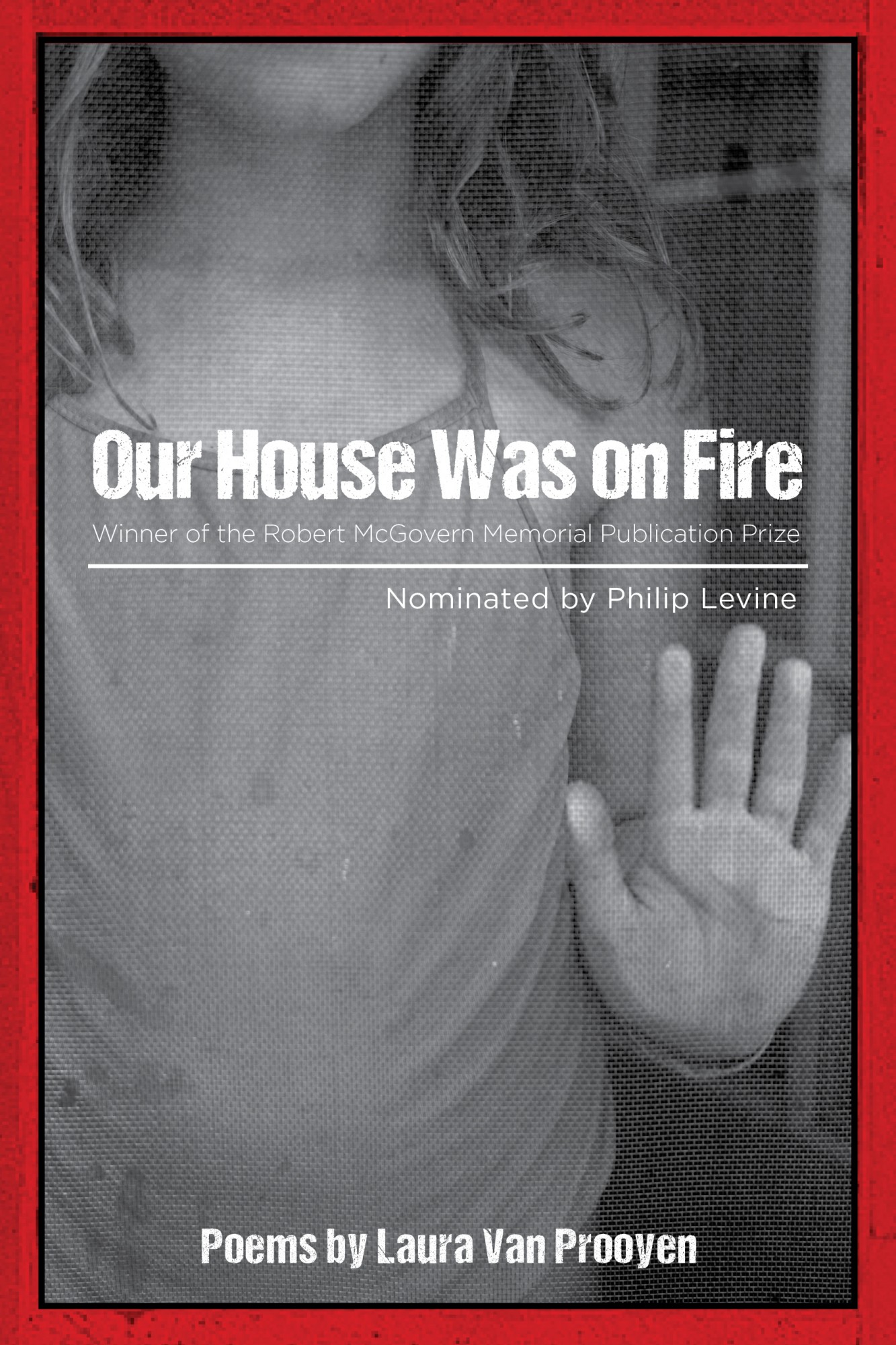
Our House Was On Fire - Laura Van Prooyen (The Ashland Poetry Press)

Today's book of poetry:
Our House Was On Fire.  Laura Van Prooyen.  The Ashland Poetry Press.  Ashland, Ohio.  2015.
Winner of the Robert McGovern Memorial Publication Prize - Nominated by Philip Levine


You can feel the swift current of an undertow all through Laura Van Prooyen's award winning Our House Was On Fire -- but that doesn't hinder or diminish in any way, these poems are top of the food chain regardless of what river they are swimming in.

You can feel the great weight of what John Irving called "the undertoad."  And rightly so.

There are often times when reason means nothing, dark currents beyond our strength are at play, angry gods conspire against us.

The toast gets burnt.

This Child

She woke and told me
her dream. She had been
in the kitchen gathering
knives, She
was planning to cut
and eat me. This, she
said, is what bad people do.
Now, how do I begin
to worry about
this? My little tenderloin
snuggles my hip in the easy
chair. I stroke her
hair while she kisses
my arm. We keep
telling the other, I love you
and I love you, and we do,
though we both know
where the knives are.

...

Van Prooyen is an explosive delight to read.  These poems are full of unexpected crossroad type moments.

Van Prooyen isn't cavalier because she has ice-water in her veins and a hard diamond where her heart should be.  In another day and age she'd be the moll who was smarter than the mobster.  Harder too.

Perennial

It can be like this. One day
to wake up thinking goldenrod. Coneflower.
Not as suggestions, but directives,
so that I load the children in the car
and go. And it can be

that I hold a trowel
in my hand, thighs scuffed
with dirt and manure, my face
likewise streaked, when I see,
for the first time in years,
someone I once loved.

It is then I wonder
what would have happened
if I rose from bed thinking: tiger
or lily. Or if
I had stayed
that one night long ago.

But I'm here.
And for a moment, I follow
that staircase again, open the old
apartment door. Stand in the bedroom
on that familiar, uneven floor

with a trowel in my hand, a hole at my feet,
and my daughter, eyes bright like daisies,
asking what I saw.

...

Never have I said less about more.  But it is sometimes hard to qualify exactly what it is that gets under your skin about a book of poems.  Under your skin in a good way.

Laura Van Prooyen's Our House Was On Fire is riveting.

Today's book of poetry admires honesty, of course.  We all do, at some level or another.  But it strikes me that Laura Van Prooyen may be capable of a little more honesty than the rest of us.

I'm pretty certain it comes at a cost.  It is a tough path to navigate the world without the buffer of suspended disbelief.

Today's book of poetry marveled at the endless stream of small moments Van Prooyen stole from my life and found fit to put in her poetry.  I am equally sure she has a few from your life in here as well.

Tango

You loosen my hair, and my head buzzes
like a wall of TVs. I don't know

what I'm thinking. I want
a thrill. I want a tangerine.

Our old cat is forever mewing,
and upstairs a trumpet and flute duet.

Did you happen to see your daughter's
latest drawing? My head is cracked egg.

But now, you dip me in the kitchen.
Your thigh pressed to my thigh

makes me think of chicken,
and how boys laugh

when they say, breast. You hold me
and you kiss mine, so that

however much by day I forget your body,
I find my way back.

...

These are some sharp poems.  No one is getting through this collection without nicking themselves and leaving a little blood.

Laura Van Prooyen is a smiling assassin poet, a real killer when she needs to be.

Laura Van Prooyen

ABOUT THE AUTHOR
Laura Van Prooyen is the author of an earlier collection of poems, Inkblot and Altar, and her poetry has appeared in The American Poetry Review, Ploughshares, The Southern Review, and elsewhere. She is a recipient of grants from The American Association of University Women and the Barbara Deming Memorial Fund. She lives in San Antonio, Texas.

BLURBS
“Van Prooyen’s 58 poems remind me of a long, restless insomnia—interrupted by dreamscapes, memories, fantasies, and touching portraits of an unnamed husband and their young daughters—punctuated by startling images and fascinating observations. Their house is not burning except in imagination; there are allusions to a child’s serious illness and others about youthful vitality; saying no, perhaps meaning yes. These are not domestic texts, but rather a journal of mysterious variations.”
     --Roberto Bonazzi, San Antonio Express-News (February 15, 2015)

"I think yes. I say no," Laura Van Prooyen declares in this book of assertions and questions where danger lives at every turn--a child threatened by disease, a love passing through uncertainty, all the what ifs and keep at it of our days on the planet. Like music, these meticulously paced poems play over and over unto dark trance their observation and grief, again and again the natural world furious and spare until all seems to stand still. "Understand, the plot doesn't matter," this highly lyric poet insists because her staring stops time. "I felt bad for looking," she tells us. "Still, I looked."
     --Marianne Boruch

"Our House Was on Fire is an arresting, beautiful, and deeply satisfying book of longing, yet longing for what can never be known. And that gives this collection its powerful complexity: what is wanted or contemplated is tempting, but impossible. True desire recognizes what one might lose and also what one must give. Much is given in this book, much of the poet’s mind and honest heart. Van Prooyen’s poems offer a celebration, a carefully laid out feast."
    -- Maurice Manning

Laura Van Prooyen
rreads: Eighth Stage of Love
video:  Arts Education TV


346

Poems cited here are assumed to be under copyright by the poet and/or publisher.  They are shown here for publicity and review purposes.  For any other kind of re-use of these poems, please contact the listed publishers for permission.

Friday, May 29, 2015

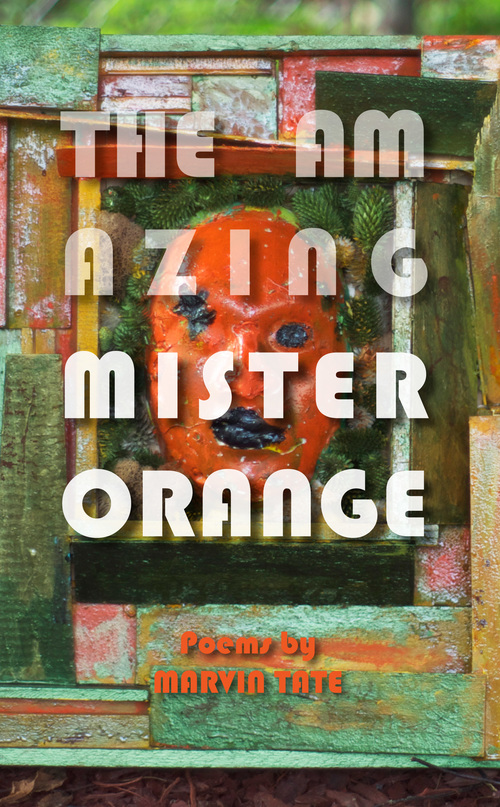
The Amazing Mister Orange - Marvin Tate (Curbside Splendor)

Today's book of poetry:
The Amazing Mister Orange.  Marvin Tate.  Curbside Splendor.  Chicago, Illinois.  2014.


Bird House

I saw a bird fall from its tree house,
into a bed of debris where it instantly died.
A passerby noticed it too and said, don't take it personal,
death can be like that, unexpected and without reason.
She then continued on with her search through all the havoc
and beauty caused by god

..

Marvin Tate is my new guru, if I can track him down.

Marvin Tate is Rahsaan Roland Kirk squealing out perfect melodic beauty laced with the shrieks, squawks and sirens of real everyday life.

Marvin Tate is a shark in shallow water thrashing his elegant discomfort.

Marvin Tate's The Amazing Mister Orange is so down to earth wise that you don't feel the earth shift beneath your feet until you try to take your next step and realize the landscape has changed.  Subtly.

Snitch

The majority of your day is spent peeking out
of your bay window at the day runners changing places
with their afternoon replacements. One of them is the son of an old
girl friend, an irregular booty call, that never amounted to anything
and so you're not surprised to see her youngest and oldest slinging
dope in the middle of a school day. You feel hypocritical in your new
role as sporadic community activist, convinced that their type of
entrepreneurialism is worse and more dangerous than yours could
ever be; you make the call, police arrive, a reality-show spectacle
ensues, and three out of the five are caught. You feel good about
your anonymity; reassured that your role as snitch, weed advocate,
and community activist is on point. Tonight you sleep with the
window open. The street you live on is moonlit. The lookouts and
stickups contemplate their losses - Pharoah's "Deaf, Dumb, and Blind,"
the soundtrack to your dreams.

...

And just so you know -- ANY poet who mentions Pharoah Sanders in a poem is going to get huge props from Today's book of poetry.  First question we ask any intern in an interview at Today's book of poetry is "what's your favourite Pharoah Sanders album?"

End of the interview for those without an answer.

When reading a book for the blog the first time I write a few notes as a reminder.  The second time through I write down the page numbers of the poems I'd like to include.  With The Amazing Mister Orange the side of my page of notes looks like a calendar listing for a month, the shape of a long ladder.

Today's book of poetry is totally convinced, Marvin Tate is a Monsterpoet.

The Amazing Mister Orange (for Ainsworth)

Mister Orange has a habit of pulling down his pants
in public places like at Bauble Land and at open mic poetry readings,
he calls these public exhibitions, "works in progress." I respect Mister
Orange; he's clairvoyant, with an original sense of humor but has
problems dealing with the present. Once he rescued a calico from
being eaten by a finch, by feeding the bird catnip, while the
frightened cat flew into his arms. Outsiders see our friendship as
superficial and exploitative, solely based on if I have any weed or my
willingness to sit through one of his philosophical tirades about
chakra and chanting the word O-YA! This, he reminds me, relaxes the
soul. From his new deck of tarot cards I've chosen the drunken court
jester. I too wish to be carefree, but first (he insists) I must rid myself
of negativity and self doubt. Music from downstairs is playing, the
singer's name I can't recall. Irked by my lack of concentration he
returns to his makeshift bed of nails and levitates. Never have I met
a brother so irreverent and uninhibited. Tomorrow we'll meet
underneath the viaduct or in the park among the dope dealers and art
fucks. I'll try to impress him with the name of the obscure soul singer
while he burns incense to keep away the many evil spirits.

...

These stories, these lovely narrative poems, read like a hit-parade of the best stories your friends have yet to tell you.  They are funny, knowing, witty, sharp, remorseless, confident.

We really couldn't ask for more.  This book kicks it.

Marvin Tate

ABOUT THE AUTHOR
Marvin Tate is a visual artist, author, educator, front man and songwriter. A notorious poet, he has performed widely, including on National Public Radio's This American Life, Def Jam Poetry, The Heartlands in San Francisco, the Chicago Blues Festival and the Eindehoefen Museum in the Netherlands. Tate has also collaborated with longtime multi-instrumentalist and former Wilco member, LeRoy Bach, and singers Tim Kinsella and Angel Olsen for for a collection of songs called Tim Kinsella sings the songs of Marvin Tate with LeRoy Bach and Angel Olsen on Joyful Noise Records (2013). 

BLURBS
“Marvin is the funky genius... Marvin is the writer for this age and his poems help us complicate the normal and ponder the obscene. Somewhere between the poem and the wisdom of Job, Tate offers us another way in, but only if you really want to go with him. Marvin made me a soul singer and a better reader and a fan of being myself and bigger than myself. Marvin’s words help us believe.”
     —Theaster Gates, Jr., renowned Chicago artist

“Walking a dog, apologizing to a lover, recognizing a kindred soul in the gesture of a stranger—these minor considerations and mundane activities open the reader to complex humorous and empathetic observations craafter with the lyricism of a songwriter and the precision of a minimalist. I was reading Marvin Tate and thinking of him in the lineage of Wanda Coleman and other poets who write their poems on the bus and leave them there for other riders in solidarity and care.”
     —Cauleen Smith, filmmaker, Drylongso

Marvin Tate
Def Poetry
"My Life 1959 to present"
video courtesy: dmetrius

345

Poems cited here are assumed to be under copyright by the poet and/or publisher.  They are shown here for publicity and review purposes.  For any other kind of re-use of these poems, please contact the listed publishers for permission.
Wednesday, May 27, 2015

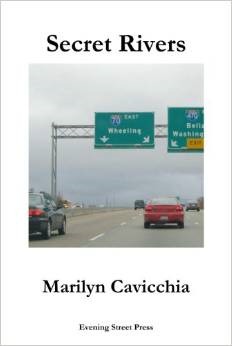
Secret Rivers - Marilyn Cavicchia (Evening Street Press)

Today's book of poetry:
Secret Rivers.  Marilyn Cavicchia.  Evening Street Press.  Dublin, Ohio.  2014.
Winner of the 2013 Helen Kay Chapbook Prize


You are driving on a big highway and imagining you can hear the interior dialogues of every other driver behind the wheel of every other vehicle.

Welcome to Marilyn Cavicchia's Secret Rivers. It's a clever trick, the speaker's are identified by their first names and their vehicles.

Today's book of poetry has long maintained that popular maxim that we are all stars of our own movies.  Cavicchia uses that sensibility masterfully as she pulls a myriad of fully formed voices out of her magic hat.

Poignant and funny, these poems are every traffic jam you've ever been in.

Barbara, Driver, Chrysler Town & Country

If that balloon truck cuts me off one more time,
I'm going to smash into it. Asshole.
What kind of idiot keeps turning their signal
on and off like that? Yeah, go ahead and
get in the left lane. We all know you're in
a big hurry. You're so much more important
than the rest of us. All I'm trying to do is
get myself home without being killed first.
It's like the whole world has gone crazy,
and no one's locked up anymore.
You never know who's behind the wheel
and what they might do. When I think
of how we used to hitchhike on those
summer days, and nights. I got
through it all and am alive to tell
the story (though I did once have to
jump out into traffic -- every hitcher
has a story like that).

...

Cavicchia's style finds empathy for every voice she employs.  She recognizes that every single person is somehow both fixated with their own narrative and inexplicably connected to the larger narrative, the bigger story that embodies every voice, every vehicle.

Cavicchia weaves this tapestry of conversation between Hondas and Fords into something we can admire.

Ben, Front Seat Passenger, Toyota Corolla

It's great no long being
the fat kid on the bus.
I mean, I'm still the fat kid,
but it's not as bad now that
no one kicks my seat, asks
about my man boobs, which,
OK, I know I have, I see
myself, too, in the mirror
(though sometimes I try
not to). I don't know why
Shawna drives me to school.
She's like, three years older
than me, really cool, so, yeah,
I don't know why she'd want
to hang out with me, much less
give me rides to and from,
every single day, even when
I have band practice. She sits
in her car, reading, until I'm
done. She asked my parents
one evening; it was really
business-like, except it was
embarrassing--she told them
some of what had been going
on, bus-wise. My mom looked
like she was the one who had
been punched, spat on, called
faggot, and oh, yeah, asked
about the man boobs. My dad
wanted me to keep riding the
bus, to build character, but I
think I have character enough
already. Shawna and my mom
worked it out--she comes
a few minutes after my dad
leaves for work, and she doesn't
honk her horn or anything like that.
She doesn't have to. I'm always
ready to ride with Shawna. It's like
this was always my seat, and she
was always saving it for me.

...

Marilyn Cavicchia is in the driver's seat (it had to be said), and the conversation she lets the reader in on is riveting.

It is strangely familiar as well -- we have all been in these cars, had these conversations with ourselves.  Cursed under our breath.

Today's book of poetry felt instantly connected to the very human follies and foibles of these drivers and passengers, they could easily be you or me.

Julie, Driver, Ford Taurus Wagon

I'm showing apartments
every day now. This one
lady, she keeps calling me
to complain about this
and that. Her flight was
delayed, and now there's
a storm somewhere
between Columbus and
here; she's not used to
driving in snow,
and she doesn't have
any sweaters. Listen,
I'm not going to pick
her up from the airport,
and about the sweaters,
I'm sure they have Google
in South America, where
she's from. She could
have looked up our
weather from there,
especially if she's so
brilliant that they
have to import her
from a whole other
continent. All she is,
is a scheduler. She
schedules the workers.
She must be damn
good at it, is all
I have to say.

...

All those unsaid truths swirling around our heads and the private spaces of our automobiles.  These are things we say to ourselves but not usually to anyone else.  These are things we say in private, in anger, in fear -- Cavacchia has made a river out of all those things we want to, need to, must say.

Marilyn Cavicchia

ABOUT THE AUTHOR
Secret Rivers is Marilyn Cavicchia’s first published chapbook. Publications in which her work has appeared or is forthcoming include: Graze, Naugatuck River Review, Hawai’i Review, The Sow’s Ear Poetry Review, and THEMA. Marilyn was born in Seattle and moved to a few different places, spending most of her childhood in Ohio. She earned a bachelor’s in English and a master’s in journalism, both from Ohio University. Marilyn now lives in Chicago with her husband, two children, a box turtle, and a fancy goldfish. She is an editor at the American Bar Association and a communications specialist at Chicago Child Care Society.

BLURBS
Marilyn Cavicchia gives vivid voices to the drivers and passengers traveling a rainy stretch of freeway in eastern Ohio. She conjures distinctive verbal identities for each of her personae, and each poem’s vignette delights the imagination and the ear. A further joy is to trace the “secret rivers” of relationship among these characters: between the anti-fracking activist and the grandmother looking forward to a check for the drilling rights to her yard; between the divorced father driving a balloon van and the road-ragey driver of the Chrysler behind him; between the energy contractors new to the community and the locals in whom the rapid changes inspire both bewilderment and hope. Cavicchia’s brilliant poems precisely observe the details of life in this city—yet her Ohio freeway represents every motorway in America, where rivers of vehicles propel their occupants toward regret, nostalgia, and inevitable transformation.
      —Jennifer Bullis, author of Impossible Lessons

Cavicchia knows that the true soul of any place resides not in its well-trod highways and main streets, but rather down the psychological back roads traversed only by locals, though well known to everyone. Like shorthand Sherwood Anderson, each of these compact poems maps the crossroads of boom and bust, of loyalty and betrayal, of prejudice and unfulfilled dreams that haunt virtually every small American town whose inhabitants are exploited as much by their own well-intentioned fears as any outside interests.
     —William P. Tandy, author of Smile, Hon. You’re in Baltimore!

The residents in Secret Rivers navigate a community coming apart at the seams; we’re privy, poem by poem, to the thoughts that worry below the surface of ordinary encounters. With language both spare and intimate, Cavicchia explores isolation, resentment, polite existence, and occasional rivulets of hope, of people facing the inevitable advance by an unnamed company promising big payoff and no risk, in exchange for permission to rive what lies underneath a dying town’s yards and land. “So many decades beyond saving/ that fear begins to look like hope”, we read. These poems remind us to listen, to each other and ourselves.
     —Valerie Wallace, author of The Dictators’ Guide to Good Housekeeping

Marilyn Cavicchia
Reads at Paging Columbus: Sealed Envelopes, Secrets, and Ciphers
February 2015
video courtesy: Hannah Stephenson


344


Poems cited here are assumed to be under copyright by the poet and/or publisher.  They are shown here for publicity and review purposes.  For any other kind of re-use of these poems, please contact the listed publishers for permission.