Tuesday, April 12, 2016

The Deepest Rooms - Randolph Thomas (Silverfish Review Press)

Today's book of poetry:
The Deepest Rooms.  Randolph Thomas.  Silverfish Review Press.  Eugene, Oregon.  2015.

Winner of the 2013 Gerald Cable Book Award


SFRPThomasDeepestCover.jpg

Randolph Thomas won the 2013 Gerald Cable Book Award and the judge was Rodger Moody.  You might remember the affection Today's book of poetry has for Rodger Moody.  We looked at Moody's Self Portrait/Sixteen Sevenlings back in February of 2014 and Moody's History back in December of 2015.  You can see both of those here:


So, Randolph Thomas had a bit of in before we opened The Deepest Rooms.  Today's book of poetry sank into Randolph Thomas world as soon as I read the first poem.  Think big couch and Old Yeller on the Sunday afternoon box.  That sort of comfort, not that sort of content.

Somehow, and I suggest some dark and magical Cajun influence, the reader is immediately emotionally invested in these poems, invested in whatever it is Thomas is selling.

Bird Island Jetty, 1969

My mother warns me about the water.
It will be cold, so I should ease into it.
Only if I can feel its bite
will it cleanse me, will it reclaim me.
She pulls her cap on tight, hiding her hair
and lowers her goggles
over her eyes.
Staring down at her feet, bent over
like the small bear we watched crossing the yard
one day in the fall,
she steps across the slick, black rocks,
stops near the edge, and glances back at me.
Why should I want to be so clean,
to be reclaimed?
I search the gray goggles
for my mother's eyes,
but they are not ever a bear's.
They are plastic, fogged.
Follow, her hand, reddened by the cold,
beckons.
Crossing the rocks, I almost topple.
When we saw the bear
she had already begun to say that time, like pain,
would form crystal shadows we would have to relearn
to see.
She'd said that, like animals, we would have to break
with all we knew.
Even an animal
knows when it's time to find the warm places,
the deepest rooms of caves,
the darkest water below the freeze,
where blood can thaw and flow anew.
Her mute face to me, backside to the sea,
she climbs down out of sight,
and I feel icy water on my legs, at my groin,
goose-pimples on my arms.
Come closer, someone, maybe even the water, says.
Inching along the rocks, I come to the edge.
I stare down at the surface as her head,
capped in rubber, slips under.
I stand looking down at the green, lapping water
twenty seconds,
then a minute.
There is no sign of her.
My breath quickening,
lost to the cold, clean air,
I turn to look for the pale blue station wagon
a quarter of a mile back where we left it
after driving all night through the Carolinas,
after reaching the marshes at dawn,
the cattails tipped in frost.

...

Thomas is a first class story-teller and the panoramic scenes he sets in almost every poem take the reader to memories long forgotten, he also gives us a few new ones to ponder.  We think Thomas is telling a story when he is really opening a door.

Thomas is like the rest of us, searching for redemption through understanding.  Each of us is at battle with the narratives we think are playing out, as though we had a say.  Ghosts and Randolph Thomas will tell us that we are in short stories with uncommitted endings, life is the big anthology.  The best stories have some idea of hope in them and Thomas knows that.

Scenic Highway

When your body welcomes mine, when we
come together on the bed, the sad
nomad I was before
takes the keys from the nightstand, makes his excuses
and slips out of the bedroom.
After drinking the dregs of our wine, puffing
the last of our tamped out cigarettes
he leaves the apartment, closing the door
and zigzagging through the light rain
across the parking lot to the car.
All afternoon while we make love, he drives highways
between here and New Orleans,
past oil refineries and through towns
of shotgun houses and tall churches.
After gliding down from the gray sky, coupling love bugs
squash against the windshield.
In one town, at a busy grocery store, he stops for coffee
and watches women he's sure are as lonely as he has been
pushing their carts along the aisles, his lips buzzing
with suggestions of getting in the car with him,
running away for a while, just for fun,
nothing heavy, no strings.
Only the uniformed guard by the door
will catch his eye, then it seems everyone
is watching him.
He shrugs, pushes open the glass door, and goes out.
The day is hot and damp, but he's dry inside,
and like some of the country he's seen
in the shadows of oil refineries along Scenic Highway,
desolate and poor. How can people
find hope here? How do they
go on? He sees himself wrecking
the car, leaving it in a ditch
or driving all night, as far as night
will take him,
but before long he stops
for a few beers, sits alone
crushing the cans, leaving them
in a line on the bar.
Soon enough he'll drive back, for he must
drive back, the road
darkening and spiraling before him,
at the tail end of many dreams; he sees himself
as a man leaving, for better or worse,
a world of fantasies, of dreams,
waking from the hypnotic roads, from the tired heat
of long similar days, from the aftertaste of beer,
and coming in late, finding the doors to the building
locked, having to knock on the window
to rouse the blurry figures
tangled together on the bed.

...

Hope always comes with some cost attached and Thomas knows that too.

This mornings read was elegantly subdued.  Milo, our senior tech, brought in a collection of Stanley Turrentine recordings and our entire office had a quiet, easy buzz.  Turrentine blowing elegant.
Kathryn, our new intern, led the way with the reading and it was superb.  Randolph Thomas' poems marched across the room like they owned it, each and every one of them built for survival.

It might be important to note that almost every poem in this superb first collection has appeared in a journal or literary magazine of some note.  

The Deepest Rooms comes fully loaded, if these poems were jokes the punch lines would be killers.
If they were hockey players they'd have a wicked slap-shot.

The Course of the Telling

I returned from the war to plant spring crops,
was at work in the field when news arrived
that my brother was dead at Chattanooga.
My daughter ran from the house, found me
beside my plough, tugged my sleeve.

I was ninety-six, a year from death
when your mother heard me tell this
in the breezeway of my dog-trot house
in Franklin County, Virginia. She was
only five, and I, her father's father's
father, was feeble, she would say, with
pale, piercing eyes that frightened her.
She did not recall my brother's name,
but carried my likeness and story to you,
who used my birthdate, ten years past the death
of Jefferson, to teach your children how close
generations are, while my brother's face
was lost in history's unmarked grave.  
Our stories are where we go when we die,
for a brief time resurrected by the living
--and then finally forgotten. As my story
is cut short, as it dims with the voices
that remember and tell--or do not
remember in full, but tell anyway,
vary by invention of fact--when all
of even these are gone, familiar things
I thought were lost come closer in the dark:
my brother's face, my daughter's steps, even
your mother's frightened eyes, and you--who kept
my tale alive--your name will be buried
with ours in the course of the telling, lost
in the stories that are no longer told.

...

"Our stories are where we go when we die,"  Today's book of poetry loves this line like no other.  It rings so true I want to paint it on the front of my house.  I've asked Milo if it is possible, he's looking into it.

Today's book of poetry finds it almost impossible to consider that this is a first book of poetry, The Deepest Rooms is simply too good for that.
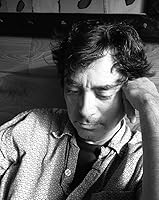
Randolph Thomas

ABOUT THE AUTHOR
Randolph Thomas is the author of the short story collection, Dispensations, recipient of the Many Voices Project Award. His poems have appeared in Poetry, Quarterly West, The Greensboro Review, Seneca Review, Witness, Louisiana Literature, and Puerto Del Sol. He teaches at Louisiana State University in Baton Rouge.

BLURB
[The Deepest Rooms,] this accomplished first collection of poems by Randolph Thomas, announces itself in rich poetic narrative and character invention, well wed in the art of the persona, which has too often been rendered as unmasked autobiography in much of the poetry of the second decade of the twenty-first century. We can happily detect a sweet new sound in the work of Randolph Thomas, a young master in full career.
     — Michael Heffernan


459


DISCLAIMERS

Poems cited here are assumed to be under copyright by the poet and/or publisher.  They are shown here for publicity and review purposes.  For any other kind of re-use of these poems, please contact the listed publishers for permission.

We here at TBOP are technically deficient and rely on our bashful Milo to fix everything.  We received notice from Google that we were using "cookies"
and that for our readers in Europe there had to be notification of the use of those "cookies.  Please be aware that TBOP may employ the use of some "cookies" (whatever they are) and you should take that into consideration.

Sunday, April 10, 2016

Country of Ghost - Gaylord Brewer (Red Hen Press)

Today's book of poetry:
Country of Ghost.  Gaylord Brewer.  Red Hen Press.  Pasadena, California.  2015.


"The earth is mostly just a boneyard.  But pretty in the sunlight."
     - Larry McMurtry

And so begins Gaylord Brewer's hypnotic litany Country of Ghost.  It is not  a small accident that Brewer begins with a quote from one of America's least appreciated boneyard specialists.  McMurtry has put down his own trail of ghosts in his fine body of work.  Showed some pretty fine sunlight as well.

Brewer follows suit.

Becoming Ghost

As you withdraw from the beloved ones,
first in mind, then abused beast of the body
following, you will find speech no longer
plausible. Suggestive turns of hip or shoulder

suffice. The night as long surmised
requires no further recompense. The sweat
of your face, your wetted hair nothing more
than a fevered baptism of exchange.

Fly, wraith. Your secrets mean nothing
to anyone now. Fly to a moon-washed city
of dust and stone. To the cemetery
locked to you, the church undiscovered,

shuttered houses murmuring as you pass.
Ghost breathes on for awhile, sorry nostalgia--
so breathe. If the heart still struggles,
you may share too that fading urgency.

Where were you going? Where you have
arrived of course. Recognize this place
and, perhaps, weep or smile at the knowledge
you pursued. The loneliness found instead,

its barbarism and solace. There, seeker--
crevasse, mountain, flickering shore.
Dark turn of wing. The bridge where you
pause, a last bittersweet time, as you cross.

...

Death does not come easy, not even to a Ghost.  

Ghost is like the rest of us, longing for love, wanting to be able to play jazz piano, wanting to absolve grief.  It's all in here, the aching human need to belong, the bittersweet tragedy of loss.

Brewer knocks 'em down like pins at the end of an alley where he know all the grooves.

Ghost Considers the Altered Nature
of His Sleep and a Consummation to Be Wished

But not sleep as you may recall suspended hours,
not dream as dream per se, pitiless collage
of exactly what you deserved--deserved or not.
Any bed a benign bed now, good enough for Ghost.
The clocks count, wind rises, again it's late.

Lay the burden of thy body down, close eyes
to a story of forgetting, what passed, what never was.
Inhale the night and its useless truth,
no harm now. Here, say, a red canvas, a staircase
descending. There, a piano in a library of babel once

revered as wisdom, the slight hands of a woman
raising a dead man's song from the keys,
lamentation and joy learned by rote. Too,
a bridge, thighs of brick and steel impassive
in the river's filthy, freezing current, body toll rising.

And there: Your wife in her soft coat, waiting
and anxious in the new snow that hides the road.
In other words, Ghost, same ole razzmatazz
of mortal coil, nightly nonsense. What else
distracts during the long darkness that has returned?

Look; She steps forward, the mark of her boots
a white trail announcing her closer, closer still.
Hair wild in her eyes and her face flush and cold. But
she is smiling, she is glowing, ice bows bare limbs
where she passes and the morning light dazzles.

...

Country of Ghost is every country.  It's where you live.  It's where I live.  Ghosts are everywhere.   This particular ghost is a Rahsaan Roland Kirk ghost.  Always more than one instrument at hand, although sometimes he will play two just for the hell of it, sometimes three, absolutely for the hellish joy of it.  Brewer is singing in the dark corners.  Sometimes illuminations comes from the most unlikely sources.

We here at the Today's book of poetry offices almost expected a return of the ghost of John Steinbeck,
or perhaps another ghost.  No such luck.  Gaylord Brewer had the center of the floor today for the morning read.  Milo, our head tech, did his usual excellent job.  Kathryn, our new intern, read them like she owned them, and so on.  As we worked around the room Today's book of poetry realized how sturdy Brewer had built his Ghost, all haunting and hardy.

Ghost Reconsiders the Romance
of the Piano Player

During your life, Ghost, you longed
for the skill, cool and unannounced:
at evening's end, when that moment
arrived, or as surprise life-of-the-party
to those who'd known you forever,

Ghost nonchalantly on the stool, without
preamble tickling a jazzy improv
or just pounding out three blunt-force
minutes of unbridled rock'n'roll
'til you bust the damn thing or burn it.

But now, as you've surrendered
beloved biblioteque where you passed
so many peaceful hours, reclined
on cushions beneath enormous beams
centuries old in their silence, or touching

frayed volumes, opening a cover,
turning a yellowed page to inhale
the musk of its quiet history, as you've
surrendered these pleasures to the pasty
young man arrived without request

as the Bechstein in the window, who taps on
morning and night--a tortured Chopin,
lurching Beethoven to make you glad
for the master's deafness, worst of all
the droning tinker, tinker, tinker

of the mule at the wheel, round and round--
your only recompense, Ghost, is pride
you never took a lesson, practiced only
the muted score of the earth, only,
say, an art of listening, rather than

shitting one's endless noise into every
passing ear that didn't ask for it. Sorry,
all this racket makes a ghost testy,
who just wanted to step out of the rain
without assault of genius--blank-eyed,

slack-jawed, idiot savant light on the savant.

...

Today's book of poetry has always been an admirer of the good Ghost story.  We often think of poems as short movies and with Gaylord Brewer's Country of Ghost we get the range, Ghost memoir to Ghost romance, Ghost history and Ghost comedy.  A poetic film festival.

Country of Ghost can be haunting as a bad dream in search mode, it is constantly perceptive and ultimately we discover we need a Ghost to tell us what it means to be human.

Gaylord Brewer
Gaylord Brewer

ABOUT THE AUTHOR
Gaylord Brewer, a native of Louisville, Kentucky, earned a PhD from Ohio State University. He currently teaches at Middle Tennessee State University, where he founded and for twenty-one years edited the journal Poems & Plays. His most recent publication is a cookbook/memoir, The Poet's Guide to Food, Drink, & Desire (Stephen F. Austin UP, Spring 2015). He has published 900 poems in journals and anthologies, such as Best American Poetry and The Bedford Introduction to Literature.
- See more at: http://redhen.org/gaylord-brewer/#sthash.Sby72DRX.dpuf

BLURBS
Brewer writes as if a sly old god, wounded, lost and yet to renounce his magic. Ghost is a tour de force, part Caliban, part Ariel. Revenant, bored, hungry and amazed, Ghost will be with us ever hereafter.”
     - —Robert Olmstead

In this work of haunting, the possibilities for fruitful speculation and reflection are great. Gaylord Brewer’s poems in Country of Ghost are, at once, whimsical and deeply affecting in their pathos. The many ghosts that inhabit these poems contend with the conundrum of regret, and desire. It takes precise, well-modulated poetry that is alive with metaphor, wicked puns, image, and acutely observed detail to achieve what Brewer does in Country of Ghost.”
     - —Kwame Dawes

The world of feeling that Brewer so urgently describes is complicated and dynamic.”
     - —Asheville Poetry Review

“The poems are eerie, achingly honest, conversational, and beautifully, darkly funny. Even if we are tempted to turn away from the rotting, breaking, bruised, and bleeding body, we are drawn in by the human need, the fragility, the nostalgia, the bittersweet longing of the speaker and his Ghost.”
    - —Prick of the Spindle

Brewer manages to masterfully balance the ordinary and extraordinary. The consequent contrasts and juxtapositions elevate both conditions of ‘ordinariness’ into a kind of equilibrium of the sublime. A trademark Brewer poem: craft, precision, self-analysis, humor, endurance, and a razor-sharp epiphany.”
     - —The Evansville Review


Gaylord Brewer
Meacham Conversations, 22.3.2013
Gaylord Brewer talks with Meacham director Richard Jackson about his experiences with "Ghost," how travel has influenced his writing, his work with fiction and editing, and his growth as a poet.
video: Meacham Writer's Workshop


458


DISCLAIMERS

Poems cited here are assumed to be under copyright by the poet and/or publisher.  They are shown here for publicity and review purposes.  For any other kind of re-use of these poems, please contact the listed publishers for permission.

We here at TBOP are technically deficient and rely on our bashful Milo to fix everything.  We received notice from Google that we were using "cookies"
and that for our readers in Europe there had to be notification of the use of those "cookies.  Please be aware that TBOP may employ the use of some "cookies" (whatever they are) and you should take that into consideration.

Tuesday, April 5, 2016

Lost & Found - David Lanier (The Texas Review Press)

Today's book of poetry:
Lost & Found.  David Lanier.  The Texas Review Press.  Huntsville, Texas. 2013.
Winner of the 2012 Robert Phillips Poetry Chapbook Prize


David Lanier's slim collection Lost & Found punches way above its weight.  By the time you are finished you'll think you've had a much bigger meal.

The first thing Today's book of poetry noticed about Lanier's writing is the easy and warm charm that resides underneath all of these pages.  Lanier seems to go about his business without any bells or whistles at all, he keeps his pencils sharp and gets the details right.  The result is that these poems feel like important conversations you've had with someone you trust.

The Upright

The older it got, the more it refused
to stay in tune for long. One note,
not-quite-right, a second that--insistently,
defiantly--plinked a little flat. Another
that might, in the middle of a scale,
suddenly squeak an octave or two
higher than it should.

He tried to keep the changes to himself,
blushed at every surprising warble
in his usually faultless playing,
chocked back the giggle in one chord
of "Lead on, O King Eternal."

But one day, when he thought no one
was listening, he began to draw them
out--all the wild, crooked sounds--
fitting his fingers around each one,
hammering them repeatedly. Then he
waited, dreading repercussions, and 
when none came, smiled and started again.

Alone in the hot pour
of an August afternoon, he grew even bolder,
began to fashion his own cacophonies,
accessorized Bach with noise
that surely would make the master frown.
Hidden here, within reach, were half-wrong
arpeggios he hurled like expletives
off mirror and mantel in the parlor.
He leaned his teenage body in,
hands learning to unzip
black keys, to dig into ivory
underthings. And then he stopped:
his mother at the door, the lock
sharply unlocked, the stiff
wooden stool beneath him
twisting a painful quarter-turn.

In the hallway she looked up,
called out, "Play me
something pretty." And before him,
wide grin of the keyboard, his
fingers poised on its lip.

...

Lanier is a small town boy and you can hear that in these poems.  But with relatively few steps, there are only eighteen poems in Lost & Found, the mature and articulate man appears amidst the strata of a considered life.

While We Wait For The Demerol To Work

The slow prayer of a sculling boat
is drifting forward on its own,
against the Potomac's urging,
oars uplifted. From your window
I watch it tug open
can almost count the knots
along the arms of rowers
who hold back just
a moment longer. How they must
ache to start again
the linked dip and pull, soft stroke
across the water's smooth brow.

...

Today's book of poetry had our regular morning read today, you know the rules, everyone who attends has to read.  But we had another unexpected guest this morning.  Just as we were starting, our old friend, the ghost of John Steinbeck, waltzed tall into the room as though he owned it.  John announced that he loved a good narrative poem and had heard we had some going around, then he reminded us that "unless a reviewer has the courage to give you unqualified praise, I say ignore the bastard."  That could be our motto.

Steinbeck took a seat in the corner, lit up a smoke like nobodies business and we just let him.  It reminded us of our childhood and he is John friggin Steinbeck's ghost.

At the end of a very inspired reading Steinbeck rose, thanked us for the excellent poems and company and then vanished just like he'd arrived.  It was clear he liked the clean, crisp and knowing poems of Lanier.

Milo, our head tech, and Kathryn, our new intern, both headed to the shelves to pull down some of
Steinbeck.  I started them off easy and pointed to Cannery Row and Of Mice and Men.  By tomorrow they will both be onto East of Eden.

Bright Leaf

Entering, my grandfather bowed
his head, the barn's opening
so low I could hook my fingers
on top of the doorjamb and lean
just my face into a sweet blast
of nightshade, the air even hotter
and drier than the dog day afternoon.

The beam of the flashlight
bounced off the flue's
blue-white jets, then jerked
upwards in short, bright arcs
as he moved toward the inner
ladder, began the slow, careful climb.

High above him, thermometers
suspended strategically from rafter
and beam told how far
to raise or lower the flame, how long
it took to turn green into gold.

I watched until his boots rose
unto the vaulted ceiling, lifted
past rack after crisscrossed rack
of leaves that quivered in his wake
like giant saffron moths
nesting side by side
on thin wooden poles, wings
folding behind them in their sleep.

...

Today's book of poetry found that David Lanier's Lost & Found had moments of ample grace and that is a big ask from any book of poetry, and a big reward.

ABOUT THE AUTHOR
DAVID LANIER, who currently resides in Santa Fe, New Mexico, lived for many years in Washington, D.C., where he was on the faculty of the Georgetown University School of Medicine. His poems have appeared in Poetry, Poet Lore, Southern Poetry Review, Marlboro Review, Louisville Review, and several other small magazines.

BLURB
“The seemingly simple and direct diction of these exquisitely crafted poems belies the wisdom, insight, and epiphanies looming beneath their crystalline surfaces.”
     — Larry D. Thomas, Final Judge

http://texasreviewpress.org/

457
DISCLAIMERS

Poems cited here are assumed to be under copyright by the poet and/or publisher.  They are shown here for publicity and review purposes.  For any other kind of re-use of these poems, please contact the listed publishers for permission.

We here at TBOP are technically deficient and rely on our bashful Milo to fix everything.  We received notice from Google that we were using "cookies"
and that for our readers in Europe there had to be notification of the use of those "cookies.  Please be aware that TBOP may employ the use of some "cookies" (whatever they are) and you should take that into consideration.

Saturday, April 2, 2016

check engine. rhinoceros. tungsten. - Michael e. Casteels (Puddles of Sky Press)

Today's book of poetry:
check engine. rhinoceros. tungsten.  Michael e. Casteels.  Puddles of Sky Press.  Kingston, Ontario.  2015.

Picture

Back on November 19, 2013 Today's book of poetry took a look at Michael e. Casteels chapbook The Robot Dreams.  You can see that here:


We liked it a lot.

check engine. rhinoceros. tungsten. is the second chapbook by Kingston area poet Michael e. Casteels that Today's book of poetry wants you readers to make time for.

Today's book of poetry would be lying if we were to say that we knew for certain exactly what Casteels is up to, precisely - but when you are having this much fun you don't question the driver.  As he did in The Robot Dreams - check engine. rhinoceros. tungsten. is packed with poems that intrigue and entertain and you can't ask more from a book of poems.

Everyone in the office had a different take on what it is that makes these poems work.  Milo, our head technician, believed it was Casteels' Dexterity Gordon act and his fondness for robots.  Kathryn, our new intern, felt that Casteels' warm heart surfaced in every poem, even those with robots that would walk us to the end of time.

The Robot Rides A Bus

While crossing the street, a robot is hit by a bus. Small parts
of the robot roll down a hill, frayed wires spark, lights flash.
The bus driver kneels beside the robot and cries, "If I had
been a surgeon, you might have been repaired. If I were a
priest you'd be blessed." The robot attempts to raise an arm
but there is only the grinding of gears, the leaking of oil.
The robot tries to speak but its voice is garbled and growing
faint. Its many lights flicker and dim as silence envelops the
scene. A robot lies in the street. A crowd is gathered. The
driver, still on his knees, cradles the robot's dented head.
The crowd closes in and hoists the robot to its shoulders. In
a short procession they enter the bus. The driver wipes his
eyes with a heavy sleeve, and follows. The door closes. The
bus starts, lurches into gear, and continues down the rolling
hills, towards a lake that is always in the distance.

...

Funnily enough there was a feature on CBC News, The National, last night and they posited whether or not artificial intelligence was about to surpass and take over the monkey/man period of domination.  Real Arnold/Terminator stuff.

In other parts of the world and in the poems of Michael e. Casteels sky divers land on trampolines after falling from the heavens and Jack London's ghost stubs his toe.

check engine. rhinoceros. tungsten. reads like a pillow book of short dreams that is inhabited with Casteels quick wit and an alacrity for juxtapositions that could only come from a devotee of the great Stuart Ross.  

Life In The Afterlife

It's not all that different:
The sun shines, clouds
get in the way, rain falls.
Wind is still invisible.
I live in an apartment
that is never clean,
commute to work, complain
about taxes and heating bills.
I set my alarm clock.
I sleep. I dream.
I dream that I am alive.
I wake up and wipe
the sweat from my brow.

...

check engine. rhinoceros. tungsten. is but one of a baker's dozen of chapbooks published by Casteels and his Kingston small press Puddles of Sky.  Today's book of poetry wants to see a publisher of reason get Casteels between the covers.  You shouldn't have to believe me to know how good these poems really are.

Totally Compulsive Behaviour

I'd bitten my fingernails
right down to the skin,
so I chewed off each fingers
and gnawed away the palm of my hand.
Then I devoured both forearms.
I couldn't reach my elbows,
so I flexed my body backwards
and pointed my toes.
I'll admit it was snakelike,
the way my jaw unhinged,
the way my feet entered my gullet
and I worked my way upward,
swallowing my knees, then my torso.
When I felt my teeth gripping
the back of my skull
I knew I'd gone too far.
My mouth was full of my own hair
and then my entire head.
I peeked out from behind my teeth
as I closed my mouth
like a single, giant, eyelid.

...

I got Salvador Dali/Francisco De Goya chills when I read "Totally Compulsive Behaviour", even more when I typed the sucker out.

The gentle humour Casteels employs both enhances and disguises the subversive nature of check engine. rhinoceros. tungsten.  

Casteels more than adequately sums up his own clever devices in his poem "Remember A Bird" when he says:

                         "the dog is staring. Can you hear it?
It's like silence or that other thing, when tomorrow
inexplicably shifts today into yesterday, the sound
your shadow makes walking the dog's shadow."

Michael e. Casteels

ABOUT THE AUTHOR
Michael e. Casteels has self-published over a dozen chapbooks of poetry and artwork. He has work forthcoming in Arc Poetry Magazine, and Filling Station. In 2012 he was nominated for the emerging artist award in The Premier's Awards for Excellence in the Arts. He lives in Kingston, Ontario where he run Puddles of Sky Press.

Michael e. Casteels
reads a Soduko poem
April 1, 2014
at TEXTual ARTivity
Video: Kelly Keeler


456


DISCLAIMERS

Poems cited here are assumed to be under copyright by the poet and/or publisher.  They are shown here for publicity and review purposes.  For any other kind of re-use of these poems, please contact the listed publishers for permission.

We here at TBOP are technically deficient and rely on our bashful Milo to fix everything.  We received notice from Google that we were using "cookies"
and that for our readers in Europe there had to be notification of the use of those "cookies.  Please be aware that TBOP may employ the use of some "cookies" (whatever they are) and you should take that into consideration.


Thursday, March 31, 2016

Sideshow Concessions - Lucas Crawford (Snare/Invisible Publishing)

Today's book of poetry:
Sideshow Concessions.  Lucas Crawford.  Snare/Invisible Publishing.  Halifax & Toronto.  Canada.  2015.

WINNER OF THE 2015 ROBERT KROETSCH AWARD FOR INNOVATIVE POETRY


Sideshow-Concessions

Lucas Crawford's first book of poetry, Sideshow Concessions, is a stunner.  We meet a bearded lady and the world's fattest man, both of them hungry for love and wedged into a prosaic poetic style that frequently finds itself confessional and disarming.  These disarming poems can also be as dangerous as having identity being both a weapon and a curse.

Crawford is ploughing some tough earth with this gender politic poetry but Today's book of poetry has never cared much about plumbing.  We are interested in poems smart enough to take us places we haven't been, fill our heads with wonder and if we are lucky - to fill our hearts with the same.

Our concern has always been whether or not the poetry pot boils, whether or not the poetry cooks. Lucas Crawford can flat out burn.

Scar Tissue Looks Good
On Pomquet Beach
     for B.

I can only go in up to my nipples, I warn;
they're freshly lanced, still leaking.

Campfires here witness the stealth sex
of people passing through
on their way to the Cabot Trail. But it's in the plain sight
of hot daylight that we two transgender guys disrobe
to air out wounds and wind tales.
His nipples are like scar tissue;
he moved too much, too fast, post-surgery.

     (Rum-clumsy is a stranger's bathroom, I once
     watched my lover dot her chest with cover-up.
     dabbing red pre-pimples mid-party. The world's
     strangest bingo that in this moment strikes me as
     charmingly Martian.)

A shallow pool holds a hot population of jellyfish,
which we sit down to meet. One is inside out but
what can we do? They've got no brains--they're like amoebas.
A baby almost shimmies up my shorts and five big ones
are pinned down dry on the shore by three rocks each.

     Later I read that jellyfish never die; they death-defy
     by morphing back into cystic blobs and starting over.
Before we shake out sand and drive back, I march in once
more with keen cold feet since the last dip
ought to be deepest.

We'll slip into the poetry reading late,
Scottish-sunburned, smelling
of salty pina coladas and few could guess why we're in 
stitches.

     I'll take off for Montreal,
     meet a Westerner named Laura
     who tells me she spent a day in Antigonish
     and got a ticket
     for parking in the priest's spot
     in an otherwise empty lot.
     She asks: How could you stand living in a wee town
     where nothing interesting ever happens?

...

If you want a real slap and tickle you have to read Crawford's poem "Canadian Literature Premises" with your tongue firmly in cheek, or elsewhere.  If you are at any sort of loss for a good title or even a good premise for a poem - this one supplies ample material while gently sticking a knife in the side of Canadian Lit.

Crawford isn't much for sacred cows.

Sideshow Concessions has it share of sad humour and unnamed demons but Today's book of poetry sees Crawford's book as a daring shot across the bow, a confident declaration of arrival.

My Last Meal

A cup of orange juice squeezed
between the retired pope's thighs.

A gallon of diet orange soda pop
because (aspartame haters be damned)
I'll burp my goodbyes.

I'll gnaw of Lloyd Robertson's kidneys, I will.
Chase them with a guava milkshake and
that assassin some would call a pink anti-depressant pill.

An enema (from) an enemy.
Another too-whipped bowl of organic cream.
Anything but another cauliflower-as-pizza-crust meme.

A Ziplock of frozen tuna tartare
to ice my burning hip.

Eggs cooked to 63 degrees,
atop ropy cheap beef cheeks.

     More cheese

Mom's tuna noodle bake

Jamon iberico and
champagne (no fakes)

More gristle
More salt

No sweat
No wake

...

Lucas Crawford's blunt and beautiful assessment of us all is at times haunting and almost always hopeful.  There is ample ground for frustration and anger and that plays out as well - but Today's book of poetry sees Sideshow Concessions as both a healing and a learning tool and we don't often get to say that.  

When Today's book of poetry mentioned earlier that Crawford could "burn" my choice of words was both a theft and a tribute to what I love best.  If you are lucky enough to have seen the insanely good Bertrand Tavernier film Round Midnight you'll know that the main character, Dale Turner, is played by the sublime saxaphone player Dexter Gordon.  Dale Turner had his own lexicon and when he refers to someone having the craft, the voice, the tone - he says that they can "burn".

My Fattest Aunt

went through our back deck, but just one leg's worth.
This leg dangled in the deck's dark underbelly,
where the black cat would go in a thunderstorm,
where only the bug-brave would hide
when others were seeking.
The rest of her was left on deck,
applying the pressure of her pounds
to a ring around her thigh.
Later it was bruised first-degree purple,
shame-shade of a varicose vein gone feral.
The toes that led the leg's way through the wood
did not reach the ground. They sought earth,
craved gravity to help bear the load. My mother,
like an adrenalized logger
who deadlifts a timbered trunk from a toe,
tore the siding off the deck, crawled under, and built a 
tower of stones
under my aunt's foot, bringing her down to earth
by raising the earth up to meet her.

      My fattest aunt is at odds with her world.

     She taught me lessons:
     How to love imported salami bought on credit.
     How to deal with adults throwing tantrums.
     That fat falls but floats.

     One day, she'll push herself
     up through the soil
     as a cat's cradle of roots.
     No, it won't be soon,
     and I can't tell you how I know.

...

Sideshow Concessions was the 2015 Robert Kroetsch Award for Innovative Poetry winner.  My startlingly brilliant young niece Hillary once told me that her favourite poet was Karen Solie and wouldn't you know it, she was the judge for the 2015 contest.  Here is what she had to say about Lucas Crawford's poetry:

     "Sideshow Concessions is fresh, honest, heartbreaking, and funny, with turns of phrase
     equally intelligent and moving."

Today's book of poetry couldn't have said it better.

Crawford picture
Lucas Crawford

ABOUT THE AUTHOR
Lucas Crawford is the Ruth Wynn Woodward Endowment Lecturer at Simon Fraser University, where he teaches in the Department of Gender, Sexuality, and Women’s Studies. His poetry has appeared in Room, Rampike, PRISM International,The Antigonish Review, SubTerrain online, Other Voices, and The Nashwaak Review, as well as the anthology Between: New Gay Poetry. Crawford’s poems won the the Writers’ Federation of Nova Scotia’s Atlantic Writing Competition and are currently nominated for the Pushcart Prize. He’s based in Vancouver.


455

DISCLAIMERS

Poems cited here are assumed to be under copyright by the poet and/or publisher.  They are shown here for publicity and review purposes.  For any other kind of re-use of these poems, please contact the listed publishers for permission.

We here at TBOP are technically deficient and rely on our bashful Milo to fix everything.  We received notice from Google that we were using "cookies"
and that for our readers in Europe there had to be notification of the use of those "cookies.  Please be aware that TBOP may employ the use of some "cookies" (whatever they are) and you should take that into consideration.