Showing posts with label residential schools. Show all posts

Monday, August 14, 2017

The Resumption of Play - Gary Geddes (Quattro Books)

Today's book of poetry:
The Resumption of Play.  Gary Geddes.  Quattro Books.  Toronto, Ontario.  2016.


Gary Geddes starts his most recent book of poems with this line from Friedrich Nietzsche,

     "We have art in order not to die of the truth."

And then goes on to fill our cup to brimming with nothing but the truth.  

Today's book of poetry feels as though we have been conducting a conversation with Gary Geddes since we first moved to Ottawa in the early 80's.  One of my first jobs in Ottawa was working for Saint Rhys of Knott at his Avenue Bookshop.  Avenue Bookshop was in a cluster of fine secondhand bookstores on Bank Street in the Glebe. The Avenue Bookshop specialized in Canadian Literature and it was a gold mine.  It was heaven, and that is where I discovered Gary Geddes.

When I say conversation, I have to confess that it has been entirely one sided.  I've never had the pleasure of meeting Mr. Geddes but I've had ample opportunity to get to know him.  Today's book of poetry send Milo, our head tech, to the stacks this morning and he came back with the following Geddes titles:

rivers inlet, 1972
Letter of the Master of Horse, 1973
Snakeroot, 1973
War and Other Measures, 1976
The Acid Test, 1980
The Terracotta Army, 1984
Hong Kong Poems, 1987
Light of Burning Towers, 1990
The Perfect Cold Warrior, 1995
Active Trading, 1996

It's hardly a complete list but Today's book of poetry isn't finished in that department.  

The Resumption of Play joins an esteemed body of work with more of the same clear, clean line that Geddes has almost always embraced.  The Resumption of Play opens with a long poem of the same name and it is a steam-roller, a longer poem, a poem of haunting truths and brutal realities.  Geddes goes inside the horror of residential school experience and no one comes out clean.

In other parts of the world other sorrows echo and the truth seeking Geddes cuts a wide swath.

Blues for Kony

I told the nuzungu my story, a reporter
I presumed. He wanted all the details
I could remember. Okay, I said. Yes,
there was pain, but that's not the worst

part. Besides these holes in my face
there is a vast hole in the universe
called the future, with no place
for the mutilated. Without my ears

I can still hear. Cutting off my nose
did not affect my sense of smell. Lips,
I discovered soon enough, are not made
to kiss, but to hold food in the mouth

while it's being chewed. A hand clasped
over my face serves two purposes:
enables me to eat and covers the shame.
Unlike the sister seated on my left,

I was not forced to kill my husband
in front of the children or serve as whore-
de-camp. Pregnant, I survived, God
knows why. Perhaps they had orders,

a logic that escaped me. The severed
parts, a bloody pulp thrust in my hands,
disgusted me, but I couldn't bear to toss
them in the bush. Human rights, that

was the phrase the reporter used
before slipping the ballpoint pen in a vest
pocket and closing his blue ring-binder
like a schoolboy anticipating recess.

As he unravelled his legs from the chair
and rose to leave, he asked a final
question, still unable to look at me:
What's needed to stop this carnage,

bring Kony's monsters to the courts?
Ah, justice. A quaint abstraction. Abducted
boys in posh jail cells in The Hague,
clutching a remote control instead of

an AK-47, watching vehicles blow up
in Kinshasa, Kandahar, London, Abidjan?
Bring them home, let the healing begin,
discharge a tender reconciliation.

...

Geddes hasn't limited his scorn for residential schools and the dignity stripping madness of cultural genocide in Canada.  Geddes has made a life's work of humanism in his poetry, he forces us to come face to face with the abundant injustices and indignities.

The Resumption of Play visits Somalia, there is a brief tribute to Virginia Woolf, a nod to the excellent poet Bronwen Wallace and more.  These poems visit the grave of Ezra Pound and "Tintoretto's version of The Last Supper." 

The one thing Geddes poems share in common is they are accessible because in Geddes world it seems clarity and honesty are always the high cards.

Monkey Business

What did we know of mythology
out there in the desert? Coyotes,

ravens, trickster figures, how
they take pleasure in havoc,

screw up the best-laid plans,
turn a clear stream blood-red,

and transform a friendly booze-up
into butchery? Scott's monkey

looked innocent enough, leather
collar, eyes closed, soft brown fur,

and one small paw clutching his
dog-tag, half obscuring the tattoo

on Scott's chest. What was going on
behind those smooth, pale lids?

Before the moon had paid its dues
a prowling teen lay bludgeoned

and dead, a string of bloody
spittle drying on his lips,

his last words, Canada, Canada,
still hanging in the air.

...

Our morning read was a little longer than usual.  Kathryn, our Jr. Editor, read the title poem "The Resumption of Play" in its entirety.  The staff rumbled through the other ten Geddes titles strewn about the office table and read from each of them, in sequence.

And then Kathryn read "The Resumption of Play" again because she was sure it deserved a second reading and she was right.  The only reason Today's book of poetry doesn't share this particular monster is because of the length.  But reading the poem "The Resumption of Play" is worth the price of admission to The Resumption of Play.  The rest of the book is good gravy.

A Song of Recall

And so it is with longing, you extend a hand
into the mist expecting to take hold of something
lost, perhaps the very thing you'd yearned for

but could not claim, a dream-shape, an unwritten
melody, insistent, that flitted in and out of your days
leaving its residue on your pillow, the faint smear

on an otherwise blank page, a colophon of desire.
You glimpse an apron, blue, with a pale, stitched
hem, a smudge of flour near the generous pocket,

enough to hold for a moment that lost mother
disappearing into the night who might, just might
be yours, wisps of her long dark hair surviving

cancer, surviving the flames, making a mockery
of memory itself, that insatiable canvas needing
to be filled, framed, needing to have occurred.

...

Today's book of poetry was very pleased when The Resumption of Play arrived at our offices several weeks ago.  We are honoured to have the opportunity to tip our hat in the direction of one of Canada's best poets.  Mr. Geddes has been sharing his fine poems with Canada and the rest of the world for more than five decades and we are happy to tell you that the song DOES remain the same.  The Resumption of Play is as contemporary as tomorrow's news.

Every poetry shelf in Canada should have some Gary Geddes on it.

Geddes author photo
Gary Geddes

ABOUT THE AUTHOR
Gary Geddes has written and edited more than 45 books of poetry, fiction, drama, non-fiction, criticism, translation and anthologies and won more than a dozen national and international literary awards, including the Commonwealth Poetry Prize (Americas Region), the Lt.-Governor’s Award for Literary Excellence and the Gabriela Mistral Prize from the government of Chile, awarded simultaneously to Octavio Paz, Vaclav Havel, Ernesto Cardenal, Rafael Alberti, and Mario Benedetti.

Gary Geddes
Attic Owl Reading Series
Video:  Lee Thompson


597


DISCLAIMERS

Poems cited here are assumed to be under copyright by the poet and/or publisher.  They are shown here for publicity and review purposes.  For any other kind of re-use of these poems, please contact the listed publishers for permission.

We here at TBOP are technically deficient and rely on our bashful Milo to fix everything.  We received notice from Google that we were using "cookies"
and that for our readers in Europe there had to be notification of the use of those "cookies.  Please be aware that TBOP may employ the use of some "cookies" (whatever they are) and you should take that into consideration.

Sunday, April 2, 2017

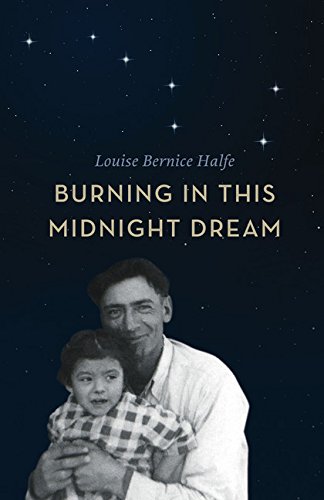
Burning In This Midnight Dream - Louise Bernice Halfe (Coteau Books)

Today's book of poetry:
Burning In This Midnight Dream.  Louise Bernice Halfe.  Coteau Books.  Regina, Saskatchewan.  2016.


Louise Bernice Halfe Sky Dancer has published a fourth volume of poetry, Burning In This Midnight Dream, and it is a burning indictment, a hushed prayer, an angry account.  Burning In This Midnight Dream articulates some of Canada's worst history from the inside looking out.  These poems are an insider's nightmare memories of Canada's residential schools.

Halfe/Sky Dancer is a quiet poet of considerable reserve yet these poems rumble with thunderous revelations that reverberate off of the page, run up your arms and attack your guilty heart.

nipin nikamowin - summer song

I listened to outrageous laughter
there by the stone-carving shelter
where children painted and listened
to Alex Janvier.
Year after year
on the grounds of Blue Quills
I shared a tent with a friend and we told stories
of those lonely nights and how we preserved
our broken Cree.

I walked, ran, skipped
swore and sang the fourteen miles
from that school all the way to Saddle Lake.
We were told by our guide to meditate, be silent
in our walk. How could we after our voices
where lost in the classrooms of that school?
When I reached my home reserve
the Old Ones received me
and danced me on my blistered feet.
Water, tea, fruit, bannock and deer stew.
What food would heal this wound
bundled against my back?
A child still crying in those long school nights.
I know of a man who still carries his suitcase,
began at six, now sixty years, carrying
those little treasures of home
that was forever gone.

...

Burning In This Midnight Dream is a peat fire of poetry.  You don't see any flames on the surface but you know for certain that you are on hot footing and that all is ablaze underneath, smoldering and determined.

Halfe/Sky Dancer has included several family photos along with the text and this case is the exception that proves the rule about photos and poetry.  These photos are necessary.  The poems work just fine on their own, they are all strong, exude the strength of a brave survivor, but these photos make the stories blood, flesh and bone.  We see the young children in a new and different context, we see them as clearly as the "boy in the striped pajamas," the red-coated lost girl in the opening frames of Steven Spielberg's Shindler's List.  The fine and perfect faces in these photos are calling out through these poems.

Residential School Alumni

An uncle shot his wife
left her lying behind the house
with the rifle at her side.
Their four children peered
behind the curtains.
He was never able to look at anyone.
A lake held him as he froze, standing,
clutching his traps.

One son joined the marines
a mosquito killed him in Vietnam.

In a police chase another son
hit a slough and drowned in his grave.

Their little brother slept in a flaming
house with needles, spoons, heroin and cocaine.

My cousin was left alone.

I remember them.

...

Our morning read here in the Today's book of poetry offices was a little more sombre than usual but that's not to say we didn't enjoy the poems.  We certainly respected them.

Louise Bernice Halfe Sky Dancer wants the Truth and Reconciliation process to succeed.  Burning In This Midnight Dream is an honourable attempt to plow as much truth into the open as the open can bear.

Today's book of poetry is interested in the poetry of things before the politics and Halfe/Sky Dancer covers all those bases with verse that creates drama and tension while still being able to cradle quiet moments of tenderness and hope. 

April 30, 2014

Weeds are flattened beneath last year's tire tracks
others lay burden by the winter's heavy snow.
The crocuses labor through this thick blanket.
I am sun drained from the bleakness
of the weeks before. Now a tick
I've carried in my hair runs up my neck,
festers on my chin.
I show it no mercy.

the lake-ice is rotting diamonds
where water seeps hungrily through its cracks.
Beneath the birdfeeders
goldfinches and juncos scratch.
Two mallards strut
crane their necks for the roving dogs and cats.
Sharp tail grouse lay low in the thicket believing
they cannot be seen, their rust-colored wings
match the frost-bitten ground.

This morning we were woken by a knocking
on our skylight, the yellow feathers
of a flicker splayed against the window.
I cradle a striped gopher, it heaves so slightly
against my palm, a leg broken
and one eye bloodied shut.
I lay it against the mountain ash and beg
it not to suffer.

This afternoon I have my hearing
for Truth and Reconciliation.
I must confess my years of sleeping
in those sterile, cold rooms where the hiss
of water heaters were devils
in the dark.

I want to walk these thickets
to that far horizon and not look back.

...

The damages inflicted upon Canada's First Nations community by the Residential School program will never be over.  Generations have been ham-strung by endemic racist policies and implementation of said policies.  Louise Bernice Halfe Sky Dancer illuminates some of that dark night with Burning In This Midnight Dream.  This is the sort of poetry that does move us all one step closer to understanding and true reconciliation.

There is still a long, long way to go but underneath Halfe/Sky Dancer's laments there is hope, astonishing hope.

Author Photo
Louise Bernice Halfe Sky Dancer

ABOUT THE AUTHOR
Louise Bernice Halfe was born in Two Hills, Alberta, and was raised on the Saddle Lake Reserve. Her Cree name is Sky Dancer.

With the publication of Burning in this Midnight Dream in April 2016, Louise has four book publications to her credit. Bear Bones & Feathers was published in 1994. It received the Canadian People’s Poet Award, and was a finalist for the Spirit of Saskatchewan Award. Blue Marrow was a finalist for the Governor General’s Award for Poetry, the Pat Lowther Award, the Saskatchewan Book of the Year Award, and the Saskatchewan Poetry Award. The Crooked Good was published in 2007. She was awarded third prize in the League of Canadian Poets' national poetry contest and was Saskatchewan’s Poet Laureate for 2005-2006.

Louise has a Bachelor of Social Work, and received an Honorary Degree of Letters (Ph. D) from Wilfred Laurier University. She currently works with Elders in an organization called Opikinawasowin (“raising our children”). She lives outside of Saskatoon with her husband.


Louise Bernice Halfe
 Returning, Words Aloud 2007, Canada
Video: Words Aloud


568

DISCLAIMERS

Poems cited here are assumed to be under copyright by the poet and/or publisher.  They are shown here for publicity and review purposes.  For any other kind of re-use of these poems, please contact the listed publishers for permission.

We here at TBOP are technically deficient and rely on our bashful Milo to fix everything.  We received notice from Google that we were using "cookies"
and that for our readers in Europe there had to be notification of the use of those "cookies.  Please be aware that TBOP may employ the use of some "cookies" (whatever they are) and you should take that into consideration.

Thursday, March 9, 2017

The Red Files - Lisa Bird-Wilson (Nightwood Editions)

Today's book of poetry:
The Red Files.  Lisa Bird-Wilson.  Nightwood Editions.  Gibsons, British Columbia.  2016.

27484943

The Red Files takes its title from the federal government files on residential schools.  Lisa Bird-Wilson has a new history for the Canadian people to consider and it is a scathing indictment.  If sins and wrongs were arrows there aren't enough Saint Sebastians in all of Canada to absorb them.

It is now beyond any reasonable question that the Canadian residential school system was an evil forced upon First Nations.  Lisa Bird-Wilson's The Red Files takes us to school.

Métis

Métis road allowance squatters
with their raw camps set up on the edge
of the exact reserve boundary, she sees them all
the time, those kids, school-less, she sees
those half-breed kids who look no different
from herself and her friends, sometimes

in spring, every single thing
they own fits in the wagon pulled
by the one sapless horse, away
for summer work, or back
from winter trapping

her mother says something nice
about the half-breed boy, the one
who comes to the house to visit
and have tea with sugar and sometimes a crust of bannock
she likes him and her mother says he is 
a good boy

but then one day in the not-work or trapping season,
he disappears
him and his whole family are moved
away and other families evaporate too
in the middle of the night
shacks burnt into the dirt and raked clean

her mother helps her
understand people
can just disappear
like that
like the seasons or the wind
she says, we are all
impermanent and when the girl looks puzzled
mother says like melted candle was or snow and then
it's finished: what are you doing inside
go out and play

on the empty road, fingers of sunlight
comfort her back and her shoulder flesh;
she runs to feel her own quick breath

...

Lisa Bird-Wilson has miraculously avoided simple anger and instead burrowed into a deeper chasm where indifference, racism and entitlement has carved deep wounds into the indigenous psyche. These poems will make you weep regardless of the colour of your skin.  

If you are First Nation the weeping could simply be memory, the scourge of residential schools cut a large uncompromising swath through generations.  If you are not indigenous then there are going to be some tears of guilt.  Either way these painful stories of imprisoned youth will tear you a new one.

Farm Instructor

afternoon chores and the sun
is three hours past its highest point
hot on their dark heads they seek the shade
behind the big barn, the boys
four of them including Ronny
decide to take their chance to run
and on a silent cue
they take off

across the open grass and down the slope
breaking through tree branches
shadow dappled panic
hearts beat faster than chased rabbits
skinny legs push for home
boughs cracking toward light and a chance
wordless spirited breaths follow
one another

and the farm instructor inside his home
boots off, already drunk
in his chair by the south window, dreaming
sun-warmth on his forearm and right thigh

and when he hears about the boys he releases
a heavy sigh
stiff with the beating he'll give
the one he catches first
he laces his boots and send the hand for the truck
hopes to be back before dark

it'll be Ronny who feels the rough hands
of the farm instructor
pull him easily to the ground
heavy knee on his narrow chest
the breath crushed from his lungs
as he steels himself to be beaten
like a man

...

Lisa Bird-Wilson has found the narrative tools to expose the horror and the terror inflicted upon these children and how it inevitably exploded into a casual methodology for cultural genocide.  There aren't enough apologies in the world to assuage the grief inflicted on the indigenous population of Canada and these poems spell it all out.

Bird-Wilson knows she doesn't have to hammer hard, these poems can feel almost gentle when read aloud, but they carry the weight of a wronged world.

The Finest in the Dominion

Saturday is his day to take
a boy. Mostly they are all the same
to him, but this Saturday it's Kenneth,
the most recent
quiet lad to be seduced
by a promise
of driving the school bus.

Here I call him Kenneth, but to name him
is the challenge, when his has only been
a number
but I will call him Kenneth
and while we are naming, I dare you to cite
a single ten-year-old
boy any one out of hundreds
who would be able
to resist, able to measure
the price of that first joyride.

What he did was this --
offered the boy, Kenneth, the chance
to drive the big school bus.
But here's the rub:
Kenneth is his principal's reach
he's too small to touch
the pedals and the
steering wheel at once
so he sits on the headmaster's
lap. Don't think Kenneth hasn't heard
the other boys calling
him the principal's fag baby
but he, too young to really
understand those words,
went along anyway with the man
whose single-mindedness and hard
work built the school residence
to one of the finest in the dominion.

...

Our morning read was enthusiasm tempered by the guilt of the oppressor.  You can't read these poems and feel the same way again.  Today's book of poetry would argue that only the very best poetry has the capacity for transformation, you read it and you are a different person.  Bird-Wilson has the entire template laid out.  One child tells a story and then the next, one foot in front of the other, Bird-Wilson walks you through it and holds your hand.

Lisa Bird-Wilson has given voice and name to a lost generation of ghosts, both living and dead.  

Today's book of poetry believes that The Red Files should be mandatory reading in every high school in Canada.

Cremation

first I stand beside your closed pine box its sharp edges
covered by a white woollen blanket
and through the shroud my fingers work
a rivet along the lid near where I imagine your hand to be --
your graceful tapered fingers

I'm aware of the funeral man waiting
ready to wheel you into the next room
it all seems to happen in stages, this death business
room to room to room -- I remember them all

we come with you so you won't have to be alone

he offers that I might want to push the button,
tells me some Hindus and Sikhs desire a funeral pyre,
take cremation as a consolation and want to participate
I tell him we're not those kind of Indians,
then allow myself to laugh but he doesn't
so I stay on my side of the glass
while your body burns I hold tight to my boys'
hands and stare straight ahead as you rise to air
and become part of the atmosphere
part of the white and yellow-centered daisies you adored
the convincing scent of the lilacs, so brief in spring
the apple tree with its small sour apples
the blossoms of the crabapple in your backyard
in the front, the giant pine that you remembered
as a seedling -- at the end these were your whole world
and I think you finally forgot about the rest of it--
the ways you'd been hurt, by men and children alike,
debts others owed you -- as you turned inward
with the preoccupation of dying
well

we leave the crematorium, your smoke
filtered through the chimneys, lit
in cold February air and perfect sky-blue sky

I imagine you now, unfettered
limbs whole again, spine straight and true,
rising to walk lightly off the boat, your hand
in the captain's, stepping down
to a place where you can dance once more
in your pretty shoes with your delicate
feet and slender legs, yes
dance on the graves of the dead bastards
the ones who have it coming because
if you don't, who will?

...

Today's book of poetry thinks that Lisa Bird-Wilson's first book of poetry is a stunner.  The Red Files is an important book of poetry for Canadians, I hope they all get to read it.


Image result for lisa bird-wilson photo
Lisa Bird-Wilson

ABOUT THE AUTHOR
Lisa Bird-Wilson is a Cree-Metis writer from Saskatchewan whose writing has appeared in a number of literary magazines and anthologies, including Grain, Prairie Fire, The Dalhousie Review, Geist, kimiwan, cîhcêwêsin and Best Canadian Essays. She is the author of the novel Just Pretending (Coteau Books, 2013), and her debut poetry collection, The Red Files, was published by Nightwood Editions in 2016. Bird-Wilson lives in Saskatoon, SK.

BLURB
“Lisa Bird-Wilson eloquently weaves archival work and collected life stories into her debut poetry collection...vivid and visceral...This sharp collection could be used to teach the more painful elements of Canadian history - ones that our curriculum conveniently glosses over. The themes of reconcilliation, and how we continue to reconcile today, will remain with readers long after reading...Bird-Wilson’s first collection of poetry is sure to leave readers wanting more.”
     ~ Nashwa Khan, This Magazine (May/June 2016)

Lisa Bird-Wilson
Lit Happens w/ guest Lisa Bird-Wilson
Hosted by Saskatoon Storyteller Danica Lorer, Lit Happens is a weekly segment on Shaw TV Saskatoon focusing on the literary arts scene in Saskatchewan
Video; Shaw TV Saskatoon


559

DISCLAIMERS

Poems cited here are assumed to be under copyright by the poet and/or publisher.  They are shown here for publicity and review purposes.  For any other kind of re-use of these poems, please contact the listed publishers for permission.

We here at TBOP are technically deficient and rely on our bashful Milo to fix everything.  We received notice from Google that we were using "cookies"
and that for our readers in Europe there had to be notification of the use of those "cookies.  Please be aware that TBOP may employ the use of some "cookies" (whatever they are) and you should take that into consideration.